All Hands on Deck: Building (and Taking Apart) Giant LEGO Cruise Ships
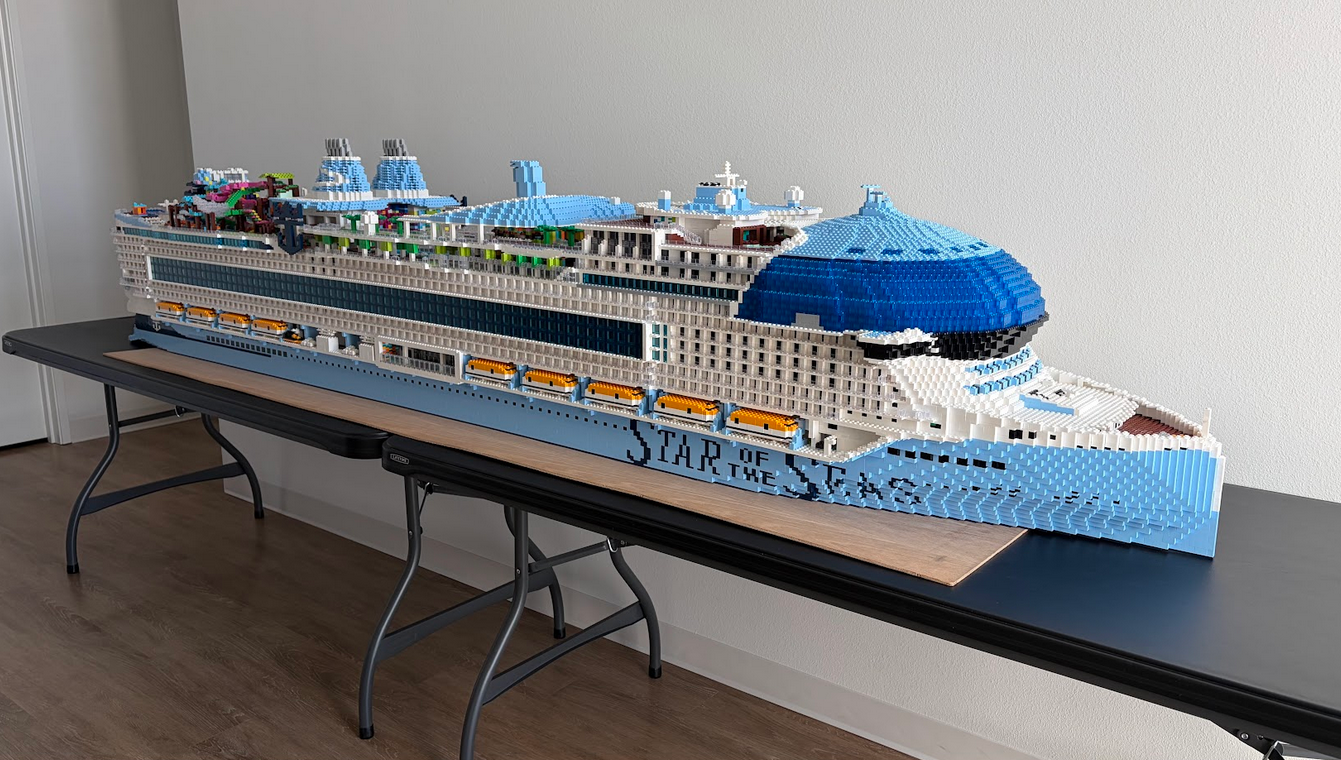
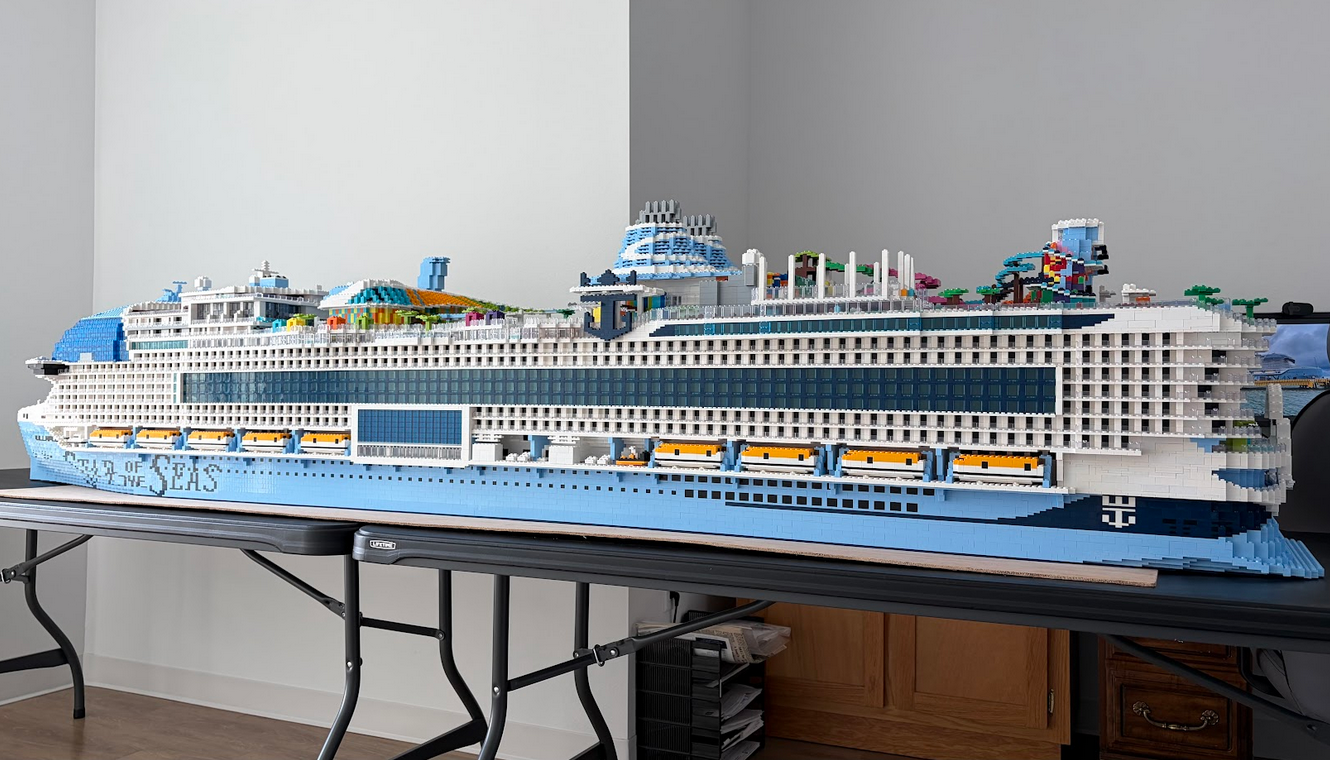
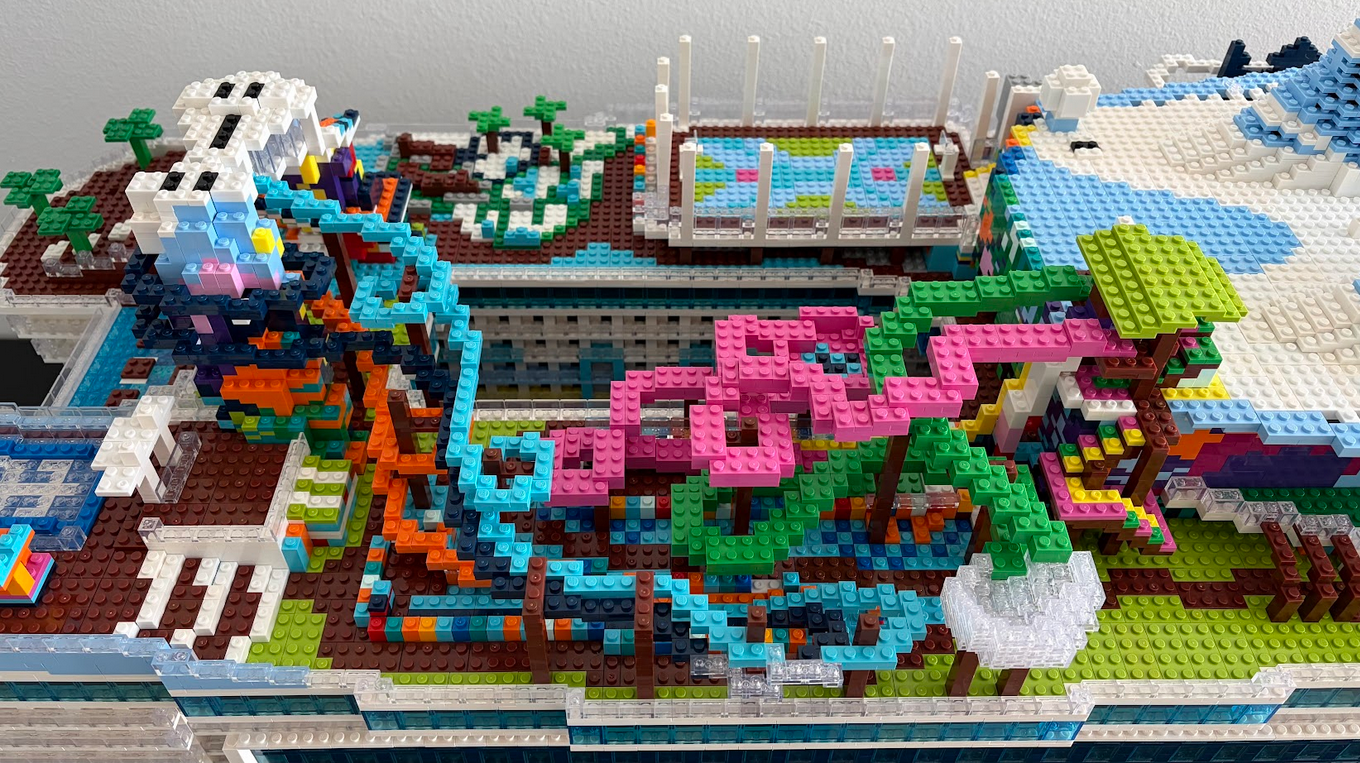
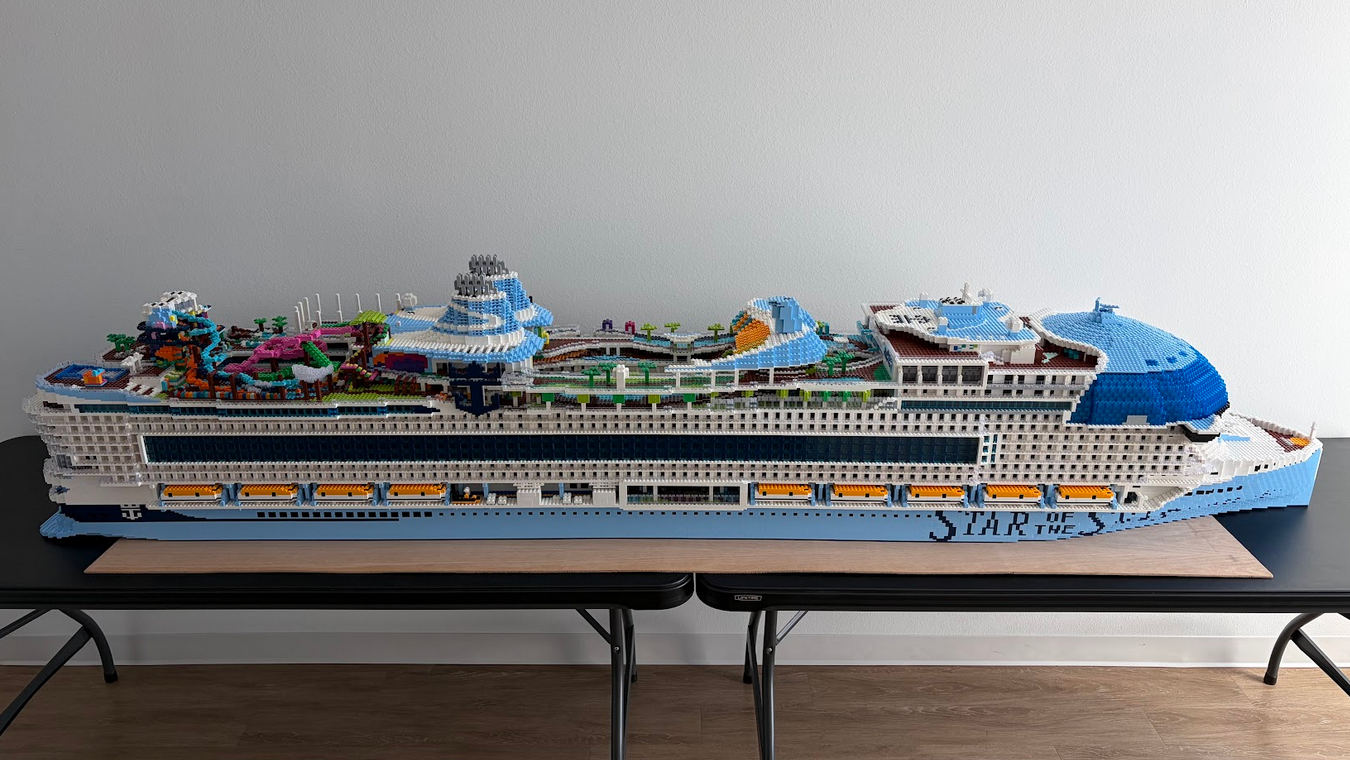
/At BrickNerd, we love exploring ambitious builds and learning how their creators bring them to life. Alexander Zarkowski’s LEGO recreation of Royal Caribbean's Star of the Seas gives us plenty to explore: 20 decks, an estimated 100,000–125,000 pieces, and a length of nearly 114 inches.
But this ship is only the latest in a series of large-scale maritime builds, many made using the same bricks. We spoke with Alexander about his approach to building, his interest in cruise ships, and why he takes each model apart to make the next one.
BrickNerd: Welcome to BrickNerd, Alexander! Tell us a little about yourself. When did your interest in LEGO begin?
Alexander: I honestly do not remember when it started, but it was very early on, maybe around five years of age. Growing up, LEGO sets were not really something I was interested in or was even aware of. I had a large number of bricks that were not tied to any set, so I naturally began to build my own structures, usually at a comparatively large size.
BrickNerd: Large-scale cruise ships make up a large part of your work. How has your collection developed, and do you have a favorite ship?
Alexander: Well, I don’t have a collection per se. I build each ship one at a time. Once completed, it will stay up for a period of time, usually a few weeks. Then I disassemble it, re-sort the pieces, and start on the next one.
Cruise ships are certainly my main focus, but I occasionally build other things, 99% of which are maritime-related. If I had to pick a favorite build that is not my most recent, I would have to say the replica of Celebrity Edge, a cruise ship operated by Celebrity Cruises and a personal favorite.
BrickNerd: Can you walk us through your design process? How do you plan a ship before building it in LEGO?
Alexander: The process is a long one, but it involves hardly any traditional planning on my end. On my YouTube channel, The Brick Executive, I recently made a nearly two-hour-and-40-minute video discussing the full process of planning and building my most recent model, Royal Caribbean International’s Star of the Seas.
To sum it up very briefly, the planning phase involves using as many resources as possible, including deck plans, onboard footage, renderings, and exterior photographs.
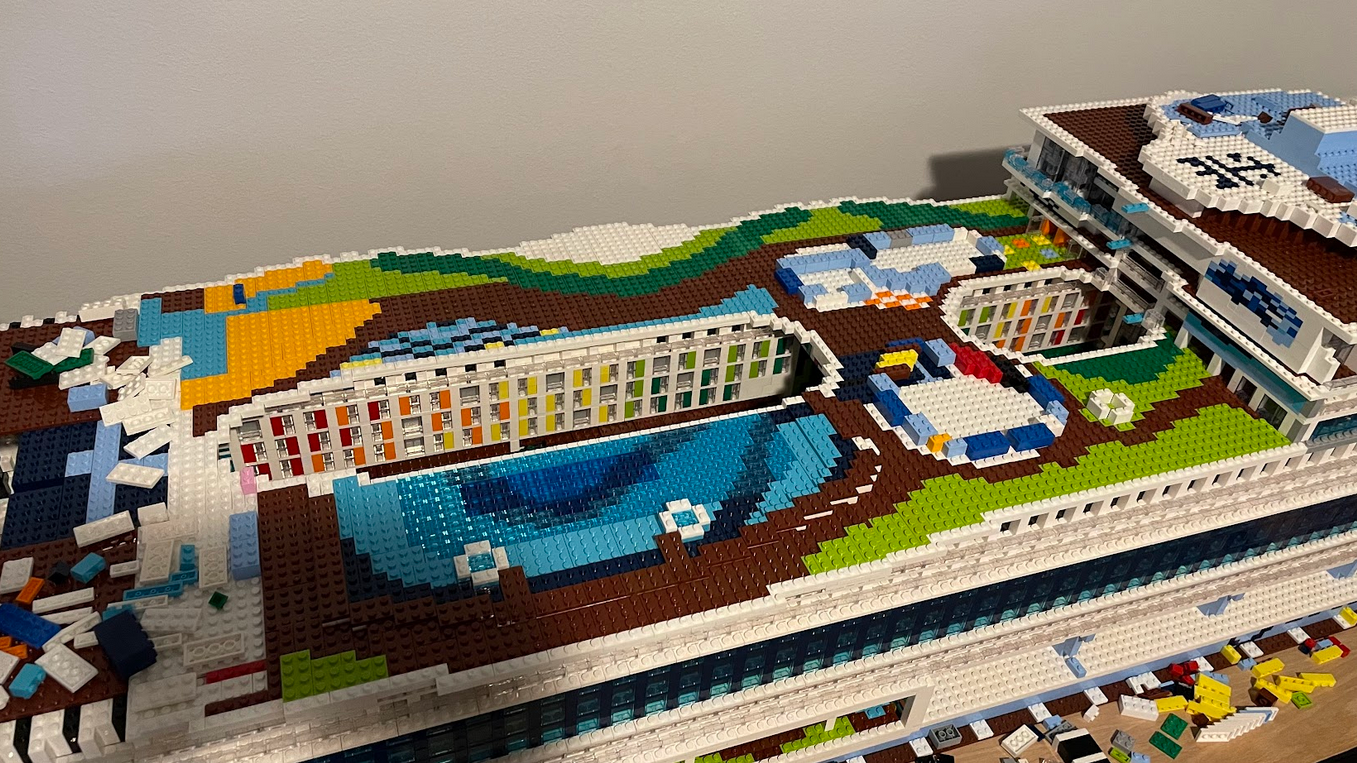
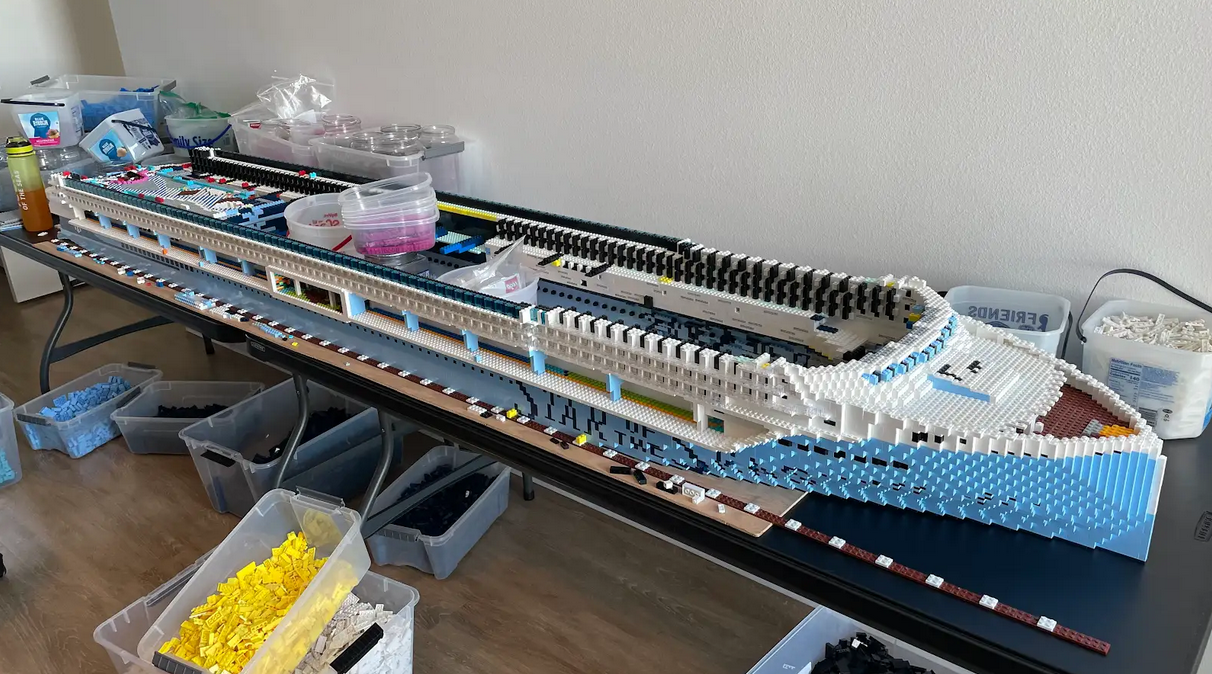
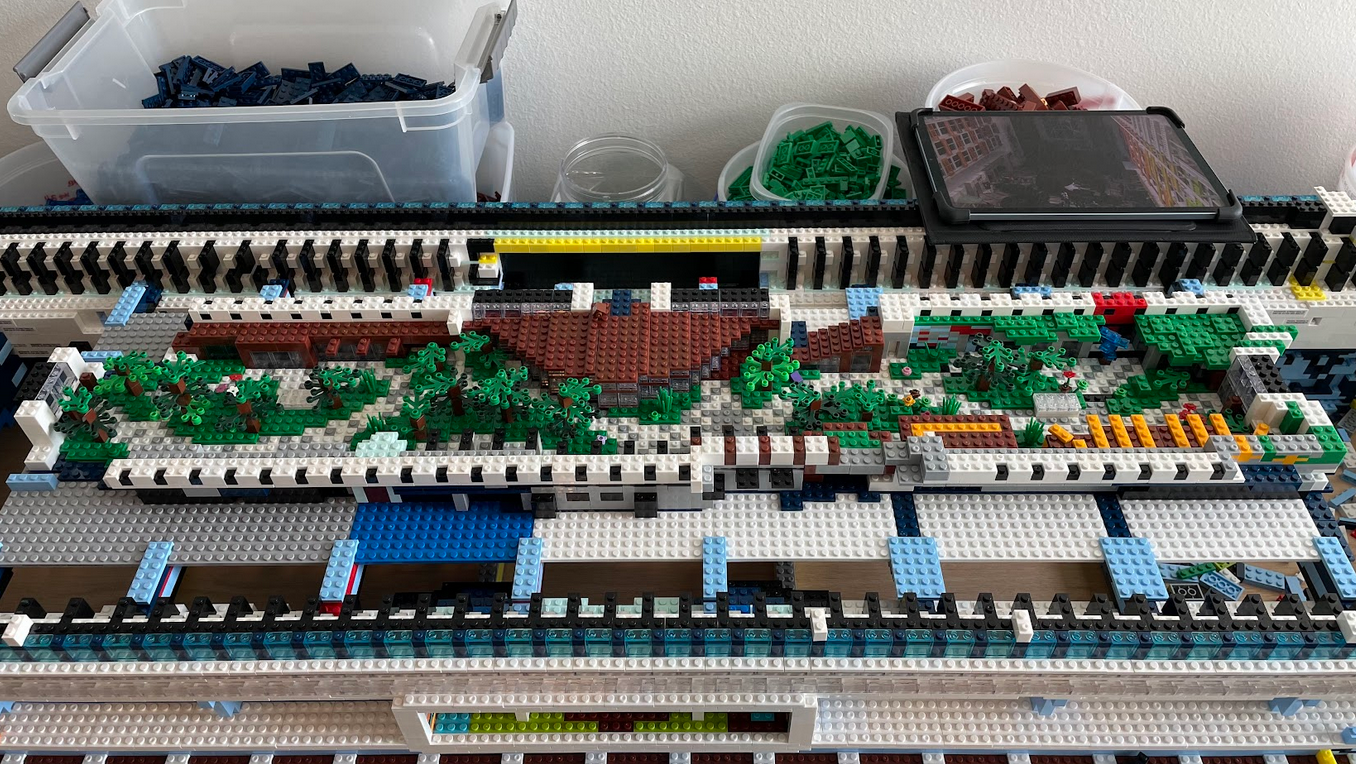
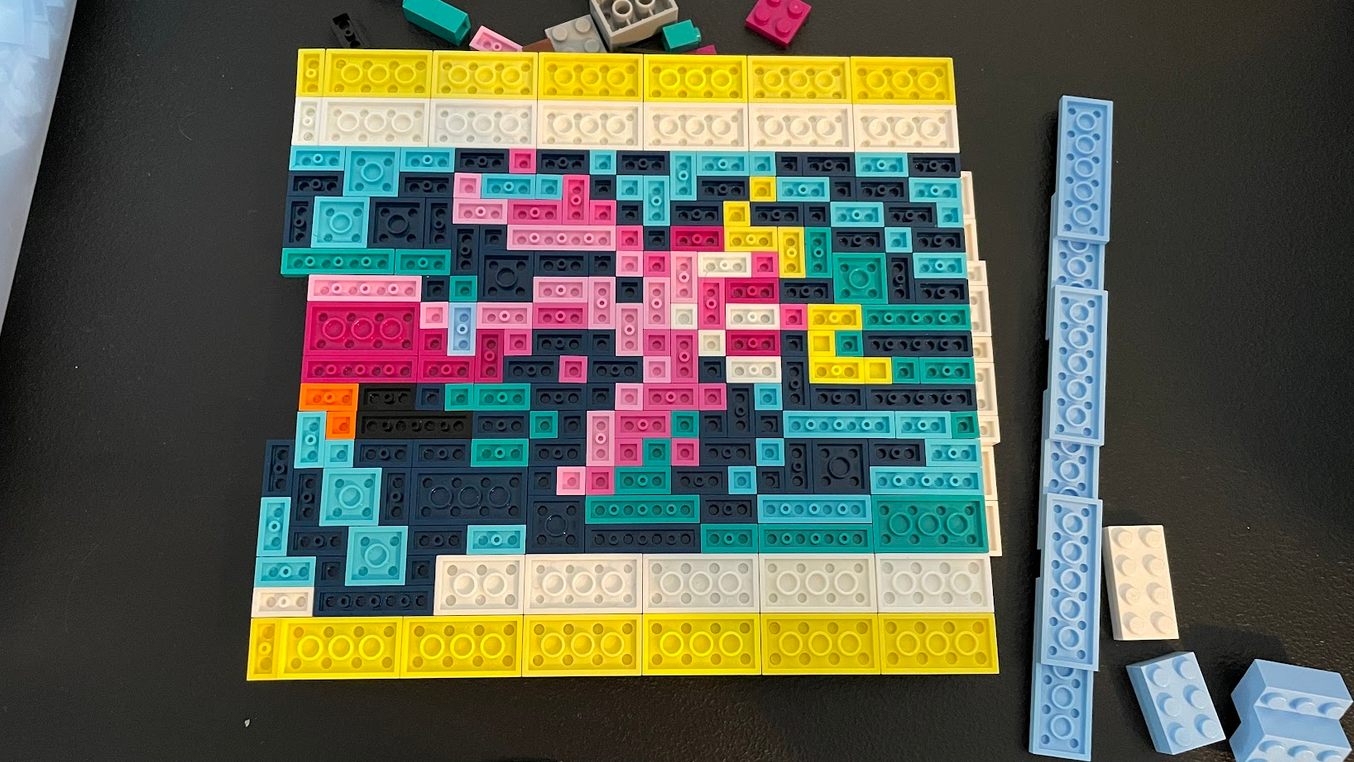
From those, I compile a list of rough dimensions of various areas and structures to make sure the proportions are correct. The ratio that I have recently started to use is 1 LEGO stud = 3.32541373 feet. From there, I build a very basic profile of the ship in a computer program to establish deck heights, window arrangements, etc. I will also build certain things digitally that I am not willing to figure out off the cuff, usually because they involve complicated artwork.
Beyond that, it’s largely all freehand, meaning there are no instructions or plans beyond those basics. If you’re interested and like long-form videos, check out my video, “The LEGO Shipyard | Building Star of the Seas.”
BrickNerd: Tell us about your LEGO Star of the Seas. How big is the finished model?
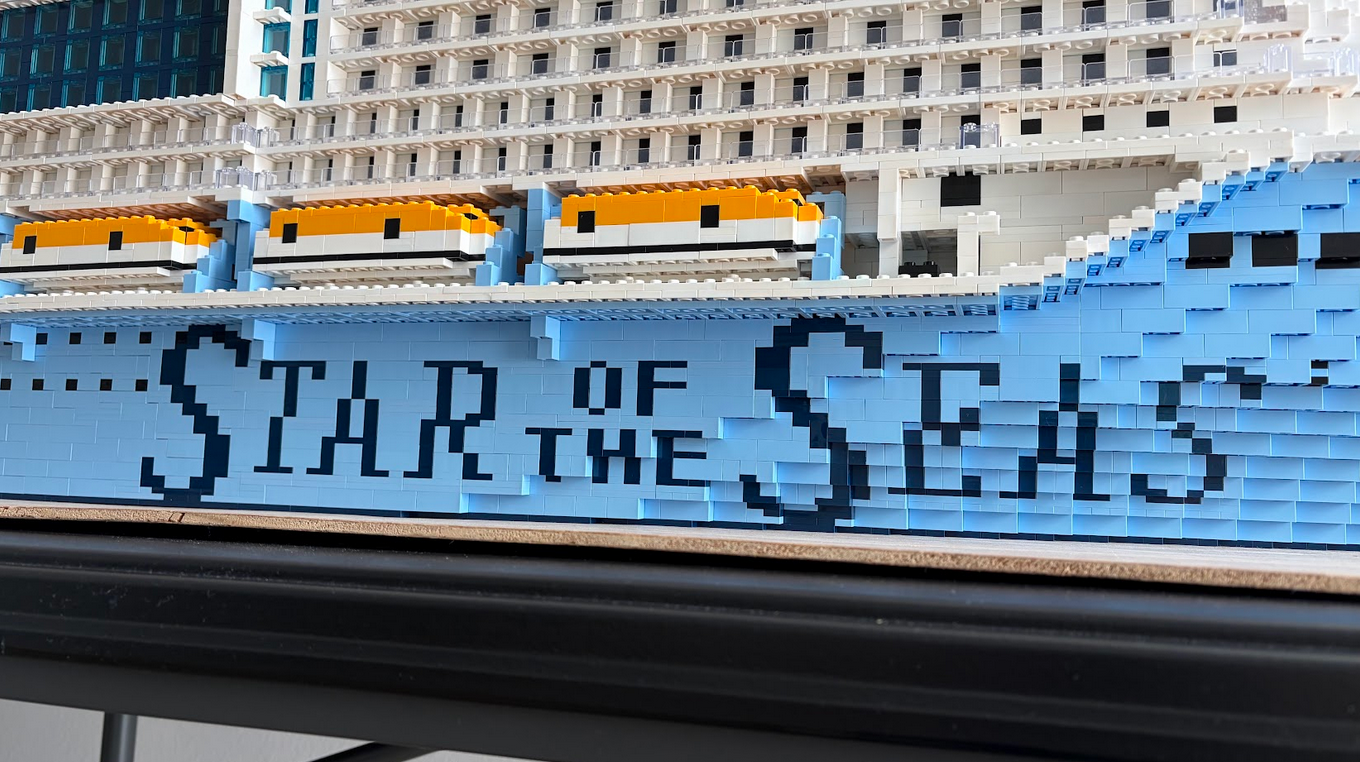
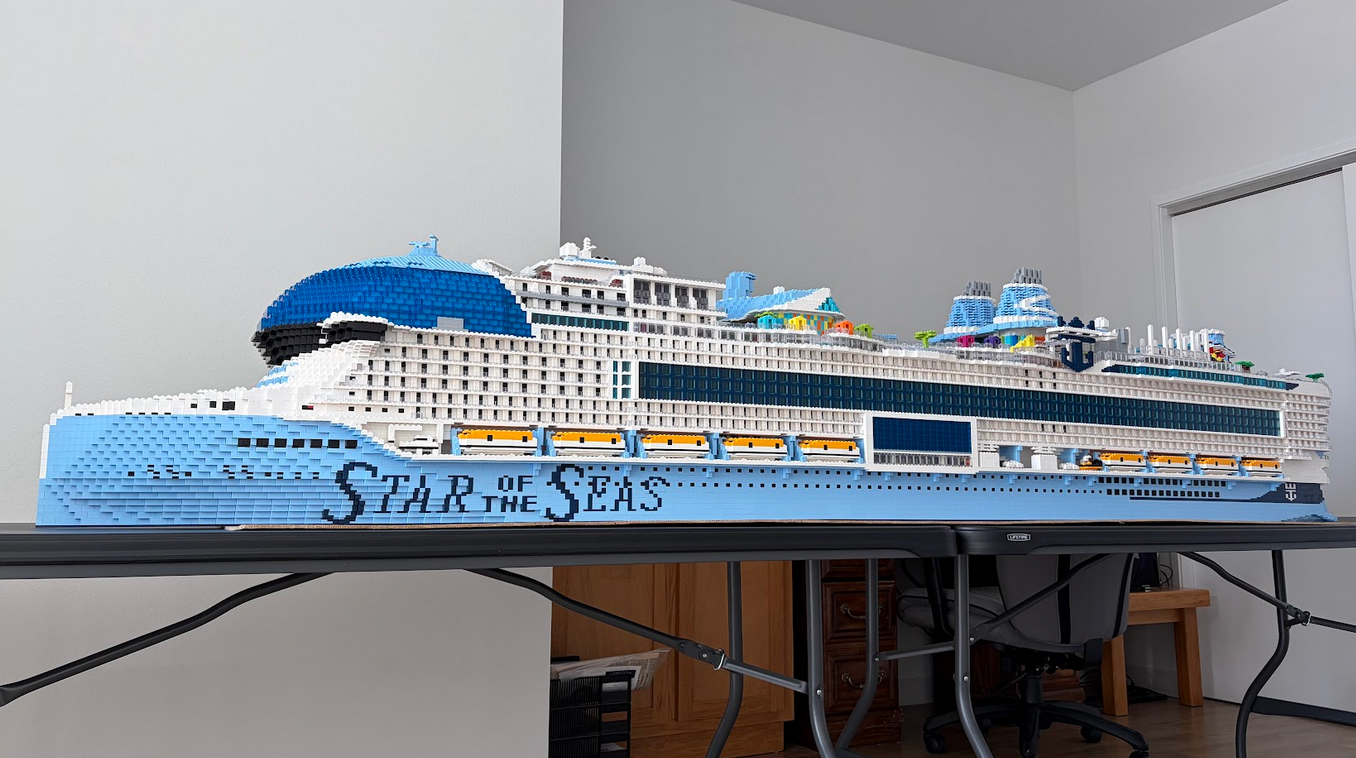
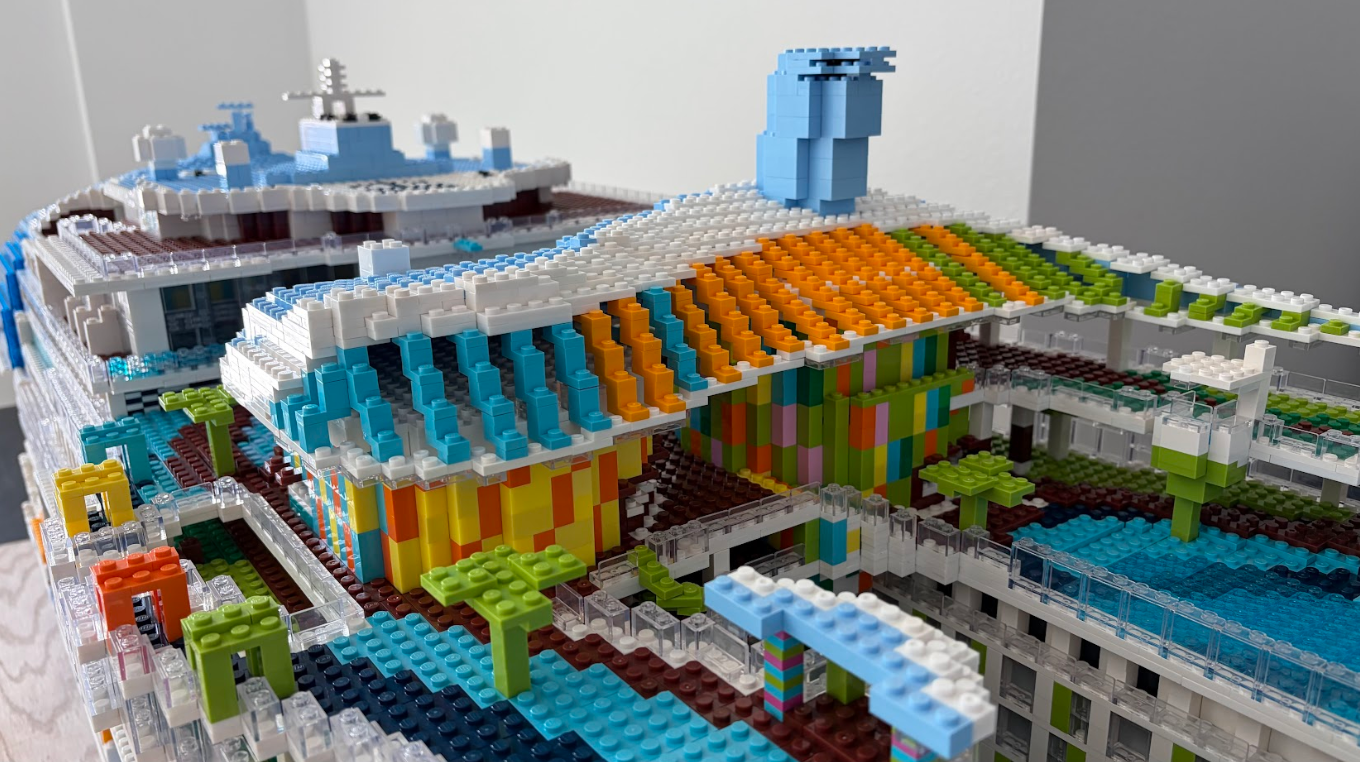
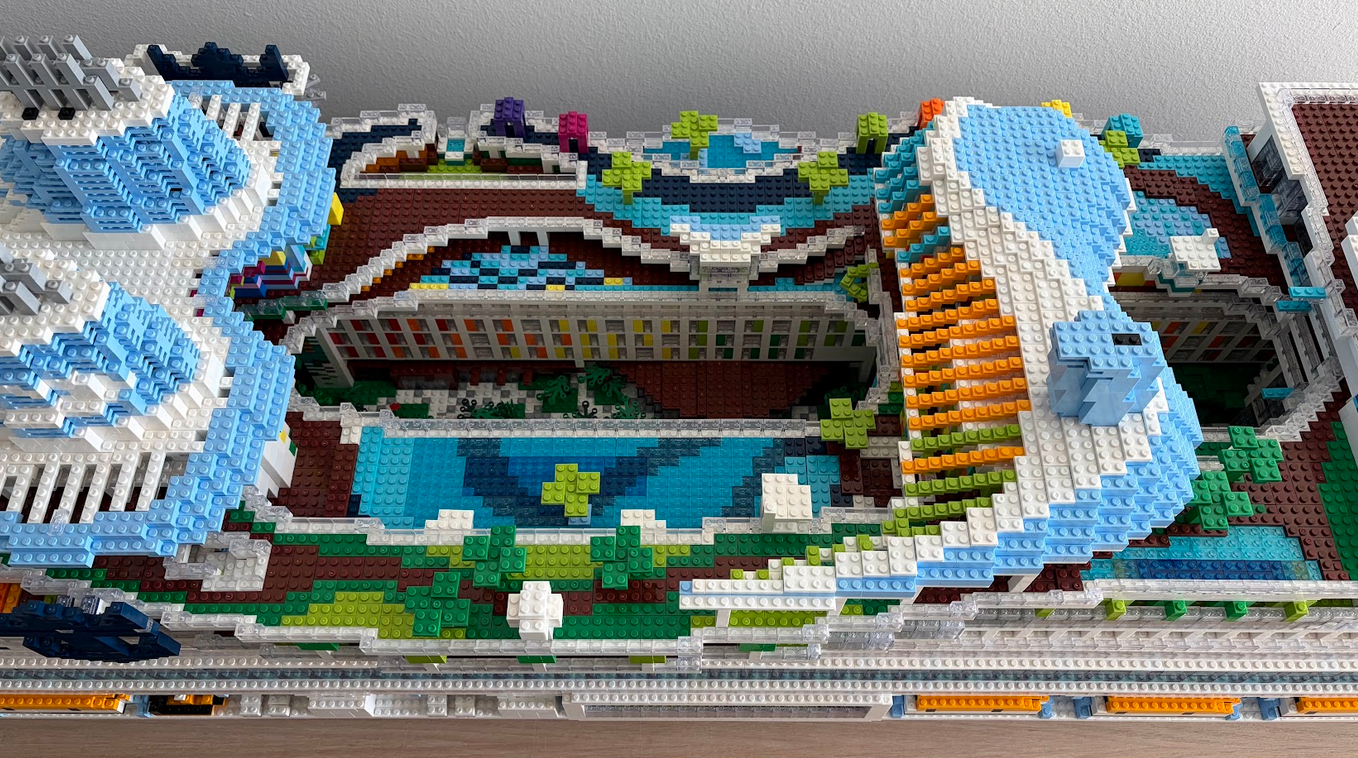
Alexander: My most recent build is Royal Caribbean International’s Star of the Seas, the second member of the massive and revolutionary Icon class. She is tied with her older sister, Icon of the Seas, as the largest passenger ship ever made!
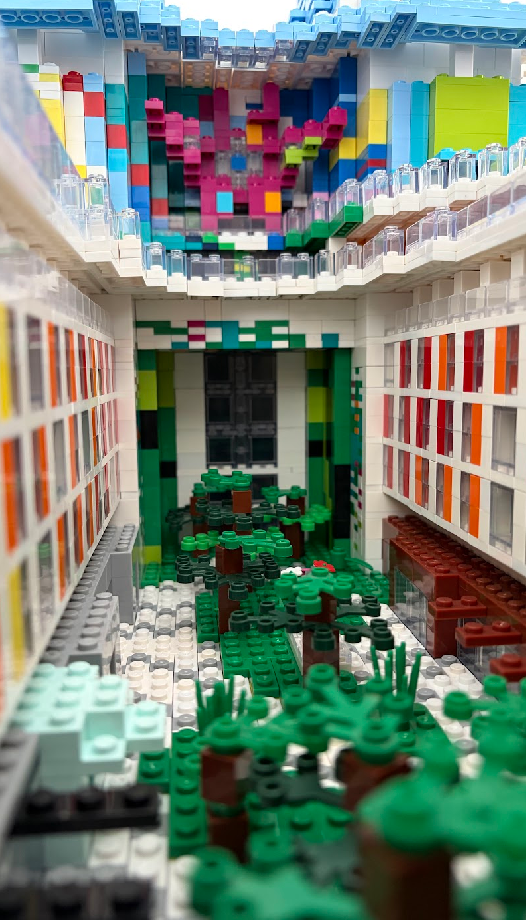
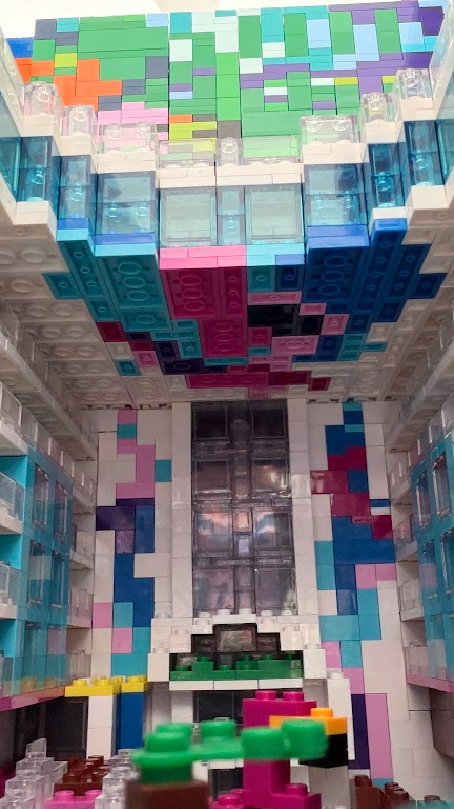
With a ship that large as the subject, this was one of my biggest models ever. Overall, it is nearly 114 inches long, almost 20½ inches wide, and 22½ inches tall. While I certainly don’t have an accurate piece count, it’s probably on the order of 100,000–125,000.
BrickNerd: There’s a lot of detail to work into a model that size. How long did the project take?
Alexander: The building process took 170.75 hours of work over the course of 23 days. The planning process easily took another 12–24 hours.
BrickNerd: Do you usually build at this scale?
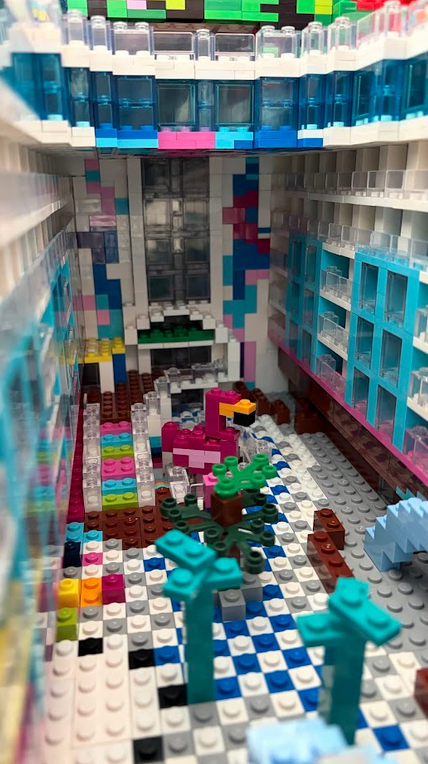
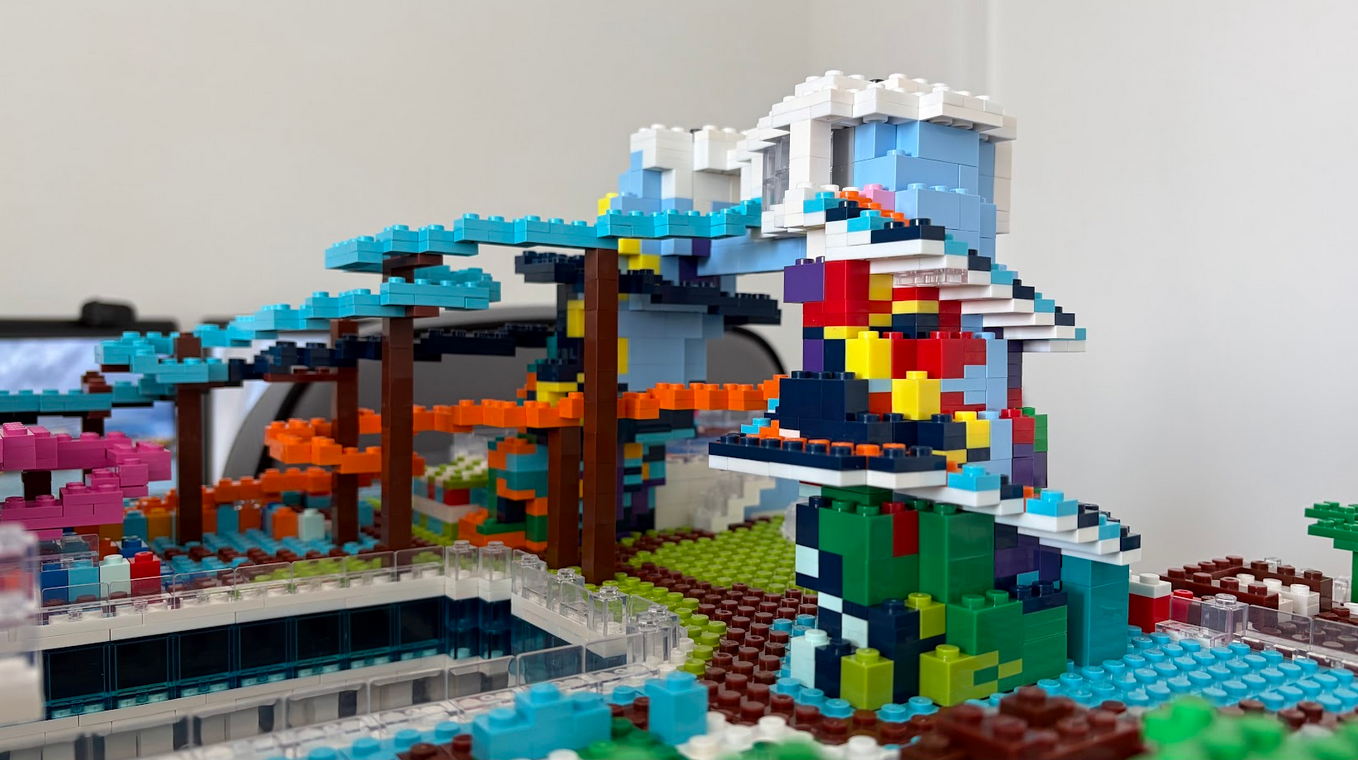
Alexander: Yes, it is pretty rare that I stray from this size because I want to get as much detail in as possible. Again, the ratio I currently use is 1 LEGO stud = 3.32541373 feet. Additionally, because I use the same bricks in every ship, I only use basic bricks so that they can be used in as many builds as possible. That is why you’ll almost never see specialized pieces or smooth finishes, and why the models can look somewhat “blocky.”
BrickNerd: What does the LEGO hobby mean to you?
Alexander: For me, it has been a way to test my brain and use my hands. I’ve always been a photorealism kind of creator, whether it’s LEGO builds or artwork. I always wanted to create proper replicas of all sorts of things, and LEGO allowed me to do this starting from a very young age. There are numerous skills and concepts that I have been able to learn, largely thanks to this hobby, and apply in my adult life.
BrickNerd: When you do build official LEGO sets, which themes do you enjoy most?
Alexander: As a kid, it was easily the City series. Now, being much older, I don’t get sets too often, but if I do, they usually fall under the Icons, Creator, or Architecture themes.
BrickNerd: Are you working on any LEGO creations at the moment?
Alexander: I certainly am, but I do not like to reveal exactly what I am working on until it is ready to be published on my YouTube channel. I will say it’s a cruise ship (shocking)!
BrickNerd: Have you taken any of your builds to LEGO conventions or exhibitions?
Alexander: Funnily enough, I have never been to or participated in a LEGO convention or exhibition, or even been to a LEGOLAND park! The closest I’ve come was participating in a few local shows as a young teenager, well over a decade ago.
BrickNerd: What do you hope people take away from your work, and what would you like to accomplish with it?
Alexander: My main goal with this endeavor is to help introduce both adults and kids to the cruise industry, maritime industry, naval architecture, and civil design, and do so in a medium that is both familiar and fun to so many.
I know the exact moment when I wanted to create ships of this size out of LEGO. It happened in my early teenage years, when I watched a roughly four-minute video of the building process of a giant, realistic model of Cunard Line’s RMS Queen Mary 2.
It was something I wish I could have seen more of at that age, and now I have the ability to provide something I’m sure many others want to see. If I’m able to help inspire or drive the curiosity of an up-and-coming LEGO creator, maritime enthusiast, naval architect, or even a new cruiser, I’ll feel that I’ve accomplished that mission.
BrickNerd: Thank you for sharing your work and process with us, Alexander! We look forward to seeing which ship you build next and hope your creations spark that same curiosity in others.
Could you take apart a build this size after just a few weeks, or would you want to keep it on display? Let us know in the comments below!
Do you want to help BrickNerd continue publishing articles like this one? Become a top patron like Paige Mueller, Rob Klingberg from Brickstuff, John & Joshua Hanlon from Beyond the Brick, Megan Lum, Andy Price, Lukas Kurth from StoneWars, Wayne Tyler, Dan Church, Roxanne Baxter, and Marci Hollingsworth to show your support, get early access, exclusive swag and more.