Did LEGO Classic Space Minifigure Colors Mean Anything?
/There’s plenty of “head canon” surrounding the colors of Classic Space astronauts. Did Red pilots fly the ships while Blue astronauts kept them running? Were Yellow minifigures really scientists? Some of these ideas come from childhood imagination, others from comments made by LEGO designers over the years, and a few have origins that are much harder to trace.
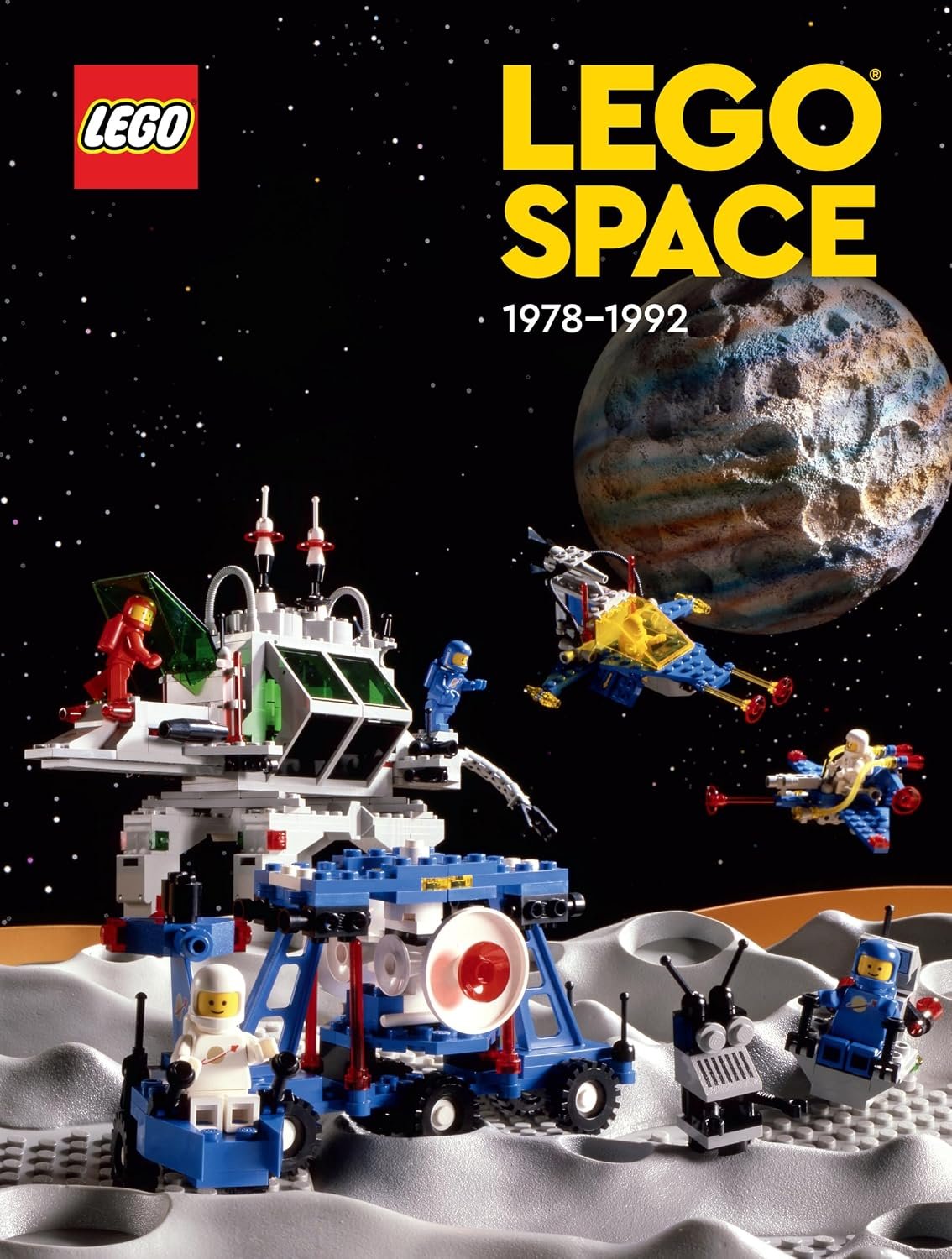
I found myself thinking about those questions while reading Tim Johnson’s excellent LEGO Space: 1978–1992. The book collects interviews with many of the designers behind Classic Space, and while it offers fascinating insights, it also reveals something unexpected: even they didn't always agree on what the colors meant.
So rather than relying on memories or fan theories, I decided to look at the sets themselves. I cataloged every Classic LEGO Space minifigure, grouped them by the role they appear to perform on the box art, and compared those jobs against each astronaut color.
Did Classic Space minifigure colors really indicate different jobs, or is that just another piece of LEGO folklore? Let’s dig into the history—and the data—to find out.
What’s Been Said
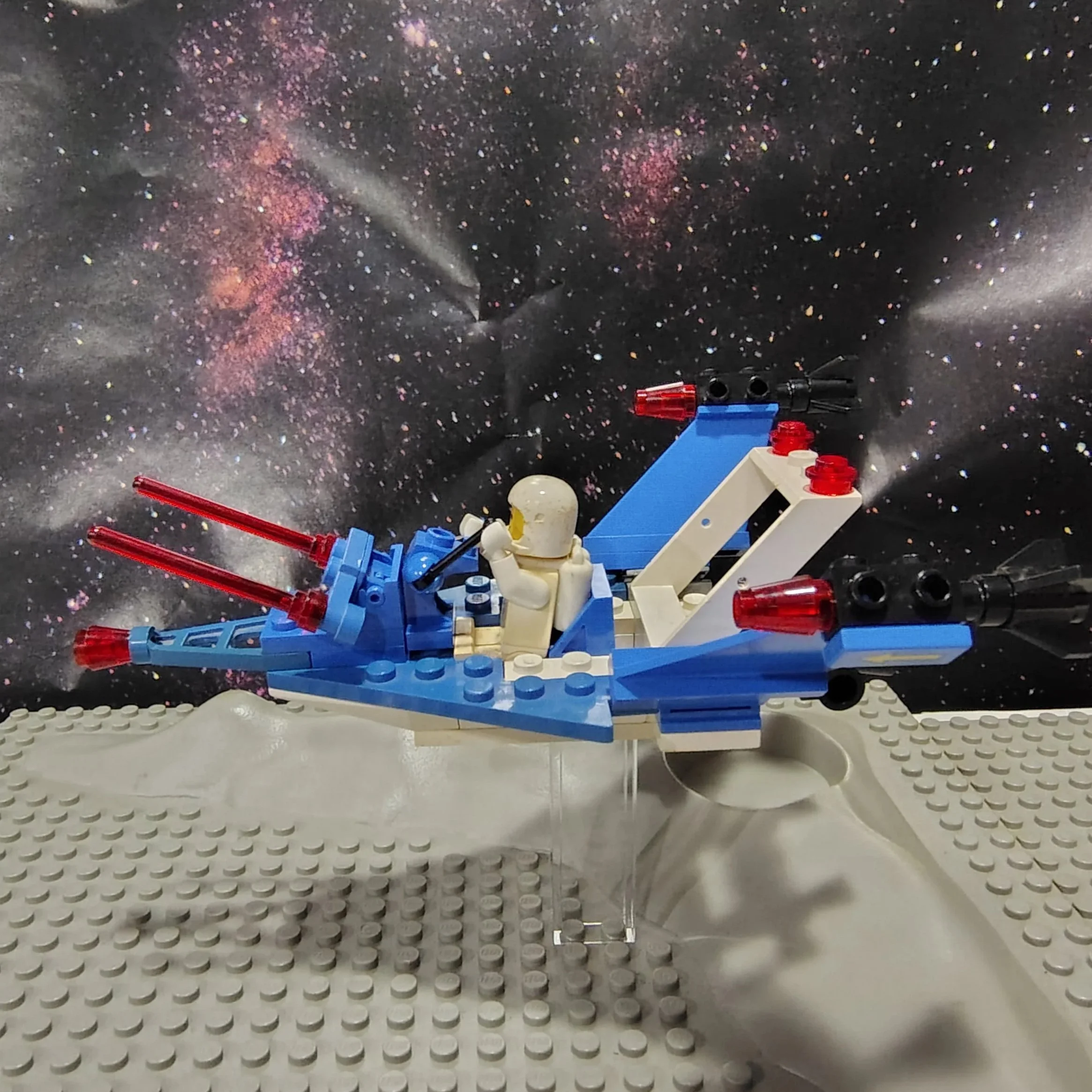
6945 Cosmic Charger - White Open Cockpit Pilot
One of the most important discussions about Classic Space minifigure colors comes from Mark Stafford’s BrickJournal interview with Jens Nygaard Knudsen and Niels Milan Pedersen. (Here are links to the article if you are curious: page 1, page 2, and page 3). Much of the modern discussion surrounding astronaut colors can be traced back to that interview. Here are a few highlights:
Jens: “We started with only Red and White figures. We considered the Red ones to be the ‘bad’ guys and that they were two competing factions.”
Stafford: “I asked about the colors of the classic spacemen and if they had any particular significance to the designers.”
Jens: “The original two colors (Red and White) were explorers, Yellow were scientists, Blues were technicians or mechanics, and I guess the Black were warriors. But we were not allowed to make a big deal out of this. We were not allowed to make war.”
Side note: I think I recall reading that Black was difficult to get approved and they were perhaps spies (proto Blacktron!?), but that was many years ago and I could not find the source.
Stafford answers whether the Red and White astronauts were meant to represent Americans and Soviets: “I think that was the original idea, to make sure both sides were represented, but I’m not sure. Even if that was the idea at the beginning, they took the conflict out very quickly.”
Pedersen recalls, “I do remember Jens saying that the White and the Yellow guys were the good guys and the Red were bad guys, but he was mostly joking of course.” Johnson concluded this discussion with “no nationalities, job roles, or story lines were attributed to minifigures in the original LEGO Space products” (page 13 for all quotes).
In an interview with Bjarne Panduro Tveskov, who joined LEGO in 1985, Pedersen says the following when asked about minifigure color (LEGO Space, page 111):
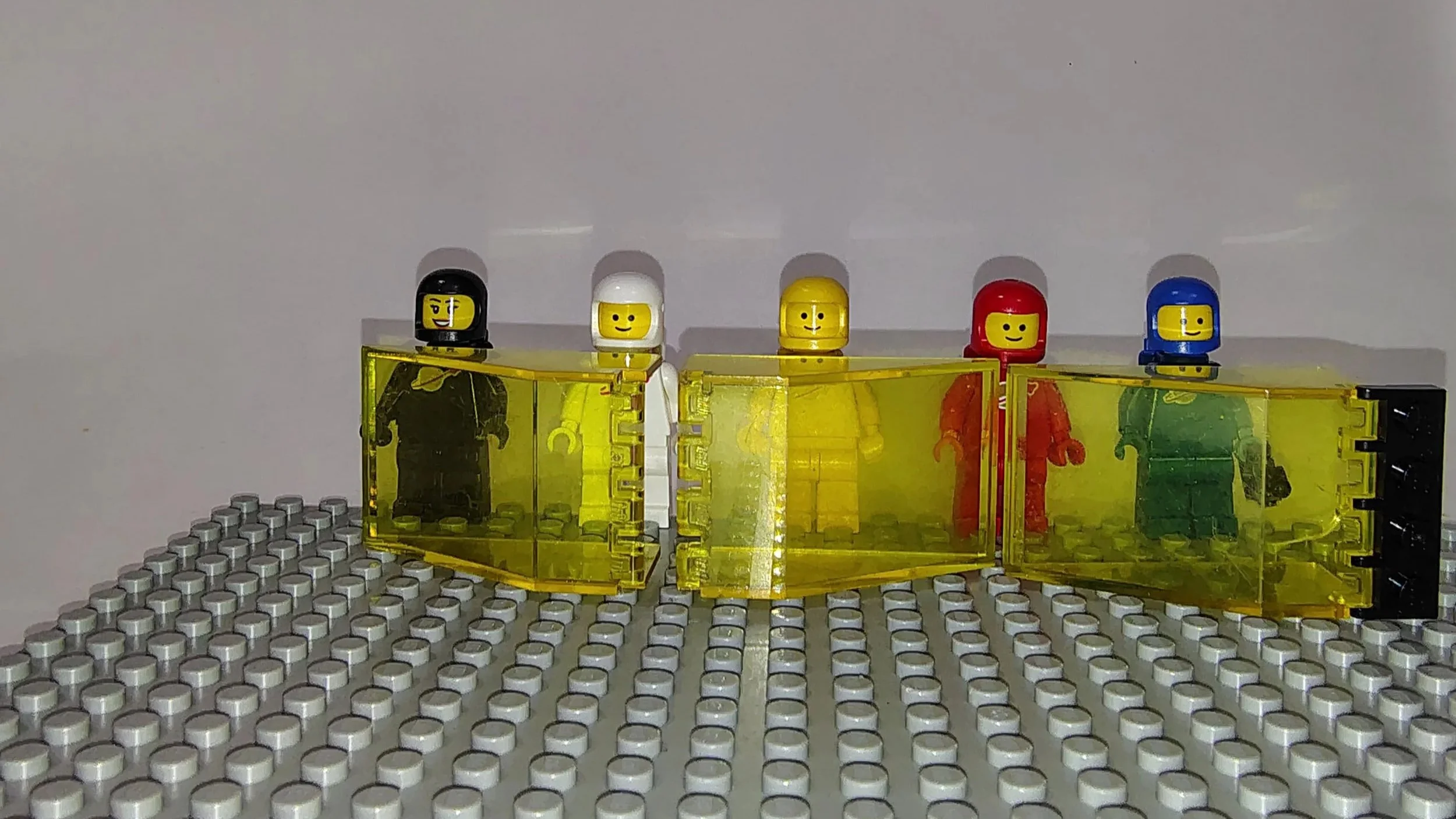
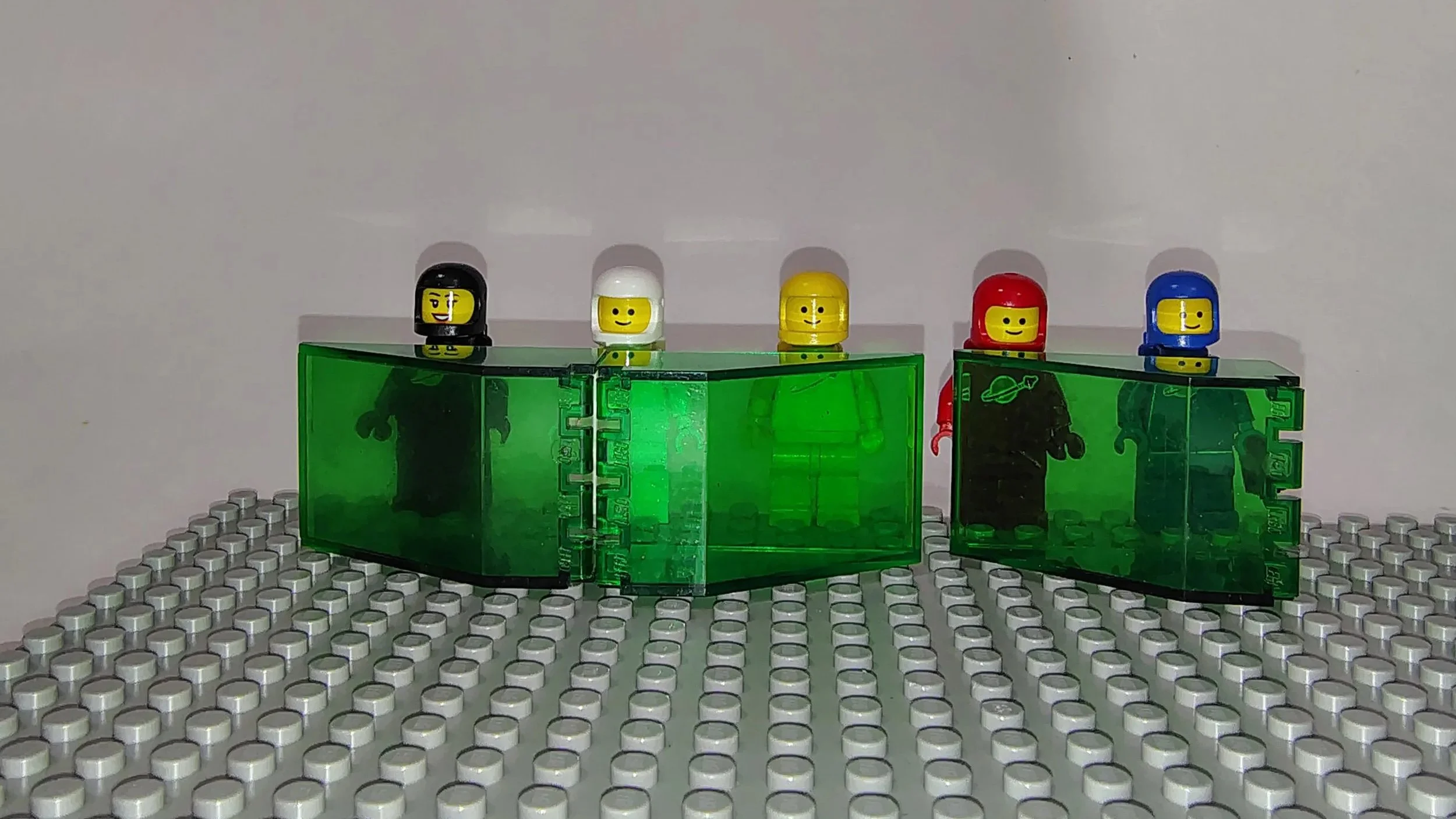
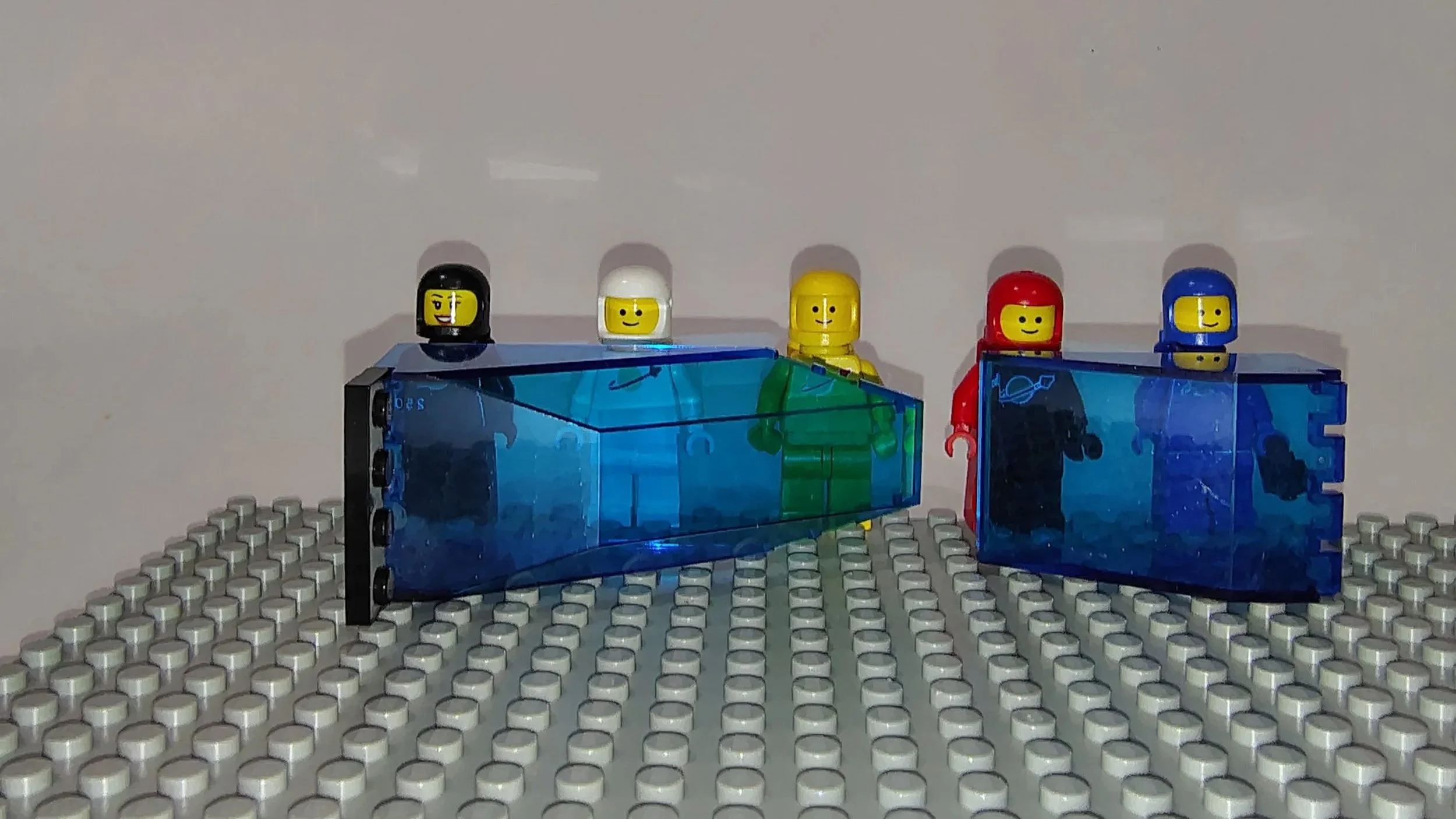
“It was only a few years ago that I heard this quote about the astronauts being color coded – each having a different role and so on. I was never informed of this. We just used whatever colors we thought looked good with the model. I often used Yellow minifigures because I thought they looked great inside the transparent blue cockpits, whereas the Red ones appear to be Black when viewed through the blue plastic.”

6802 Space Probe - Yellow Rover Driver
So even within the LEGO design community, there is uncertainty about roles and colors, when those ideas may have come and gone, or whether they existed at all!
Let’s Look at the Data
The Classic Space line consists of 72 sets, with a total of 122 minifigures. I’m excluding sets without minifigures, sets of just minifigures (6702, for example), and modern Classic Space-adjacent or revival sets such as 21109 Exo-Suit, 70816 Benny’s Spaceship Spaceship, SPACESHIP, and the 10497 Galaxy Explorer). Red and White were the only colors from 1979 to 1981 and had a total of 38 and 30 figures, respectively. Yellow was introduced in 1982 and had 31 figures. Finally, Blue and Black arrived in 1984 with 14 and nine minifigures, respectively.
I ultimately decided on two main categories of jobs (Pilots and Crew), with subcategories for each. This creates six broad job descriptions:
Pilot - Canopy: Astronauts with enclosed cockpits.
Pilot - Open: Astronauts who often pilot smaller craft with open cockpits.
Crew - Rover Driver: Astronauts who drive wheeled vehicles.
Crew - Base Crew: Astronauts who work at a base.
Crew - Walker/Operator Crew: Astronauts who operate walkers/giant robots/other things.
Crew - Other Crew: Astronauts who come with a spaceship/rover/etc. but aren’t the operator.
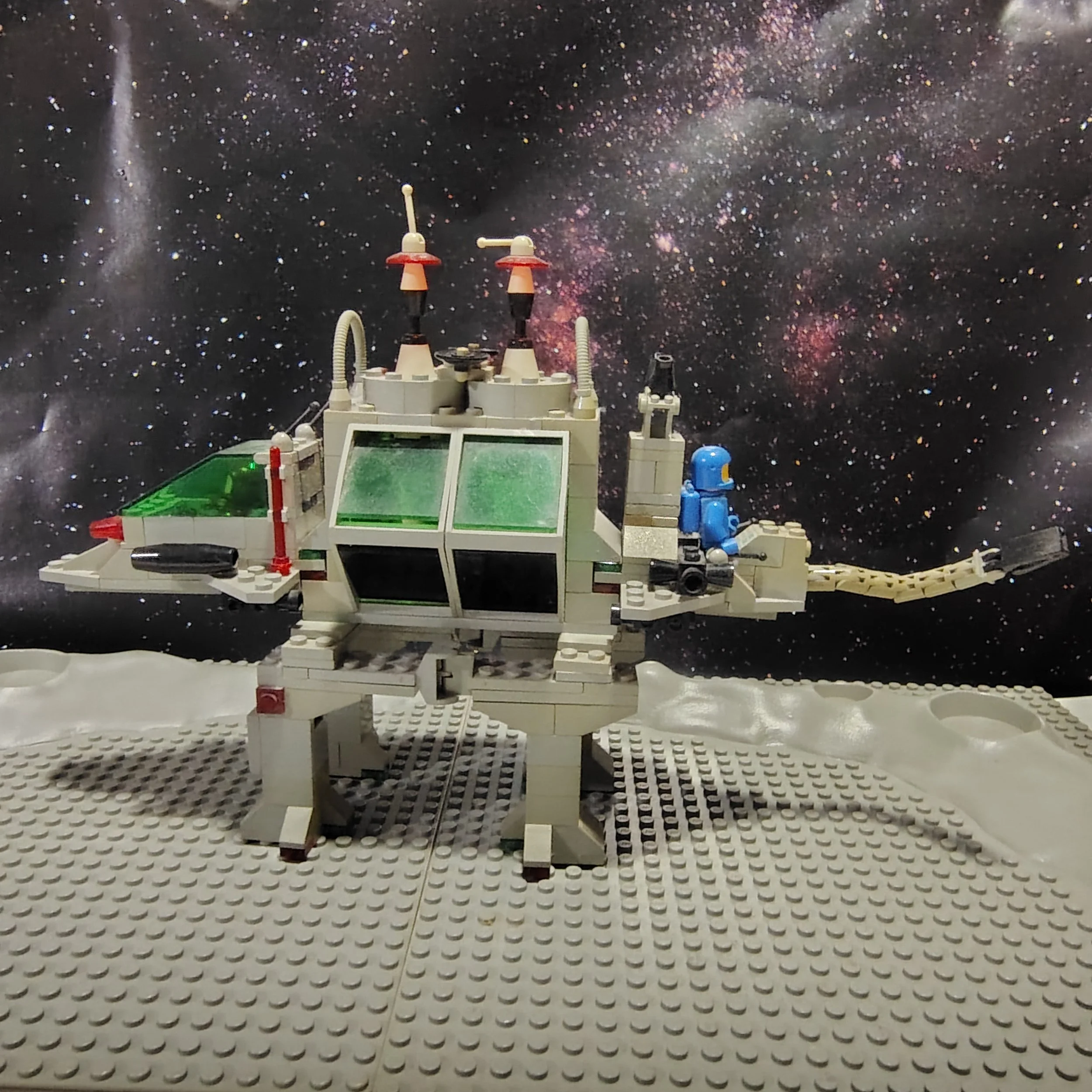
6940 Alien Moon Stalker - Red and Blue MiniFigs walker crew
My data is derived from the box art in LEGO Space and Brickset images. In older sets especially, there can be conflicts between box art, instructions, and other images, so I gave box art precedence. However, let’s talk about some outliers and oddities in the data.
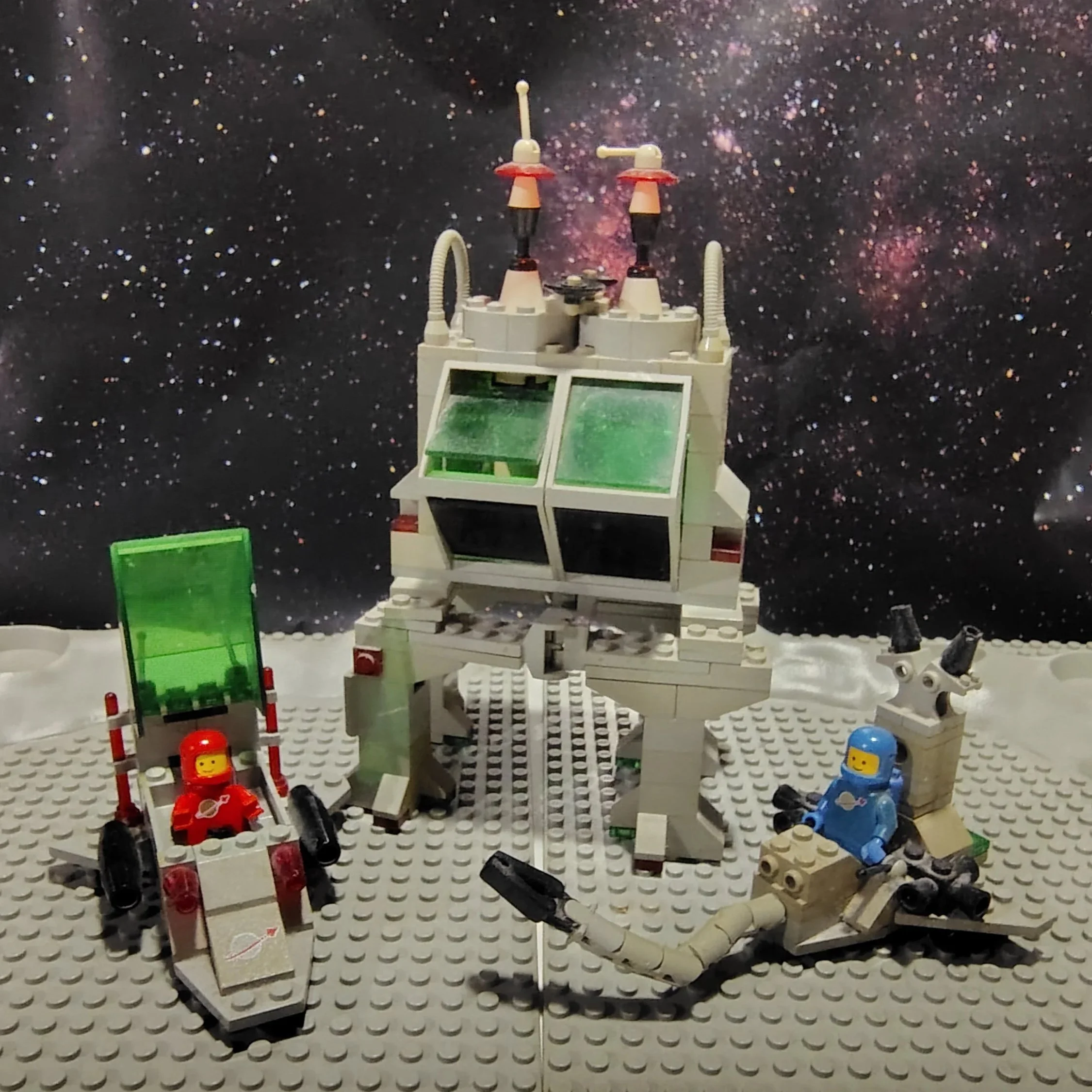
6940 Alien Moon Stalker - split into components. One of my all-time favorite sets!
6940 Alien Moon Stalker, which is one of my childhood favorites, is a walker with two detachable ships containing Red and Blue astronauts. So, how did I categorize it? Clearly, it is a walker, but the Blue astronaut is depicted in the open-cockpit ship with the claw, and the Red astronaut is in the ship with a canopy. I chose to put them both in Walker Crew, as that is the primary set function. I could have split their classifications between Walker Crew and Pilot roles, but I tried to stay away from half roles, with the exception of two sets.
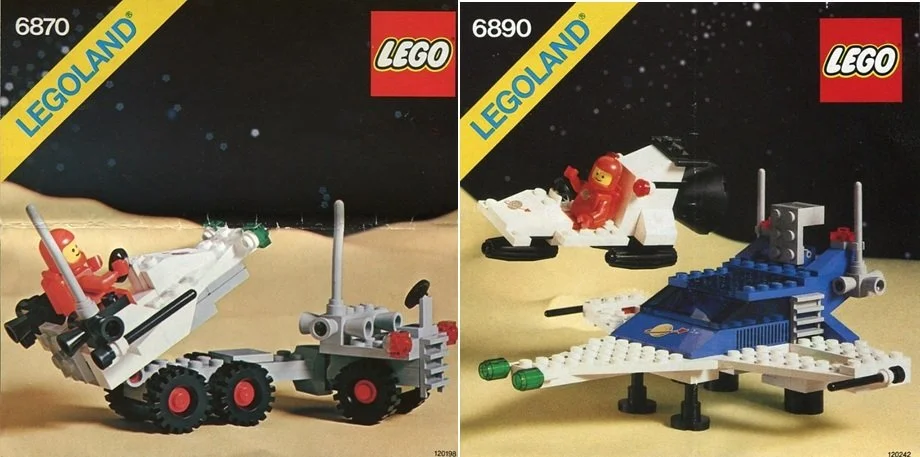
6870 Space Probe Launcher and 6890 Cosmic Cruiser - What’s the Red Minifig’s Job? Images from Brickset.com
The dreaded half roles appear in 6870 Space Probe Launcher and 6890 Cosmic Cruiser. Both sets come with a dual-vehicle setup. 6870 has a rover and open cockpit ship, while 6890 has a closed-cockpit ship with a smaller open-cockpit ship and only one figure. The box art for both depicts the Red astronaut in the open cockpit, but clearly they are meant to operate both. Furthermore, the open cockpit craft is the pilot station for the closed cockpit craft in 6890! I felt the only good solution here was to count the figures as half of each role.
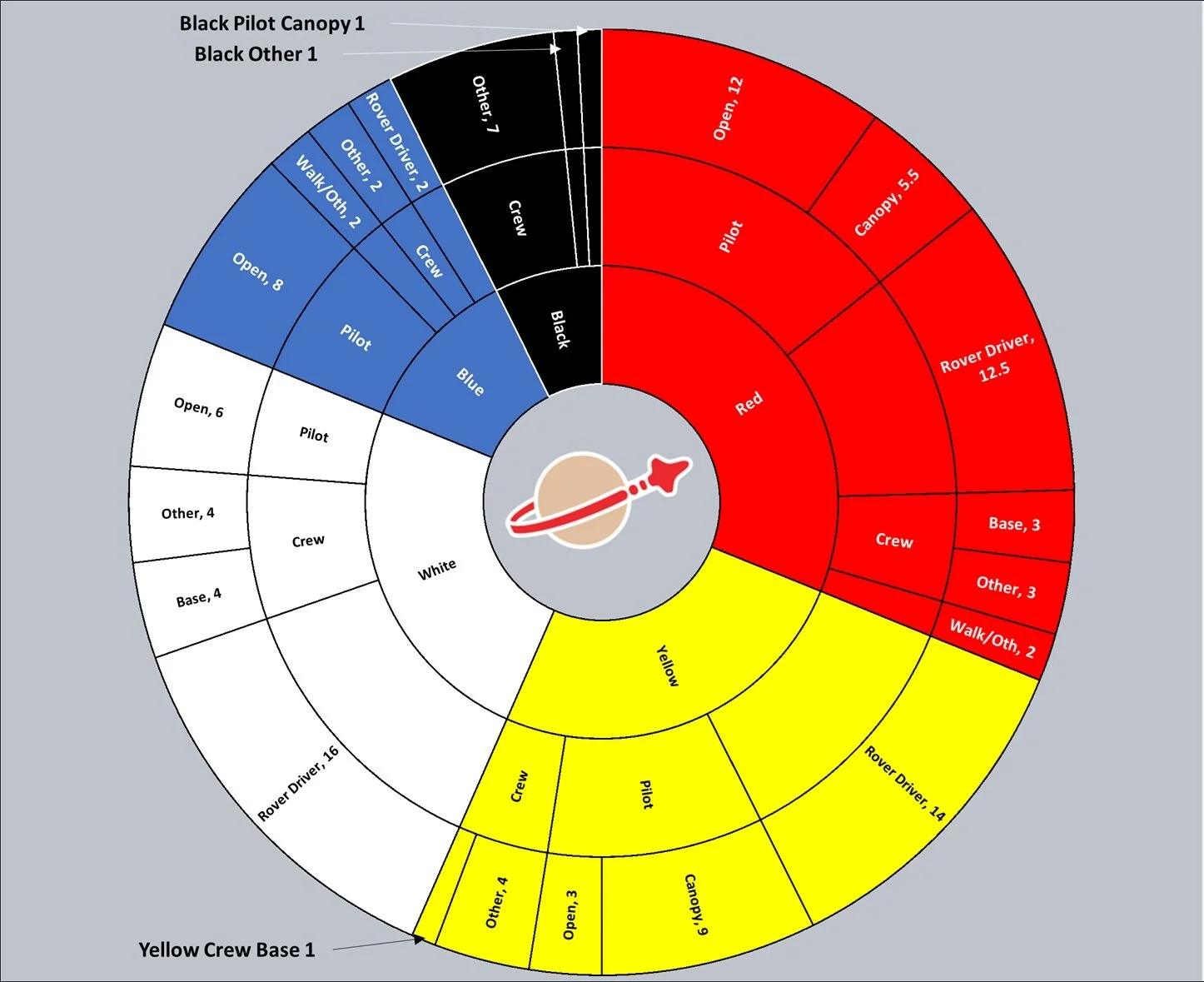
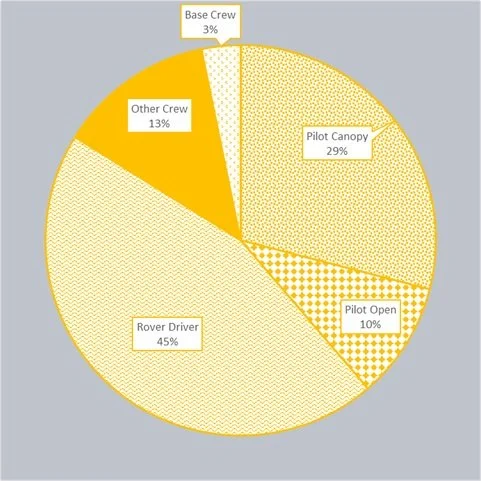
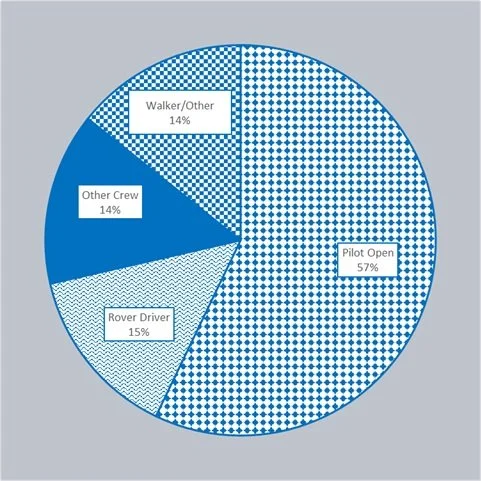
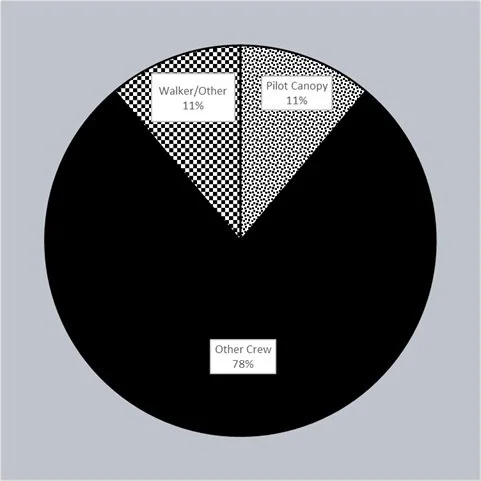
Look at that fancy layered pie chart! You can clearly see how roles and colors are divided across the Classic Space range.
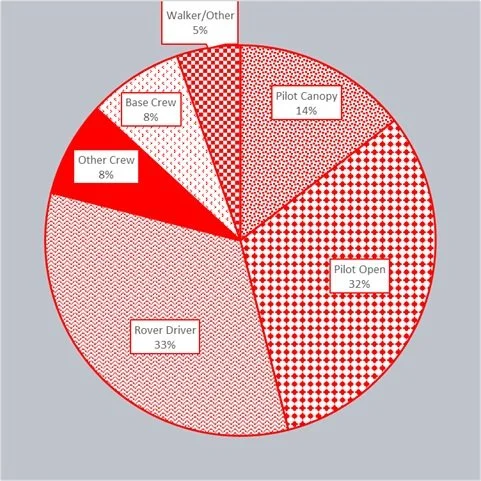
According to the data, out of the 38 Red astronauts, almost half are pilots (17.5 minifigures, 46%). Yellow astronauts have 12 pilots, with 9 flying in closed cockpits. I call this the “Tveskov Effect,” since he avoided Red because it did not look red through the cockpit canopy.
Blue has eight open-cockpit pilots, representing 57% of all Blue astronauts—and Blue has less than half the total figure count of Red, Yellow, or White! Had all five colors been active from the start and ended up with around 30 figures each, Blue would have had around 16 or 17 open-cockpit pilots (assuming all other trends remained the same). How’s that for supremacy in the Pilot seat?
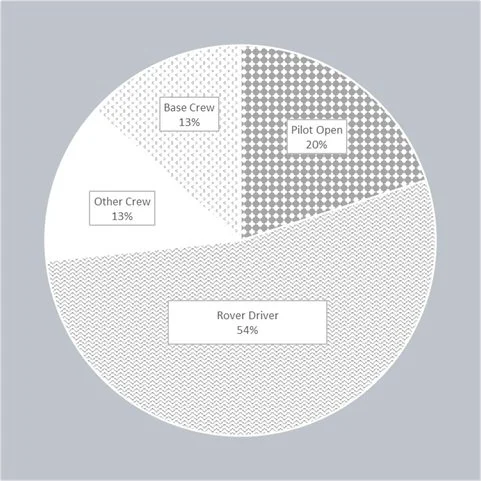
Overall, I think specific roles may have been intended when the line started, as can be seen in the ratio of Red to White pilots. However, that seems to have been left behind with the introduction of the other colors. The raw numbers make Blue and Black look less significant, but combined they have fewer figures than any of the other three colors! I don’t believe the data supports truly defined roles in Classic Space minifigures.
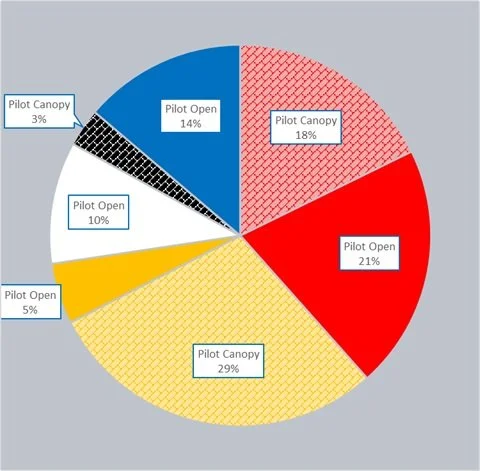
Back to the Futron!
I ran the numbers for Futron, but it was much less interesting. As Tveskov said above, the Red didn’t look good under the blue canopies and only appeared in 6953 and a minifigure pack (where I have my one Red Futron figure from).
6828 Twin-Winged Spoiler
There are no White Futron astronauts. Yellow has 13, Blue has six, and Black has three. Red was supposed to make a return in SeaTron with Red canopies; however, SeaTron eventually became Aquazone and thus Red Futron-style minifigures remain scarce.
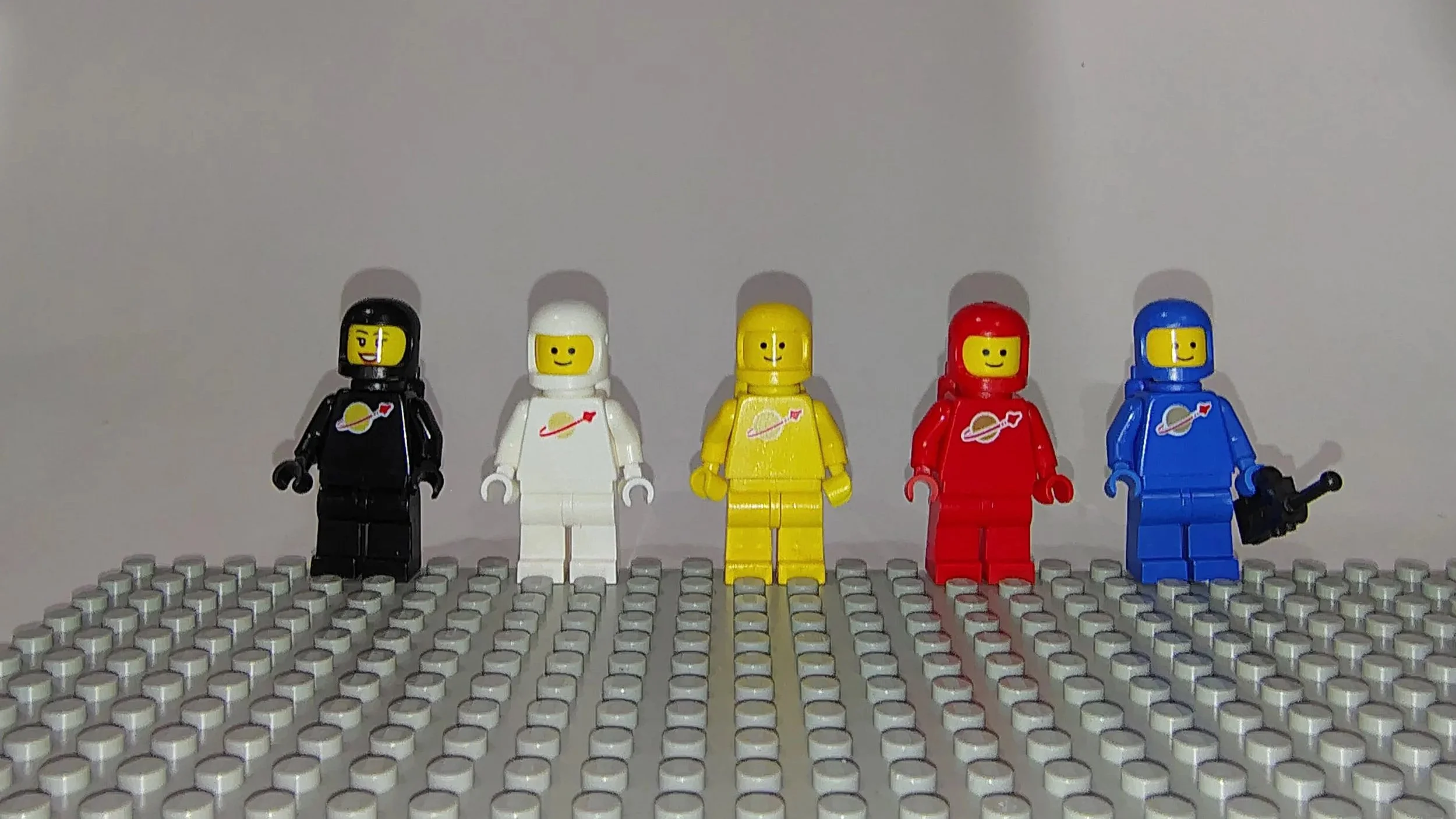
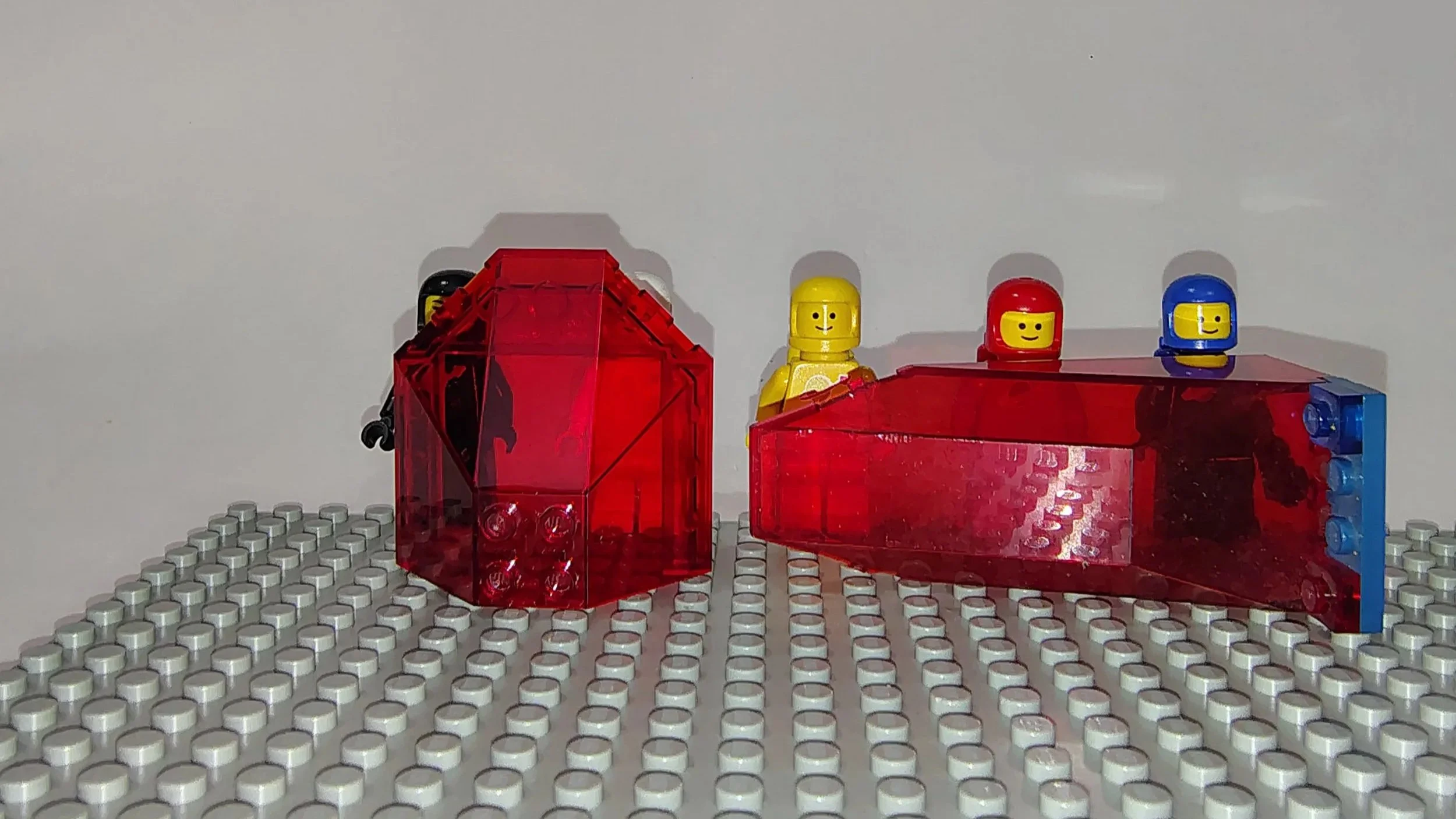
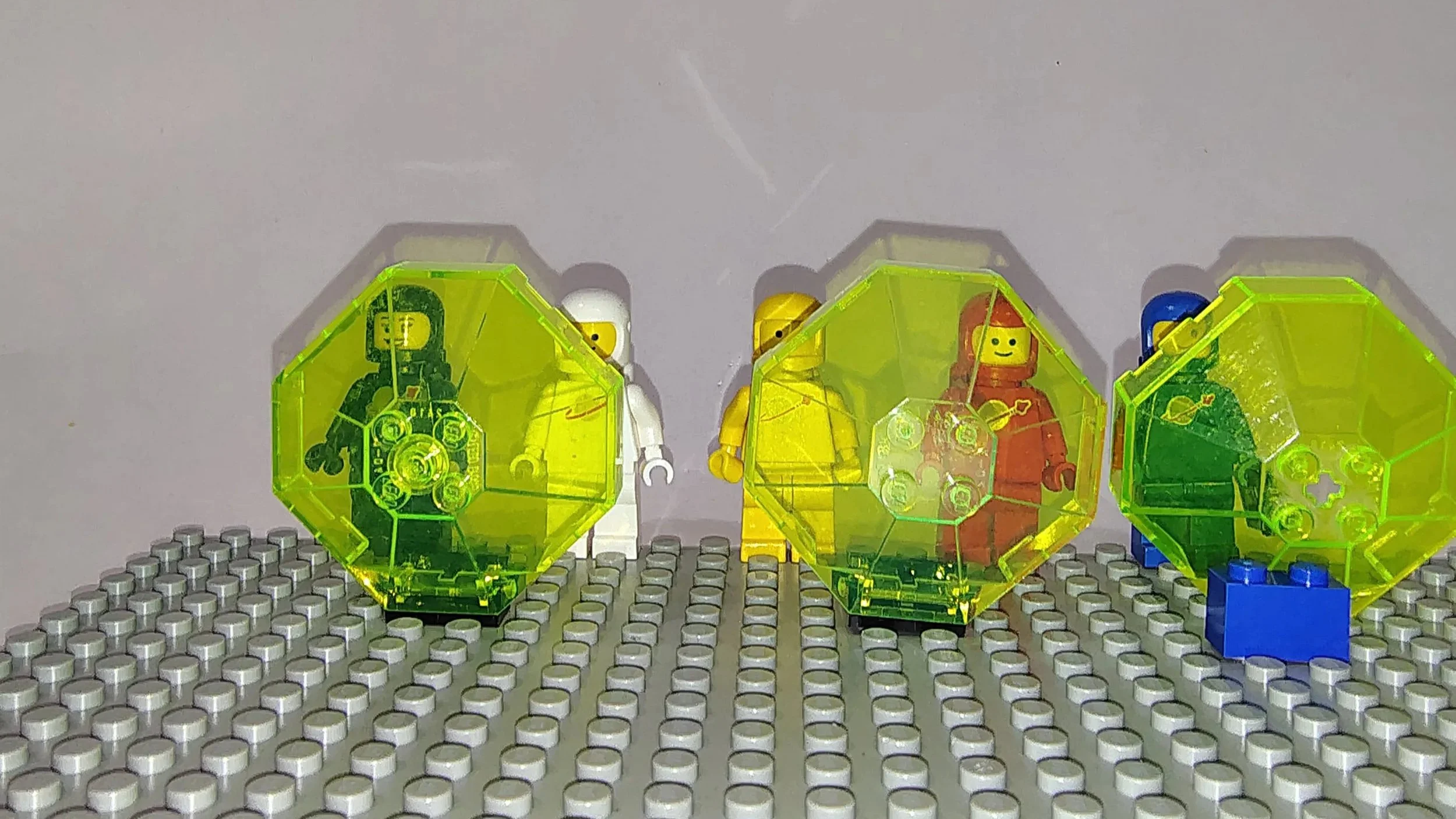
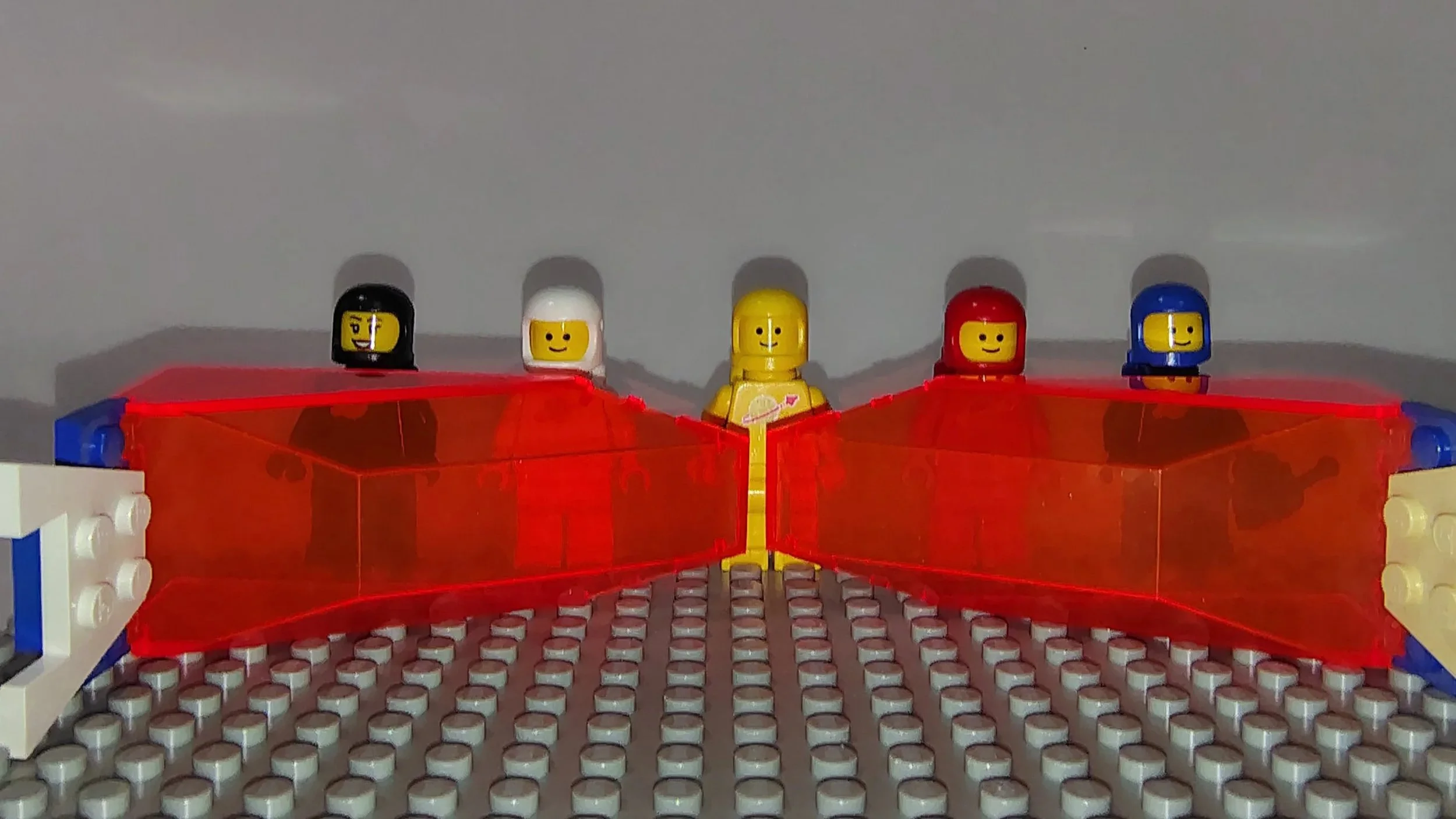
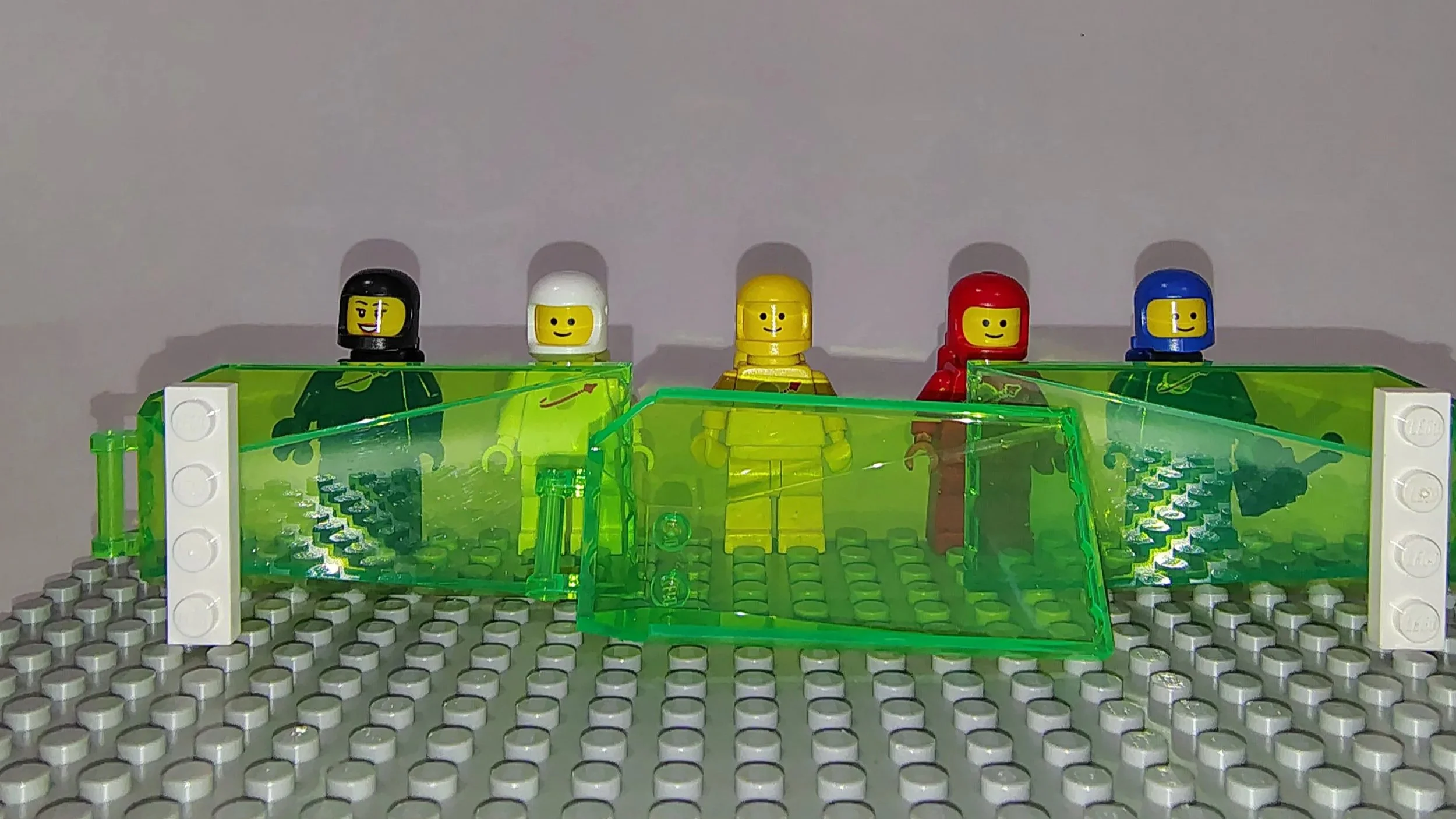
However, Tveskov’s comment that “I often used yellow minifigures because I thought they looked great inside the transparent blue cockpits, whereas the red ones appear to be black when viewed through the blue plastic,” got me thinking about canopy colors and astronaut colors, so I took some comparison photos. It’s quite clear that more saturated canopy colors filter more light, making the astronauts appear different shades than they do under less-pigmented canopies. This was likely also a factor in the Space Police I and other Space theme color choices.
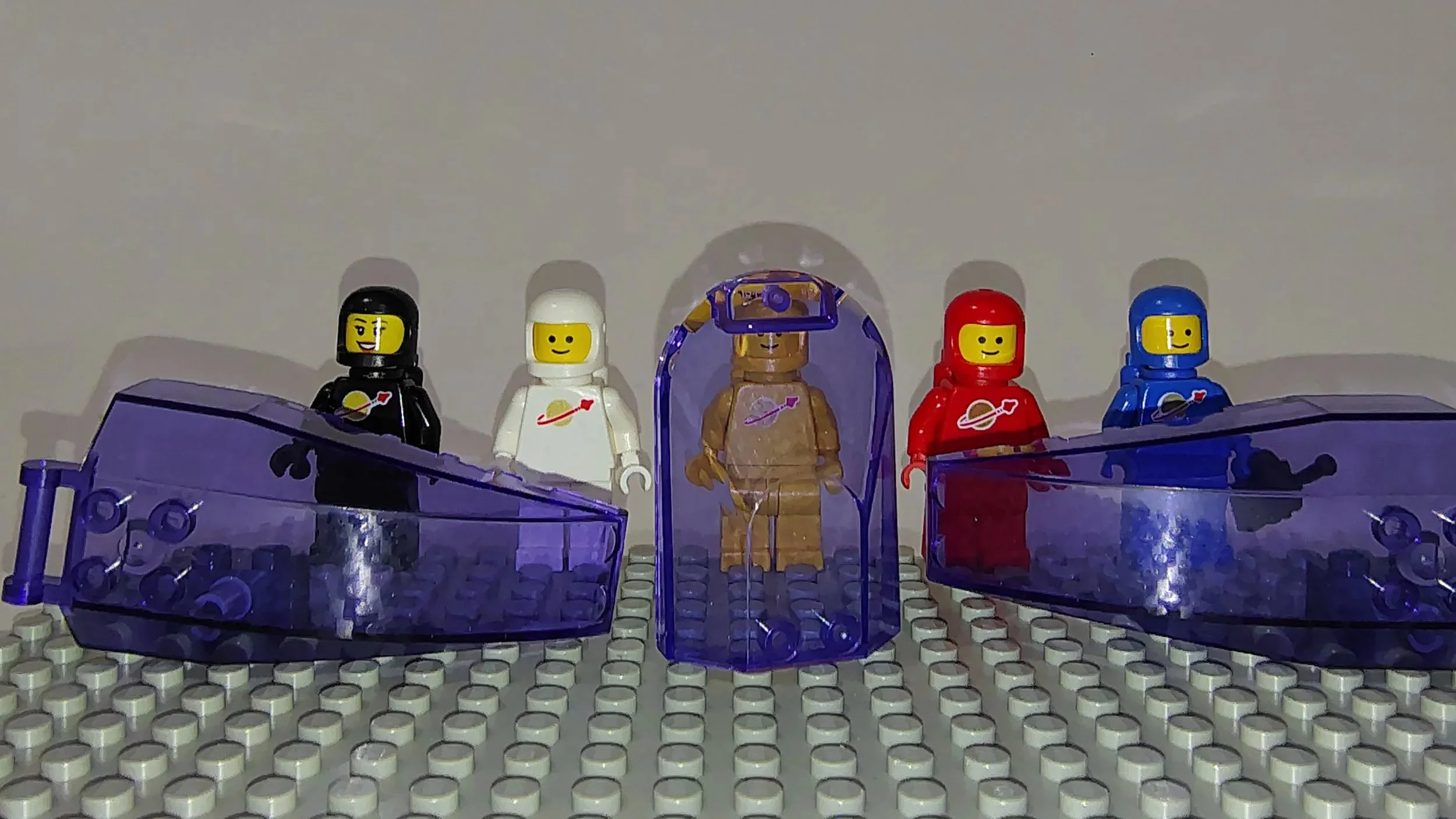
Colorful Space
I think the data shows that there was ultimately no clear connection between color and role once Yellow, Blue, and Black entered the Classic Space line. However, I have no illusions that this article will end the debate. The data can be interpreted in different ways, as I’ve shown above, depending on how you account for the significantly smaller number of Blue and Black minifigures. And with the recent explosion of other “Classic Space” colors, any job inventory is up to the builder.
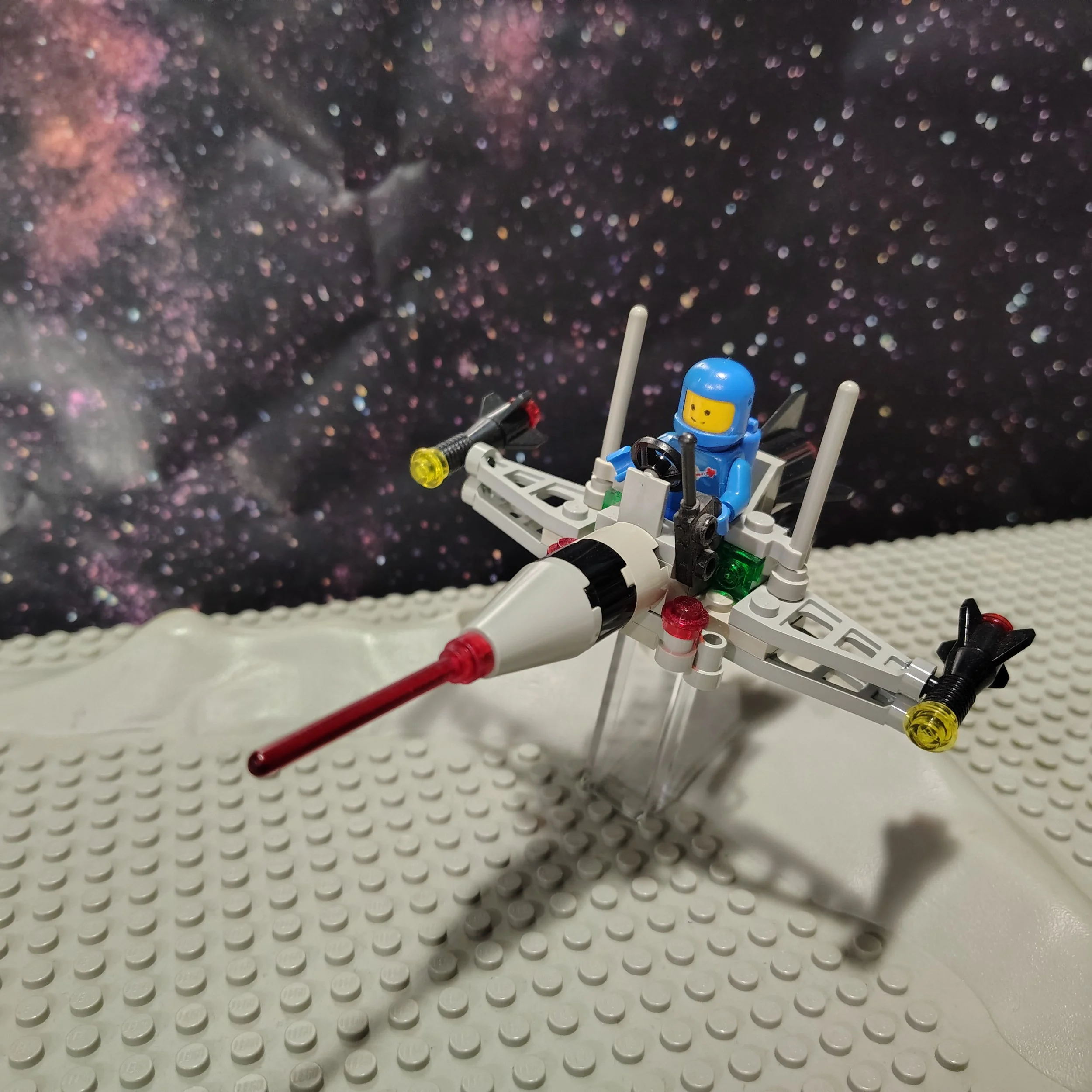
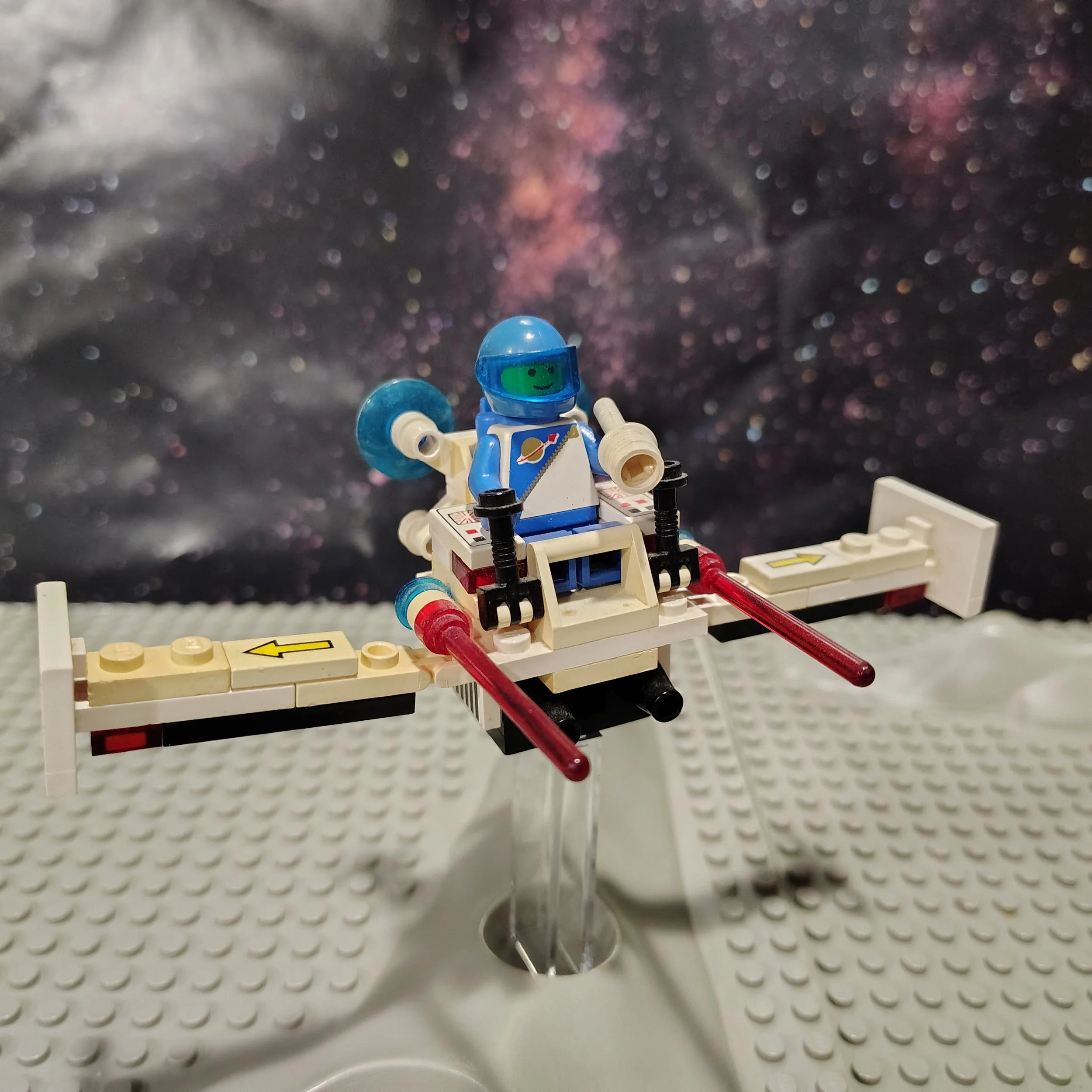
6824 Space Dart 1 - Open Cockpit Blue Minifig Pilot
Blue always was and will be the BEST!
What job did you imagine each Classic Space astronaut color had? Let us know in the comments below!
Do you want to help BrickNerd continue publishing articles like this one? Become a top patron like Paige Mueller, Rob Klingberg from Brickstuff, John & Joshua Hanlon from Beyond the Brick, Megan Lum, Andy Price, Lukas Kurth from StoneWars, Wayne Tyler, Dan Church, Roxanne Baxter, and Marci Hollingsworth to show your support, get early access, exclusive swag and more.