The Conversation Piece #16: Strengthening Your Skills
/
“The Conversation Piece” is a monthly BrickNerd series about creativity and building with LEGO authored by our friends over at the Builder Improvement Initiative (BII), a Discord-based community that helps LEGO builders of all levels get better at their craft through knowledge-sharing and constructive feedback.
Have a question you would like us to consider for a future article? You can submit it here. Enjoy!
How to Improve
Everyone has a different reason that they enjoy building with LEGO (honestly, a topic worthy of its own article). Regardless of the motivation, like any other creative craft there is a common thread which is the desire to improve. For us at BII, it matters enough that we’ve made it our main focus (it’s in our name)!

In past articles, we’ve discussed various theories surrounding LEGO building. We hope that through these articles, readers can take something away and utilize the techniques discussed in them to inspire improvement. In this article, however, we are going to look at improvement from the 10,000-foot view. It all begins with setting your improvement goals.
Setting “SMART” Goals
Setting goals for yourself is one of the most powerful tools at your disposal when learning or strengthening a skill. Goals provide you with milestones that provide a sense of progress and help keep you motivated. As you look to build upon your MOC skills, choosing goals and milestones can help strengthen your journey to improvement. What the focus of these goals are will depend on what building areas you are looking to work on.
In all cases, to get the most out of goal-setting as a tool, any goal you set needs to be a “SMART” goal. SMART is an acronym that stands for Specific, Measurable, Achievable, Relevant, and Time-bound. The framework is a systematic and simple guide to goal-setting that ensures the goals are clear, focused, and practical when it comes to achieving improvement:
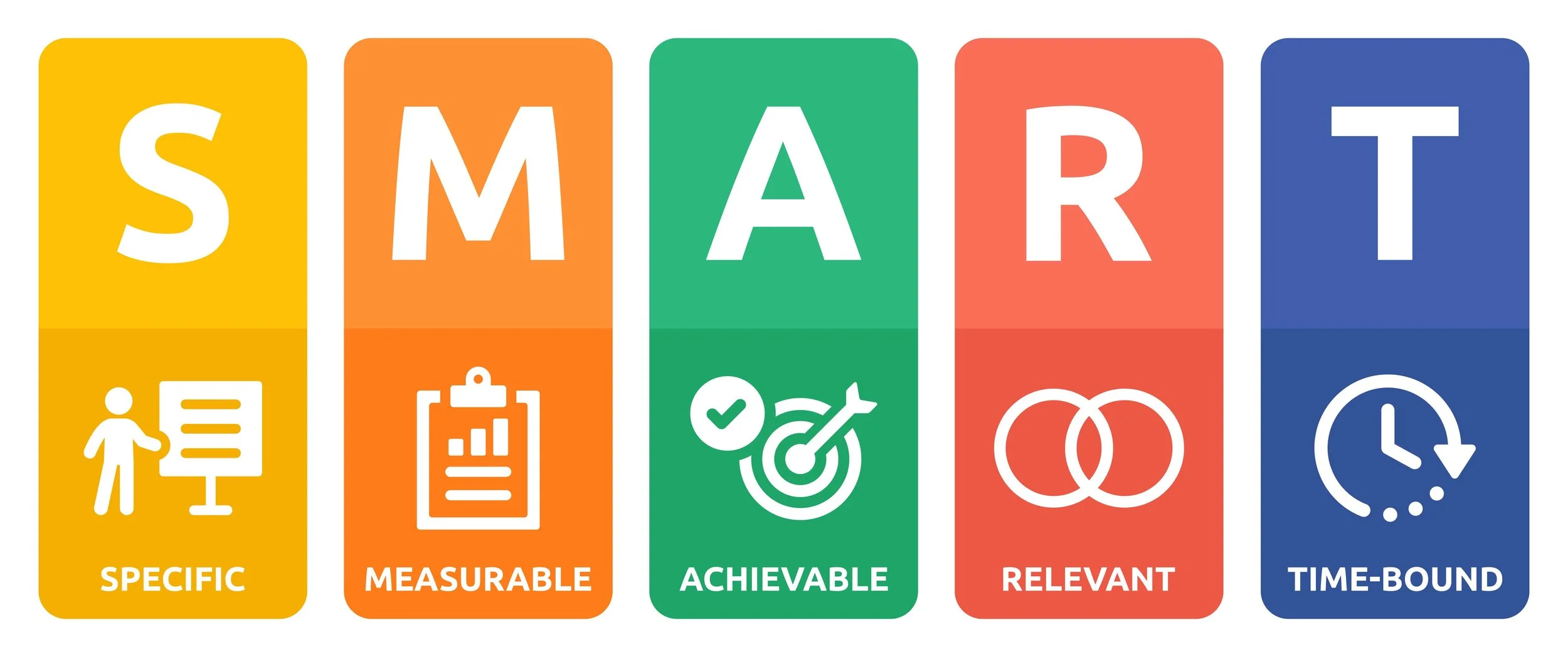
Specific: The goal is concrete and tangible.
Measurable: The goal has an objective measure of success.
Achievable: The goal is challenging, but should be achievable with the resources available.
Relevant: The goal is meaningful, and contributes to the overall objective.
Time-bound: The goal has a deadline or a timeline of progress milestones.
Challenge Yourself
If you feel like you want to build more often or that you spend too much time on a single project, one SMART goal could be challenging yourself to build more often. That can force you out of your usual building habits. Builders can self-impose a build quota, aiming to create a specified quantity of builds within a time frame (i.e., one build per week over a month). If you find yourself struggling to complete MOCs or wind up in a state of constant refinement, these time frames can force you out of your comfort zone.
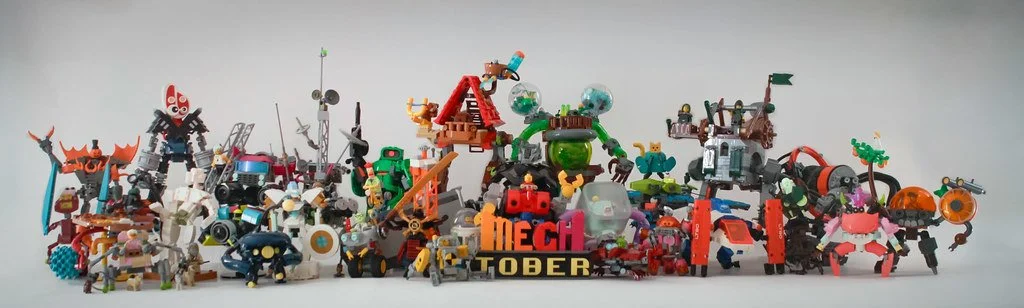
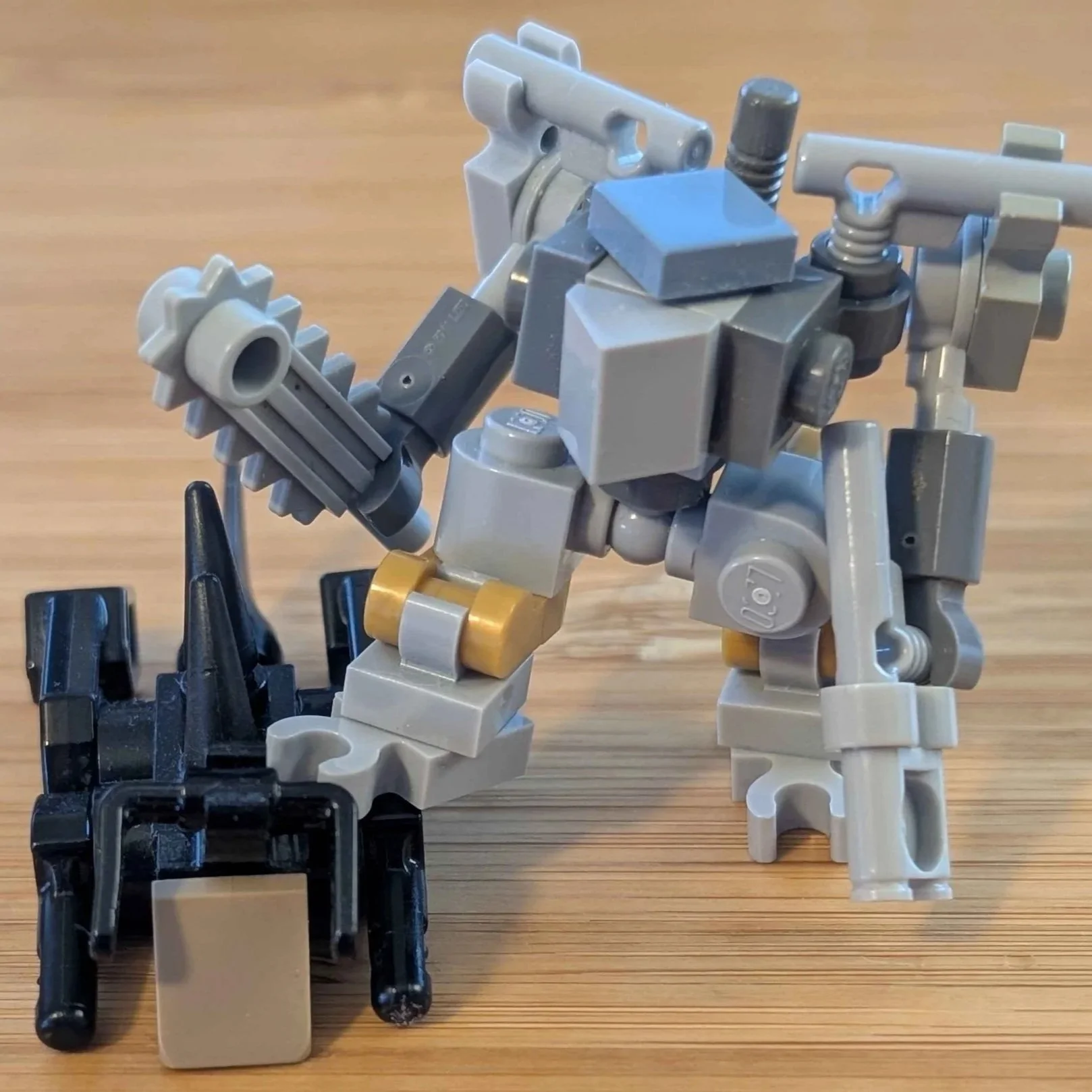
Ivybricks took the Mechtober challenge several steps beyond and built a mech a day!
For some, self-imposed challenges are hard to maintain without external support. Several annual challenges exist that provide a structured SMART-goal framework for these time-based build approaches. (Check our BrickNerd’s exhaustive list of all the recurring challenges.) Some popular ones include:
SHIPtember: Builders create spaceships over the month of September that are, at minimum, 100 studs long.
Mechtober: Builders create one custom mech a week over the month of October.
Febrovery: Similar structure to Mechtober but with rovers… and in February!
RogueOlympics: Weekly prompts from March-April, with a max of 101 parts.

Challenges like these can also be milestones of their own (i.e. the “Time-Bound” portion of SMART goals). Building for the same contest each year gives you a frame of reference for your improvement journey; each year is a culmination of the skills you’ve strengthened since the last. Finding contests that require skills you want to improve upon gives you the opportunity to hone specific aspects of your building.
Some of the big annual contests include:
Bio-Cup: A constraction-based building gauntlet; good for those seeking to improve on character building and speed building.
Iron Forge: An annual gauntlet where participants are assigned a seed part to use in creative ways, serving as tryouts for Iron Builder: good for those seeking to improve on parts usage and speed building.
Summer Joust: An annual 2-month competition celebrating the fantasy genre. Each year boasts both new and returning categories, such as figbarfs, vignettes, and collabs.

Get Organized
In production settings, “lean manufacturing” practices seek to reduce or eliminate wastes in processes to increase efficiency and output. In terms of LEGO building, organizing your collection and keeping your most-used parts within easy reach can help streamline the build process, allowing you to focus on builds themselves (rather than wasting time searching for parts). How you approach building can – and should – influence how you organize your building space.
Sorting methodology is an important part of where you start your builds. Most LEGO builders are familiar with the age-old conundrum of sorting by color versus by part; in reality, everyone ends up with some combination of the two. Your ratio of color-to-part organization depends on many things, including collection size, available space, budget, and most importantly, what you want to build.
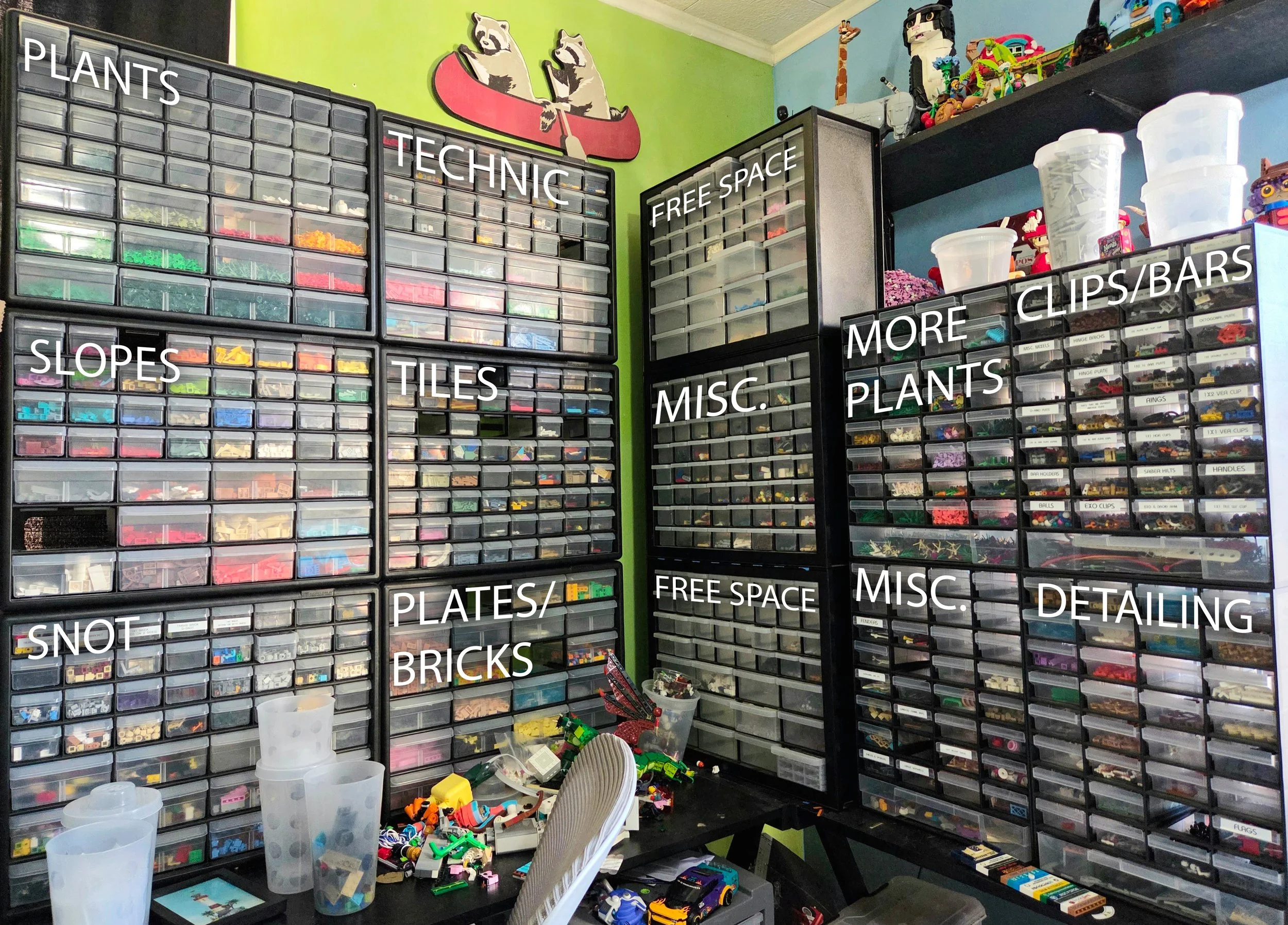
Author Miscellanabuilds, predominantly a character builder, keeps his most used parts in Akro-Mils on his desk, allowing for easy access for 80% of a build.
Prioritizing limited space and accessibility for your most important parts is necessary to ensure your creative spark doesn’t get sidelined. If you like to draw inspiration for builds from Nice Part Usage, you may dedicate a significant portion of your organization system to weird and unusual parts. If you start from a more technical base, your main drawers may be filled with brackets or Technic. Being able to find what you need when you need it is crucial to immediately translating your spark of inspiration into a creation.
While good organization makes things easier on the building front, it can be easy to get carried away and end up over-sorting. Excessive sorting, such as separating every part by color and shape or sorting out parts you rarely use, can be unproductive and take away from your limited build time. Additionally, sorting everything rather than prioritizing certain pieces can make your system less efficient, as there are more drawers, bags, or bins to go through when searching for parts. Most people have limited LEGO space (or end up with limited space once their collection grows!), so it is important to focus on the parts you will use the most first, then find where everything else can go.
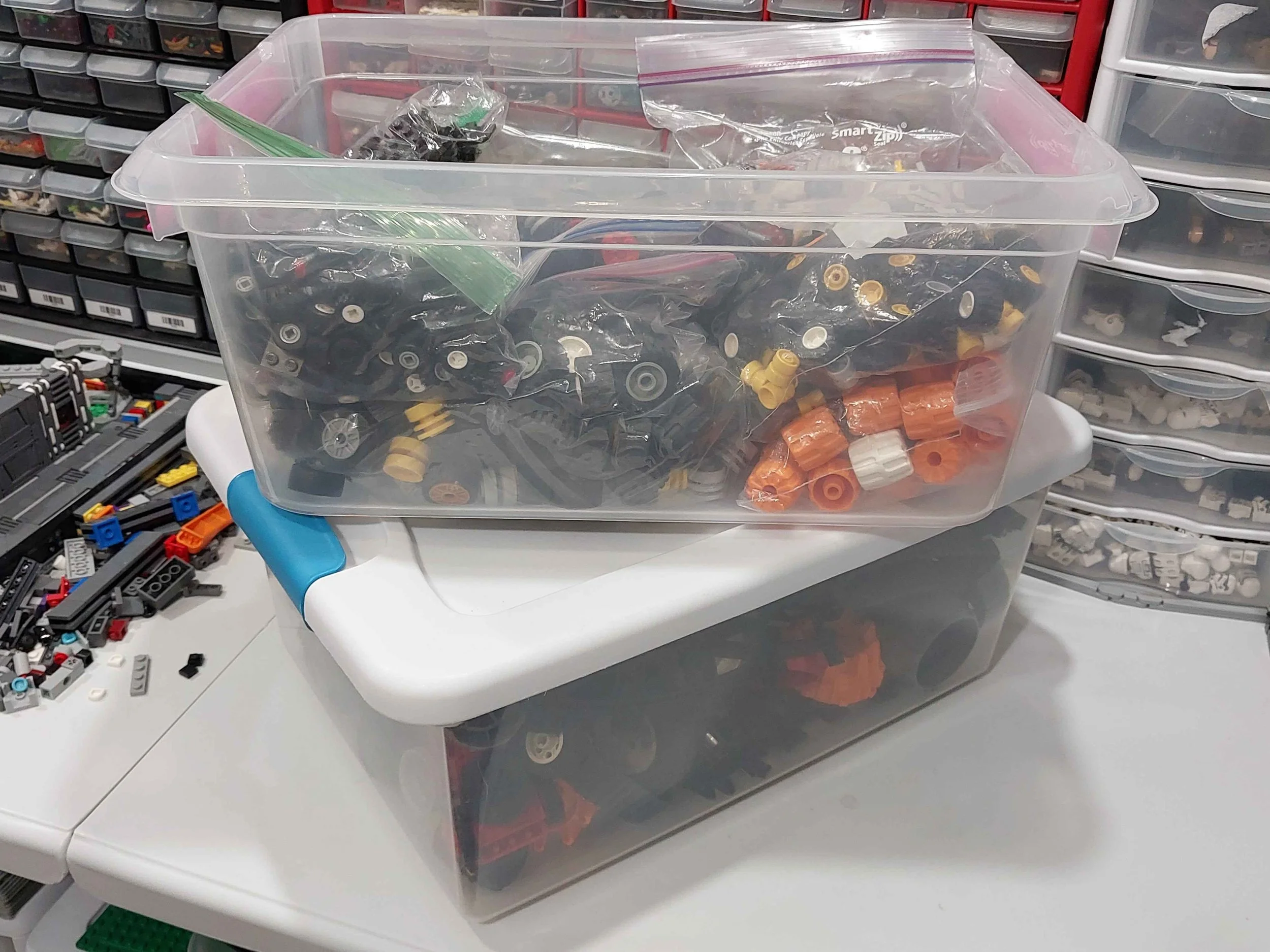
As a builder who works more with flying vehicles, ThankTheLEGOMaker sorts wheels and tires into loose categories and stores them in bins instead of more easily-accessible drawers.
Over time, your building style and approach will develop. The way you sort can play a part in that; having pieces in more accessible locations can inspire you to use them more frequently. Maybe your collection size grew too much to fit in your current sorting system, or you’ve gained an interest in a different building style, such as character builds instead of terrain. The process and system of organization is what enables you to create. If how you create changes, your sorting system should too.
Broaden Your Horizons
As you improve, you naturally may find your growth beginning to plateau, reaching the point where your current skills can’t significantly develop without external support. By broadening your horizons, however, you can help keep your growth linear and reduce stagnation. In practice, this occurs naturally as you engage with the broader world: both within LEGO spheres (like BrickNerd!) and outside them.

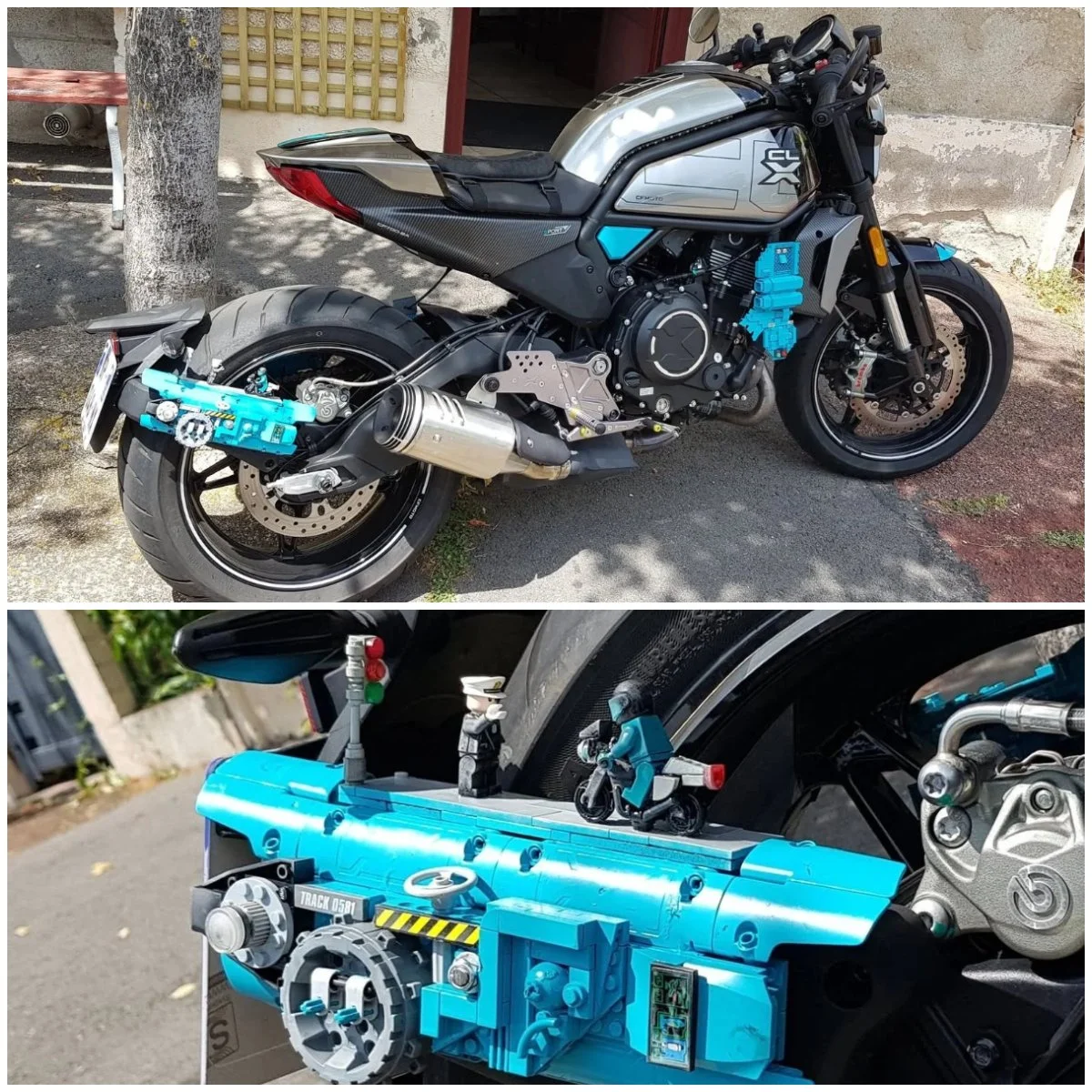
Broaden your horizons! (Credit: MySnailsEatPizza)
Exploring other genres is a great way to broaden your horizons (and in turn, broadens the horizons of the genres themselves). For instance, a large portion of builders begin their LEGO journey in the Star Wars space (pun unintended, but recognized). Given the IP's extensive reach, it is quite popular in the MOC space and easy to find reference sources and builds. However, a common trend among these builds is that they can often be similar and lack identity. While the galaxy has a plethora of interesting locations, planets, and vehicles, builds often tend toward greyscale color palettes, blocky layouts, and overdone locations.
Given that these types of builds are the most popular, simply staying within the confines of the LEGO Star Wars community reduces the amount of “different” builds you see and can lead to homogenization. However, by branching out, you can expose yourself to other builds and builders you can learn and draw inspiration from. For example, plenty of Star Wars locations include temples, ruins, and landscaping: motifs that are shared among other themes. One can look to builders in these other areas, such as prolific fantasy builders, to greatly increase the pool of builds you can draw inspiration from. By merging the build techniques of fantasy builders with the Star Wars aesthetic, you can create builds that stand out!
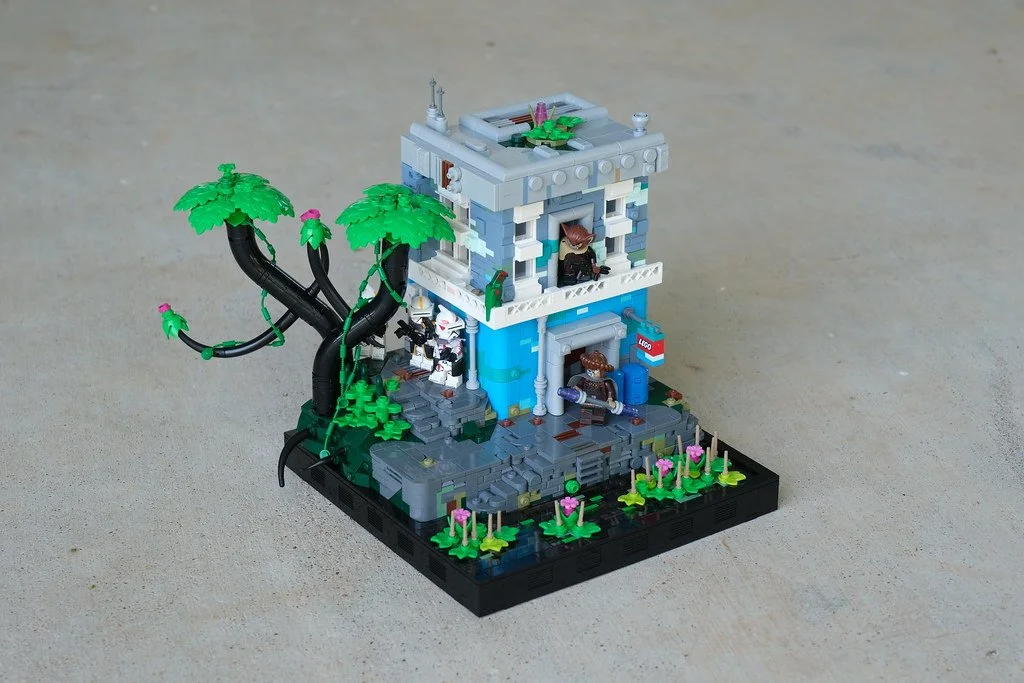
TTROOPER-’s "Couriers of Cruelty" is a great example of a Star Wars build that draws inspiration from other genres of builds to create a unique jungle scene.
The same principle applies outside of the confines of LEGO. While the LEGO community is chock full of talented builders and insightful articles, much of the theory surrounding the hobby pulls from other hobbies, skills, and creative fields – most being much more widespread than ours. Resources explaining the theories of design, color, shape, and storytelling are plentiful in these creative mediums. By immersing yourself in other crafts, passions, and pursuits, you perceive your world through a stronger artistic lens.
Learning to draw parallels between your interests can strengthen and mature your views on building and style. If you love the art of Ghibli or Shinkai movies, you may find joy in adapting their color palettes into builds. Are you an architecture enthusiast? Draw inspiration from the patterns, texture, and blocking to create a visually appealing building of your own. Dark Souls games are renowned for their environmental storytelling; likewise, incorporating small details into your builds can add a sense of realism and intrigue, encouraging the viewer to look deeper and piece together the hidden story.

Opening Scene of Makoto Shinkai’s Suzume
Engage with the Community
Broadening your horizons doesn’t often happen alone: around others, you are naturally challenged and exposed to other ideas. Throwing yourself into the LEGO community is one of the strongest improvement methods outside of building itself (see our previous article!). With the right group of people and an open mindset, others’ feedback can help you identify areas of improvement that you had overlooked. Over time, you naturally may find that the number of communities you are a part of has grown. Joining more than one community helps ensure that you get a broad range of builders and feedback, compounding the impact on your improvement process.
Communities will often lead to collaborations, too. Building with others offers the opportunity to explore principles of style deeper than you usually might. How cohesive will the collab be? How will others recognize the builds as part of a larger series? Sometimes, a collab may celebrate the different styles of its contributors; others will strive for consistency.
Committing to a collaborative project with other builders is also a form of setting a SMART goal for yourself, with Time-bound deadlines for presentation (either at a convention or online) and ultimately the Measurable achievement of a finished build. New Hashima is a masterclass in collaboration, both celebrating the styles of its builders and pulling off an impressive feat of coordination (read more about it here!).

Conventions are one of the best ways to engage with the community at large. When engaging with the LEGO community through the internet, you are at the whim of the algorithm; you may never find obscure builders, communities, or resources simply through search engines and “For You” pages. Conventions, however, offer a unique experience and are a melting pot of builders from all walks of life.
Builders often spend some time during the convention hanging around their builds and are typically more than happy to talk about them. Convention trips can be expensive, so the majority of those who attend do so out of a passion for the craft. Through these interactions, you often get insight into how others approach the LEGO hobby, learning new techniques, ways to approach complicated builds, and finding a newfound appreciation for the craft.
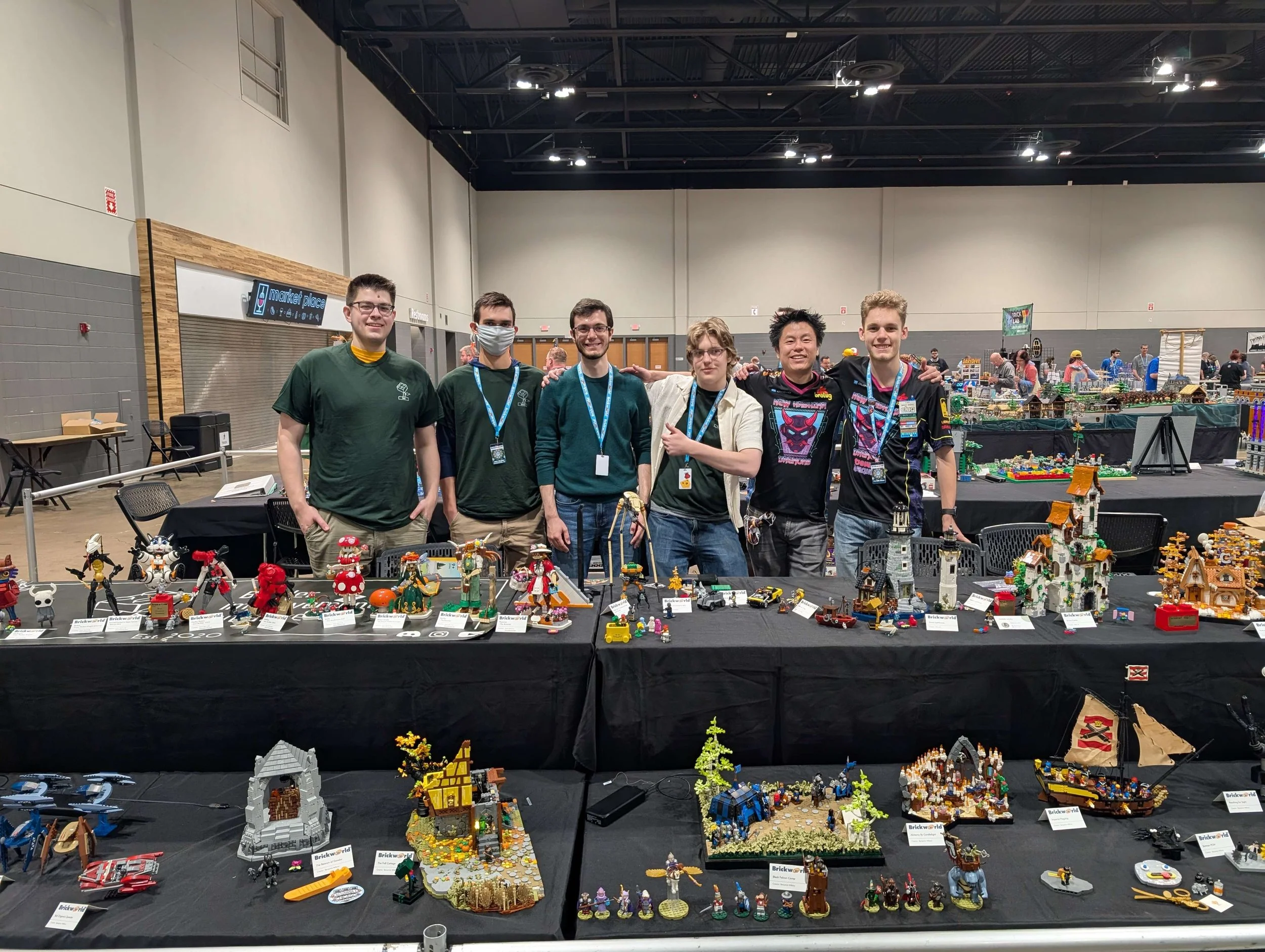
BII Convention Crew at Brickworld Chicago 2025
Above all, participating in meaningful conversations with other builders can be the strongest form of community engagement. It can be as simple as someone referring to their builds as “projects,” inspiring you to view builds more through the creative process rather than as a simple product. Other times, you may find yourself engaging in the deeper meaning and personal significance of a build and treating the process as a form of self-expression rather than simply a means of personal amusement. No person’s existence is within a vacuum: through interaction with peers, your artistic view is often challenged, enhanced, or validated.
Layers of Improvement
Improving isn’t a simple one-and-done task; it should be treated as continuous. Every build you make, every technique you learn, and every weakness you identify makes you a stronger builder.
At first, you may find yourself focusing on techniques. After all, LEGO as a medium is defined by its systems, not its tools. How do you make effective rockwork? How can you make character builds feel organic? What pieces fit together in ways that they may not have been intended for? As you build and see other builds, you will find yourself naturally learning, cataloging, and developing these techniques… or outright avoiding ones that don’t appeal to you. You could be 15 years into building, and you may still hate rockwork.
As you strengthen your techniques, you may find interest in the theory side of building. What makes a strong silhouette or a unique layout? How does the size of a build impact the build approach? Is there a specific way sorting could help improve your builds?
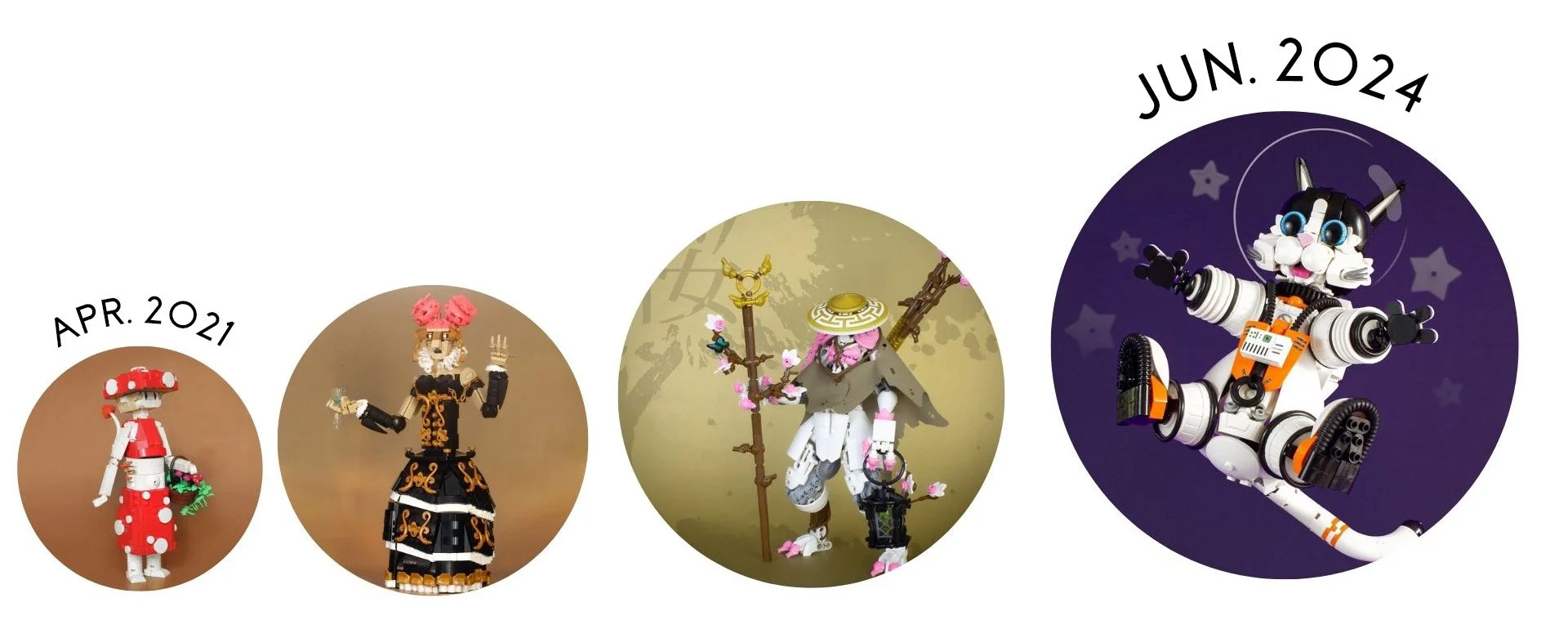
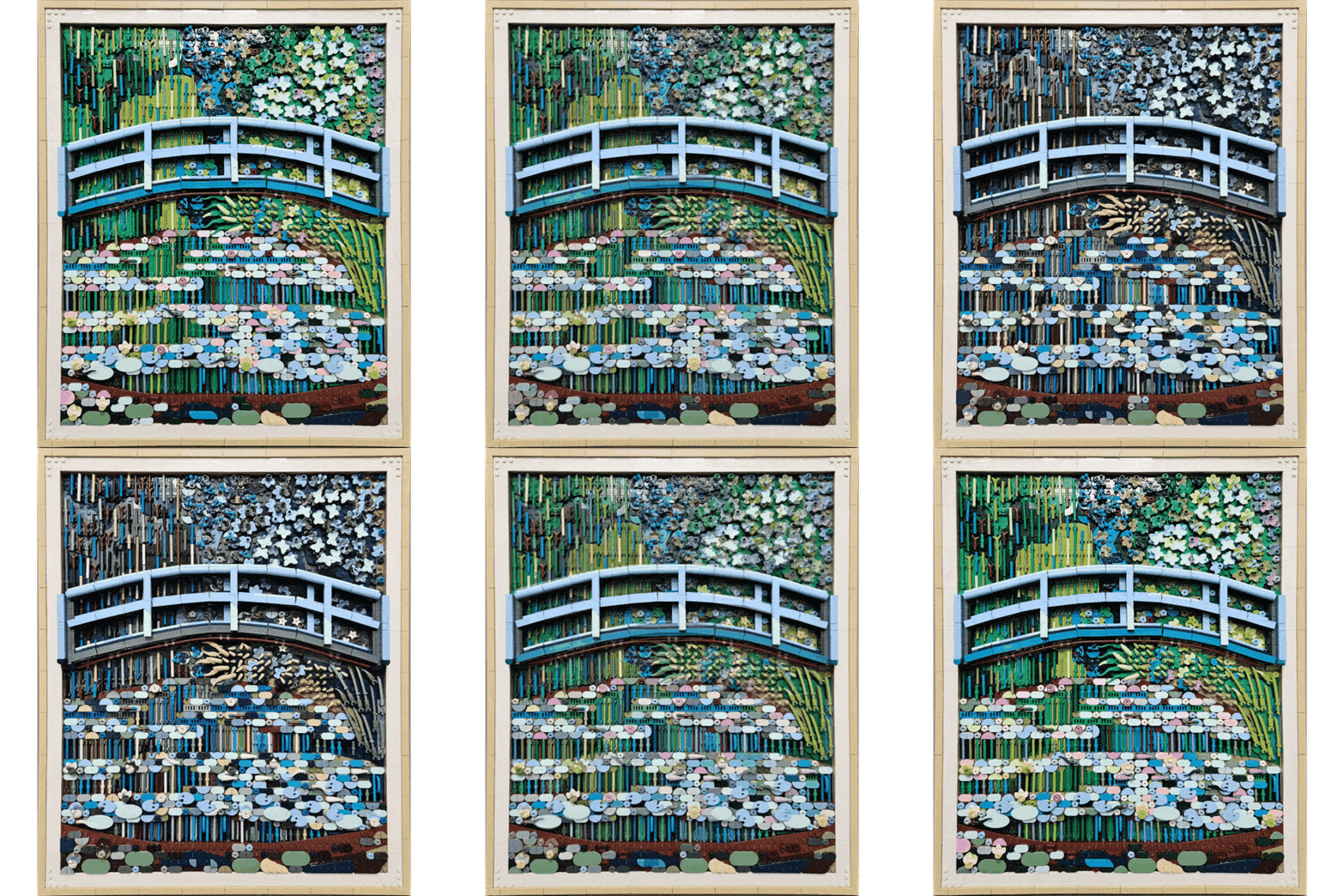
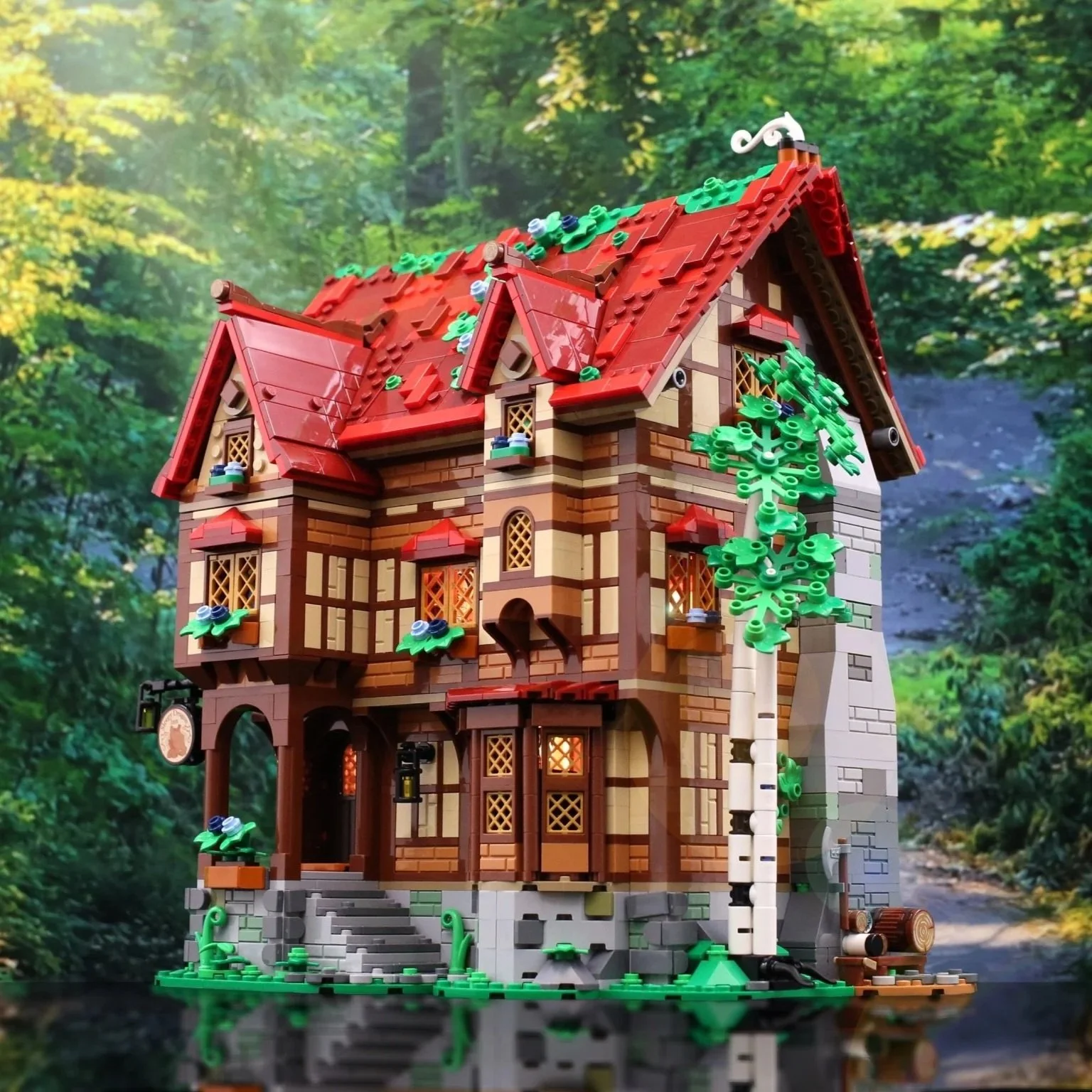
Author Miscellanabuild’s Improvement from 2021 to 2024
In the end, improvement is a personal journey. While these tools may help assist you in that journey, improvement will naturally occur if you strive for it. Feeling stationary is not a failure, either. While it may not feel like it in the moment, every build teaches you something new. Improvement is a natural process, and even without directly employing these tools, you will likely see growth over time.
Written by Julian Collins and Eann McCurdy (Miscellanabuilds) in collaboration with the BII Contributor Team
Do you have any different SMART goals to recommend? Let us know in the comments below!
Do you want to help BrickNerd continue publishing articles like this one? Become a top patron like Paige Mueller, Rob Klingberg from Brickstuff, John & Joshua Hanlon from Beyond the Brick, Megan Lum, Andy Price, Lukas Kurth from StoneWars, Wayne Tyler, Dan Church, and Roxanne Baxter to show your support, get early access, exclusive swag and more.