A Retro Review of LEGO’s 2026 Spring Botanicals
/We’re in the middle of the darkest time of the year here in the Nordics. What could be a better way to liven up your day than building some colorful flowers? I have been given the opportunity to look at four of the latest sets from the LEGO Botanical theme:
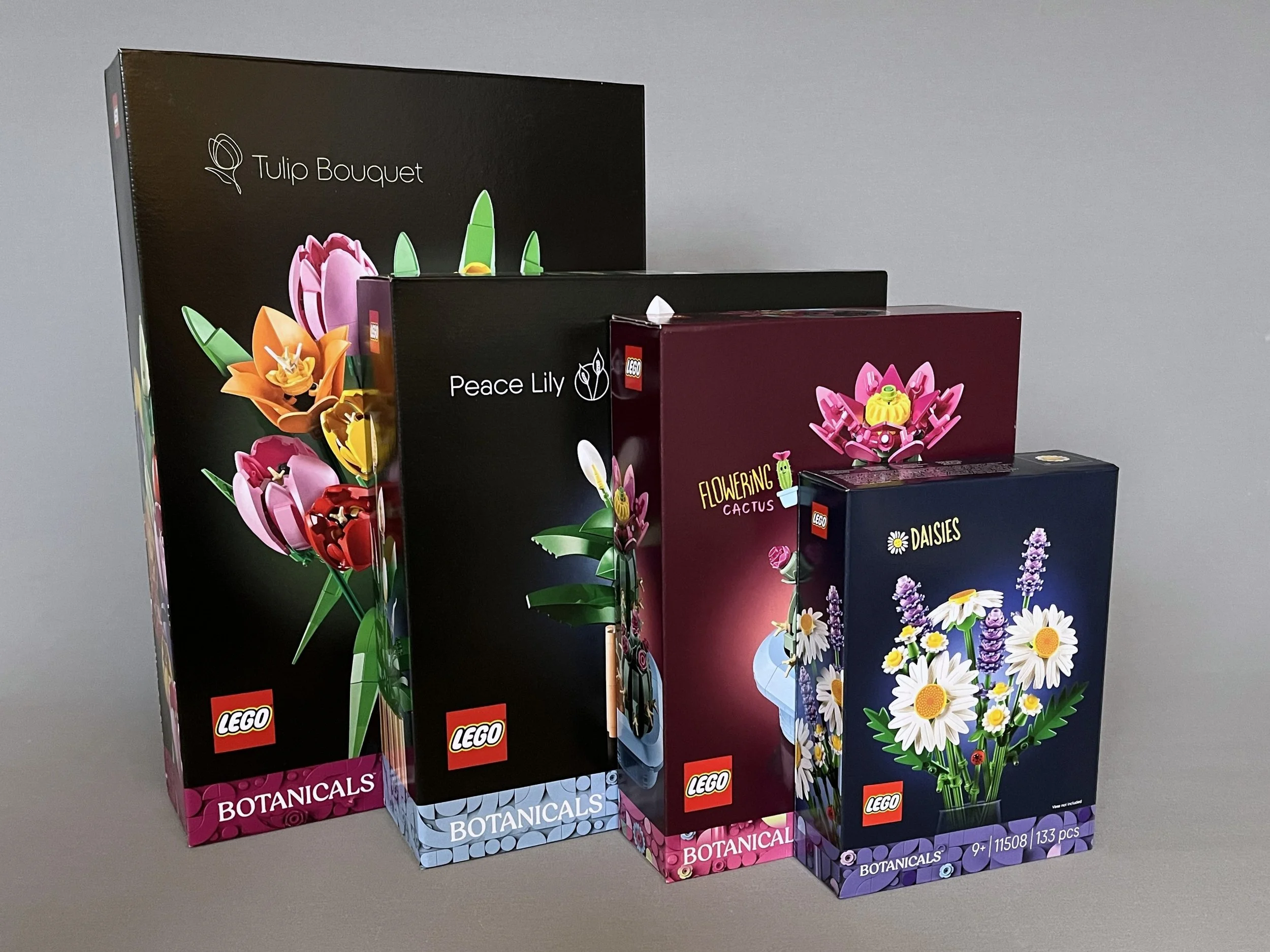
11508 Daisies, 133 pieces
11509 Flowering Cactus, 482 pieces
11504 Peace Lily, 474 pieces
11501 Tulip Bouquet, 576 pieces
My relationship with the botanical sets before this review is quite positive. I have built 10311 Orchid and 10309 Succulents before, and I was very pleased with those. I like how the Botanical sets use regular LEGO to resemble somewhat common house plants.
I decided to revisit the format of classic reviews here on BrickNerd from the before times with Nerdly scores out of five. So let’s take a look at the new sets, starting with the smallest.
11508 Daisies, 9+, 133 pieces
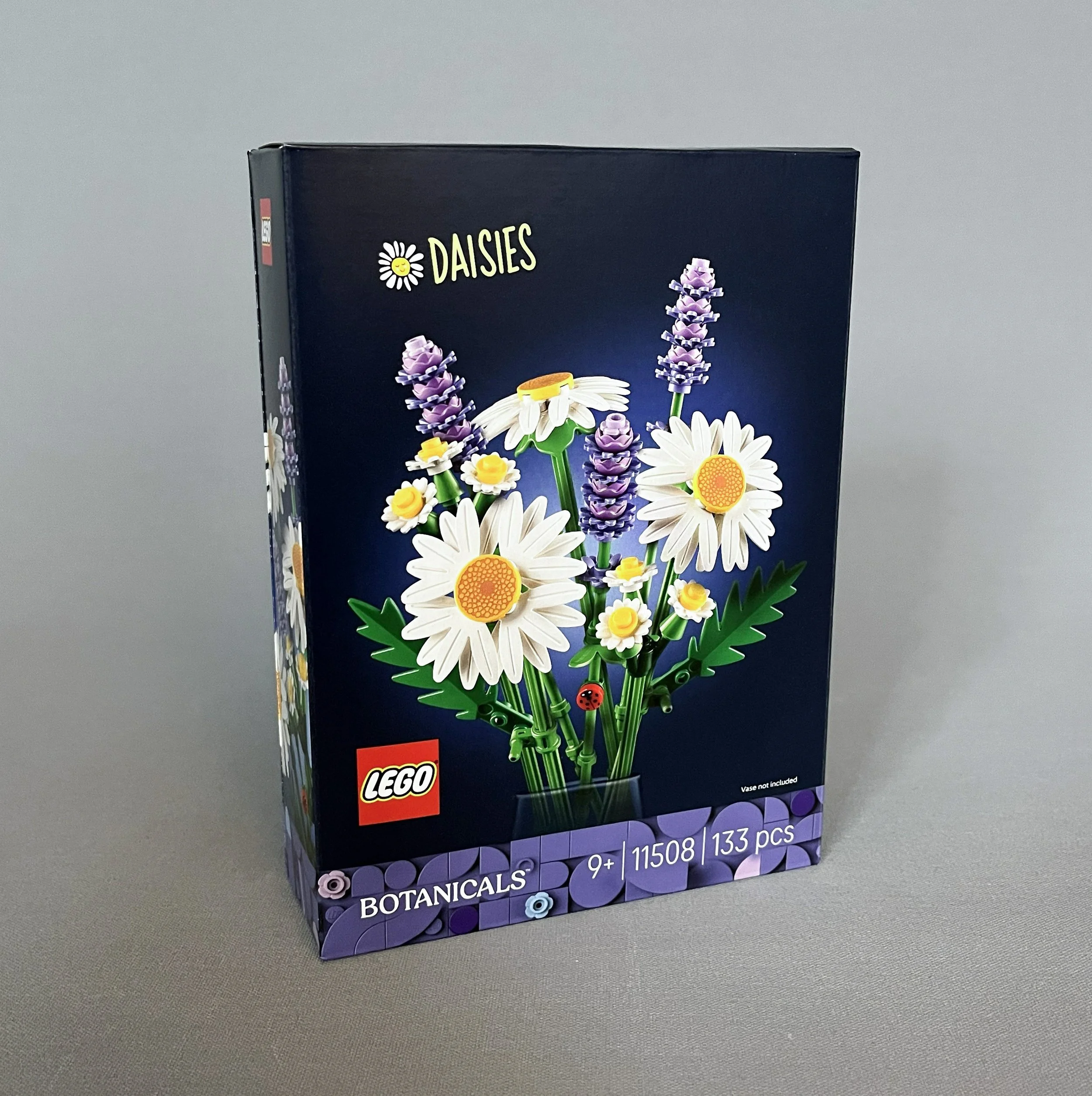
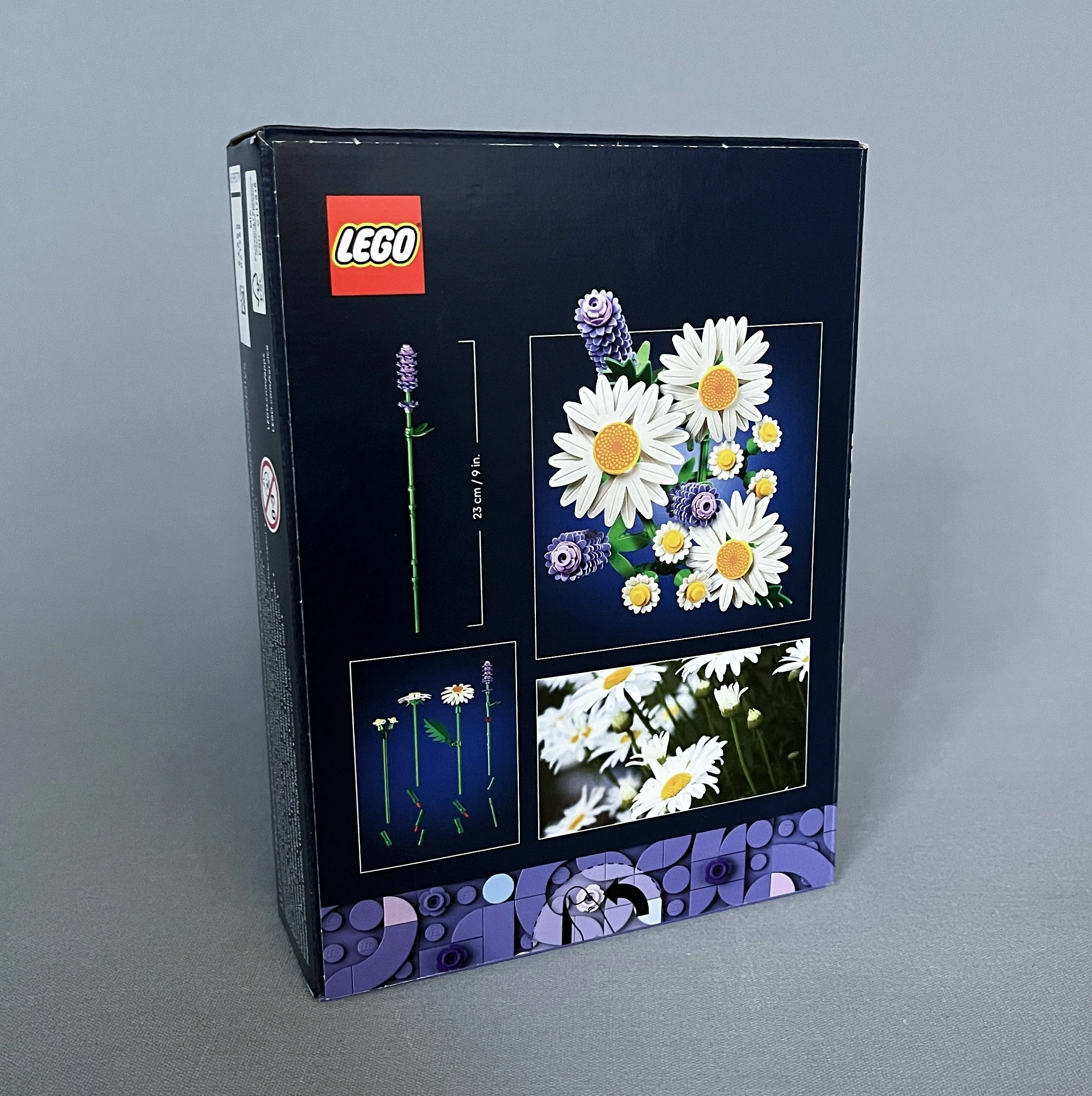
The set displays a lavender and daisy bouquet. A pretty combination of flowers that are relatively common and often picked outdoors to make a bouquet. The combination is frequently used for rustic, garden-inspired arrangements. Lavender often represents serenity or grace, while daisies represent innocence and cheerfulness, making them a popular choice for "get well" or friendship bouquets.
The duo is common in fall weddings and table settings, where the lavender adds depth, and the daisies provide brightness. There are hundreds of different daisies out there, so I can’t really tell which one is represented in this set. But it is probably the Shasta Daisy.
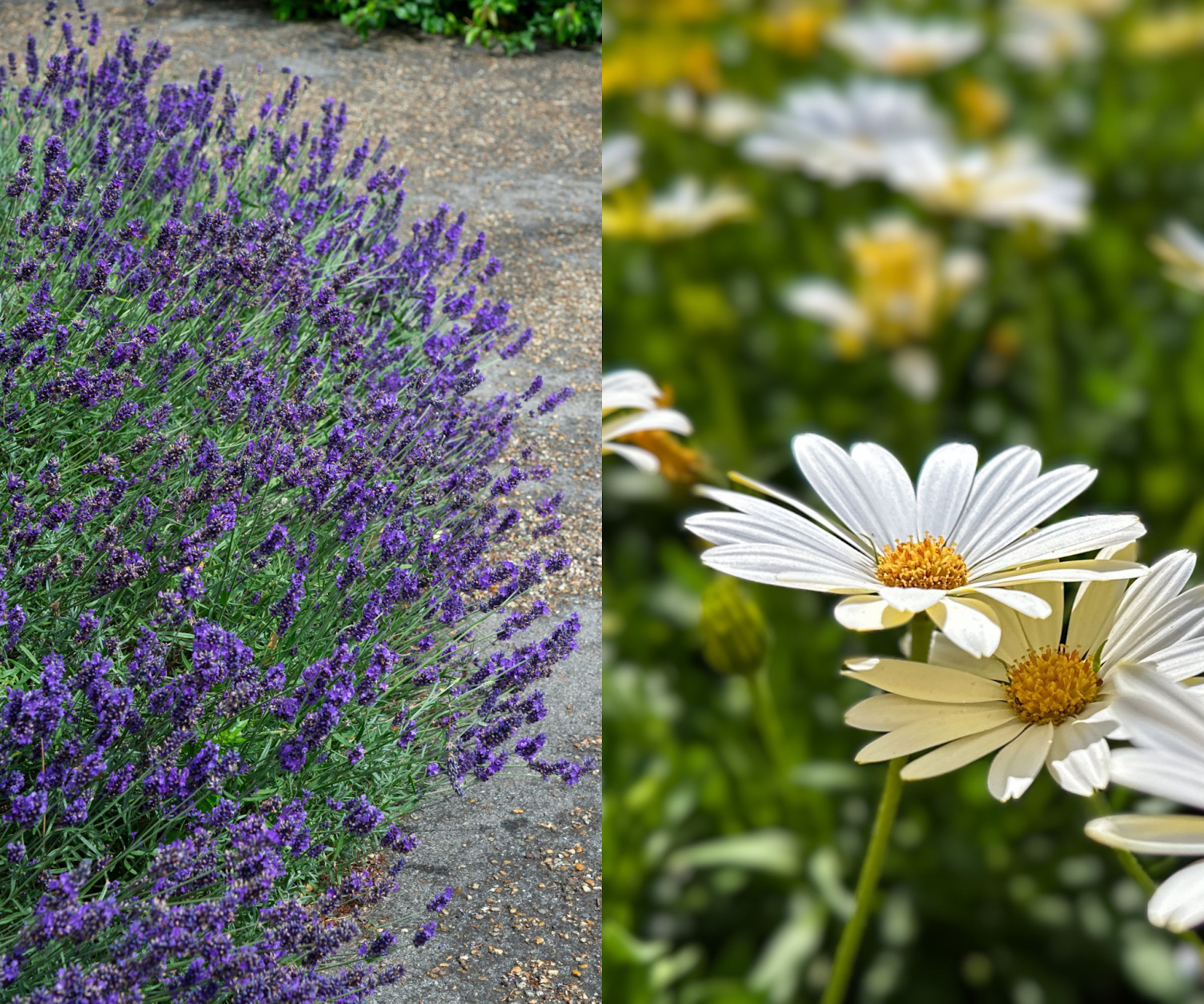
Images from Homes and Gardens
Leucanthemum × superbum, the Shasta daisy, is a commonly grown[1] flowering herbaceous perennial plant with the classic daisy appearance of white petals (ray florets) around a yellow disc, similar to the oxeye daisy Leucanthemum vulgare Lam, but larger. - Wikipedia
Building Experience
This is a relatively small set aimed at a younger audience. It contains two numbered paper bags and one plastic bag for the long Technic axles.
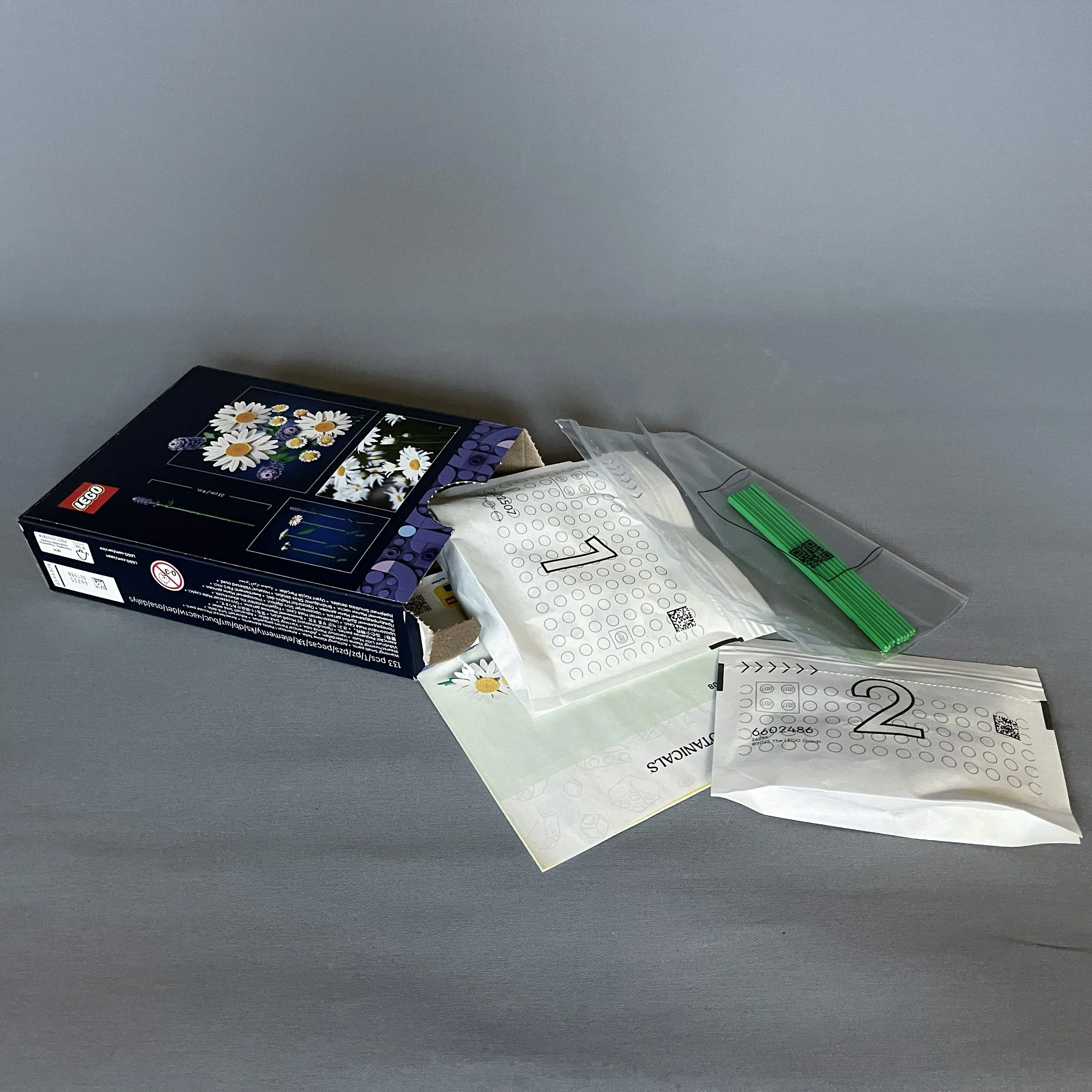
Bag 1 - Daisies
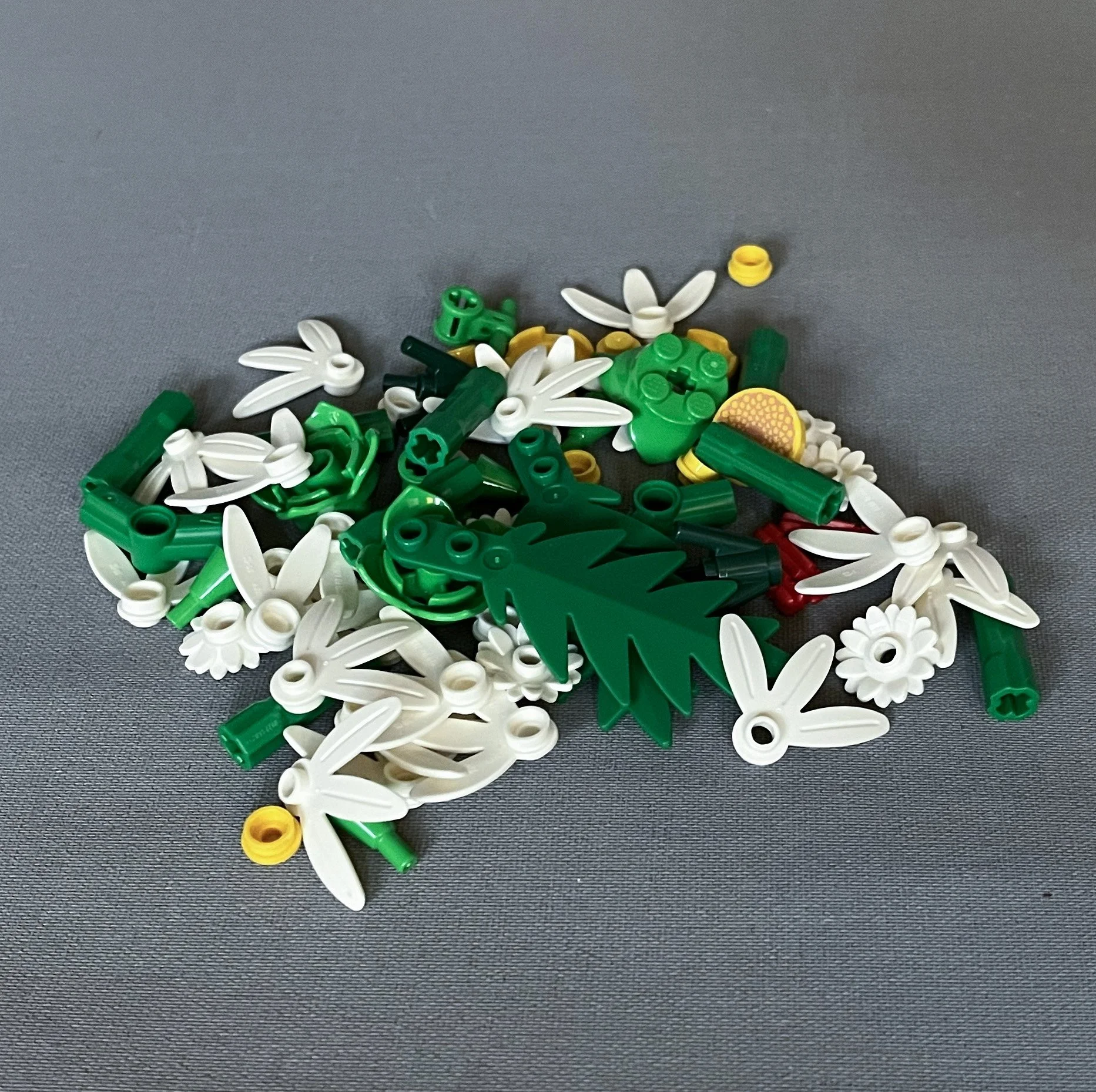
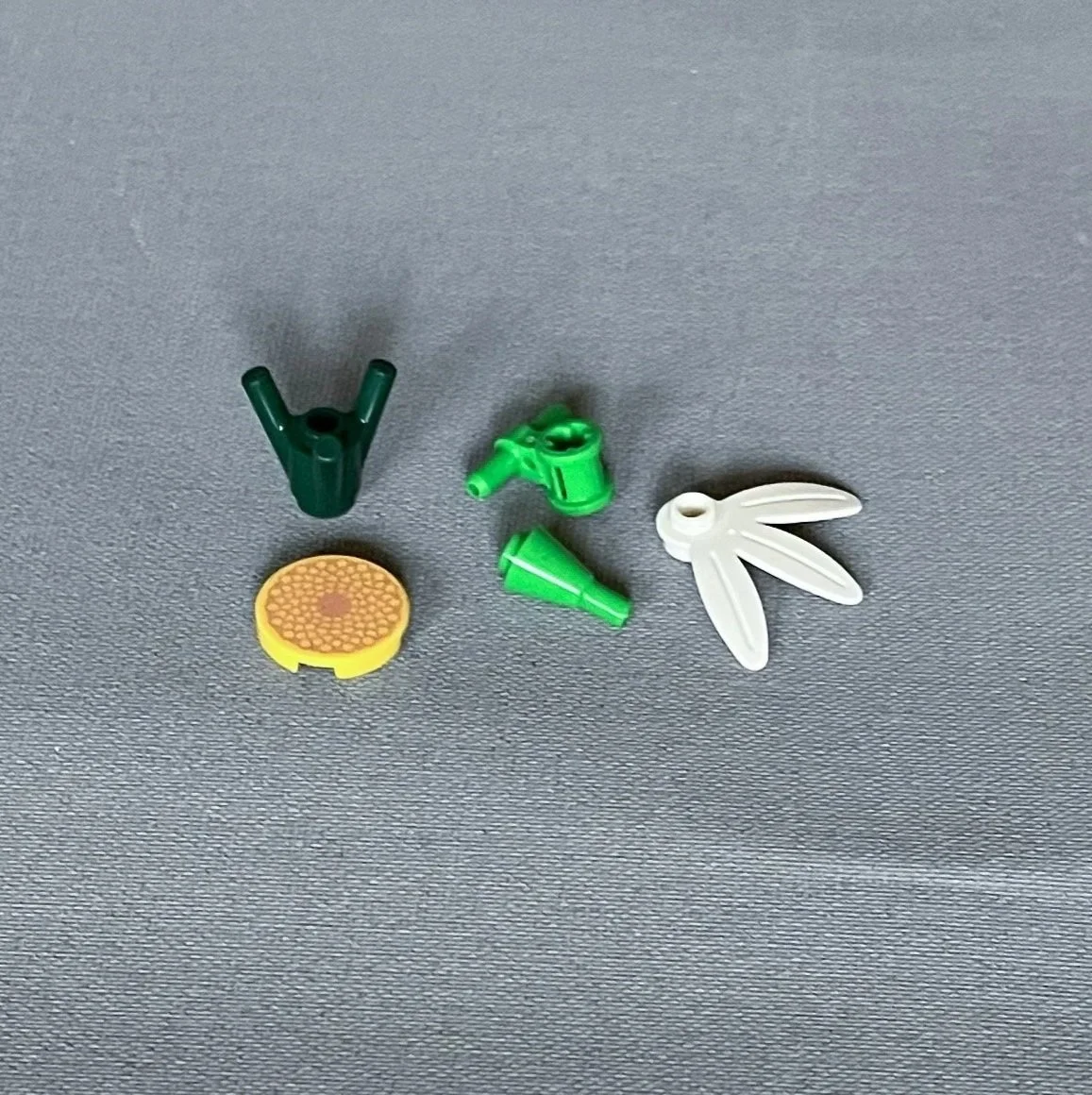
You start building the daisies. It is a fairly simple and a somewhat repetitive process. There are some variations on the flowers in that they have different lengths and a slight tilt.
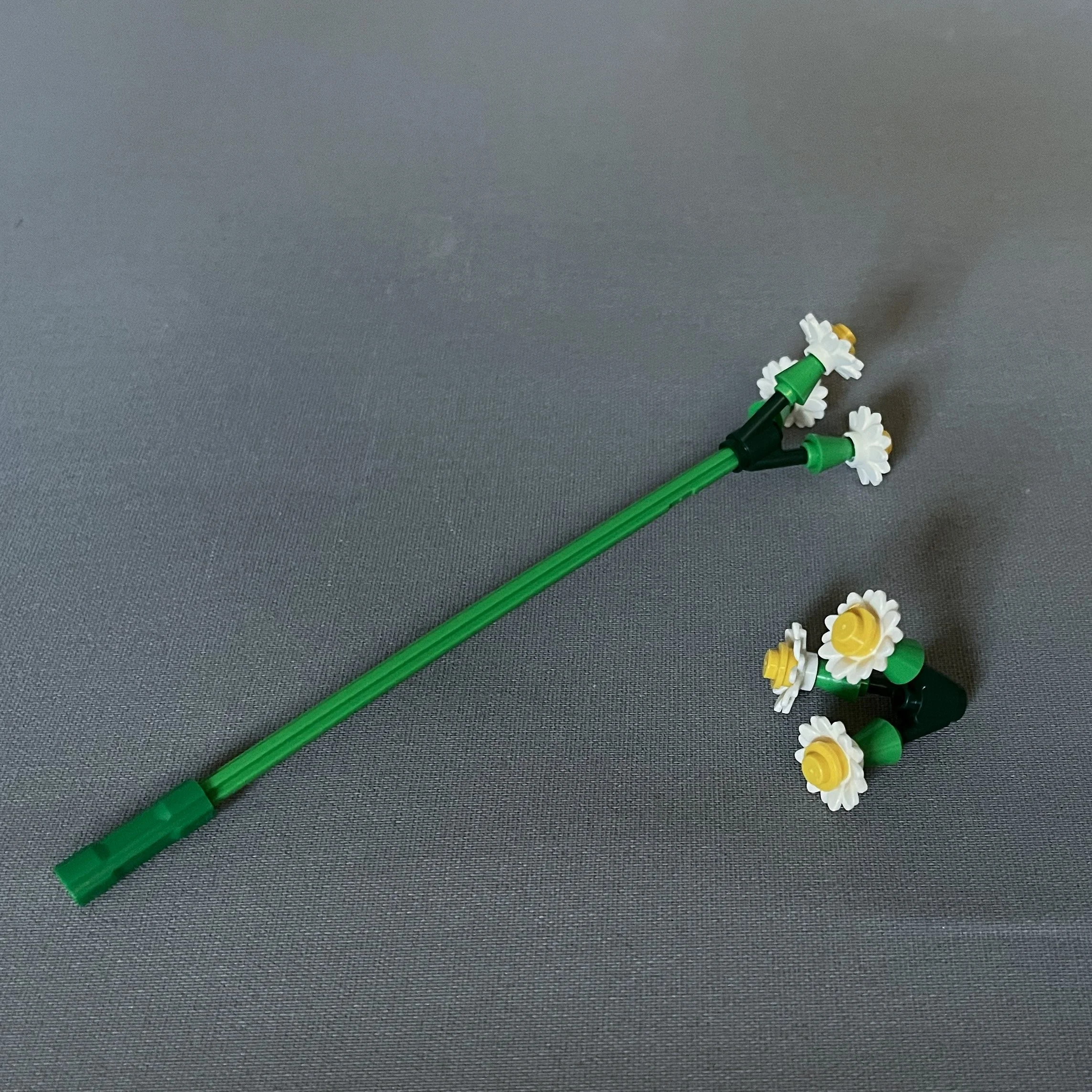
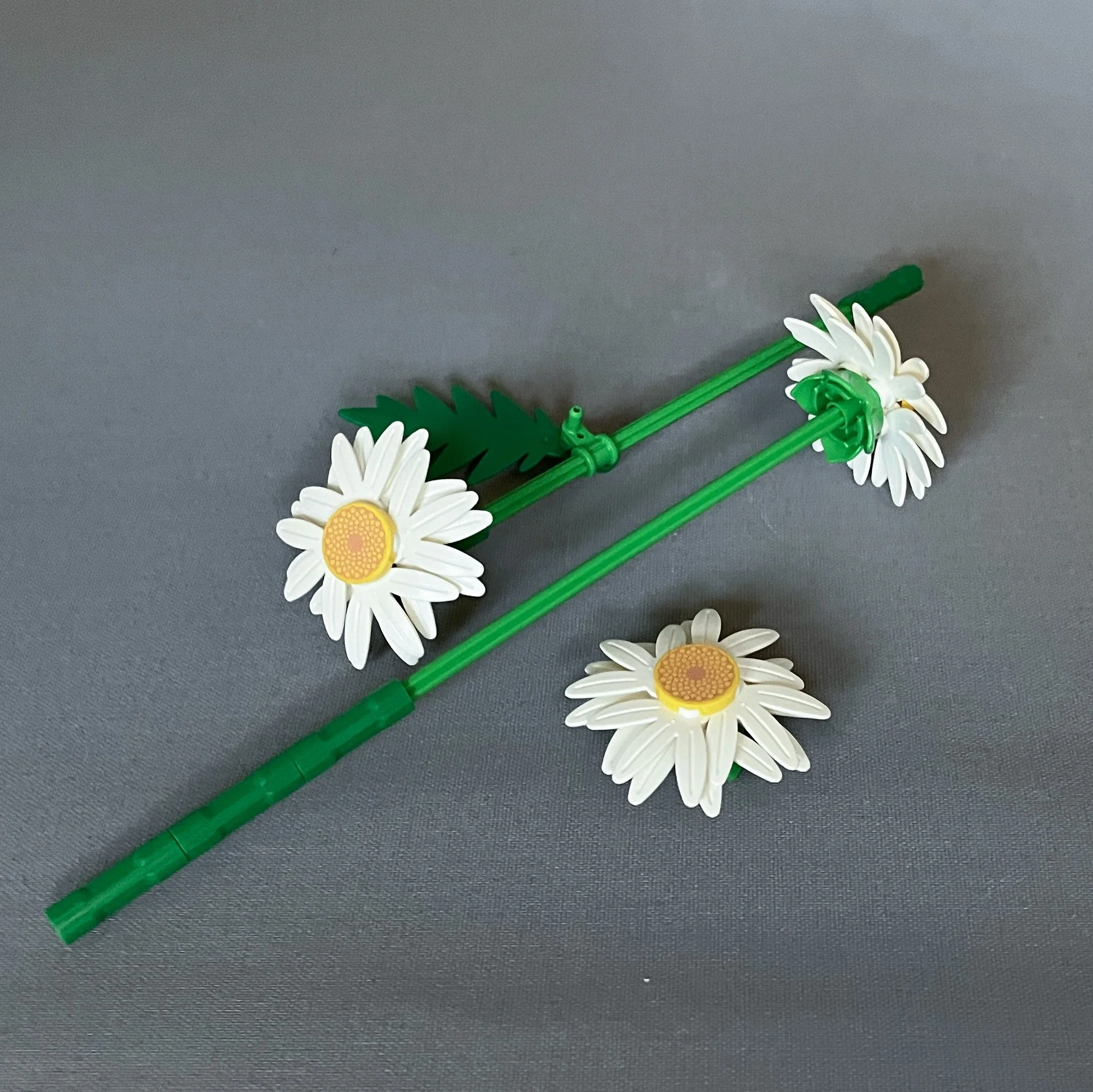
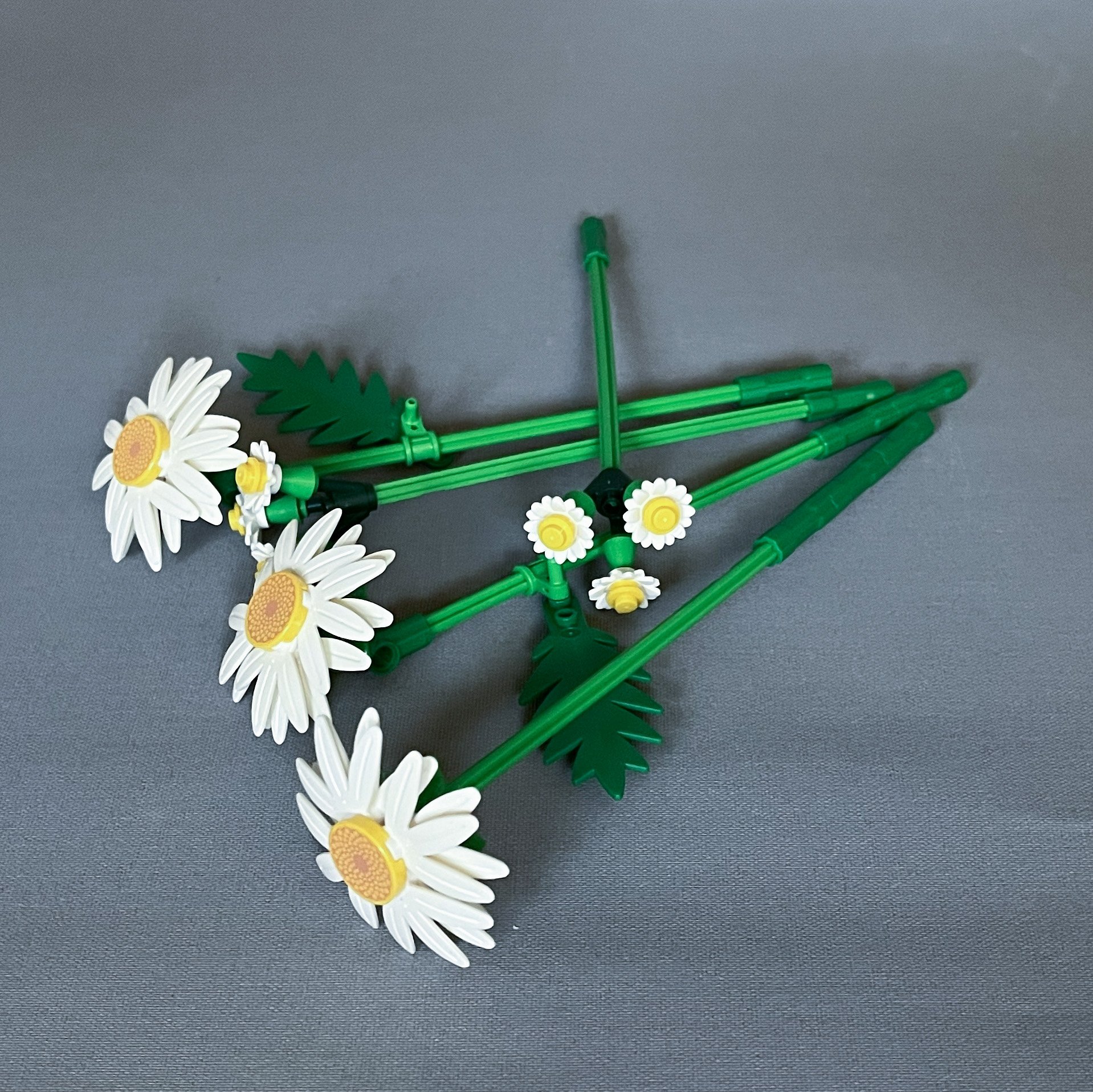
Element 7264 in white is the perfect parts usage for the big flowers. I can’t think of any other element that would fit better to build the petals of daisies. The palm leaf is also a perfect element to represent the jagged leaves.
Bag 2 - Lavender
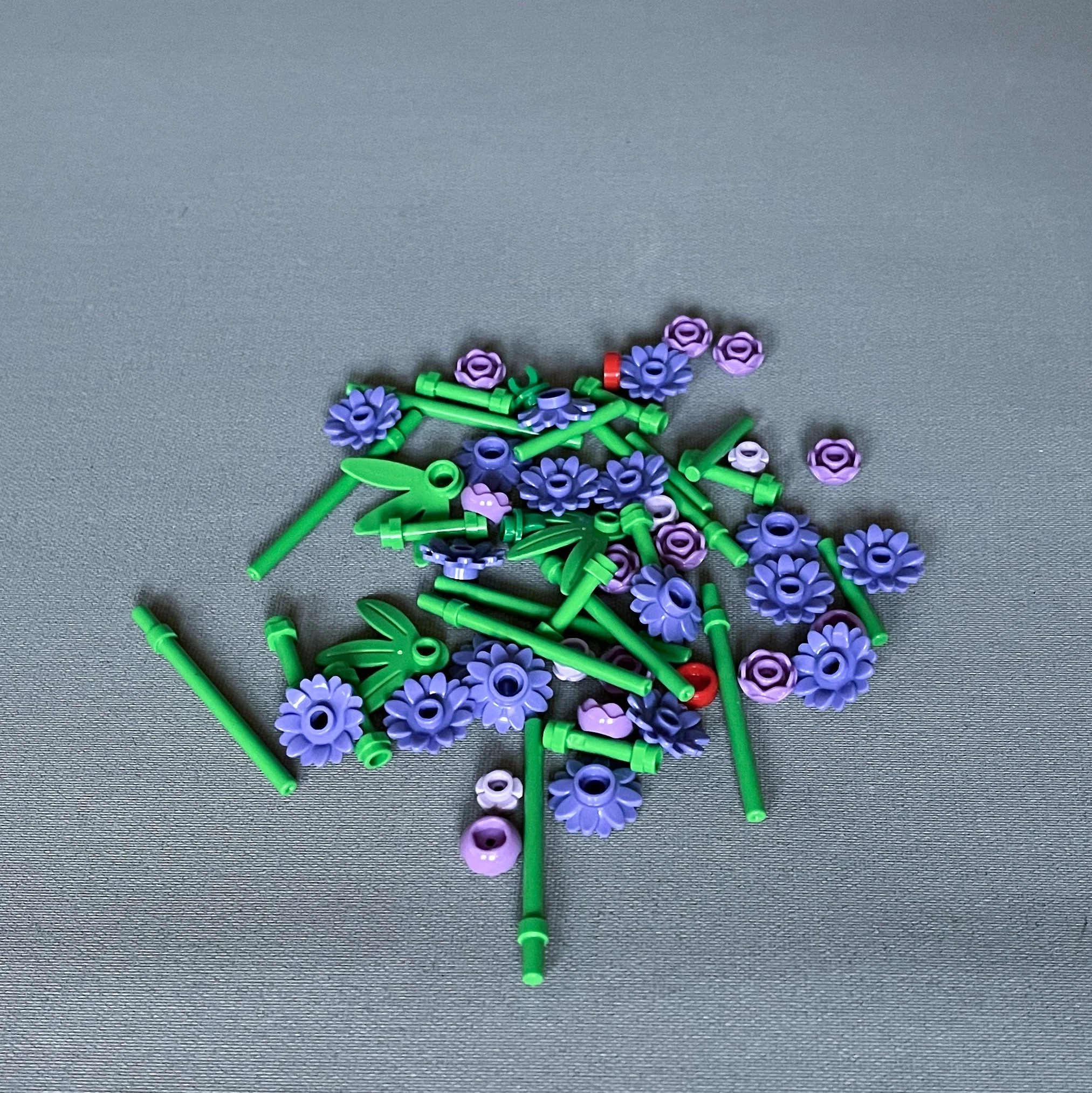
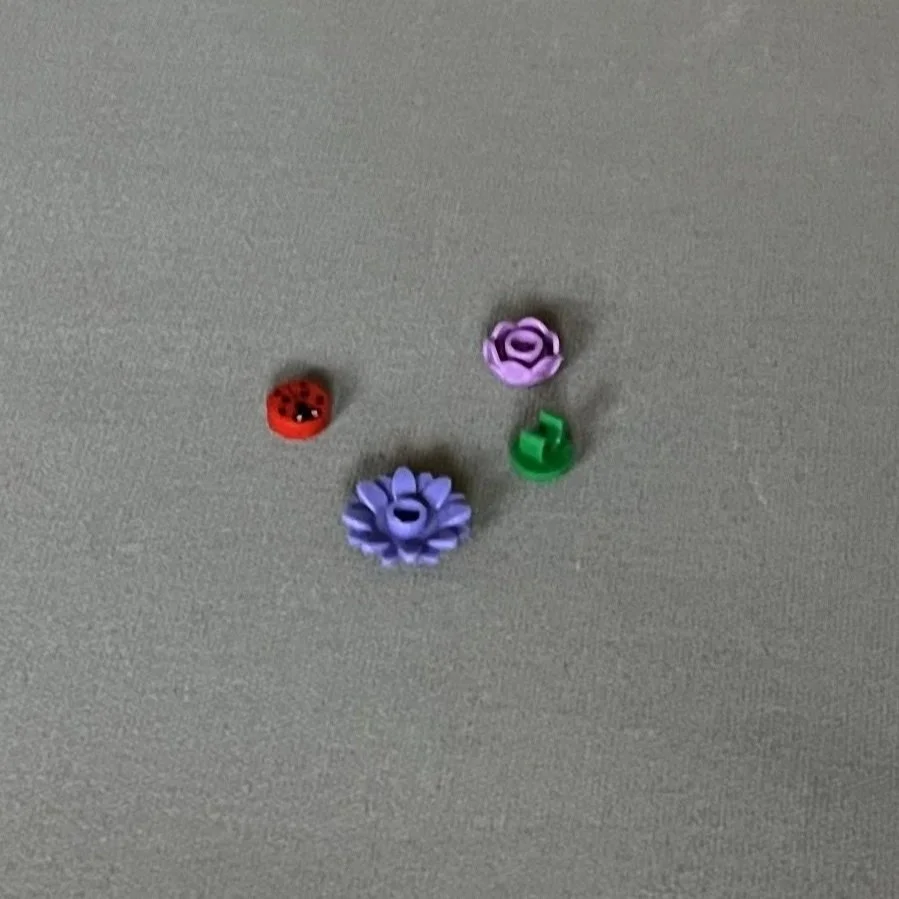
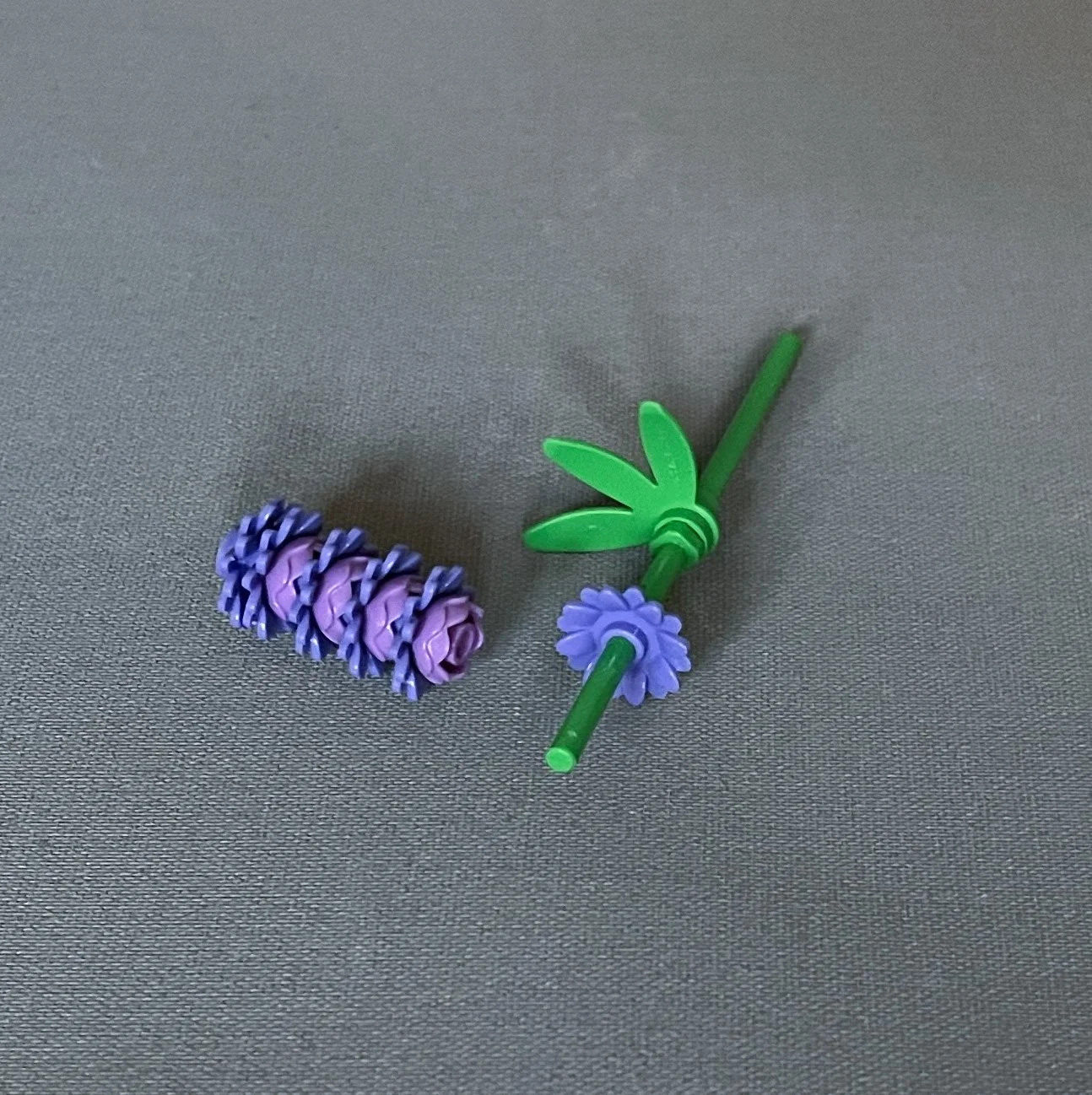
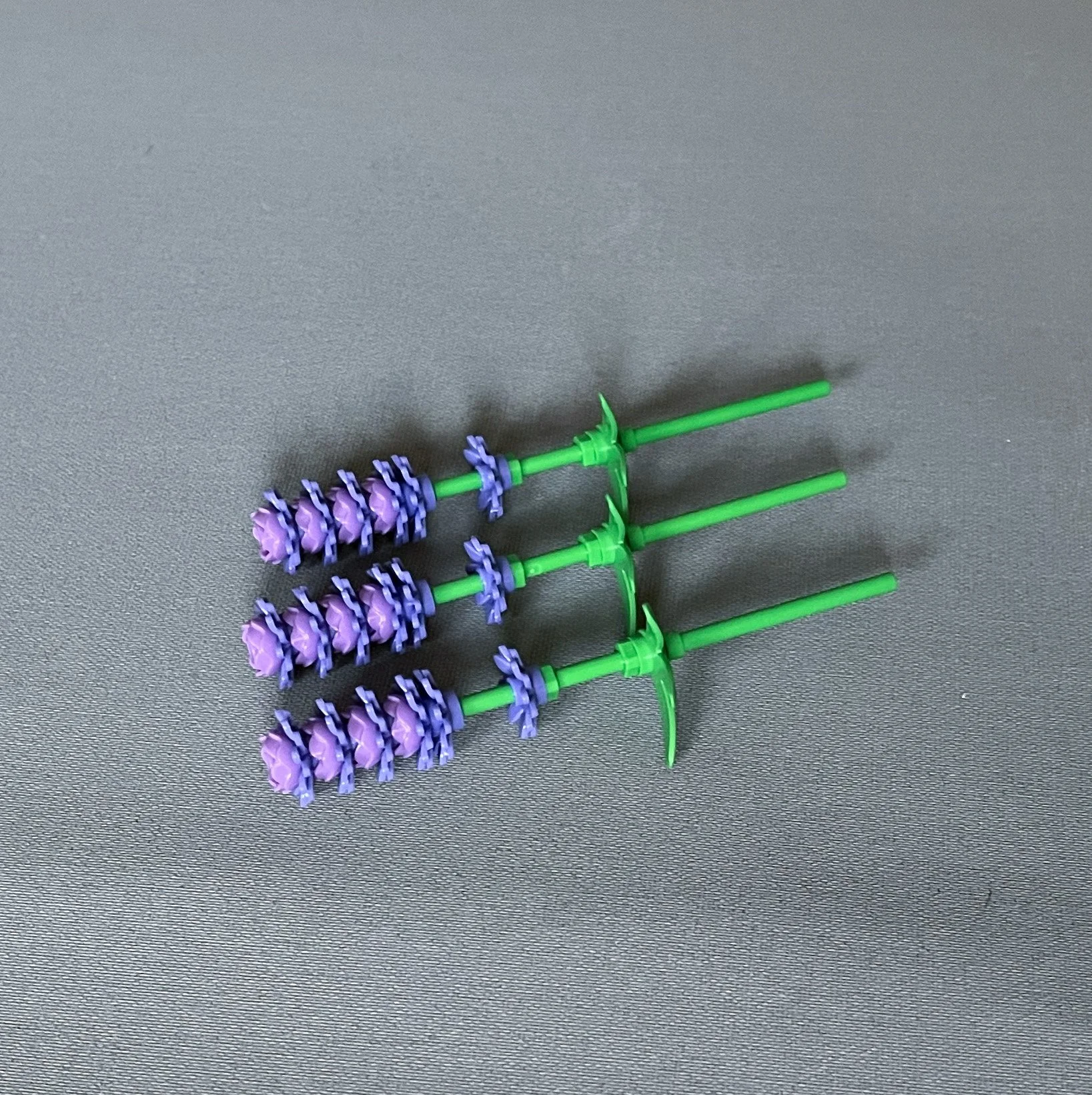
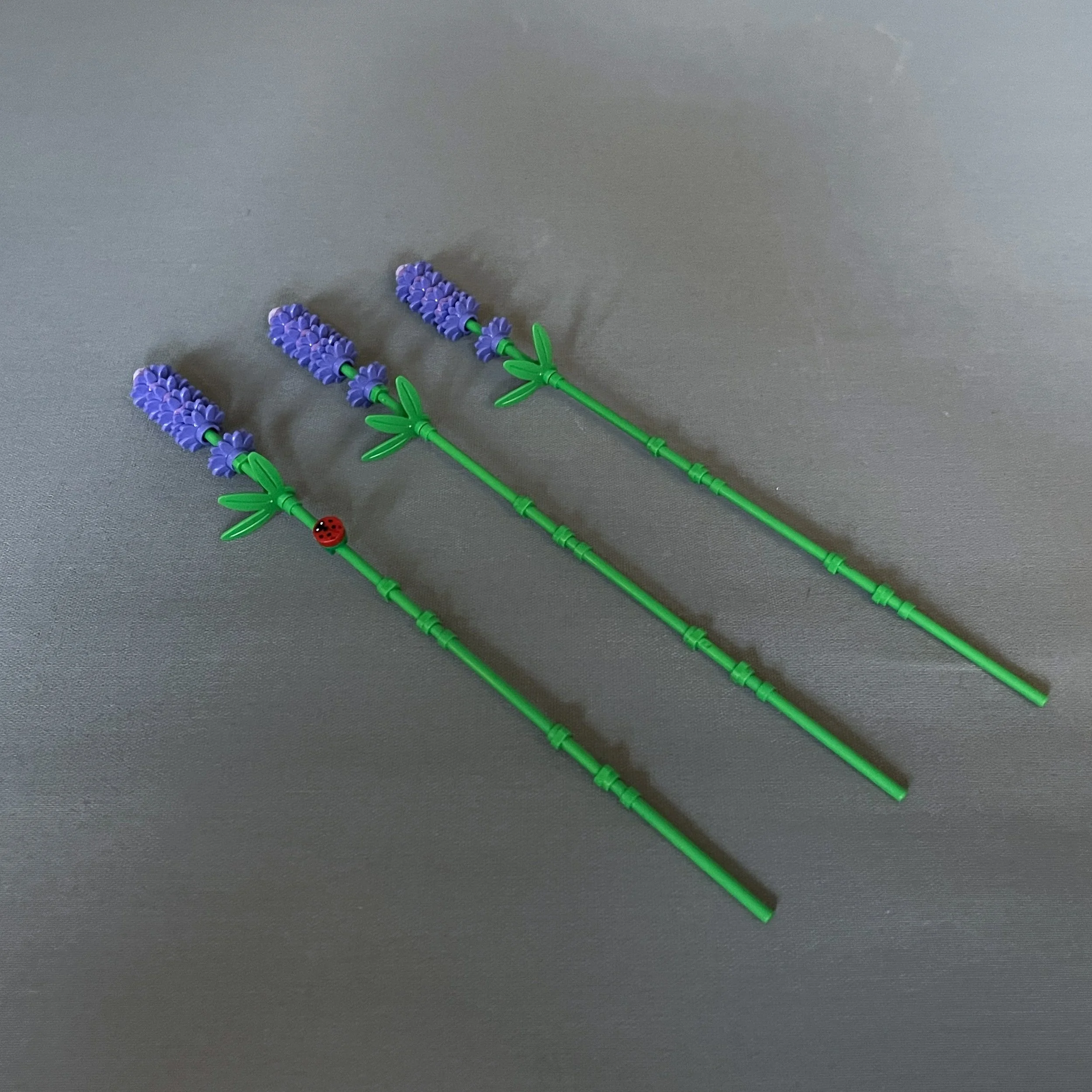
The lavender looks convincing, using the relatively new flower elements in new colors, like the new Blue Violet. They are built by stacking flower elements and then adding them to the stem. They are identical, but in one of the final steps, you add a ladybug to one of the stems. I guess the ladybug is there to make the flowers look like they have just been picked in the garden. It is a cute and welcome detail!
Final Thoughts
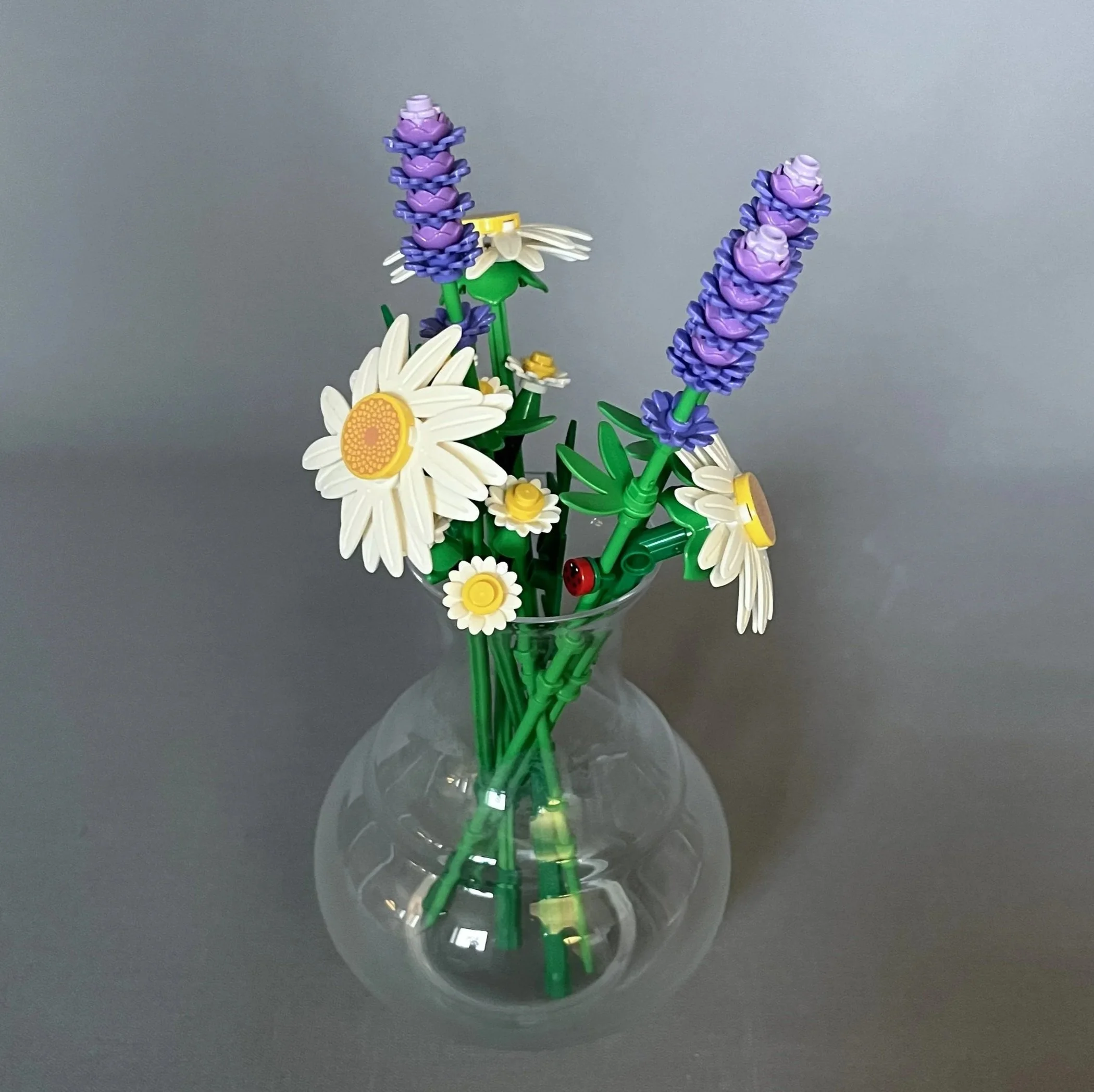
The final result is a pleasant little bouquet that gives a feeling of spring or early summer. It’s probably during those seasons this set is best displayed. The relatively low price makes it a perfect gift for a birthday or when visiting friends for a spring/summer party.
One thing that I expected, but did not find was information about the flowers in the instruction booklet. There are no facts presented nor any images of the original flower in the booklet. There is one image of the real flower on the backside of the package. That was a bit disappointing, but maybe not something that can be expected from such a small set aimed at kids.
Parts Usage: 3/5
Building Experience: 2/5
Final Result: 4/5
Overall: 3/5

11509 Flowering Cactus, 9+, 482 pieces
There have been a variety of cacti in previous LEGO Botanical sets, all of them bundled with other plants in 10309 Succulents and 10329 Tiny Plants. This is the first time a cactus appears in its own set.
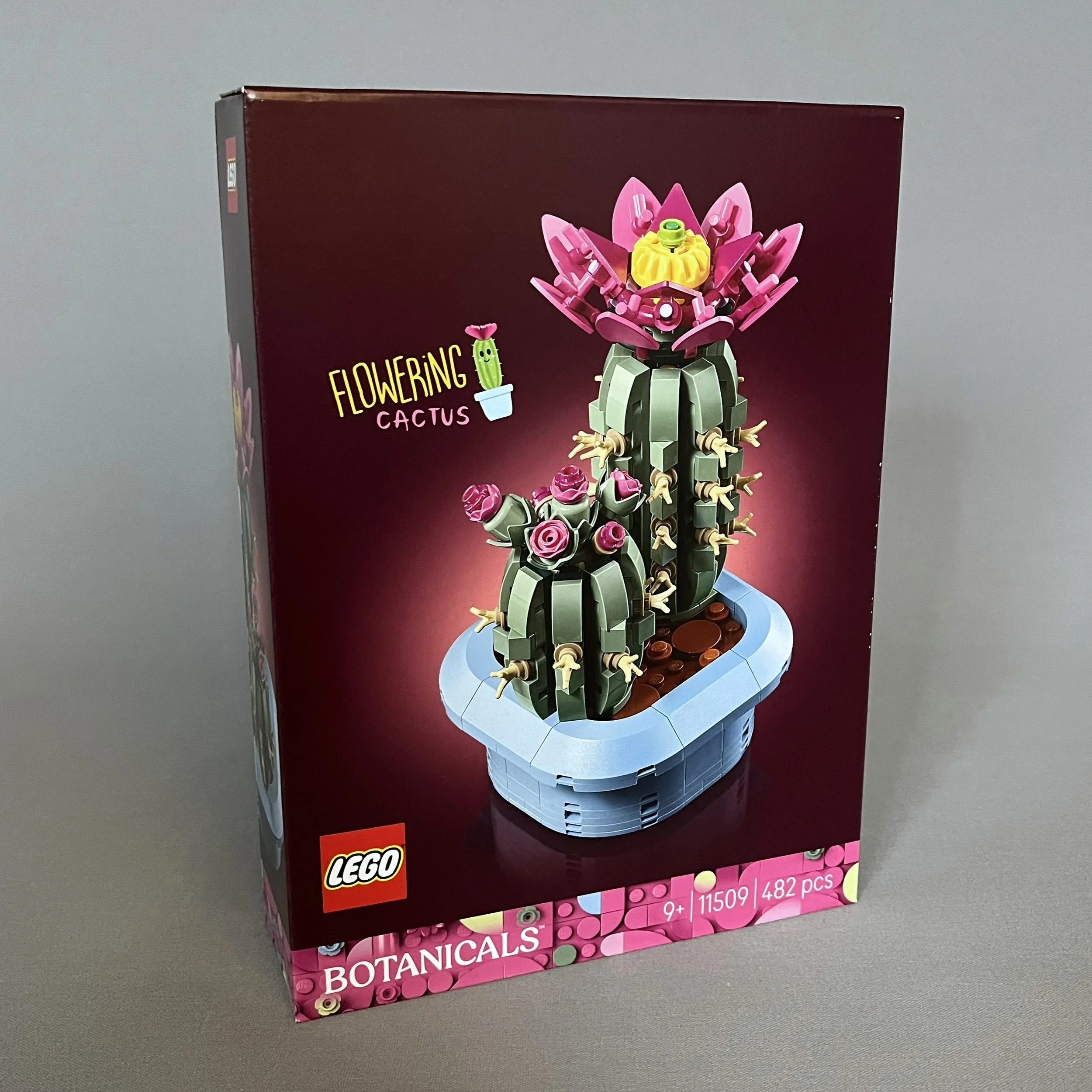
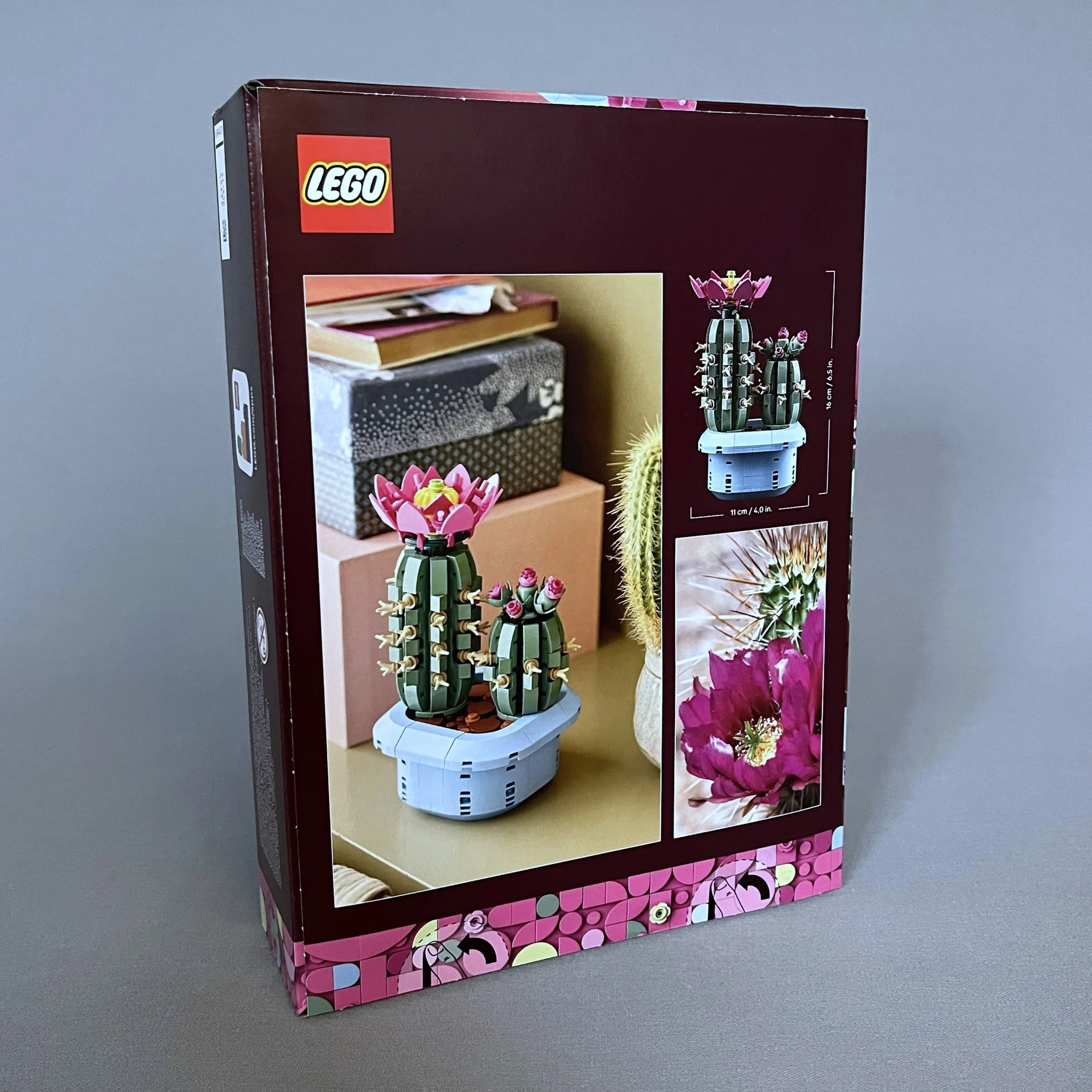
When I showed all four sets to my family and asked them which one was their favorite, I had varying reactions. My wife, who is not into LEGO at all, said she liked the cacti the most because it is the only set that actually looks like LEGO. All the other sets just look like plastic flowers. I thought this was very interesting, and I kind of agree.
When the first botanical sets were introduced, one of the fun things about them was all the recolors and clever use of existing elements. Some of the new elements certainly make the Botanical sets look even more like real flowers, but sometimes feel very specialized. You want the sets to look like LEGO because LEGO is fun and everyone has a connection to it, and you also want them to look like a flower. But if it only looks like a flower, how fun is it?
There are several cacti with pink flowers. I think the one being represented here is an Echinopsis:
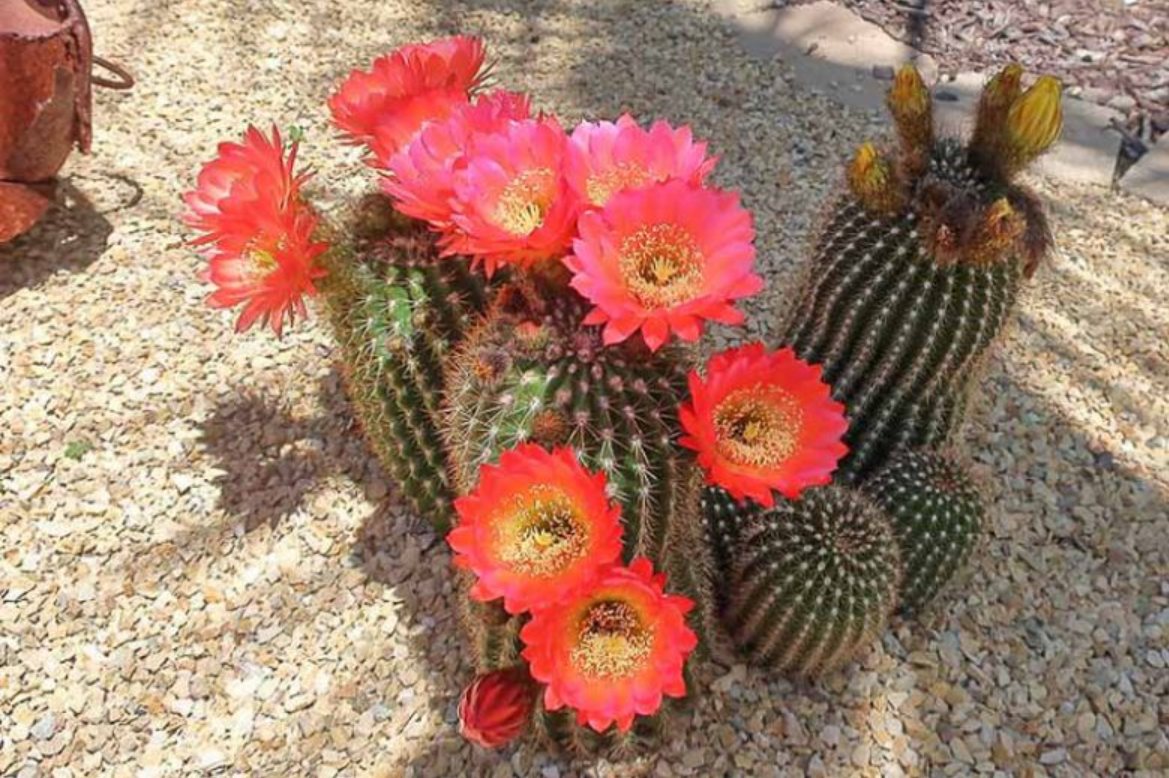
Image from gardenia.net
“Echinopsis is a genus of cacti native to South America, sometimes known as hedgehog cactus, sea-urchin cactus or Easter lily cactus. As of November 2025, Plants of the World Online used a broad circumscription of the genus, resulting in about 80 accepted species, ranging from large and treelike types to small globose cacti. The name derives from echinos hedgehog or sea urchin, and opsis appearance, a reference to these plants' dense coverings of spines. They are remarkable for the great size, length of tube, and beauty of their flowers, borne upon generally small and dumpy stems.” - Wikipedia
Building Experience
Opening the box reveals four paper bags in various sizes and an instruction booklet.
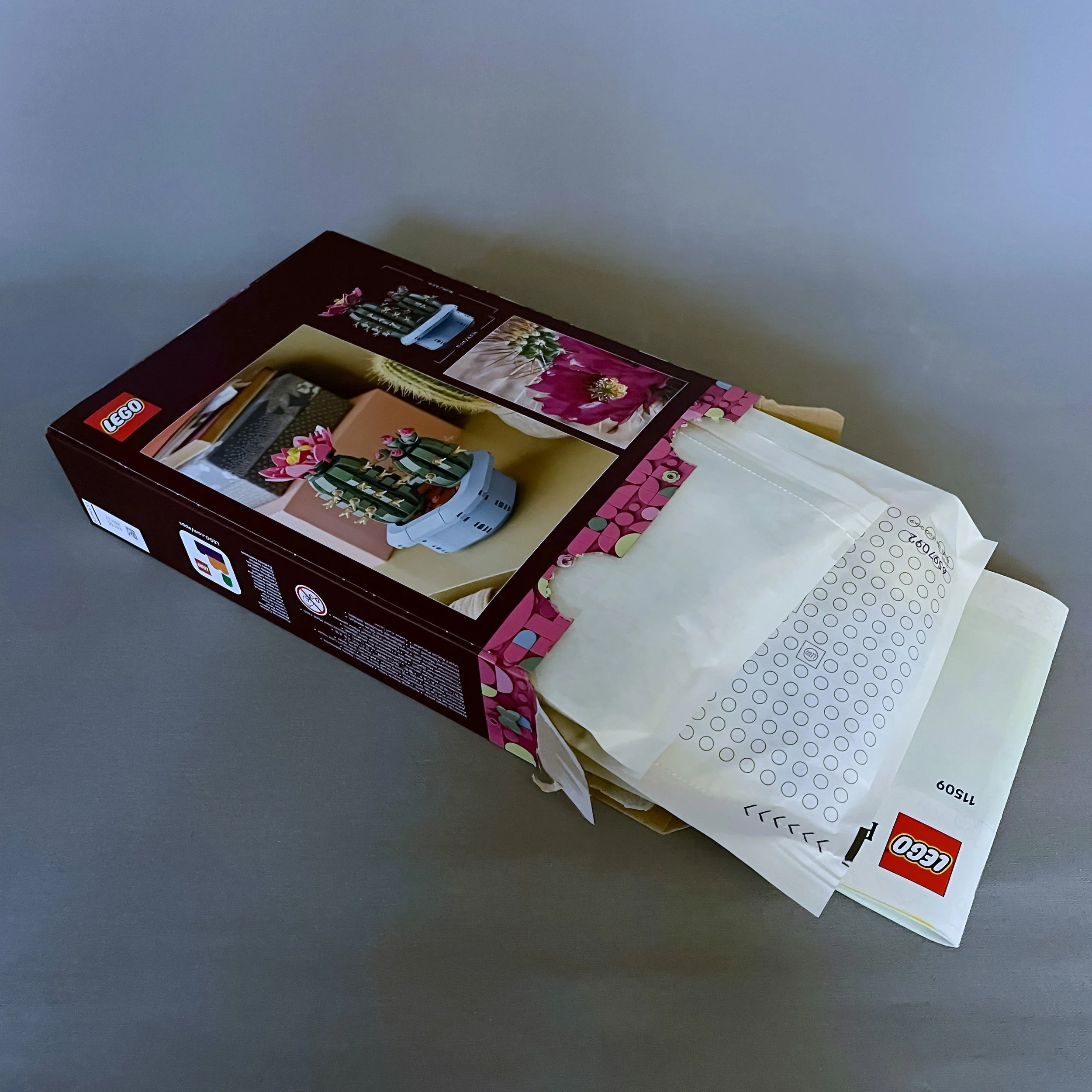
Bag 1 - The Pot
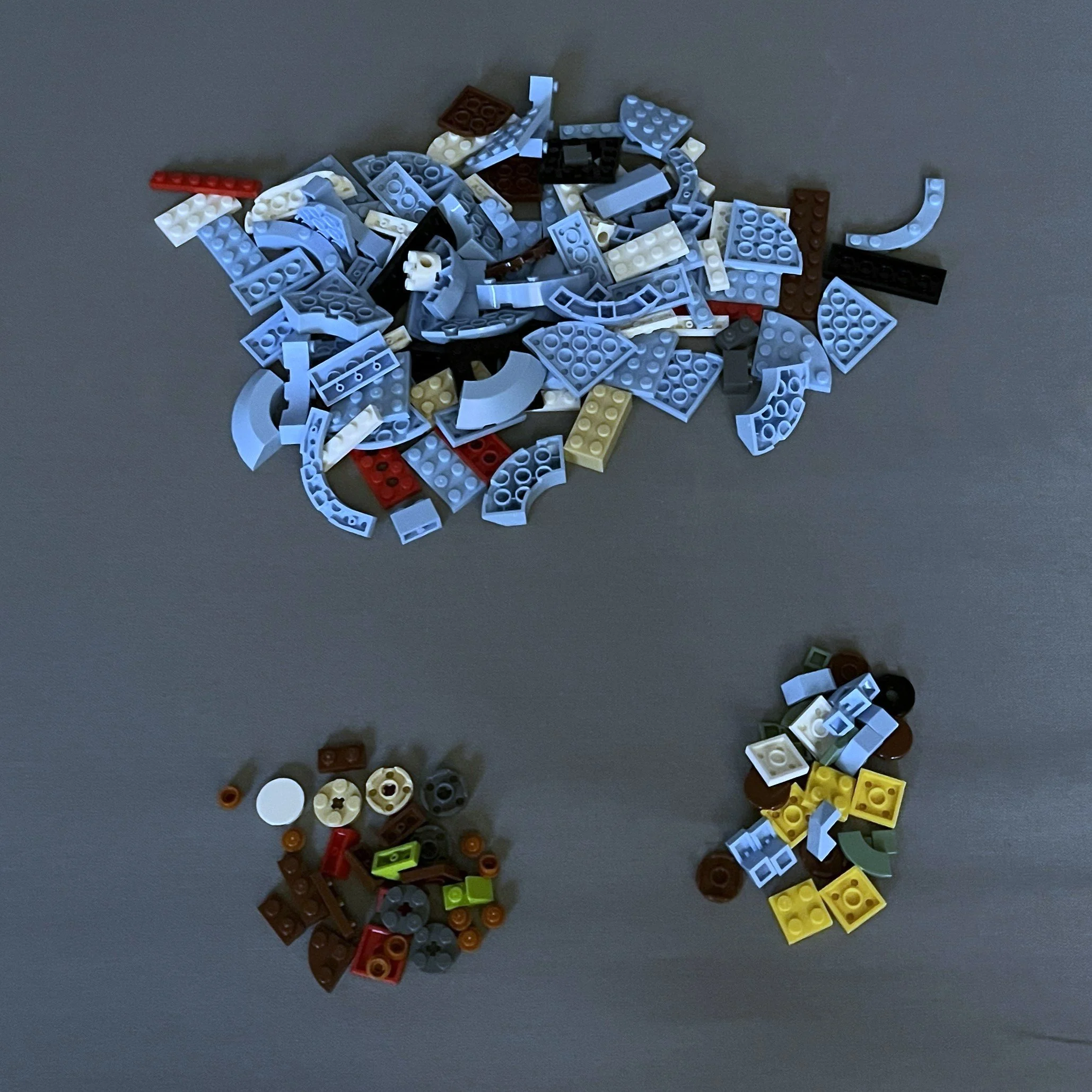
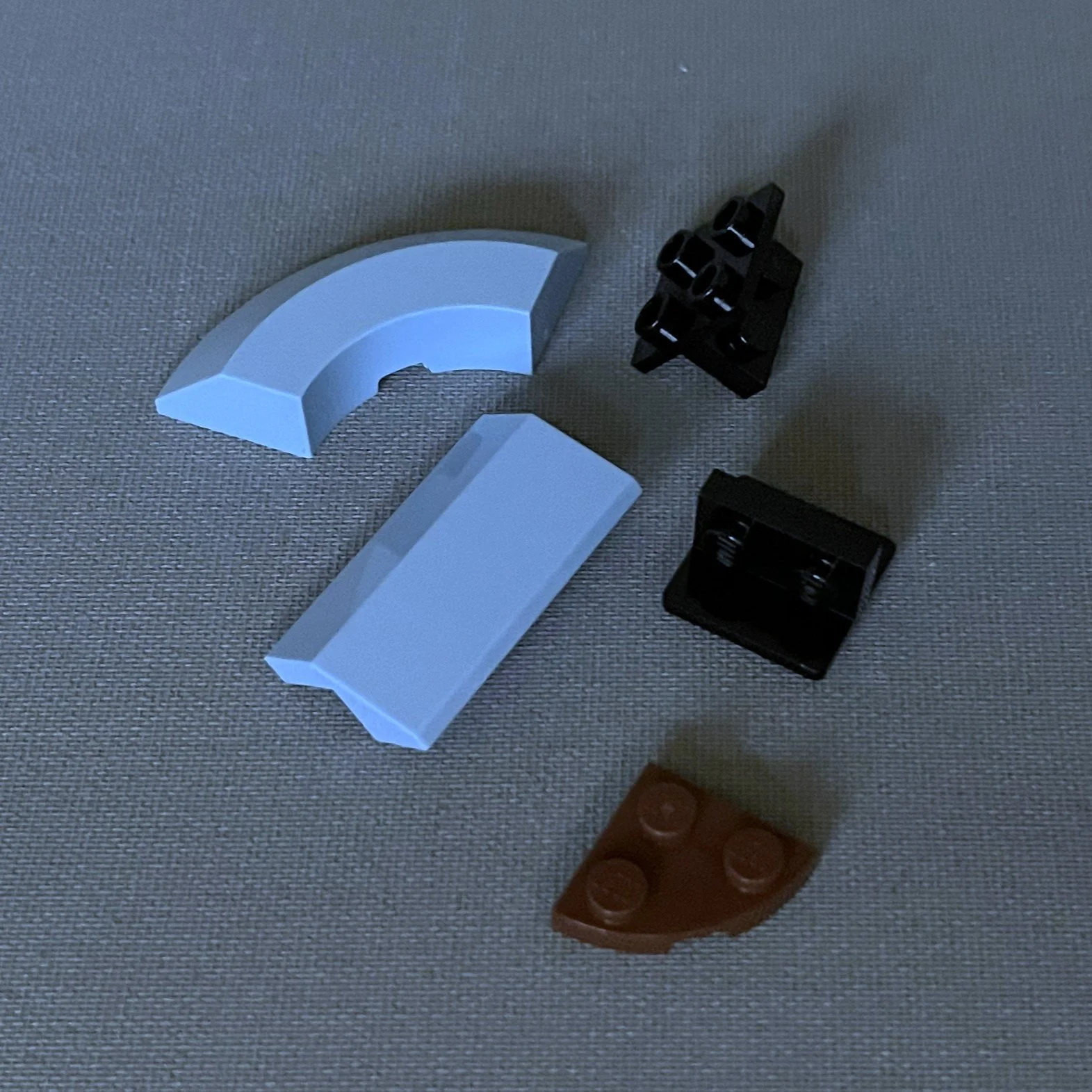
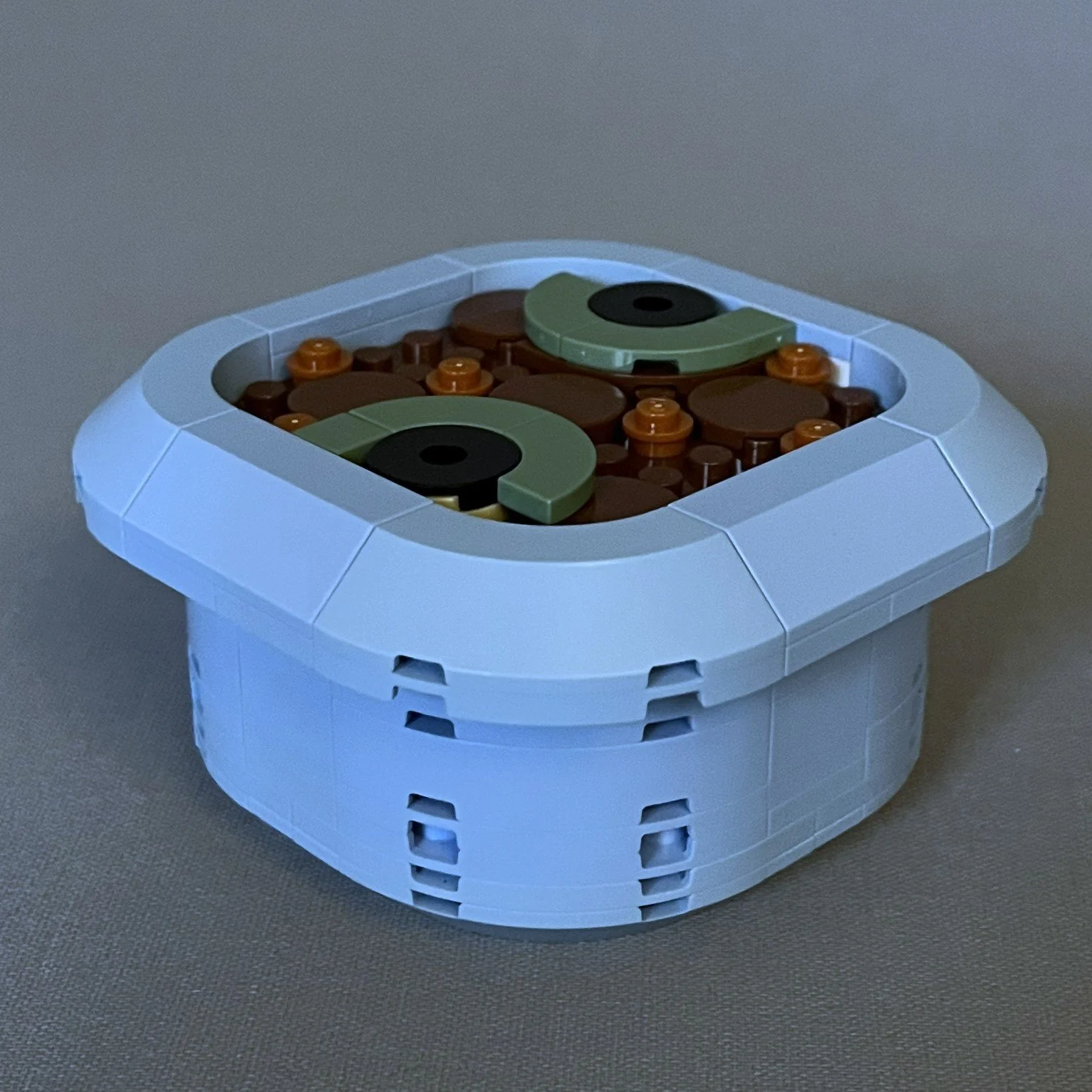
The first thing we build is the pot. You start out building the sides, and then you add soil on top. The inside of the pot hides axle holes where you will attach the cacti later in the build. The pot is built in two parts, then connected with a simple SNOT connection using only four studs. This connection might seem a bit flimsy, but since this is a display piece rather than a toy, it’s sufficient.
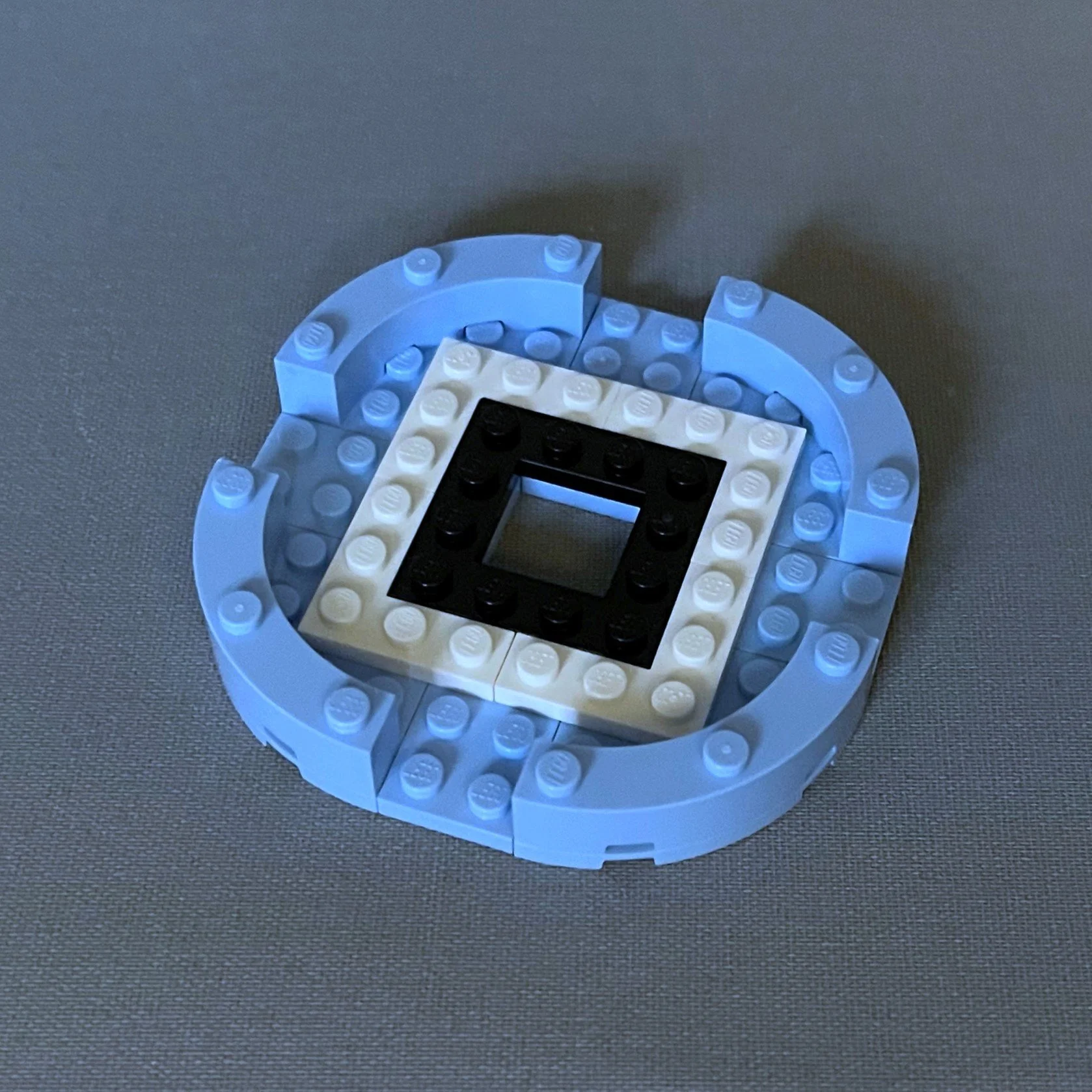
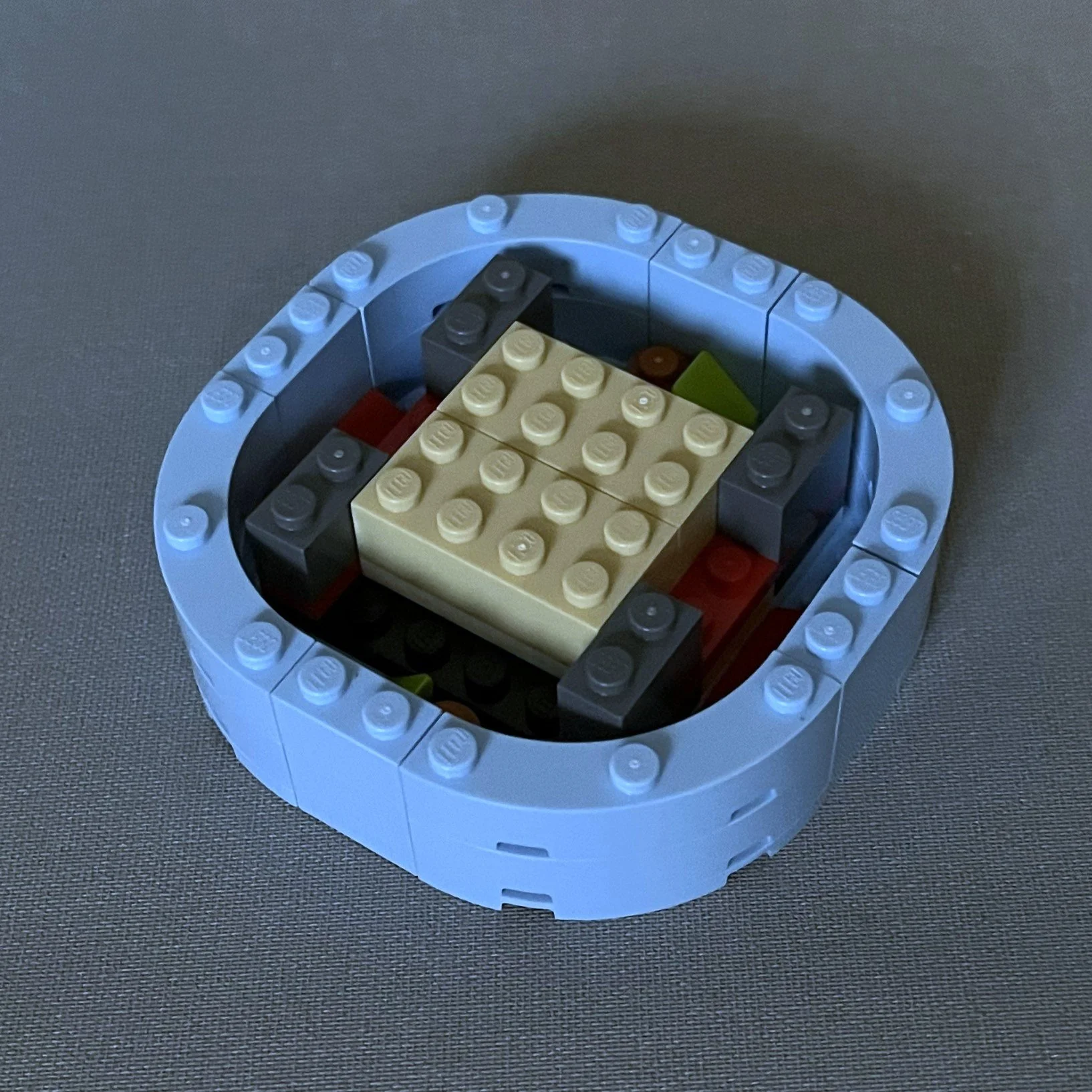
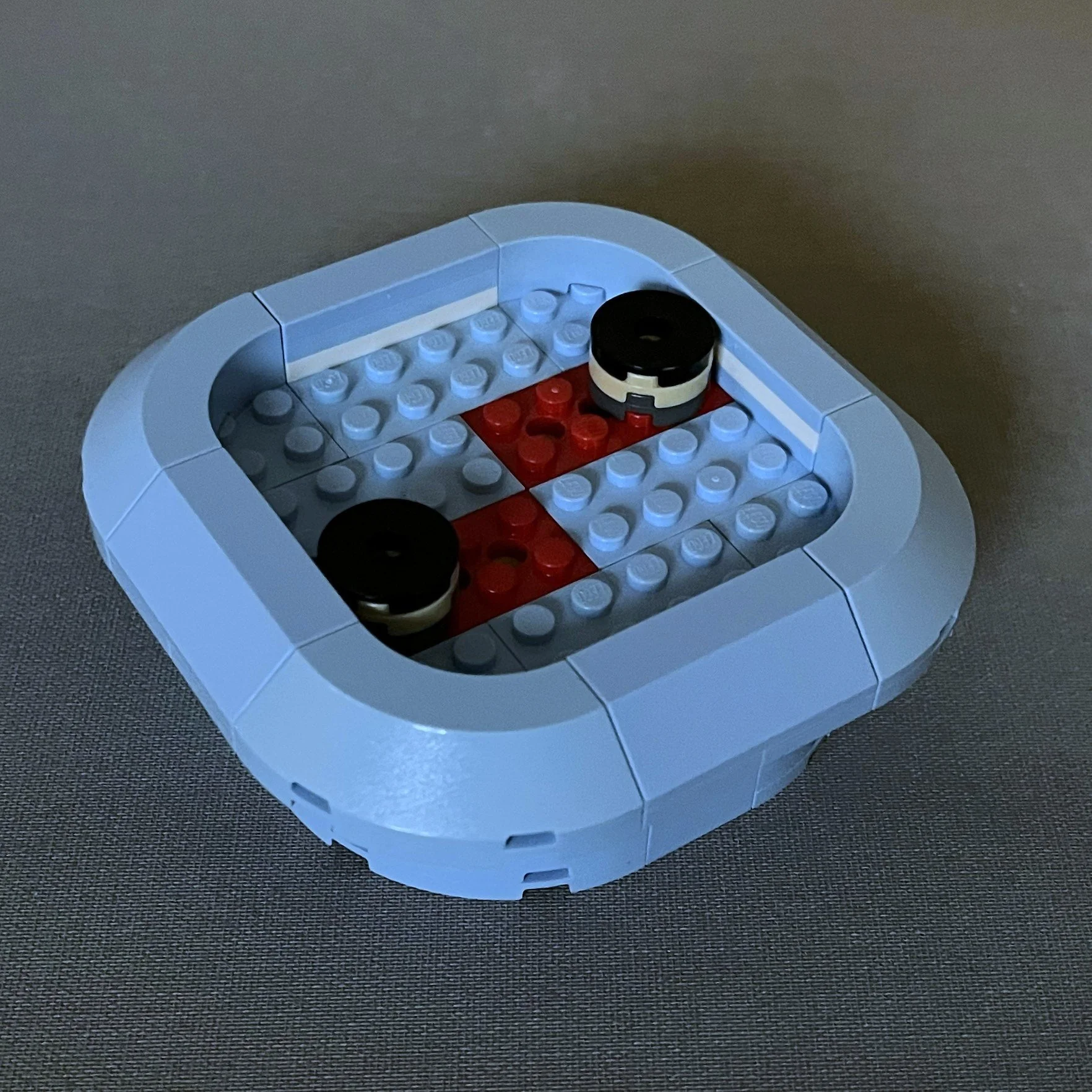
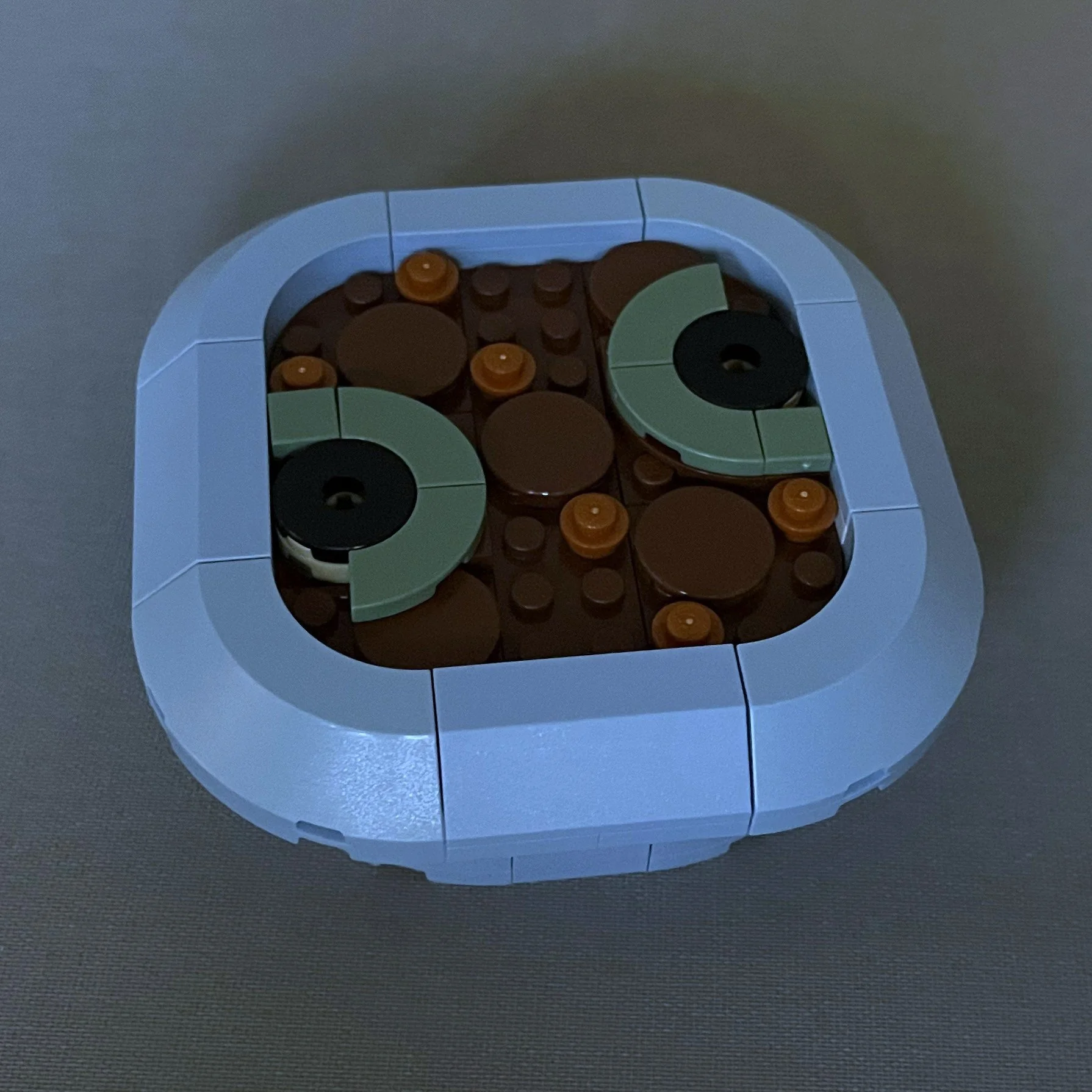
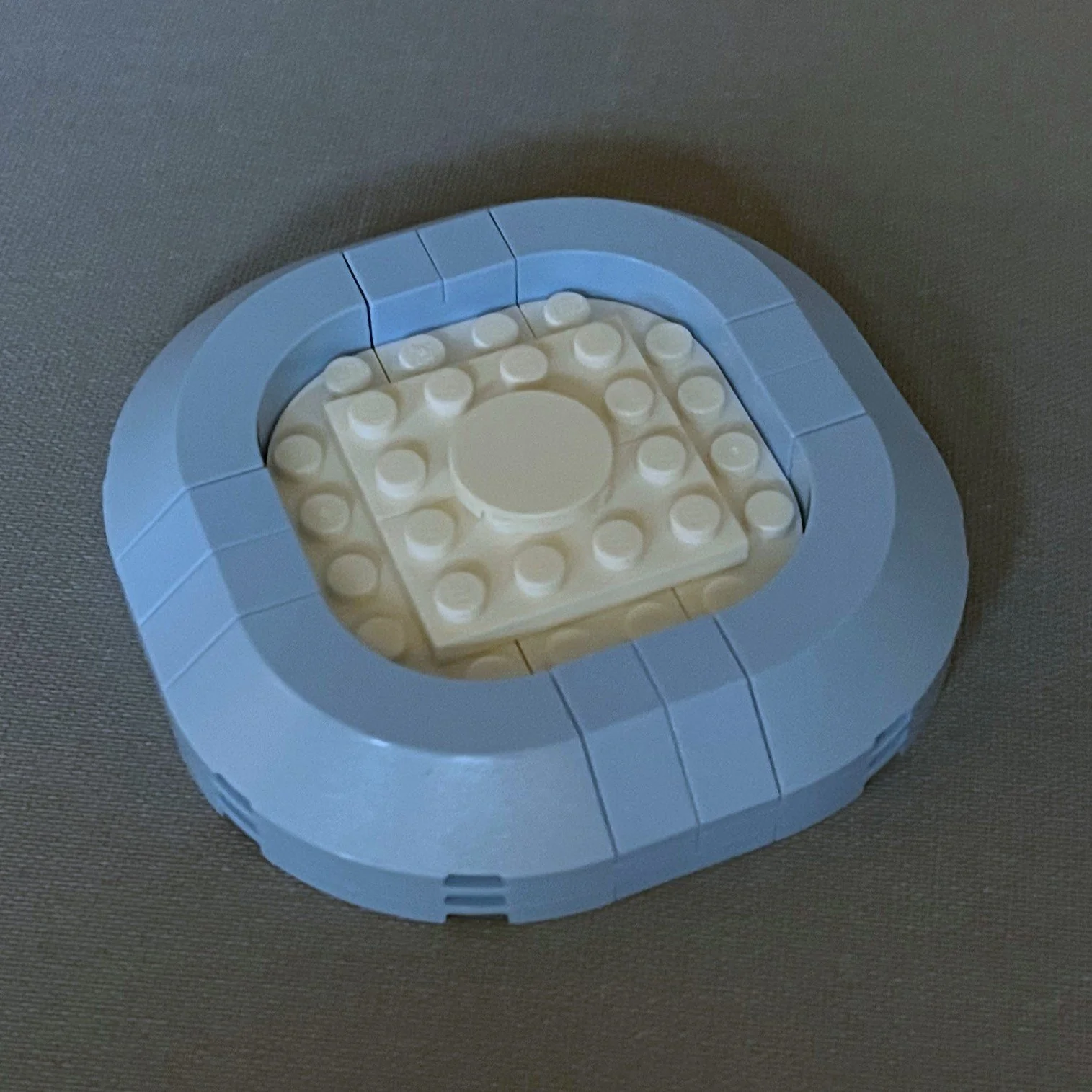
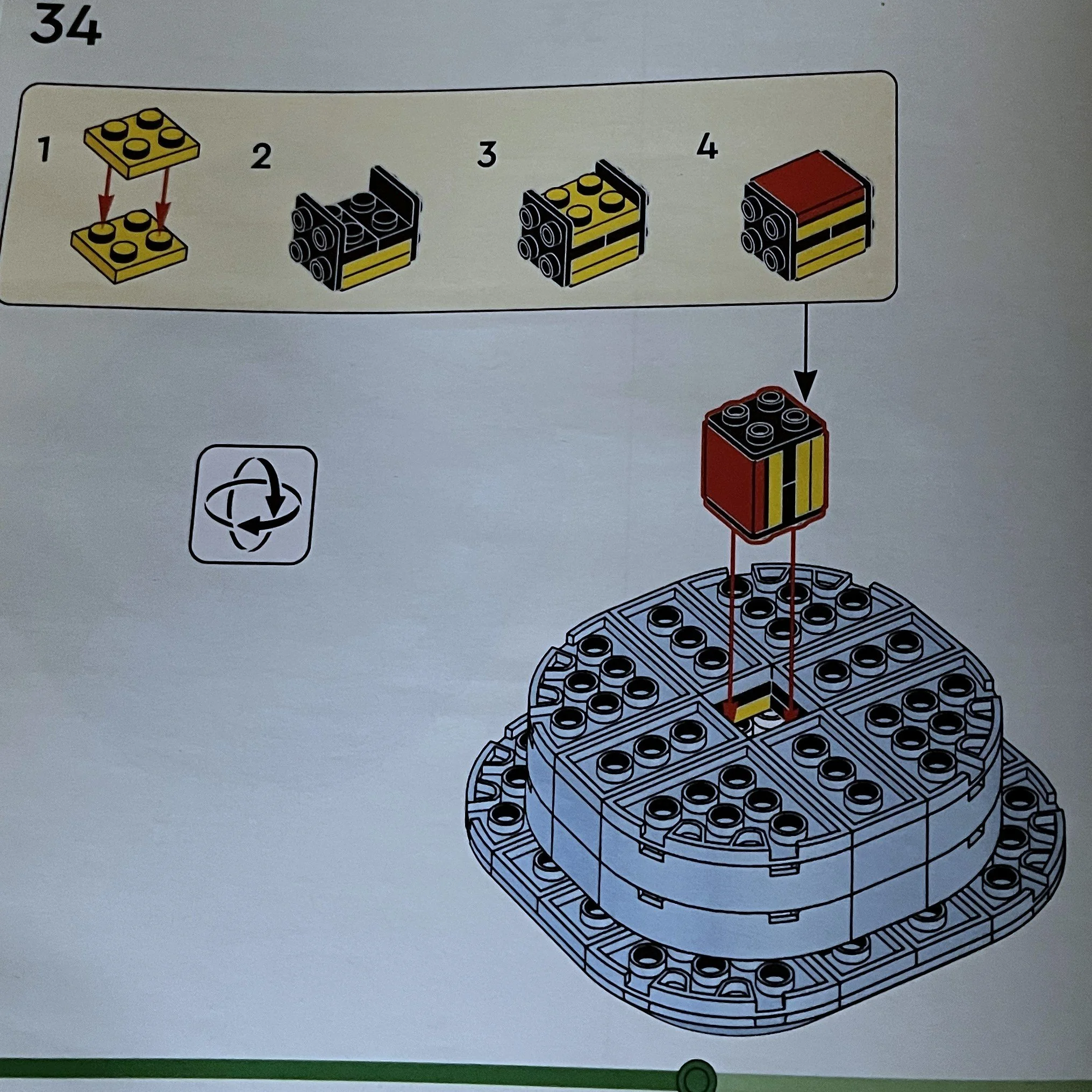
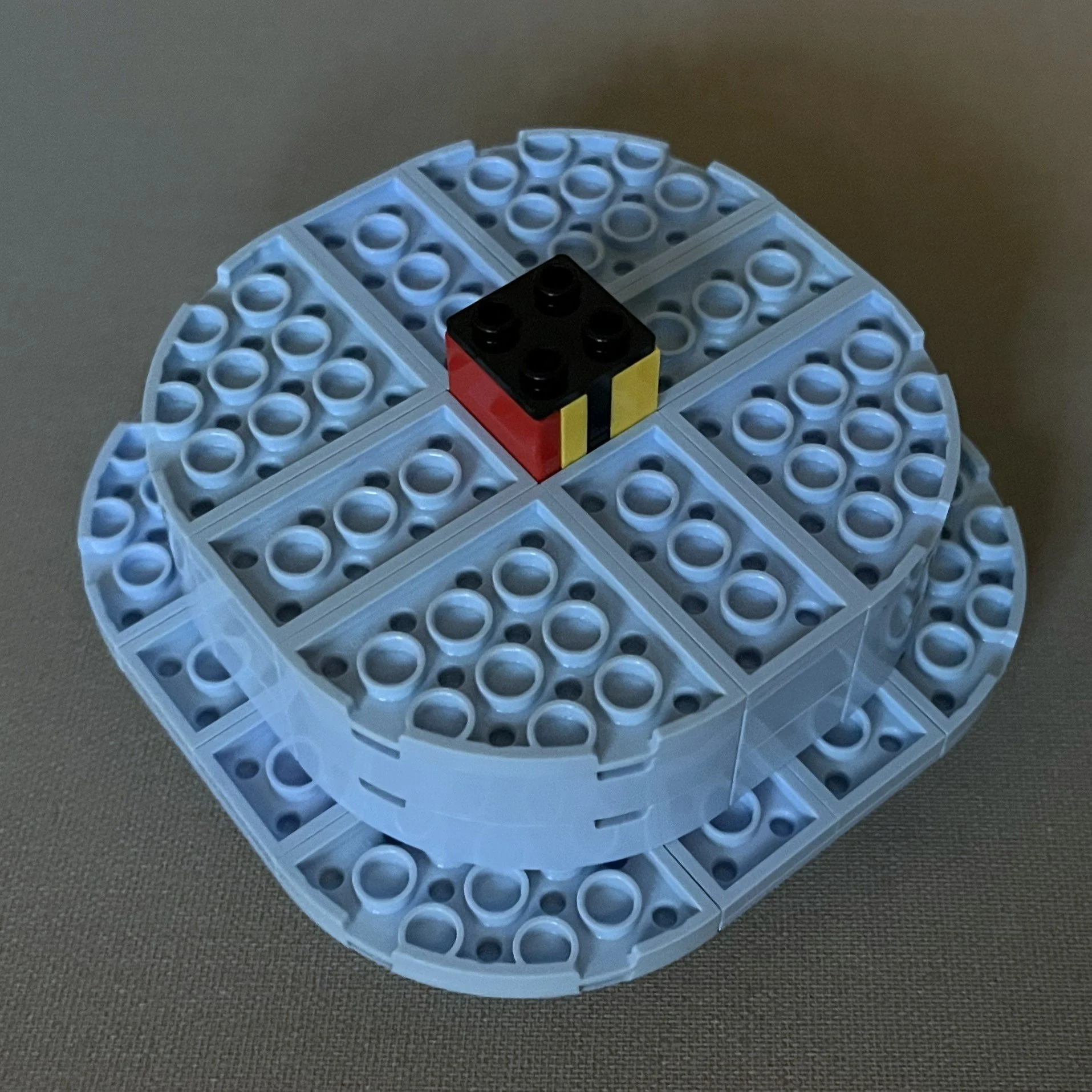
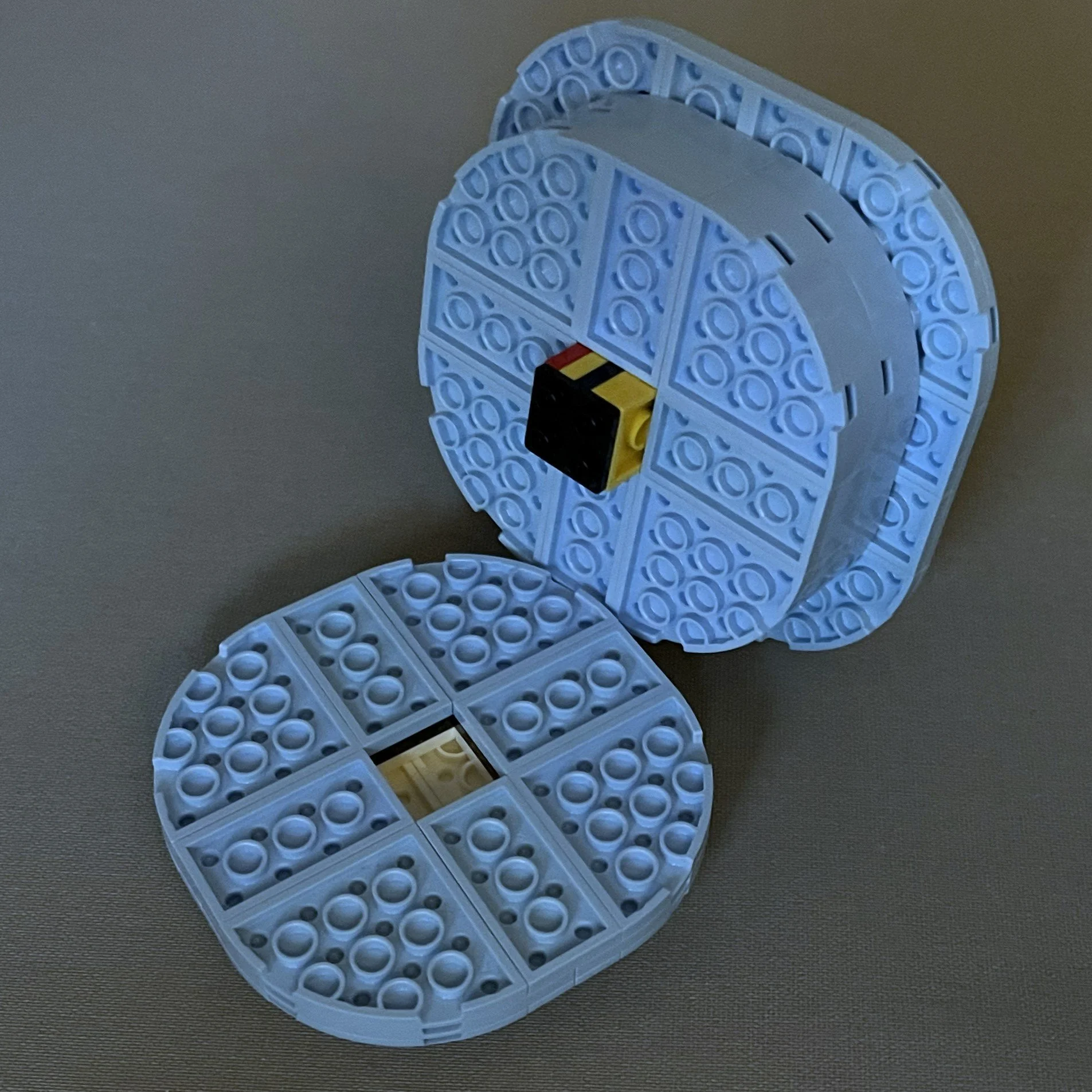
The pot is a bit generic-looking compared to all the beautiful pots we have seen in recent years, especially in the Four Gentlemen sets (10369 Plum Blossom, 10368 Chrysanthemum, 10344 Lucky Bamboo, and 10343 Mini Orchid). It is mostly built with round plates and bricks, and all the notches make it look like it’s full of holes. It’s a bit underwhelming and actually quite ugly. I like the color, though! It works quite well together with the sand green of the cacti.
Bag 2 - Cactus
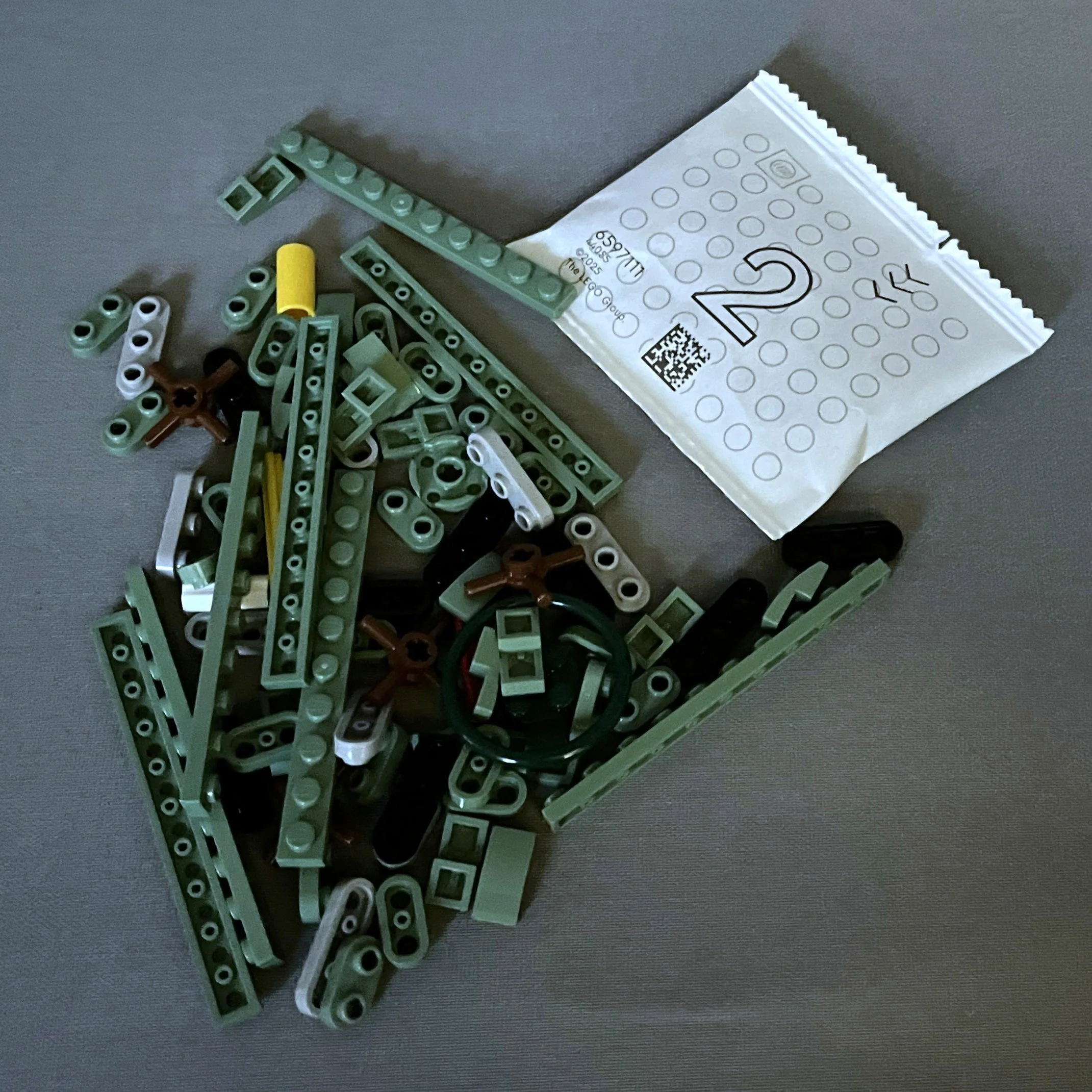
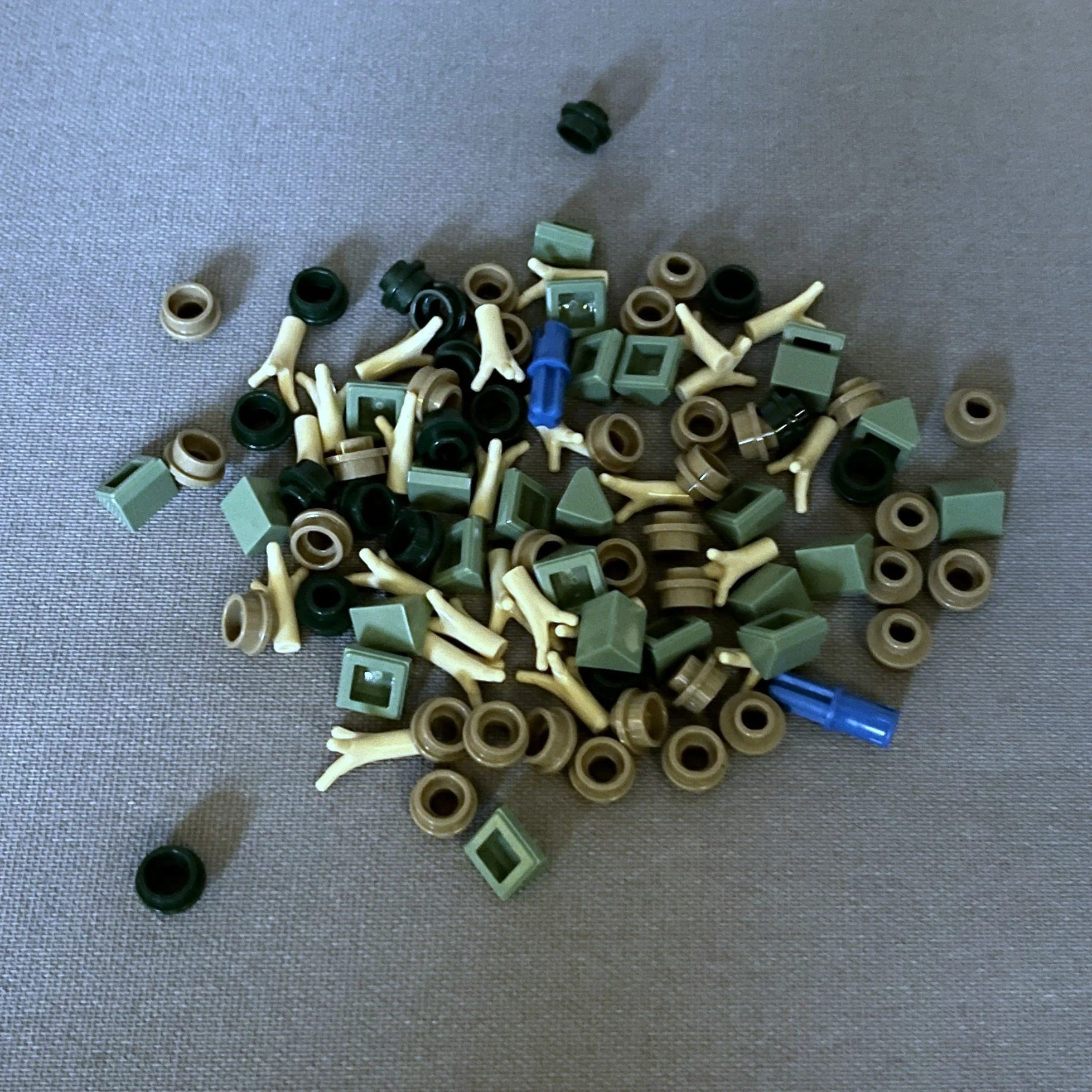
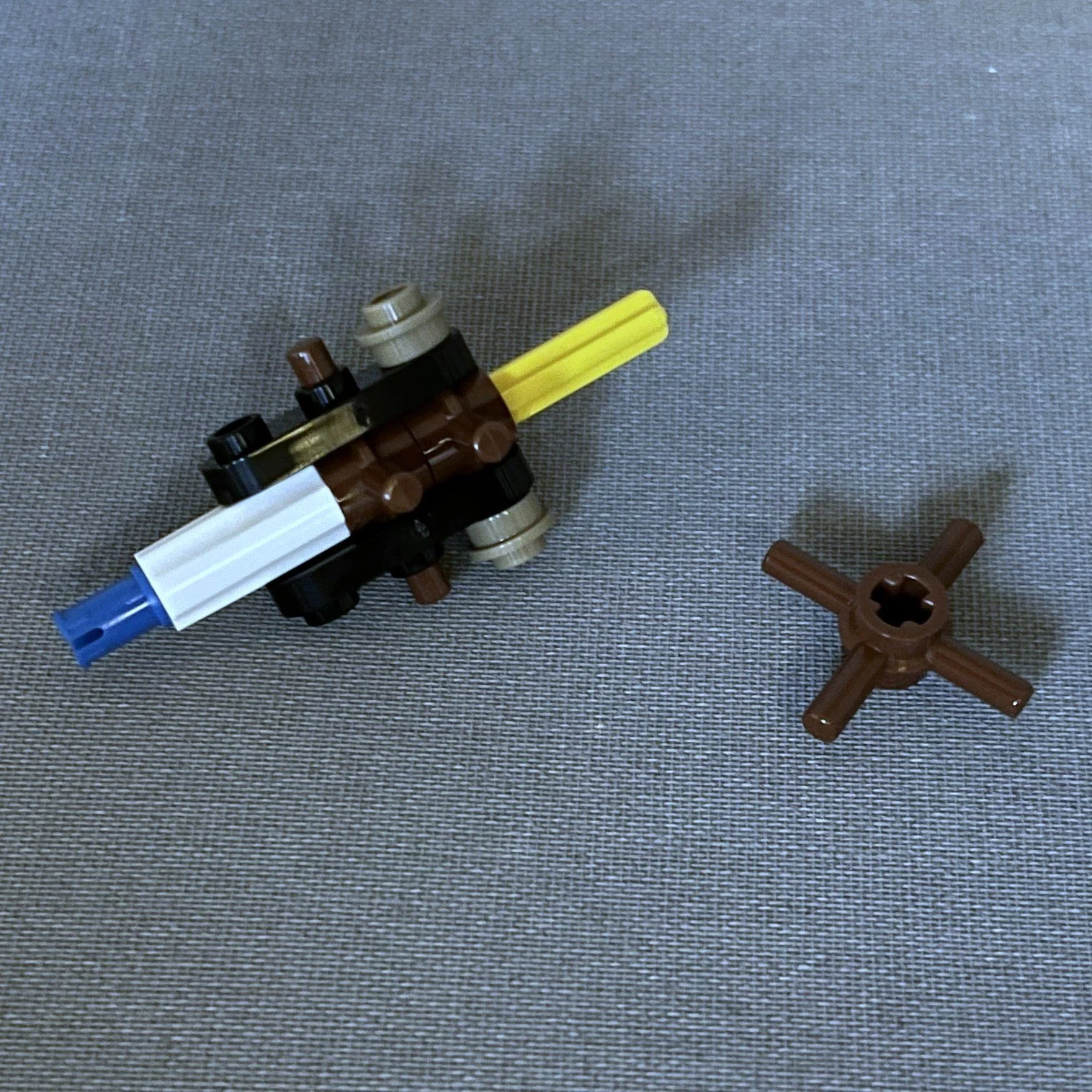
The next thing in line is the bigger of the two cacti. Both the big and the small ones are built in a very similar manner, borrowing techniques from the small cactus in 10309 Succulents. The color chosen to represent the cactus is sand green, which I think does a pretty good job.
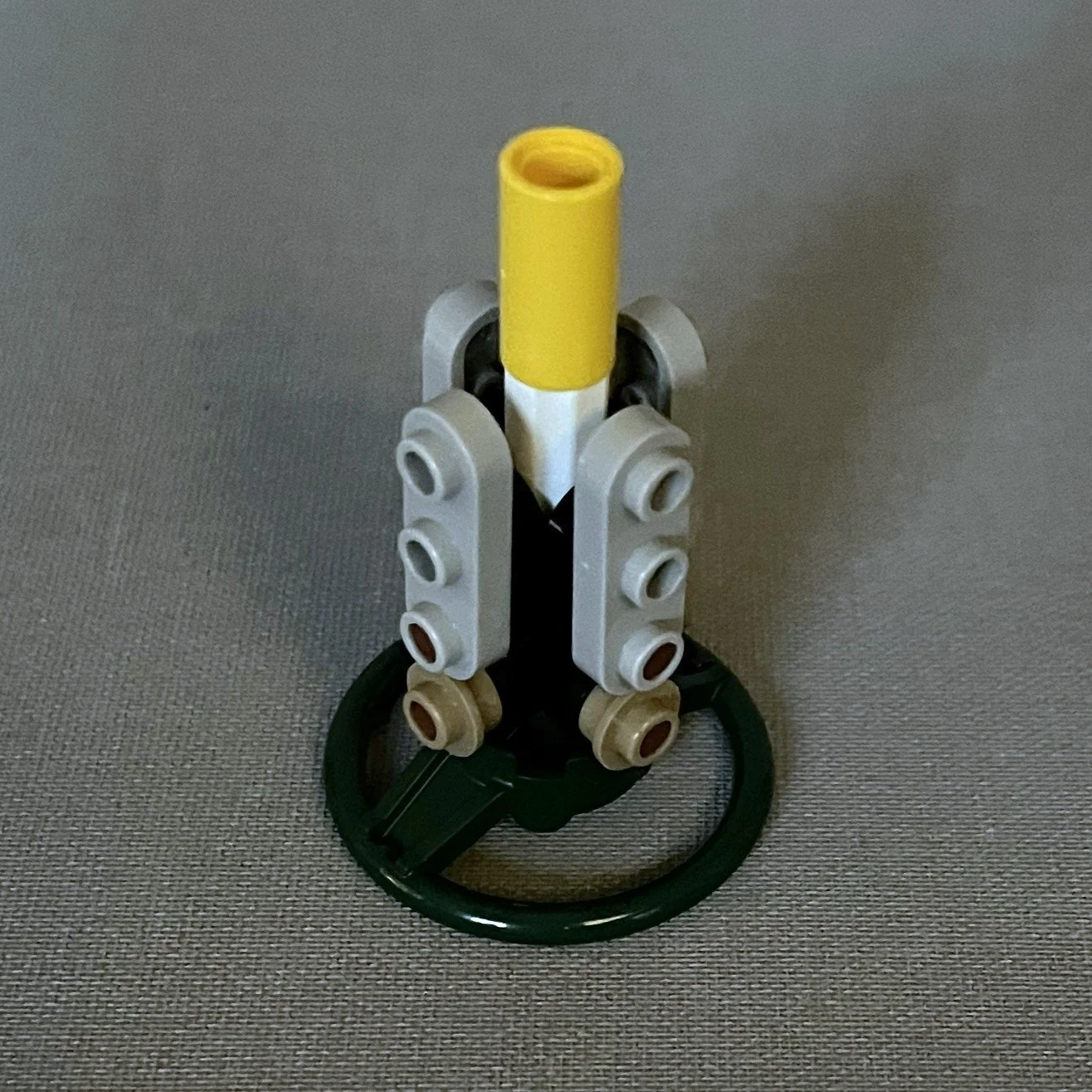
You start with this nifty SNOT core based on steering wheels and a Technic axle.
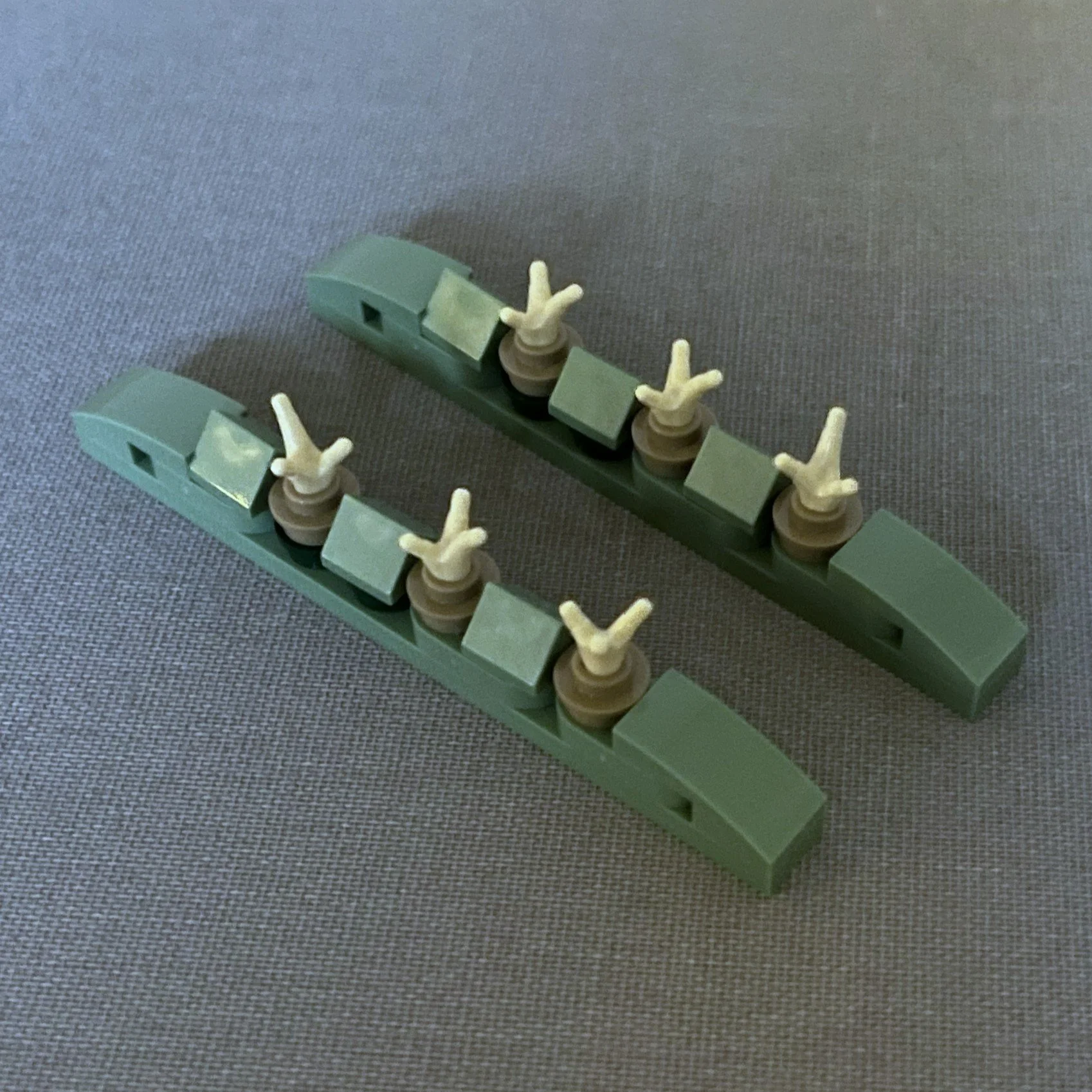
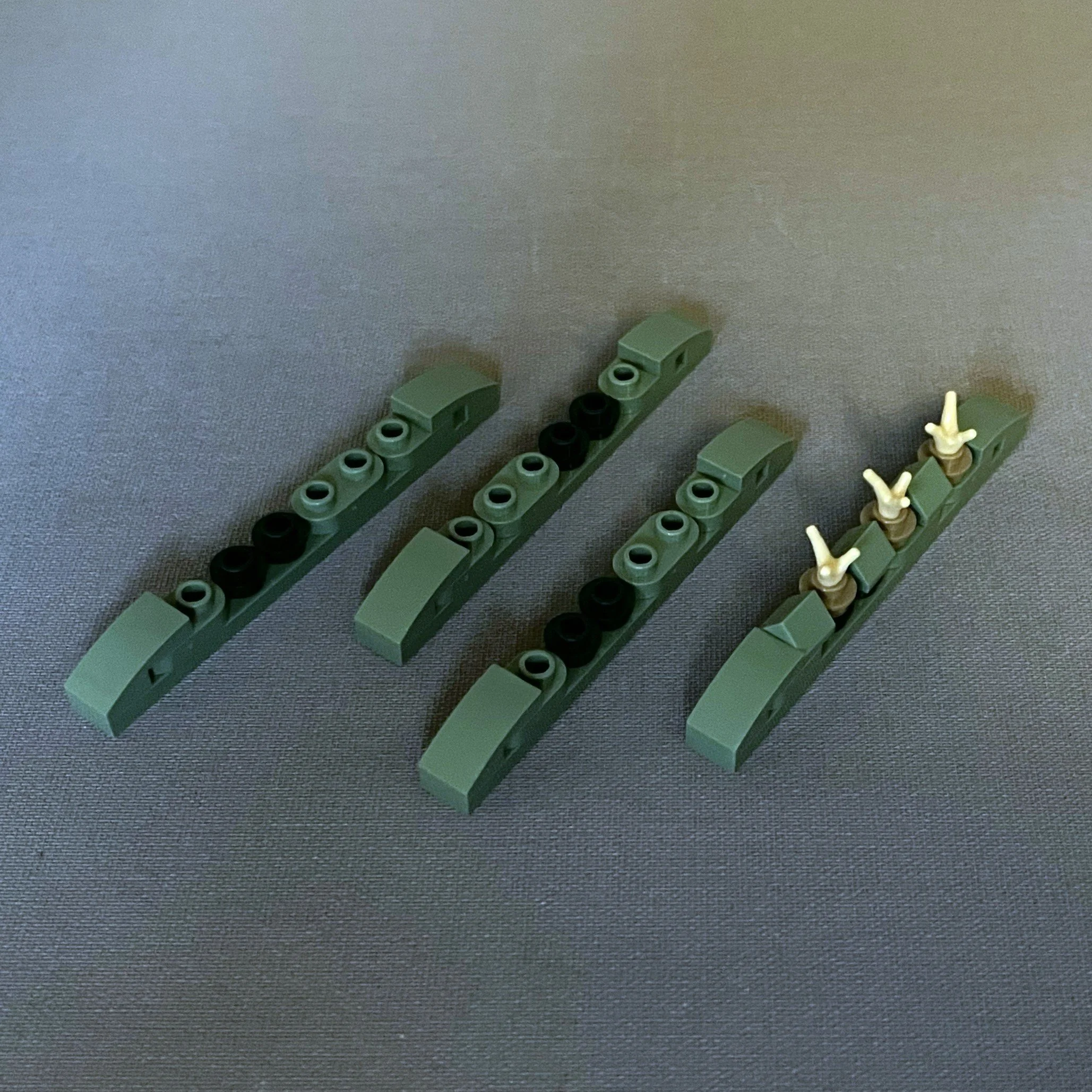
Then you build the ridges of the cactus. There are eight identical ridges and building them feels both repetitive and painful. Pressing down all those tan hair pieces in hollow studs is not pleasant.
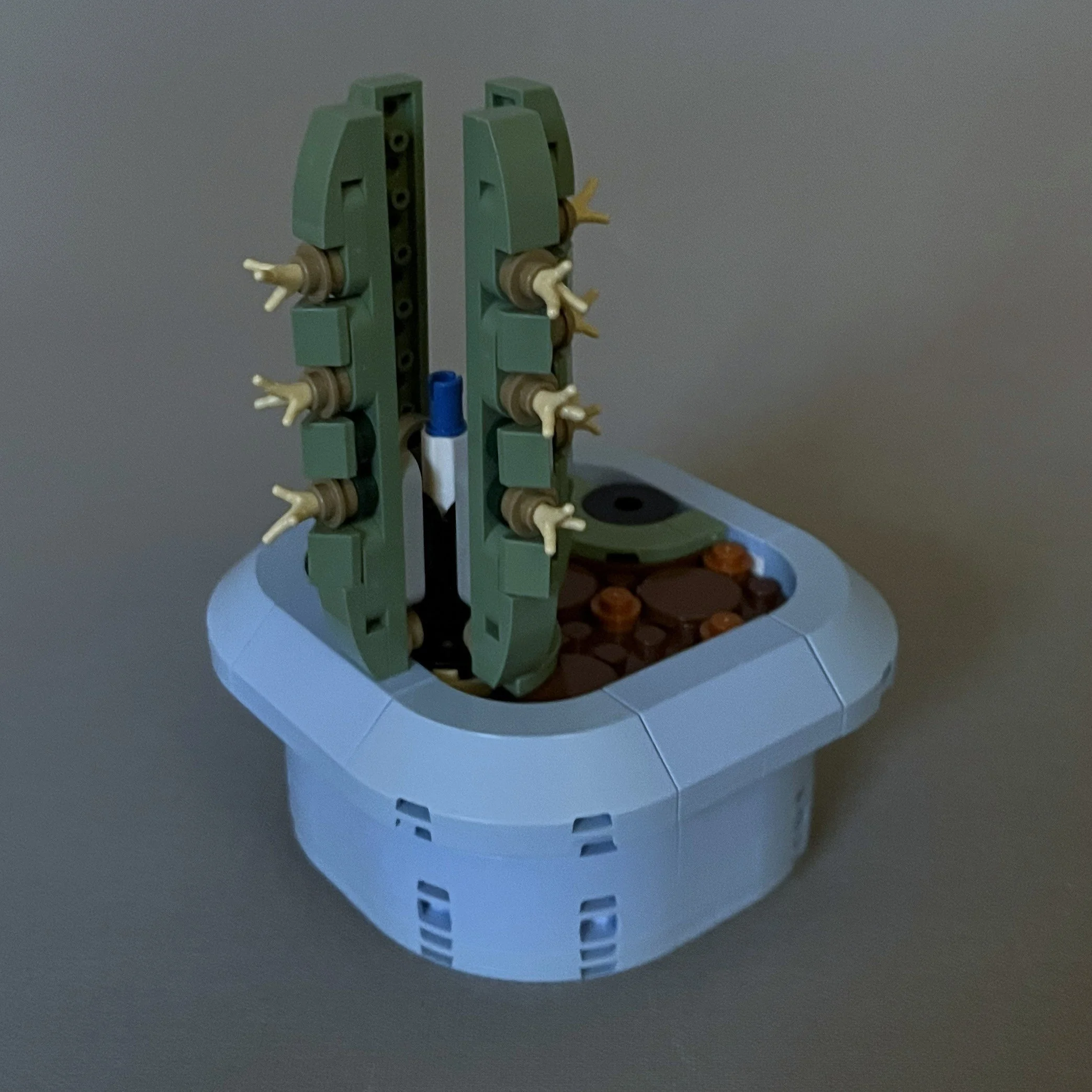
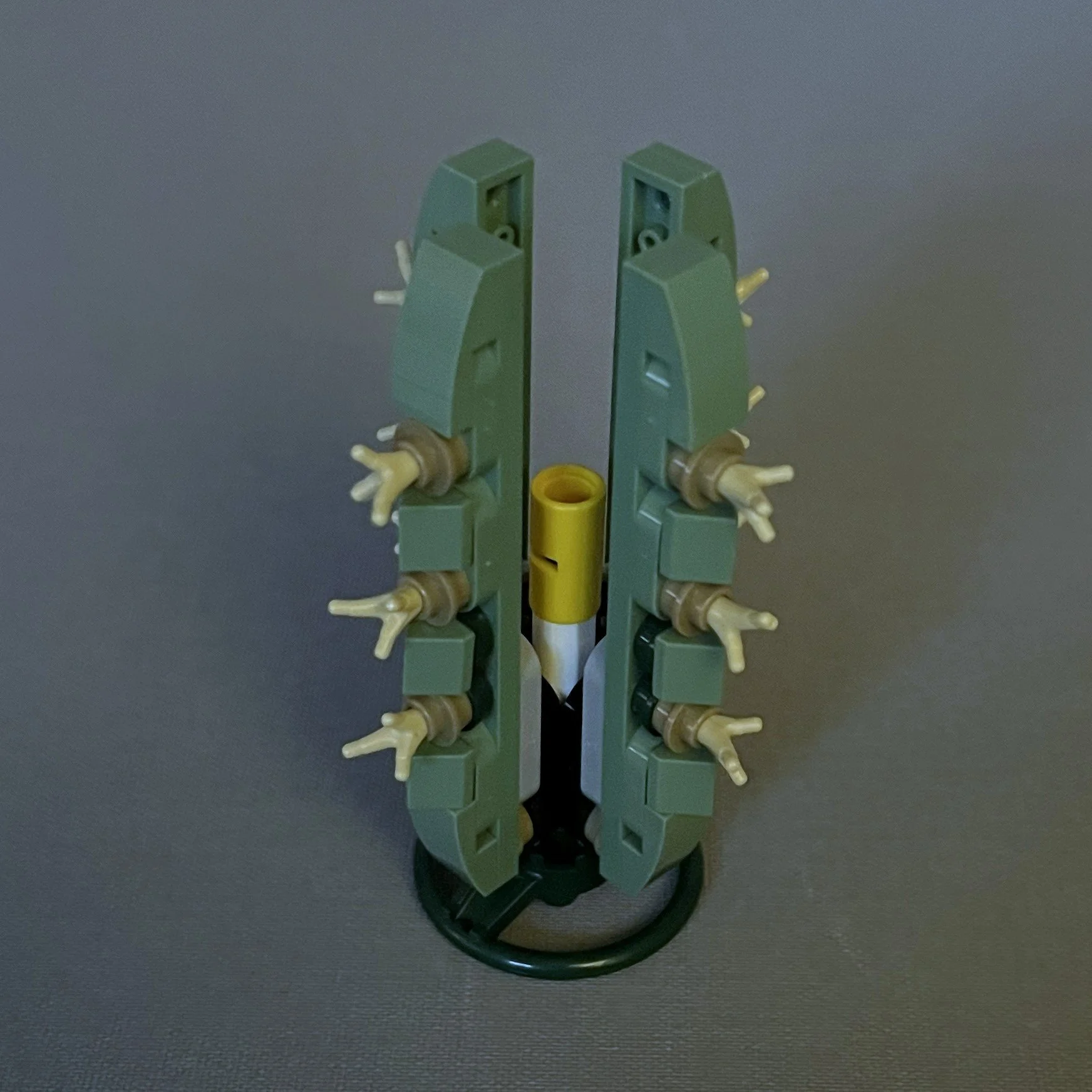
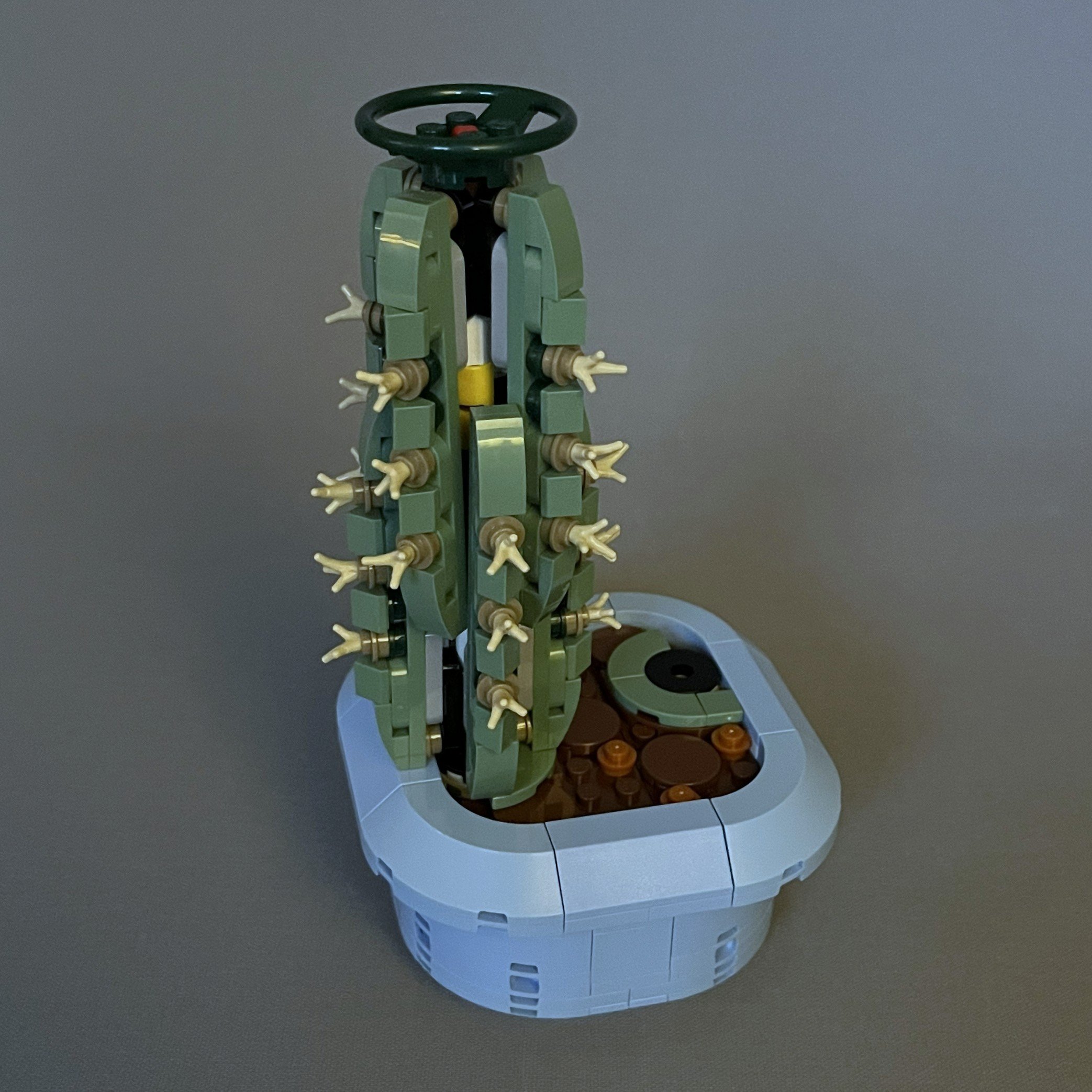
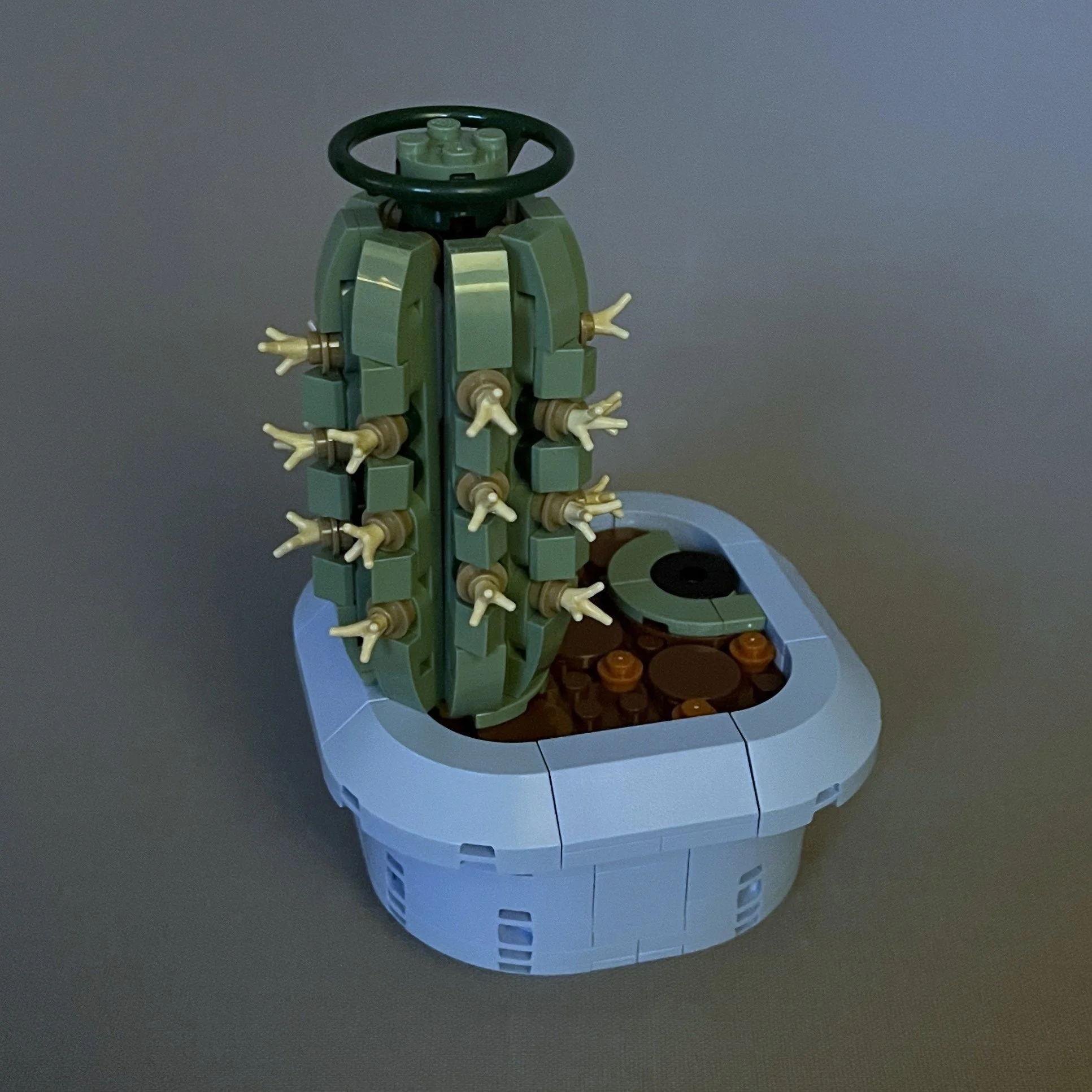
End of bag 2
Bag 3 - Cactus
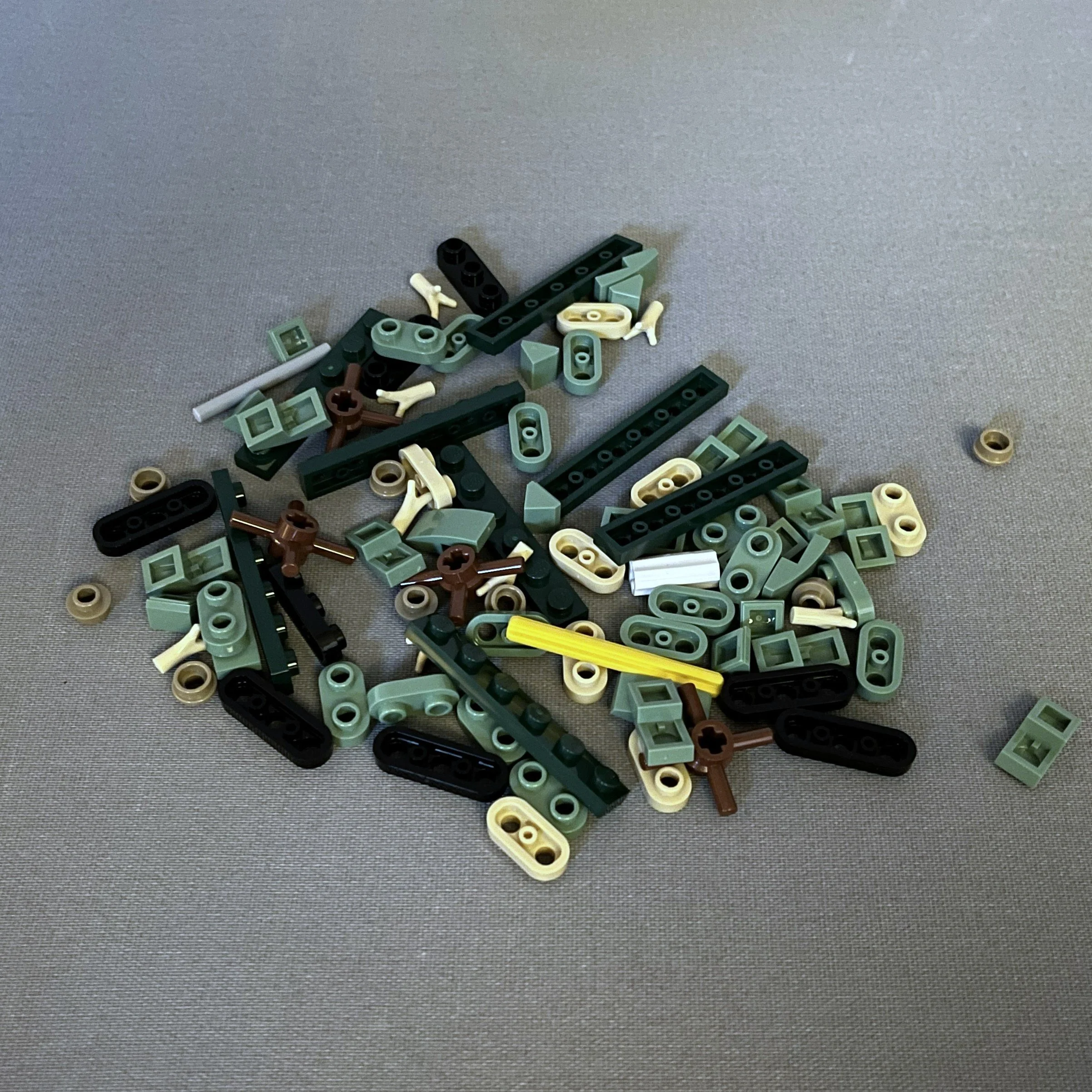
This bag contains the parts for building the smaller cactus. It is built in a very similar manner and once again you build eight identical ridges with pointy bits hurting your finger tips.
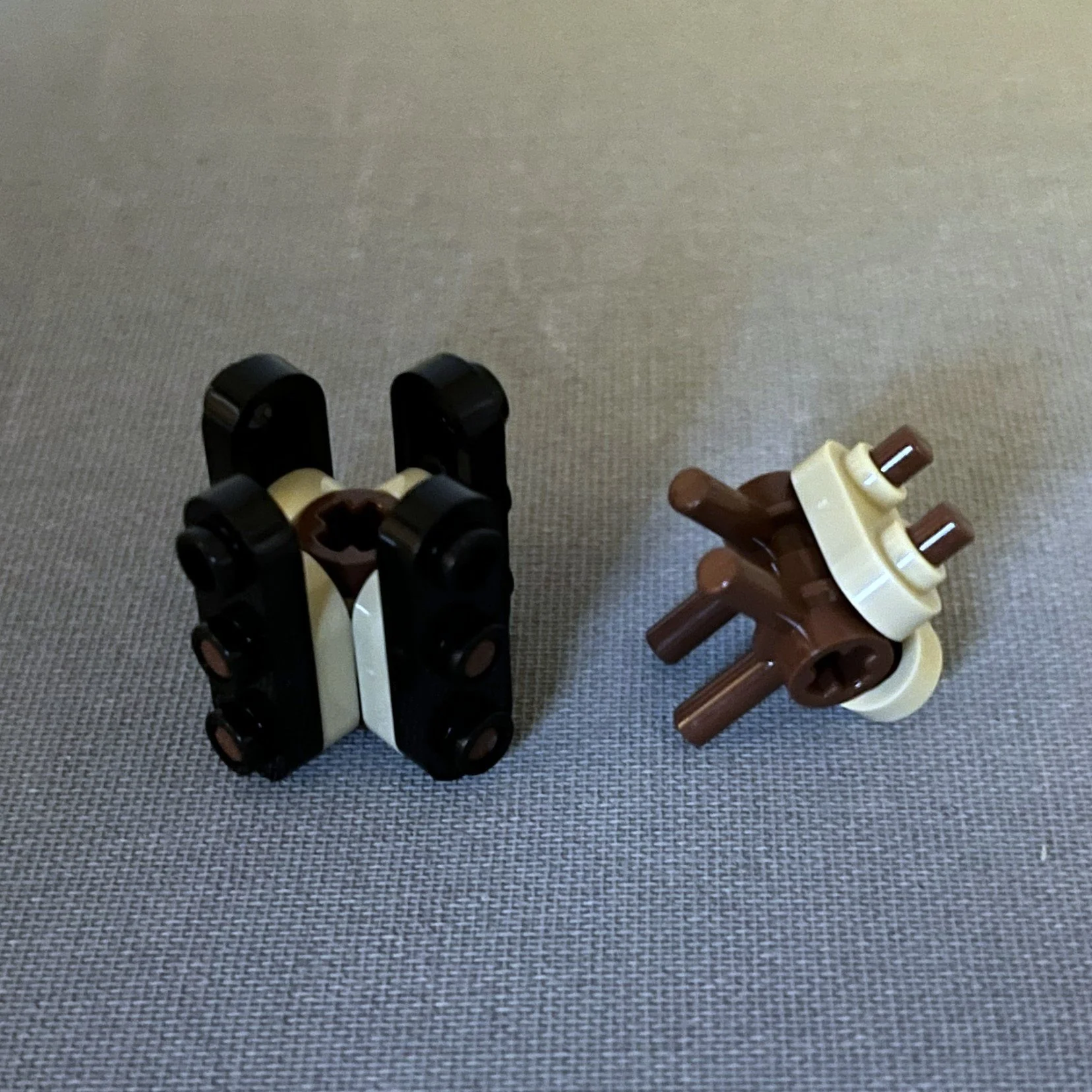
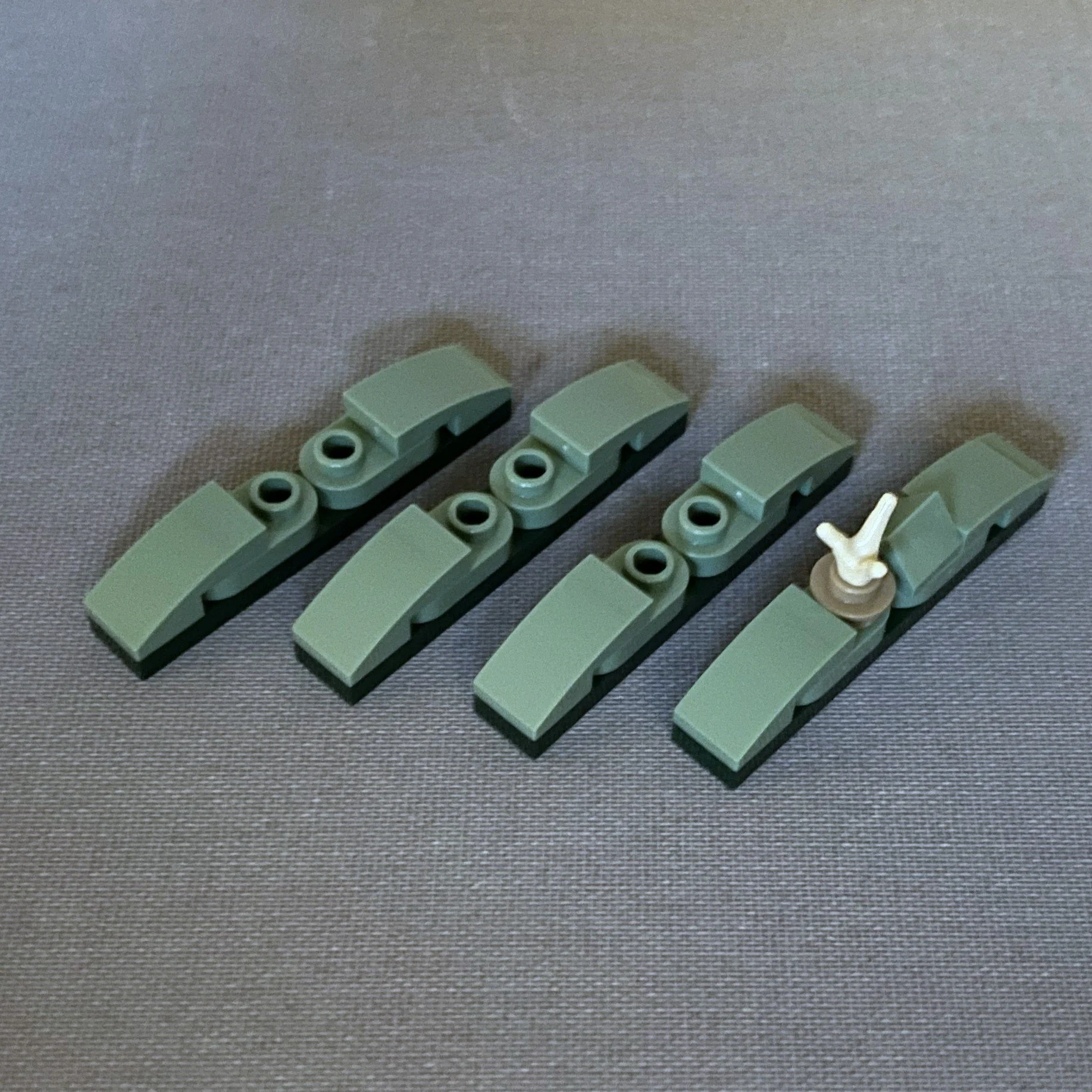
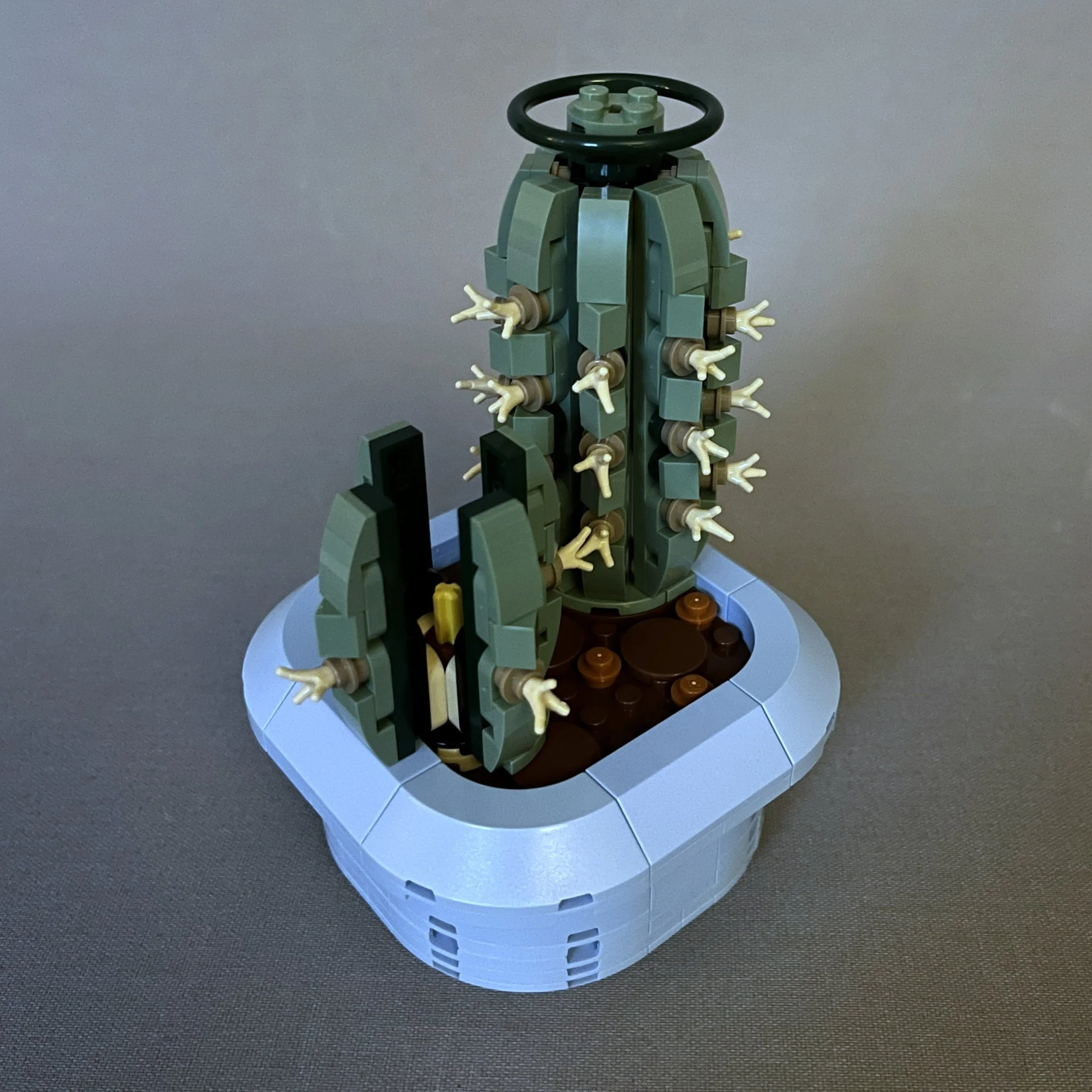
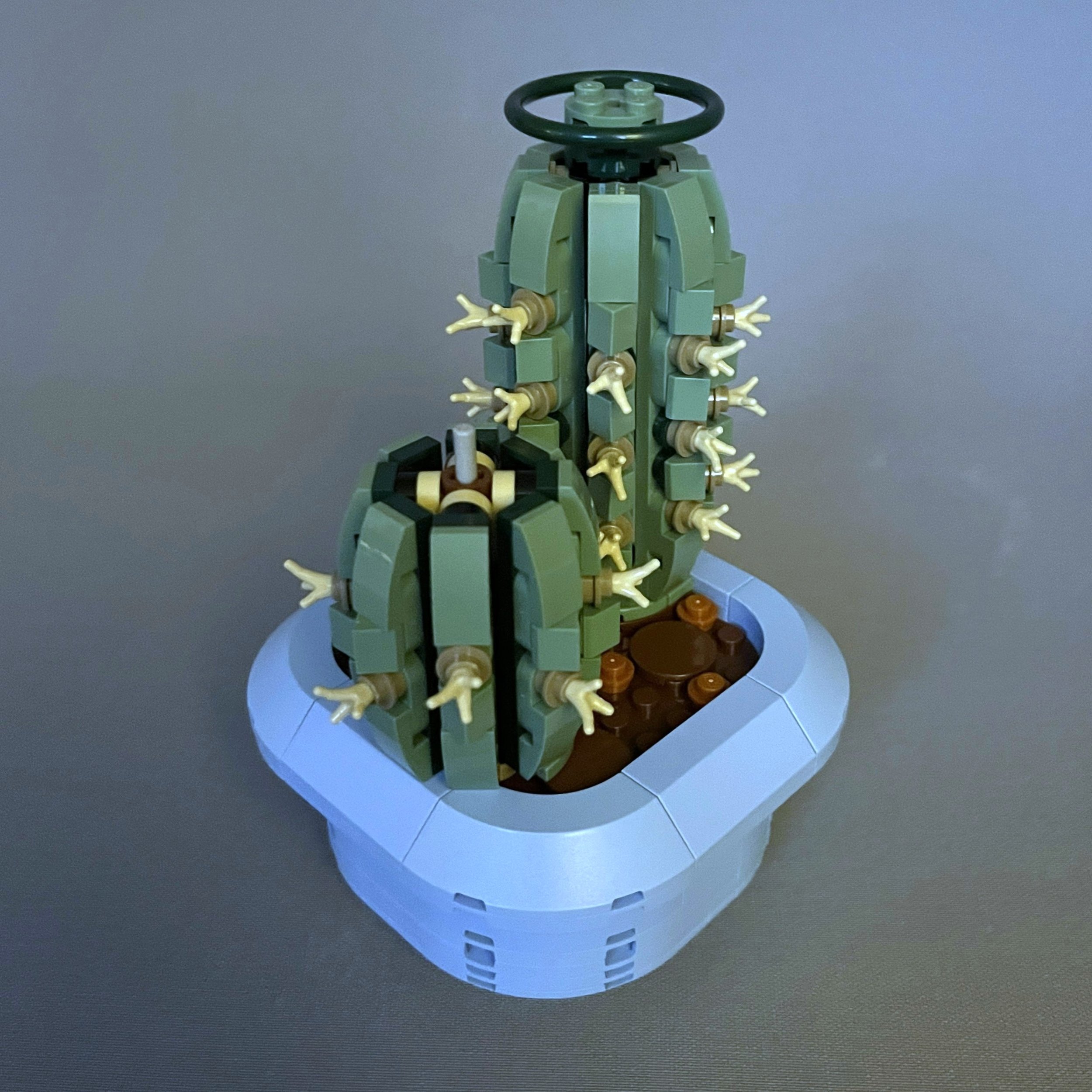
End of Bag 3
Bag 4 - Flowers
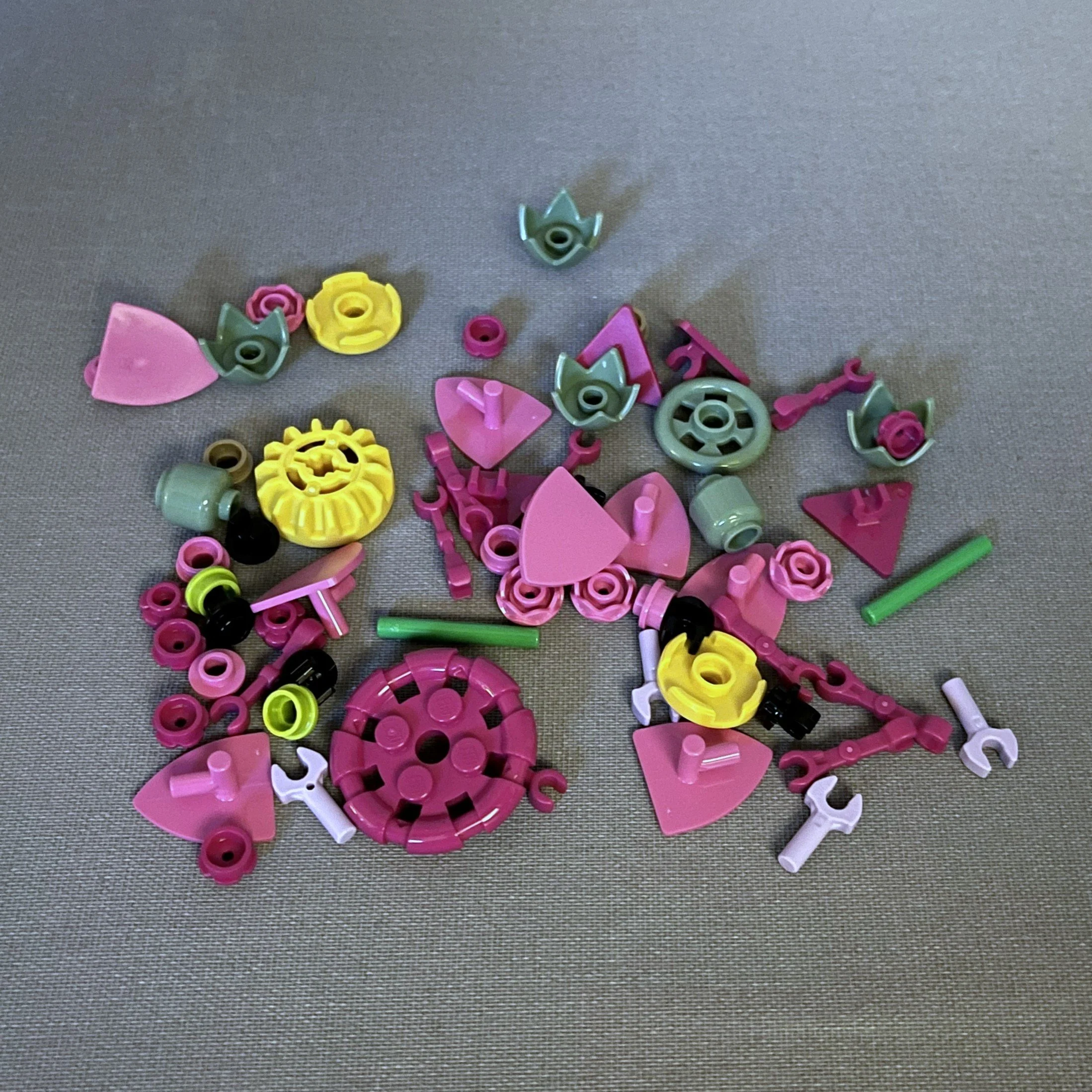
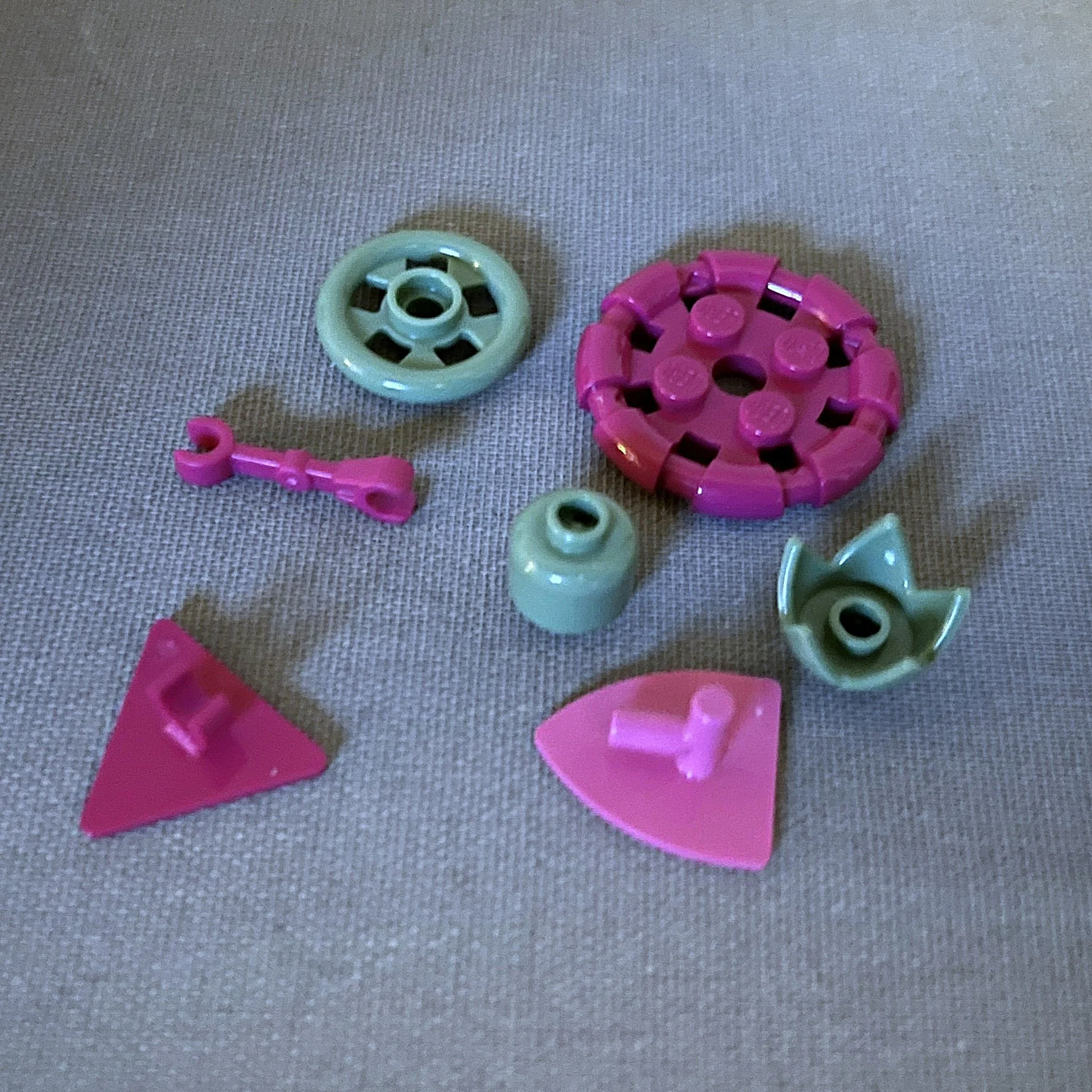
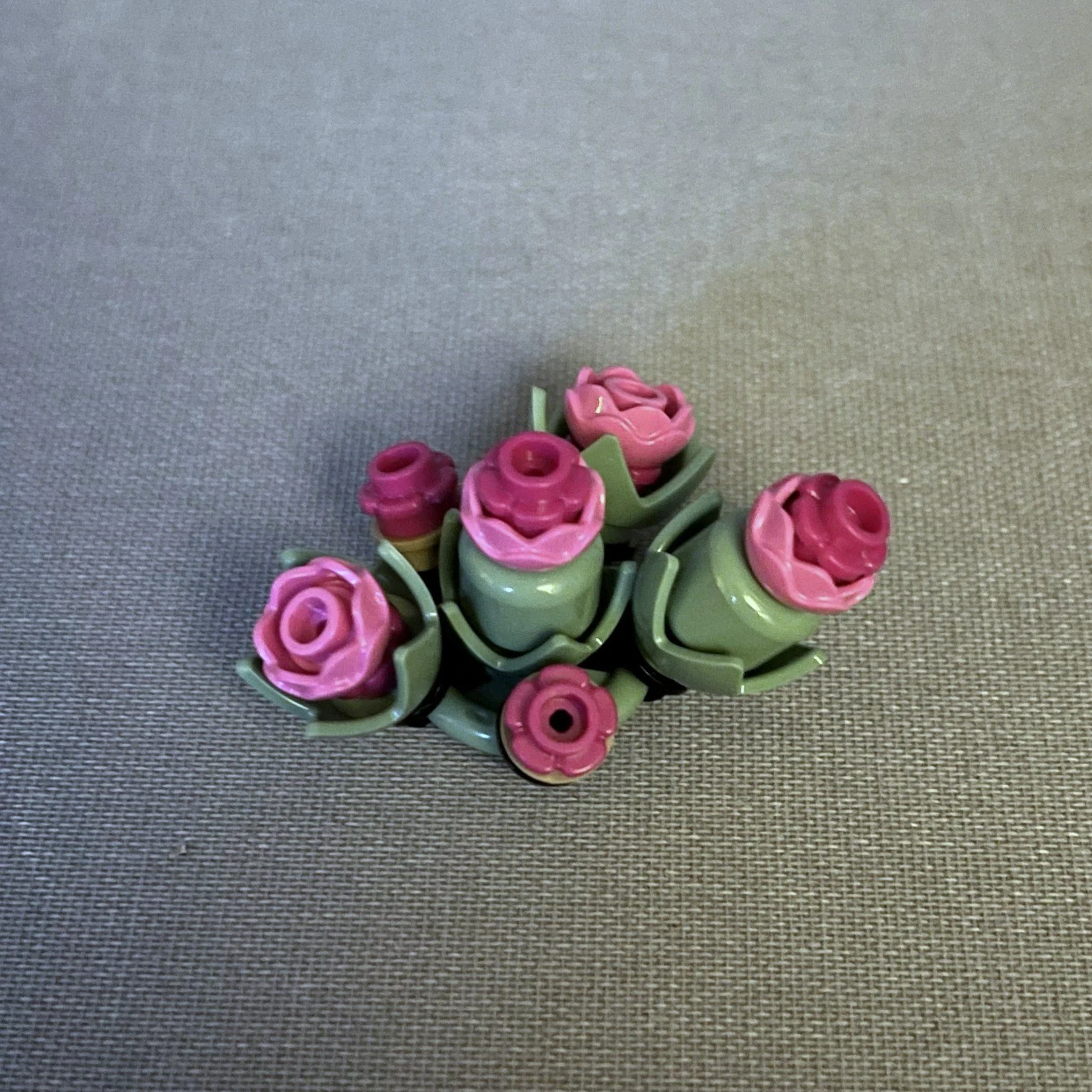
The final bag contains the parts for building the colorful flowers on top. Here, we are treated to quite a lot of recolors, like pink shields and dark pink robot arms. There is also a new element here: The 3x3 sand green wheel.
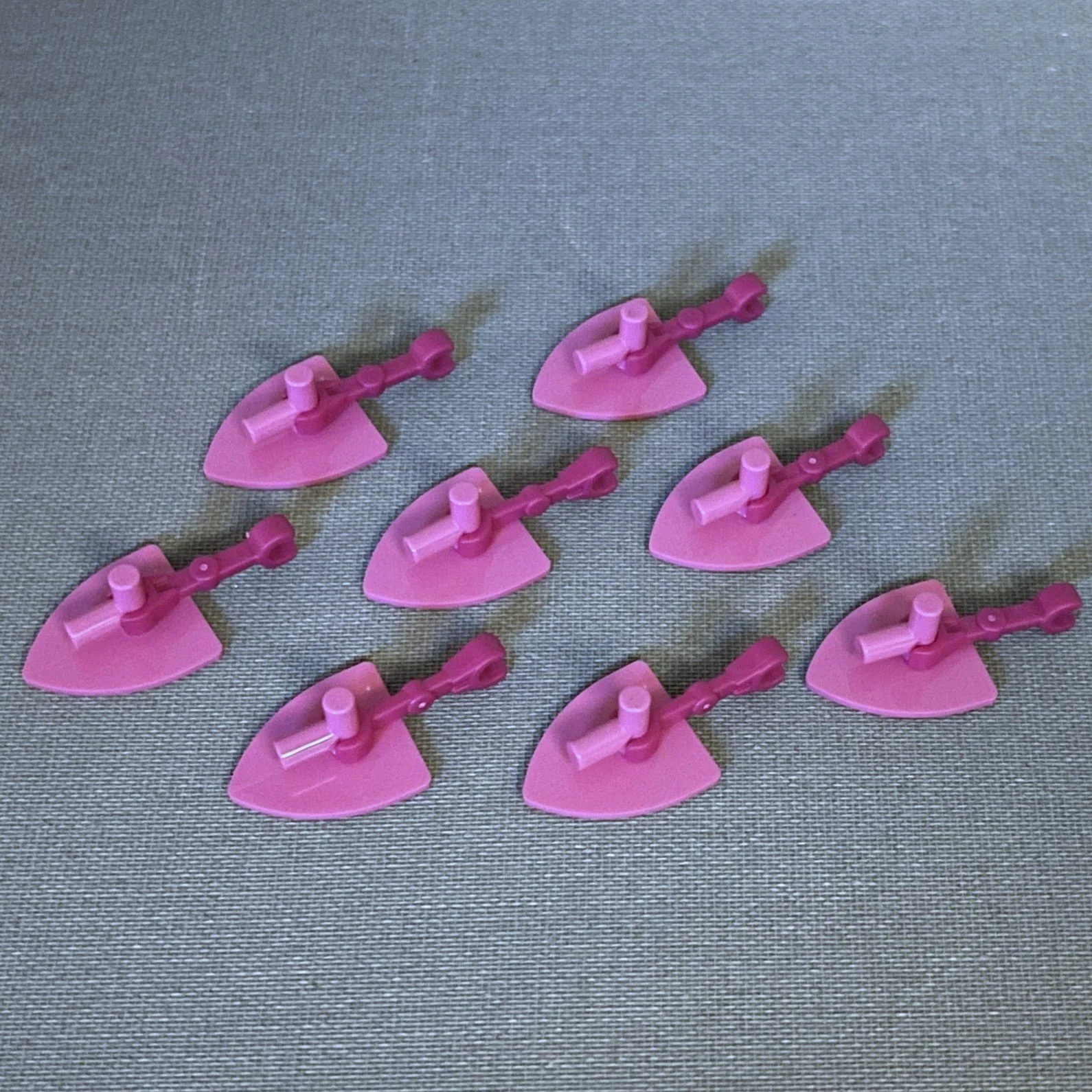
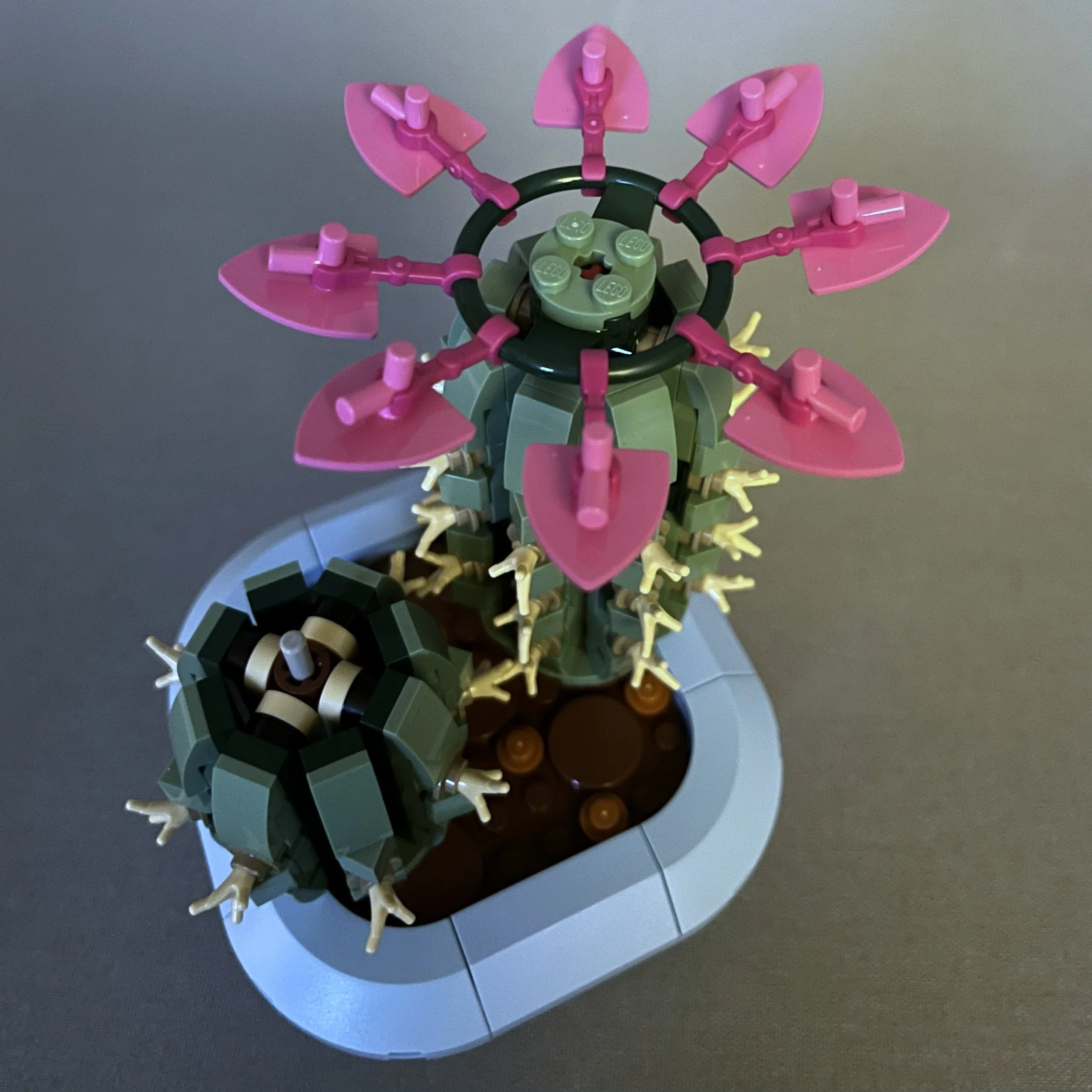
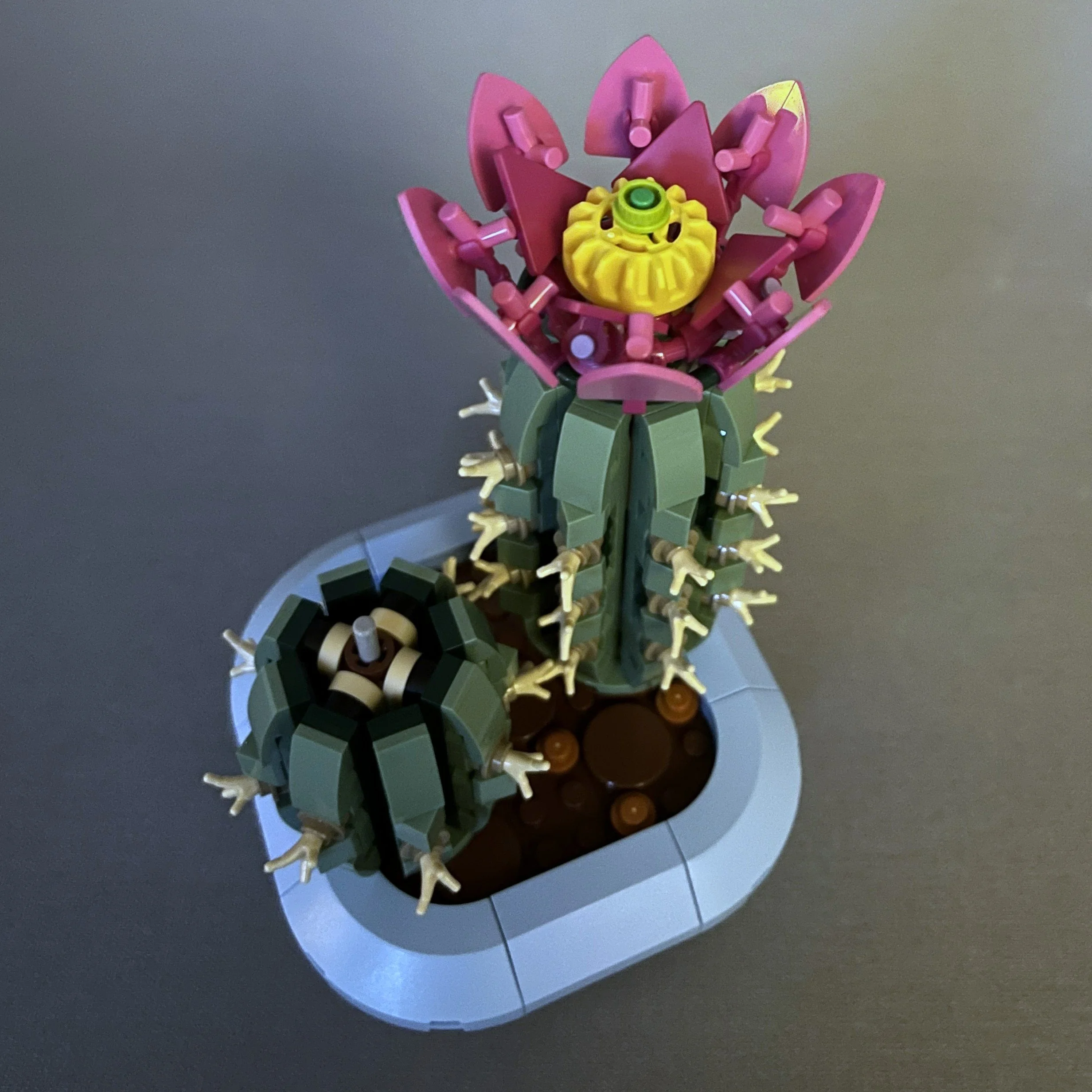
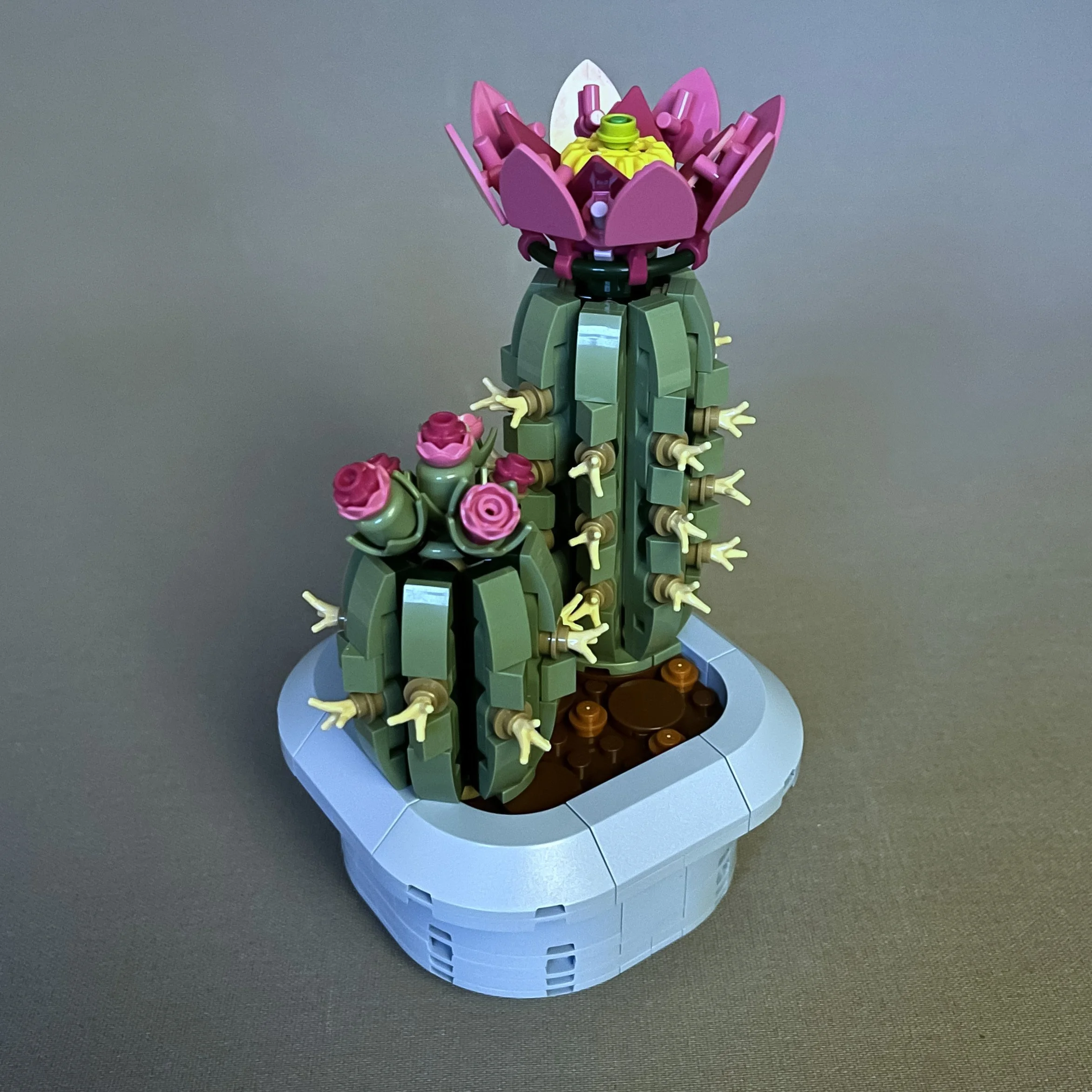
The flowers are the most interesting and fun part of the build, so it’s a good thing to save for last. Putting the final assembly on top of the cacti feels like a crowning of sorts. And the final result looks very pretty!
Final Thoughts
Just as in the daisies set above, there is no image of the original flower, and no information about which cactus is represented in the booklet. There is an image of a cactus on the back of the package, but no description. I would have found that interesting.
The pot was fun to build, with a complicated inner structure surrounded by a variety of curved elements. The cacti, on the other hand, were very repetitive and actually painful to build. The final result is very pretty despite the pot having so many holes. The flowers that crown the cacti look beautiful and have some interesting parts and color combos. It will look good in windows or on desktops everywhere!
Parts Usage: 4/5
Building Experience: 3/5
Final Result: 4/5
Overall: 4/5

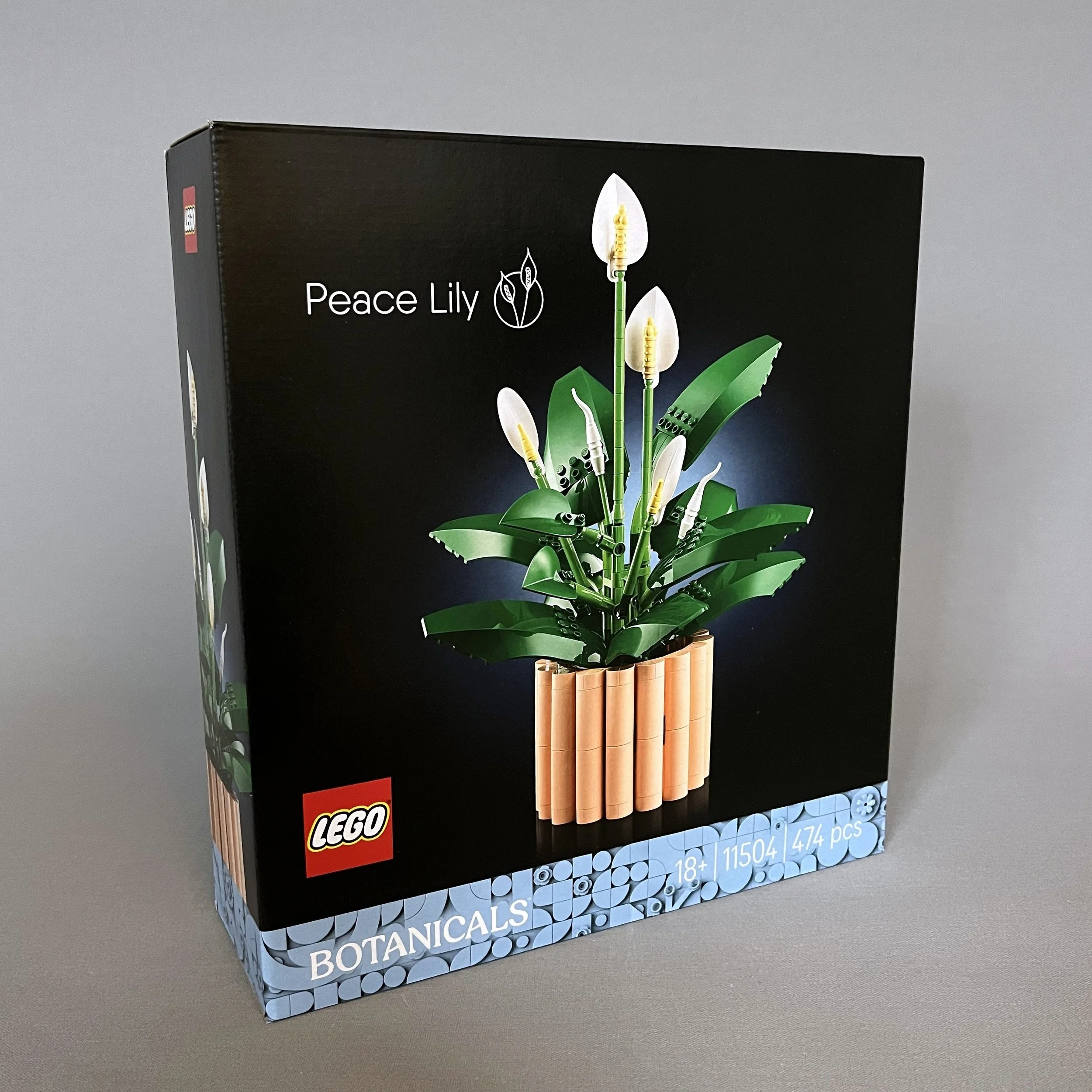
11504 Peace Lily, 18+, 474 pieces
“Spathiphyllum is a genus of about 60 species of monocotyledonous flowering plants in the family Araceae, native to tropical regions of the Americas and southeastern Asia. Certain species of Spathiphyllum are commonly known as spath or peace lilies.” - Wikipedia
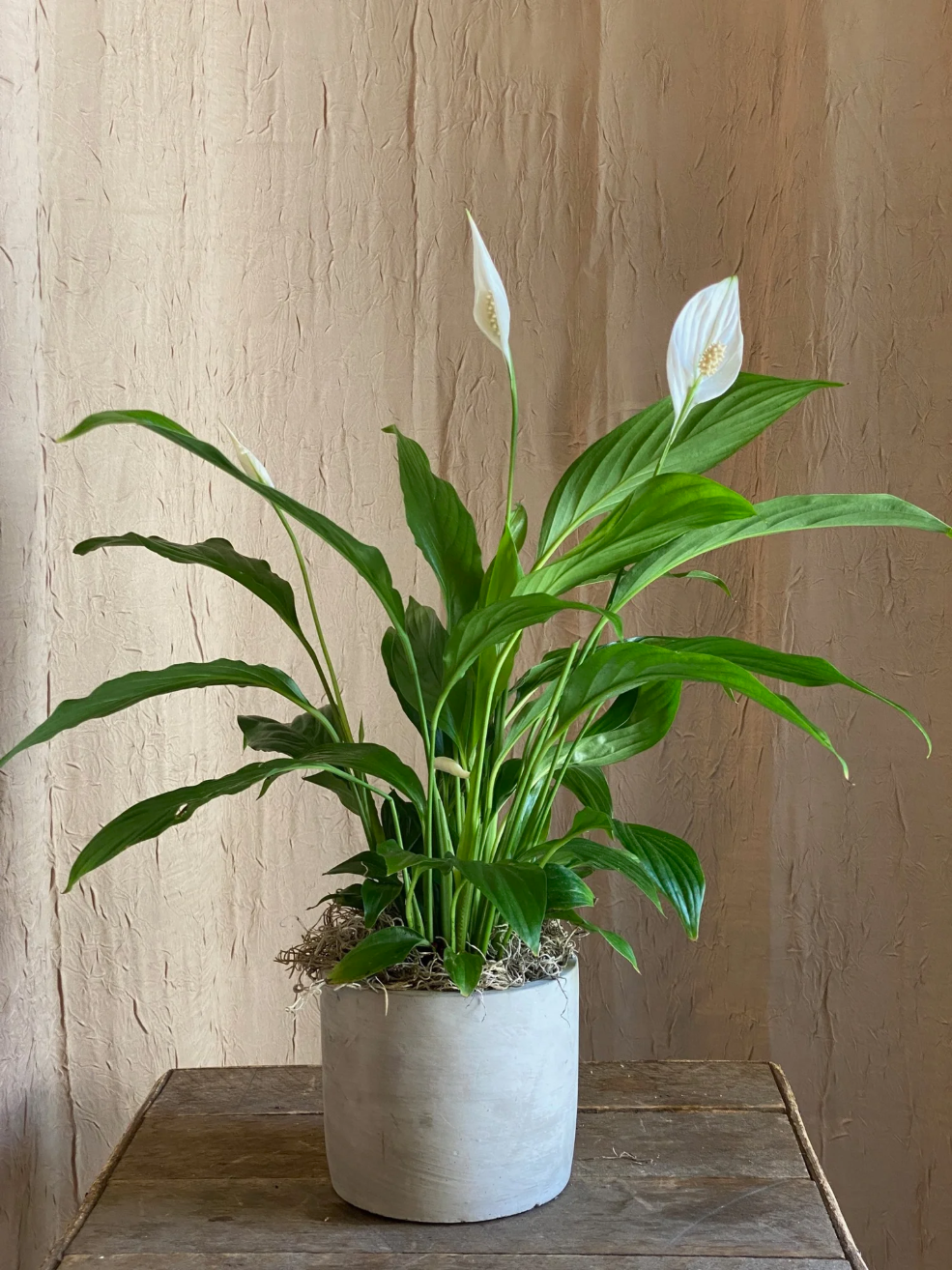
Image from stems-floral.com
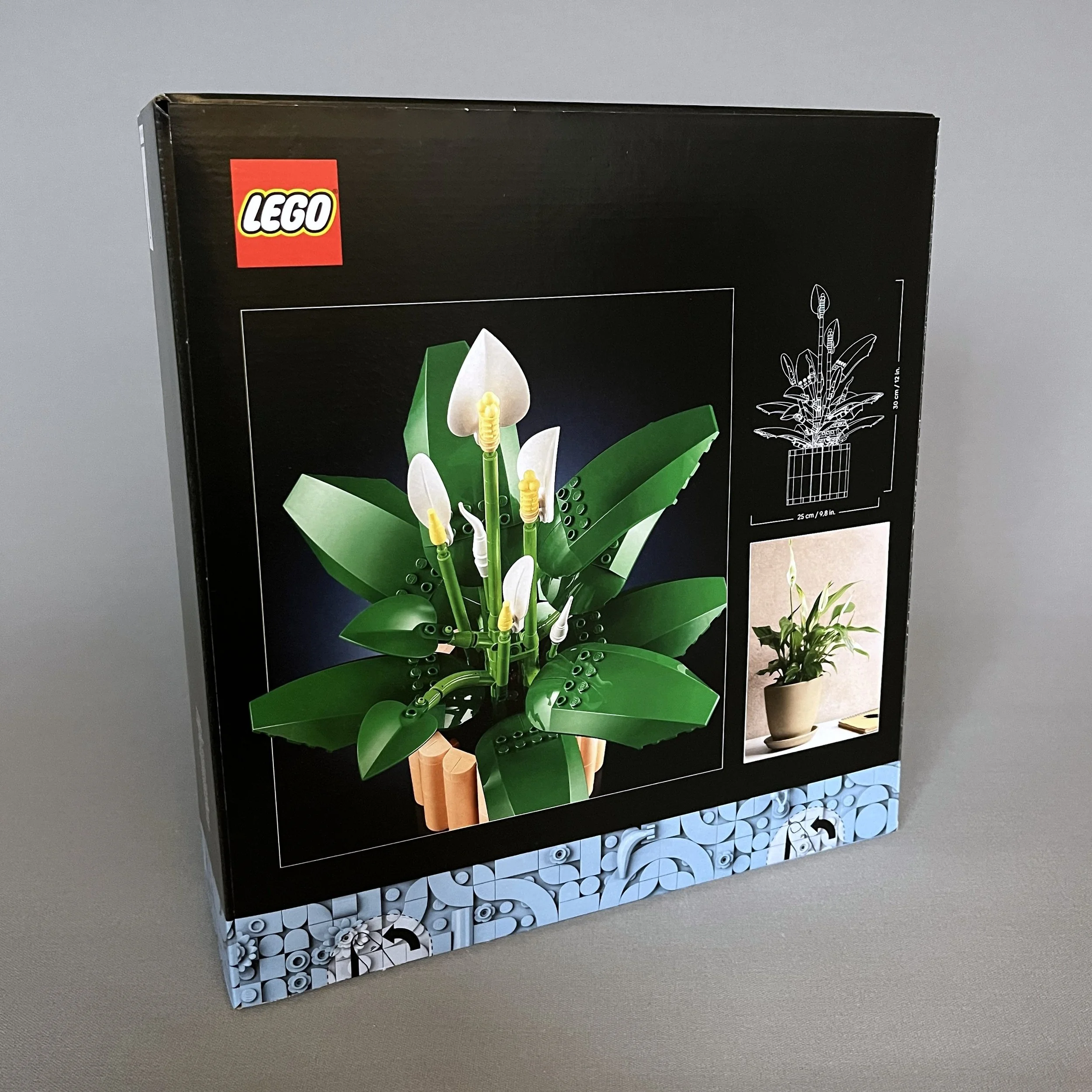
The Peace Lily is a fairly common potted plant. They exist in several colors but white is the most common variety. Its leaves are large and shiny, making them ideal for LEGO. Let’s see how this set captures the essence of this plant.
Building Experience
The box contains four paper bags and one plastic bag containing green wind screens.
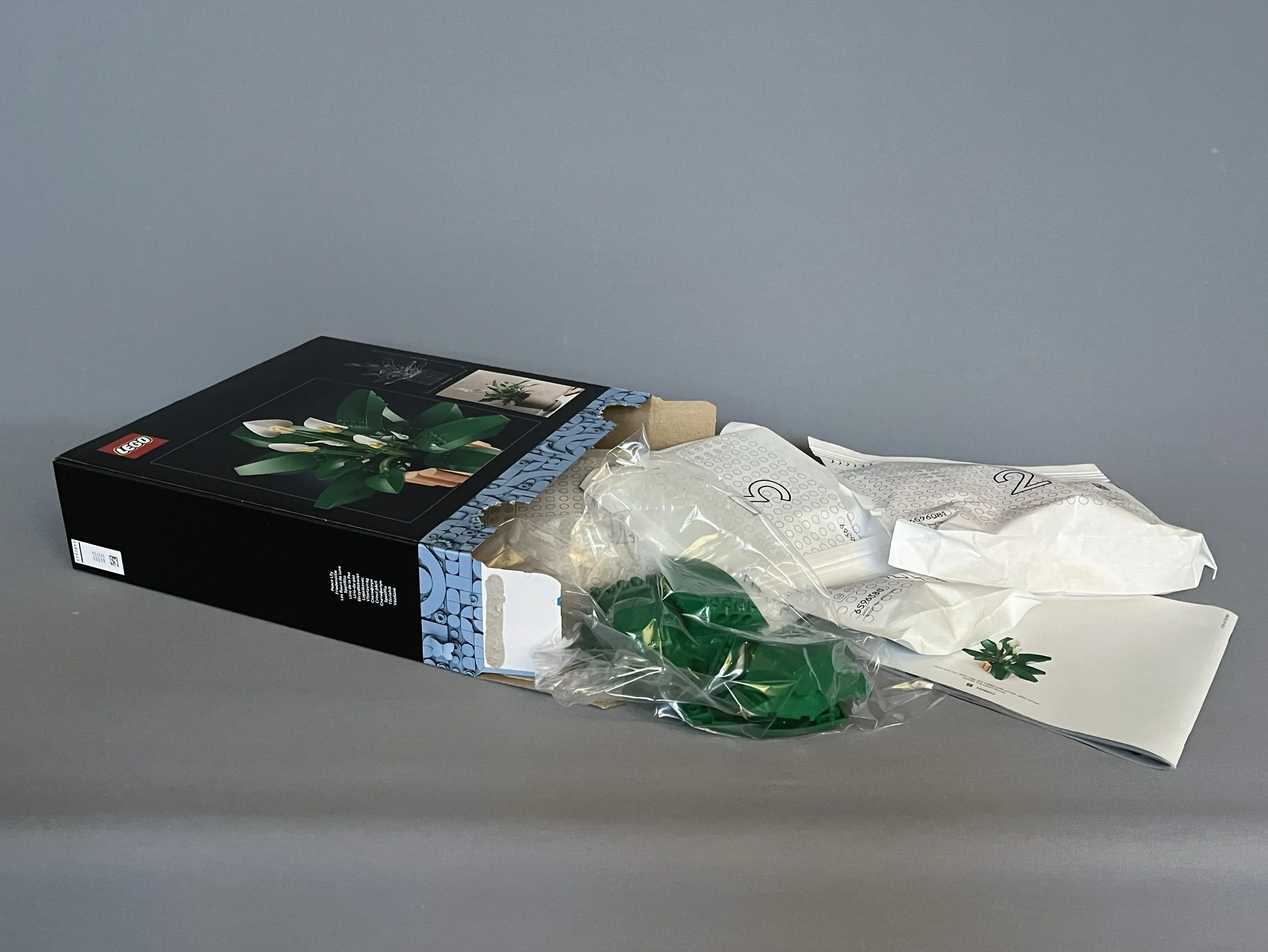
Bag 1+2 - The pot
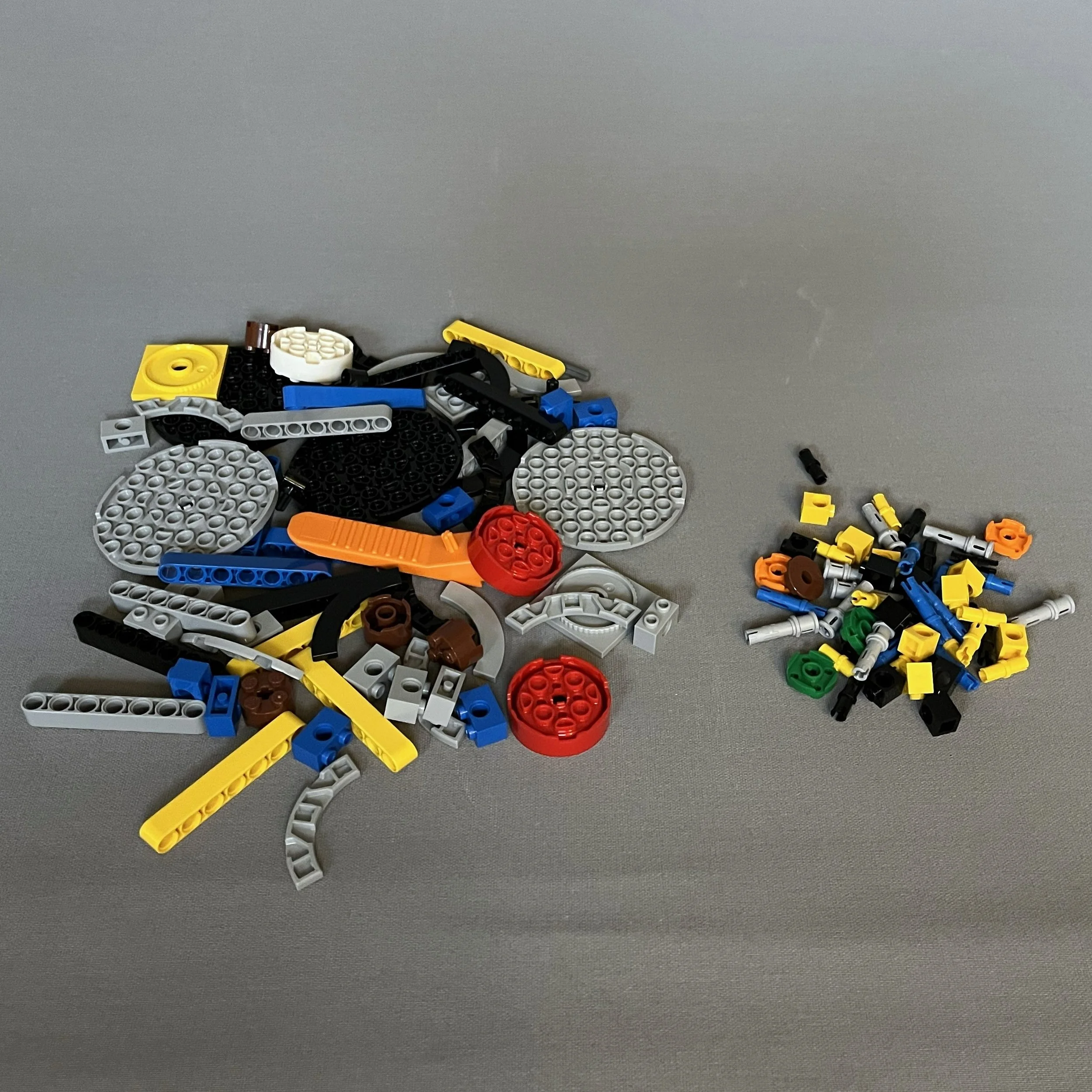
Just like other botanical sets, for instance the 10311 Orchid and 10289 Bird of Paradise, this set comes with a nice-looking pot. This instruction booklet actually contains the Latin name of the flower and some information about it. Nice! I missed that in the two smaller sets.
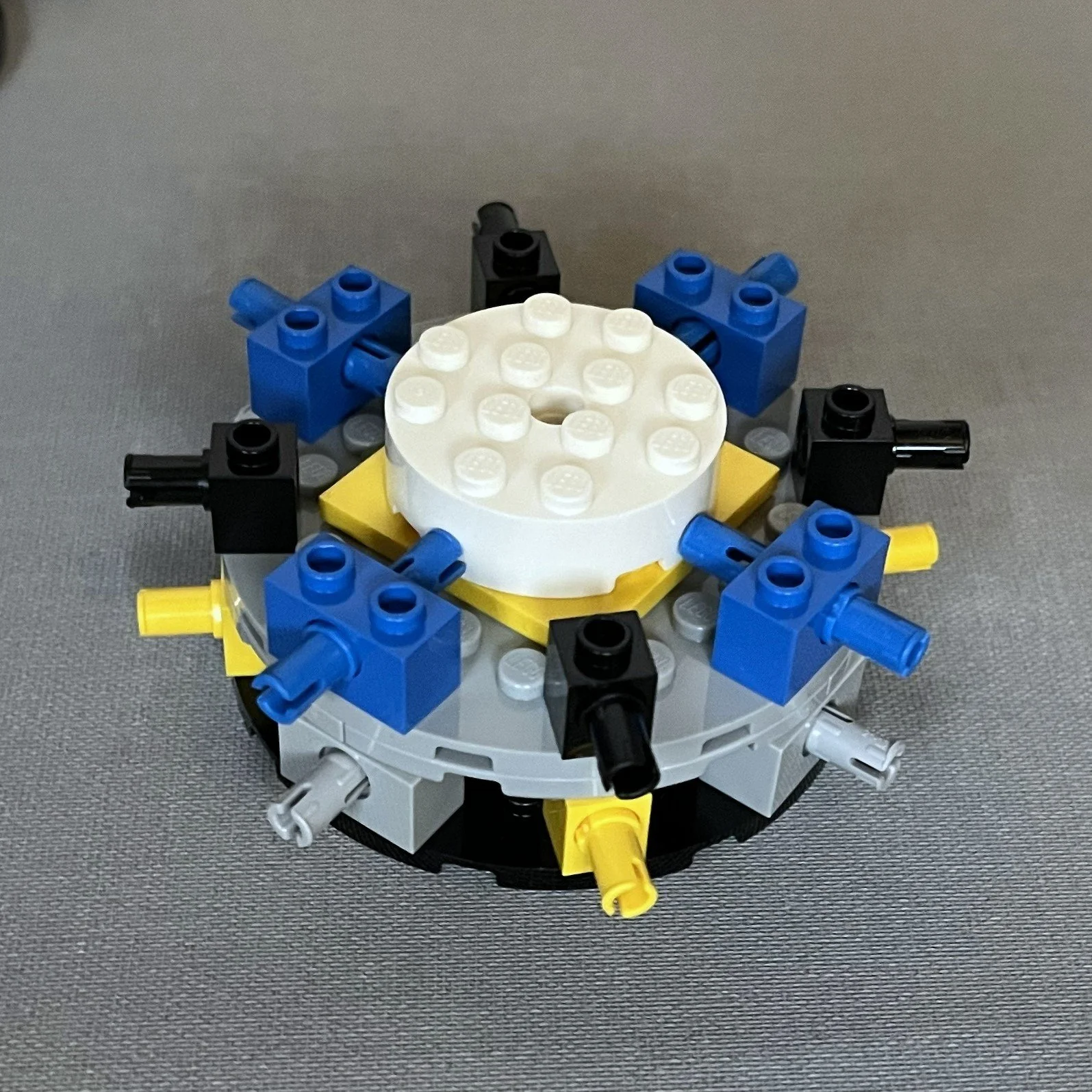
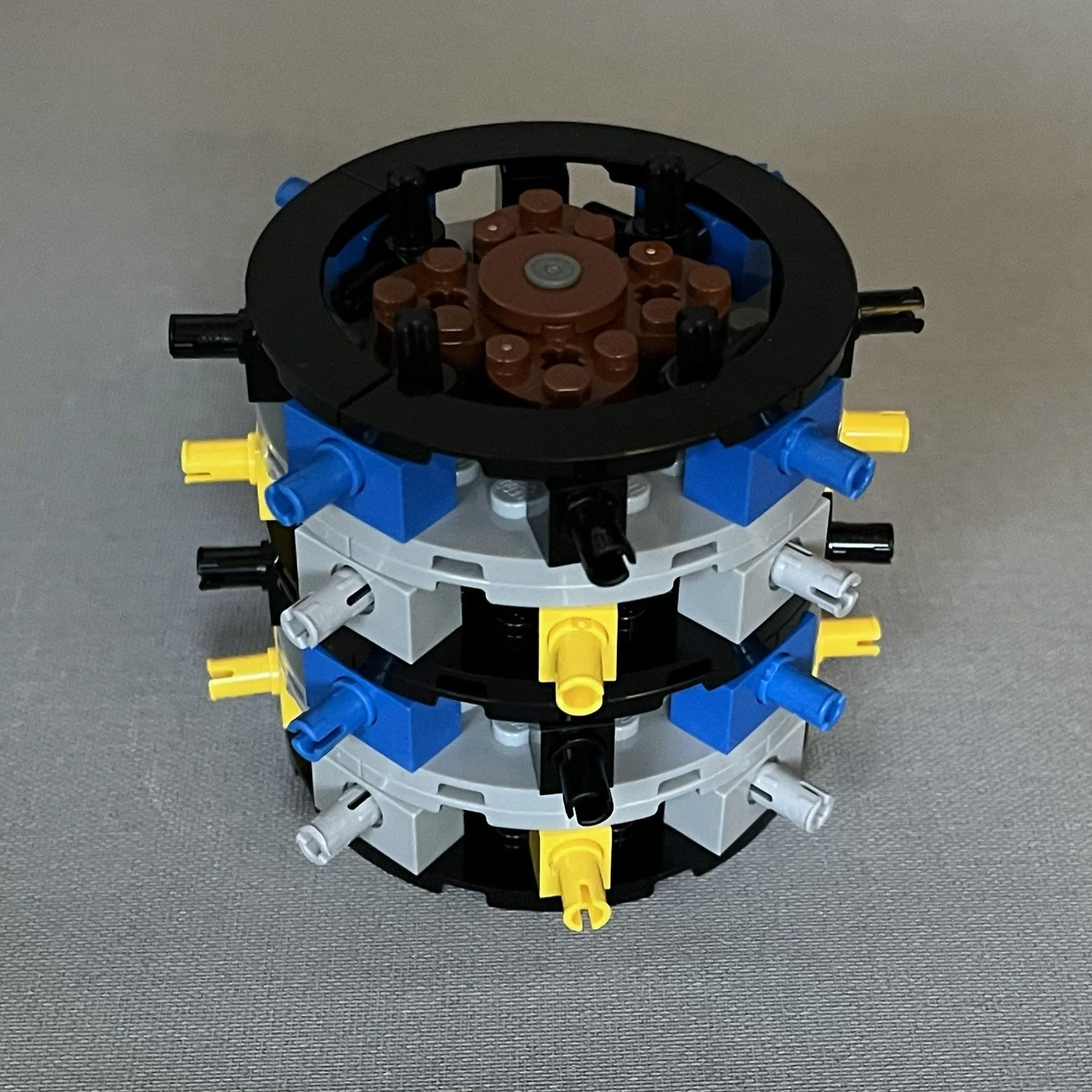
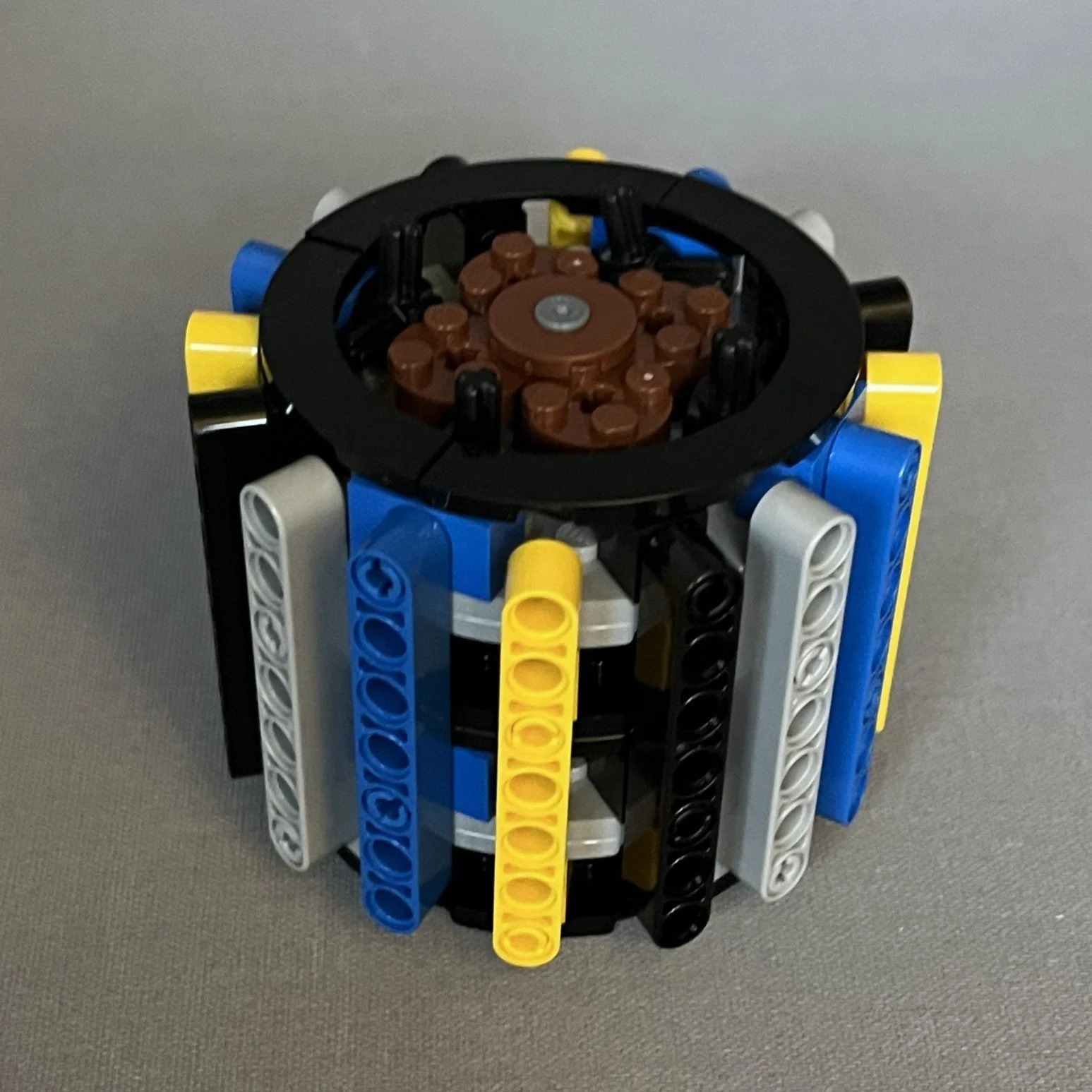
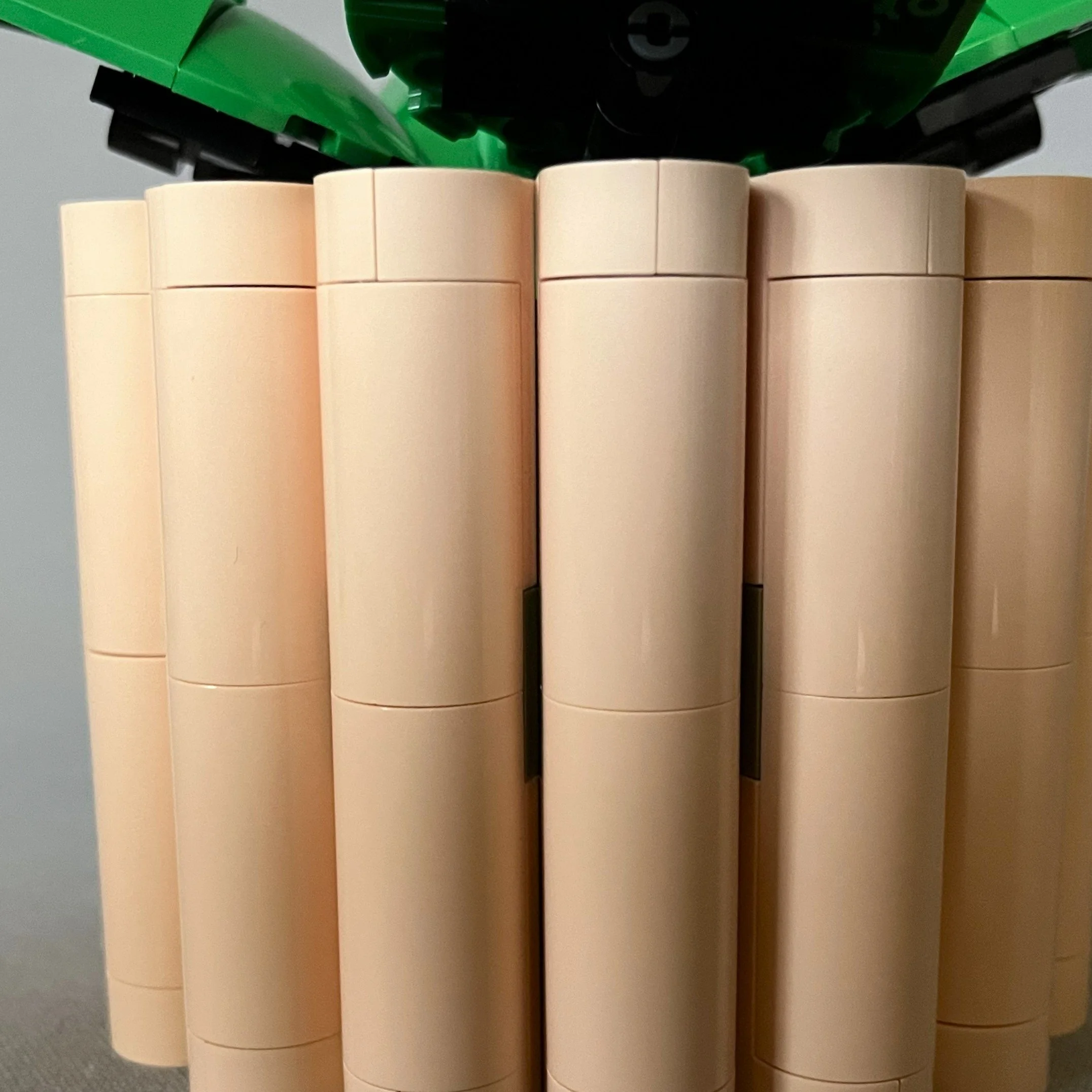
We start by building the inner core of the pot. At first, all the colors seem very random, but later you realize there is a color coding for attaching the Technic beams on the outside of the core, which also locks all the inner parts in place.
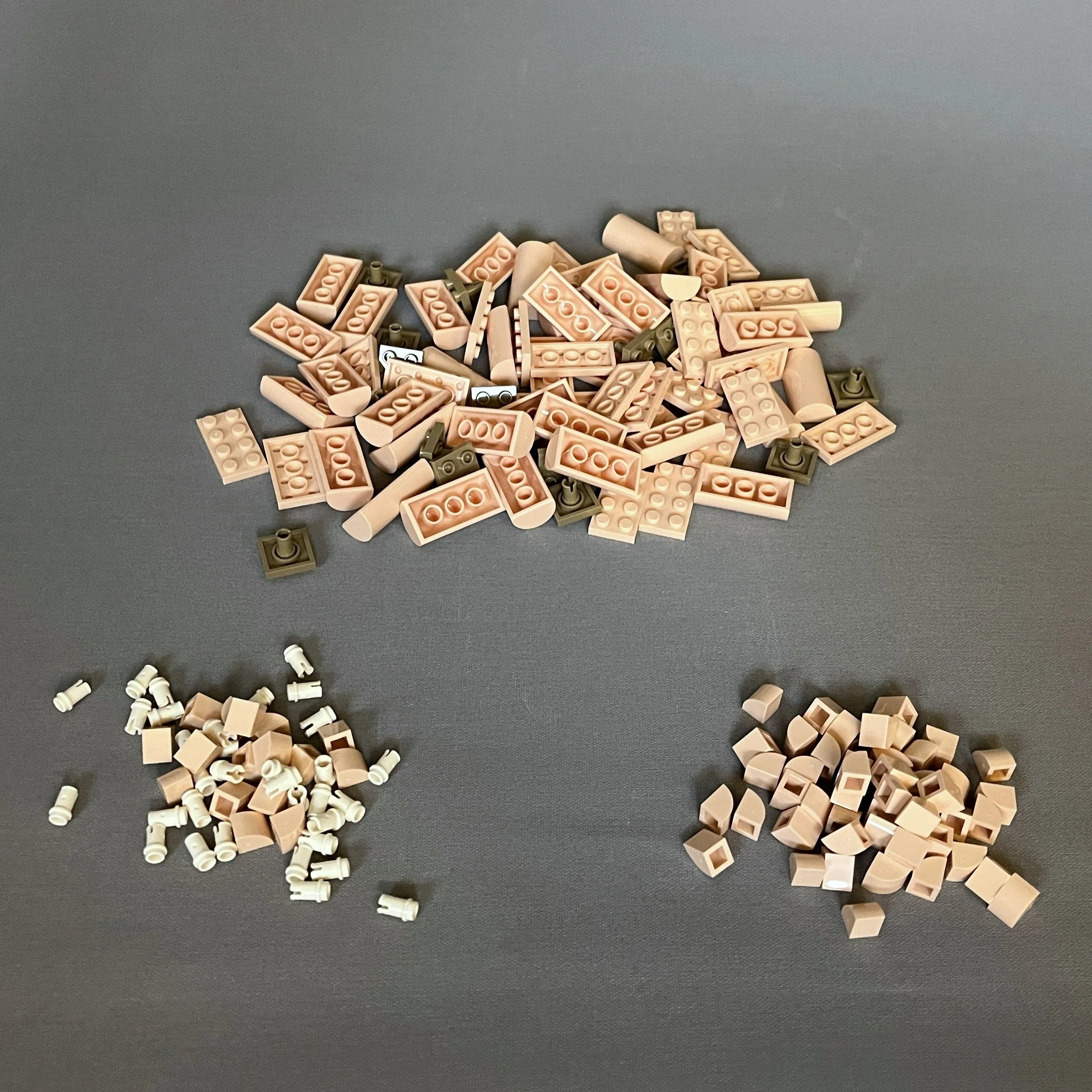
Bag 2 contains all the light nougat parts that form the pot's exterior. You are now given the incredibly repetitive task of building 32 identical subassemblies which you then attach to the outside of the core. The result looks really nice, though.
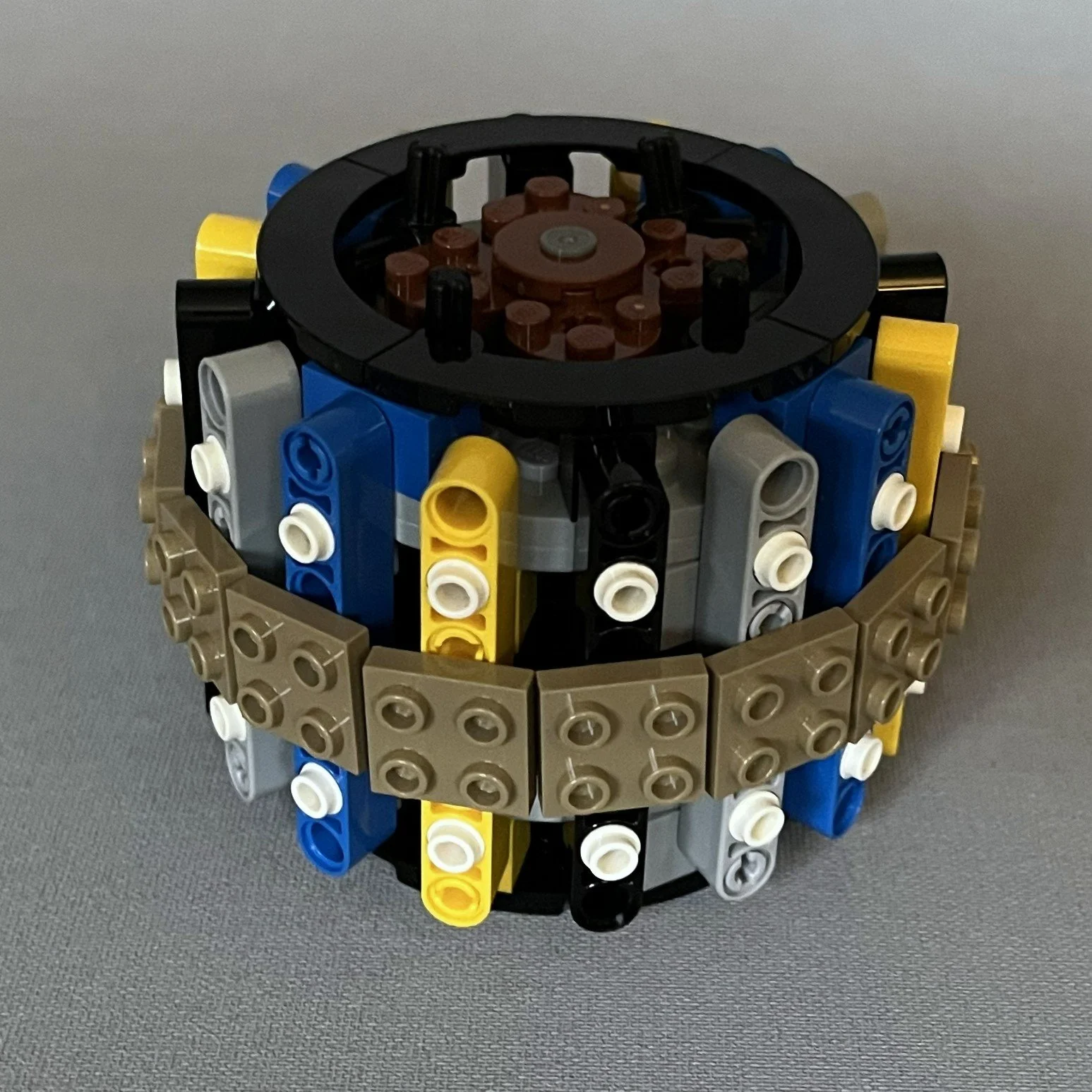
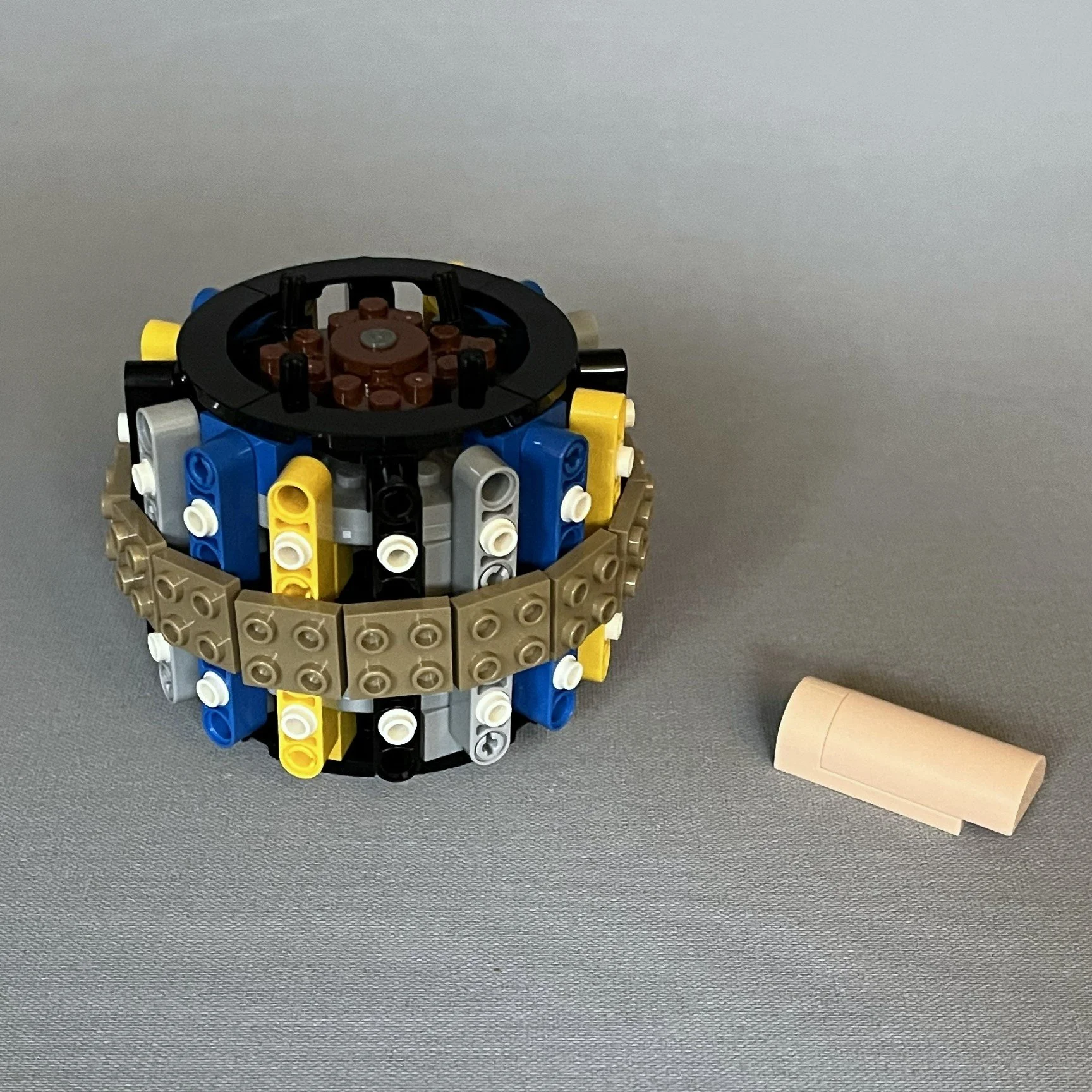
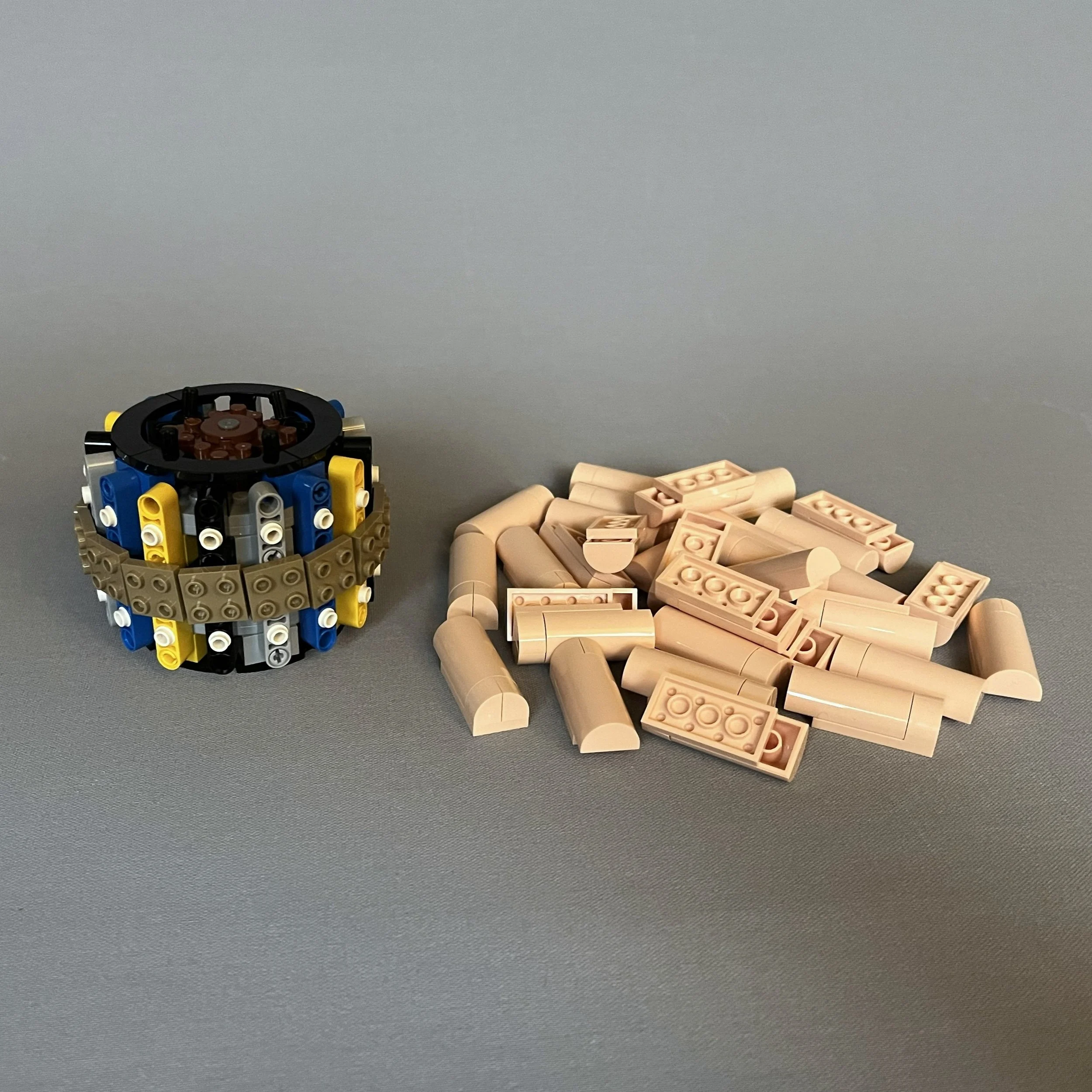
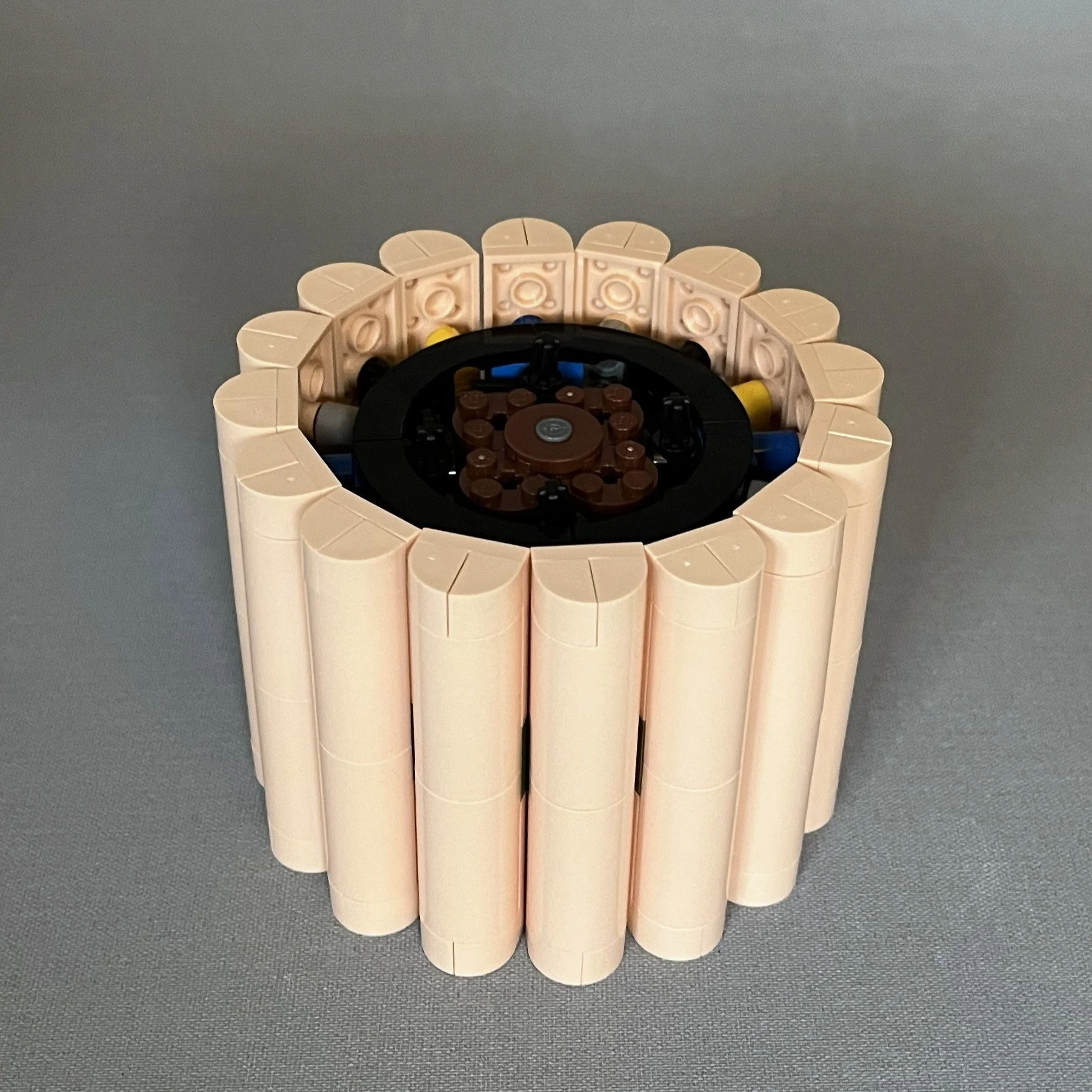
I like that this set contains a pot. It makes the set more complete and easier to display as an interior detail. This pot is built more or less exactly like the pot in 10311 Orchid, only with a small difference in colors and curved slopes instead of regular slopes.
The color is probably chosen to make it look like a modern beige stoneware planter.
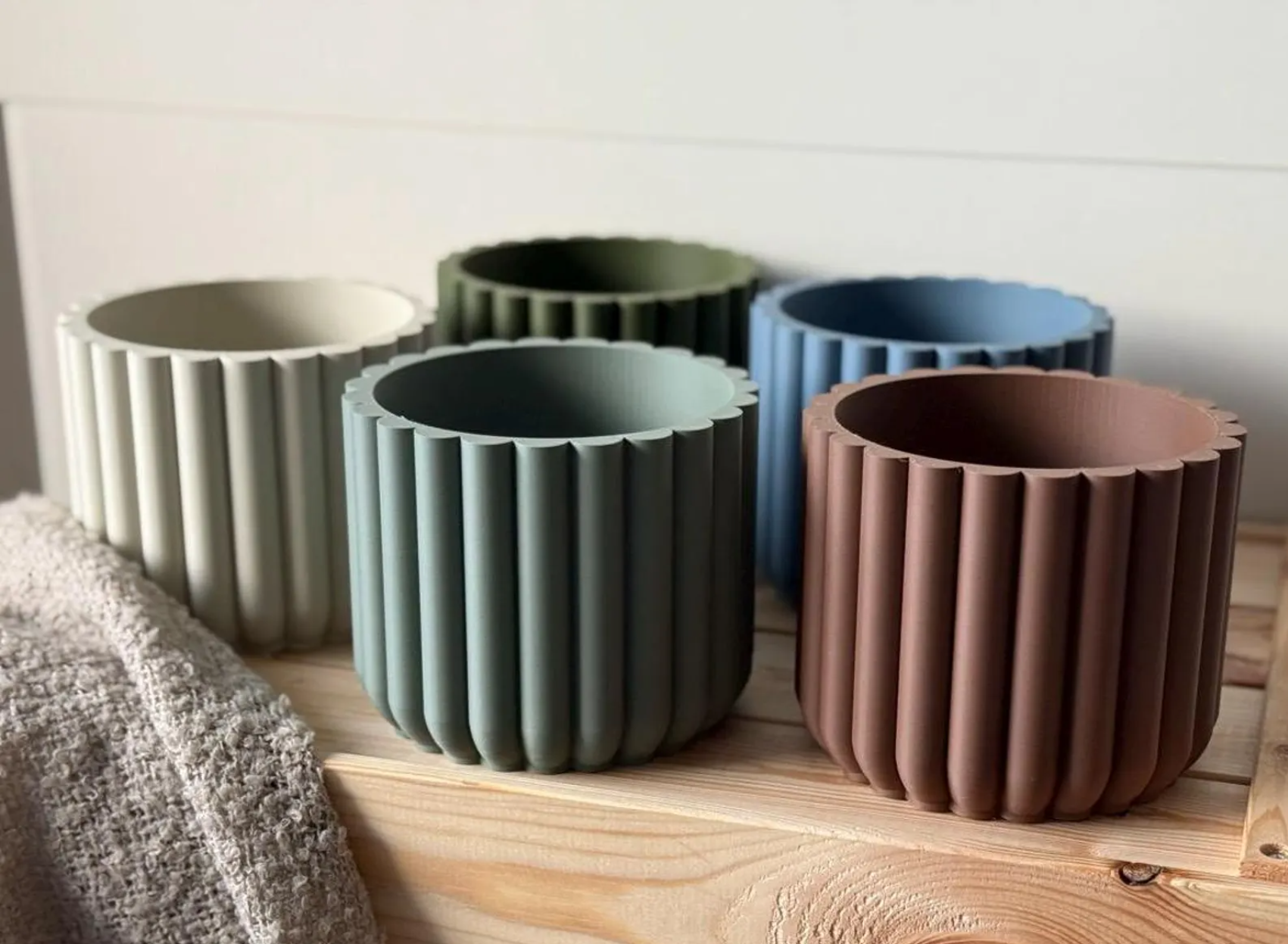
Image from etsy.com
I would have liked a little warmer color, like medium nougat or sienna brown. In my opinion, the light nougat is a bit too bright and does not have enough contrast compared to the white flowers.
One thing about the pot that bothers me immensely is that the designer has chosen to use a part in dark tan that is very visible in the seams between the ribs that form the outside of the pot. I guess this is done to make the instructions easier to understand, but in this case when the end result is actually visible, it would have made more sense to make it the same color as the rest of the pot. This is actually a problem I had with the 10311 Orchid set as well, where the pot is built in the exact same way, but with other parts facing outward.
Bag 3+ 4 - The plant
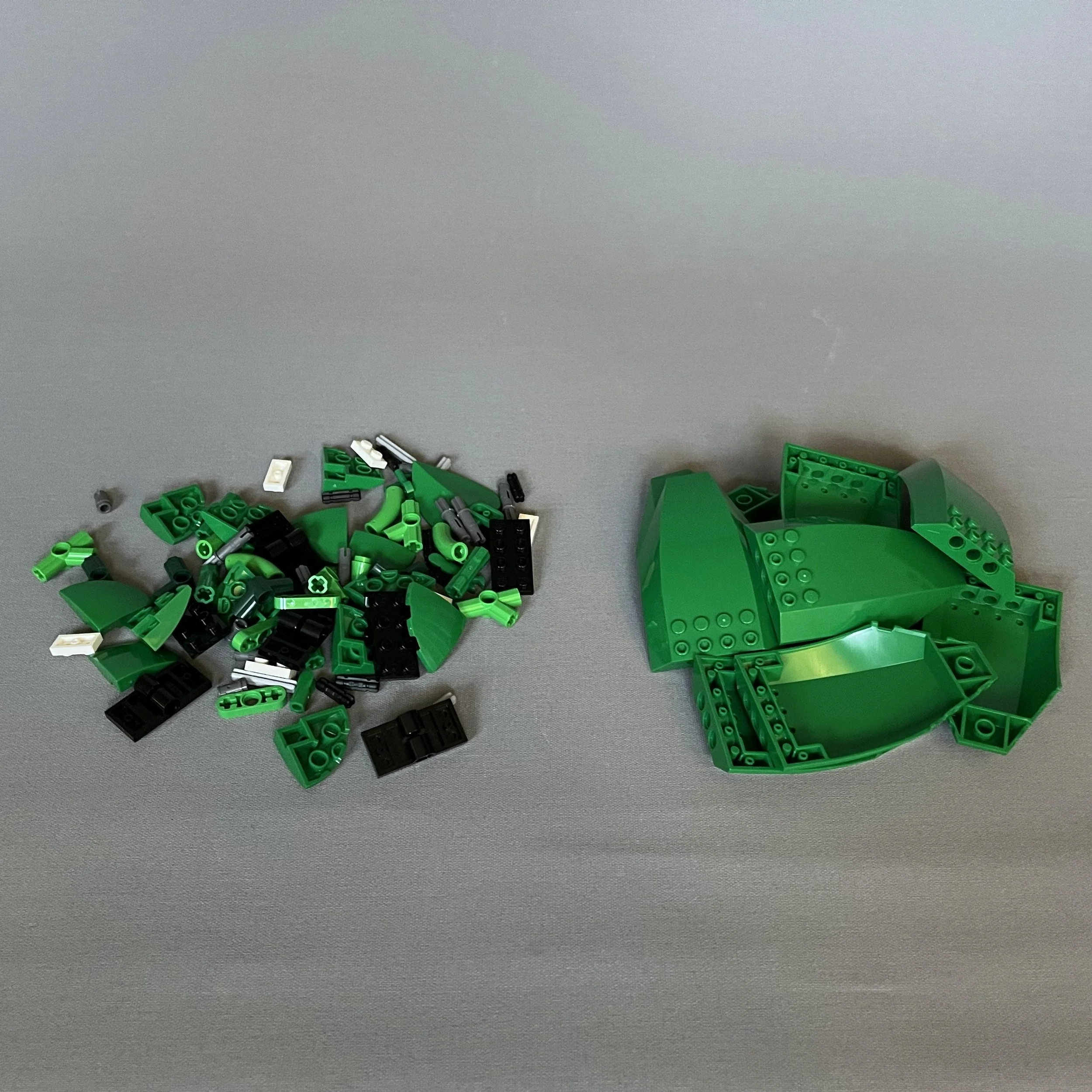
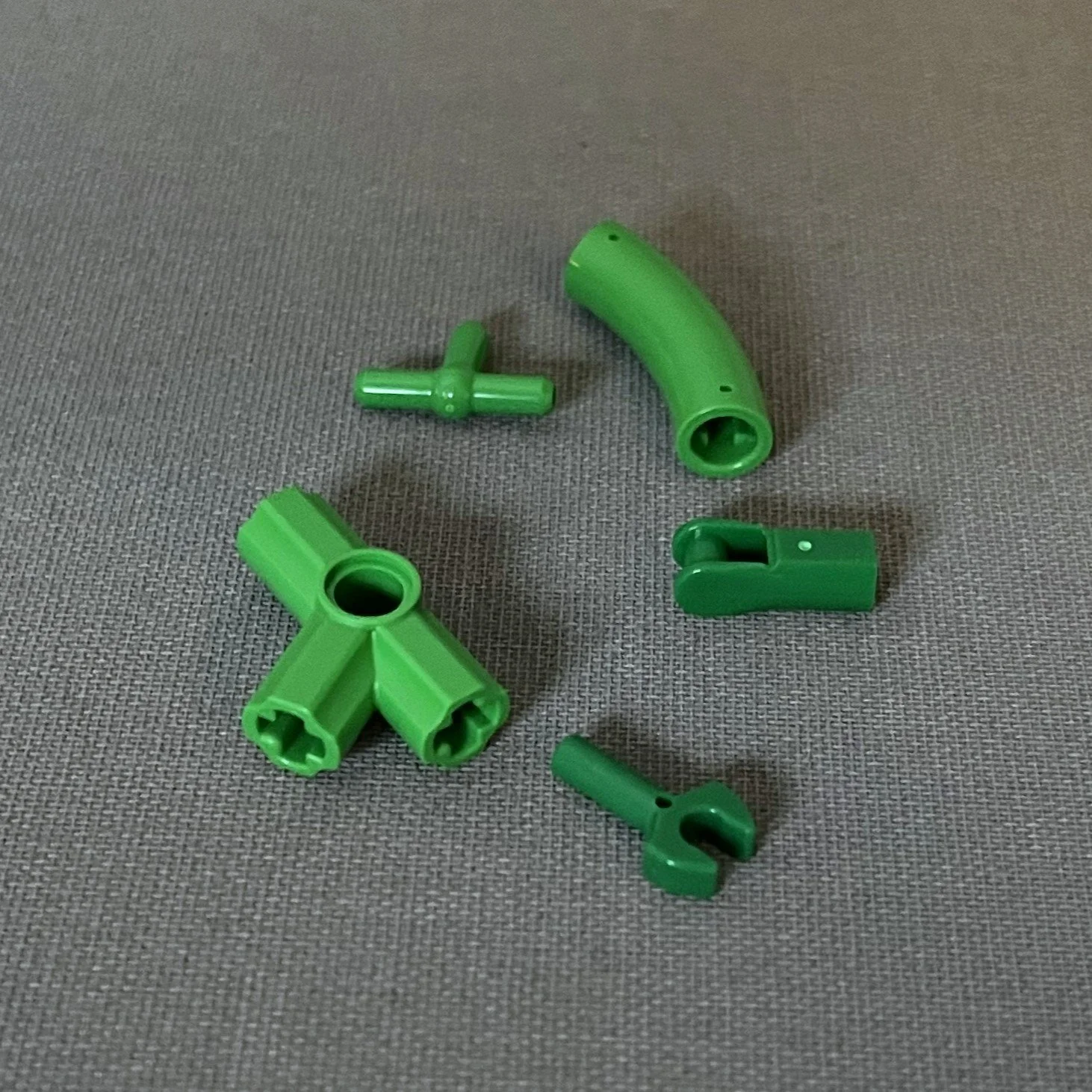
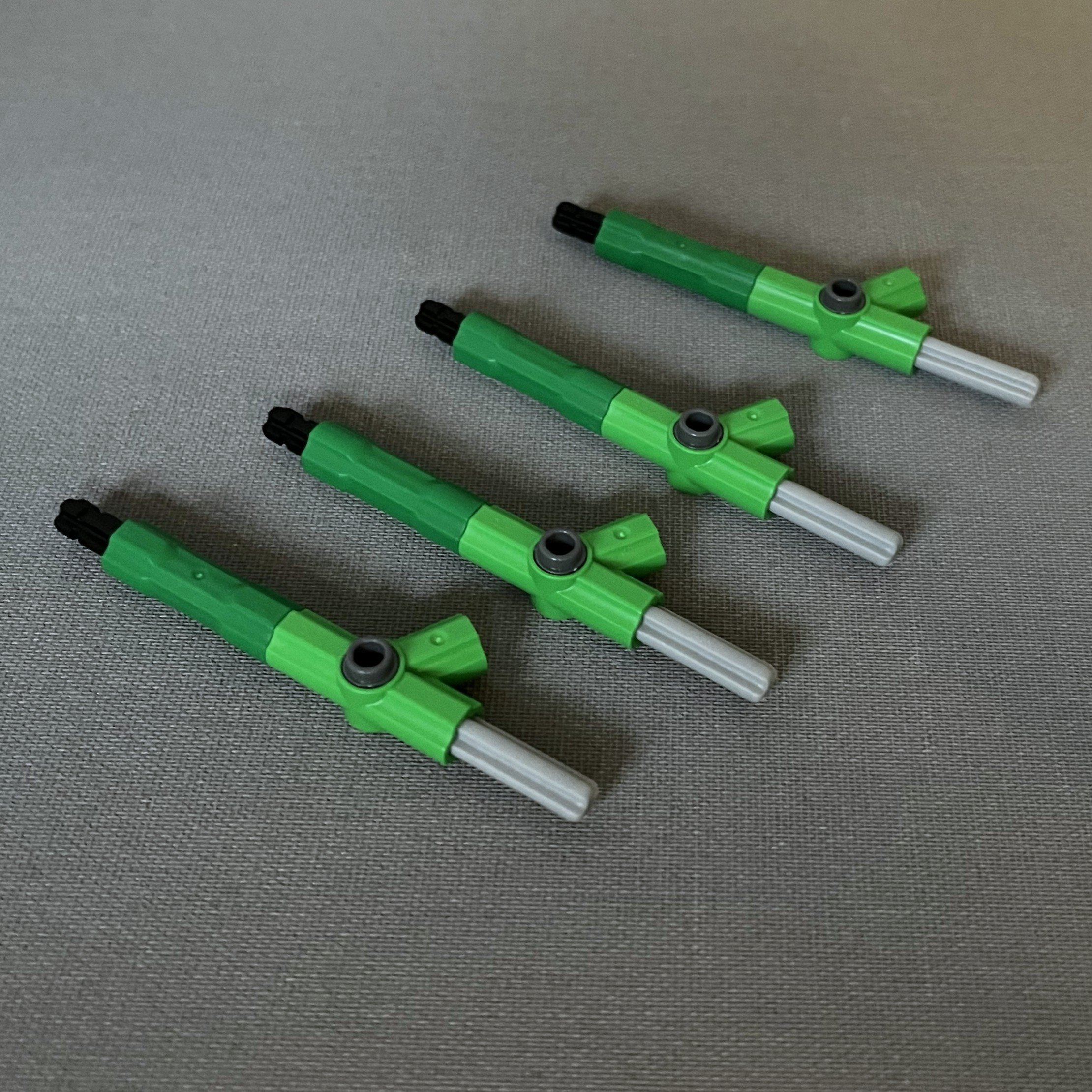
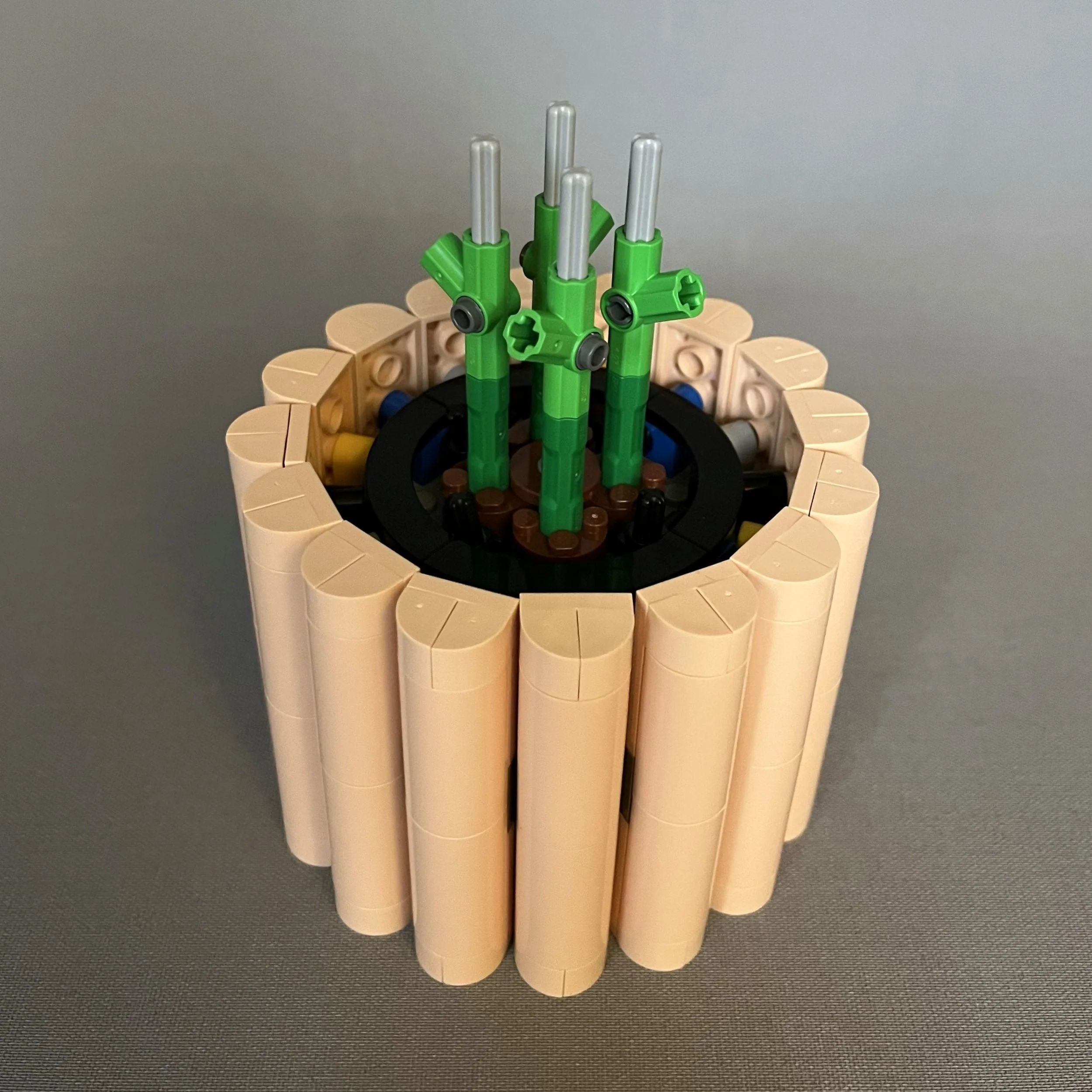
Now it’s time to add some foliage to the pot. The first step is to build the stems and attach them to the axle holes in the pot.
Next, we build the leaves.
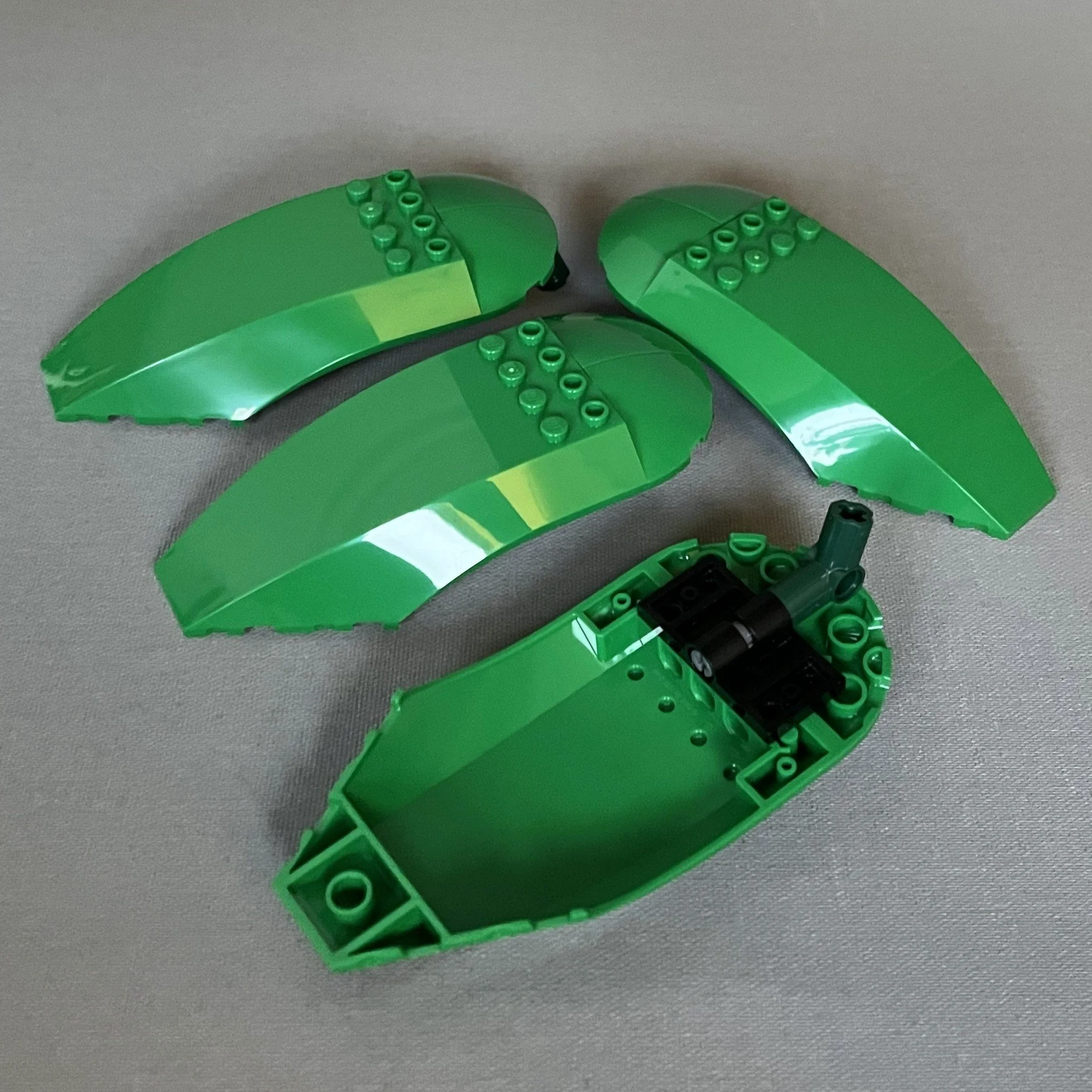
Part 45705 is used to represent the leaves. Together with the 3x3 round corner slopes, it gives a good approximation, but the leaves on the real plant are much more delicate and pointy. I’m not pleased with the choice of parts here. Sure, it may look like leaves, but not Peace Lily leaves. The transition between the curved slope and the regular slope is quite jarring, and all the exposed studs give the leaves a rough finish.
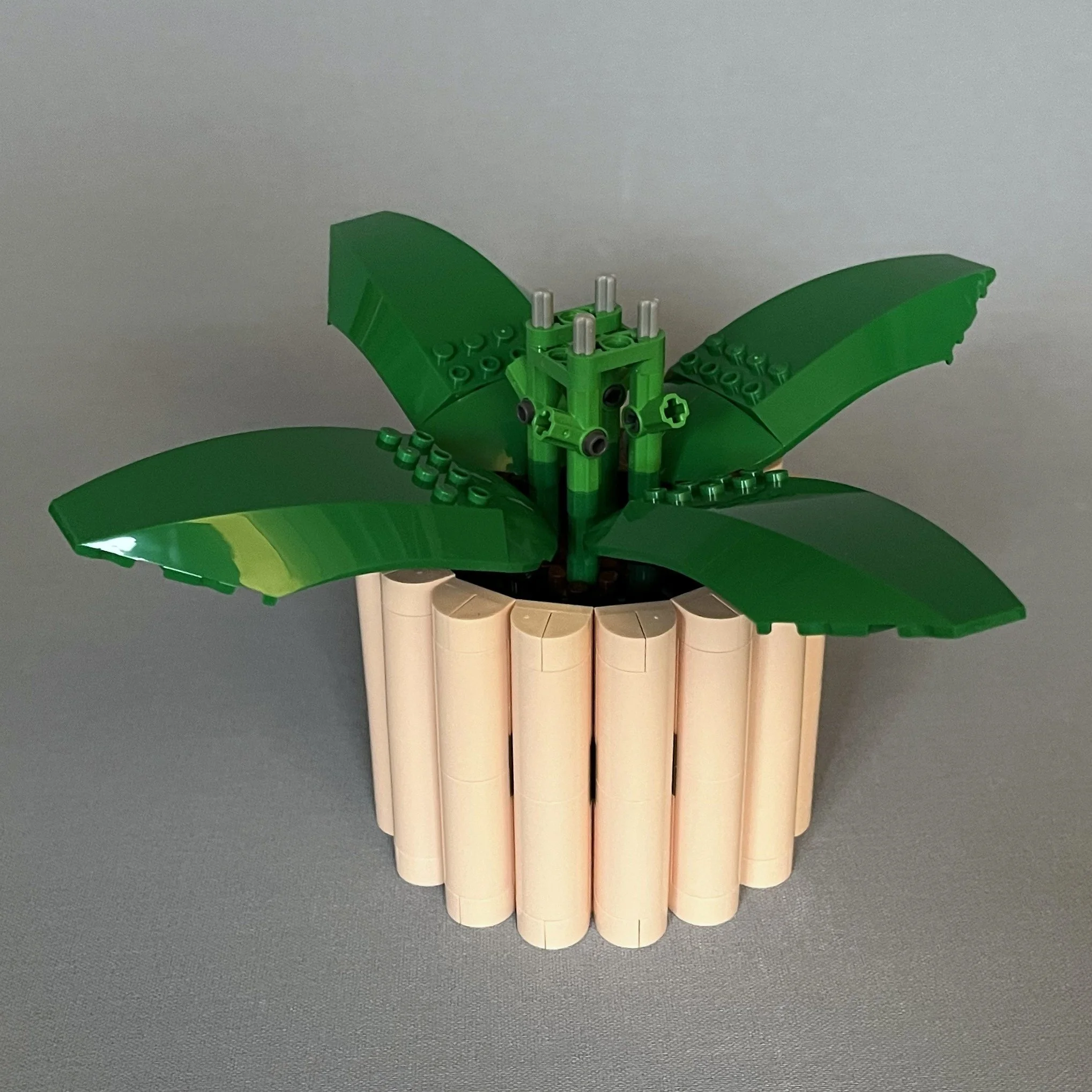
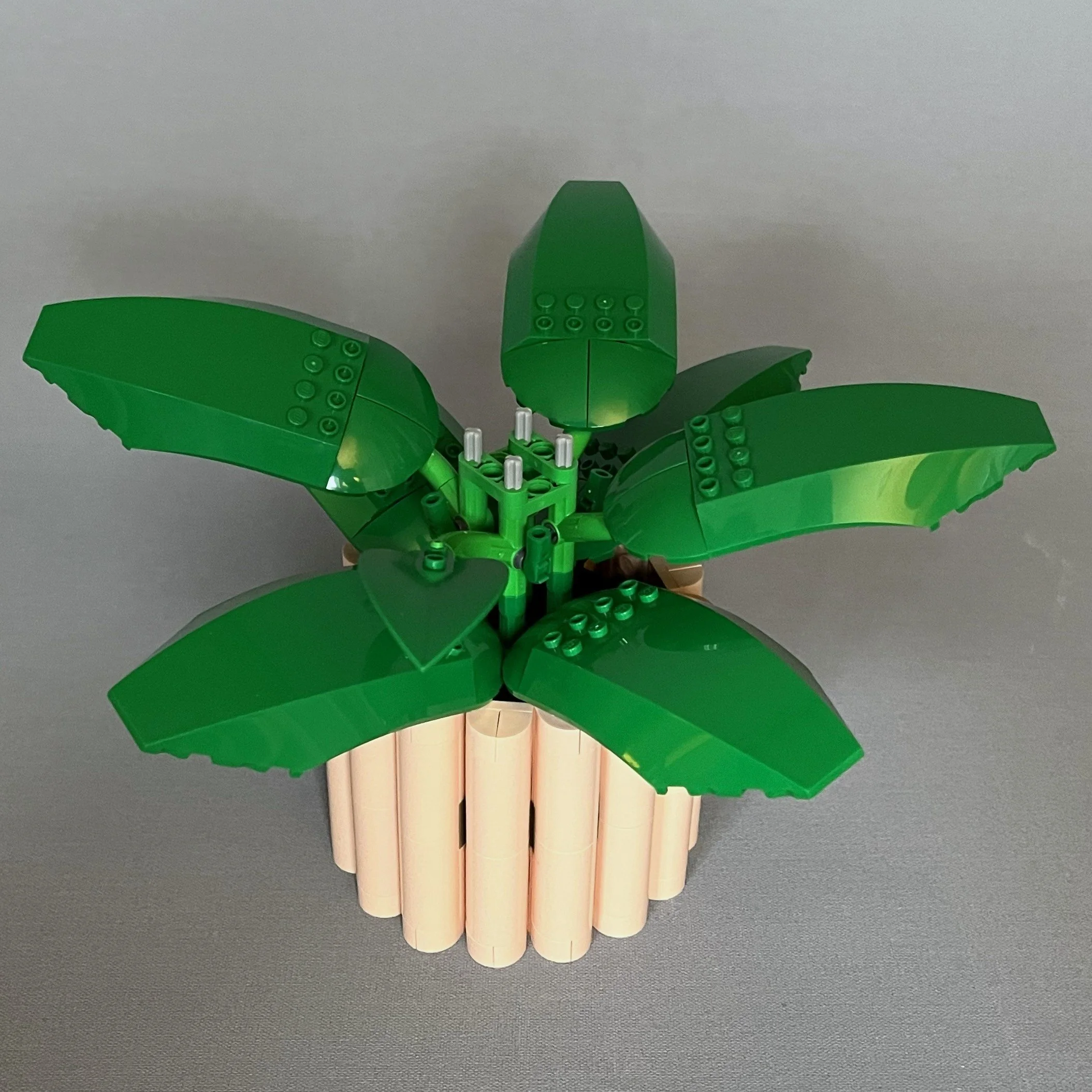
The leaves are then attached to different Technic axle connections in the base.
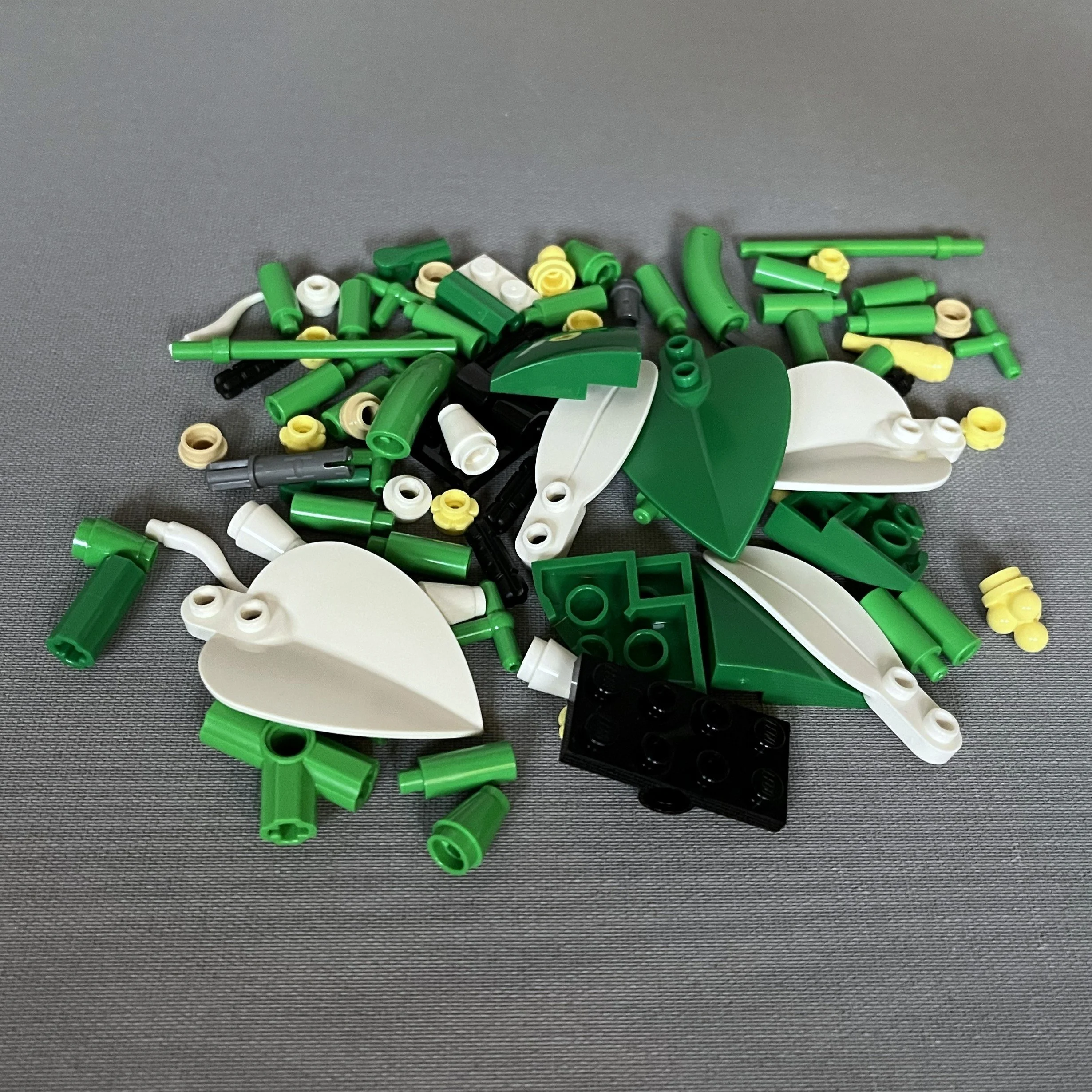
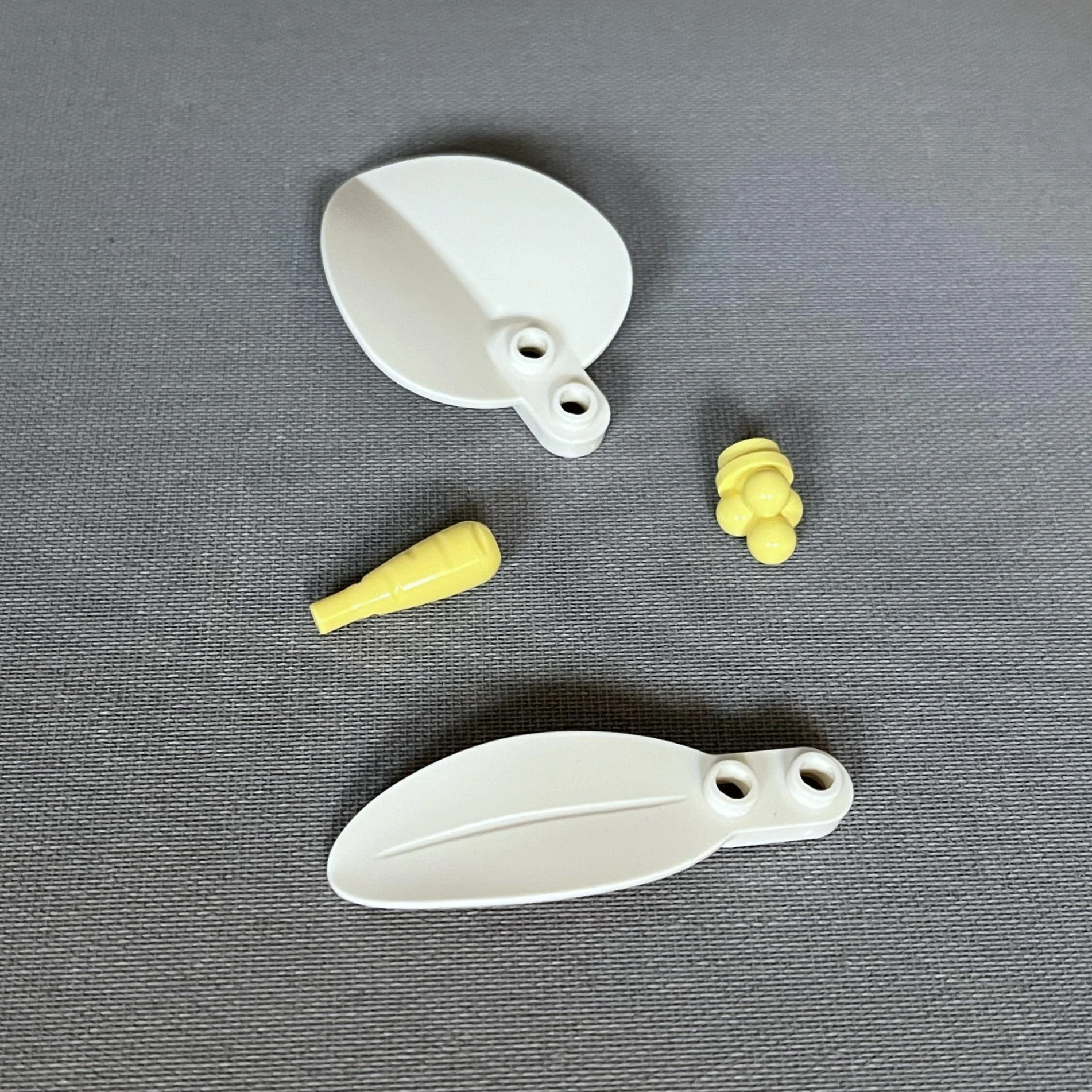
Now, onto the last bag, where the flowers are built and attached.
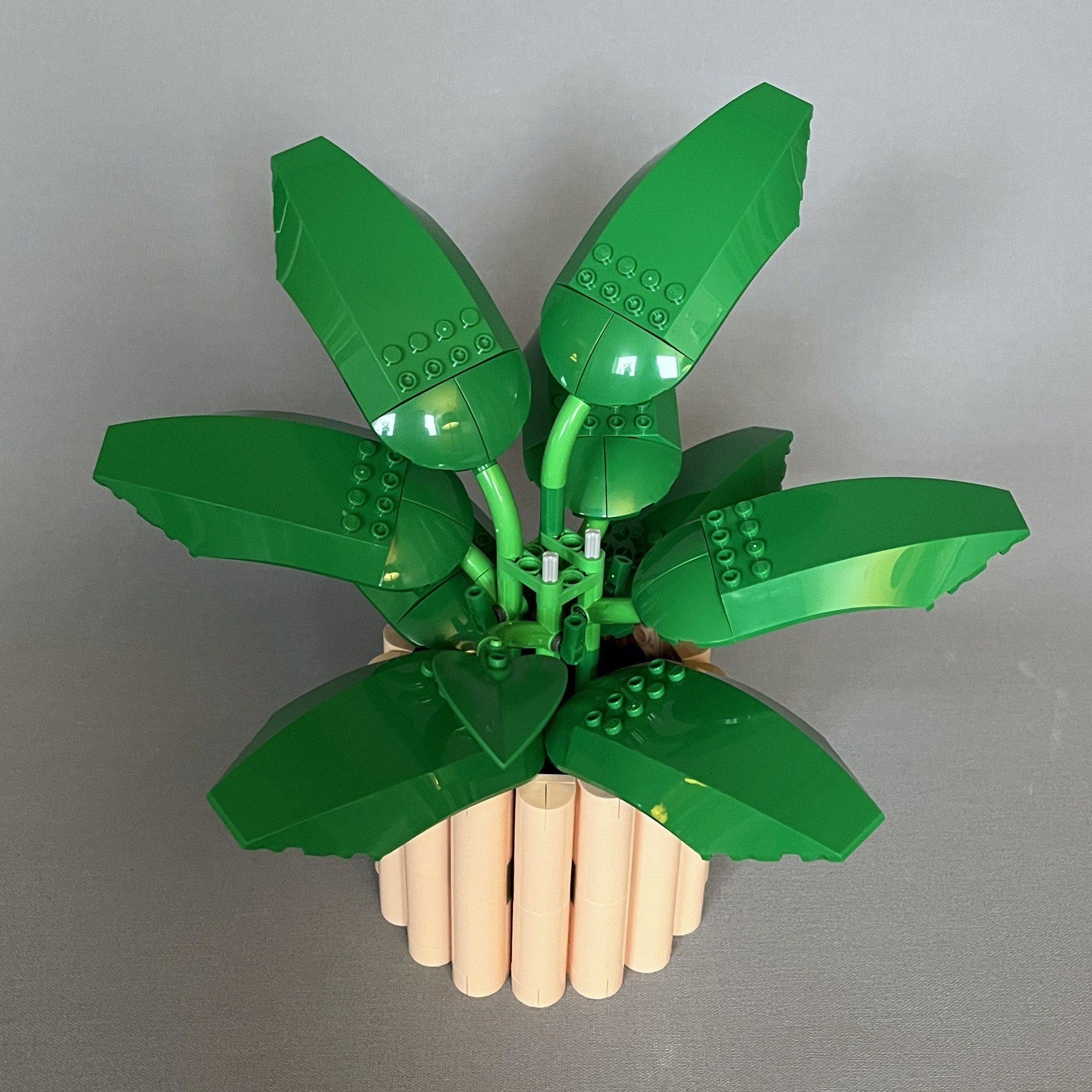
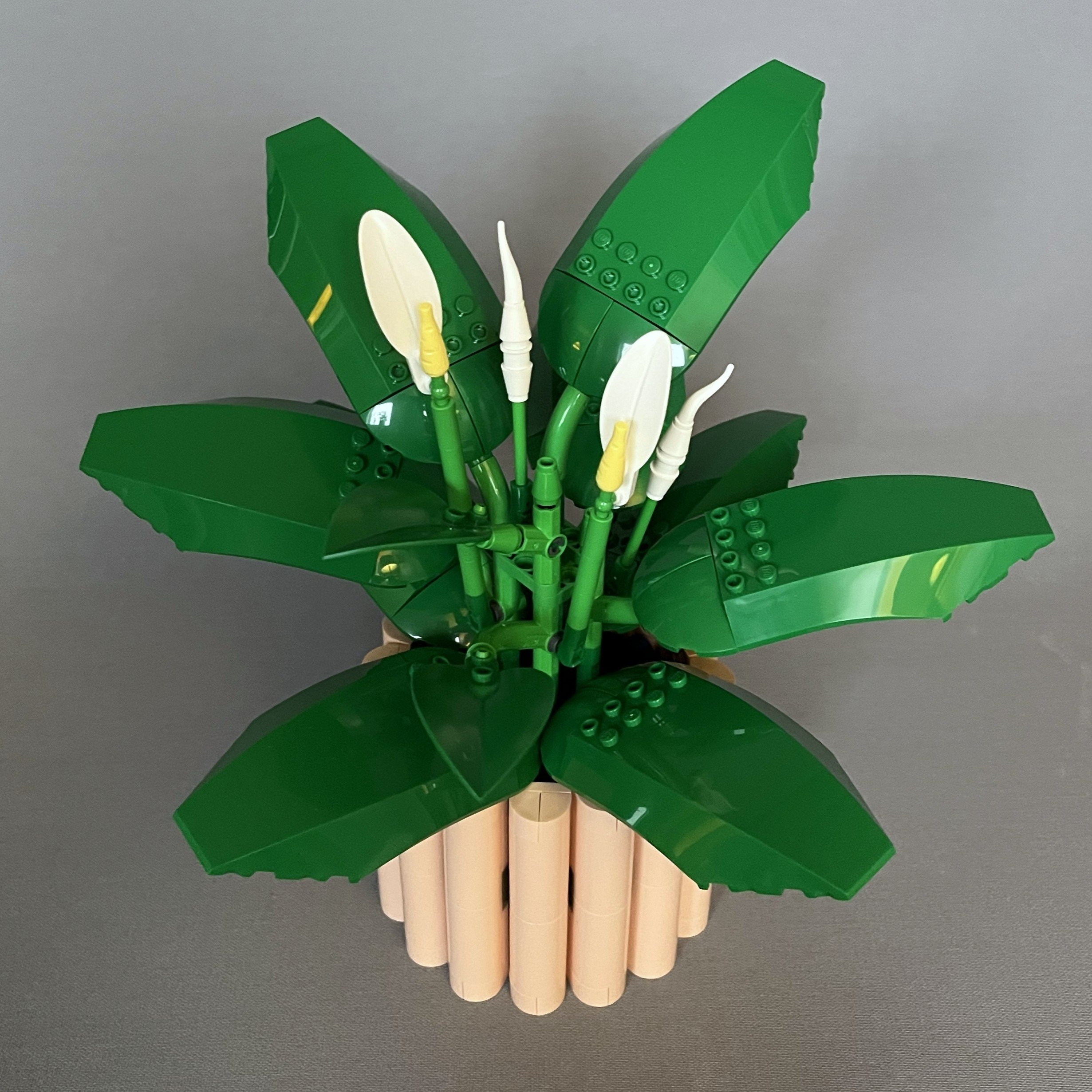
Final Thoughts
I cannot help comparing this set to 10311 Orchid. They are very similarly built, and I will probably display them together. Both sets have pots that are very repetitive. The orchid has a much more organic and asymmetrical feel to it compared to the Peace Lily, and it is also much more customizable.
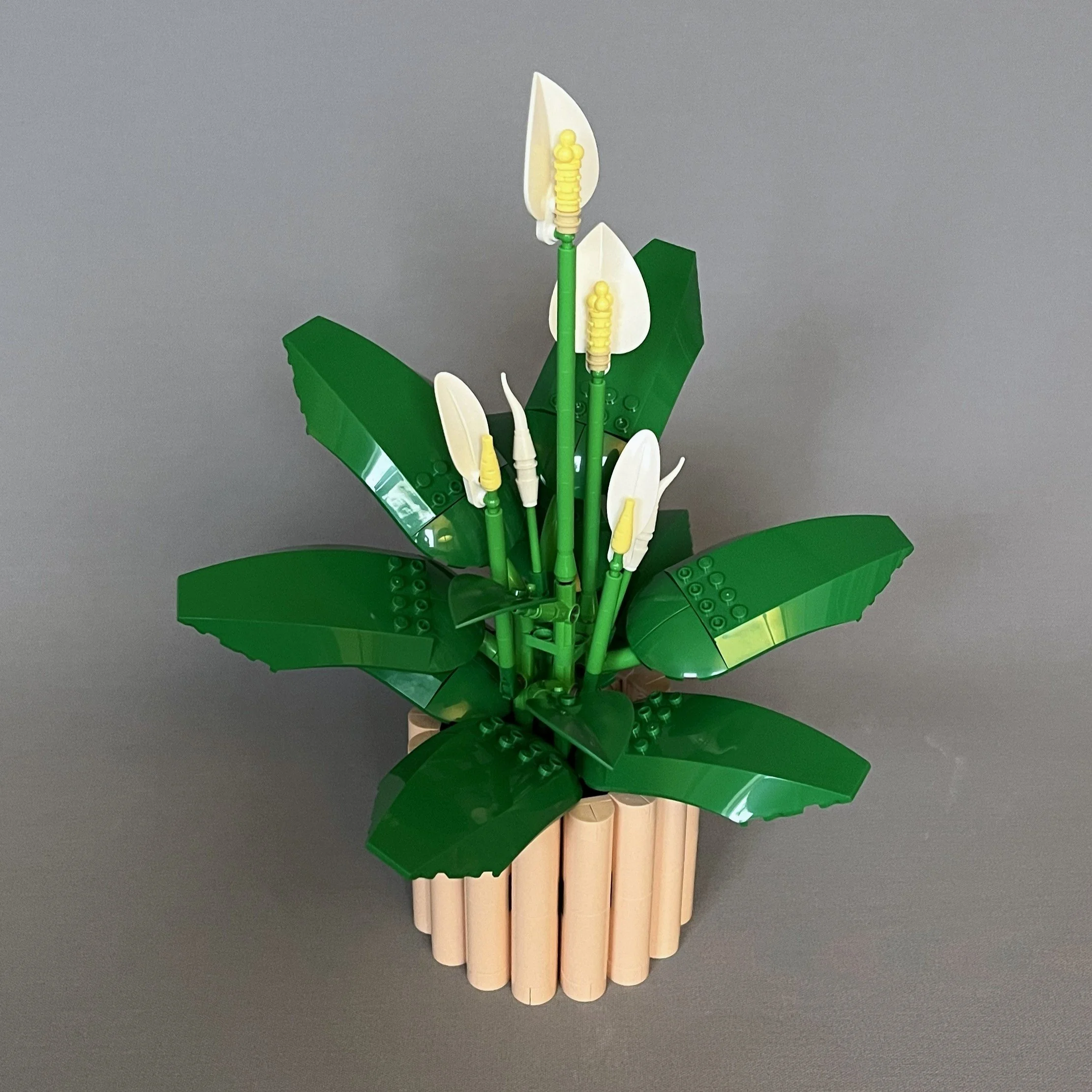
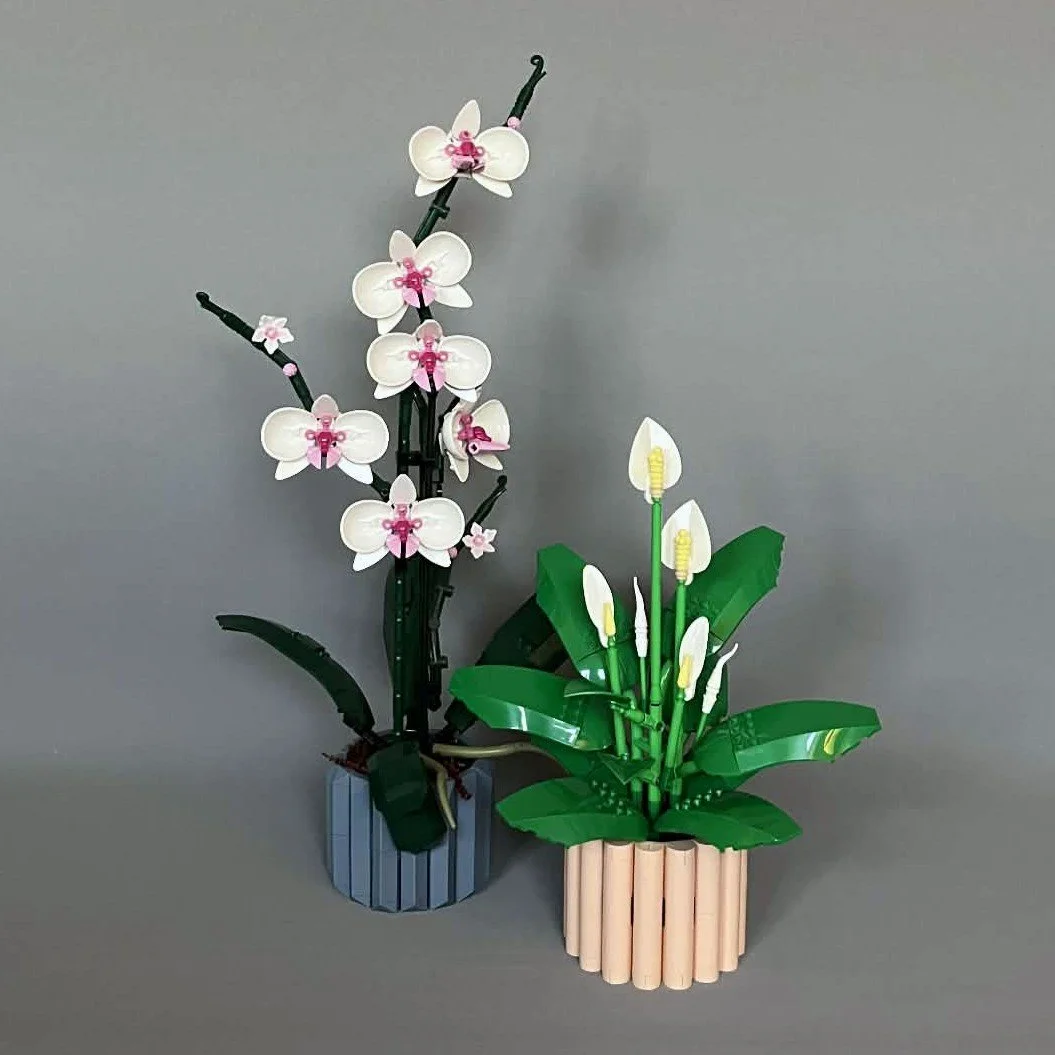
The most striking thing, however, is that the orchid actually looks like a 1:1 scale representation of the real-world counterpart, whereas the Peace Lily looks too small. I have owned several Peace Lilies, and this set looks like a miniature version of them. I realize it would have been much more costly to scale it up and add more flowers, but isn’t the point of the Botanicals to look like real flowers? Why choose the Peace Lily if you have to make it smaller than the original? The final result looks very pretty, though, despite the size.
Parts Usage: 2/5
Building Experience: 3/5
Final Result: 4/5
Overall: 3/5

11501 Tulip Bouquet, 18+, 576 pieces
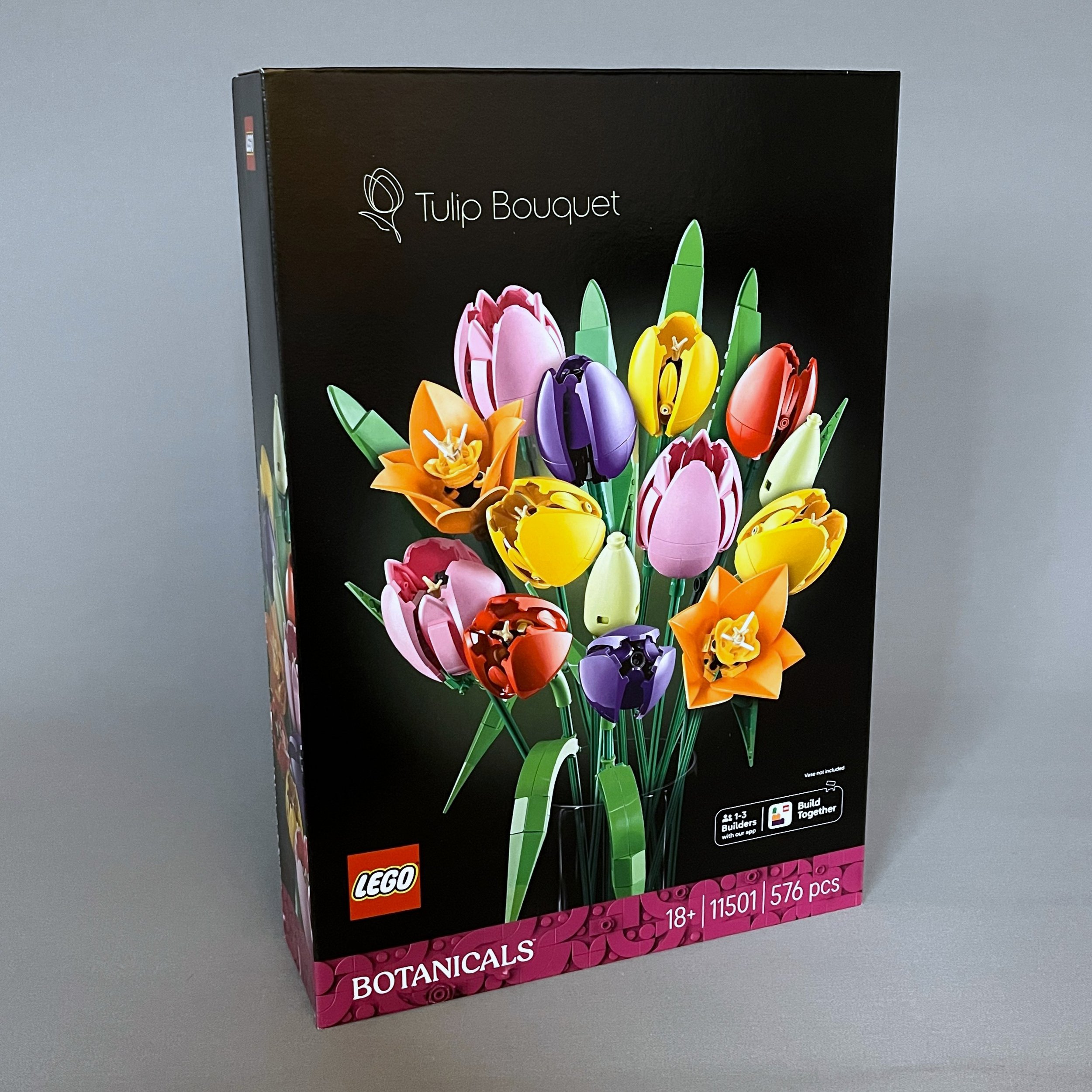
And now, finally, the biggest of the four sets. About this time of year, people in my part of the world are growing tired of winter and start longing for spring. That’s also when tulip bouquets start popping up in droves in every store. A lot of tulips are bought and brought home to bring some color and hope. The last time tulips were represented in a botanical set was in 2021 with set 40461 Tulips. This new set is definitely an upgrade from that!
“Tulips are spring-blooming perennial herbaceous bulbiferous geophytes in the Tulipa genus. Their flowers are usually large, showy, and brightly coloured, generally red, orange, pink, yellow, or white. They often have a different coloured blotch at the base of the tepals, internally.“ - Wikipedia
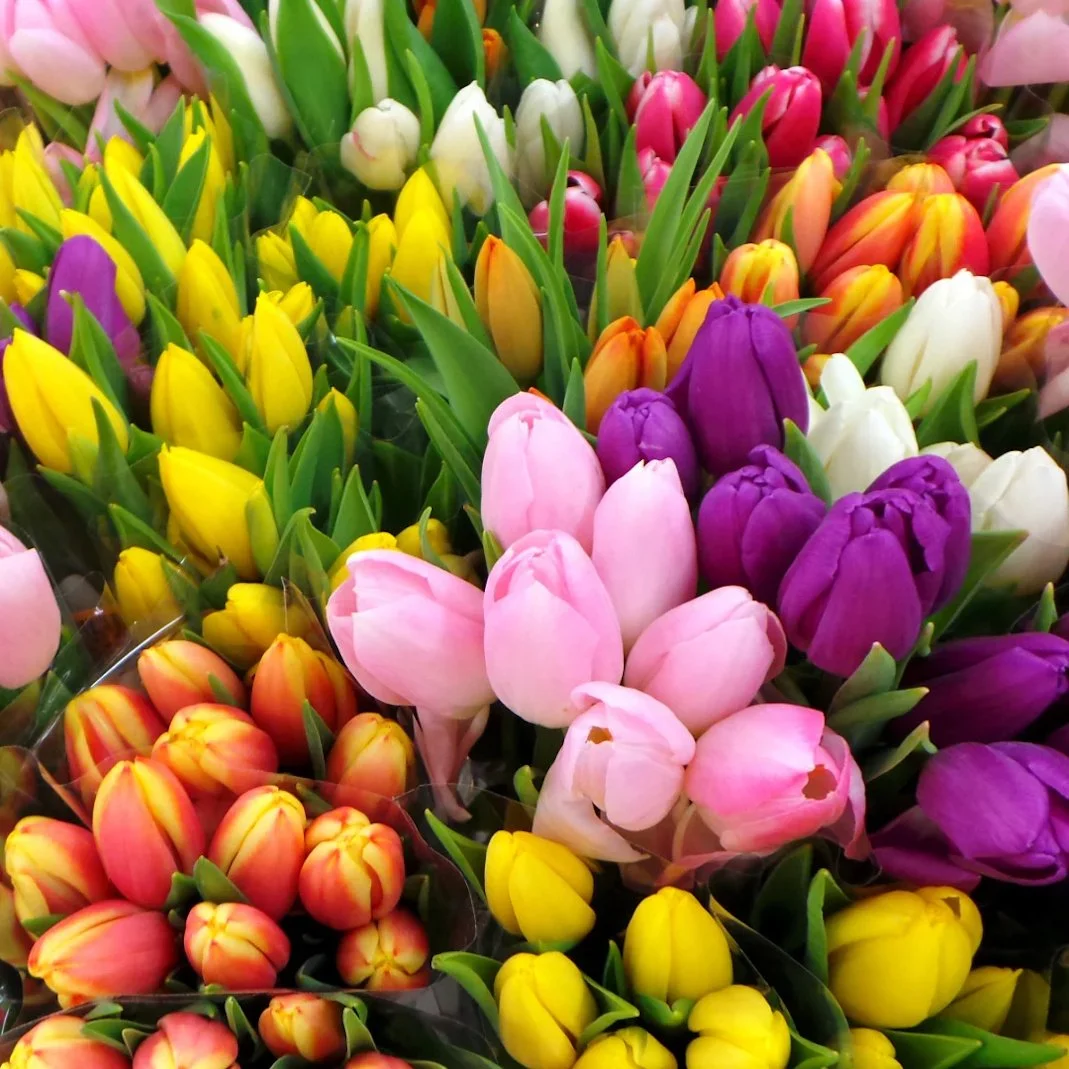
Image from Botanix
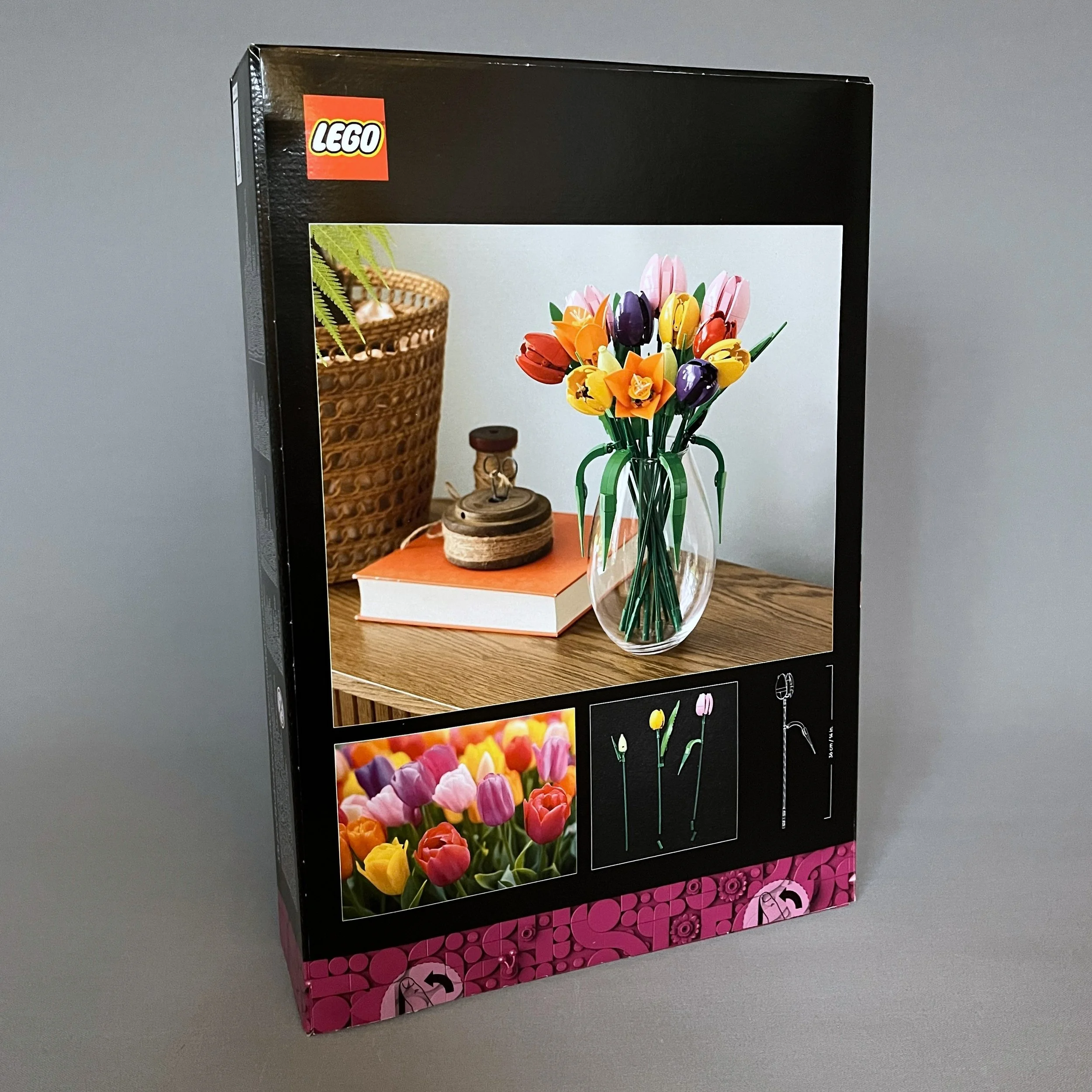
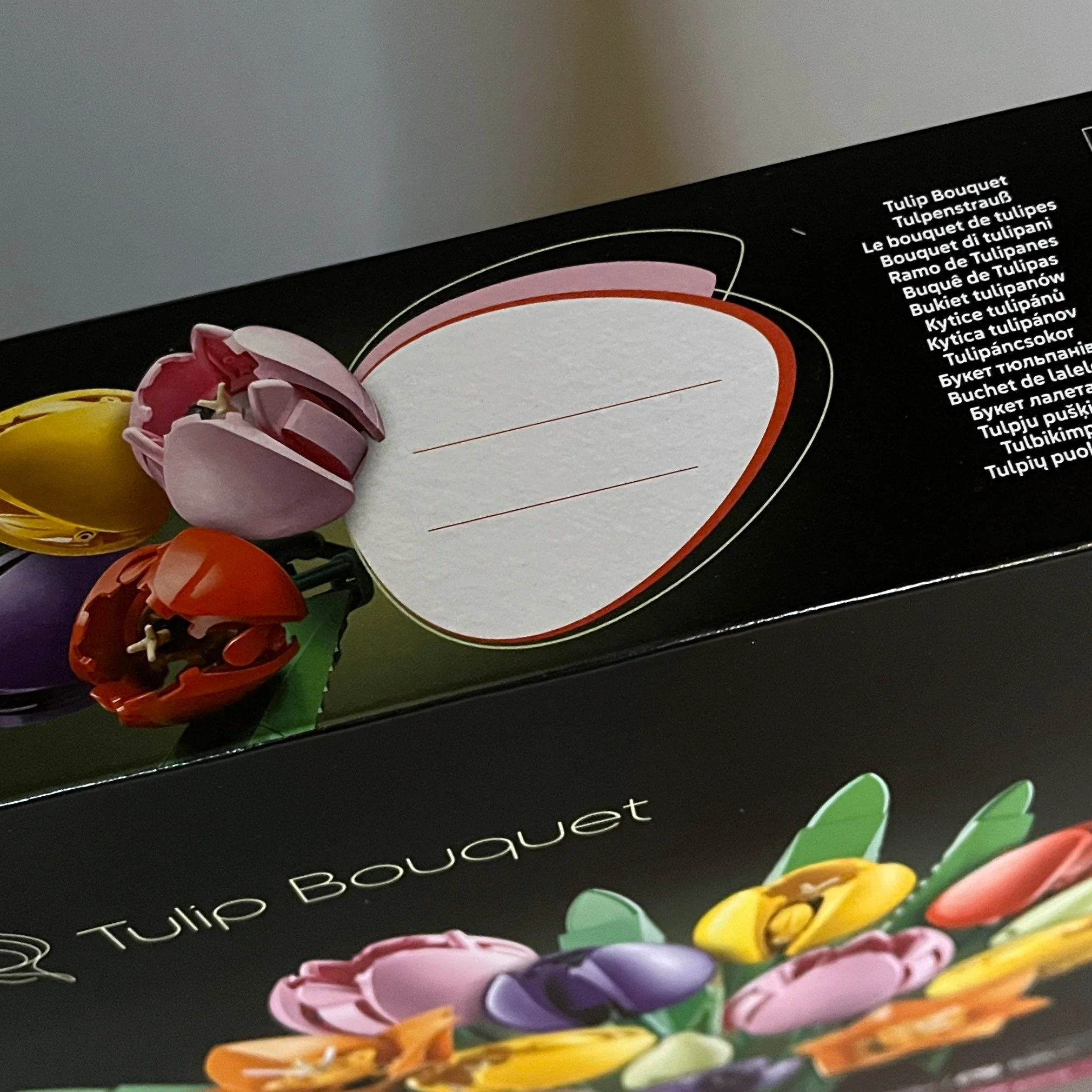
A fun detail on the box is this white space where you can write a greeting to someone if you plan on giving away the set as a gift. Much like a greeting card that you would add to a bouquet.
Like so many times before, this Botanical set brings us a bunch of recolors, but also two new elements! Let’s dive into it!
Building Experience
The box contains five paper bags, two instruction booklets, and a plastic bag with green Technic axles.
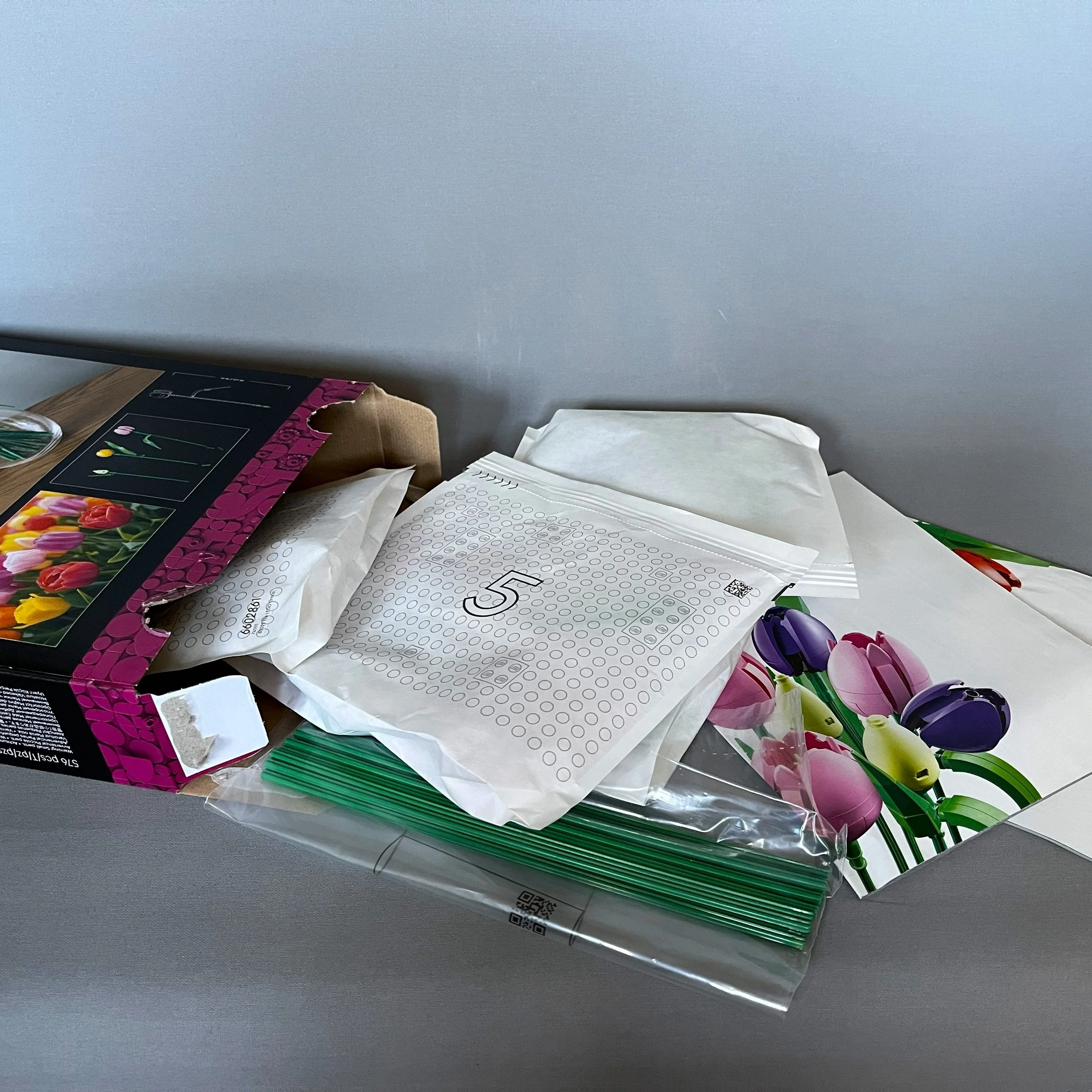
The instruction booklet begins with an image of real tulips and a text describing the etymology of the word tulip and how the designers did not have a specific tulip in mind when designing this set. It represents some of the more than 3,000 variants out there.
Bag 1 - Red tulips
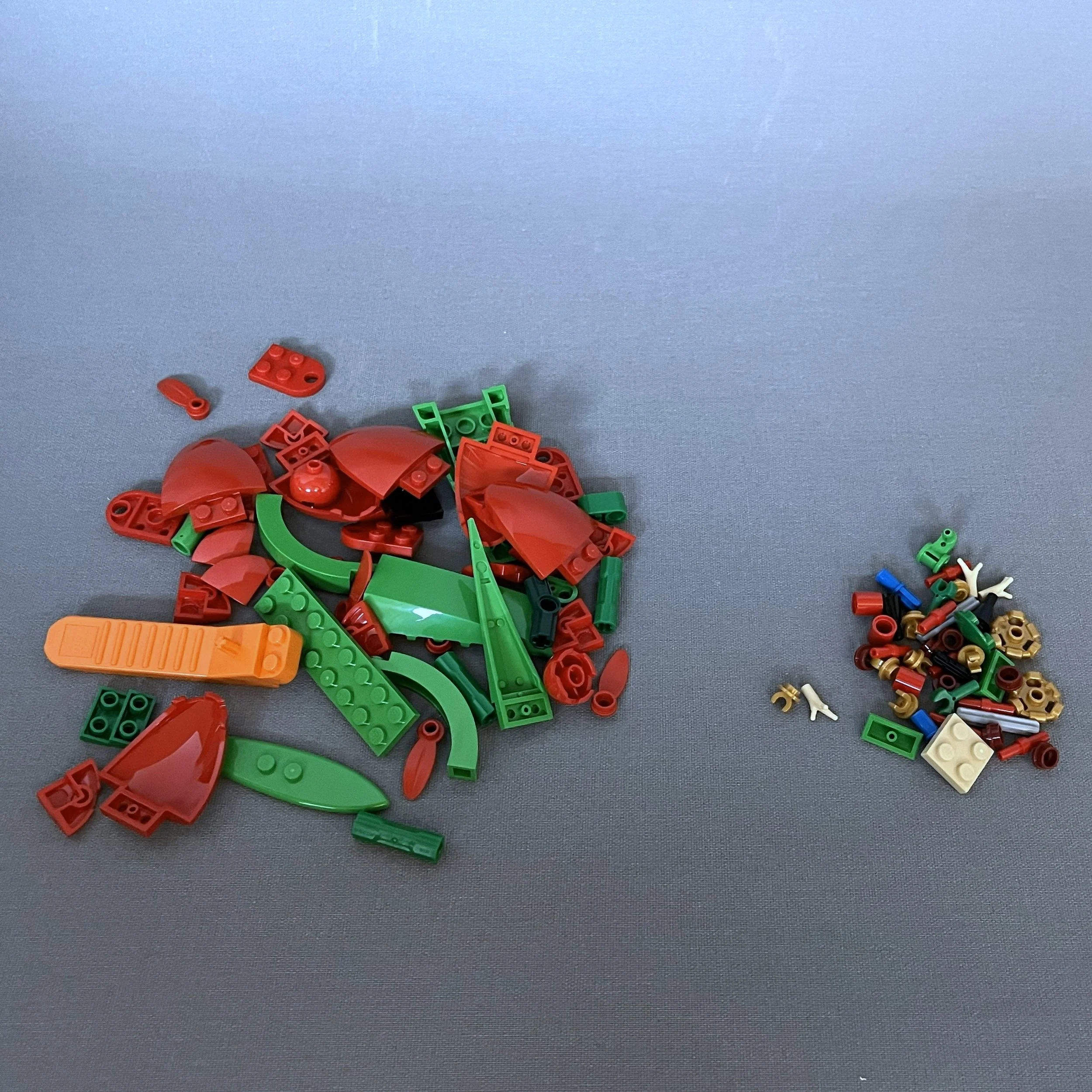
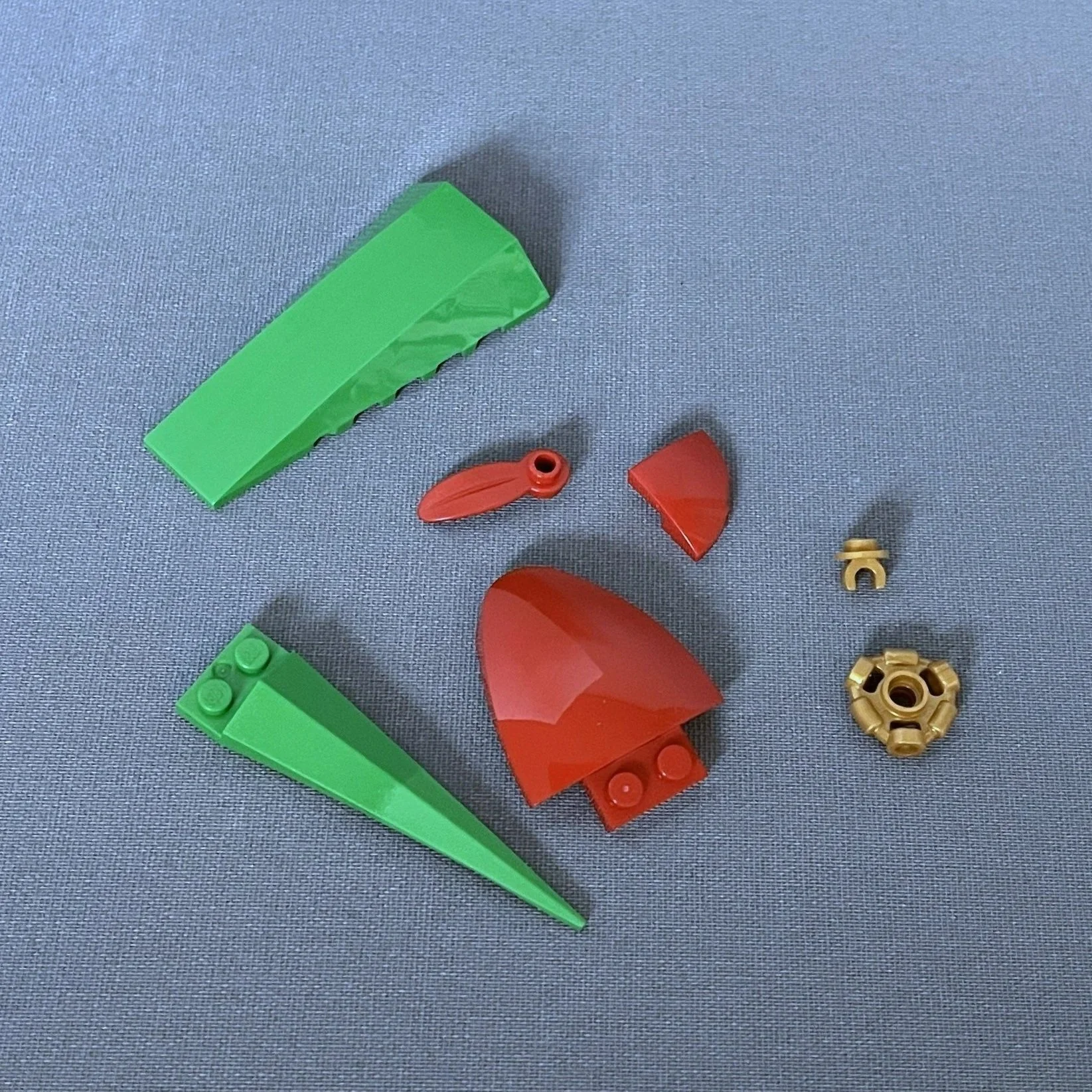
The first new element shows up here in red. It is a kind of curved slope/wedge/canopy. It has a 4x5 footprint and is 5 plates in height. The tulip set gives us the new element in red, yellow, pink and purple. The second new element is a small single leaf. It looks like Part 7264 with two leaves cut off. This element will be a welcome addition for tree builders, but I suspect it might also be used as a tongue in some coming Pokémon or Ninjago sets.

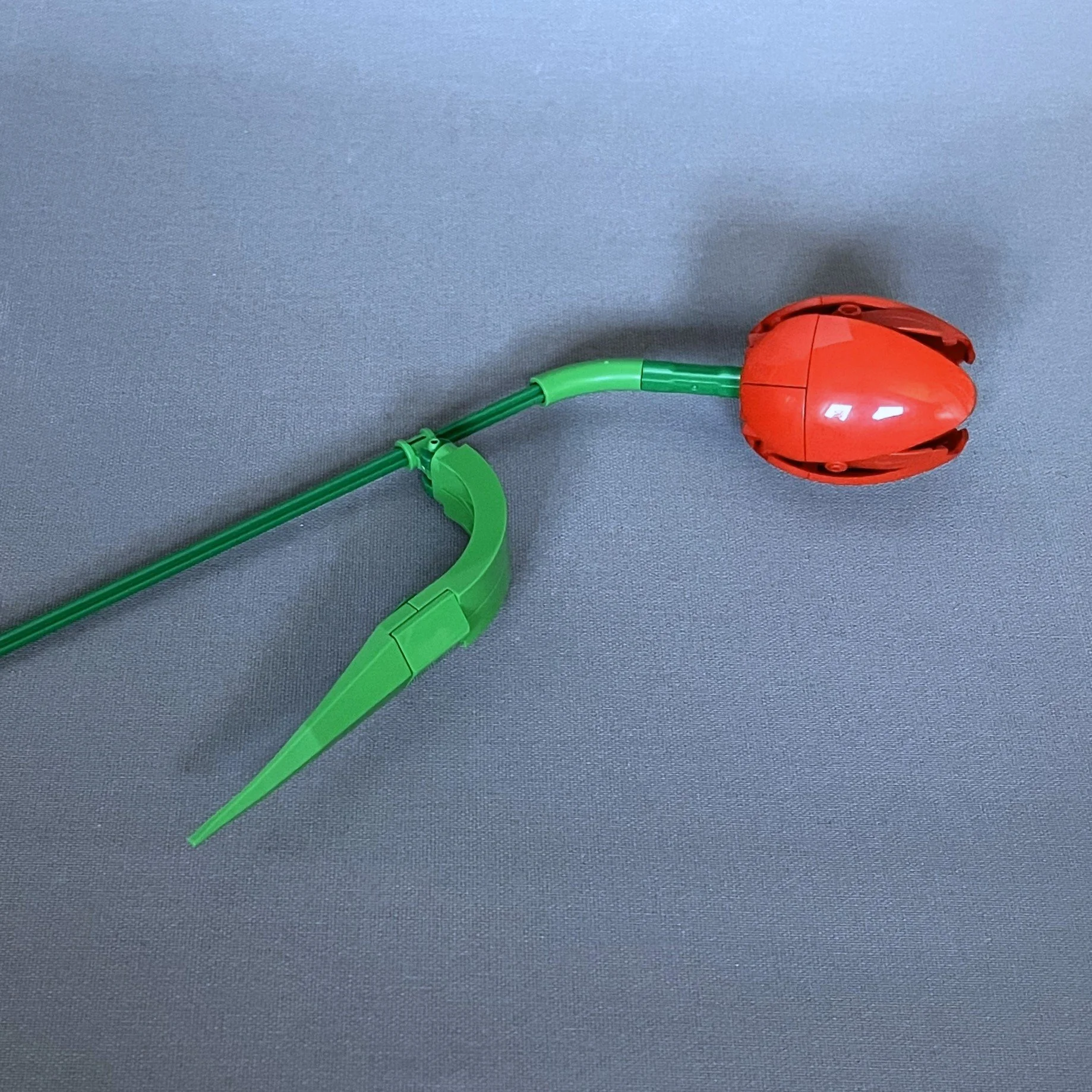
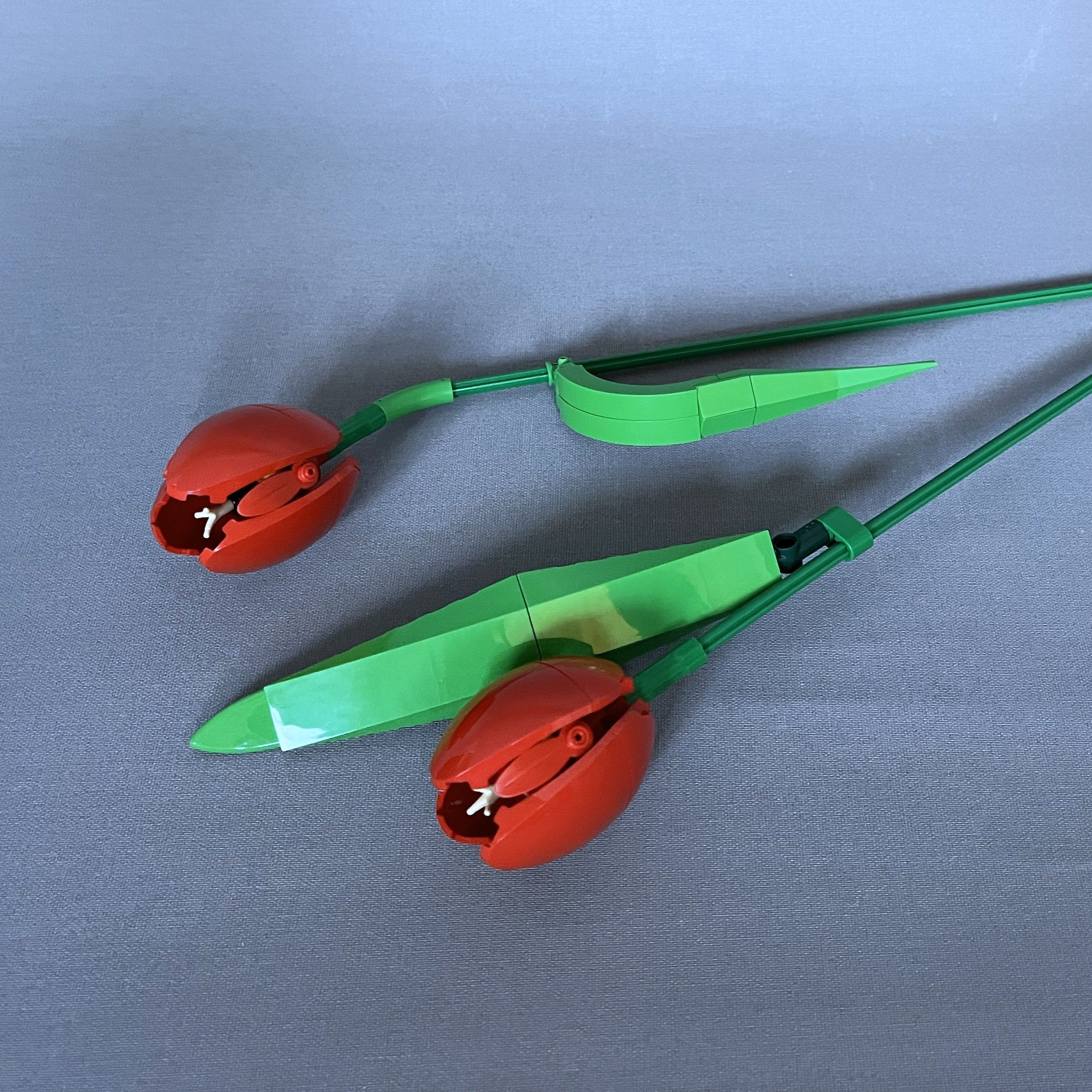
We build two tulips from the first bag. The hexagonal Ninjago hilt is used effectively here and is actually quite satisfying how perfect the petals click into place forming the flower. The new canopy element is the perfect element for representing the tulip petals. I suspect we will soon see this element in some transparent colors, used as windscreens or canopies.
The two tulips are not identical. One of the flowers is attached at an angle, and they have different leaves.
Bag 2 - Orange Tulips
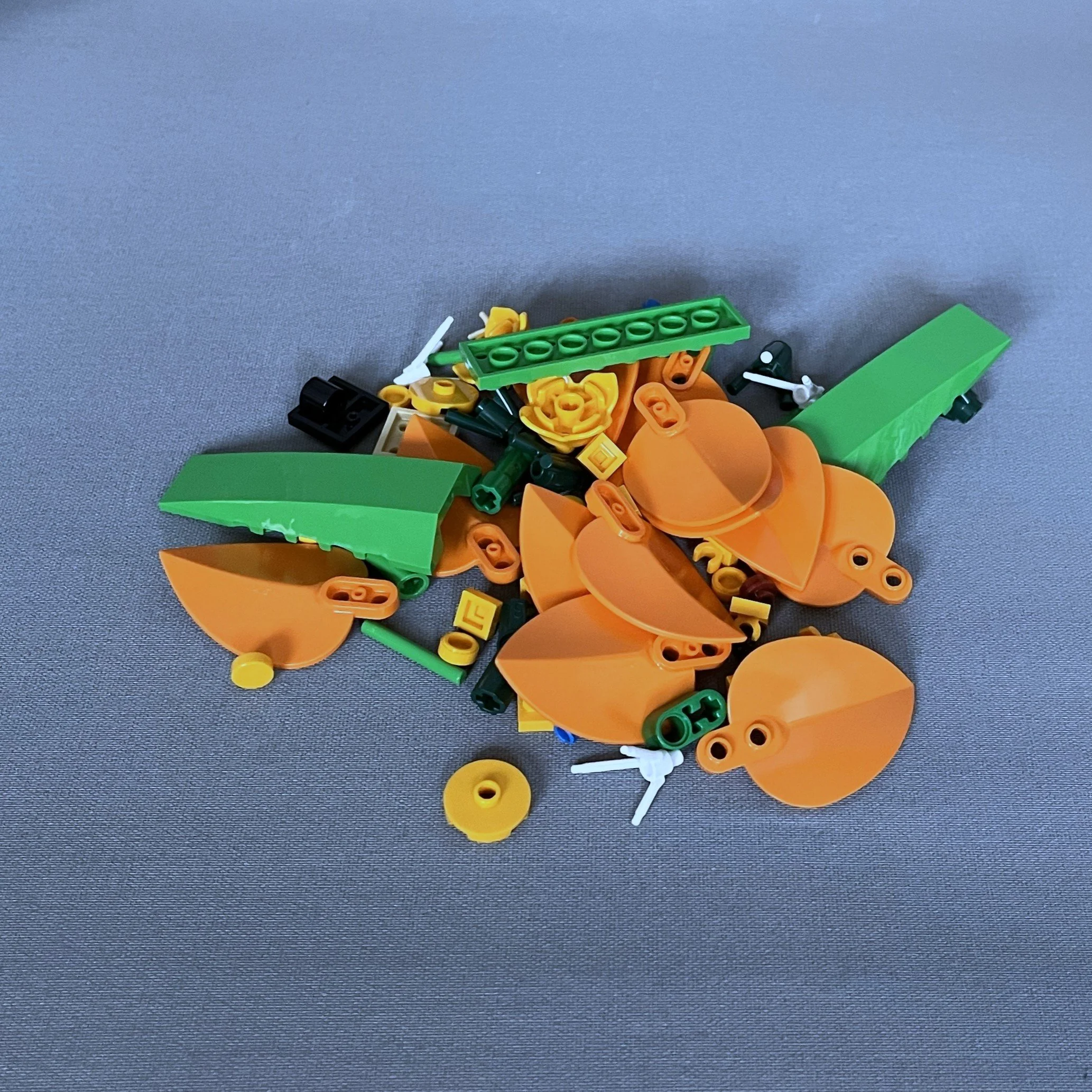
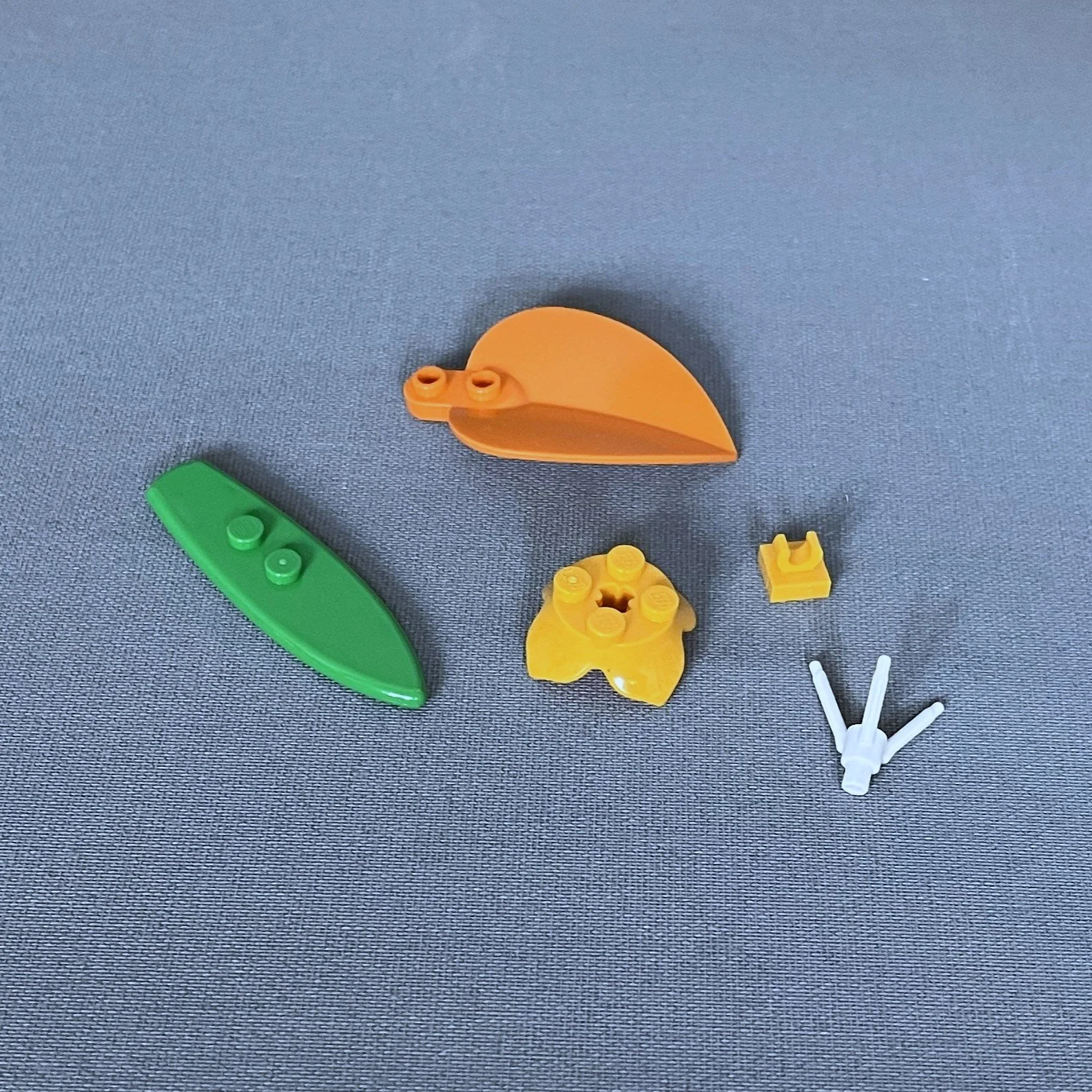
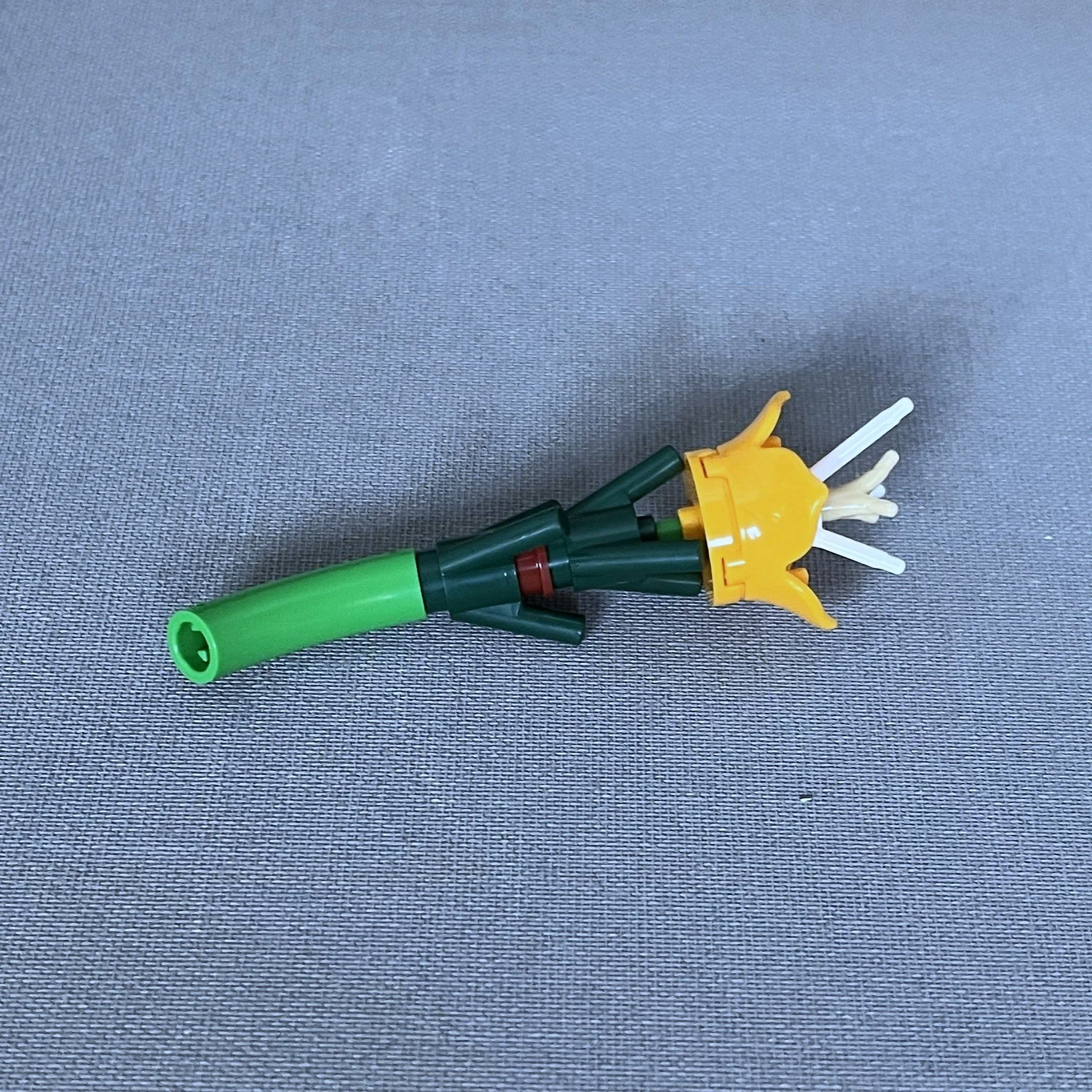
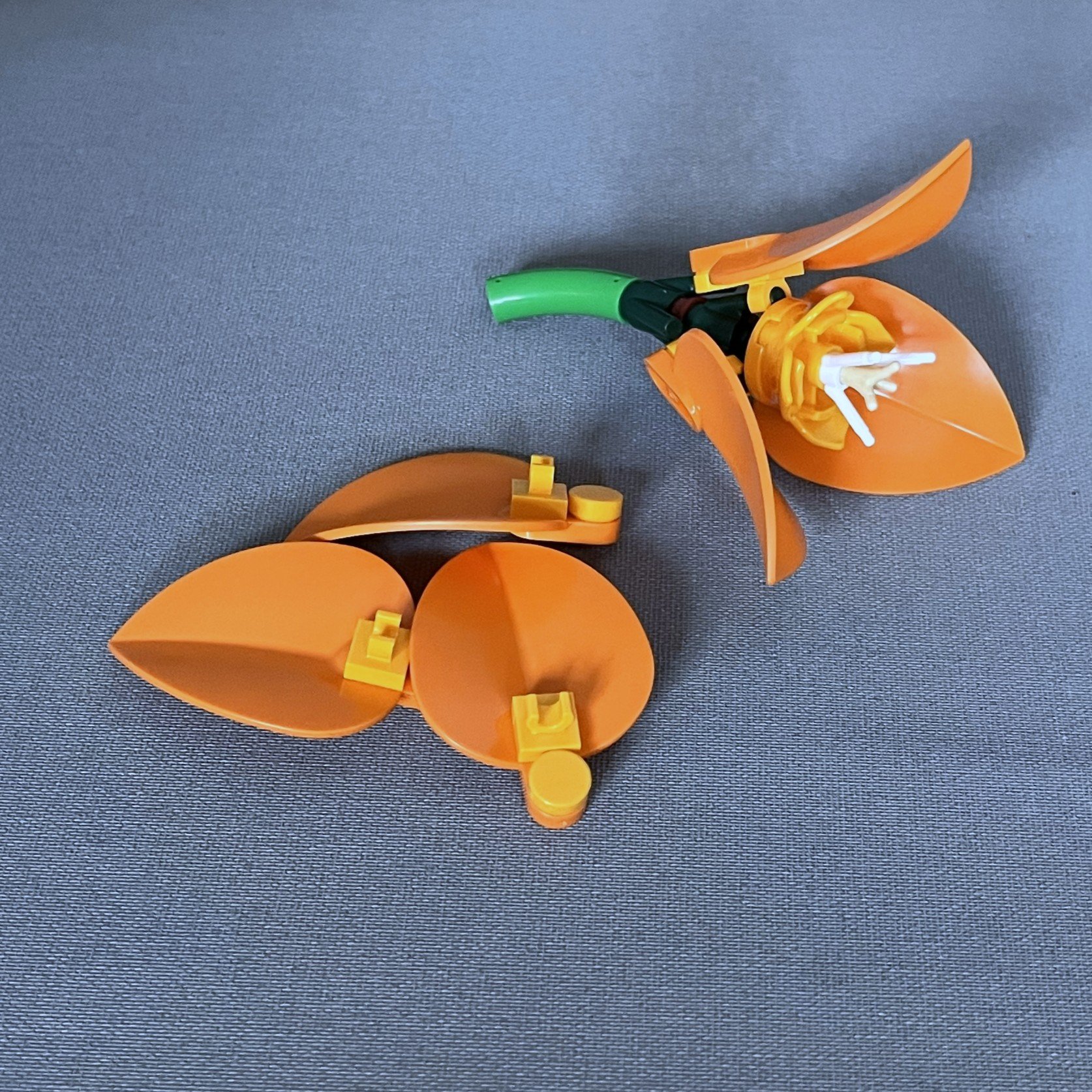
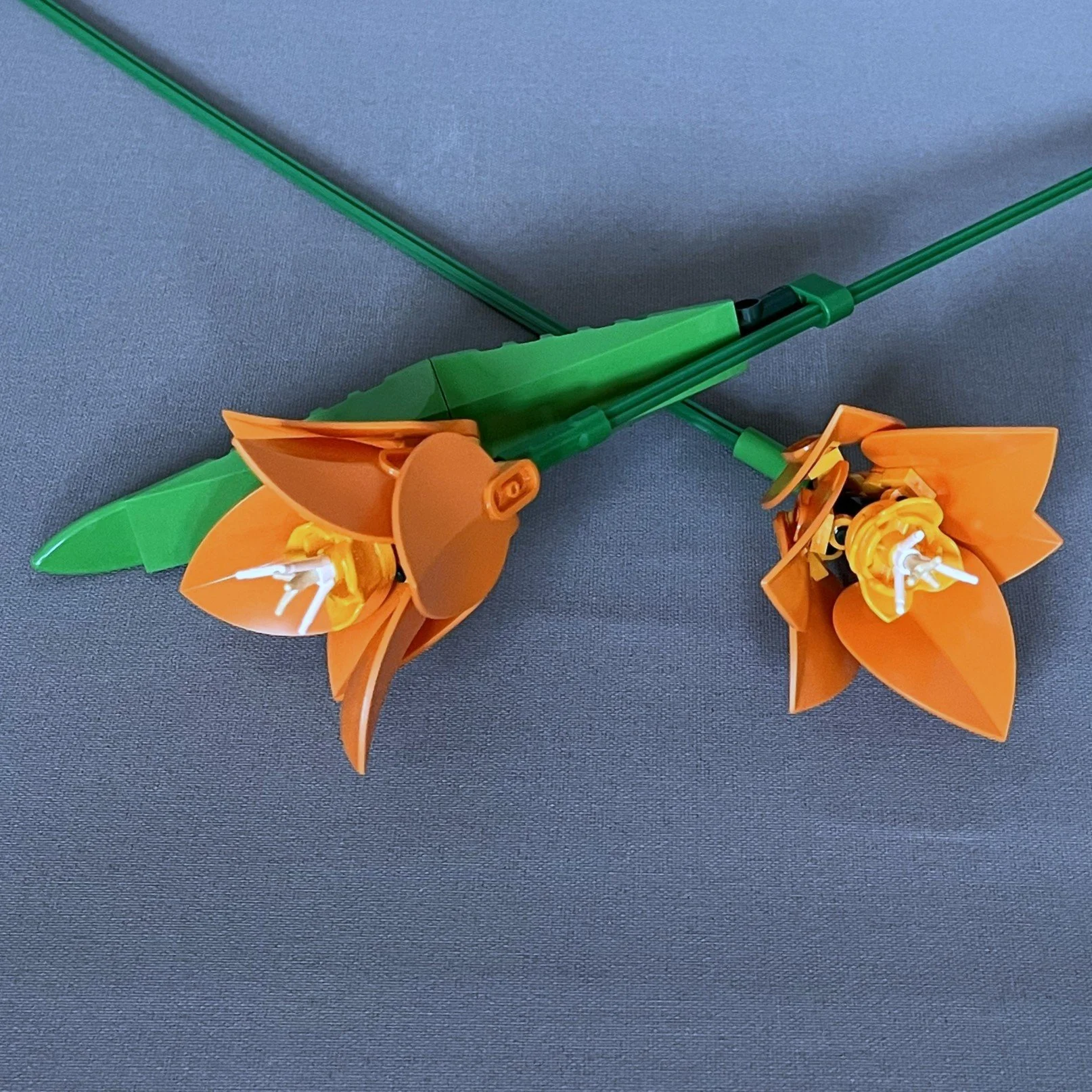
The orange tulips are built around a different subassembly. These flowers are supposed to look like they are in full bloom. Part 7096 is used to represent the petals. I think it is a bit too pointy and shaped the wrong way. It is a very abrupt contrast to the beautifully rounded buds. Honestly, it looks more like a daffodil or a narcissus than a tulip.
Bag 3 - Yellow tulips
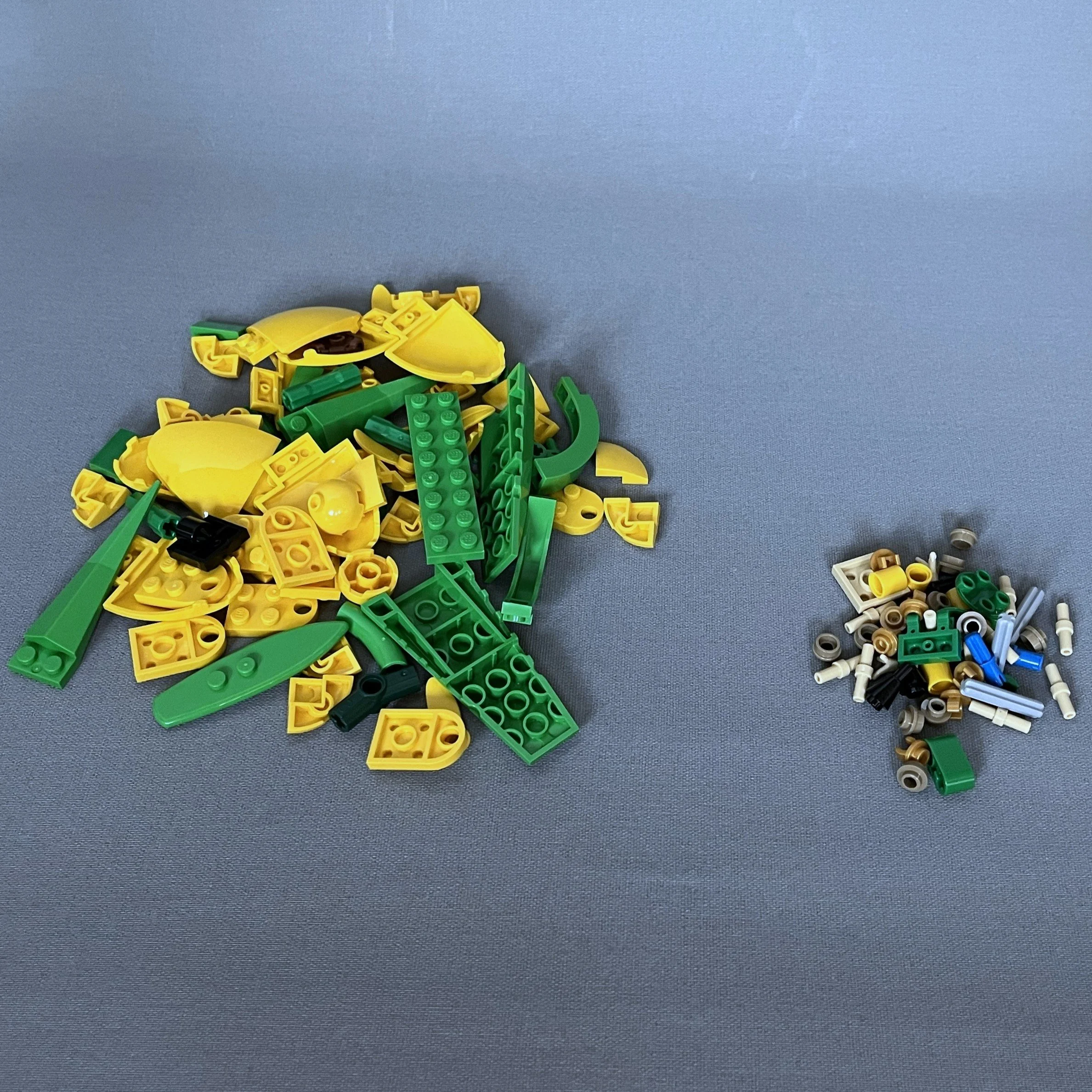
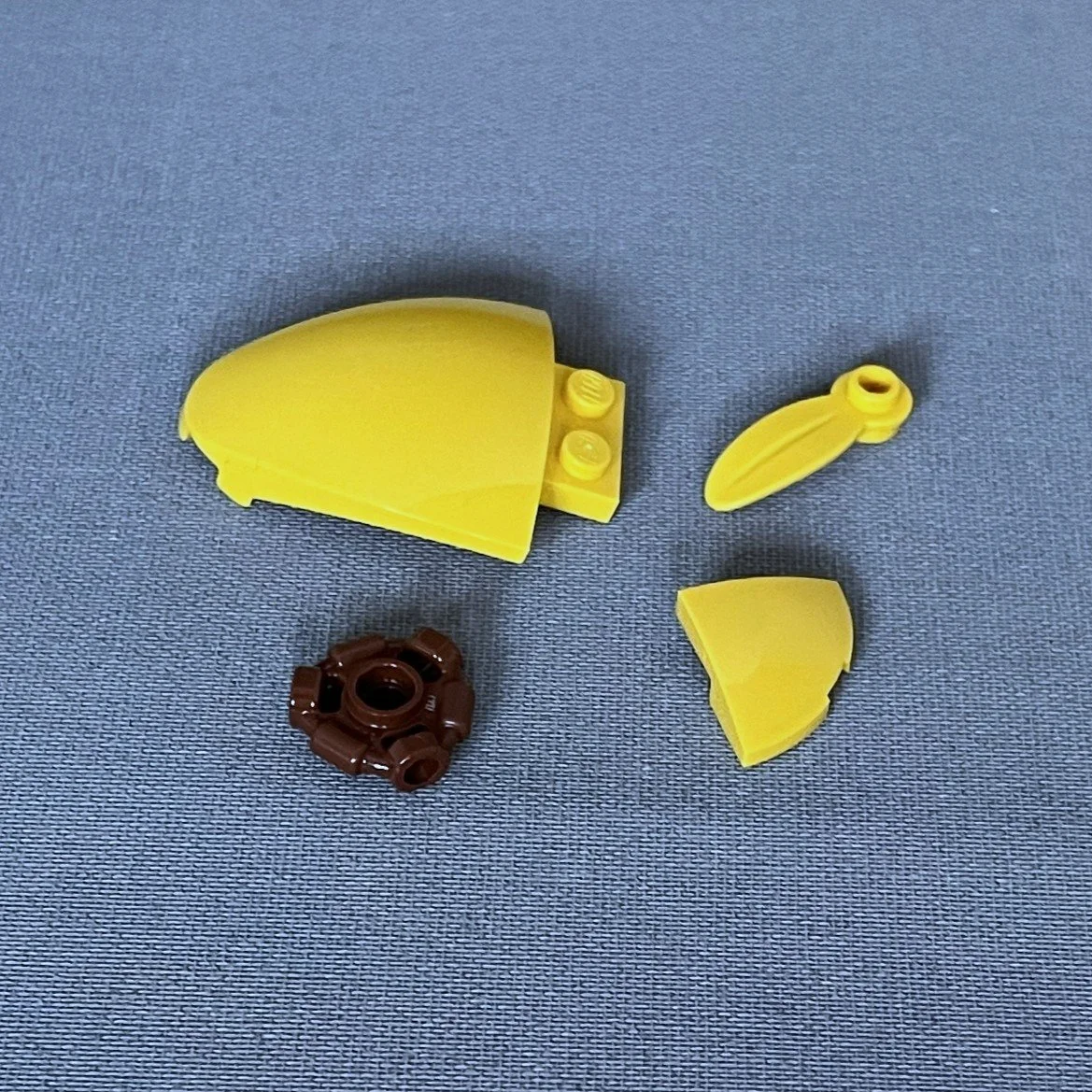
The third bag contains parts for building three yellow tulips. The flowers are built exactly the same as the red tulips from Bag 1, but a new variant of the brick-built green leaves is introduced.
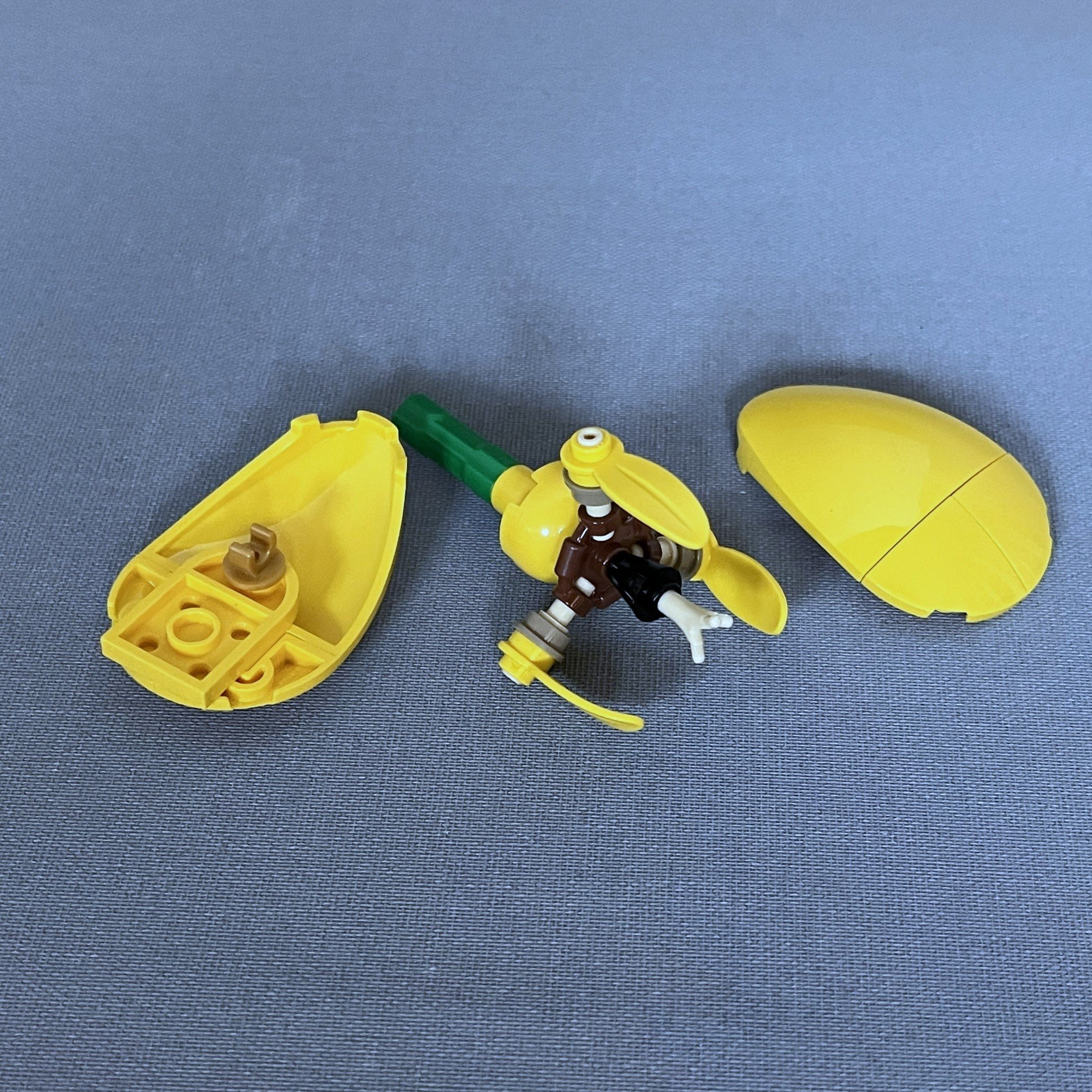
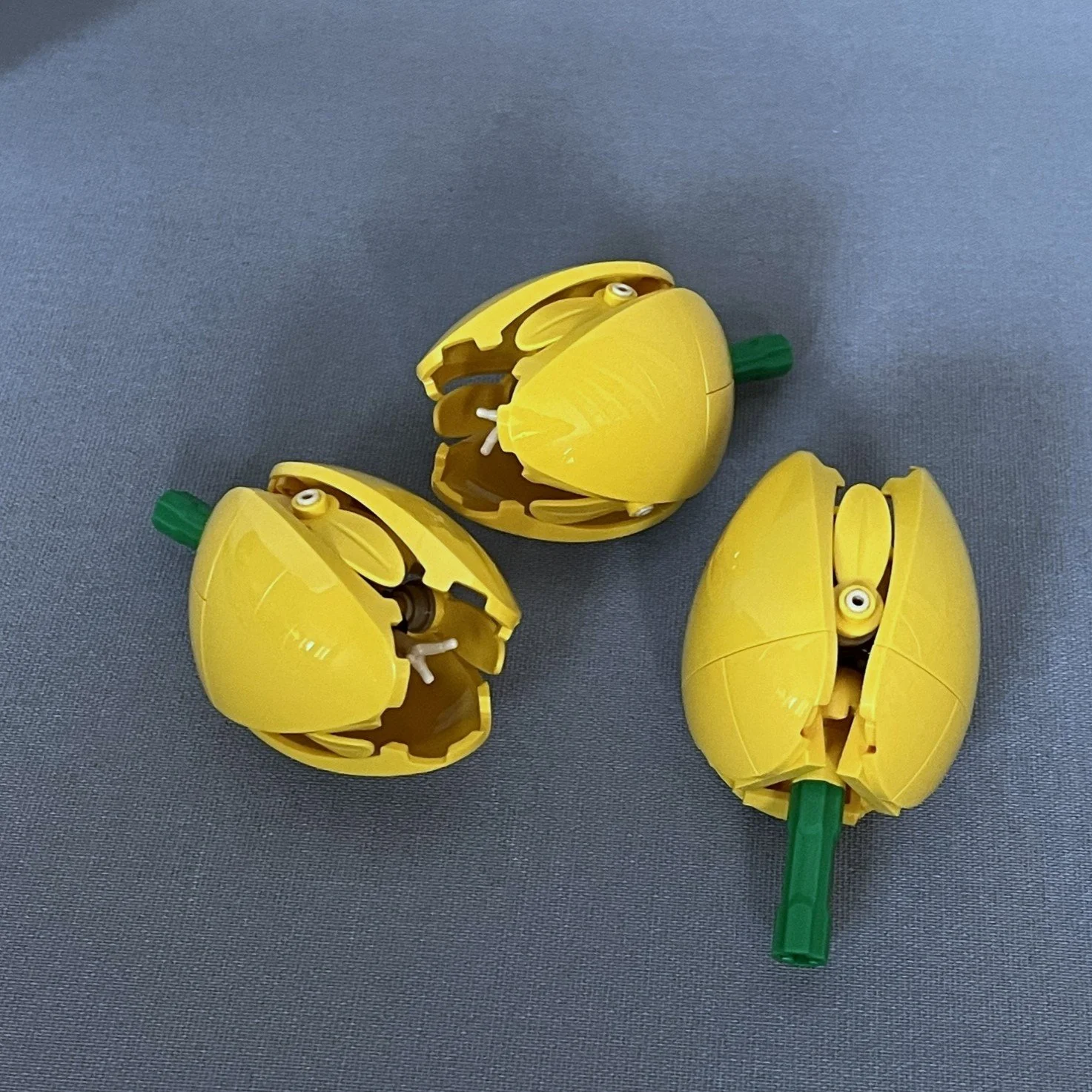
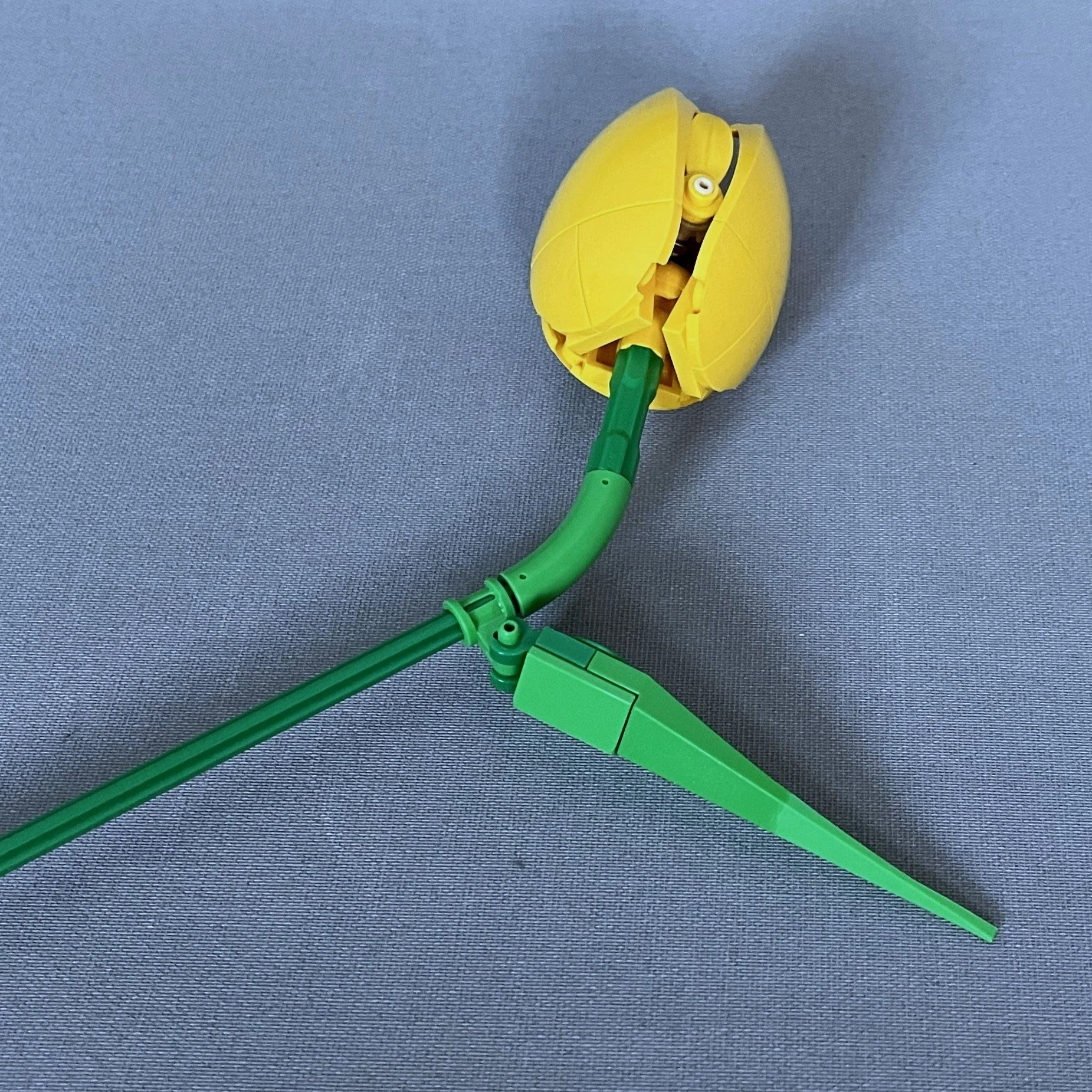
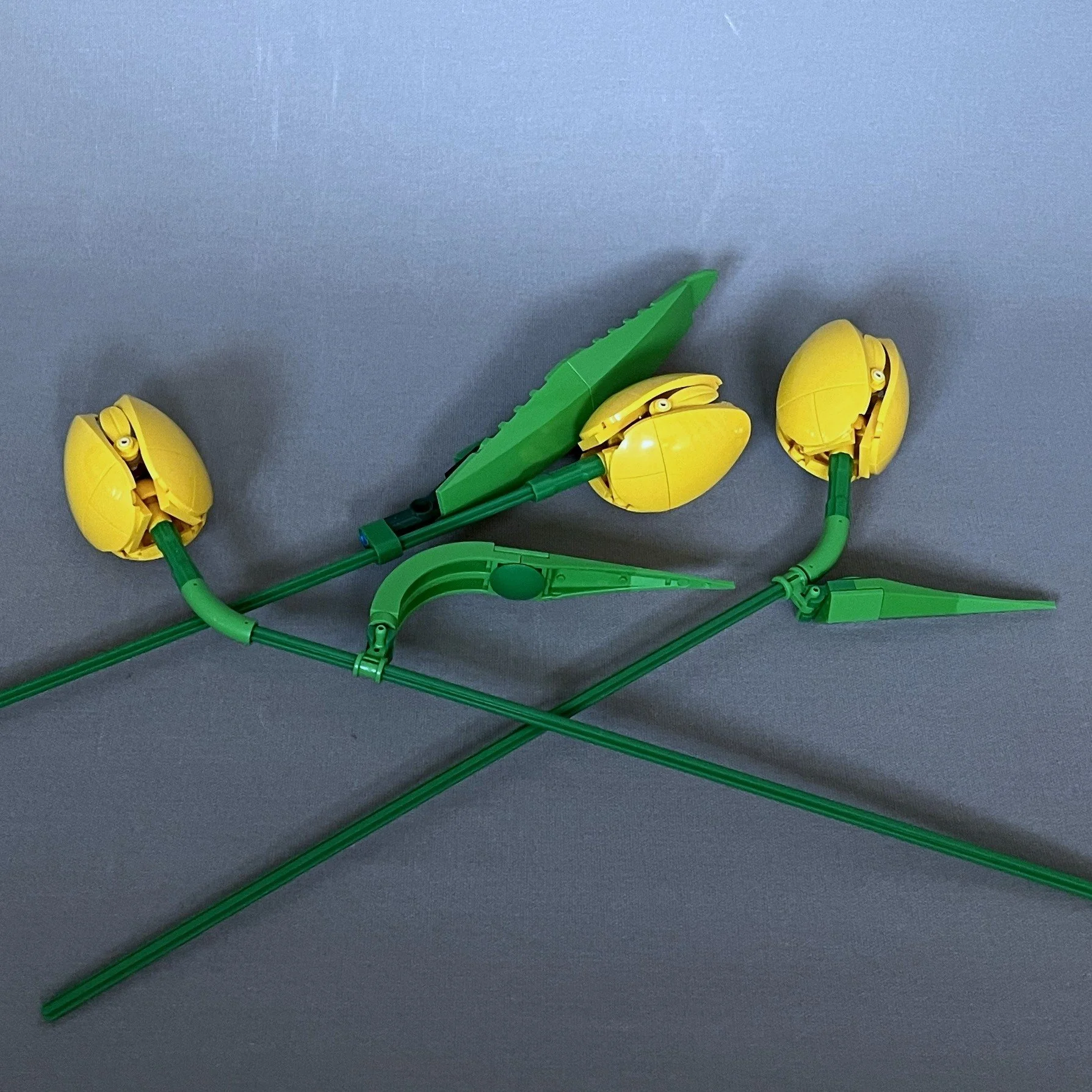
Bag 4 - Purple tulips and green buds
Here is the contents of Bag 4:
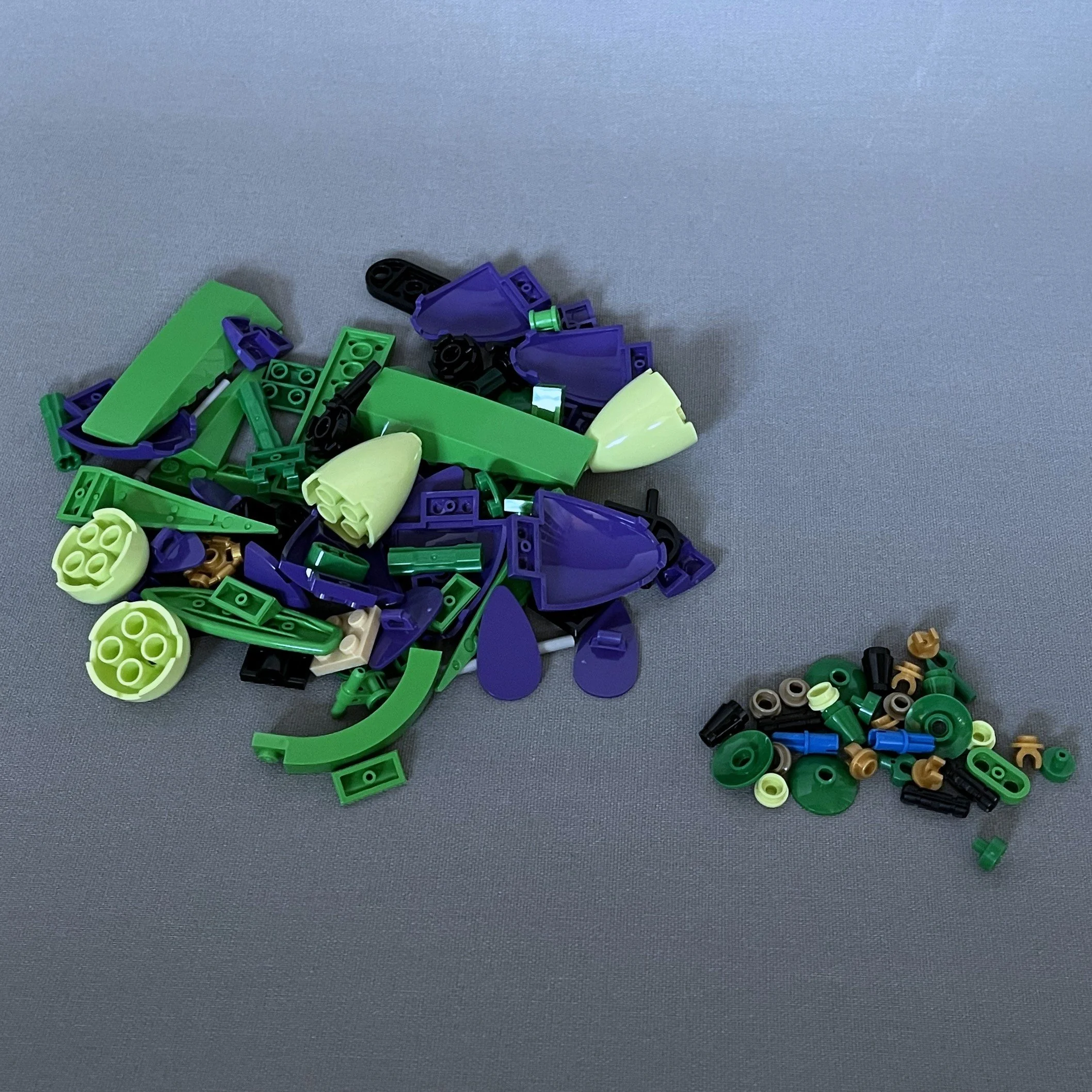
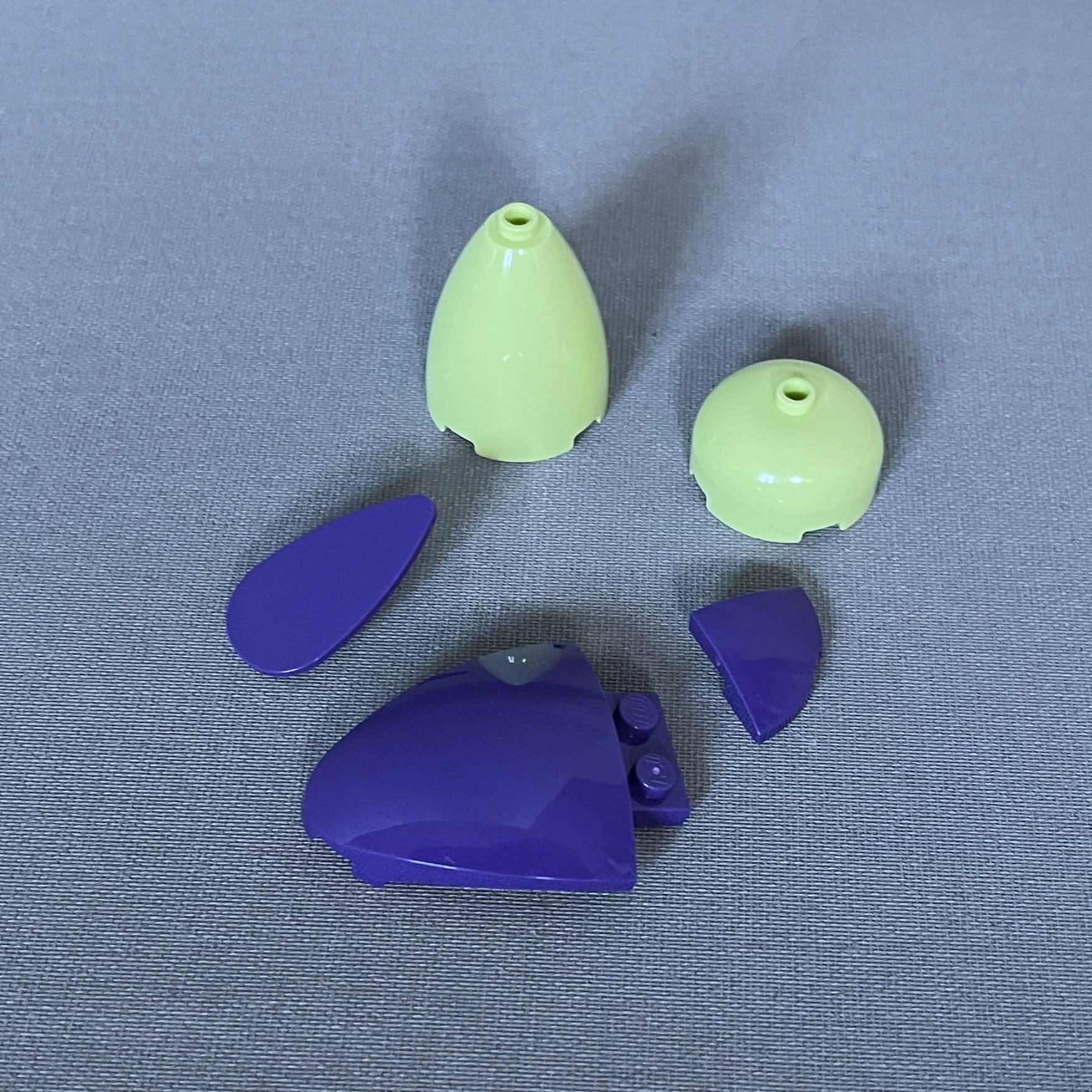
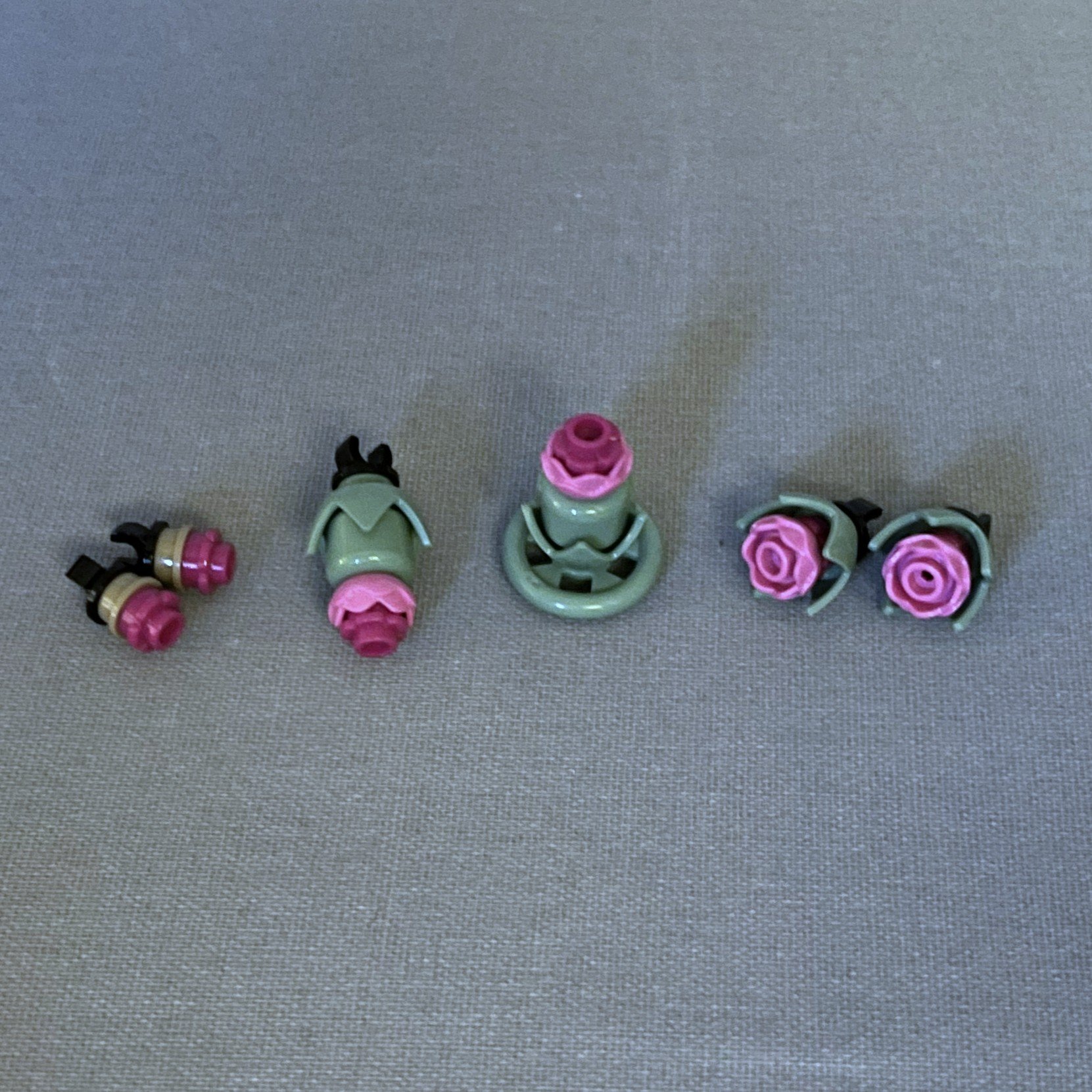
The 3x3 cone is new in this color. But look! Purple minifig shields? What are those for? Let’s find out!
We start off by building two identical buds in yellowish green.
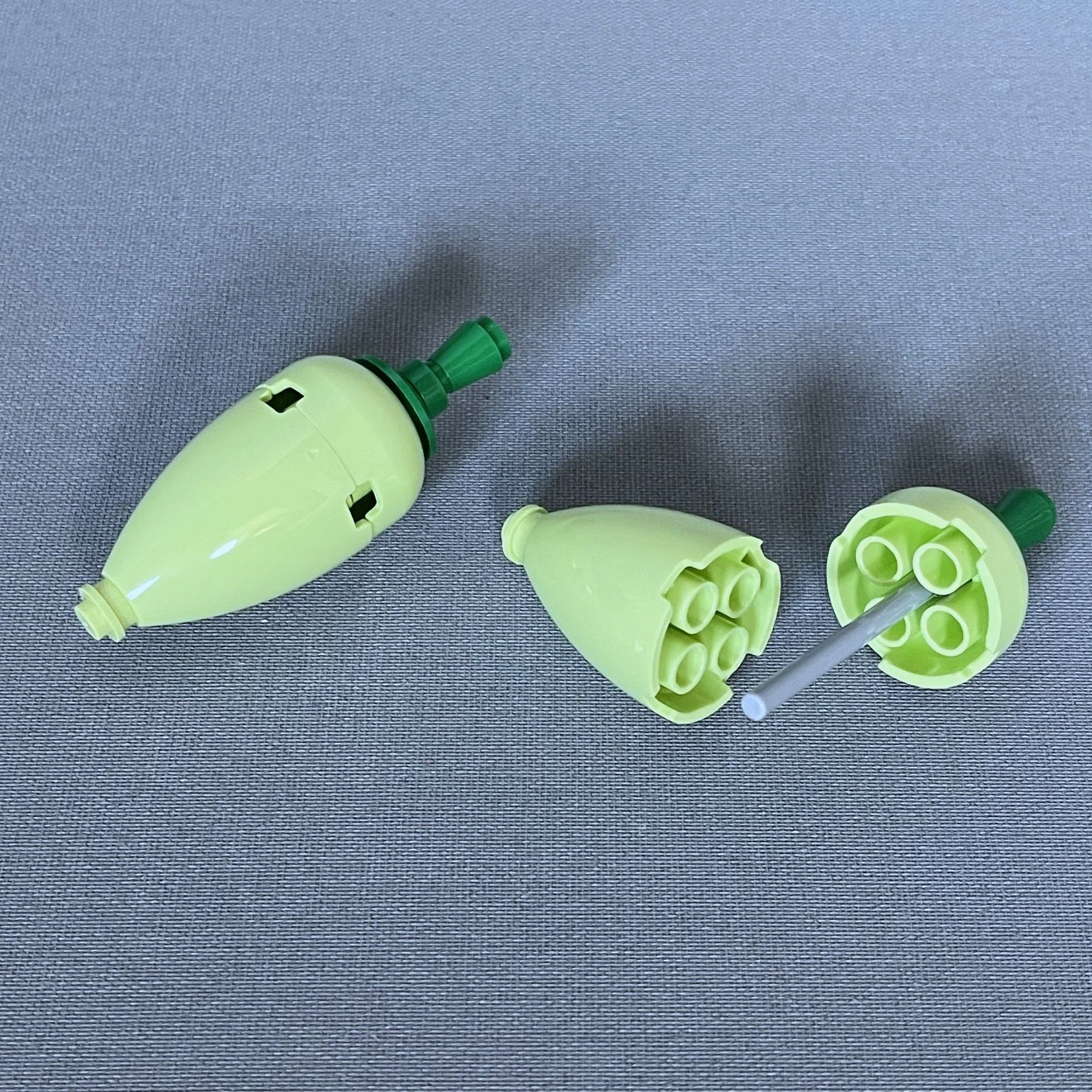
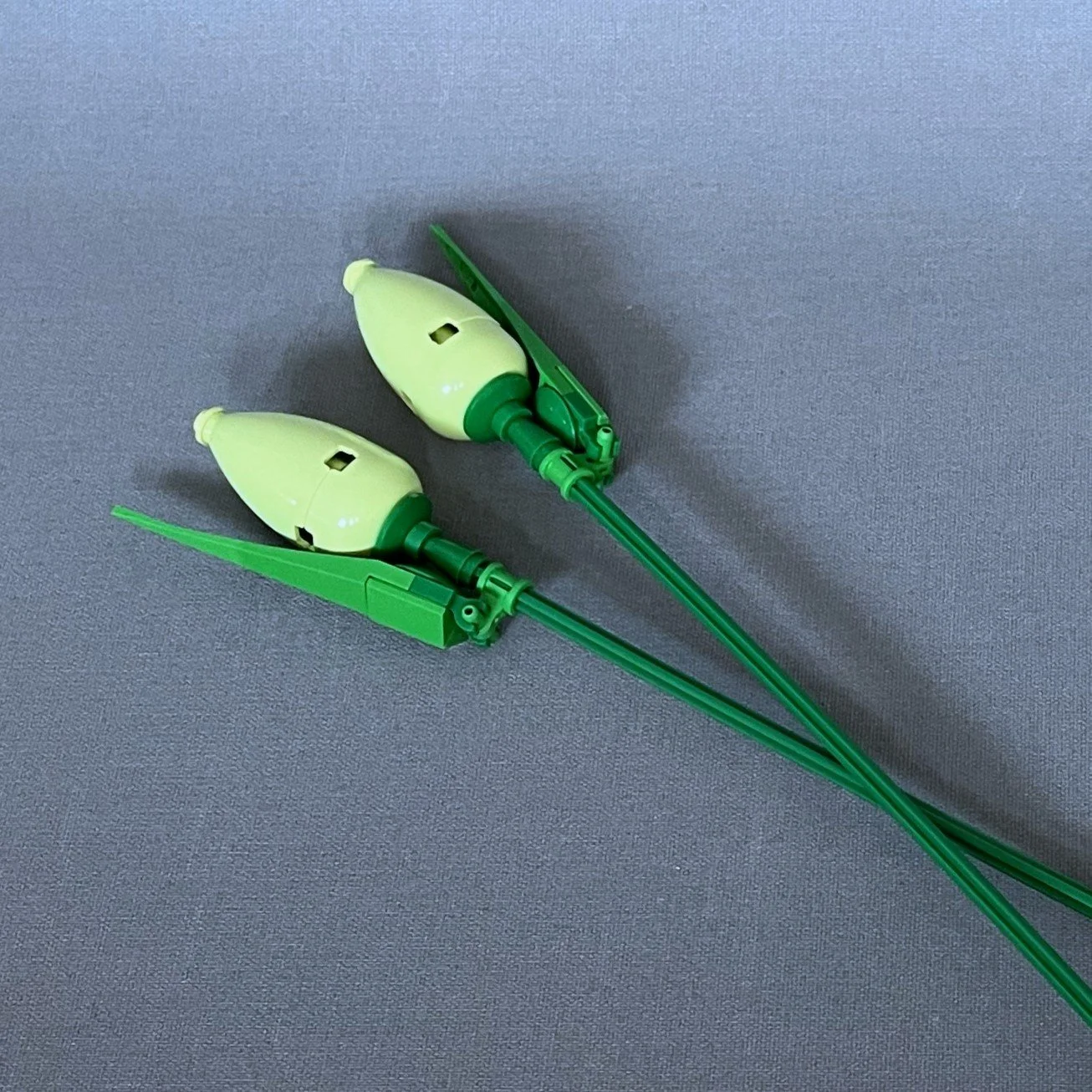
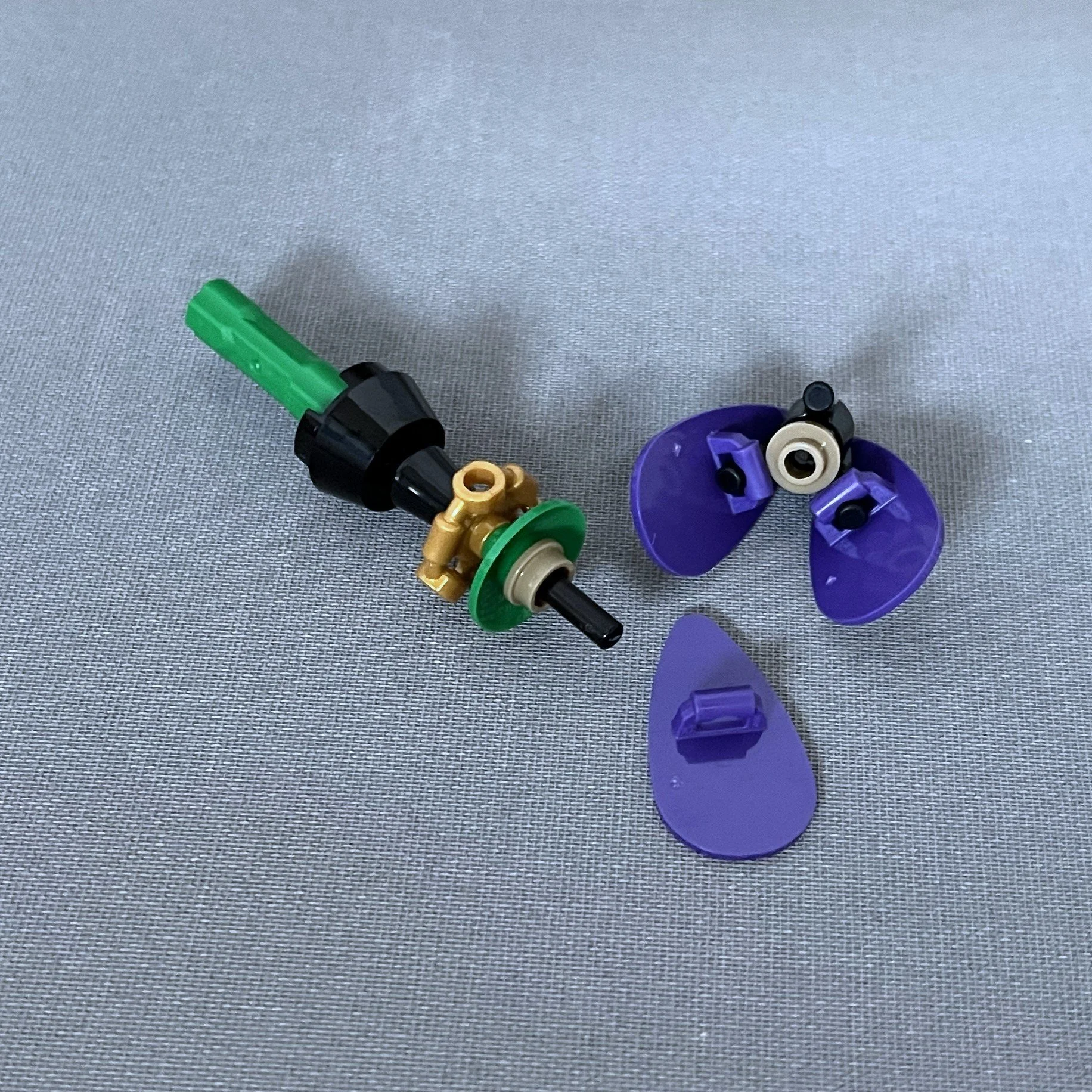
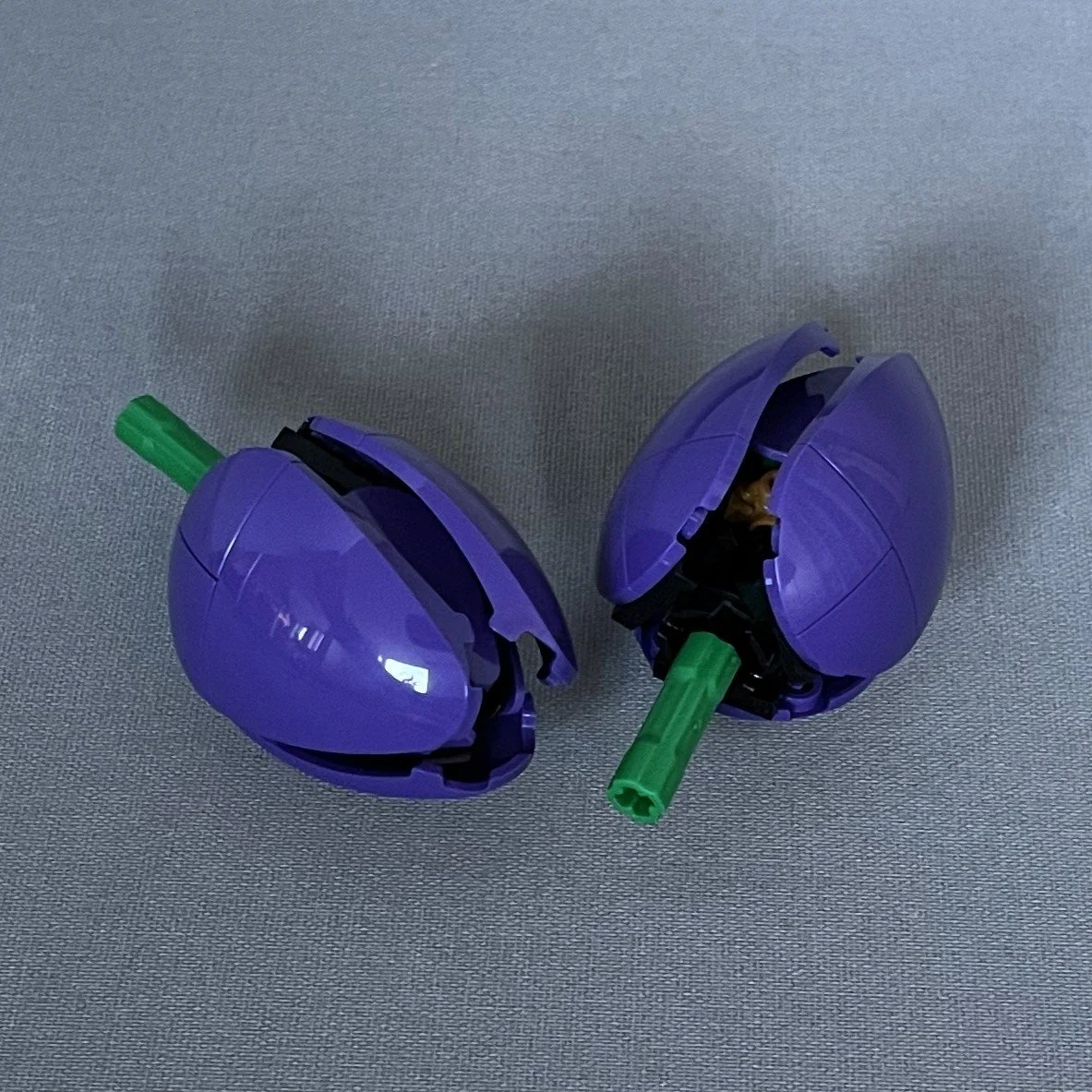
Next up are two purple tulips. They are not built in the same way as the red and yellow ones. Here, we use minifig shields to form the inner petals. Mixing up the building methods and parts usage in the flowers is a nice way to add some variety in the otherwise quite repetitive set. Two different leaves are added in the last step.
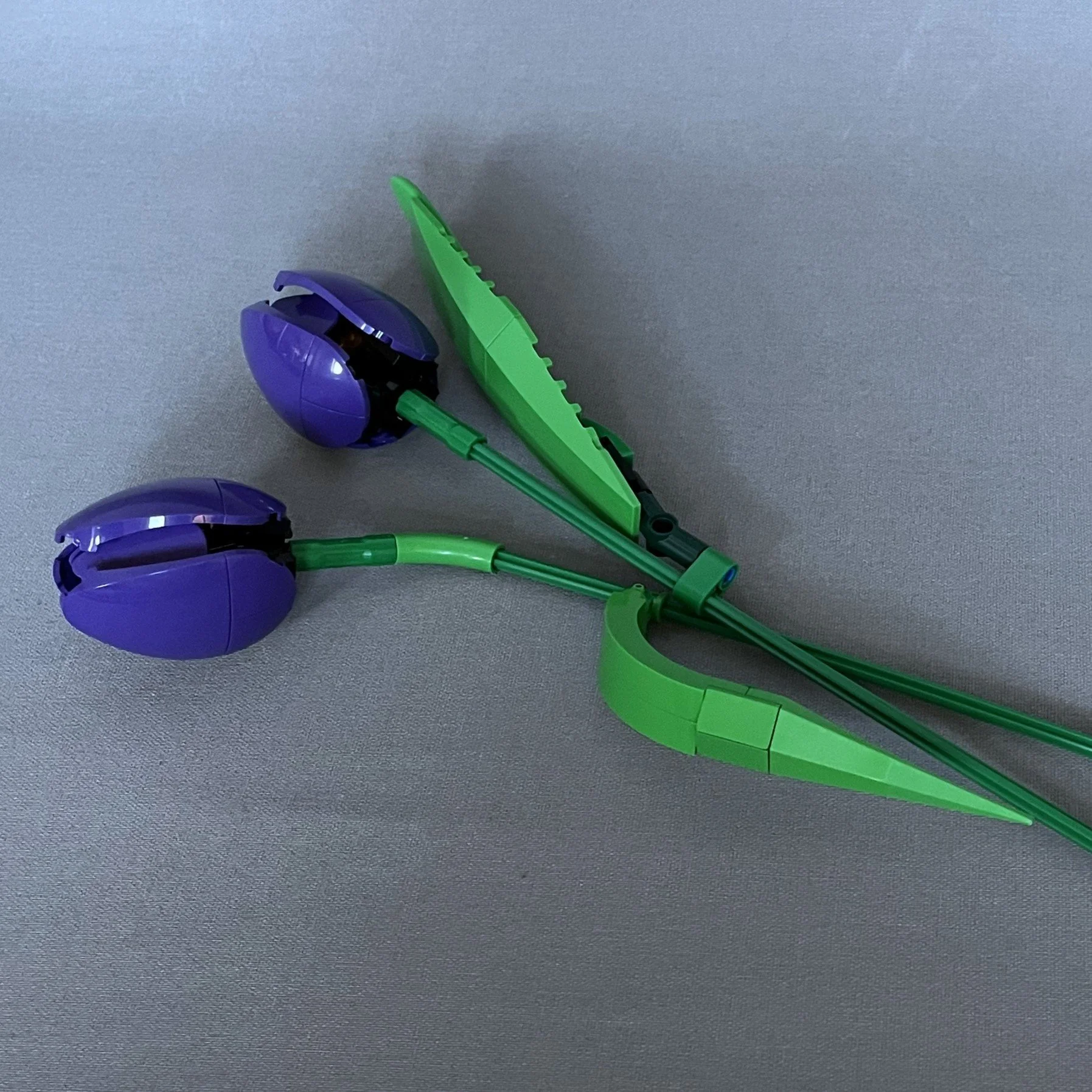
Bag 5 - Pink tulips
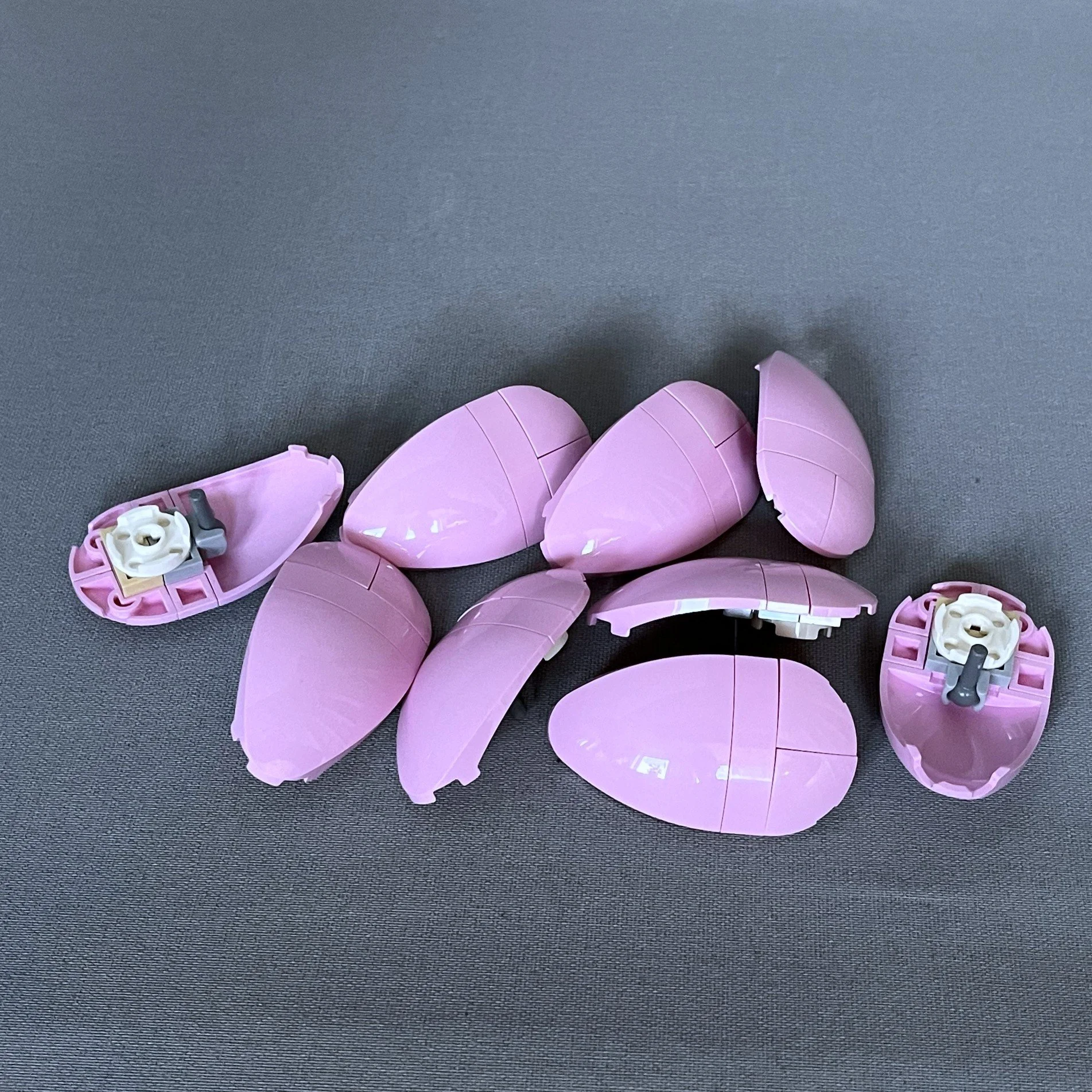
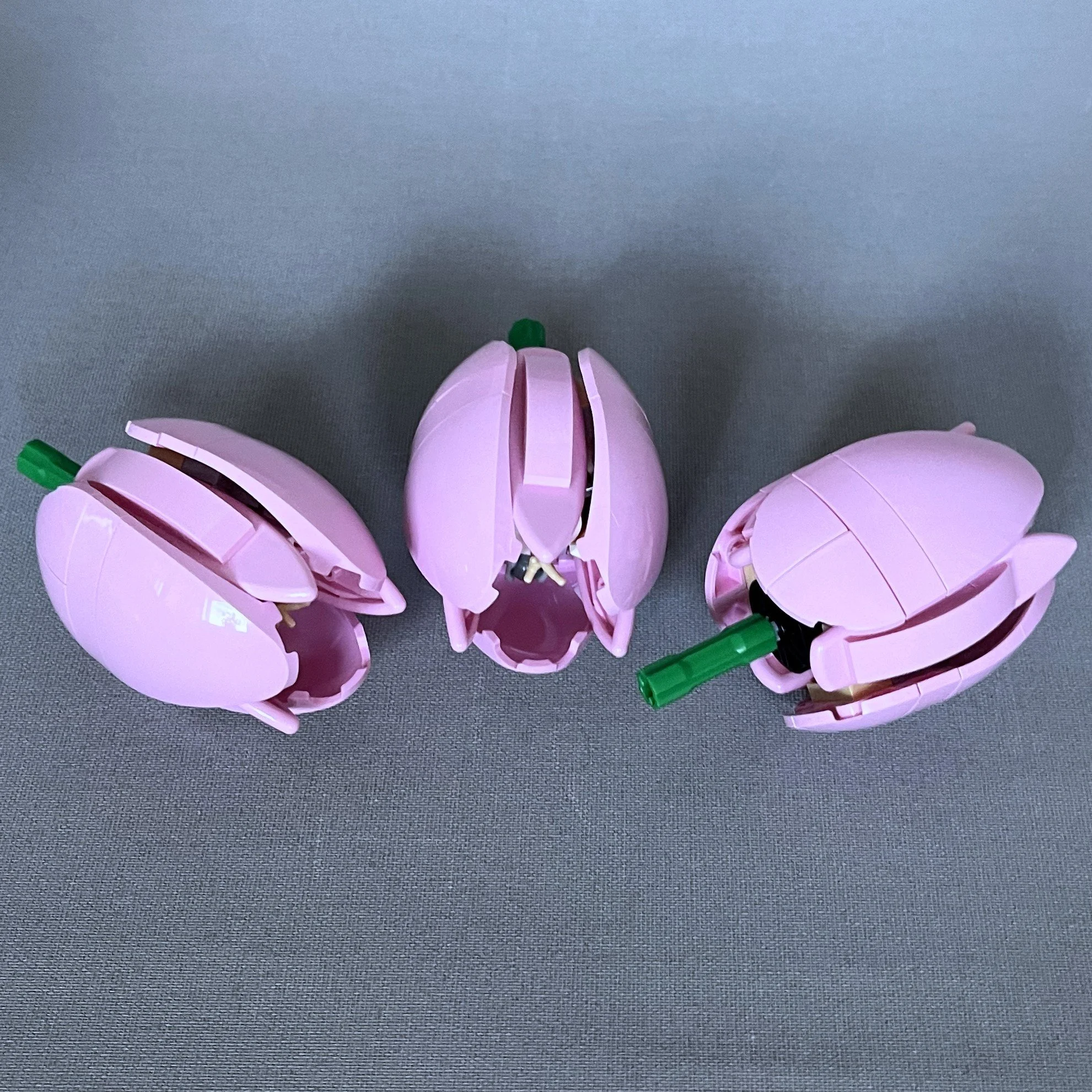
In the final bag we are presented with nine(!) pink surfboards when we open the bags. Interesting! That means there is yet another way of building tulips waiting for us!
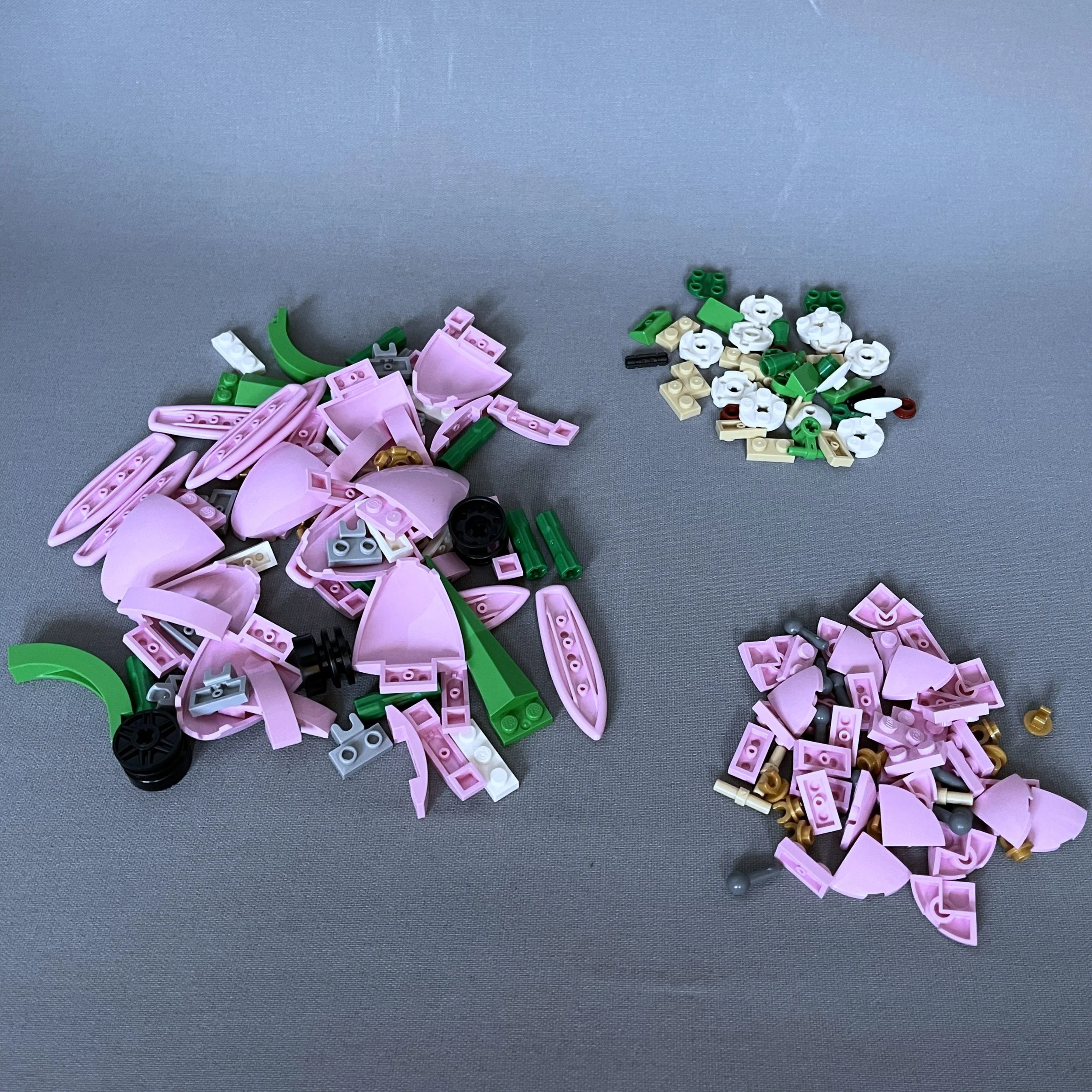
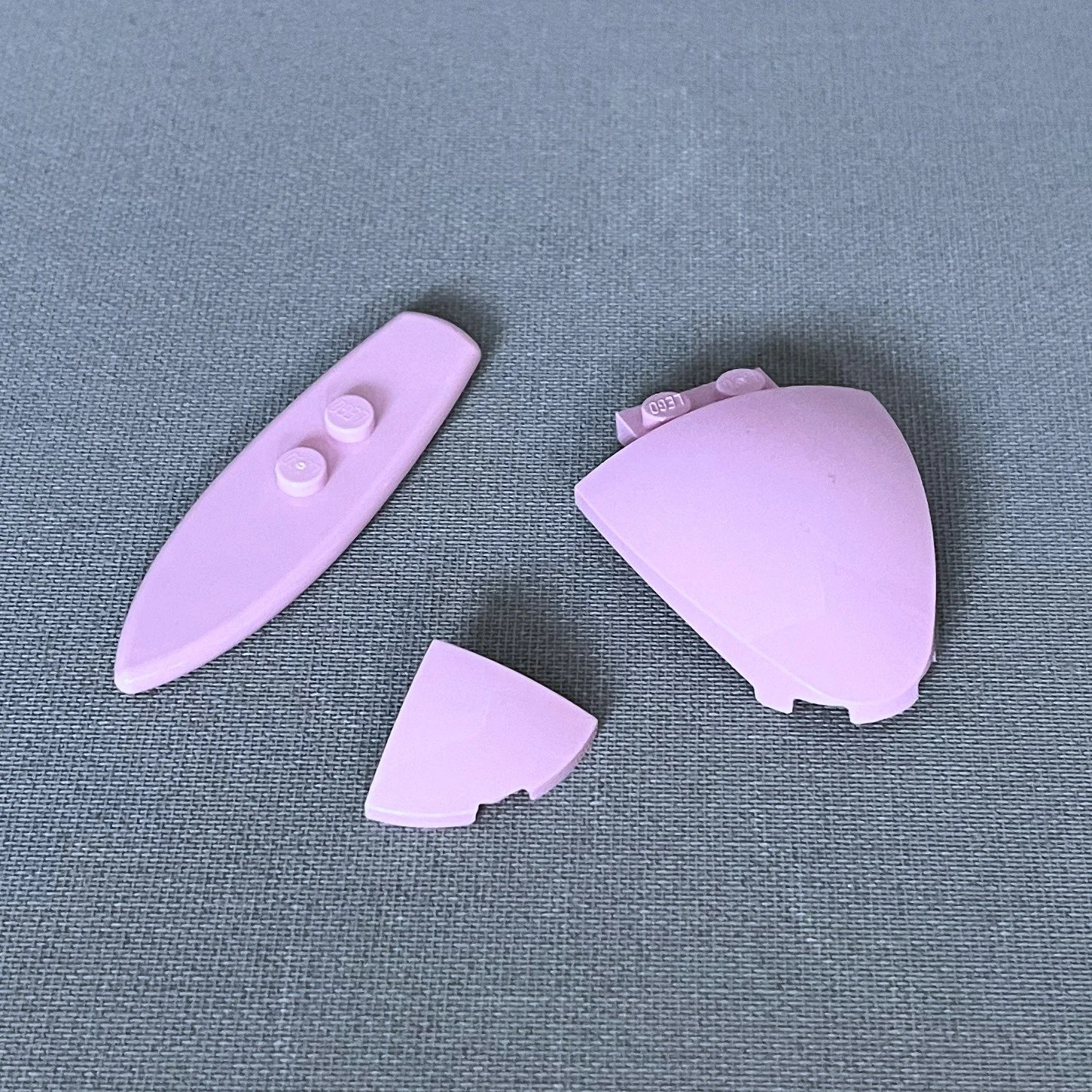
The three pink tulips are bigger and taller than the other ones and are built using a combination of clips and ball joints. A black wheel is used to position the petals at the right angle, and the surfboards align perfectly with the new canopy elements. In the last step, some leaves are added to the stalks.
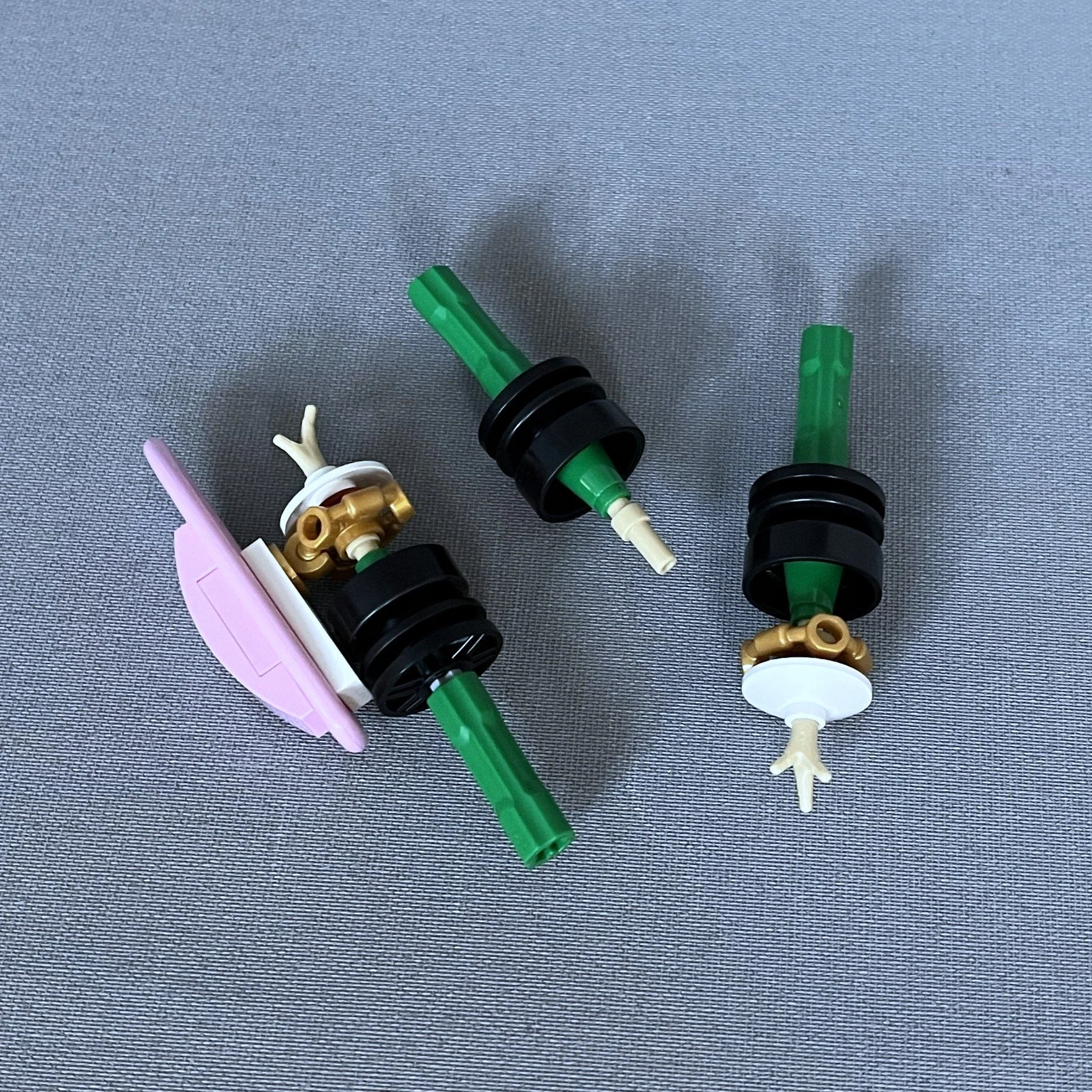
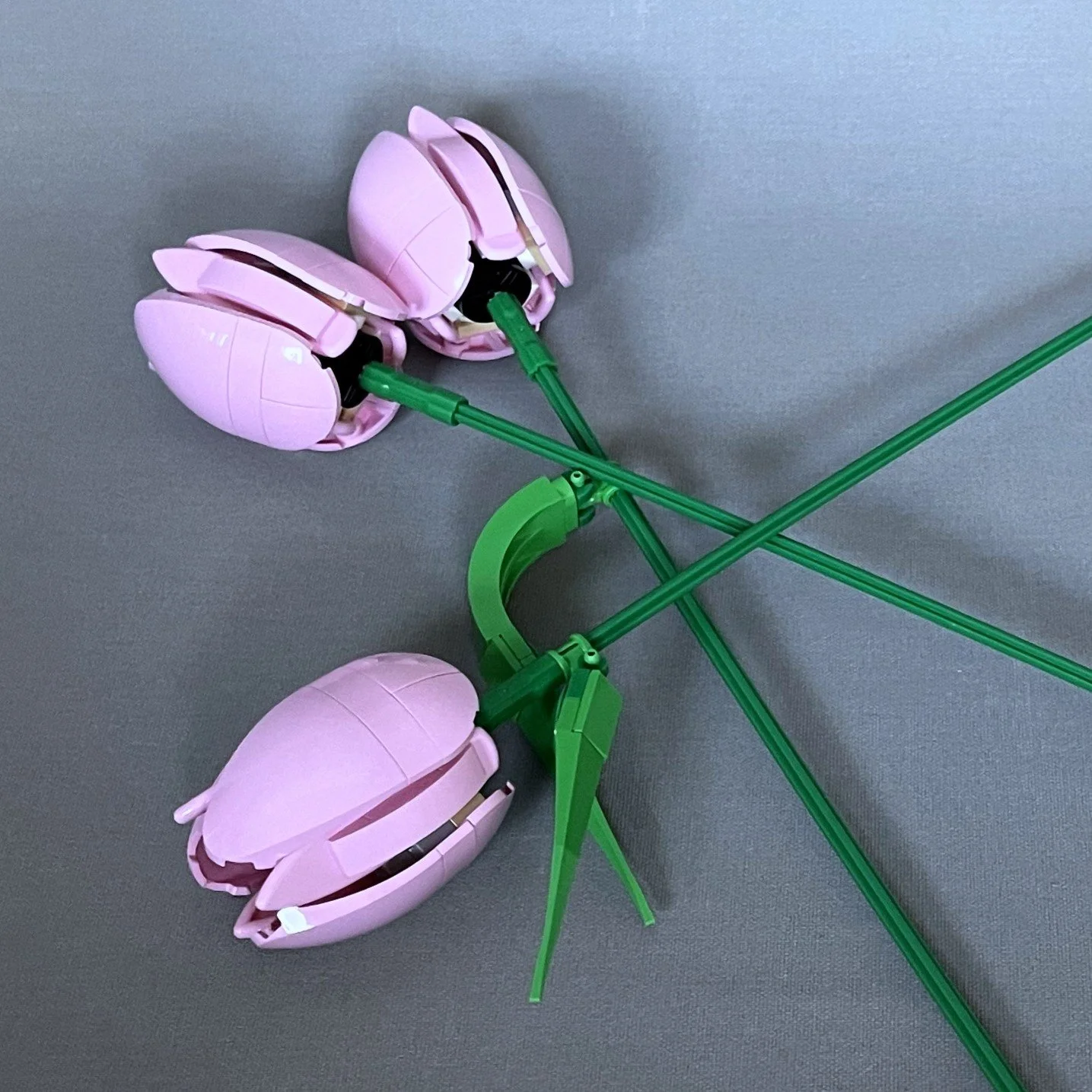
With that, the tulip bouquet is done! It looks magnificent!
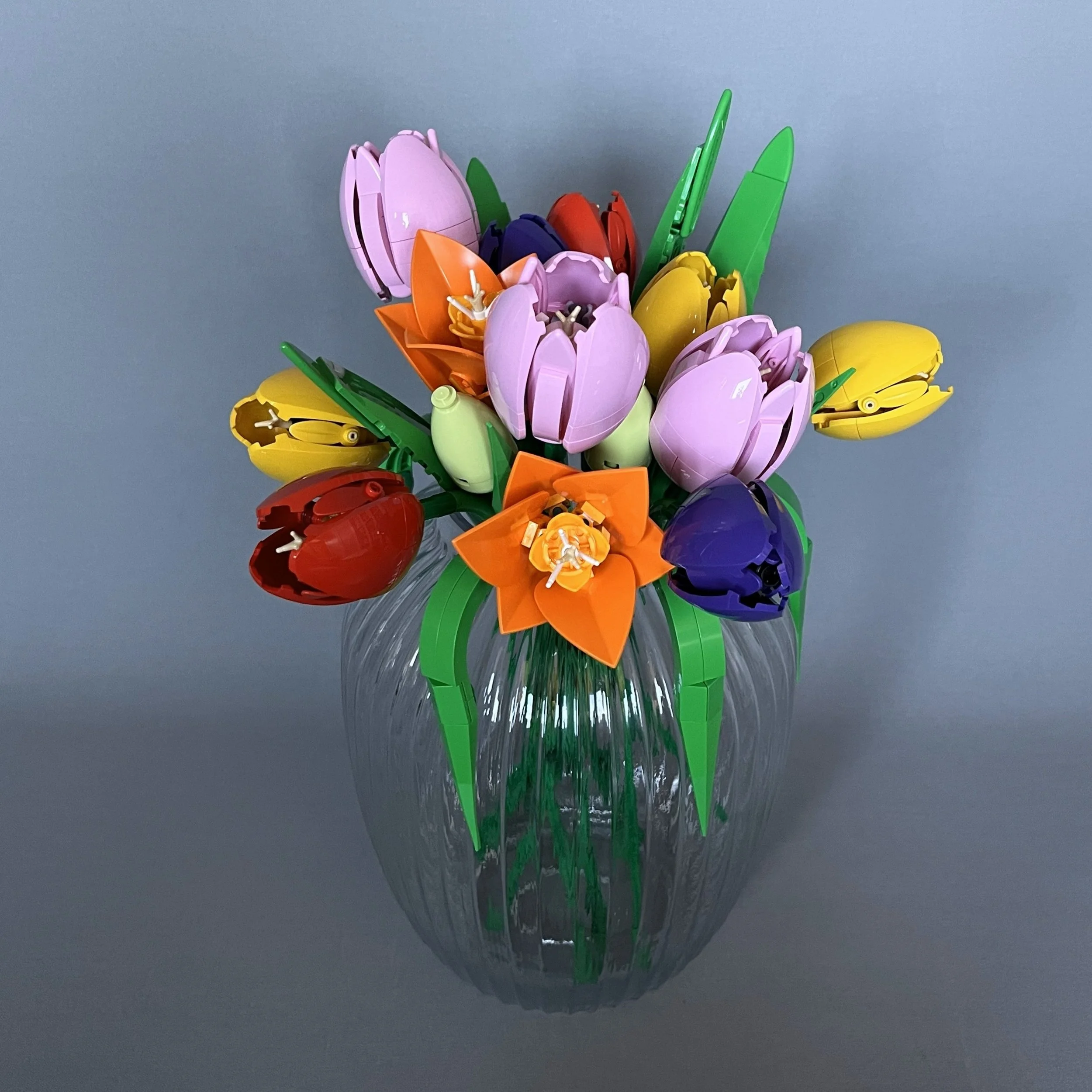
Final Thoughts
The tulip bouquet is a big and expensive set with many parts. It would have been disappointing if it didn’t look like a premium set. I think it delivers, though. When it is done, it actually feels quite majestic. Since the flowers are not connected to each other, the customizability is quite good. Just like a real bouquet of tulips, you can move them around and combine them whatever way you want. It does, however, require a rather big vase to display properly.
Building the set felt a bit repetitive at times, but since many of the flowers had variations in their assembly, it still felt exciting and fun.
Parts Usage: 4/5
Building Experience: 4/5
Final Result: 5/5
Overall: 4/5

Flowers for Spring
The four new Botanical sets come in four different sizes and are aimed at different age groups. They are quite varied in colors and aesthetics, so there should be something here for everyone. Even though I really enjoyed building the tulips and the final result is amazing, I can’t quite make it fit into my home. I think I still prefer potted plants, like a peace lily or a cactus. The pots make the sets feel more complete.
The tulips are trickier to display. Not everyone has a proper tulip vase at home. I tried to make the bouquet fit in a vase, but I had to add some Technic connectors at the bottom of all the flowers because they were a bit too short to fit. Are people prepared to go buy a vase with the right dimensions just to display a LEGO set?
I don’t even know what to do with the Daisies. I don’t think I will display them in my home. I do think they make a good gift for the intended age group, though.
The Tulips, Cacti, and Peace Lilies have found spots in my home for now, at least:
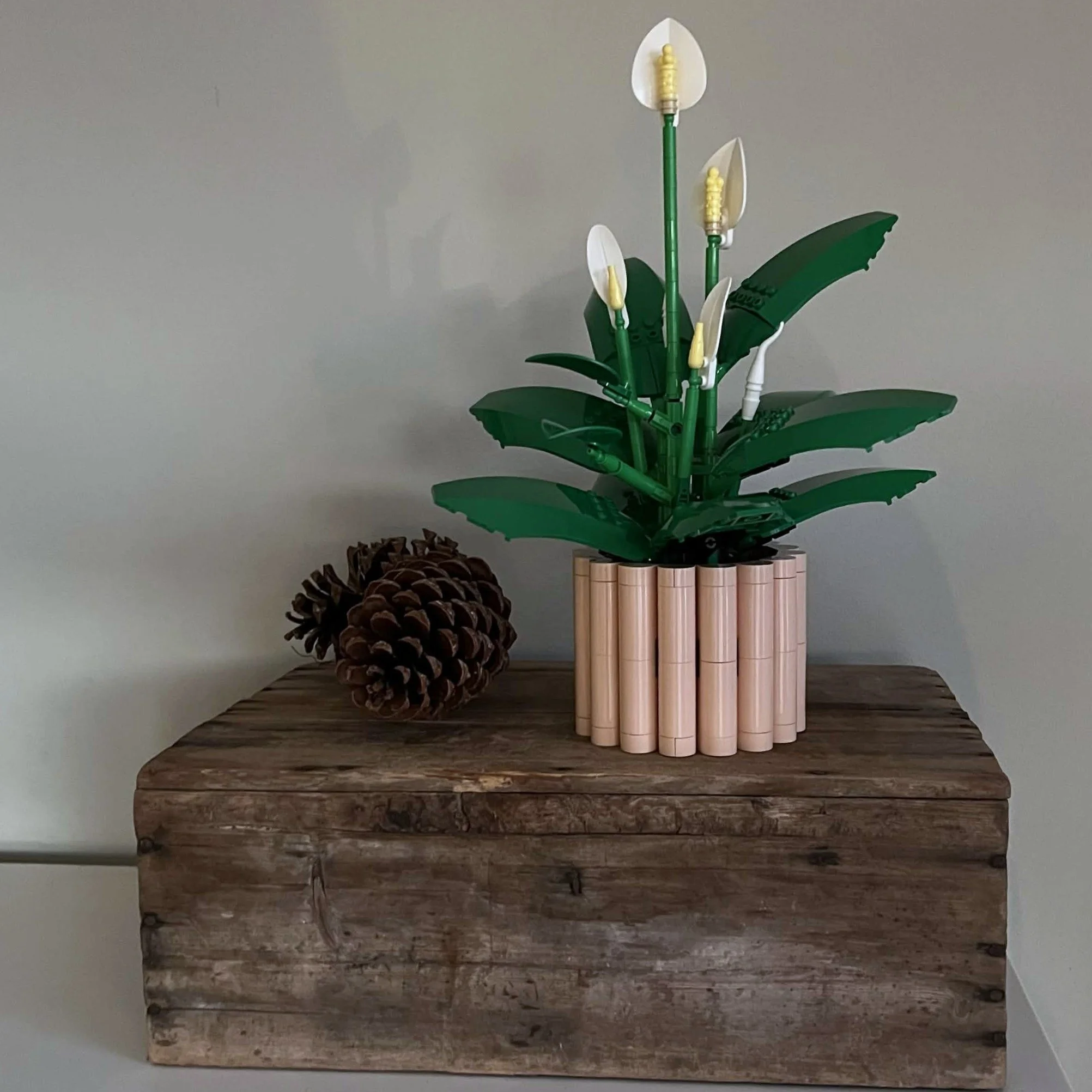
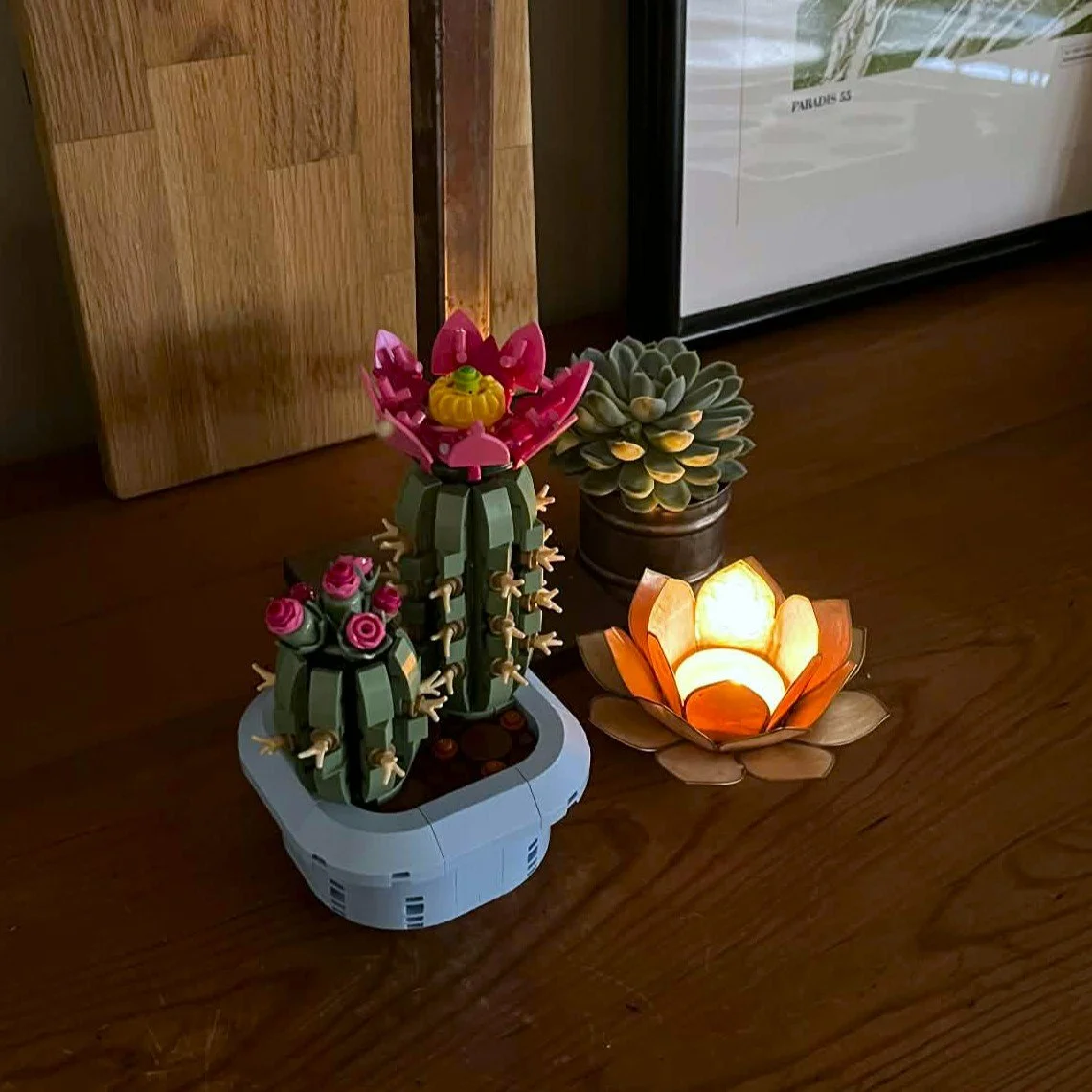
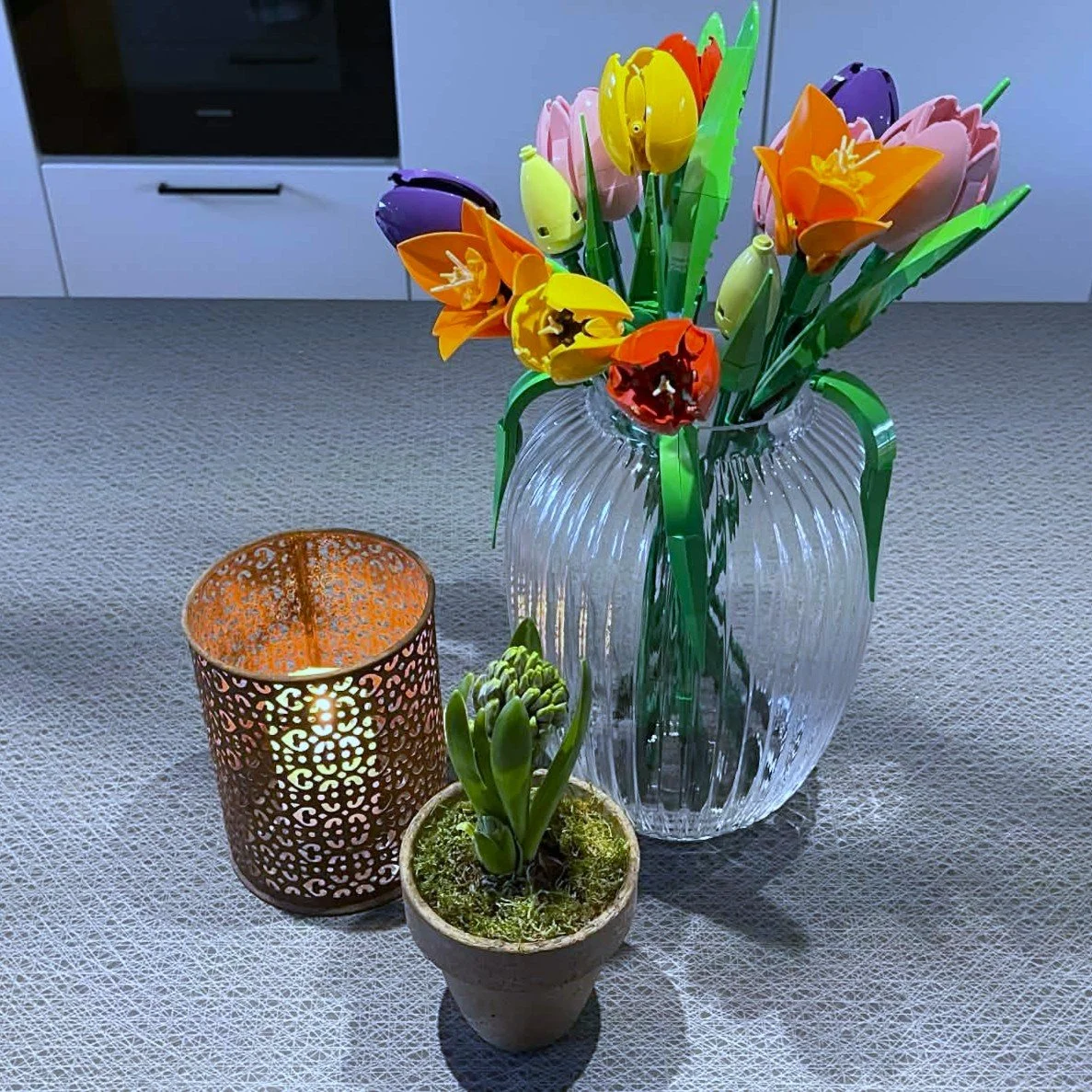
In the end, each of these sets succeeds differently, depending on whether you value realism, display practicality, or simply the joy of building something that feels like spring.
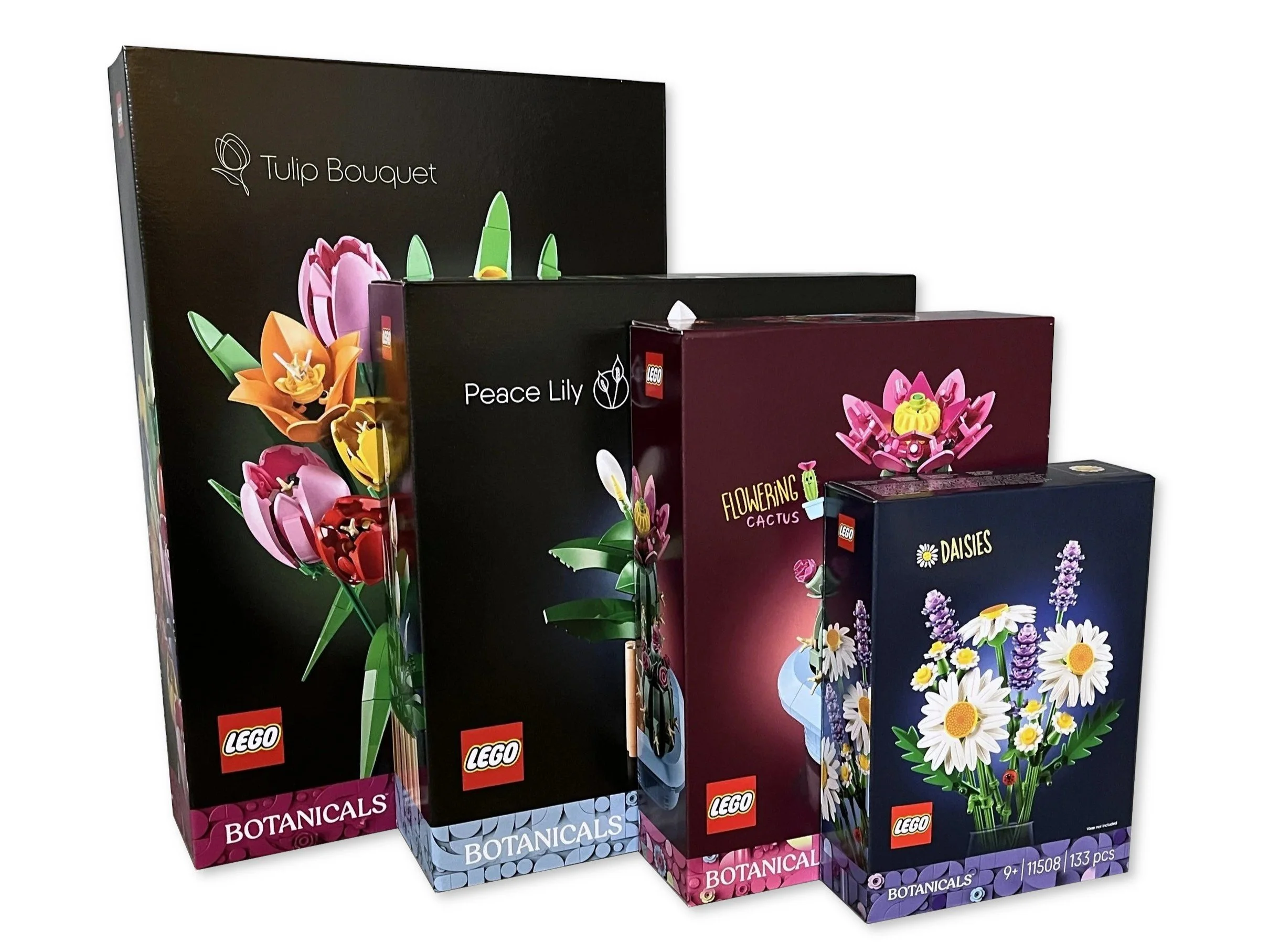
Which flowers are your favorite? Do you prefer them loose or in a brick-built container? Let us know in the comments below.
Do you want to help BrickNerd continue publishing articles like this one? Become a top patron like Marc & Liz Puleo, Paige Mueller, Rob Klingberg from Brickstuff, John & Joshua Hanlon from Beyond the Brick, Megan Lum, Andy Price, Lukas Kurth from StoneWars, Wayne Tyler, Dan Church, and Roxanne Baxter to show your support, get early access, exclusive swag and more.