Gotta Build ’Em All! Tackling LEGO Pokémon’s Starter Trio
/Today’s guest article comes from Zane Houston, a math teacher and builder from Colorado who has built some pretty impressive Pokémon MOCs. You can follow him on Flickr and Instagram.
Gotta Buy ‘Em All!
They’re finally here! Time to load up on Super Potions, kiss your mothers goodbye, and follow Professor Oak’s instructions as we embark on our very own Pokémon journeys!
I don’t remember the exact moment I was introduced to Pokémon, but the craze hit me like a stampede of Tauros sometime in the third grade. I spent every dime I had on Pokémon cards, memorized every random stat I could, and never missed an episode of the animé (instead of learning how to function in society as an adult, I just have the Pokéraps rattling around in the back of my brain).
I don’t think I ever understood this as a kid, but Game Boy games had a unique way of not only immersing you into a story that you felt like you controlled, but also gave you graphics so bad that you were forced to play out the action in your own mind, allowing your creativity to give life and personality to the little monsters on your screen.
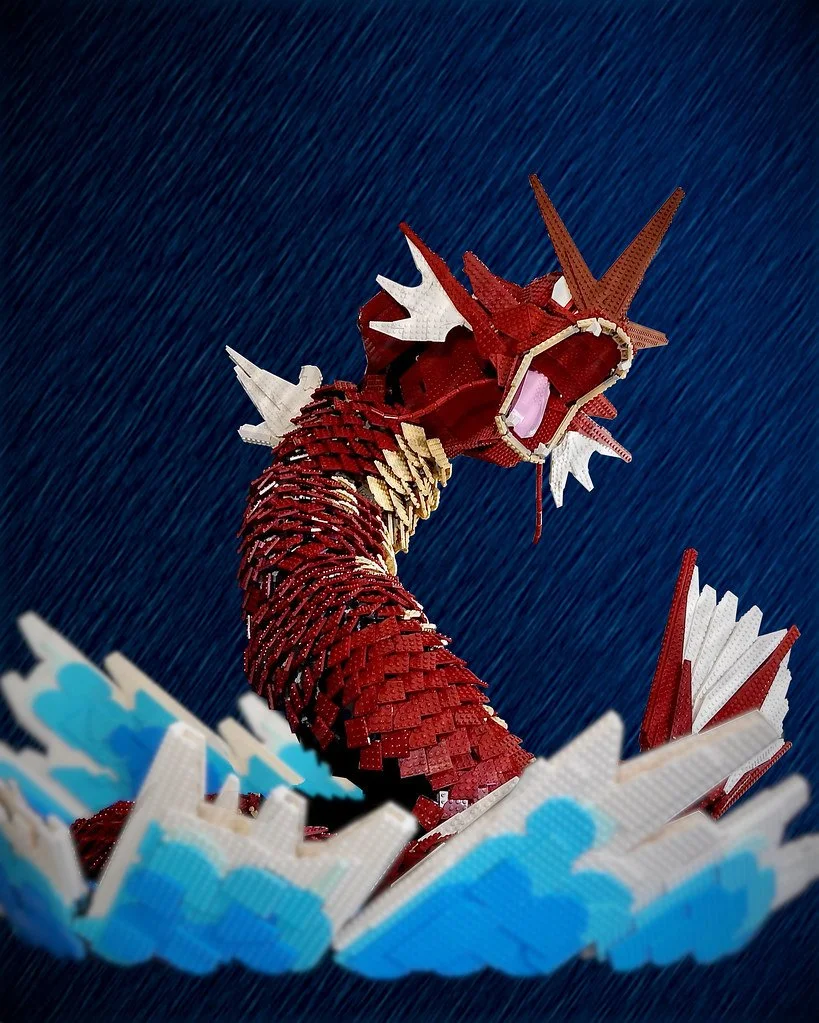
Fast forward 25 years, and I started making Pokémon MOCs after coming out of my LEGO dark ages. I hope to explore these some other time, because when I build a Pokémon MOC, I get to instill that same life, personality, dynamism, and action that my 10-year-old self felt while playing the video games.
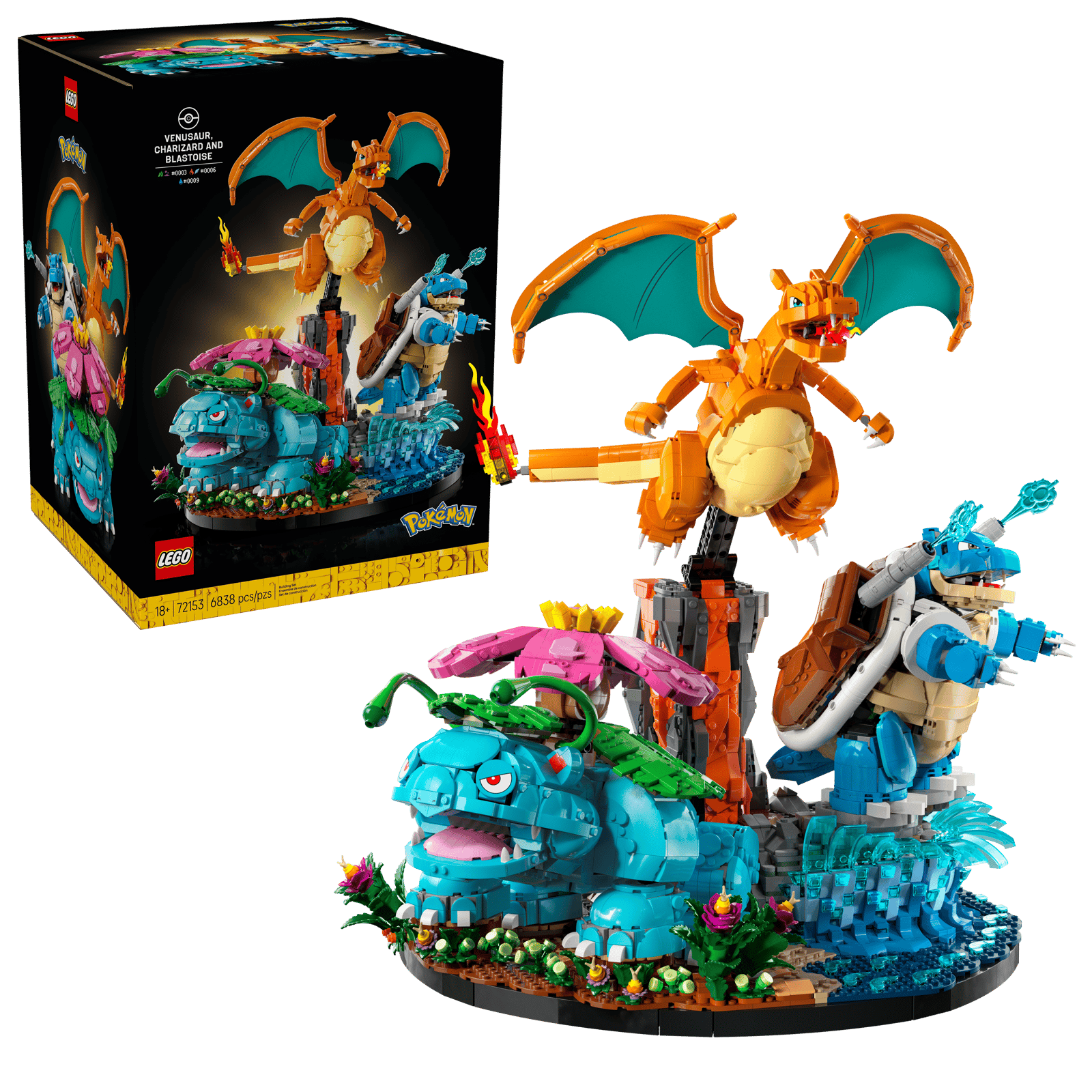
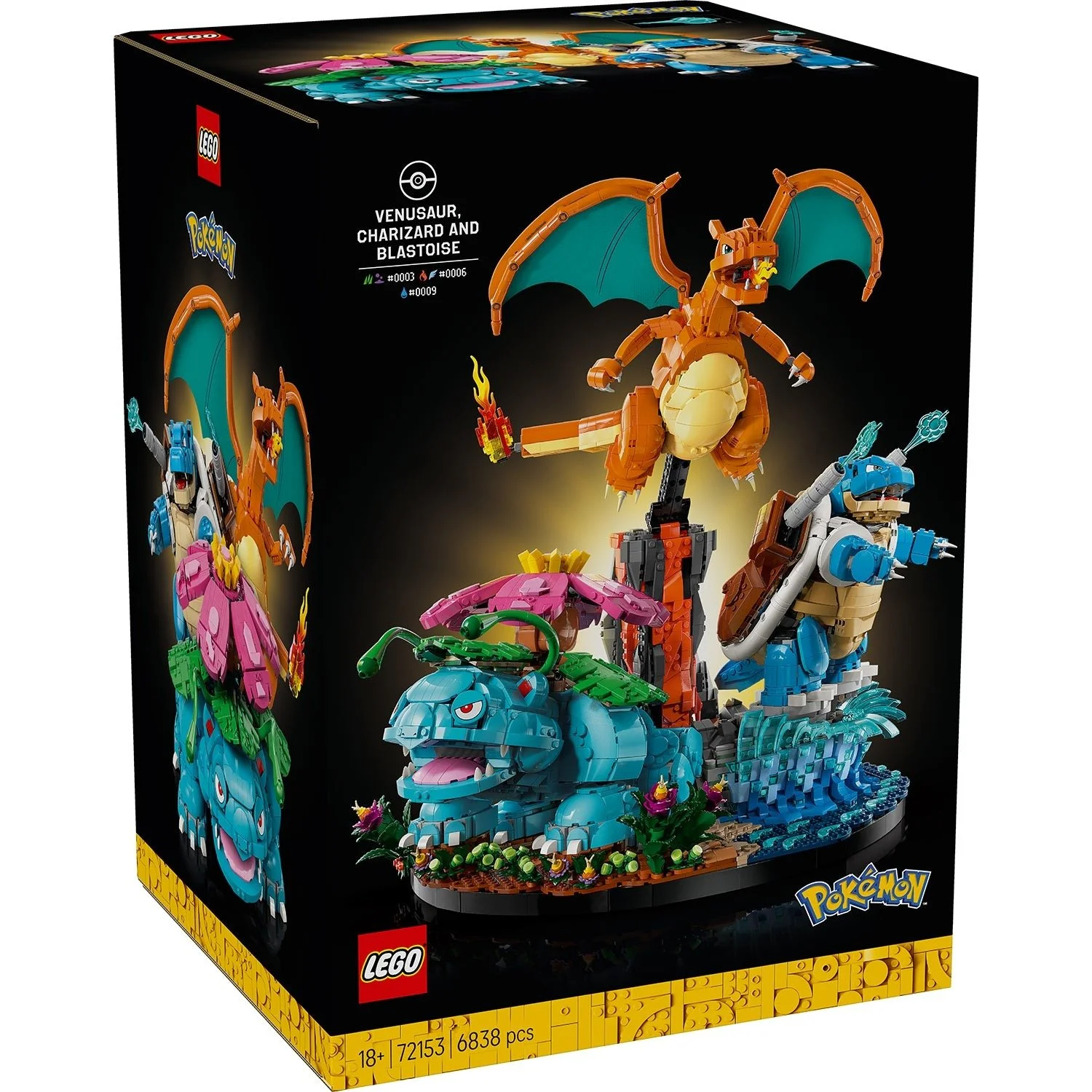
I stared longingly at Mega Bloks Pokémon sets at Target for so long that it didn’t even occur to me that LEGO could ever pick up the Pokémon IP. It was earth-shattering news when the collaboration was announced back in March 2025, but the sets are now here, starting with LEGO Pokémon 72153 Venusaur, Charizard and Blastoise!
Before we jump into LEGO’s iteration of the original Stage 2 starters, let’s take a look at the prevalence of Venusaur, Charizard, and Blastoise in pop culture, both in brick form and not.
I Choose You, Venusaur!
Oh Venusaur… numerically first but definitely the least loved of the three. I don’t know what it is, but Venusaur has always had the worst representation. The “from-behind” sprite in the first generation of Pokémon games was actually incoherent:

(What is even happening? My 10-year-old self getting car sick on the bus after school playing Game Boy knew this could have been better.)
Not long after that, Venusaur had inexplicable bloodshot eyes in N64’s Pokémon Stadium. It was meant to show strain while using attacks, but… yikes!

Even now, Venusaur is still missing its own standalone Wikipedia article—which feels wild for a fully evolved Gen 1 starter. (Fact check me, I dare you!)
This low bar was the perfect opportunity for construction toy brands to have a Venusaur that was at least presentable, right?
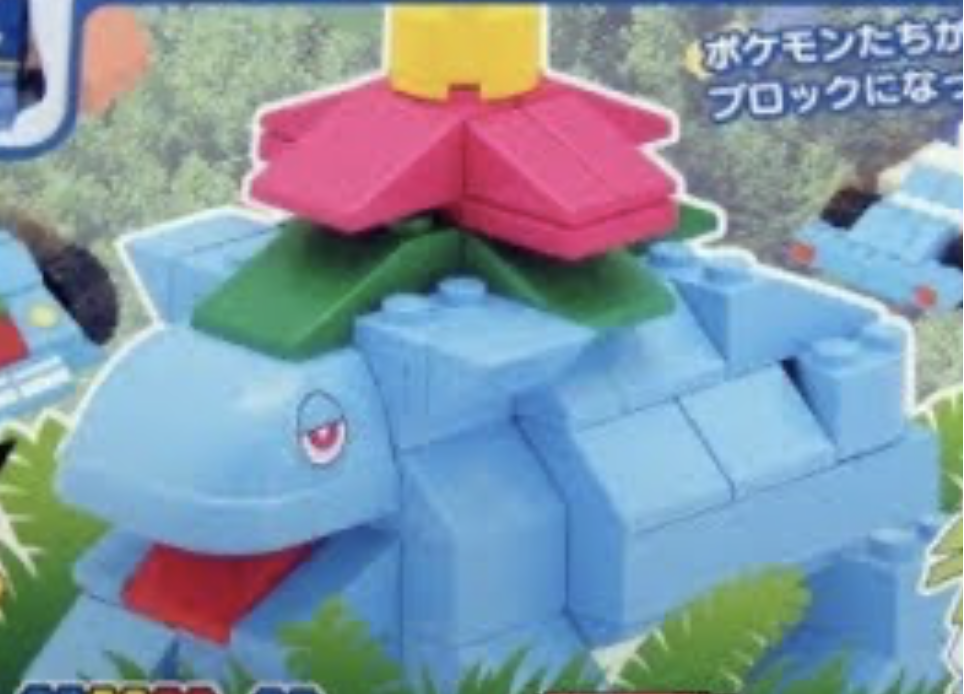
Uh oh…
Go Charizard!
On the other end of the spectrum, Charizard has gotten so much love that die-hard Pokéfans don’t even fully understand. From toys to MOCs to fan art, Charizard is the second-most recognizable Pokémon ever, but none of that fame compares to its throne in the world of the Pokémon Trading Card Game:
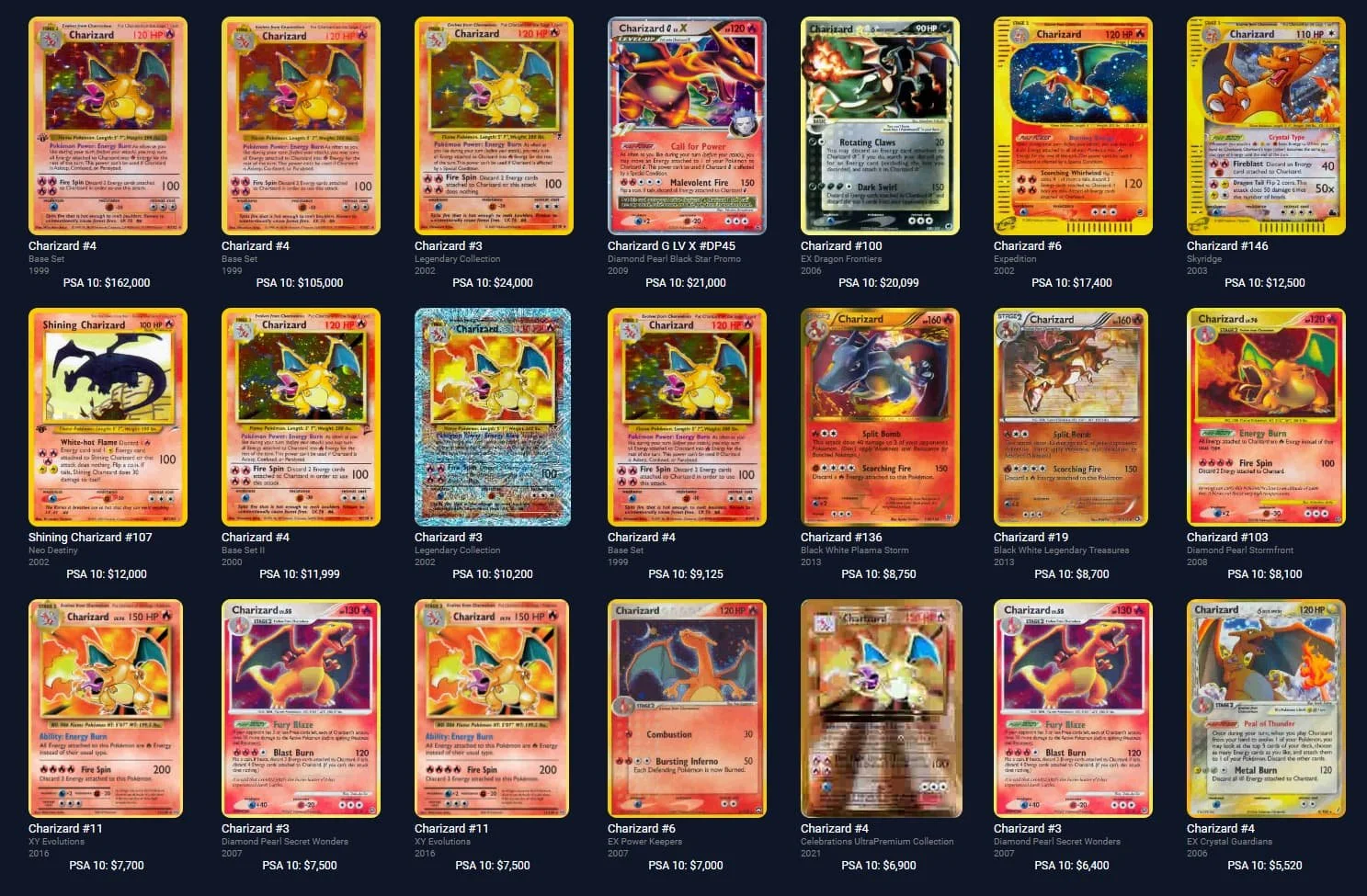
Those dollar amounts make LEGO look dirt-cheap! Charizard variants seem to always be the chase card in a respective TCG (Trading Card Game) set and hold the most prestige among collectors. It’s no wonder that it has had (by far) the most versions in brick form.
Come On Out, Blastoise!
Blastoise’s artistic design is definitely a standout in the Pokémon world. There are very few mechanical elements in the first few generations, so a giant defensive turtle with massive cannons on its back is going to draw some attention.

It’s one of the coolest original designs, so the minor but long-running theme of Squirtle’s family wearing sunglasses fits Blastoise perfectly.


(Sidenote: I wanted to keep this look at the set purist, but I might have to build a pair of sunglasses as a mod!)
The Brick Timeline
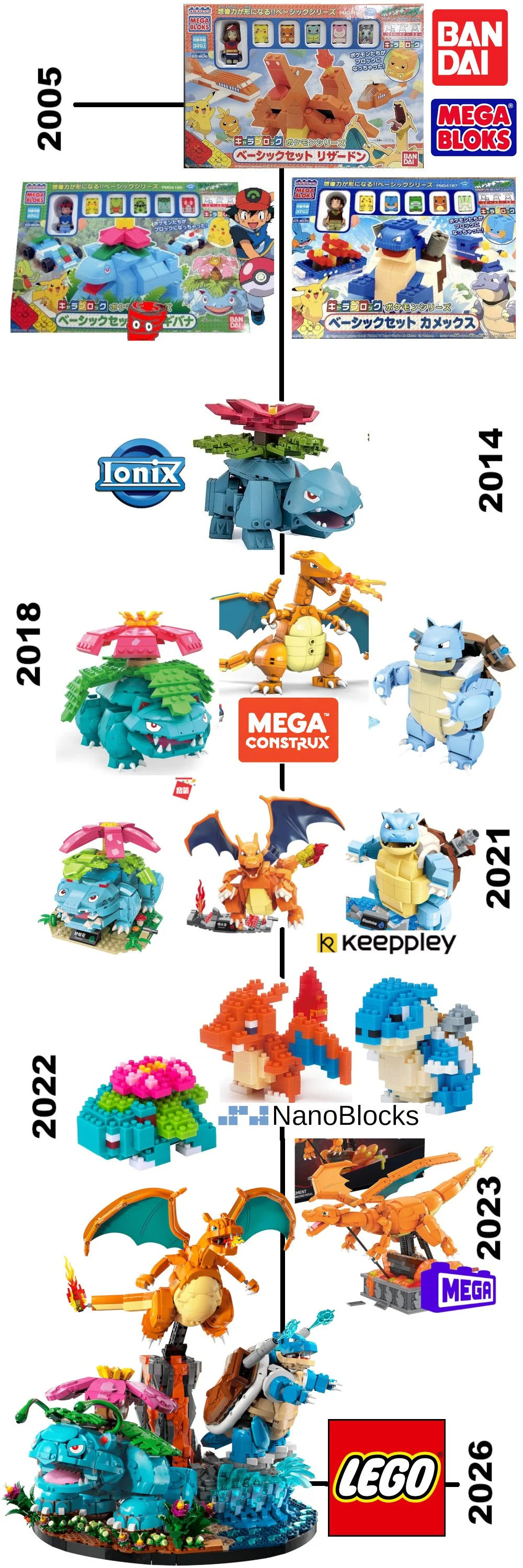
Given the popularity of the Pokémon games, TV show, and trading card game, it’s no surprise that toy companies would try to implement as many Pokémon-related products as possible, and construction toys followed suit.
Mega Bloks teamed up with Bandai to be the first to release Japanese-exclusive sets of the Stage 2 Kanto starters. Each one came with a handful of 4x4x4 Pokémon-cube-brick things and two random vehicles (of course):
Charizard with plane and helicopter
Blastoise with boat and train
Venusaur with police cruiser and riding lawn mower (Sorry, Venusaur, they did you dirty again!)
After that incident, there would be some time before serious Pokémon sets started appearing in brick form. Once Mega obtained the rights in 2015, they hammered retail shelves, making it their most profitable line and carving out a spot in the LEGO aisle for years.
There have been many other iterations of the starters not shown on this timeline and they all sold well enough. Seeing the side-by-side comparison timeline with LEGO’s version at the bottom, the $650 price tag doesn’t seem so bad!
So without further ado, let’s crack open 72153 Venusaur, Charizard and Blastoise, dump these bags out, and see what we get!
Box 1: Venusaur Takes Root
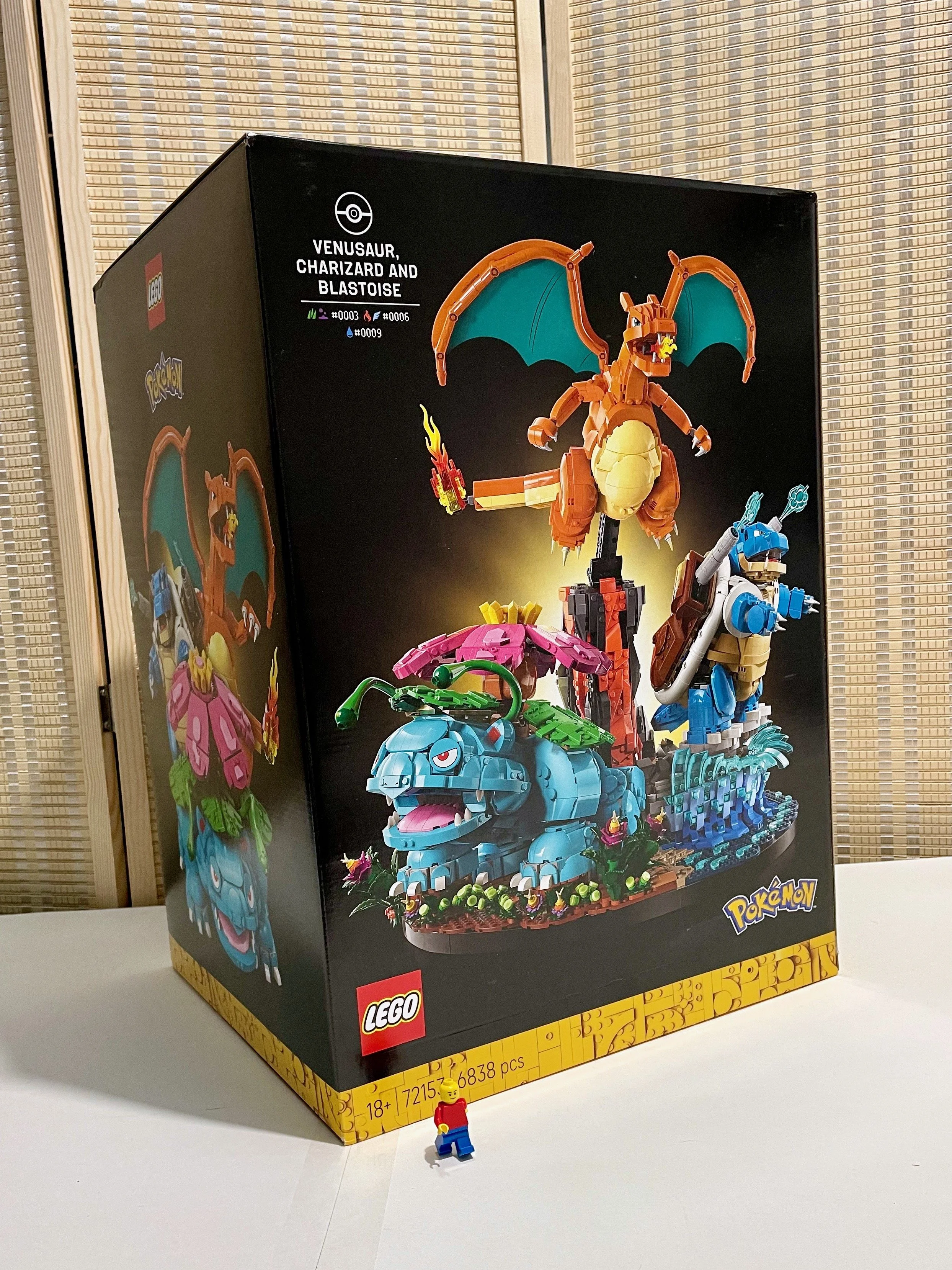
The box itself is massive! Even at the $650 USD price point, for some reason, I wasn’t expecting LEGO’s version to be this substantial.
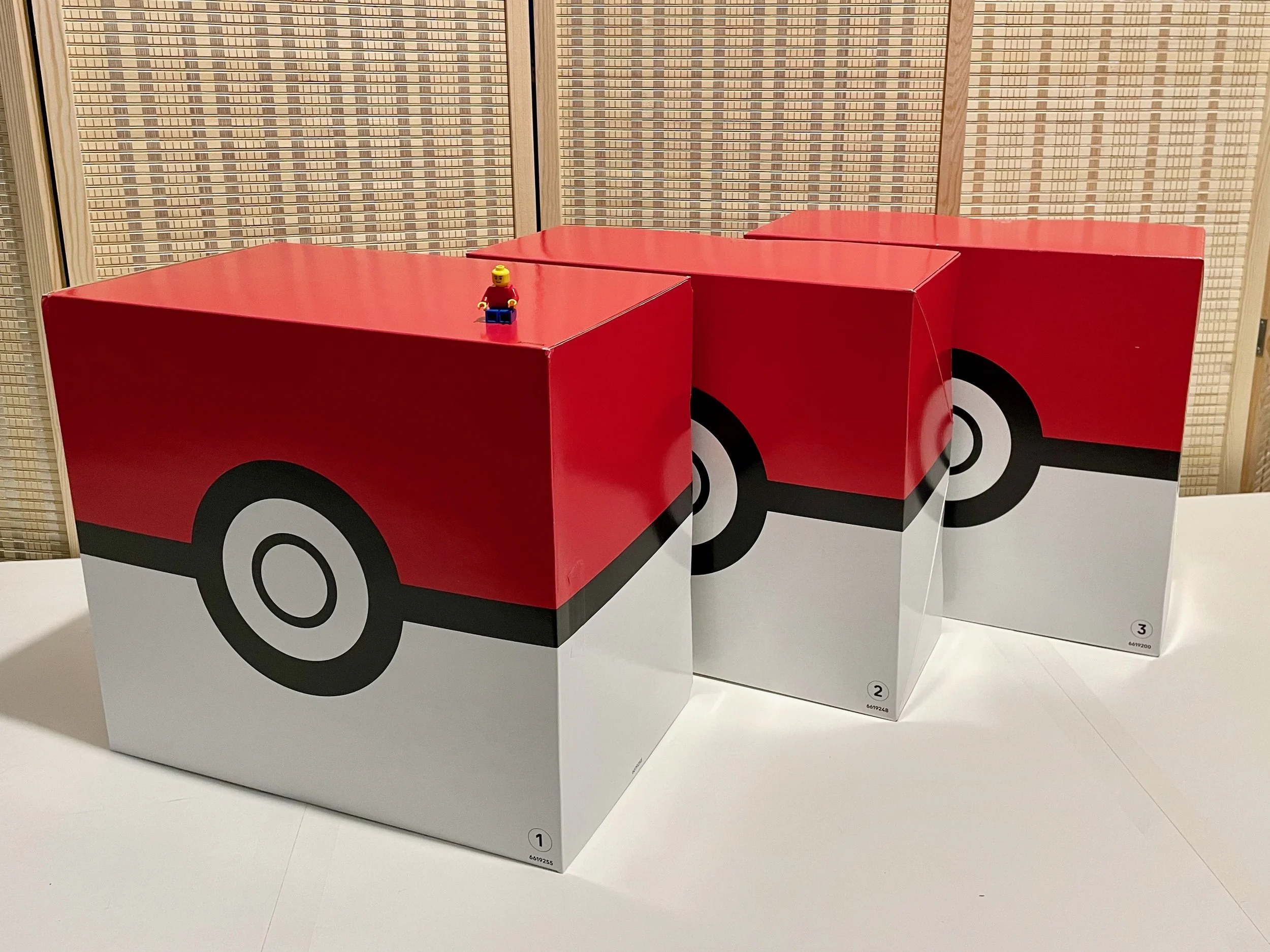
Venusaur is up first!
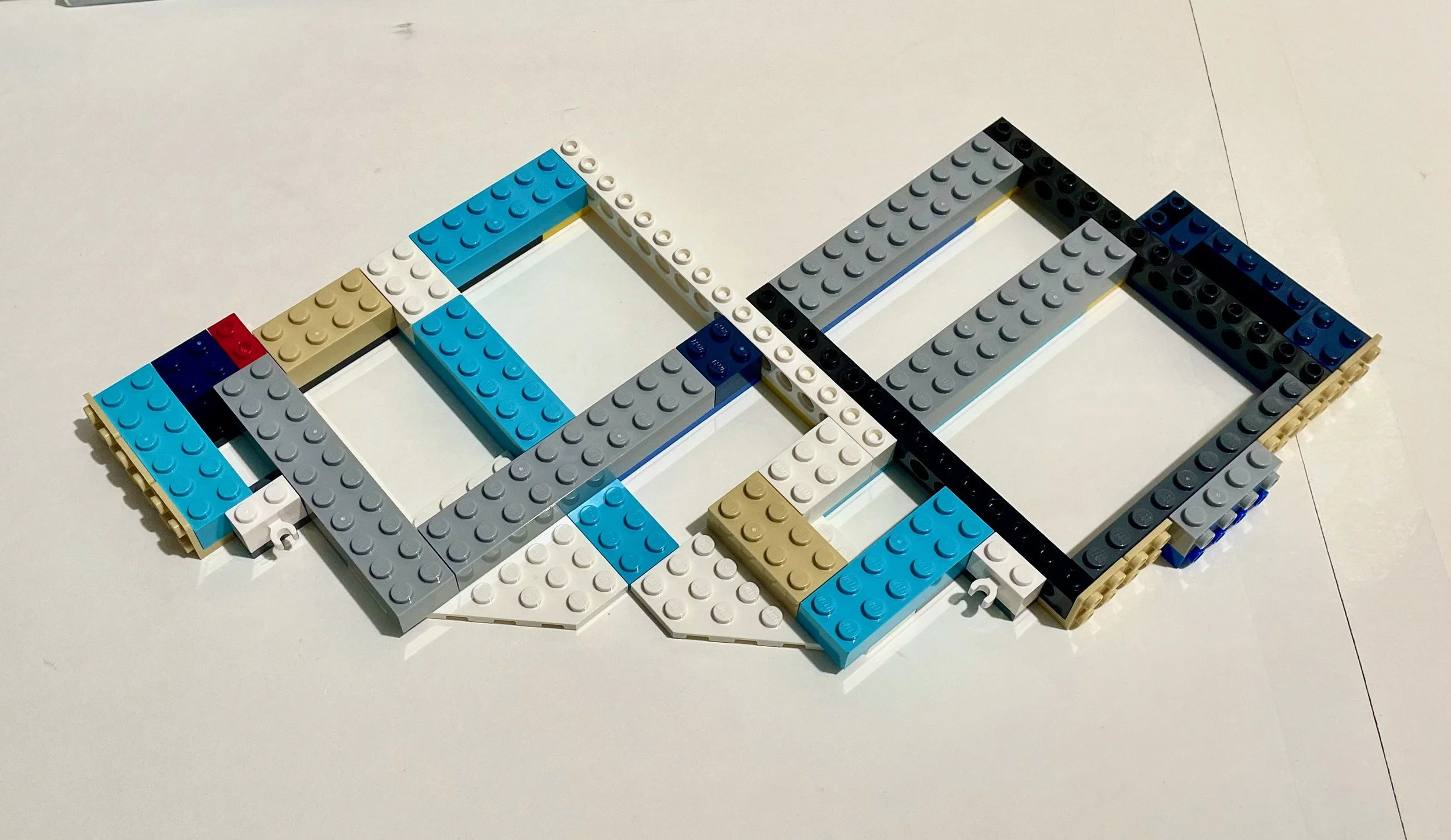
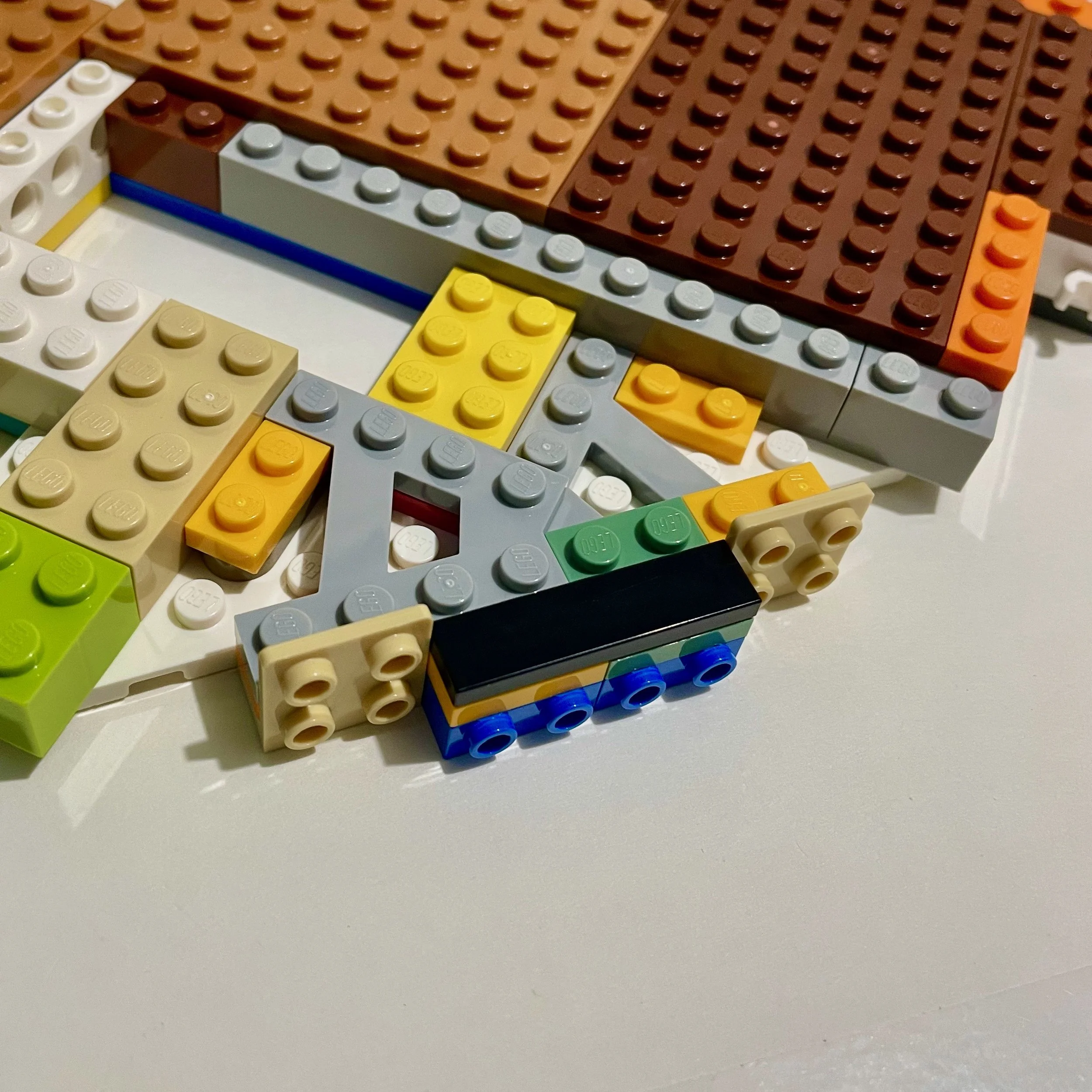
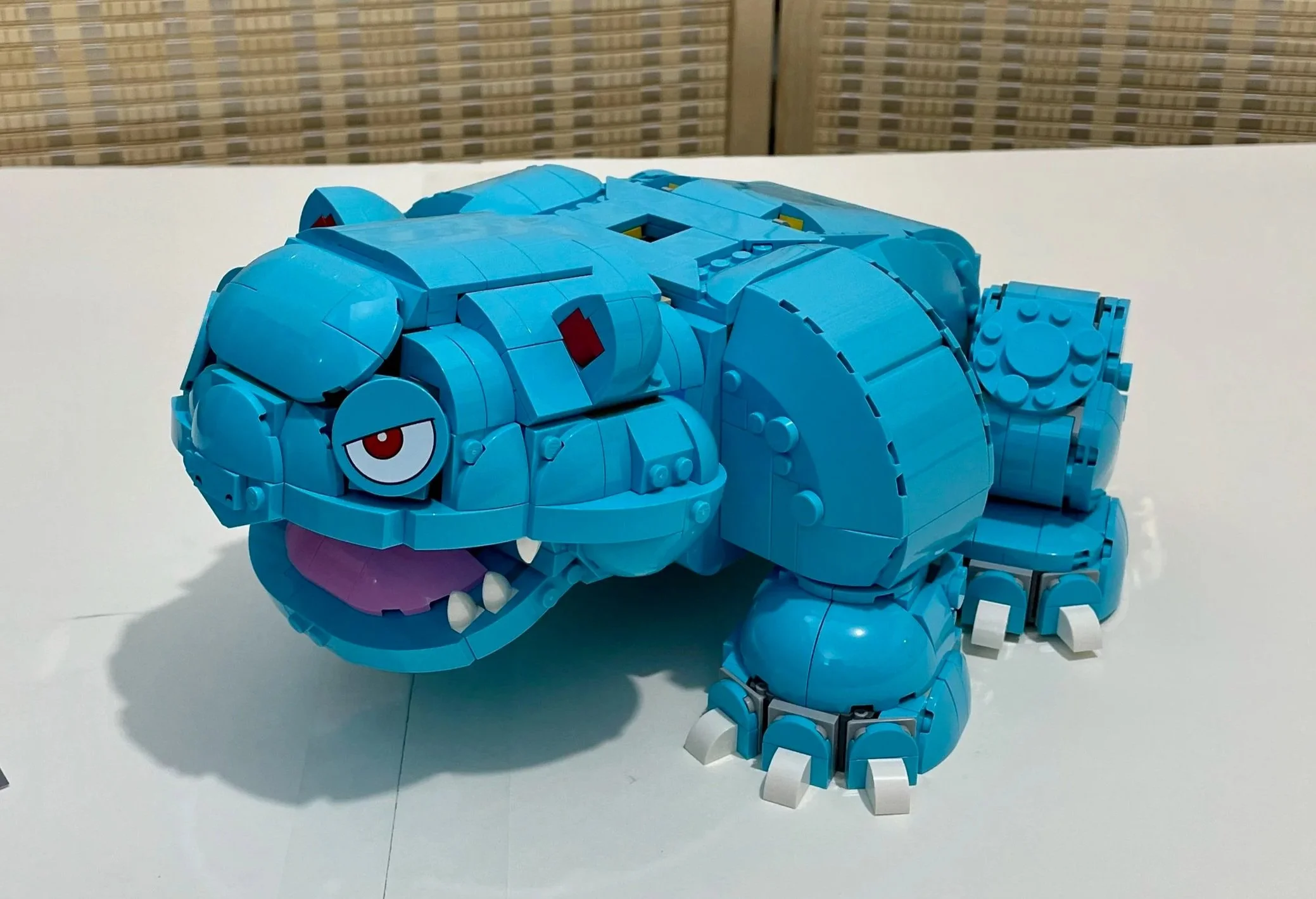
The base structure is sturdy and has a few neat techniques, but nothing too groundbreaking.
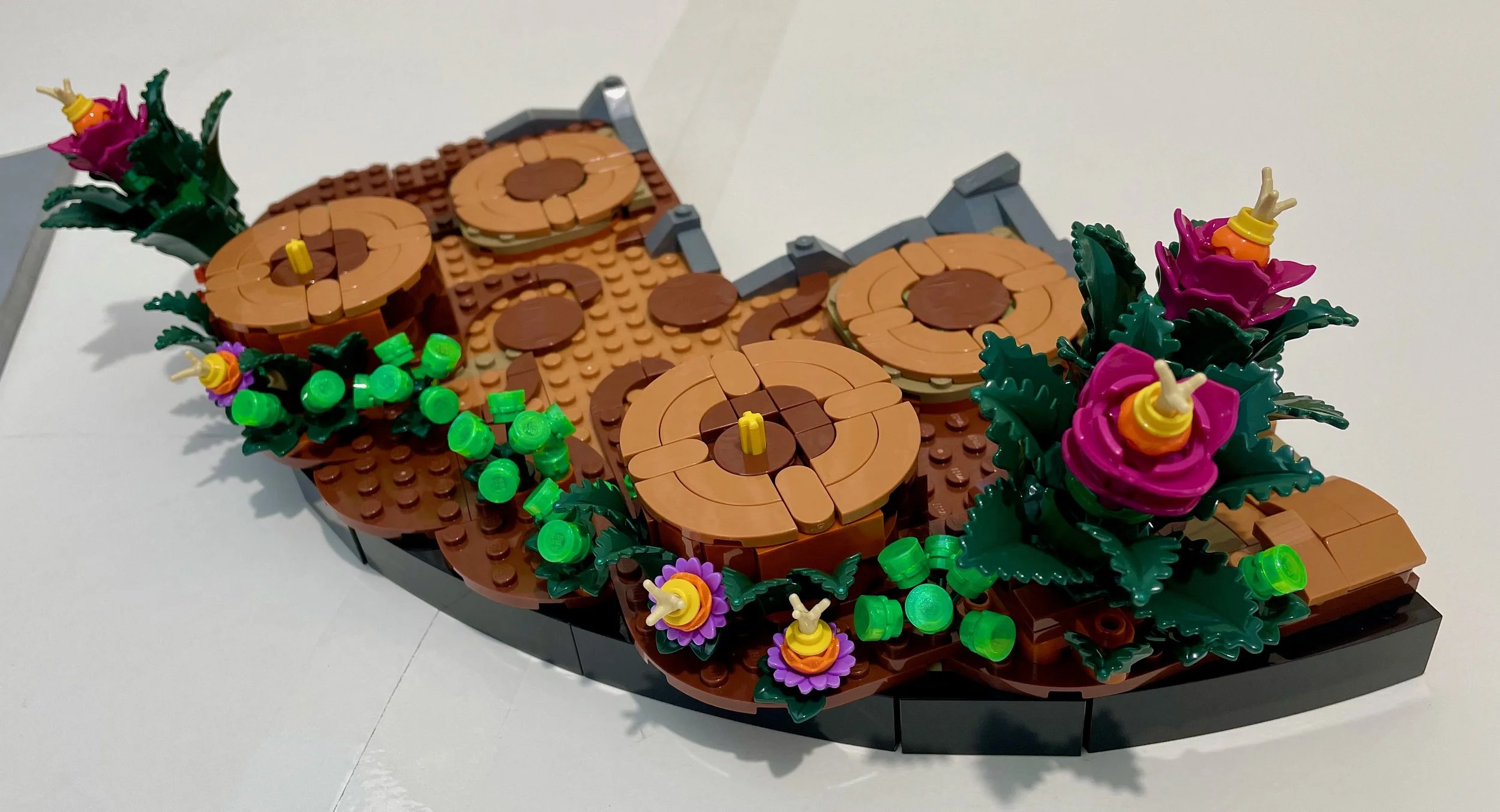
The real highlights for me are the tree stumps that give Venusaur a more dynamic pose (which it desperately needs) and the poisonous-looking flowers that are perfect for the grass/poison type Pokémon. I wouldn’t mind a bit more greenery, showcasing new LEGO Botanical parts and colors, but I guess there’s a risk of crowding the set with too much detail and fragile parts.
After completing what seemed to be a medium azure Iron Man torso, I was excited to see how the rest of the Pokémon Avengers were going to evolve.
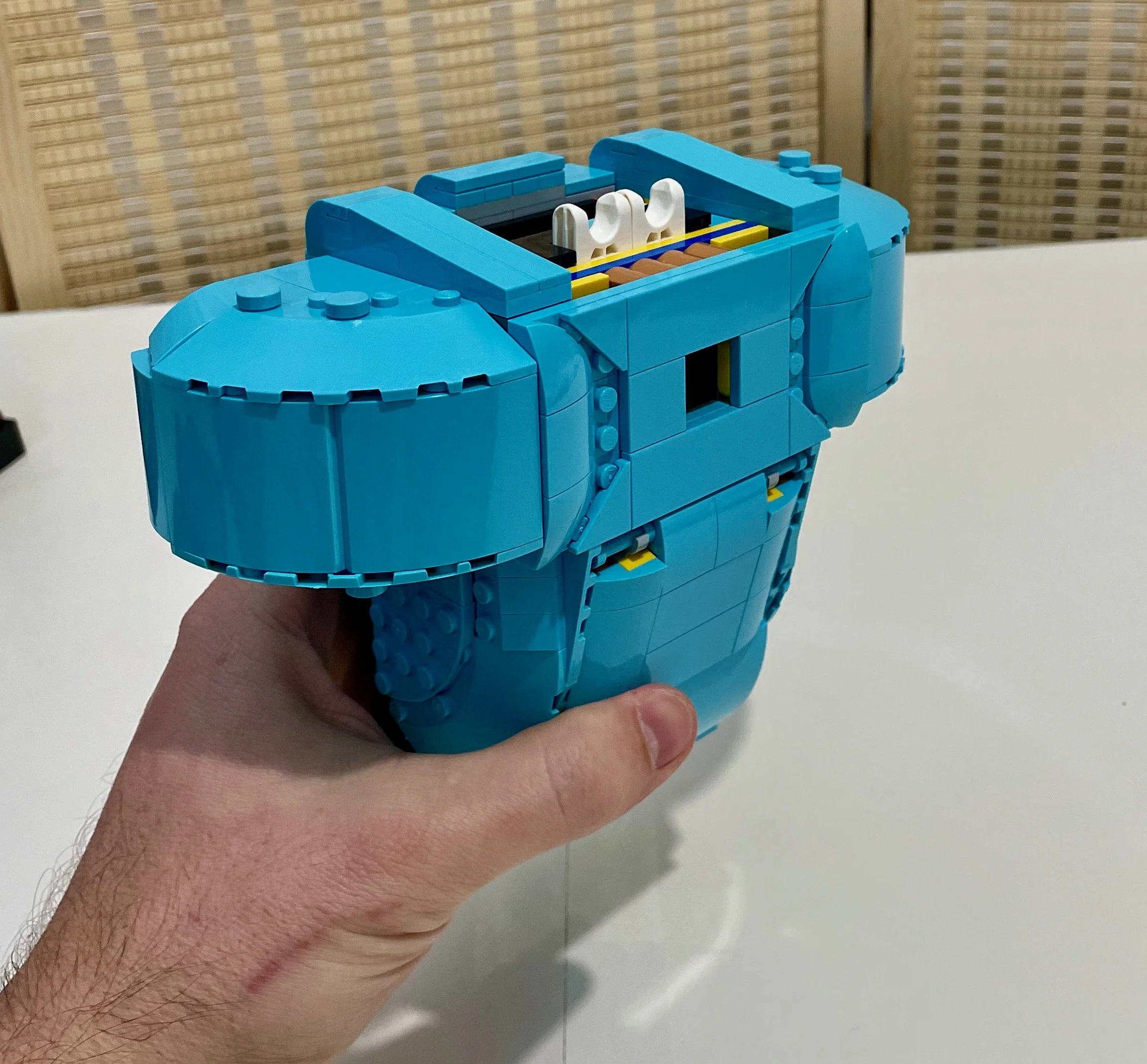
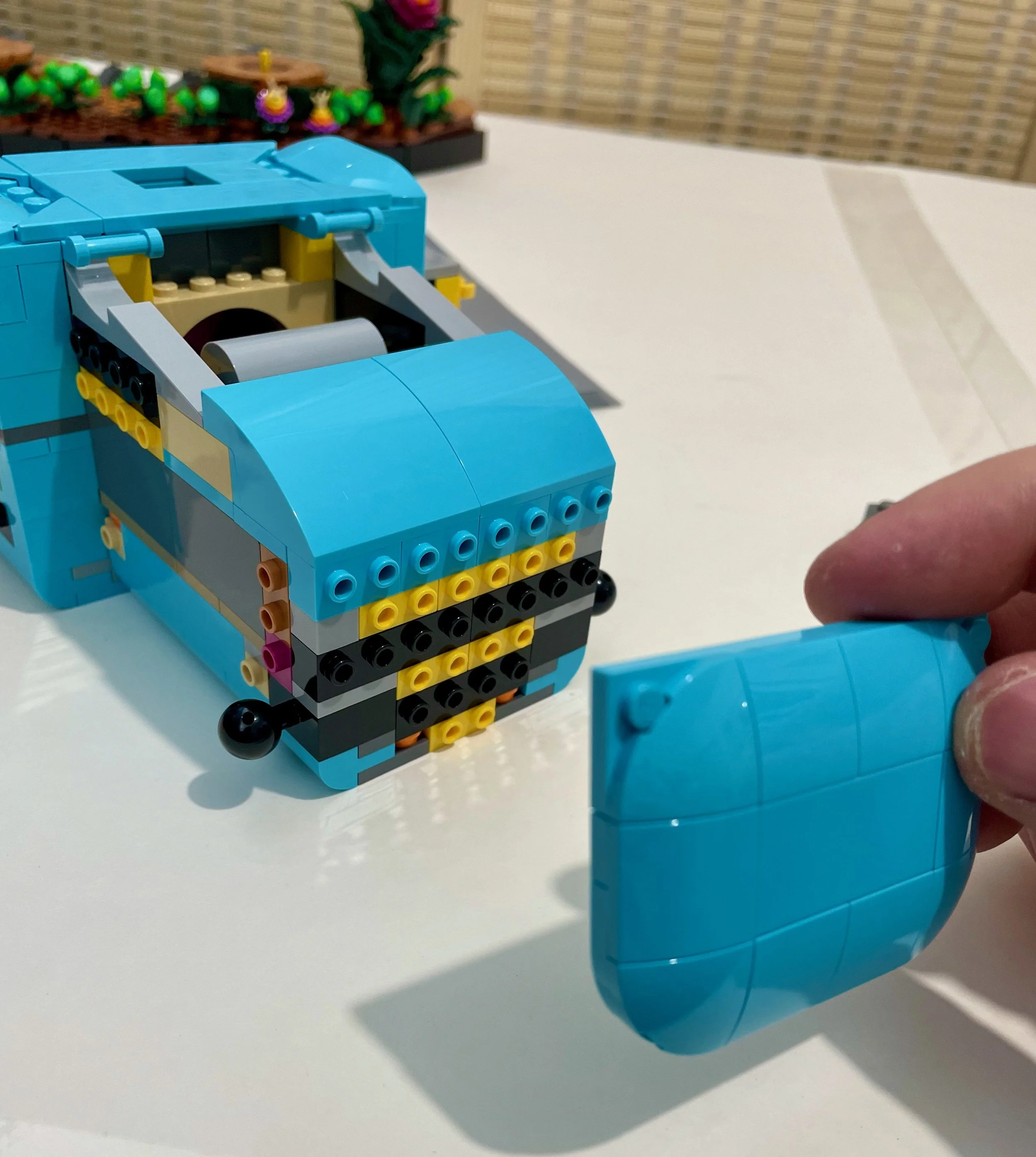
This section is so indestructible you could huck it at a Rhyhorn in the Safari Zone without a single piece breaking off. This is partially due to a single plate that is held on by a whopping 32 SNOT studs! Unfortunately, I think too many EVs are invested into the build’s defensive stats, and that comes at a cost.
The front legs just jut out at 90° angles. I know it’s LEGO and I’m being a bit picky here, but the legs give Venusaur an awkward blocky stance that contrasts the dynamism of the rest of the set.
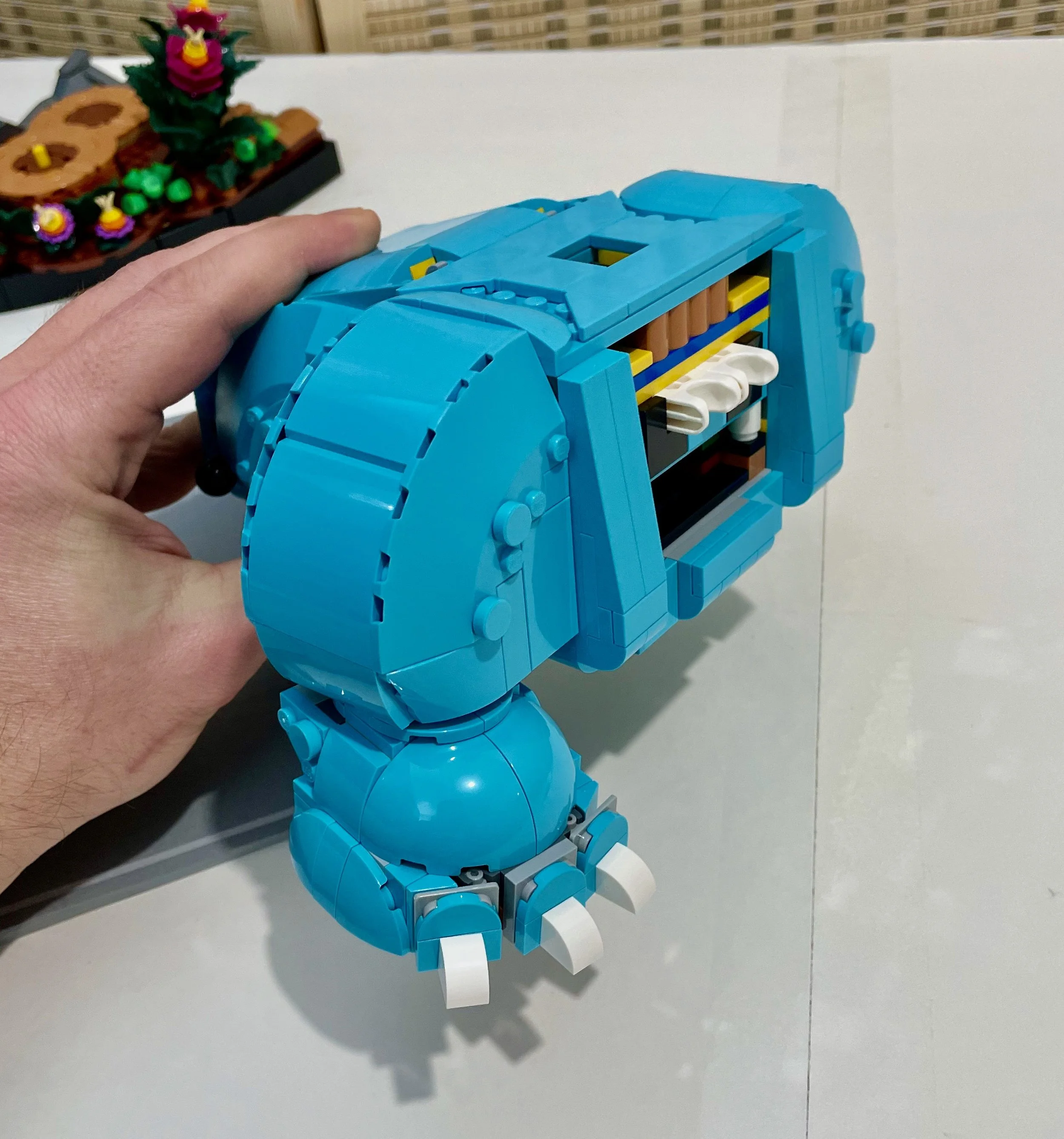
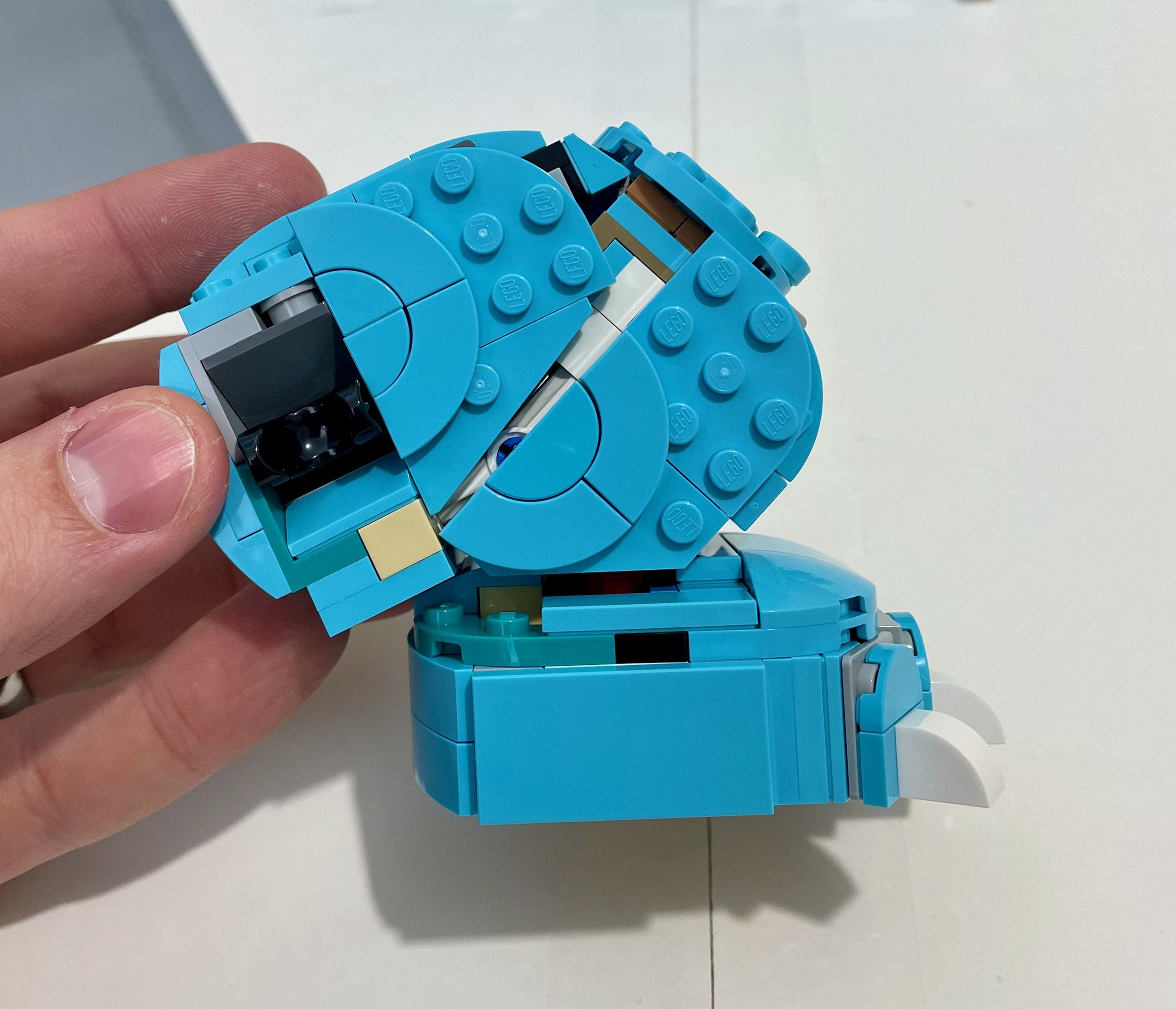
The back legs have the shape and ball-joint orientation I would have liked for the front, but the construction is not nearly as clean, with multiple off-color internal parts visible.
The head is the last part of the main body to build. The best part is that the eyes can easily be rotated to get a “Happy Venusaur Variant.”
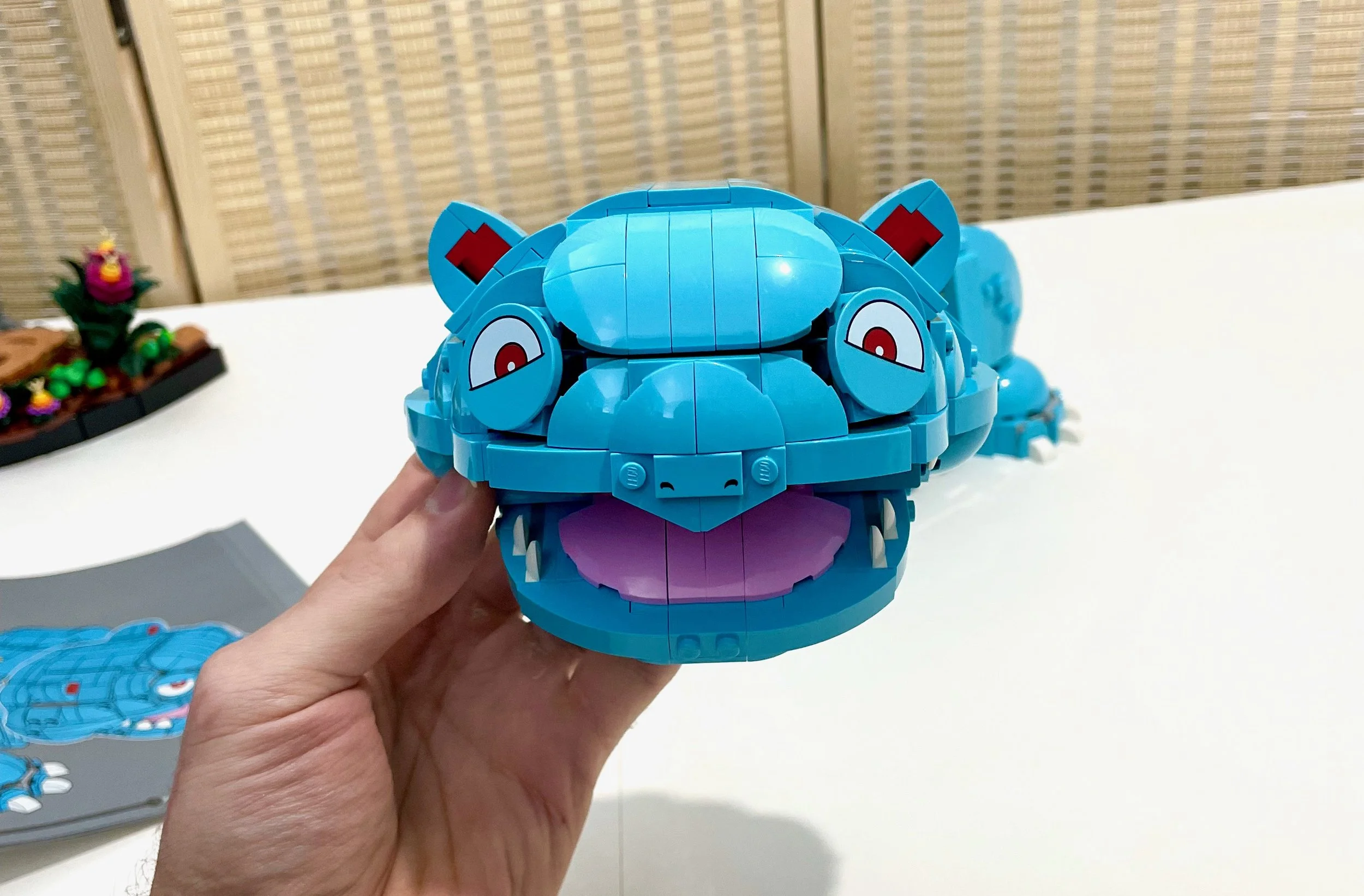
However, as soon as the set was spoiled, Venusaur’s face was one of two things that I had a negative reaction to.
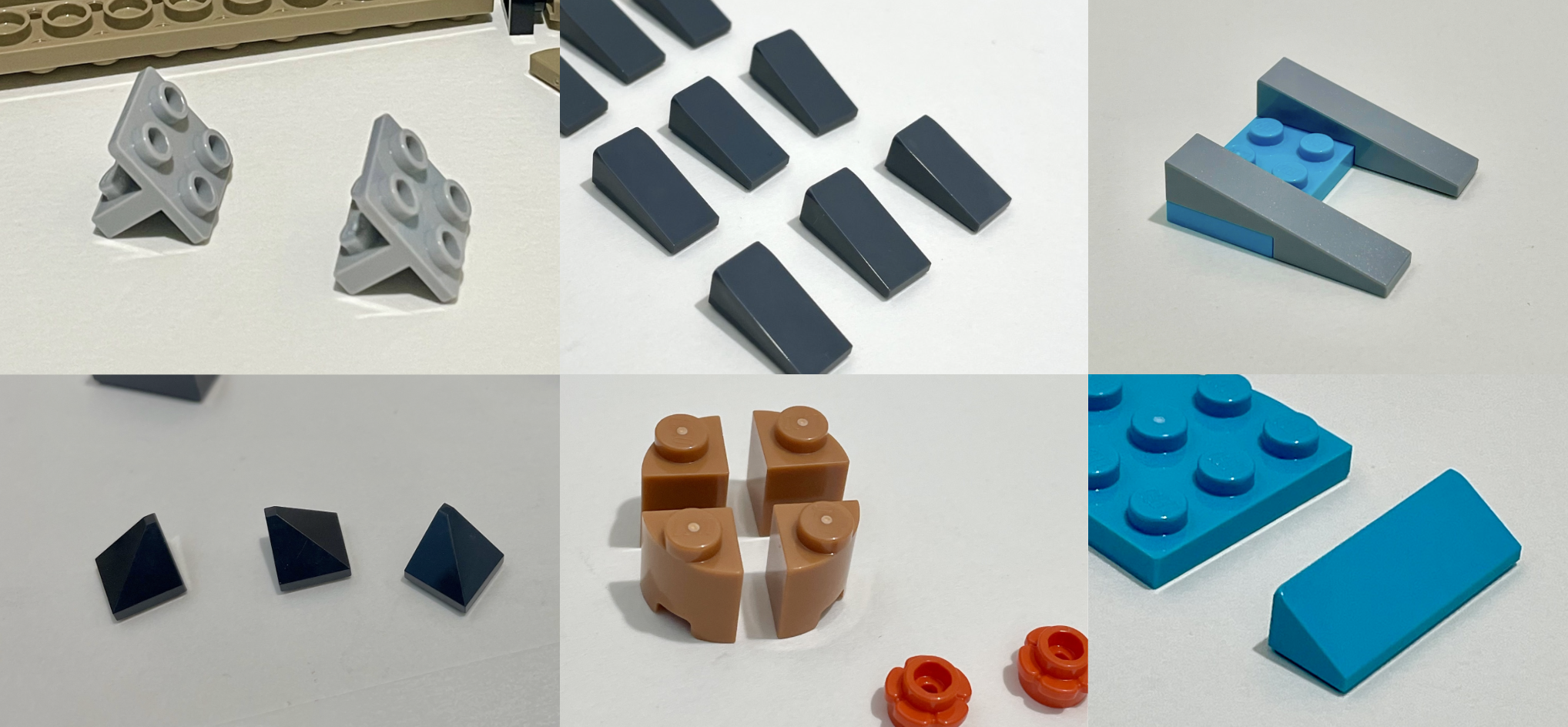
The LEGO parts catalog and this set in particular are loaded with many new curvy, domey, quarter-circle slopes and bricks. Venusaur’s head is essentially built from a pile of bubbles, and the contrast between the bricks and the dark gaps between each “bubble” is too much to ignore.
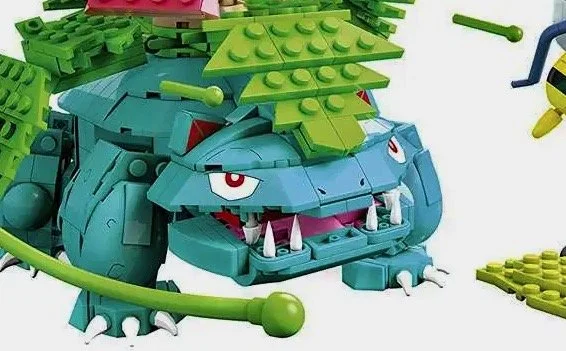
Here’s another look at Mega Construx’s Venusaur from 2018. The head is angular and far from perfect, but it’s less compartmentalized and simply looks a bit more like Venusaur.
And on that note, here’s the leaf that covers Venusaur’s head:
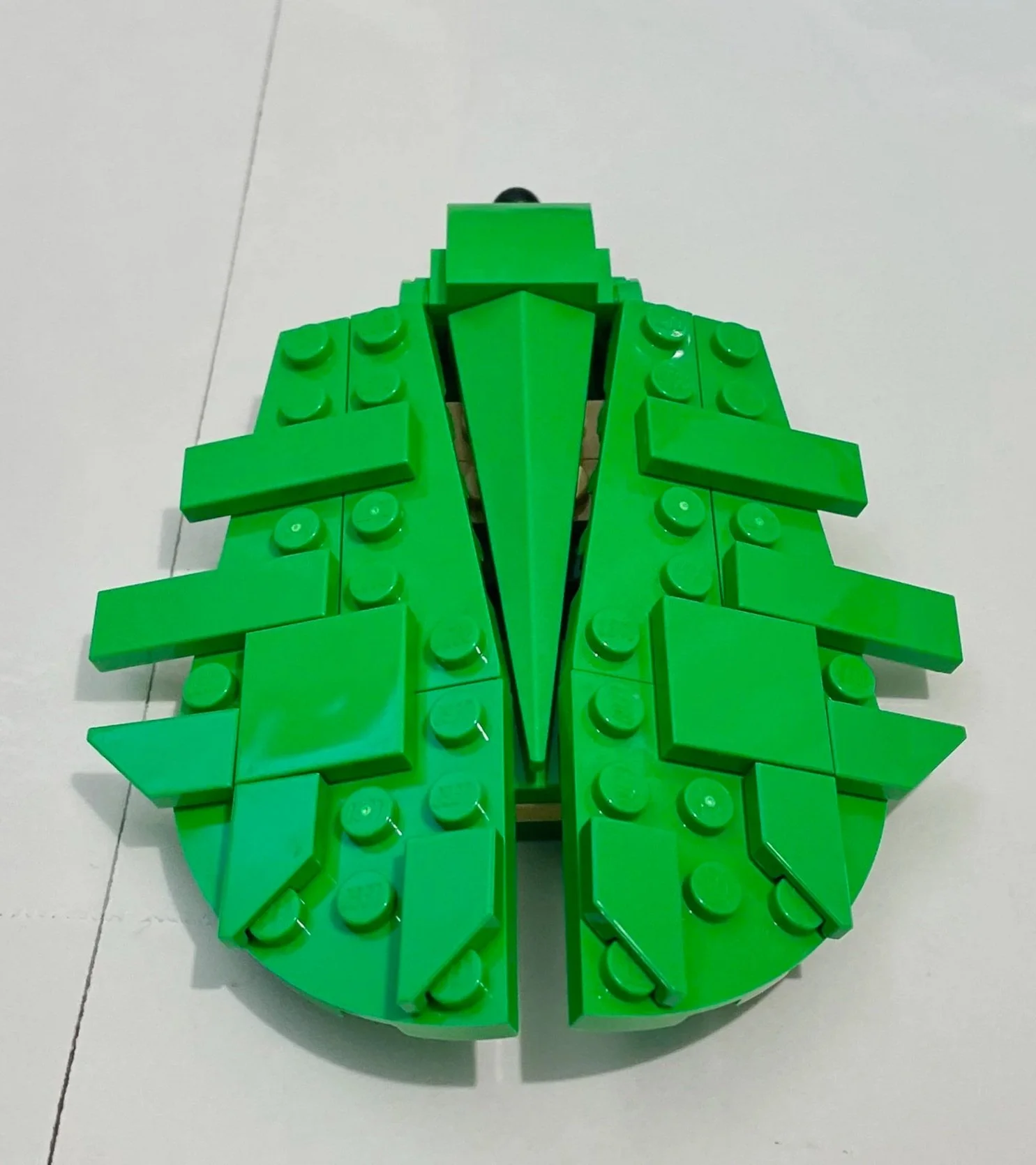
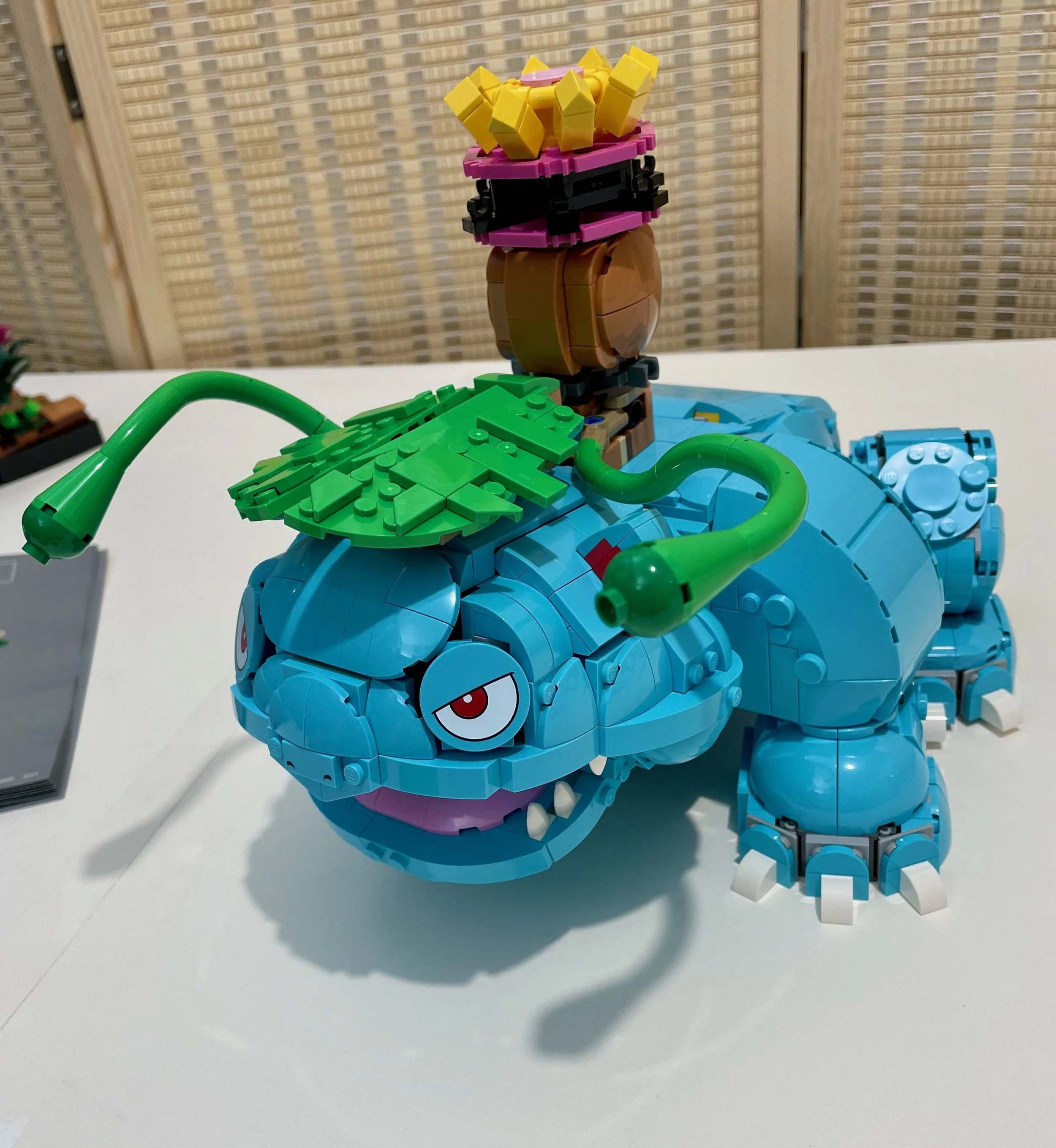
I didn’t start this early look at this set with the intent of being negative, but this leaf is just not good. The weird thing is, I can tell it’s not a case of lazy designing or parts constraints (as far as I can tell). The clips underneath and the 1x2 modified plate with rubber spike from Exo-Force show care and intention, but the shape and texture are a miss.

The 4x4 round corners don’t do it for me, the leaf should be a pointed palm. And the tiles on top don’t offer the needed effect of the pinnae (I had to Google that). It’s a shame the 6x5 swordleaf parts are too small, because Pokémon Stadium Venusaur would have loved those.
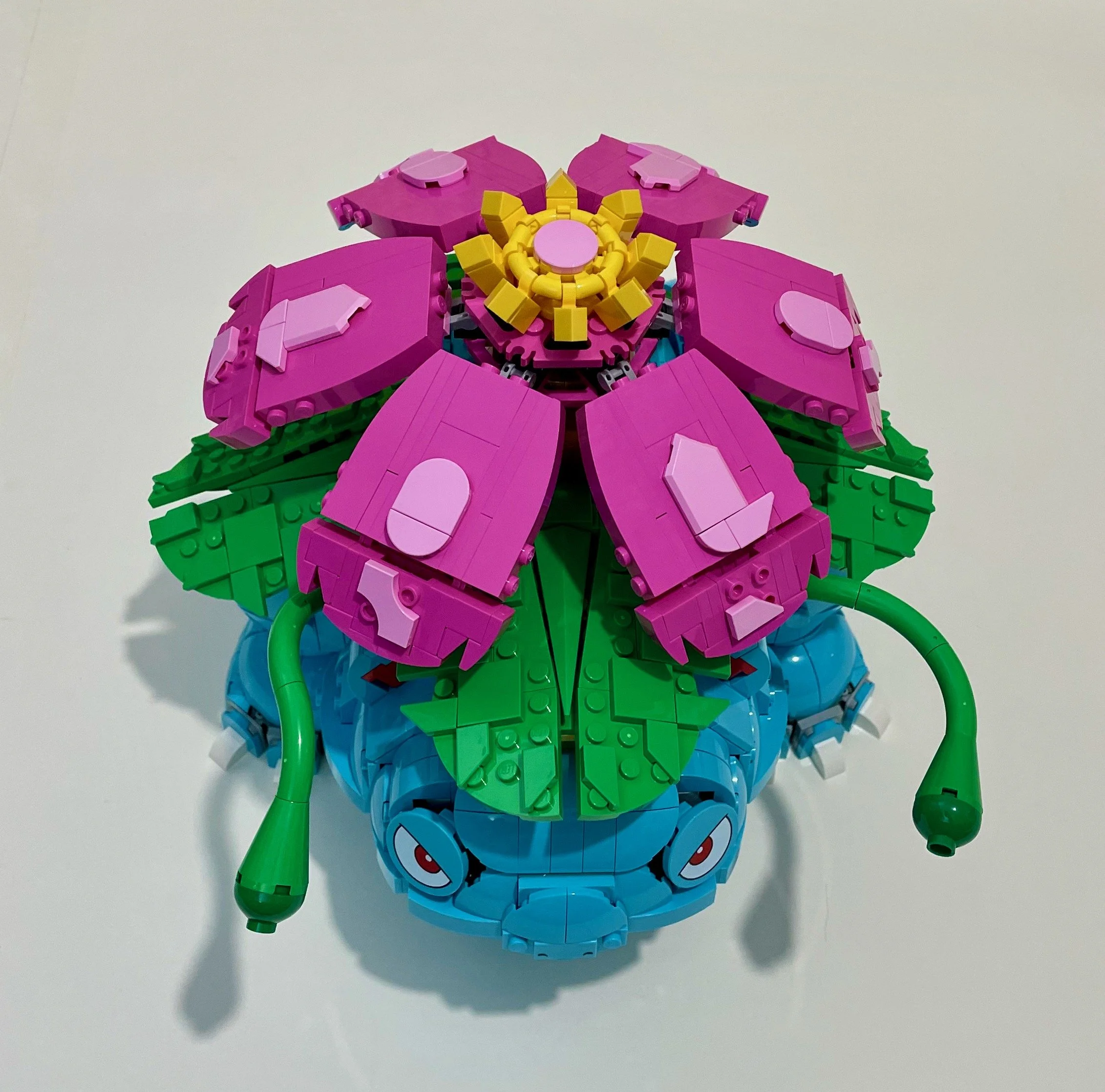
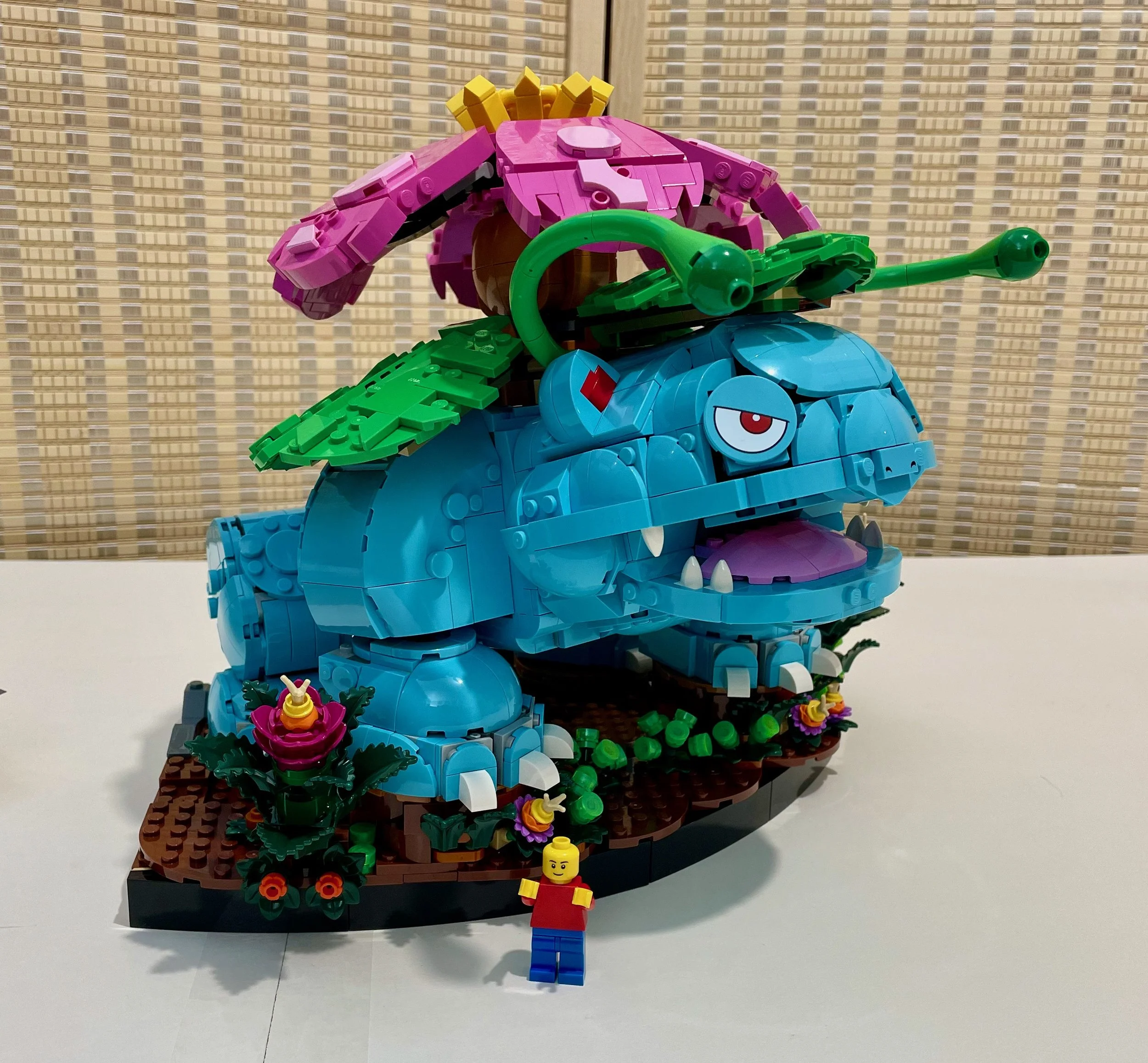
Vine Whipping it all together, you get to place the large iconic flower on its back, and pose Venusaur onto the base. Nitpicking aside, the Venusaur is huge, and its overall presence makes a great display piece. Once put together, the sections that bug me don’t stand out as much. Must be something about “the whole being greater than the sum of its parts.”
Onto box 2!
Box 2: Blastoise Hits the Shore
The rocky shore of Blastoise’s base was the second part of the set that I disliked when the images were released. But before we look at the waves, I want to take a moment to appreciate the interior of the rocks.
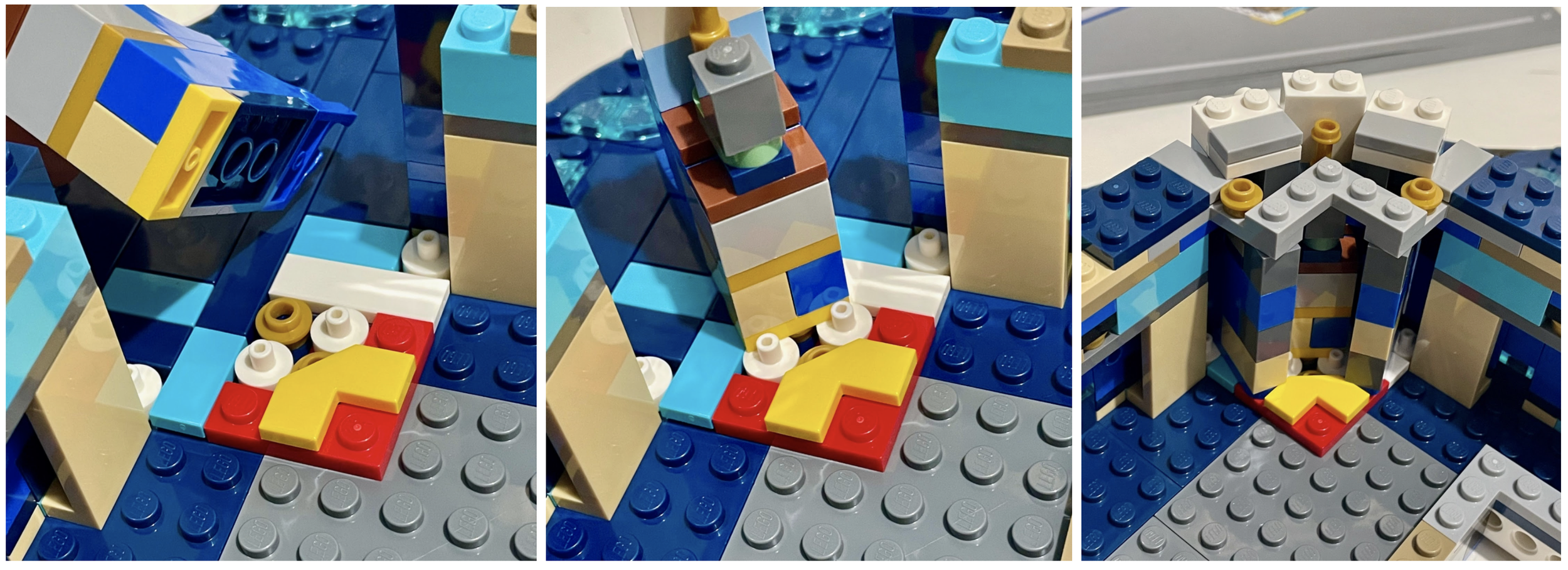
On the exterior, the result is a couple of rotated bricks, but the inner workings are clever and well-fortified.
Unfortunately, my amazement at the techniques does not extend to the repeating water design. For starters, the water doesn’t seem very convincing. A little bit of chaos and randomness would have gone a long way here, but the repetitive nature of the water is hard to ignore. I also think the trans blue windscreens should be white to better match the appearance of splashing water, but maybe that’s just personal preference.
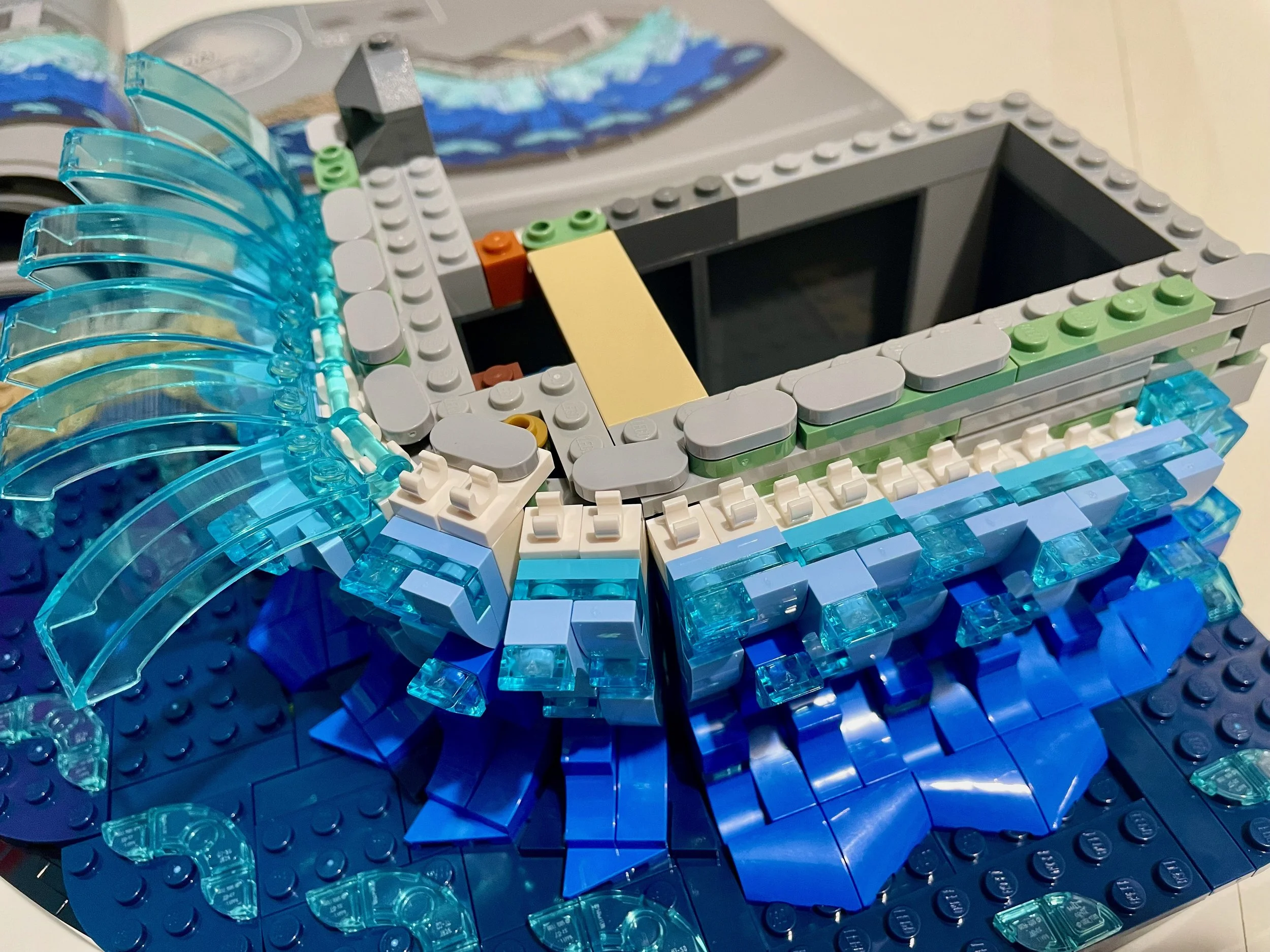
I was, however, impressed by the careful offsetting of the clips and SNOT plates that allow the windscreens to be angled into a near-perfect wave. From a LEGO-building perspective, angling the windscreens was very satisfying, even if the final result feels copy-and-paste.
By contrast, however, Blastoise’s body quickly became my favorite part of the build! For such a round and bulbous body, LEGO pulled out all the stops to achieve the angles needed to attach the limbs and shell sections.
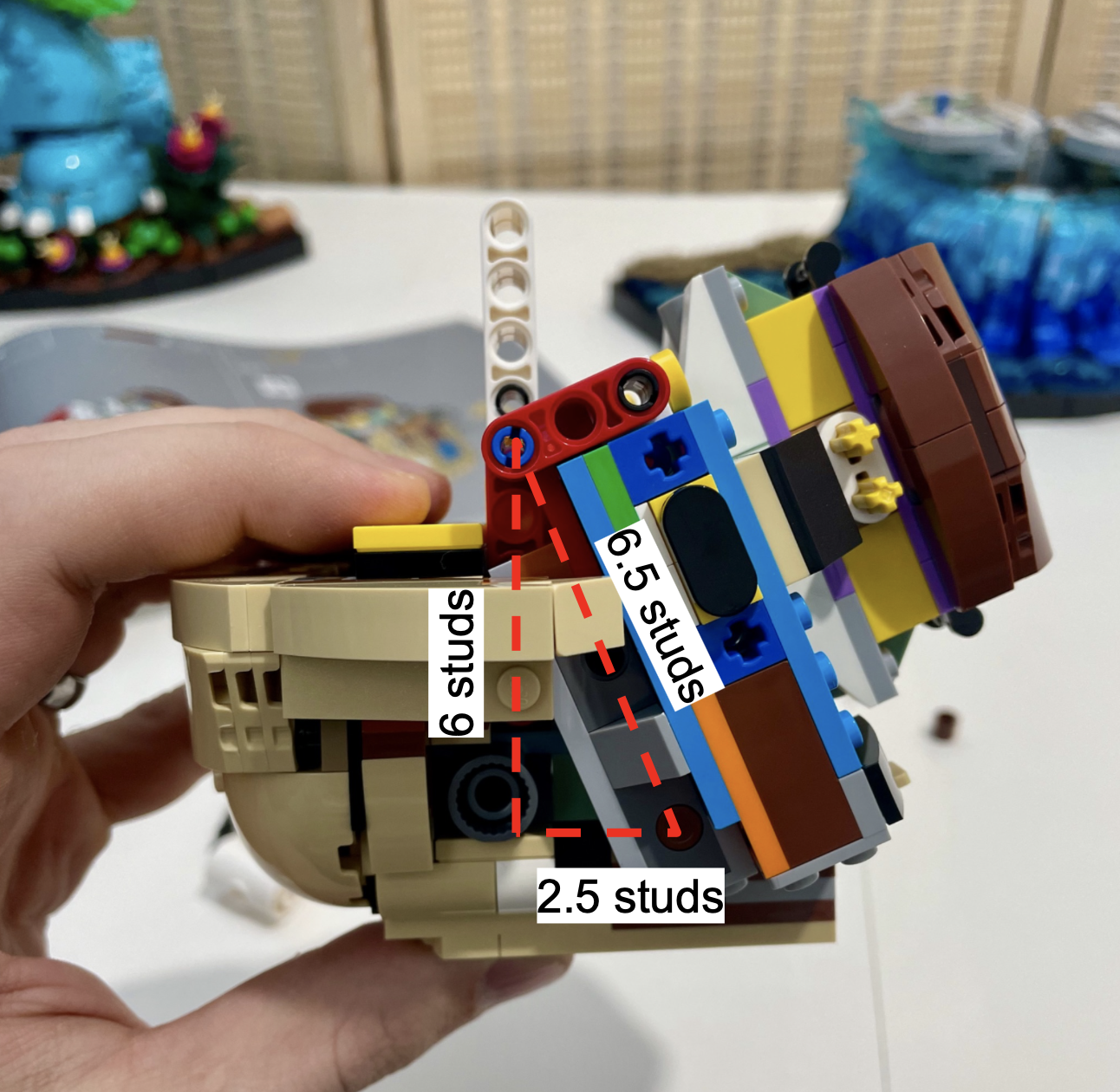
A convenient right triangle is used to secure the shell at an angle with the rest of the body (which holds the chest, arms and legs). I don’t think any LEGO set, past, present, or future, is as sturdy as that Venusaur. It could probably survive a tumble off a collapsing bookshelf that has too much LEGO!
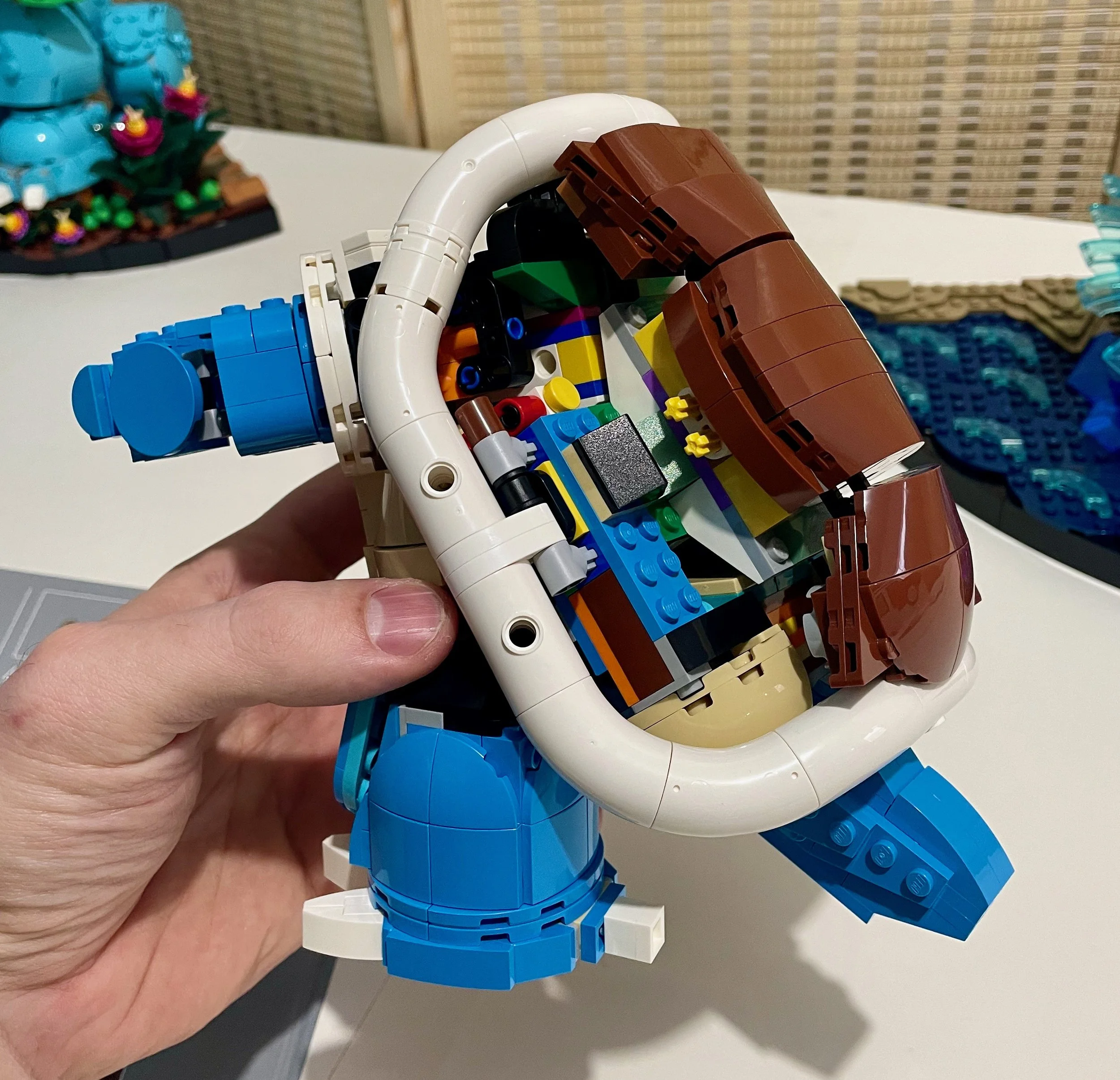
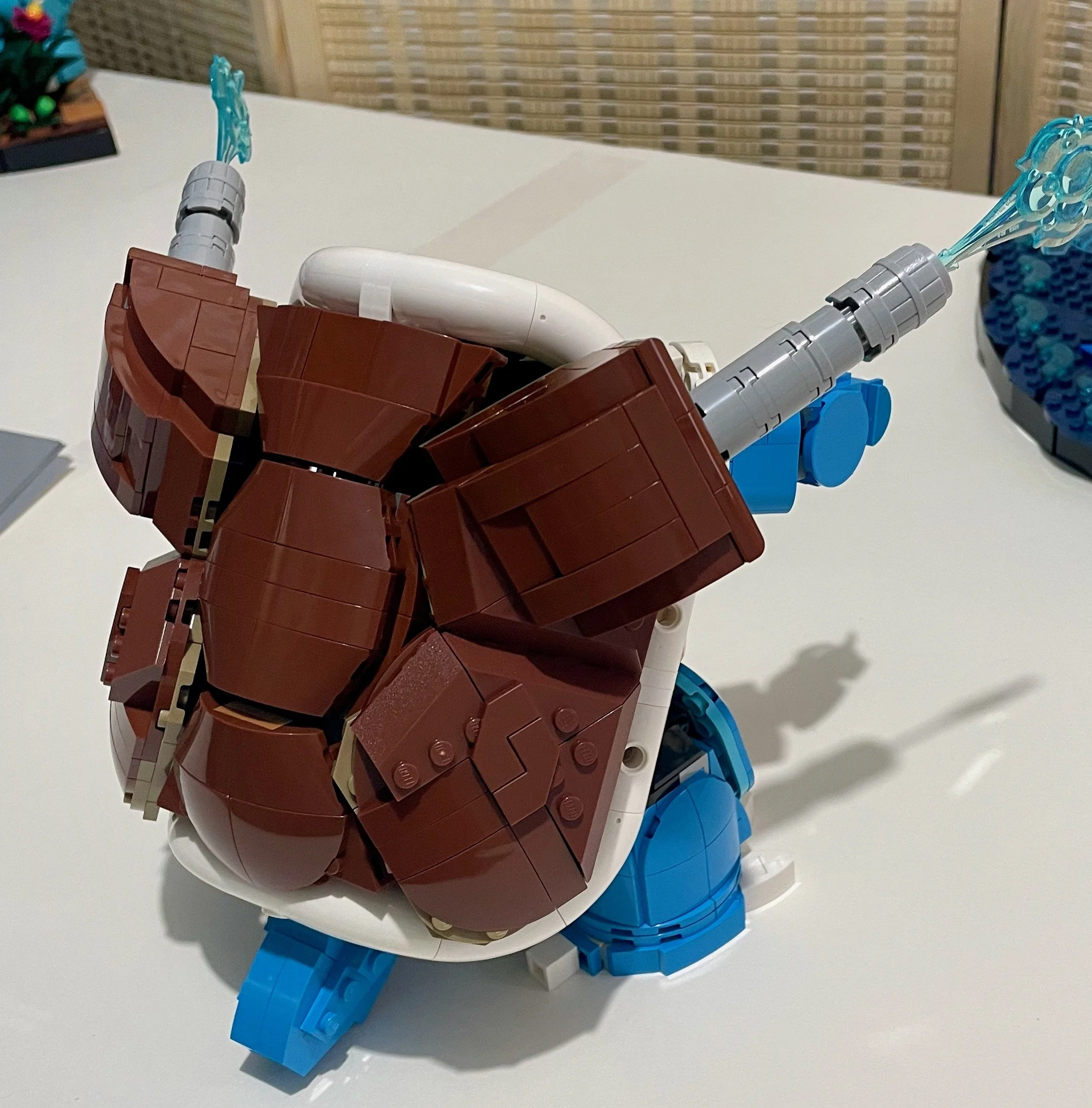
Building the internal structure of the body was a blast! The shell is as chunky as expected but conceals everything nicely and isn’t really seen once on display. I was hydro-pumped to see it all come together!
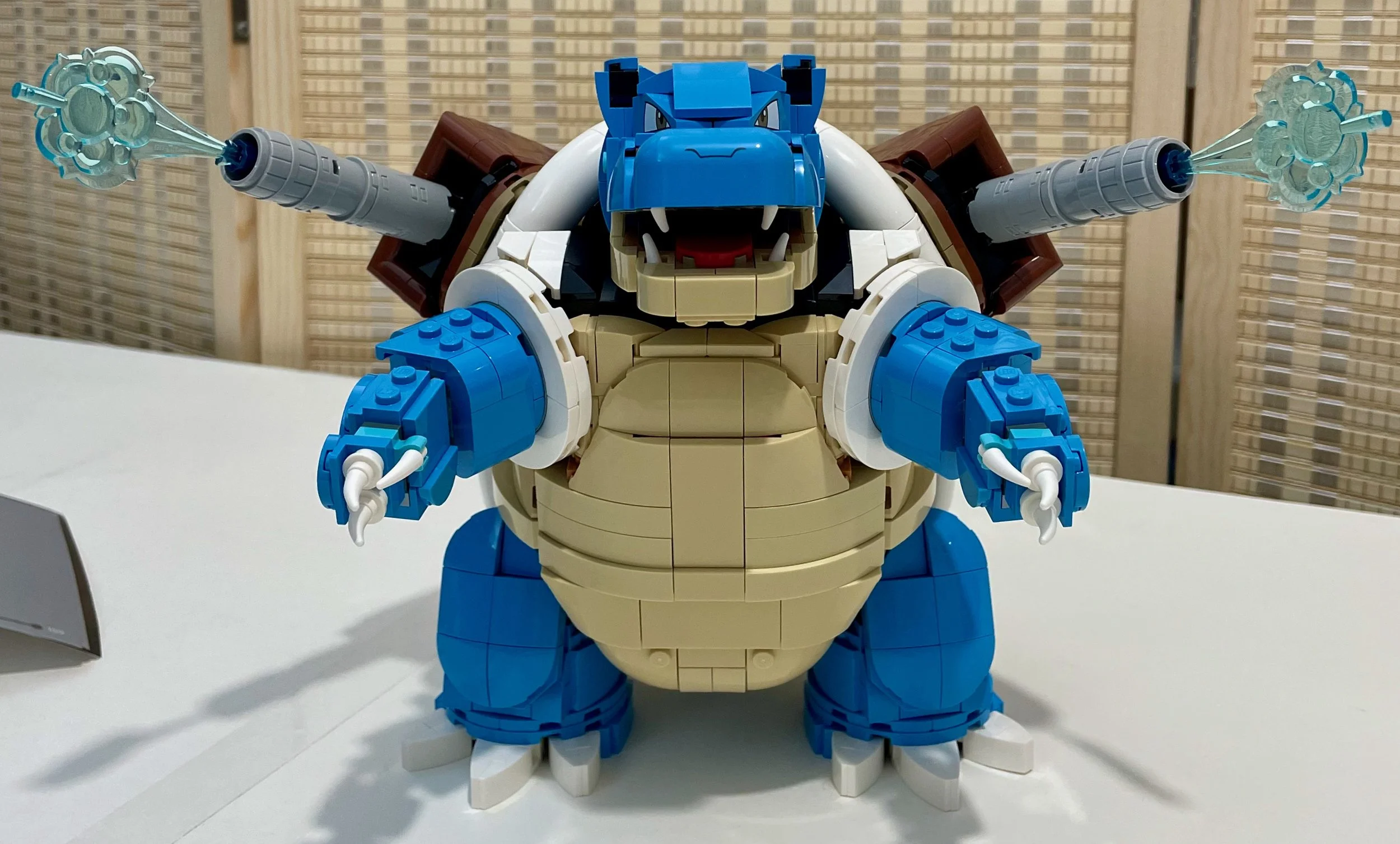
The Blastoise has great-looking teeth, using the dino-tail-in-headlight-brick technique that is pretty common in MOCs; however, that’s the only real compliment I can give the head.

Blastoise should have the head of a pitbull—the LEGO version’s eyes are too close together and the jaw proportions are off. (I will say though, the pieces holding the printed slope eyes are built in a way that could allow the eyes to be slightly repositioned; I wonder if they oriented differently during the design process and eventually were given their permanent position for structural reasons…)
In any case, this Blastoise’s body best matches the iteration from Pokémon GO; I personally would have loved something closer to the original TCG card art but that’s certainly not a knock against the set.
Box 3: Charizard Takes Flight
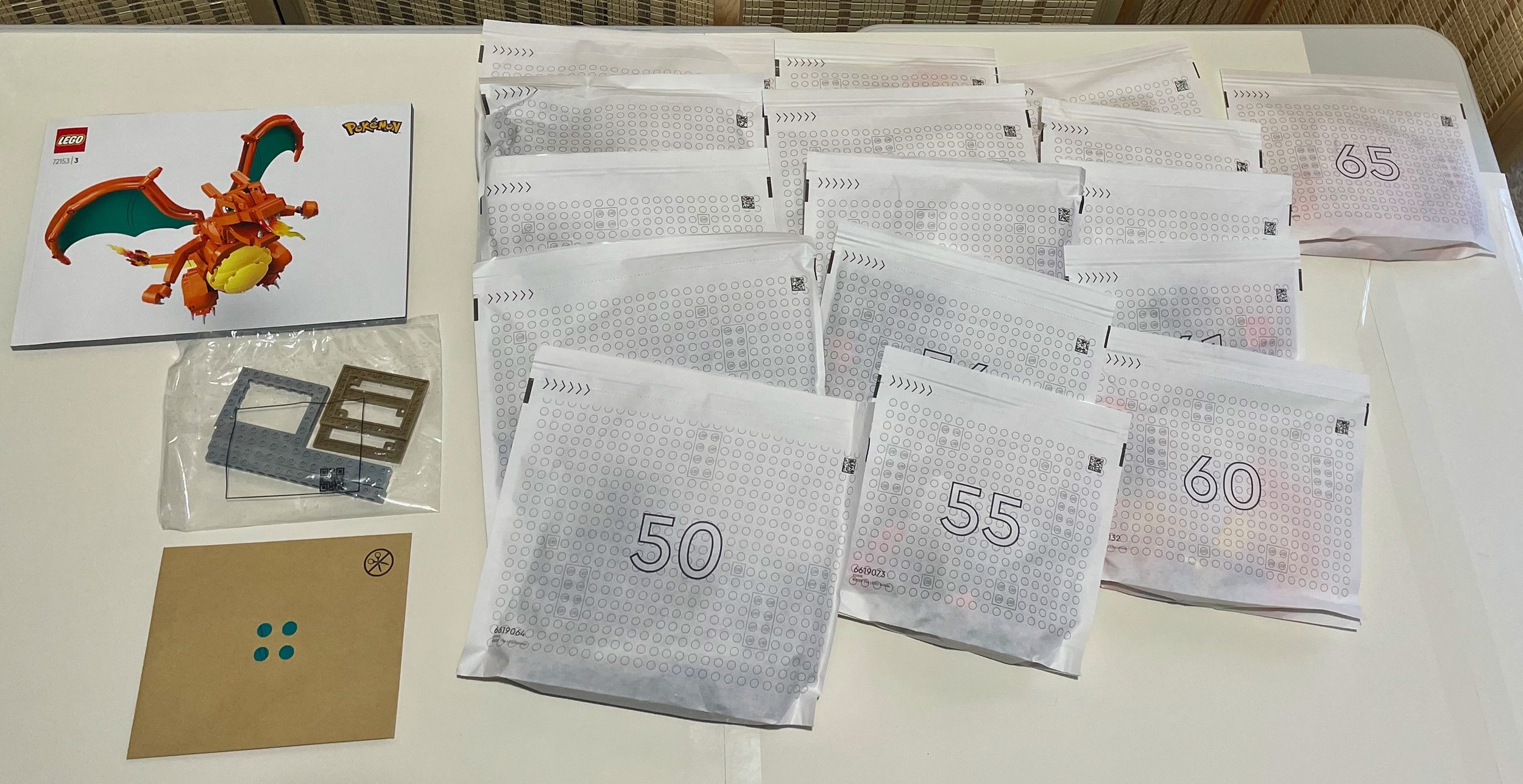
Onto box three, and Charizard rounds out the remaining parts of this 65-bag set!
The volcano base starts out comically less sophisticated than the other two…
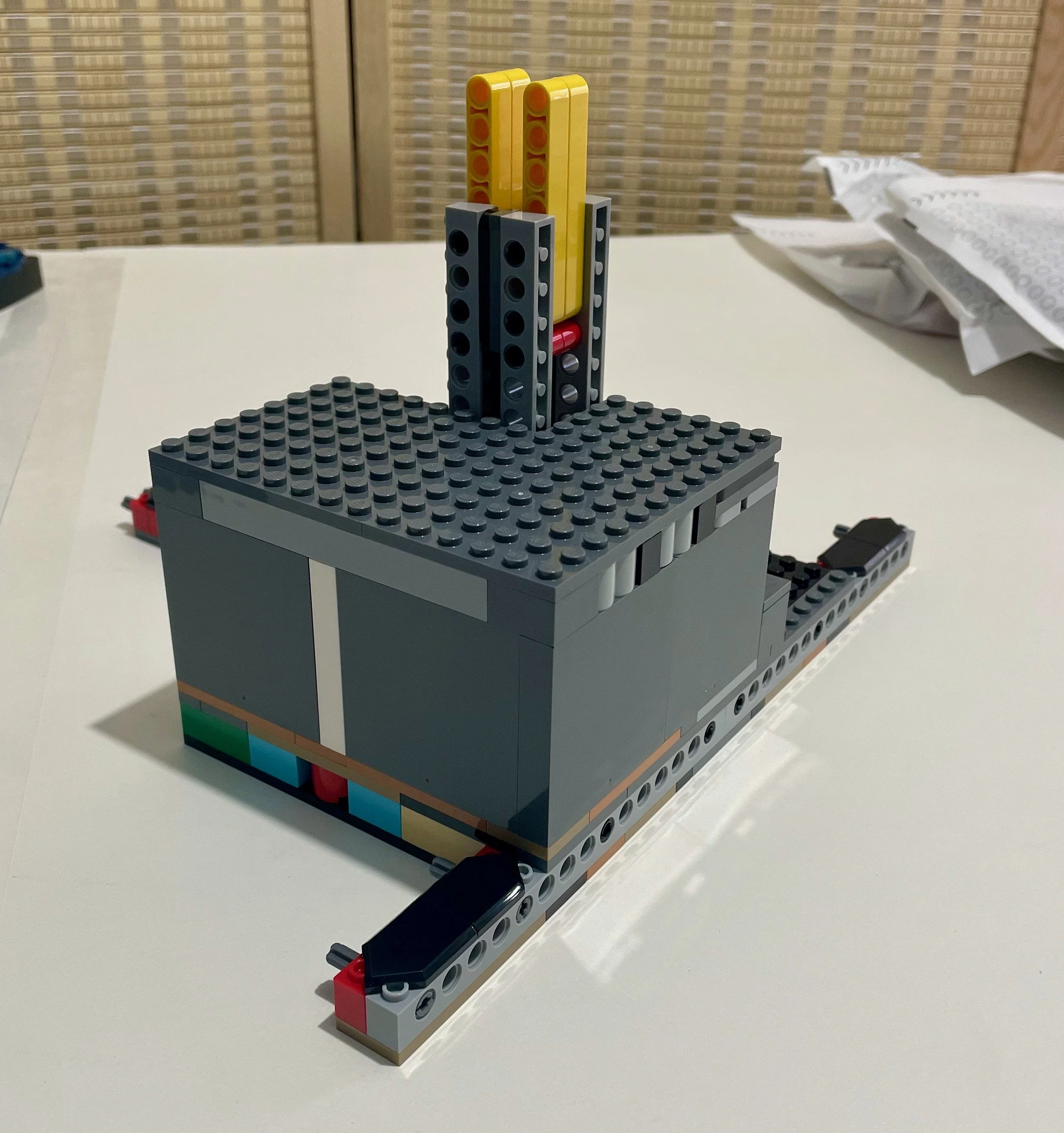
(This looks like everyone’s first attempt at making a LEGO house from scratch!)
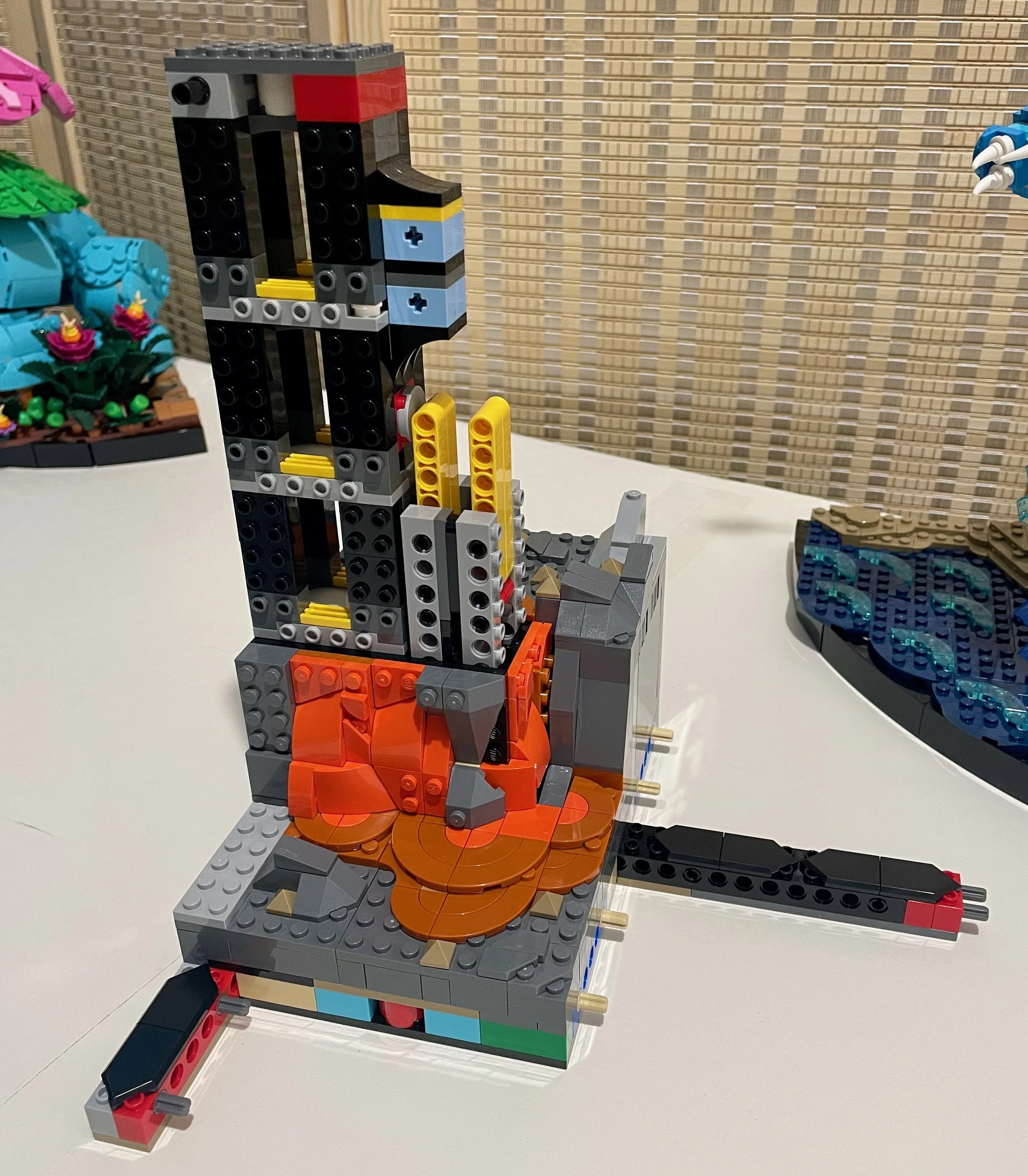
The structure is definitely strong enough to suspend Charizard in midair, but the wedges and round tiles do little to disguise the fact that the volcano is a big rectangle.
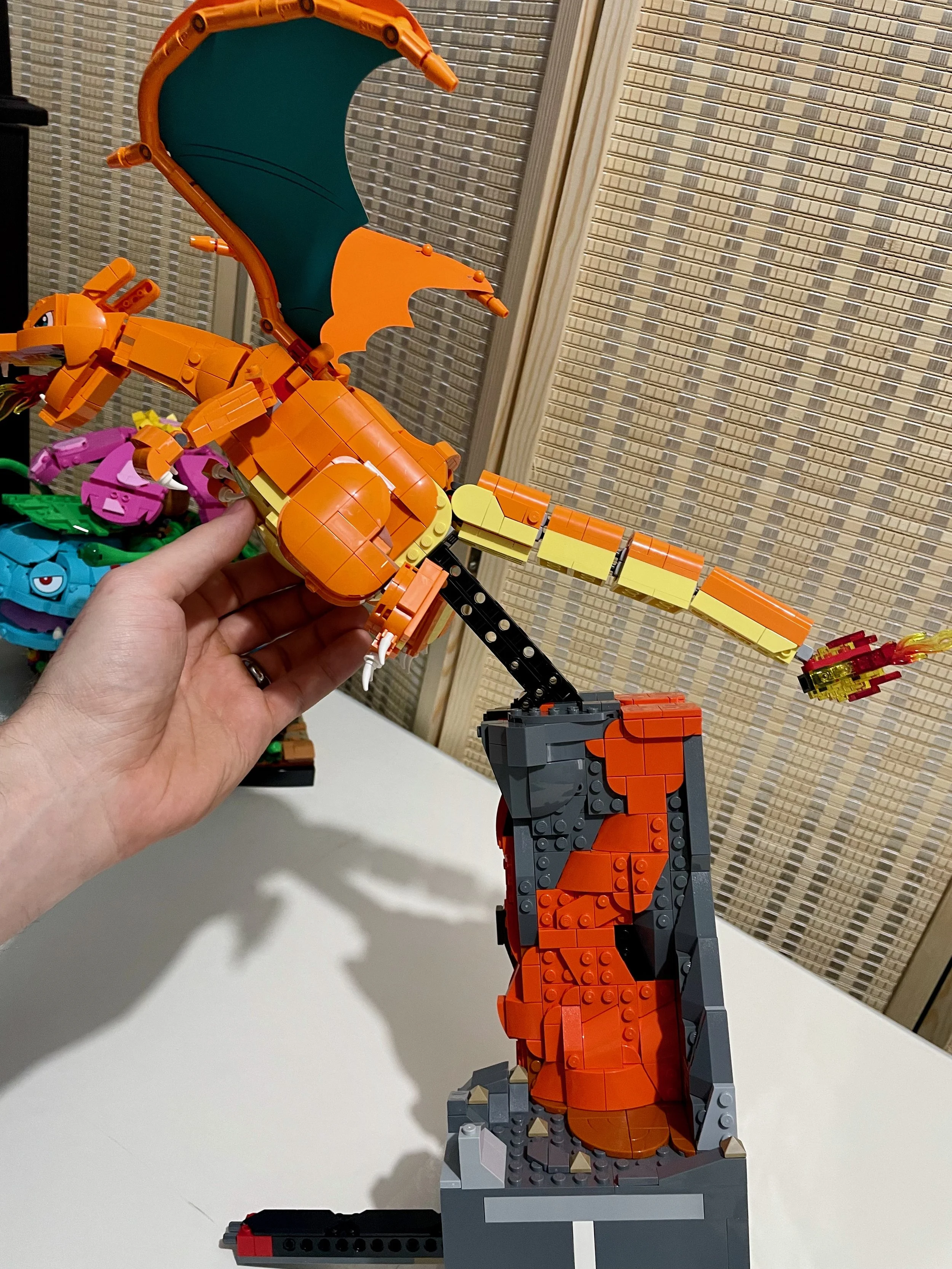
I honestly don’t know how necessary the flying pose was. I’m probably in the minority with this opinion, but I think Charizard simply standing on a volcano would have been cool enough. It’s held not far off the base anyway, and the lack of a necessary cantilever would have allowed for a bit more design flexibility in the base.
It’s not much, but Charizard does have the most articulation. The wings can fold back with a pretty clever arrangement of Technic elements, and there is some movement in the arms and tail (though the range of motion is limited).
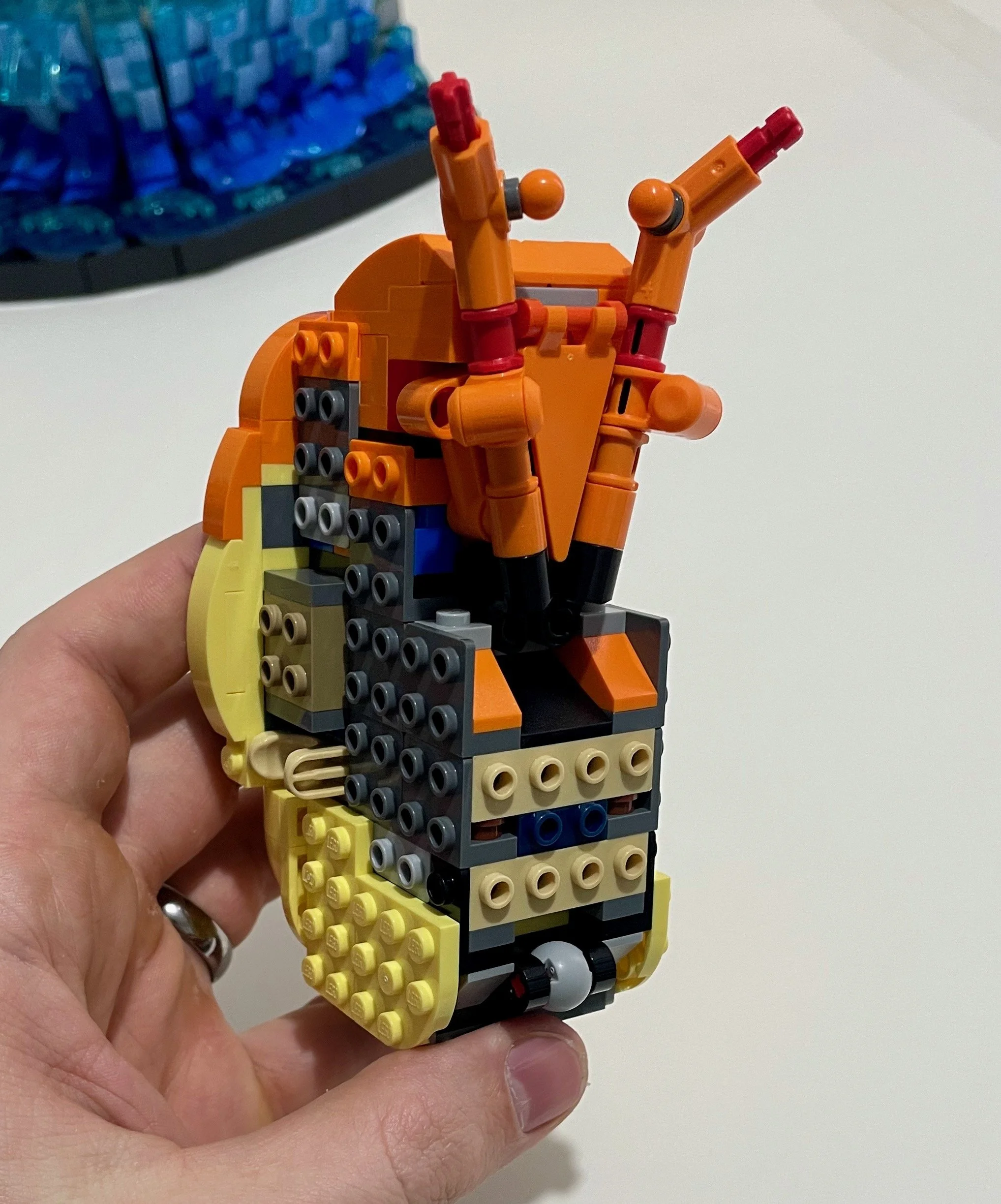
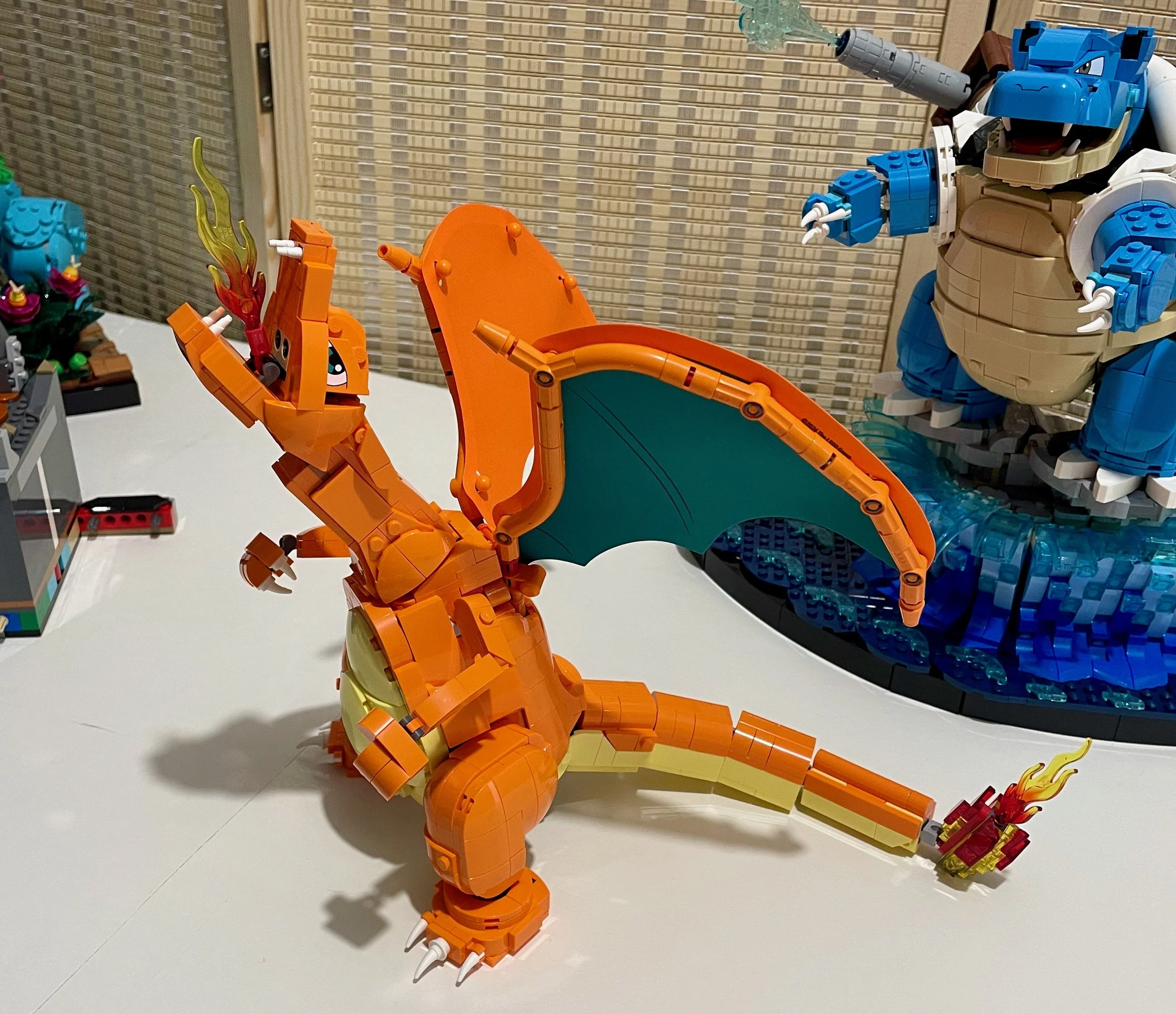
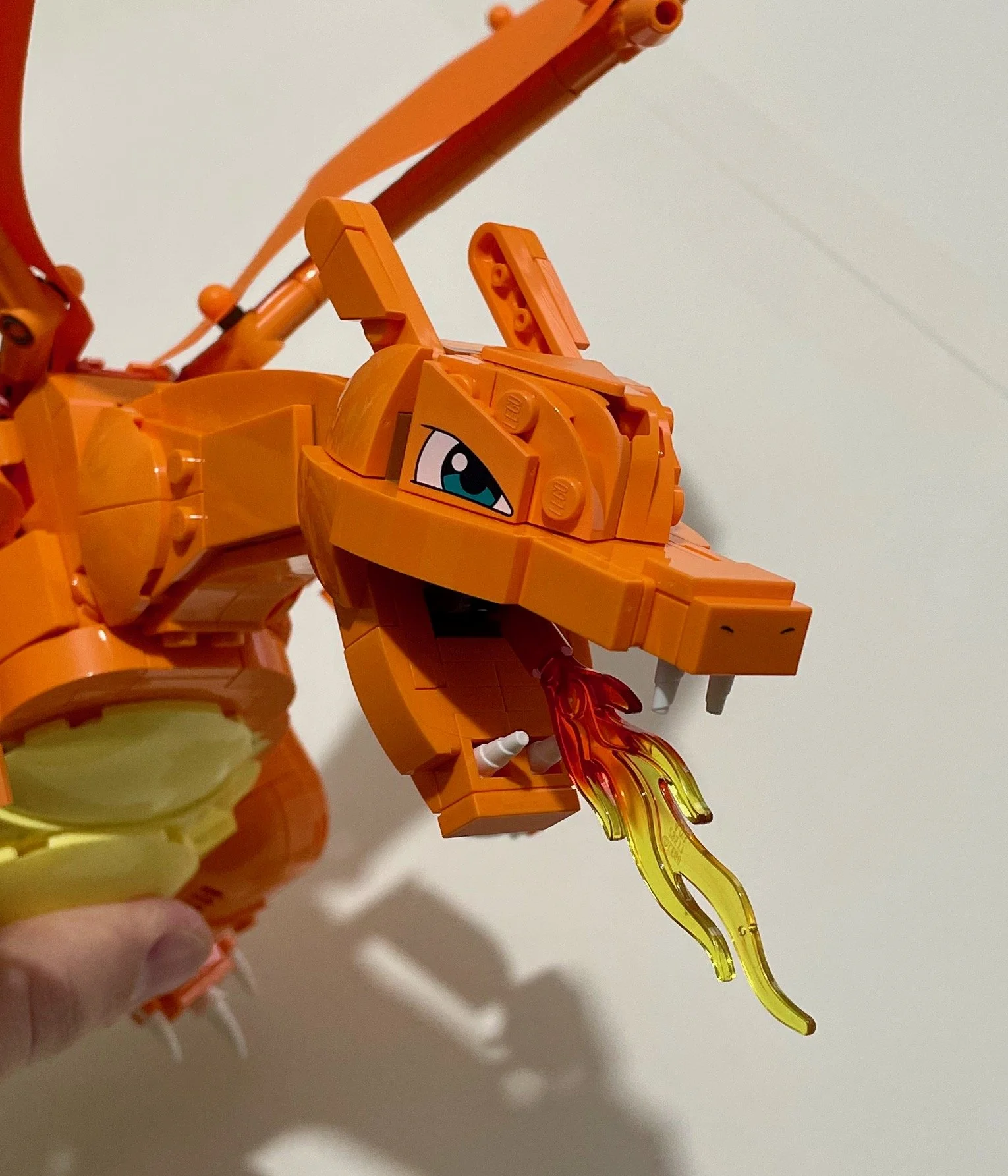
The sculpting on the head is good, not great. The new printed wedge tile definitely sells the Charizard look, but I don’t think it’s that big of an upgrade from its brick predecessors. The sides of the lower jaw are a bit wide and too convex, the horns are too rounded, and the nose is missing the characteristic raised nostrils.
With the final brick laid, assembling all three into their final poses was very satisfying.
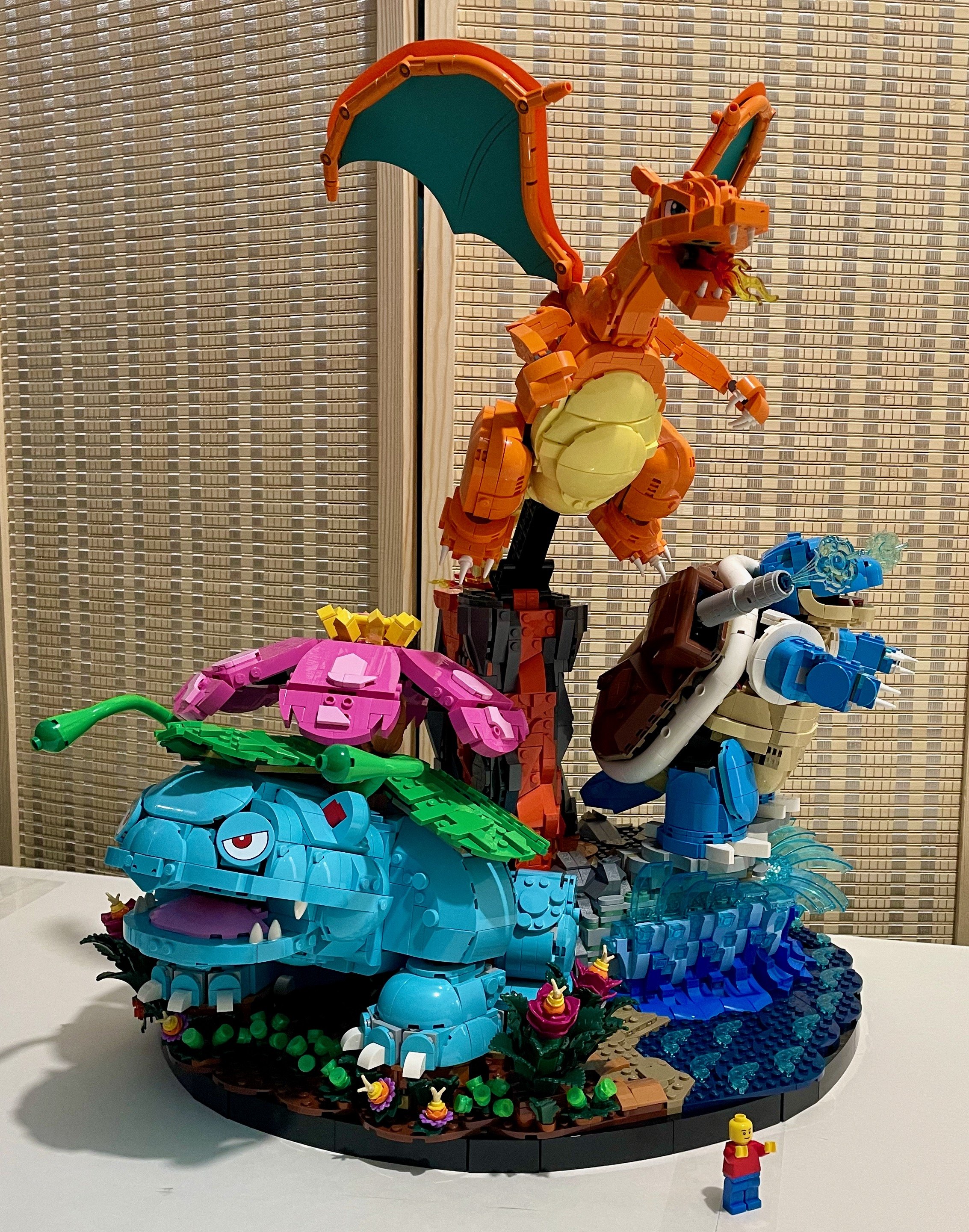
It still seems a bit surreal to have this set in my collection. Like most nerds in their 30s, I religiously hang onto my belief that the first generation will always be the best. It was great to see only Gen 1 Pokémon in this first wave of sets; LEGO definitely knew their target audience.
Bonus Build: Kanto Region Badge Collection
For an extra dose of nostalgia, I was fortunate enough to also receive the accompanying GWP, the Kanto Region Badge Collection. This was available with pre-orders and should be available when the set is available until they run out (which may be very fast!).
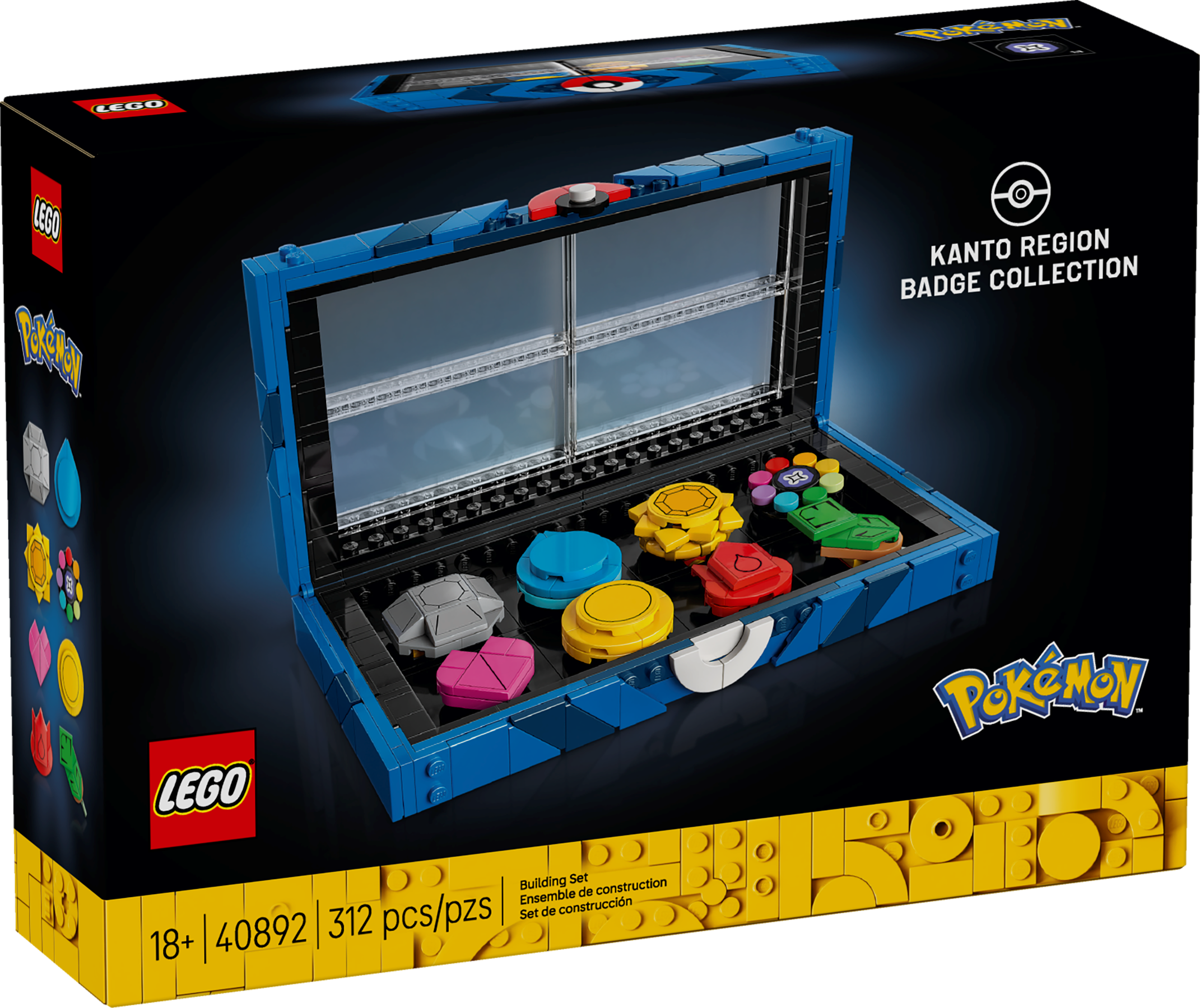
It’s a quick little build but allows you to roleplay being a Pokémon Master with 1-to-1 scale gym badges.
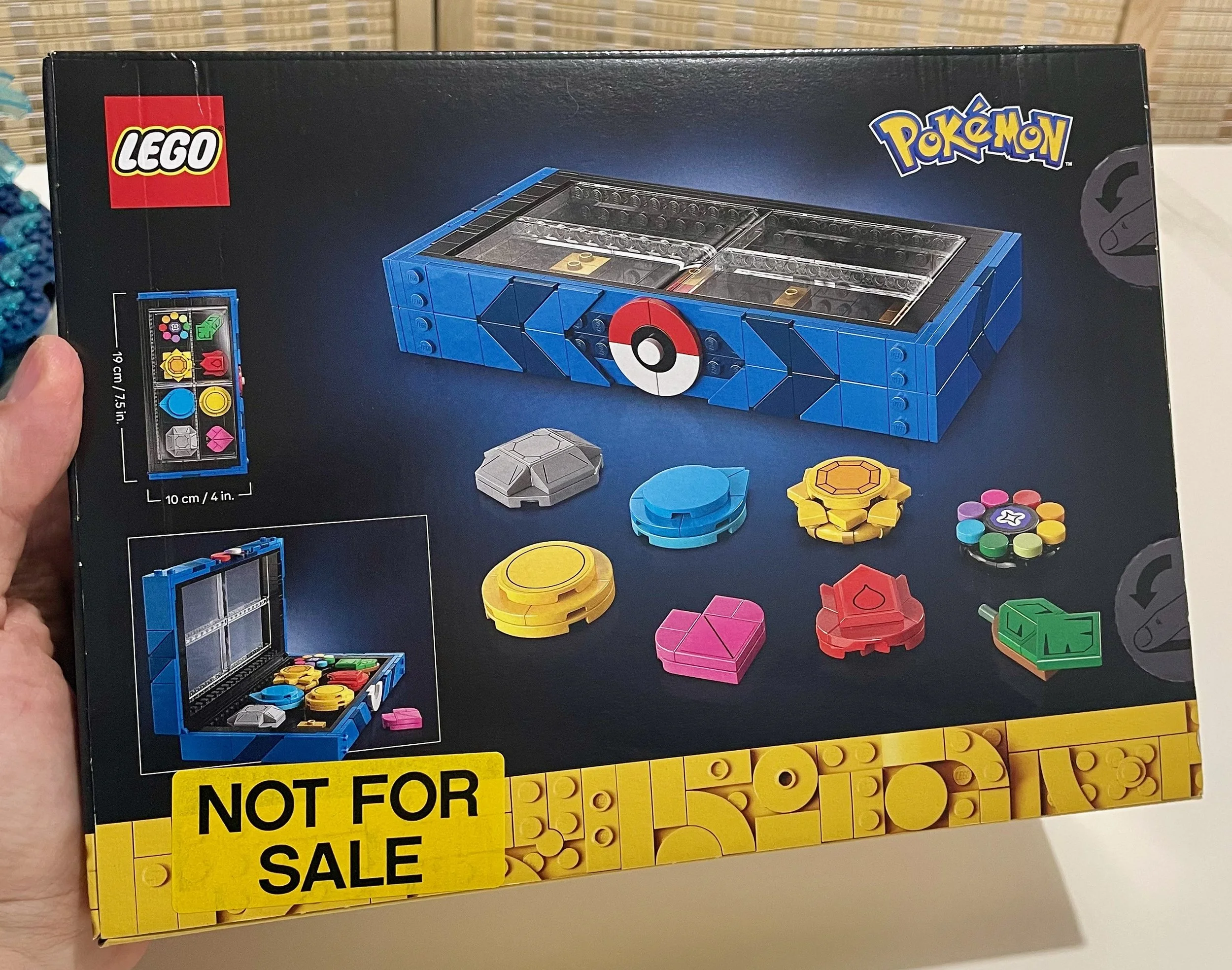
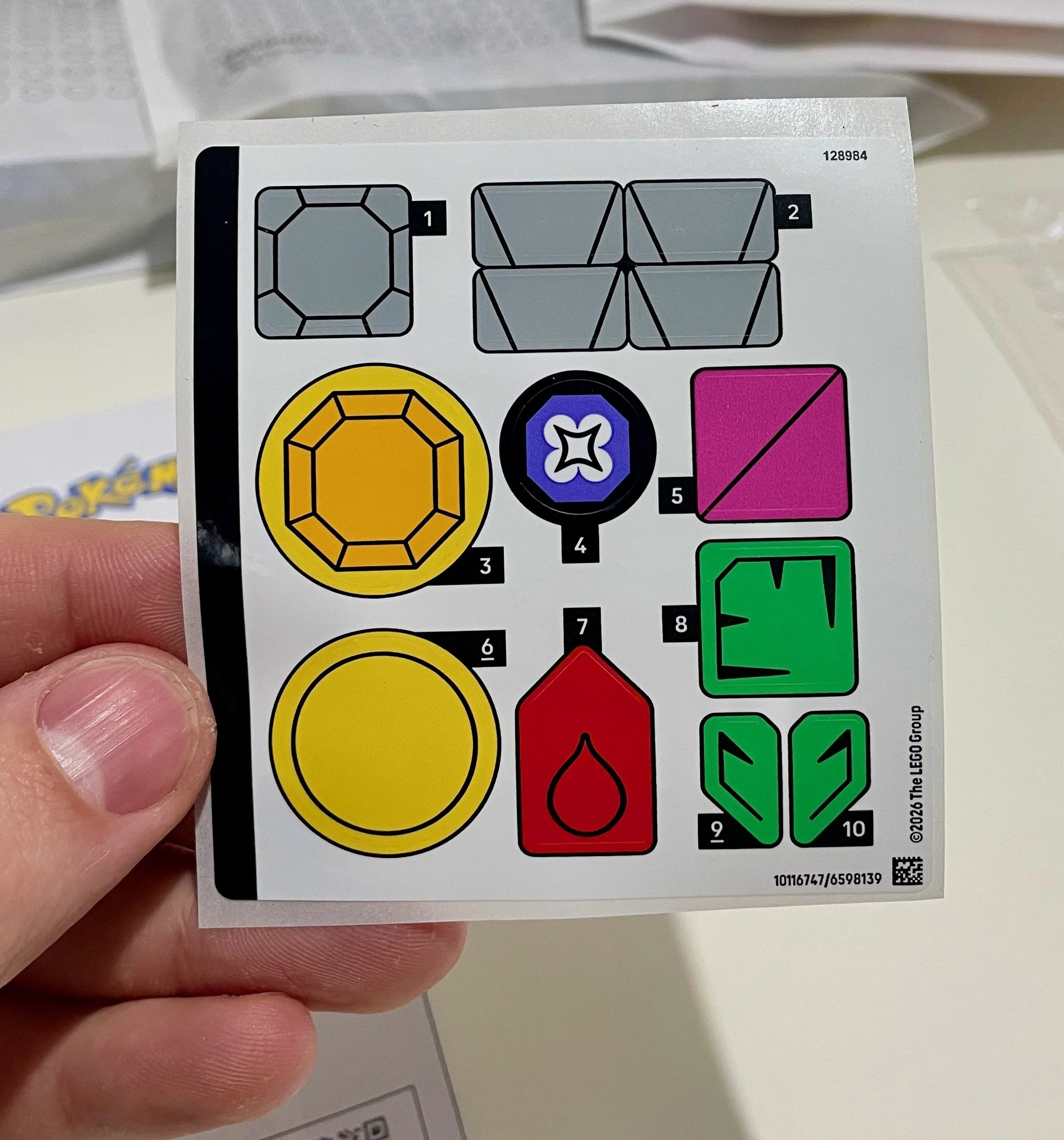
Unlike 72153 Venusaur, Charizard and Blastoise, this set uses stickers to achieve the finer details, and the techniques are fairly simple. A couple of the badges (Thunder Badge and Volcano Badge) had some clever shaping worth appreciating.
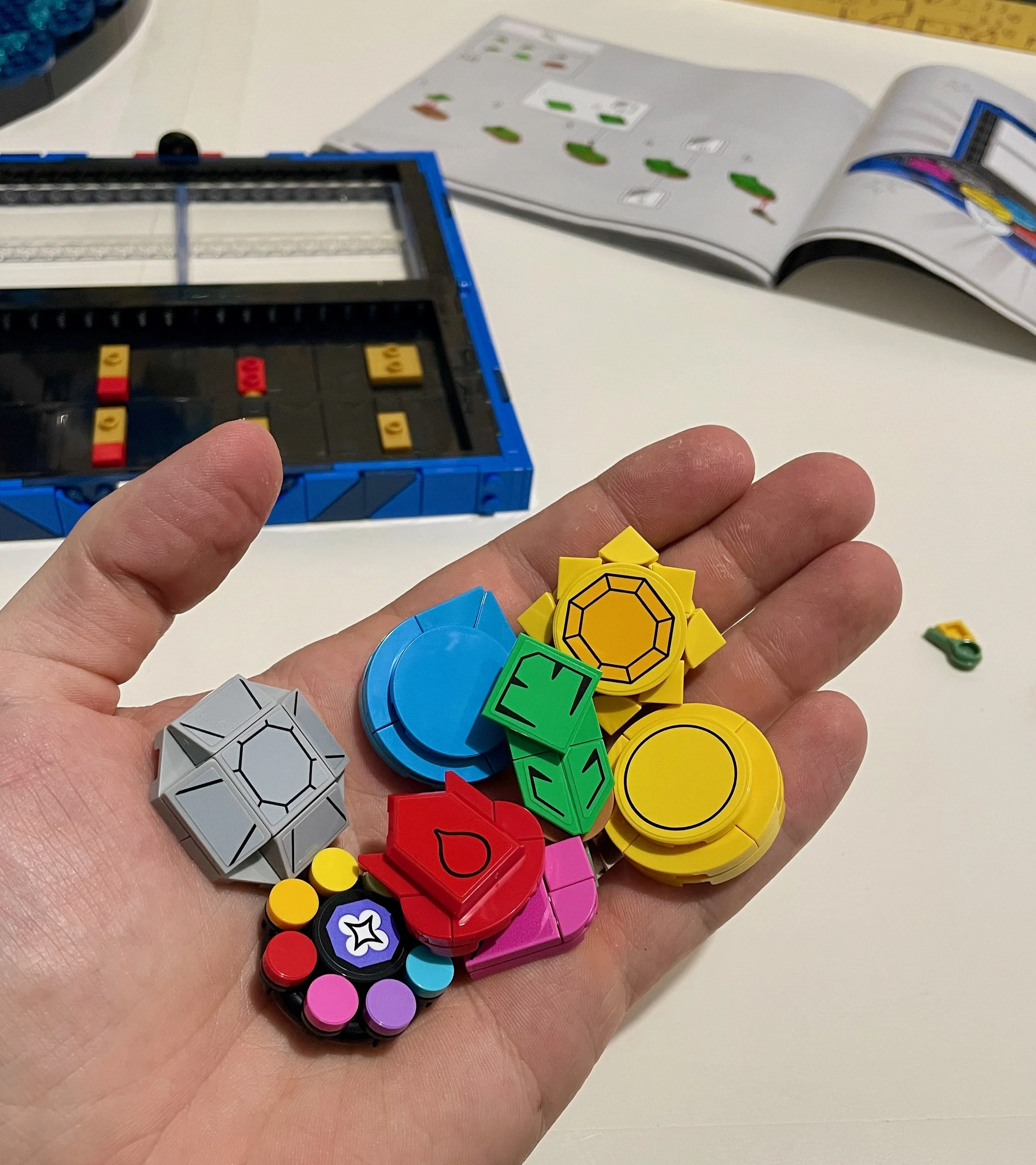
Other than carrying this around in my coat pocket, I’m not really sure the best way to display the GWP, but it doesn’t look too bad just cramming it up against the Stage 2 Pokémon.
Final Evolution
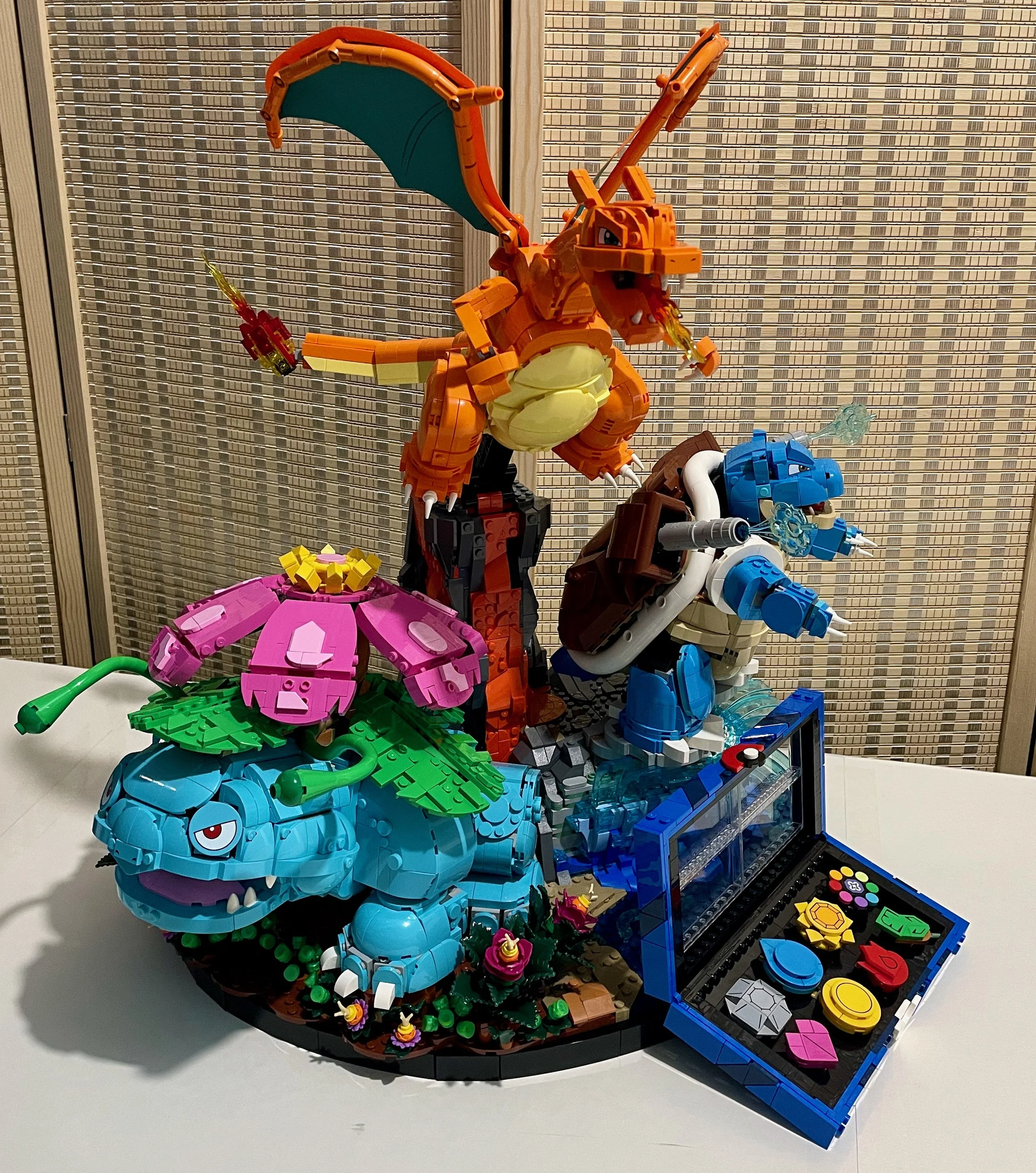
Now that the full build is complete, the strengths and weaknesses of the set are much easier to see. There’s plenty here that works extremely well, along with a few areas that may divide builders. Here’s where it all lands.
The Cons
The set is not perfect. I know that’s a ridiculous thing to say, but this is a premium-priced set, and I feel like there’s just one too many little areas that could be touched up. If this were a cheaper play set, I could definitely accept the rough patches, but as a display piece, I wish my first reaction was “Oh my gosh, this is amazing!” and not “Hmmm… that Venusaur face is a little weird.”
The part selection was underwhelming. I know New Elementary et al. will do a better job covering this, so I’ll simply drop a few images below, but most of the new pieces you get to play with are the quarter domes/curved slopes. Those have such a specific shape, and the lack of studs doesn’t really lend itself to the LEGO “system”; they’re toppers to round off the edges of some blocky surfaces that we’ve all honestly been fine with for decades.
The Pros
This first LEGO Pokémon set is a vibrant and dynamic piece of art that looks great on display. It seems like the largest LEGO sets are mostly big gray Star Wars ships and monochromatic pieces of architecture; 72153 Venusaur, Charizard and Blastoise break that mold and dollar-for-dollar look significantly better on the shelf. The designers also clearly put effort into going vertical rather than just spreading out horizontally, and made the Pokémon able to stand without the base, giving the builder more options for display.
The set is a truly fun building experience. The 6,838 pieces never felt like a chore; I was constantly excited with thoughts of “Oooo, I think the legs are coming next,” and the change in color and part texture from bag to bag kept the construction process fresh.
Almost all of the details are brick-built. LEGO’s competitors did not shy away from custom moulds for their sets, so I’m happy to see the Pokémon likenesses come together as a collection of elements. The few parts (mainly the eyes) that aren’t made of bricks are all printed with zero stickers! (GWP excepted.)
Overall LEGO Pokémon 72153 Venusaur, Charizard and Blastoise is an amazing set… and it is priced accordingly. If it’s in your budget, this is certainly a must-have for any LEGO and Pokémon lover. I can’t wait to see what else LEGO has in store for the new Pokémon line!
Which of the three starters would you most want to add to your display? Leave your thoughts in the comments below.
Do you want to help BrickNerd continue publishing articles like this one? Become a top patron like Paige Mueller, Rob Klingberg from Brickstuff, John & Joshua Hanlon from Beyond the Brick, Megan Lum, Andy Price, Lukas Kurth from StoneWars, Wayne Tyler, Dan Church, and Roxanne Baxter to show your support, get early access, exclusive swag and more.