An Old Town Built on Legends: Exploring the Secrets of Ninjago’s 15-Year History
/
Today marks the 15 year anniversary of when the original two pilot episodes of Ninjago aired. I still remember it vividly, all these years later, sitting on the living room floor of my childhood home in early January of 2011. I was bundled up in blankets, looking up in awe at the TV. The screen showed a blacksmith shop, with the sound of metal clanging as a young blacksmith hammered it into the shape of a sword.
Within moments, little me and that blacksmith, who I would soon learn was named Kai, would begin a 15-year journey filled with incredible characters, epic battles, and many memories that I will cherish for my life.
For Ninjago’s anniversary, The LEGO Group is making sure this year is one to remember for Ninjago fans, with a new season of the TV show, special sets, collaborations, and events, all to celebrate this milestone. While Ninjago spans many areas—from the TV series, movie, books, comics, video games, apps, and more—the roots of Ninjago lie in LEGO sets. So how can you celebrate 15 years of storytelling in a single LEGO set? The answer is one set: Ninjago 71861 The Old Town.
A Ninjago Fan from the Beginning
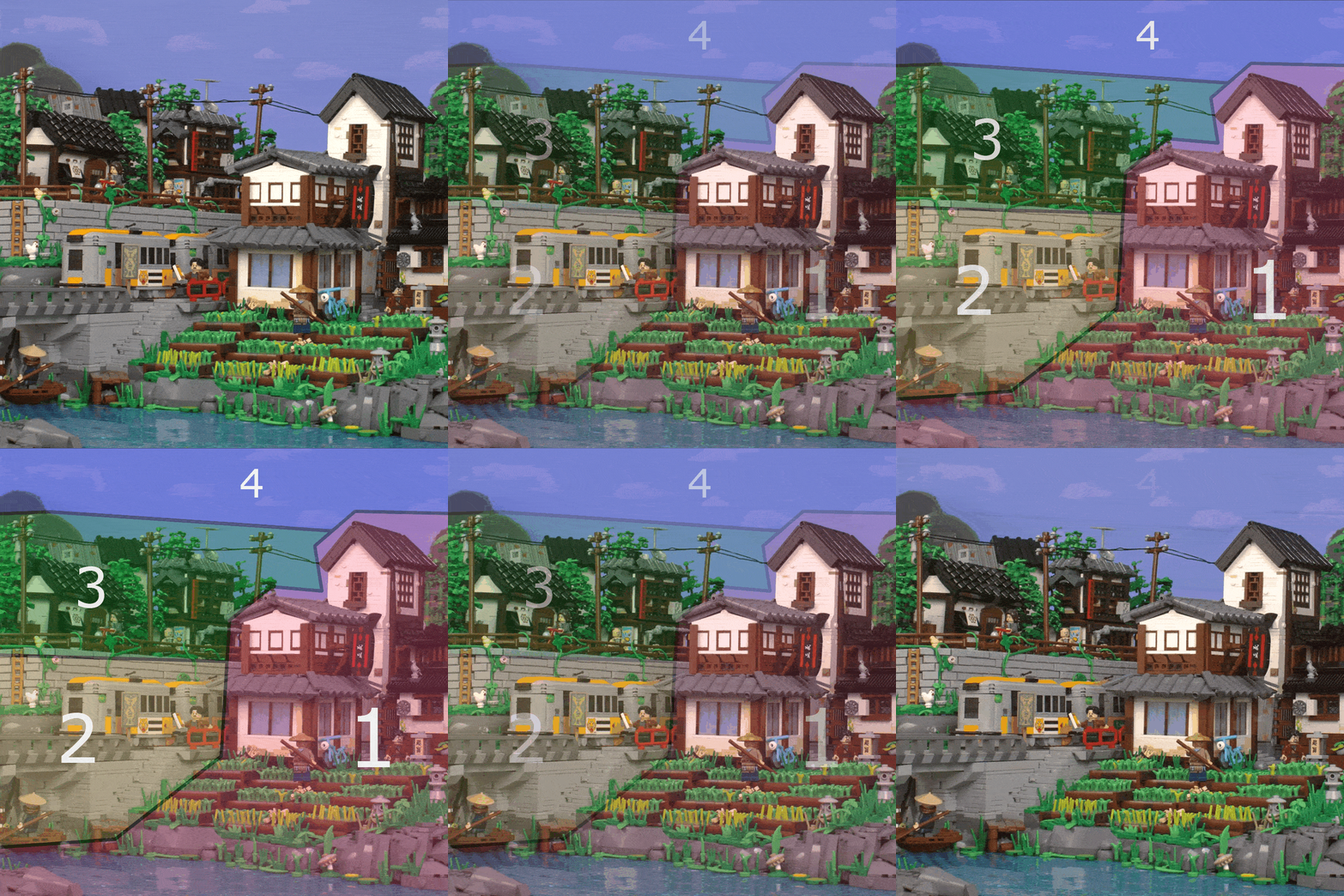
As one of BrickNerd’s newest writers, I have been a day-one Ninjago fan. I have every Ninjago minifigure, as well as nearly every LEGO Ninjago set released since 2011. I have watched the entire series numerous times and read the comics and books many times. I’ve built myriad custom Ninjago creations over my LEGO-building career, the standout being a 14 ft x 7.5 ft custom Ninjago City.
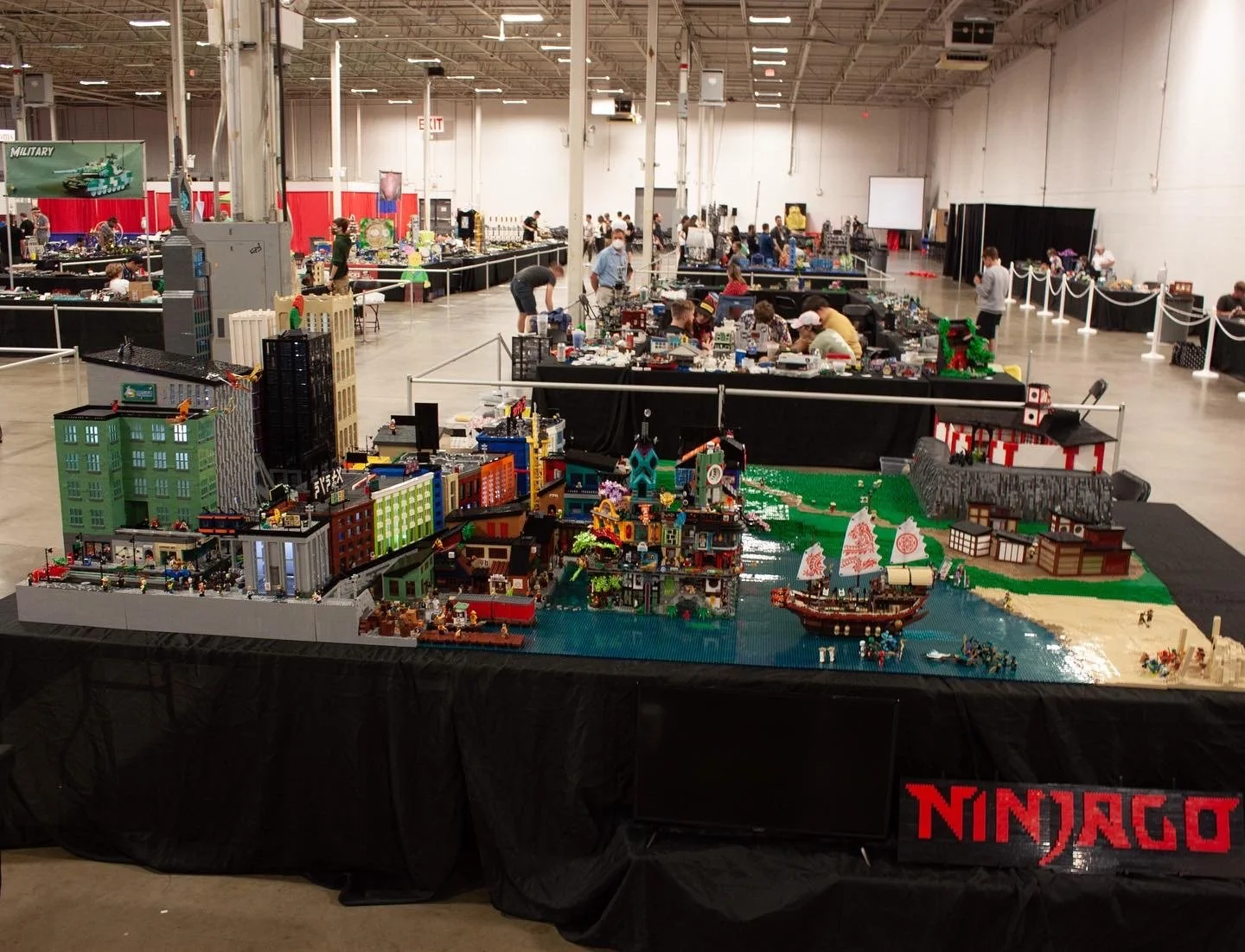
My Lego ninjago city, displayed at brickfair VIRGINIA 2022
All of this is to say that Ninjago has been—and still is—my favorite LEGO theme. When I had the chance to get this set early, I wanted to approach it not just as a builder, but as a lifelong fan, to answer a simple question: Does this set truly represent 15 years of Ninjago?
The Old Town carries the weight of that history on its shoulders. That’s a lot for any single set to cover, and like many longtime fans, I was eager to see how well it could capture so many years of storytelling. As I built, I evaluated not only the construction and design, but also how effectively it reflects Ninjago’s rich history through the eyes of a day-one fan.
Even The Box Celebrates
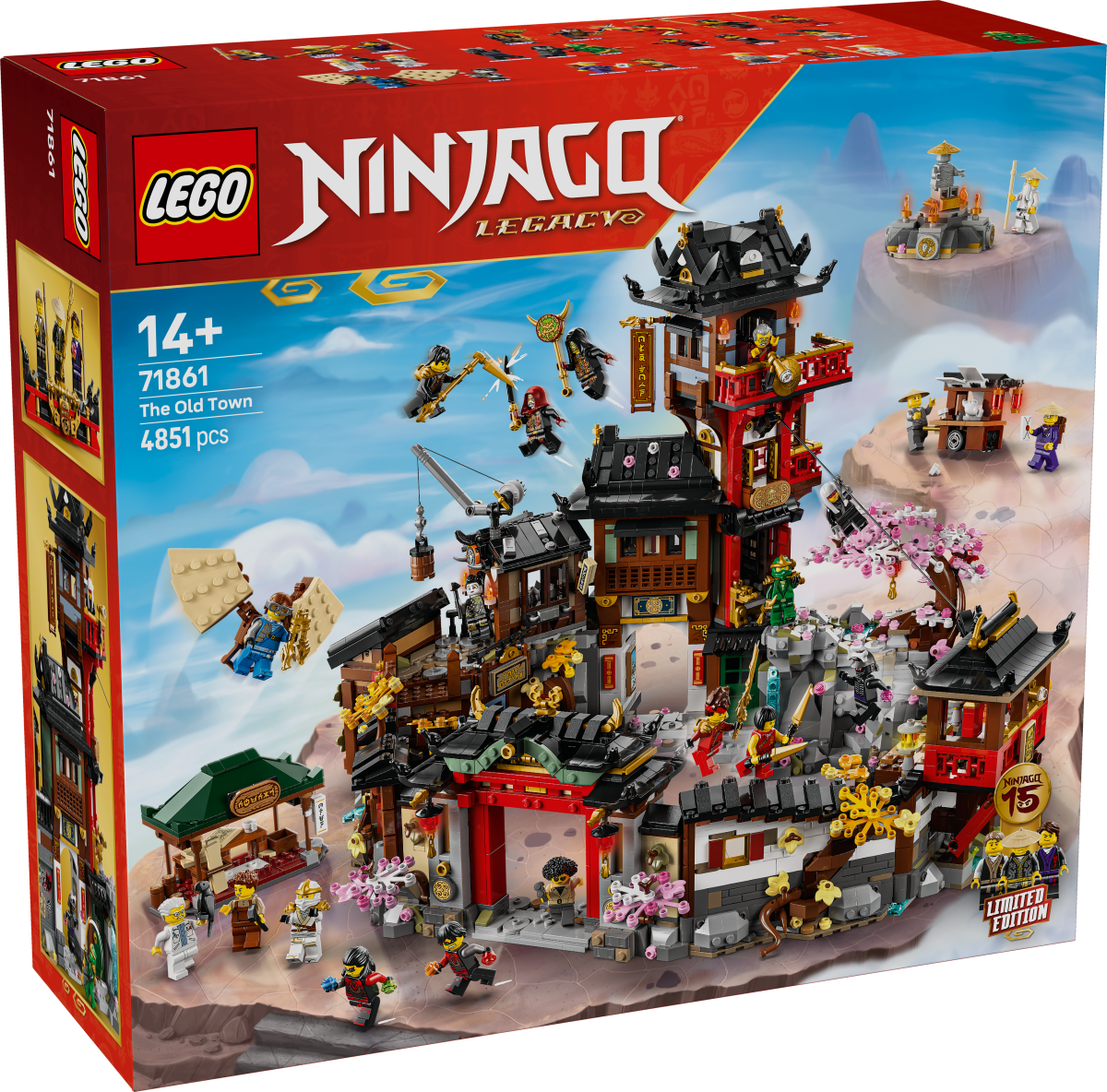
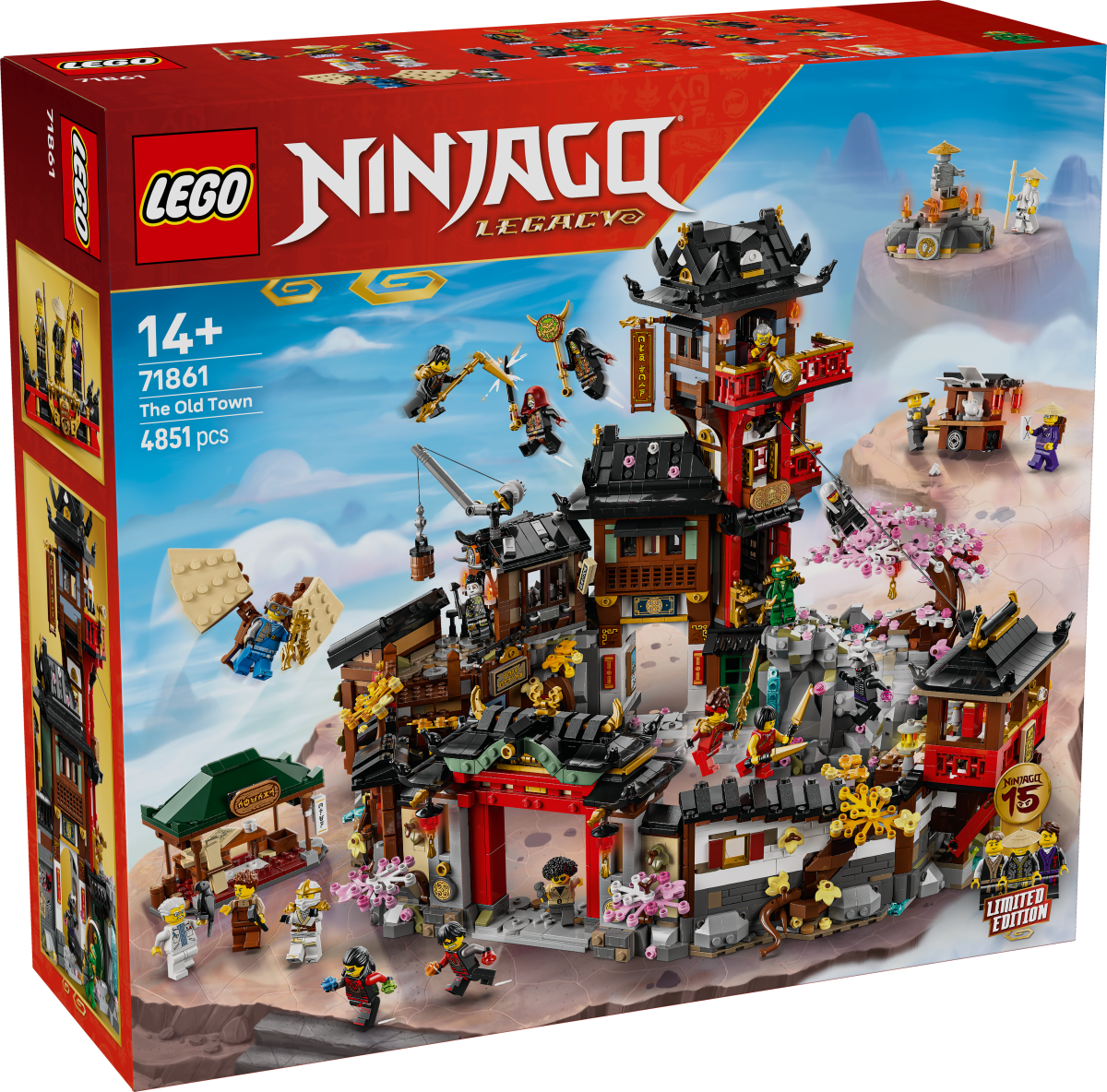
Let’s start with the box. The first thing I noticed was that this set is branded under Ninjago Legacy. This was the same branding used for the 10th Anniversary sets made in 2021. It seems the Ninjago team is bringing it back for the 15th anniversary as well, to set it apart and make it easier for fans, new and old, to distinguish what this set represents. As stated by the Ninjago team during the 2025 Fan Media days, this year’s Legacy sets represent and honor the past, Dragons Rising represents the present, and the Ninjago Legends sets from 2025 represent the future of Ninjago.
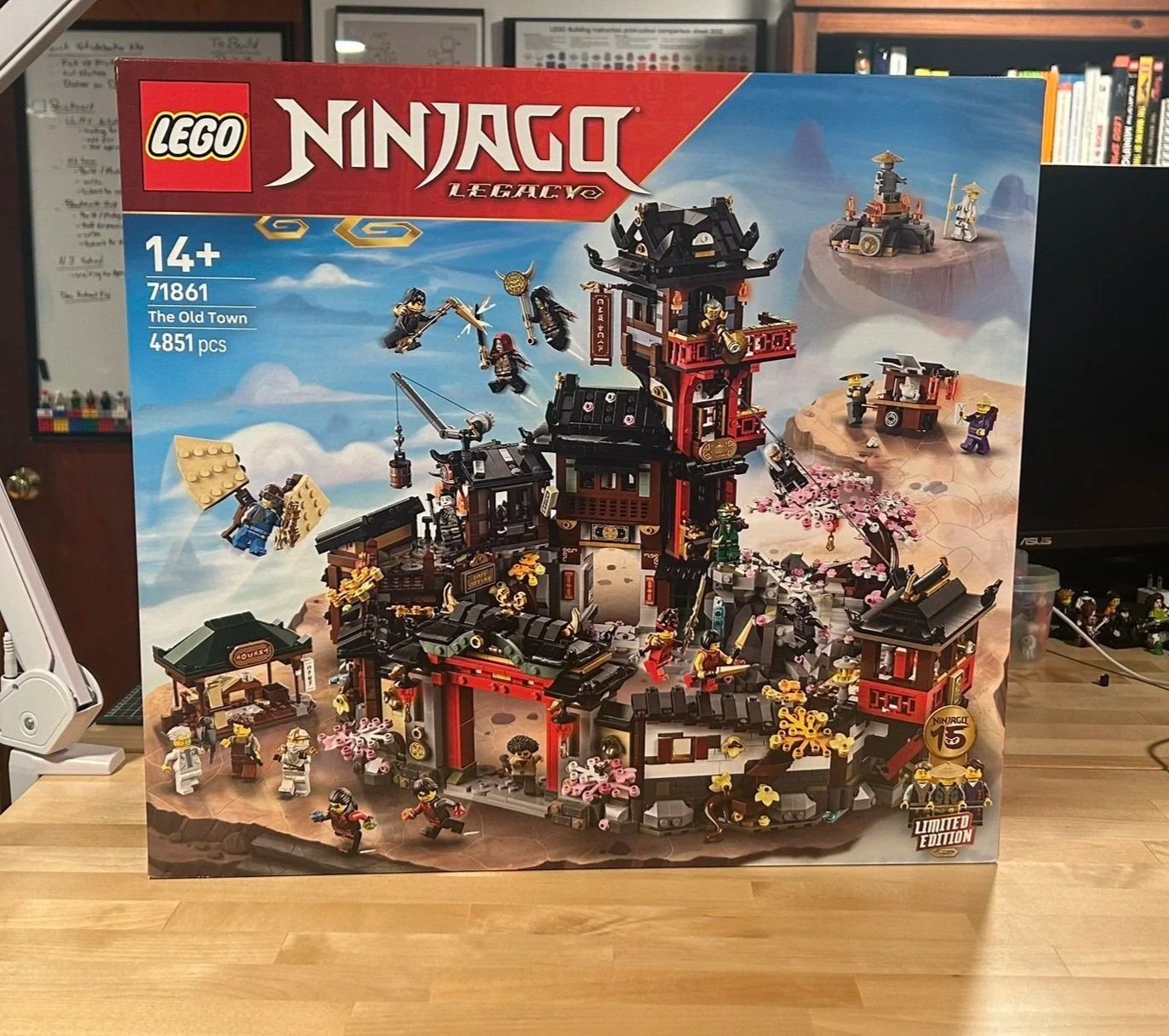
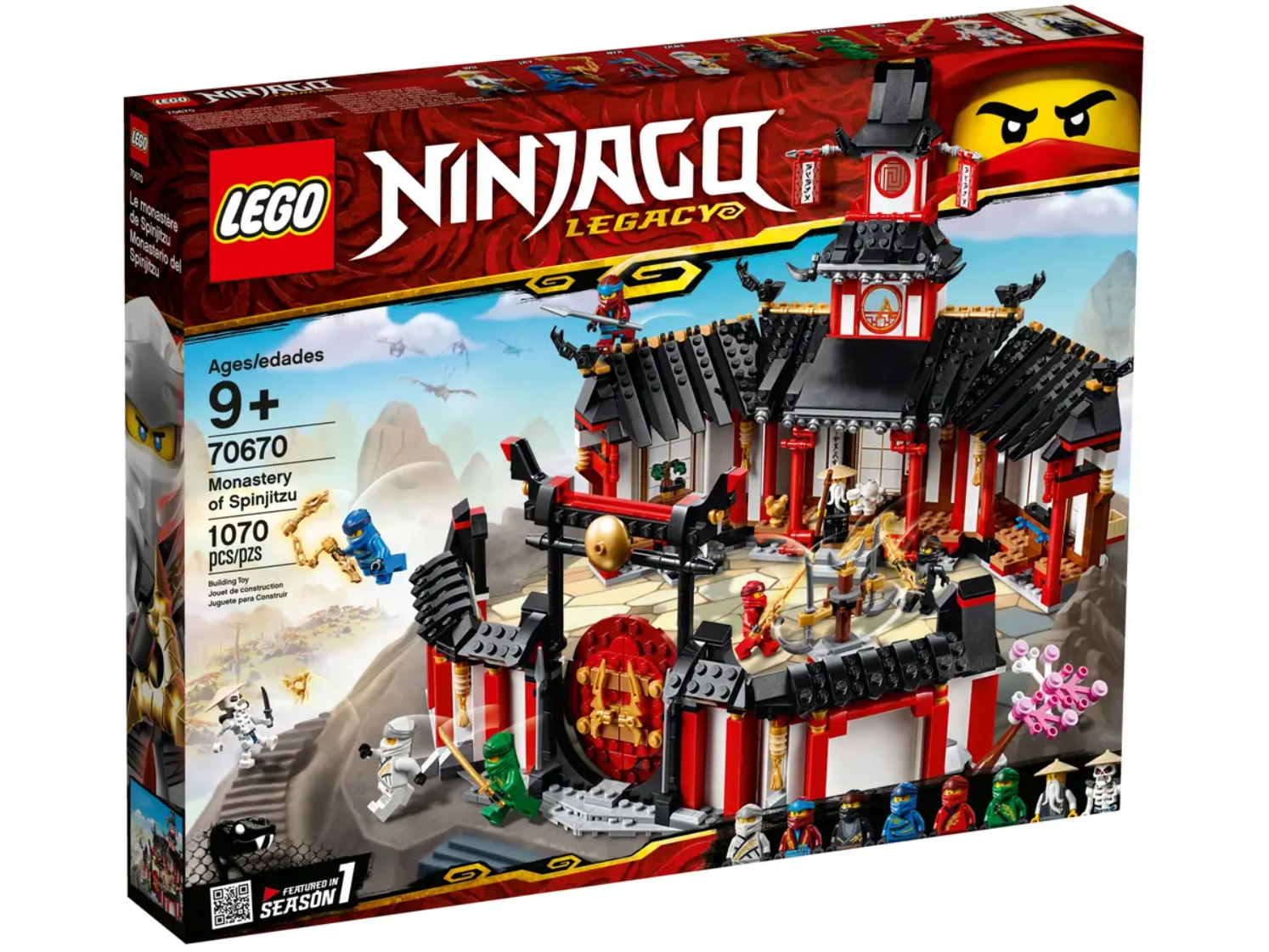
Looking more closely at the box, the positioning of The Old Town set on the box reminded me of another legacy set, 70670 The Monastery of Spinjitzu. What adds to this callback is that The Old Town looks like a “future” version of the original monastery—something that feels very intentional. The Old Town is an original design; the Legacy sets are typically updated versions of old Ninjago sets or based on something from a previous season that never got made into a set (for example, 71742 Overlord Dragon, from Season 2, Rise of the Green Ninja).
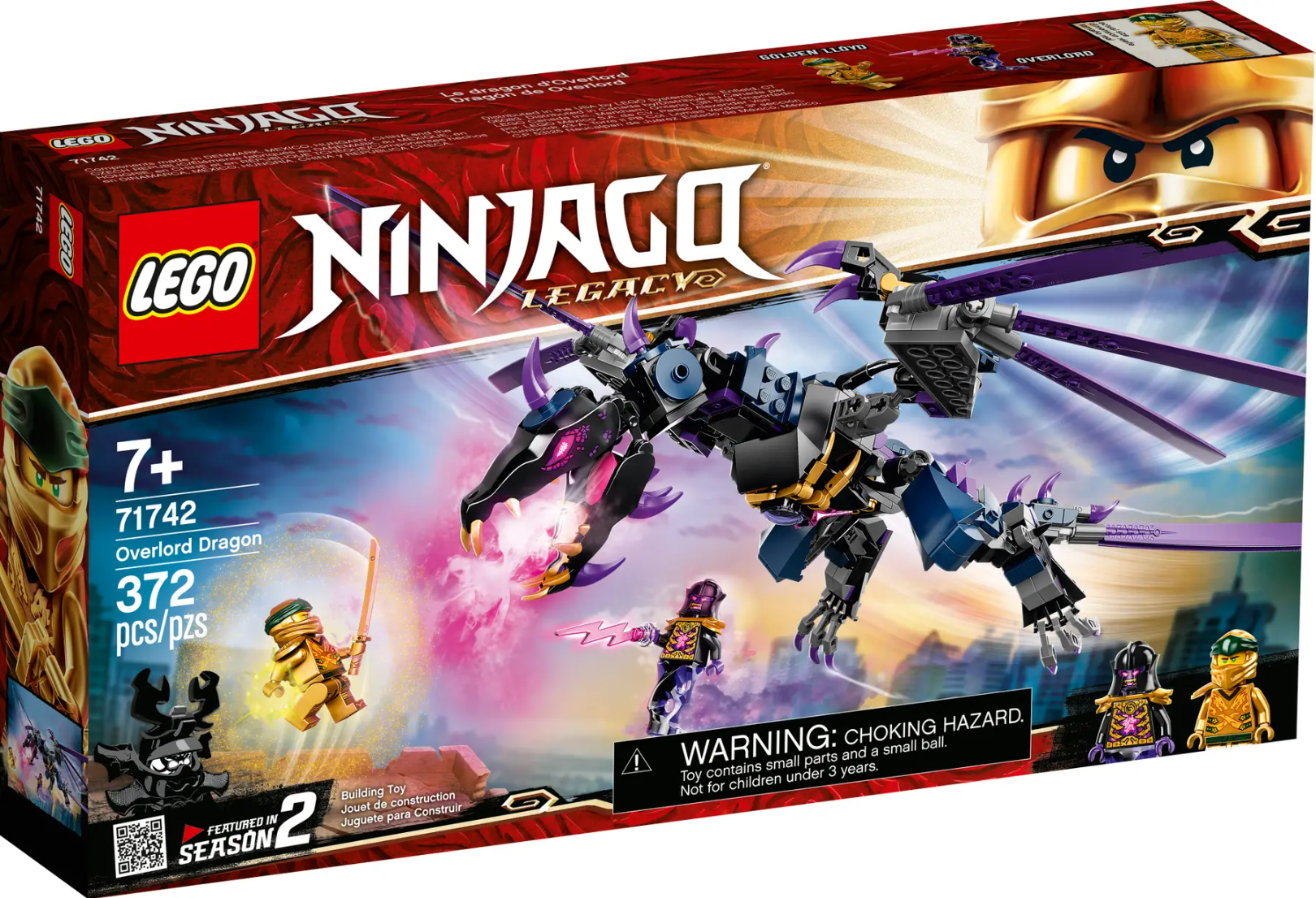
The Old Town doesn’t fit in either of these categories. Leading to my theory is that The Old Town is a new location that will be seen in the upcoming Season 4 of Ninjago: Dragons Rising. That season will introduce the concept of multiple monasteries across the world of Ninjago that the ninja can use as bases and travel between, like waypoints in a video game. This is the first time we have gotten one of these alternate monasteries as a set, and based on this alone, The Old Town really stands out in creating a distinct and unique look that captures the feel of the original—but it expands upon it and creates something unique not only in design but in building experience as well.
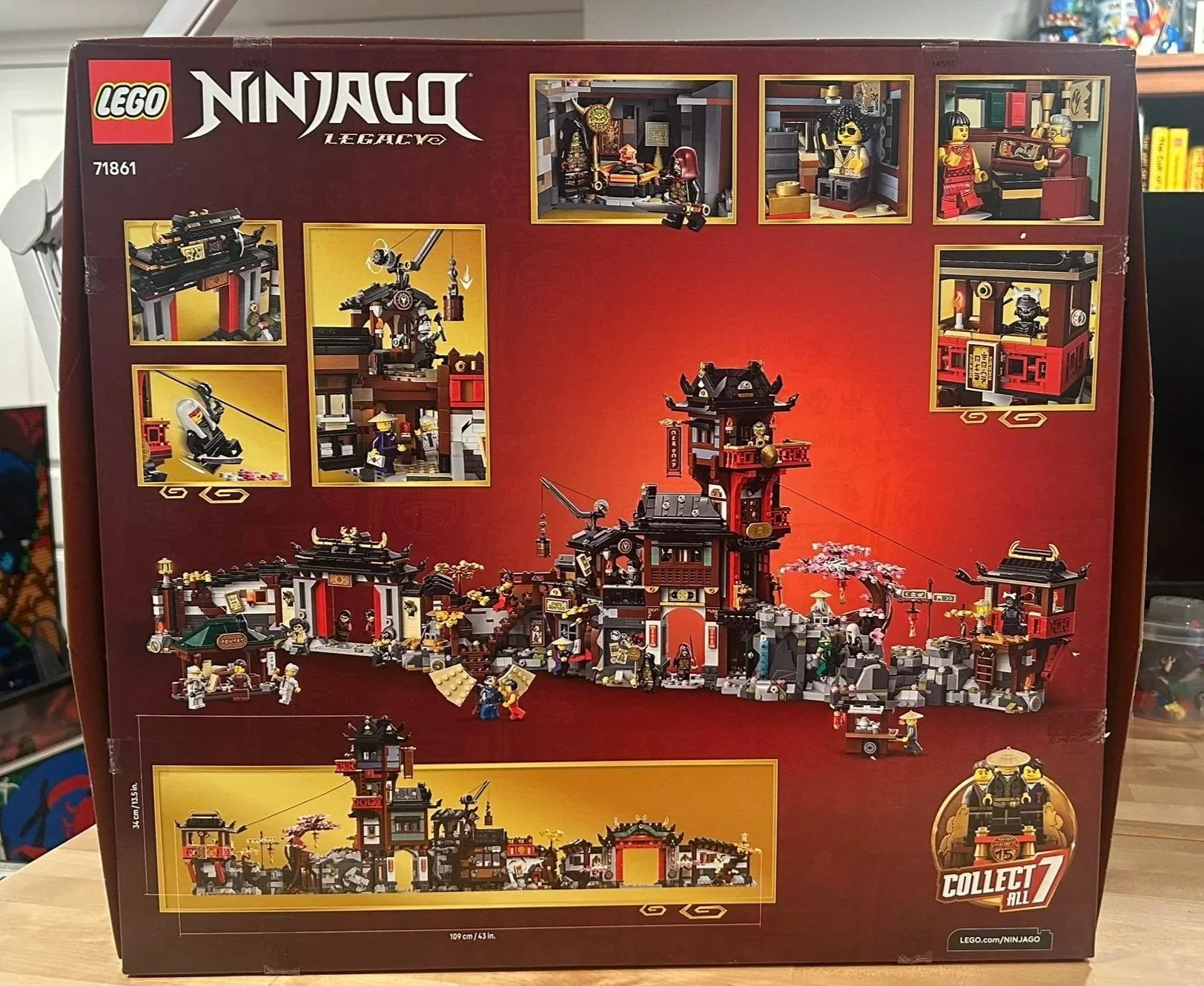
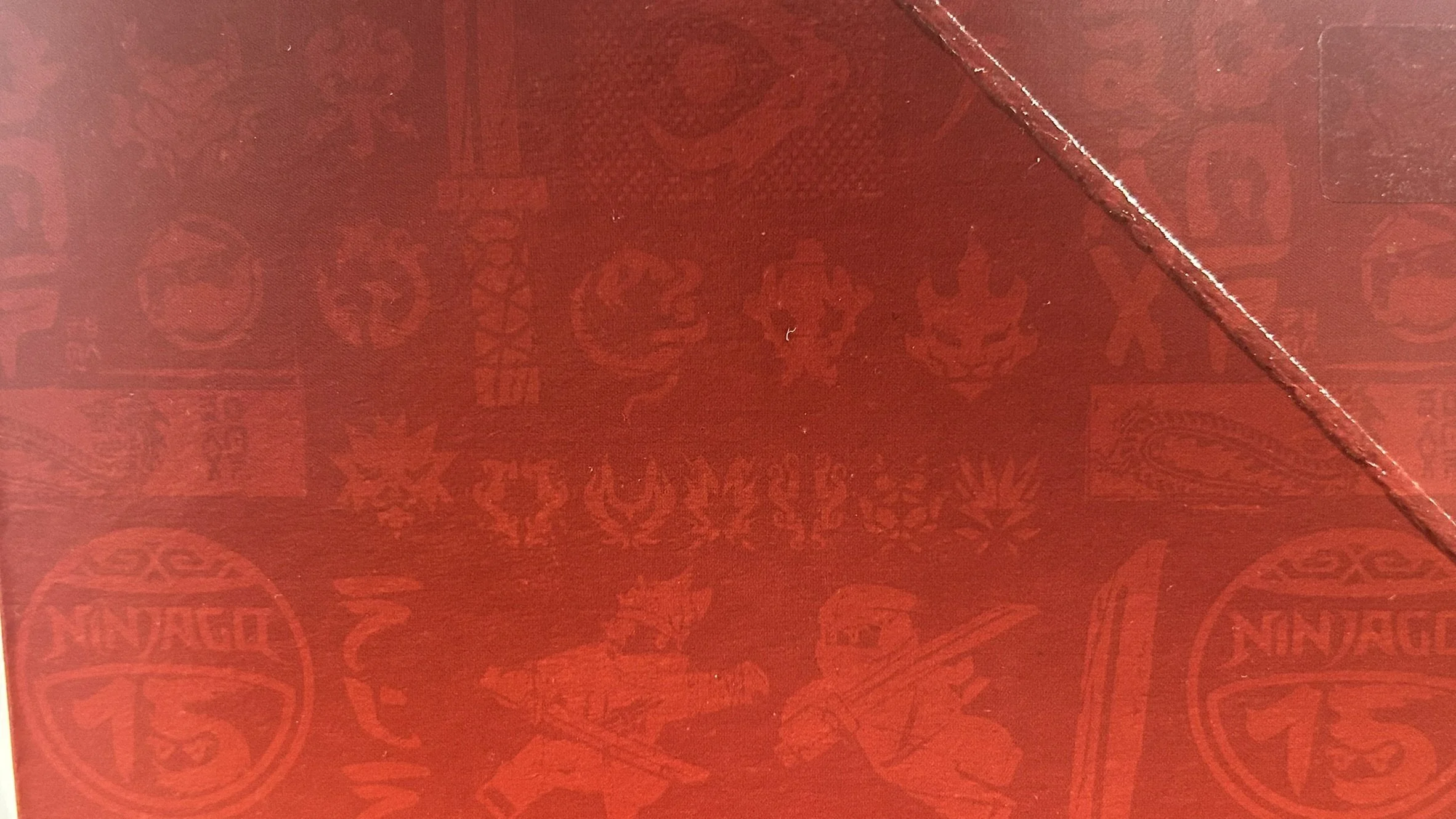
On the sides of the box, there are many call-outs to the past and present of Ninjago. Along the side, you’ll find some of the symbols and emblems that have been used to represent the Ninja and other aspects of Ninjago’s history. A small but fun addition to this set, even the packaging celebrates the history of Ninjago.
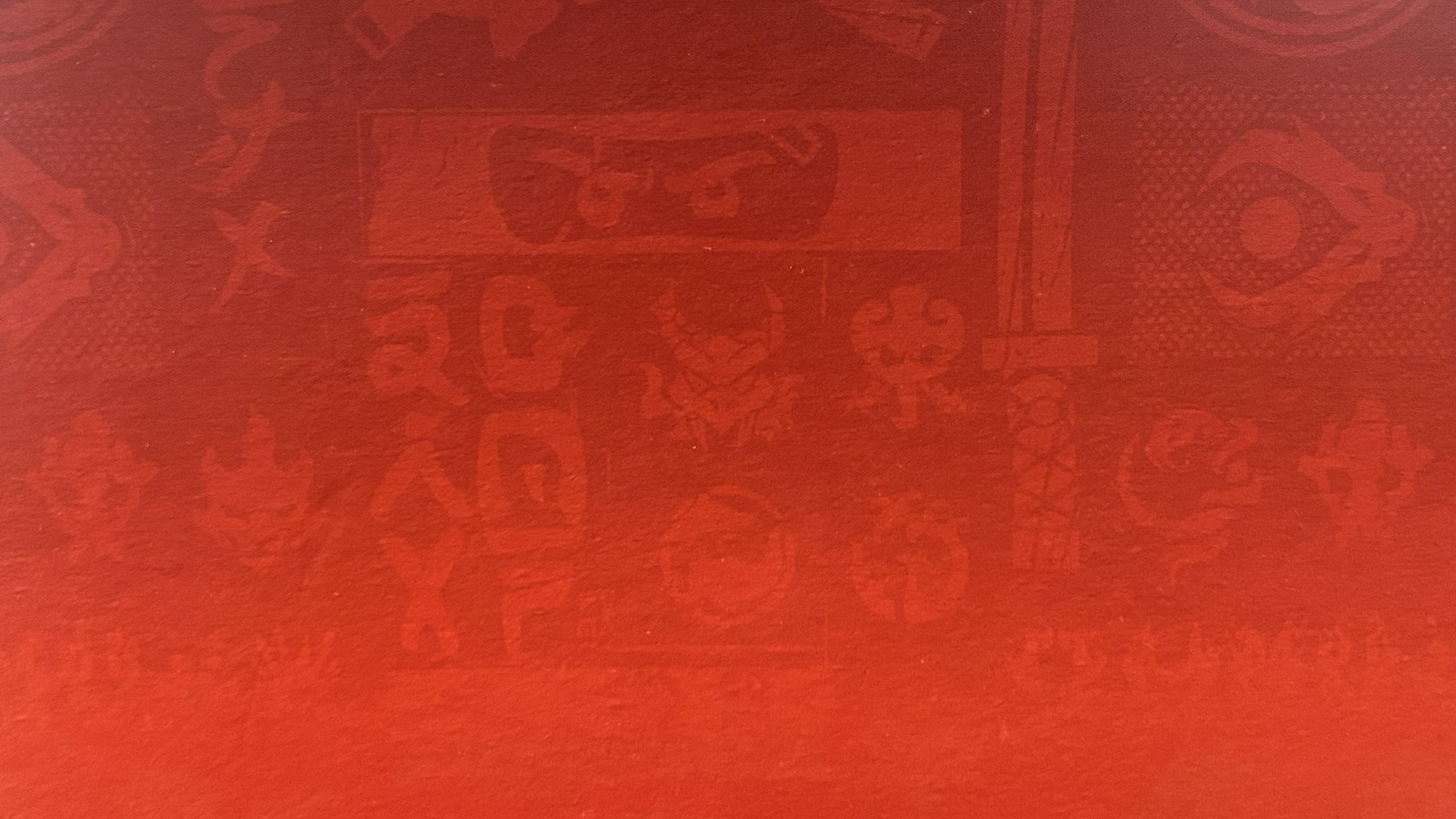
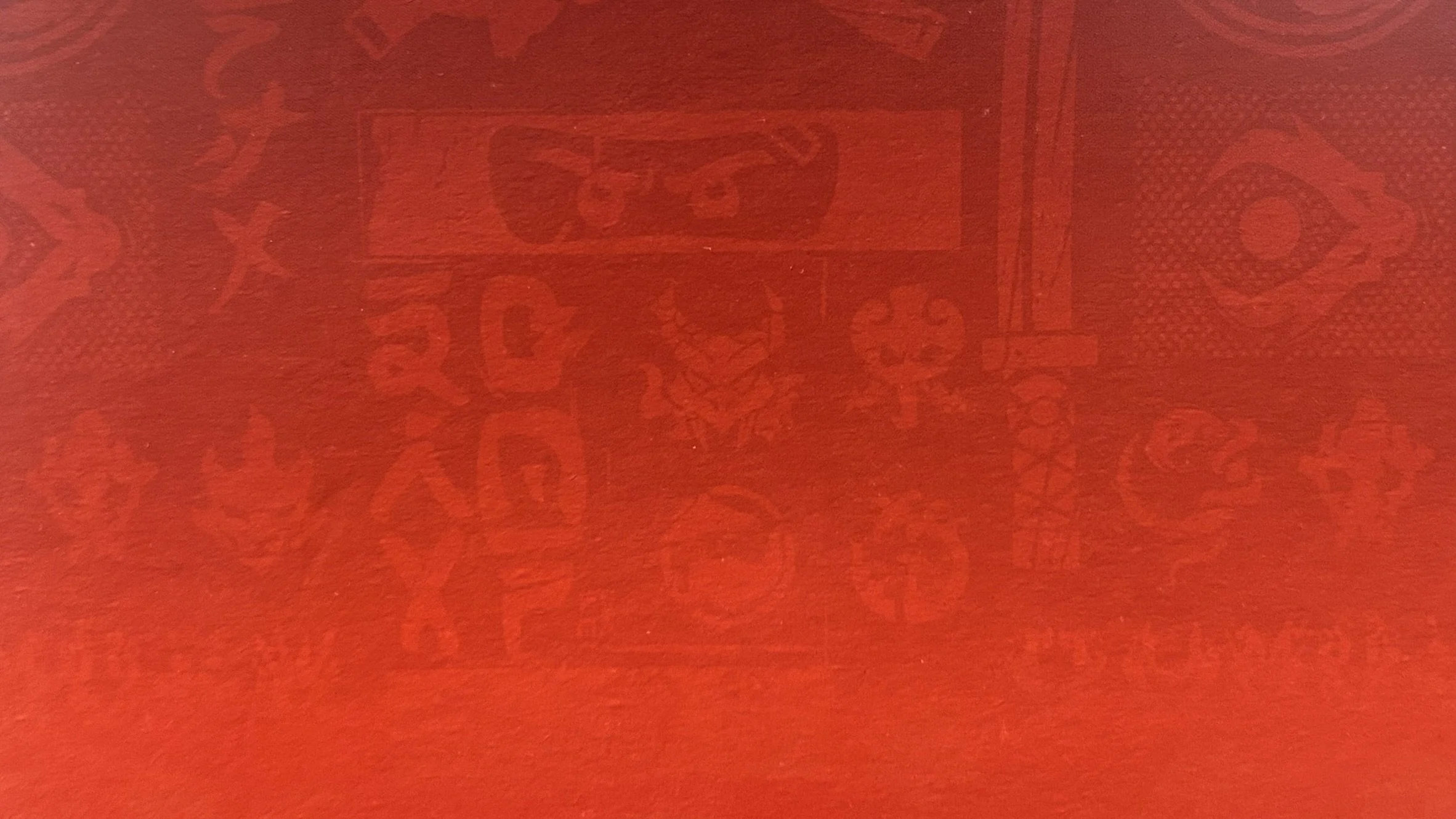
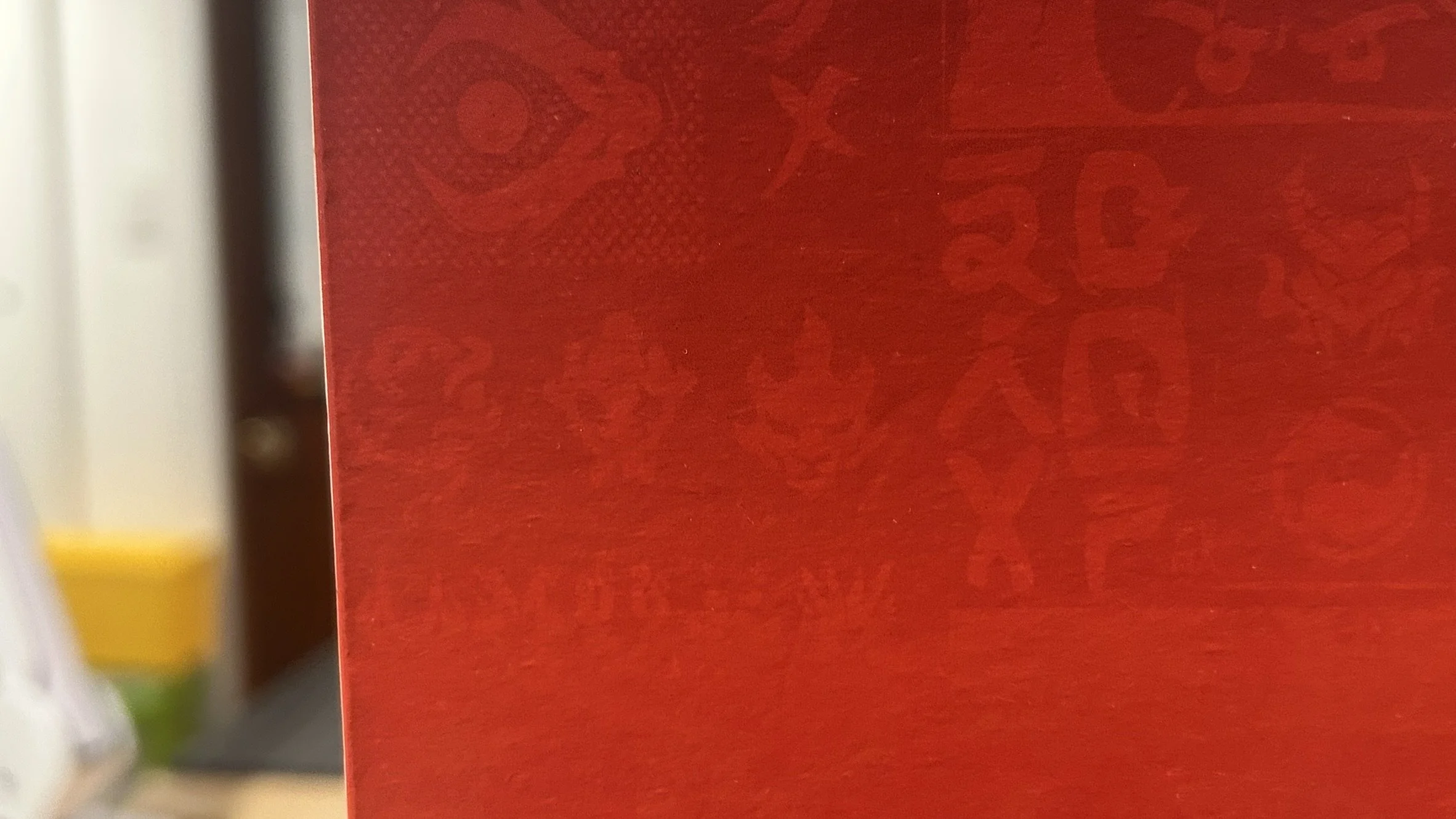
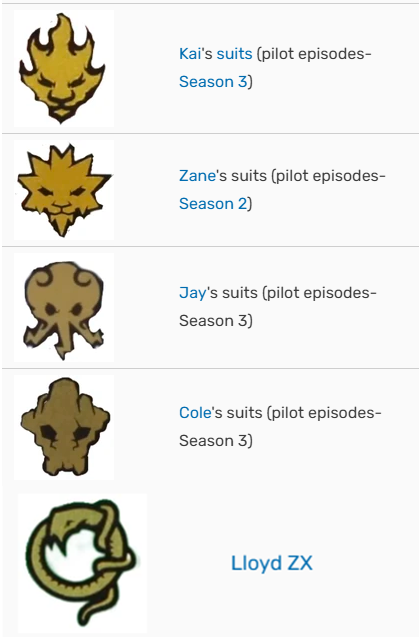
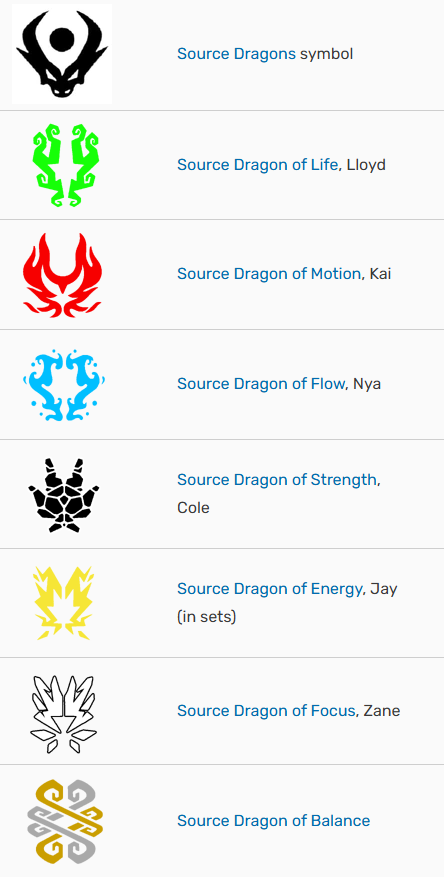
Symbol images via The Ninjago Wiki.
Characters Long Desired and Returning Friends
Let’s move on to one of the most exciting aspects of The Old Town: the minifigures! The Ninjago story comes with a large cast of characters. Of course, you have the original six ninja: Lloyd, Kai, Cole, Nya, Zane, and Jay. And with them, we get many long-desired, fan-favorite characters such as Dr. Julian, Harumi, Faith, the Time Twins, and three very special anniversary figures: young Wu and Garmadon, and their father, The First Spinjitzu Master.
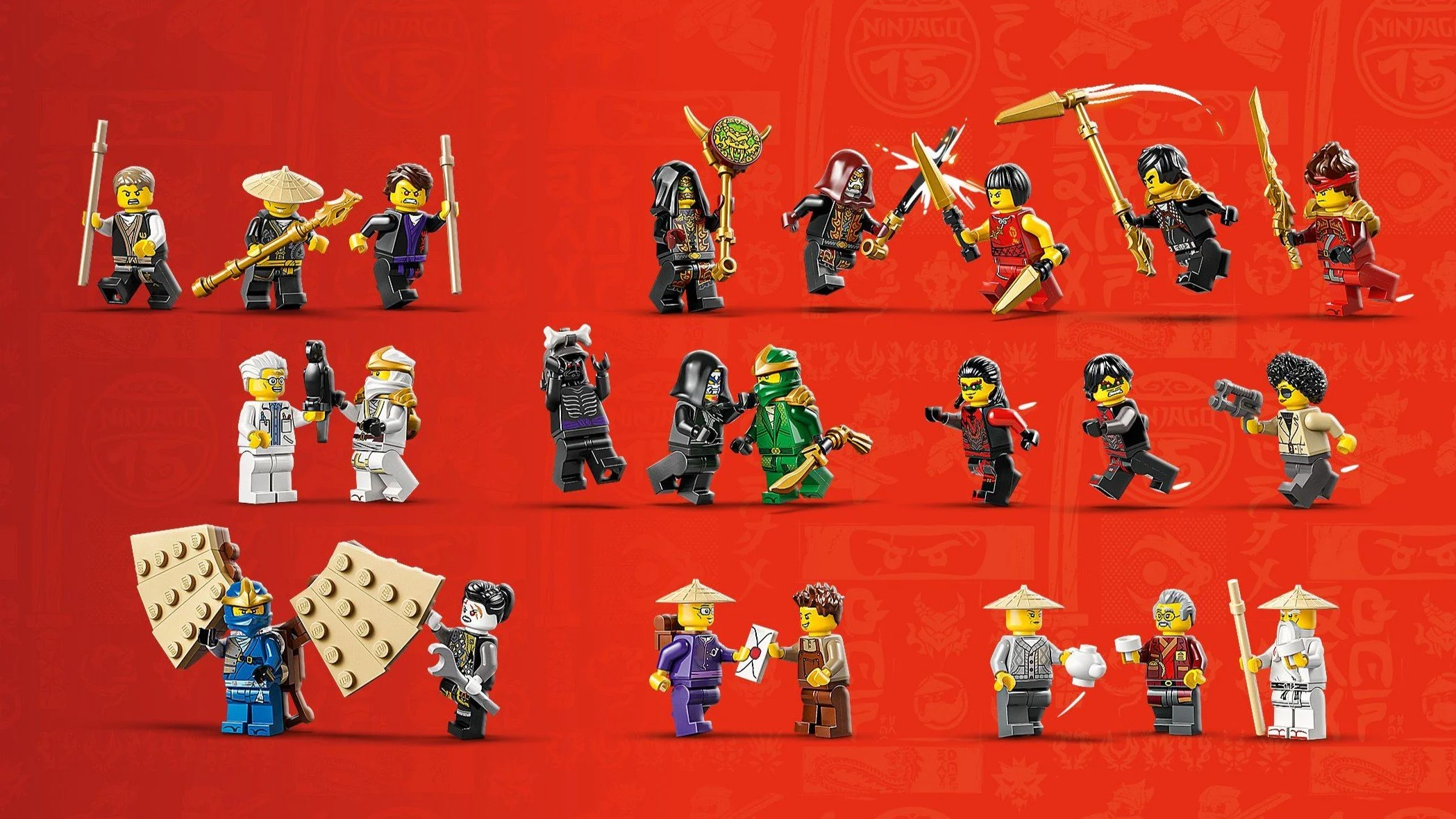
Most of the figures here feature new prints that closely match their original appearances in the series. One standout for me is Dr. Julian, first seen in a season one flashback in 2012 as Zane’s creator—and effectively his father. I’ve wanted him as a physical minifigure for years, so finally getting him here is hugely satisfying.
Harumi returns in a new outfit based on her appearance in season 15, Crystallized, while Faith also makes her return with her true face and hair, as seen in season 9, Hunted. Previously, she had only been released in her disguise under the name Heavy Metal. Krux and Acronx, the Time Twins, appear again as well, having previously been limited to a single set—70626 Dawn of Iron Doom—and now fetching steep prices on BrickLink. Their inclusion here offers a much more accessible way to get them, with the added bonus of Krux appearing for the first time in his older disguise as Dr. Saunders.
The Mailman, a recurring gag character from Ninjago’s early years, also makes a welcome return after a long absence from sets. Mystake and the Administration Agent round out the lineup as long-requested new figures, each representing different eras of the story. While Mystake technically appeared before in 70657 Ninjago City Docks, that version bore little resemblance to her onscreen design—sharing only the name—so this feels like her true debut.
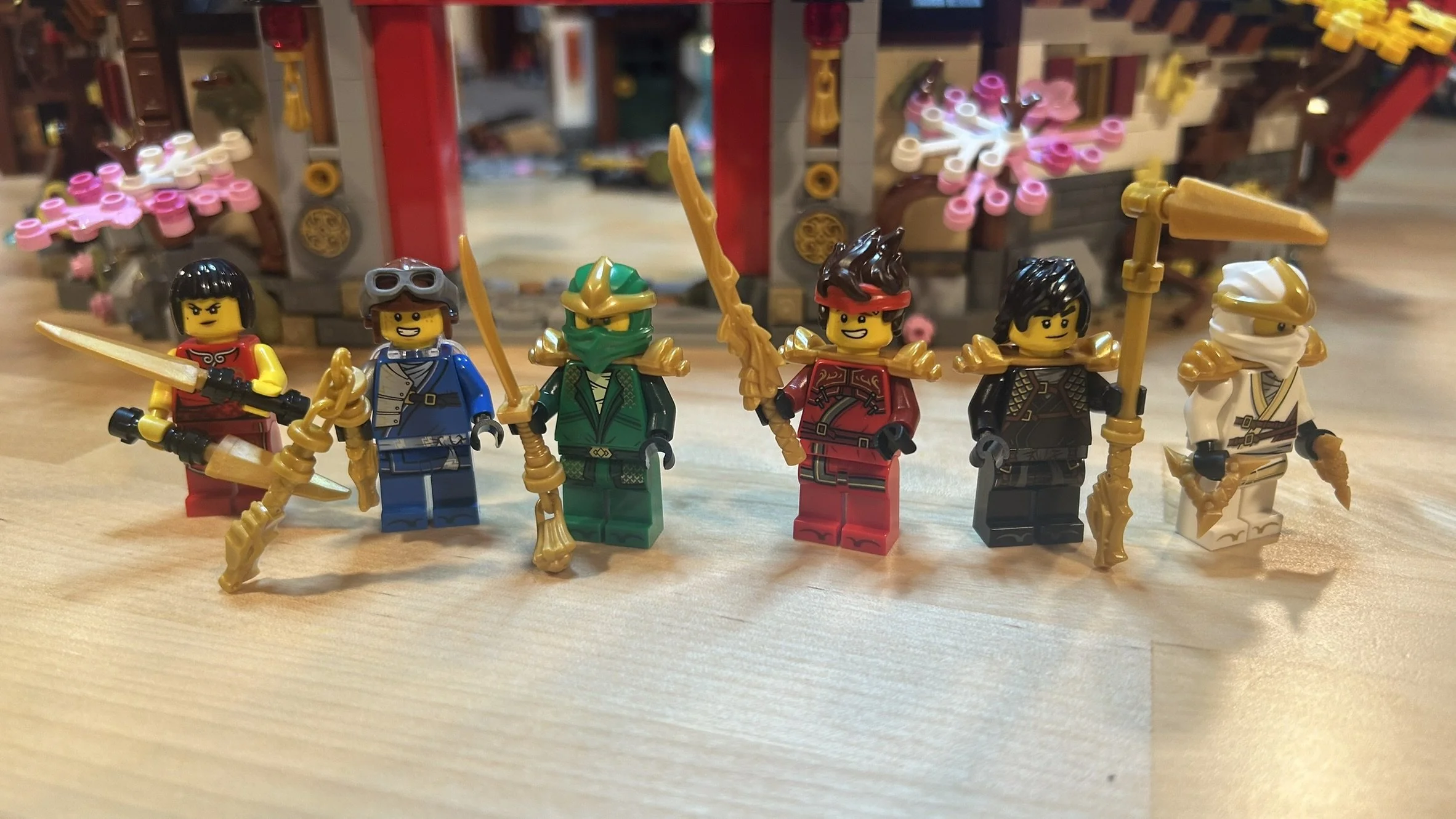
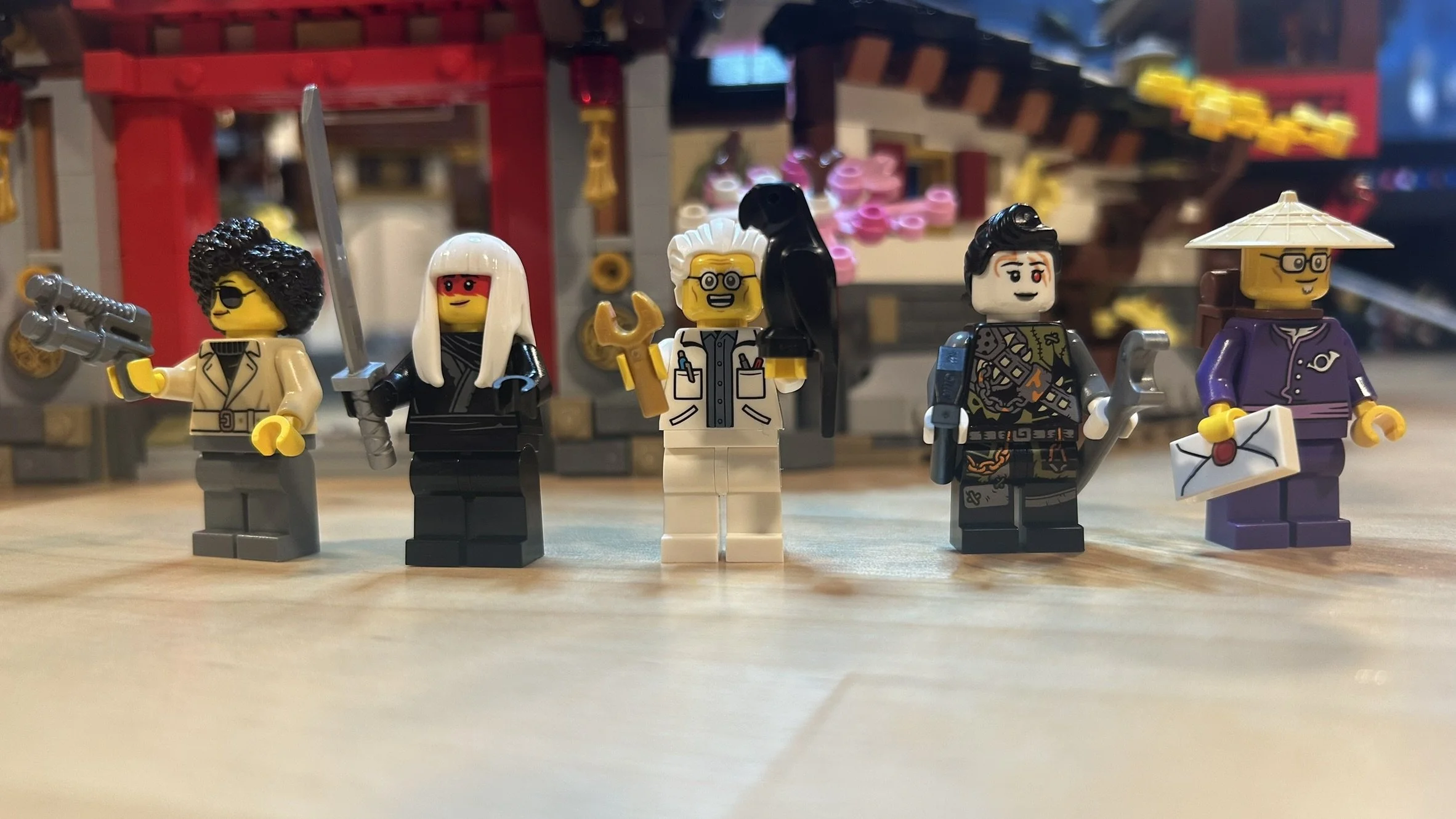
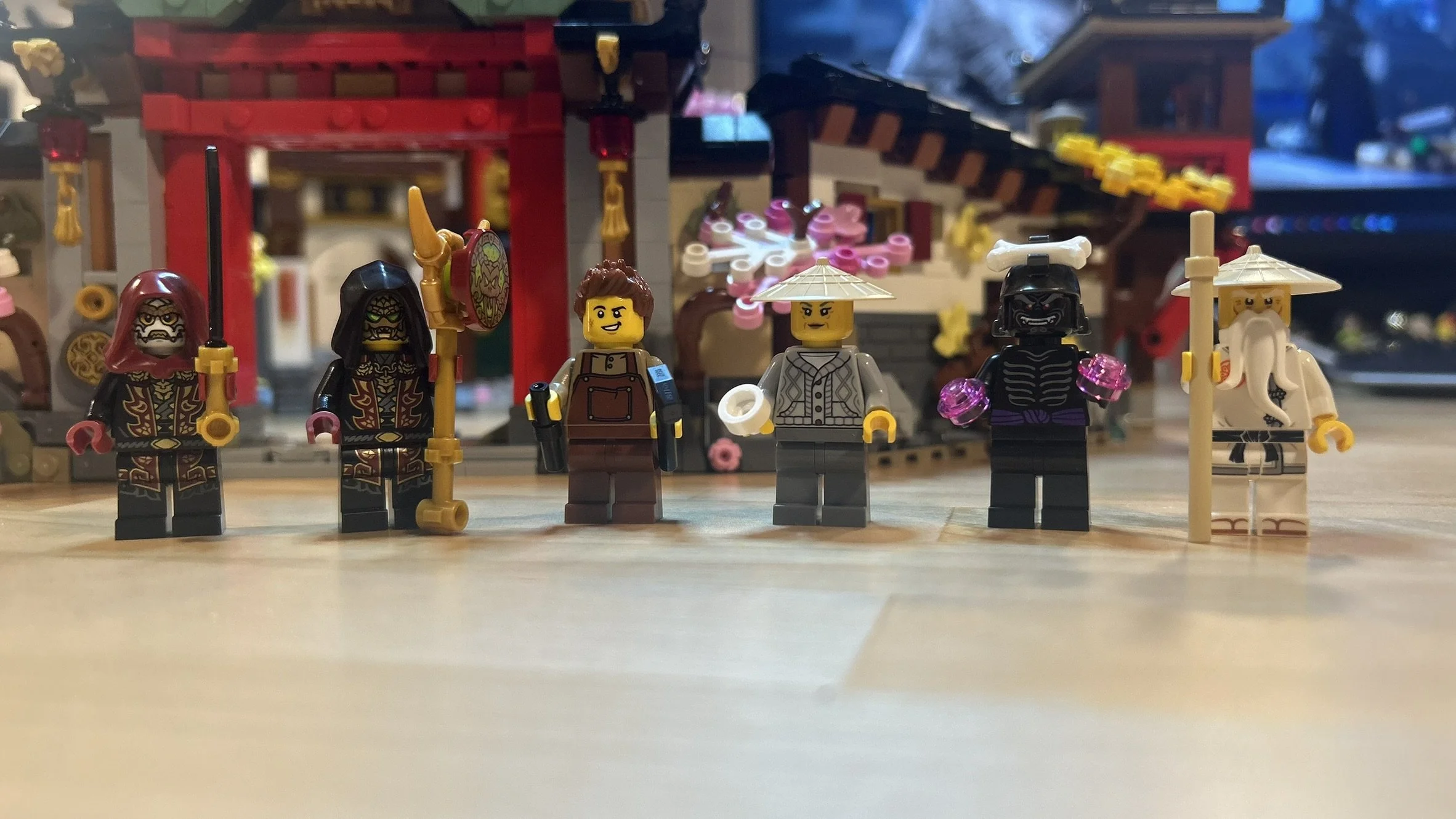
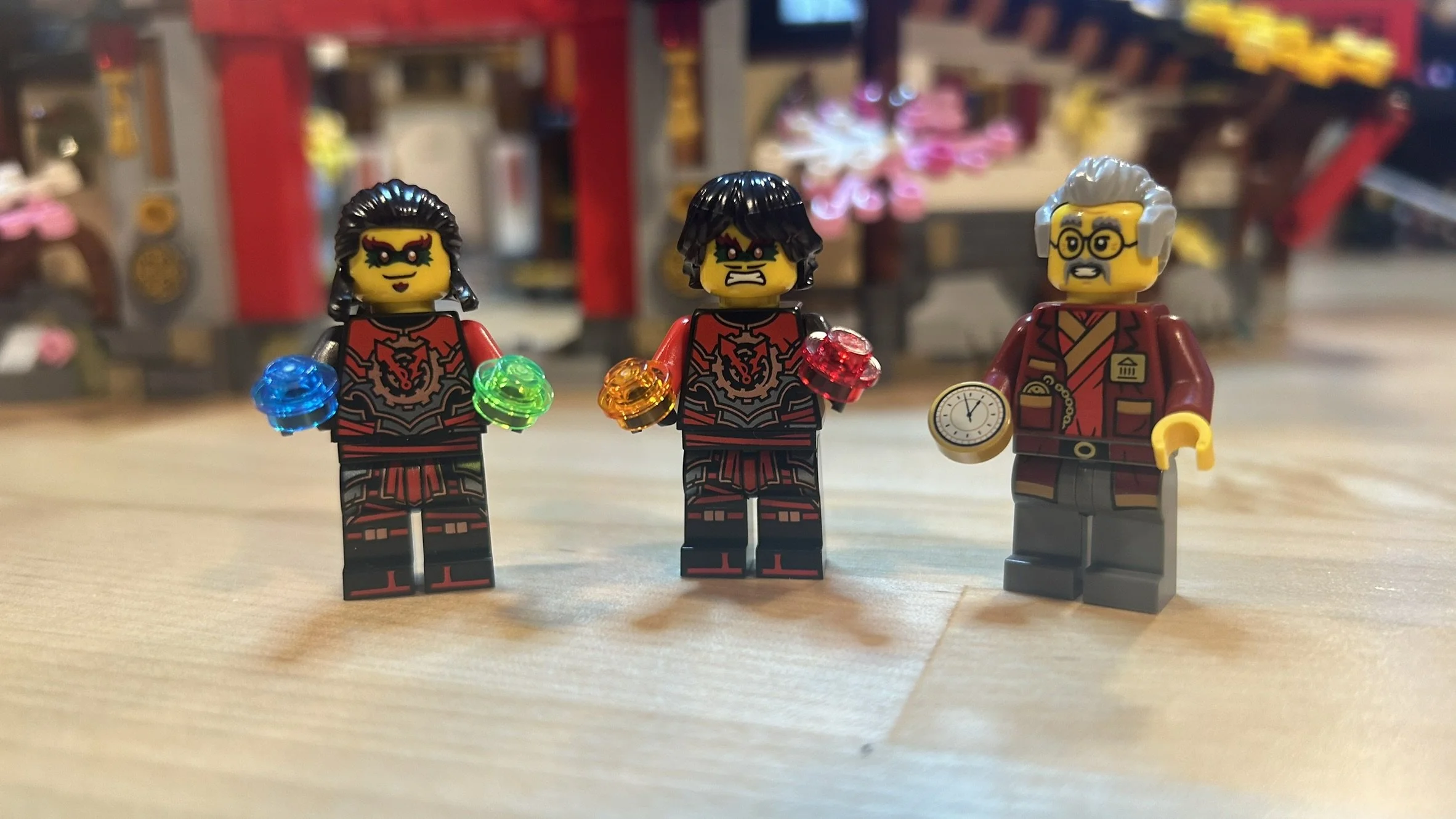
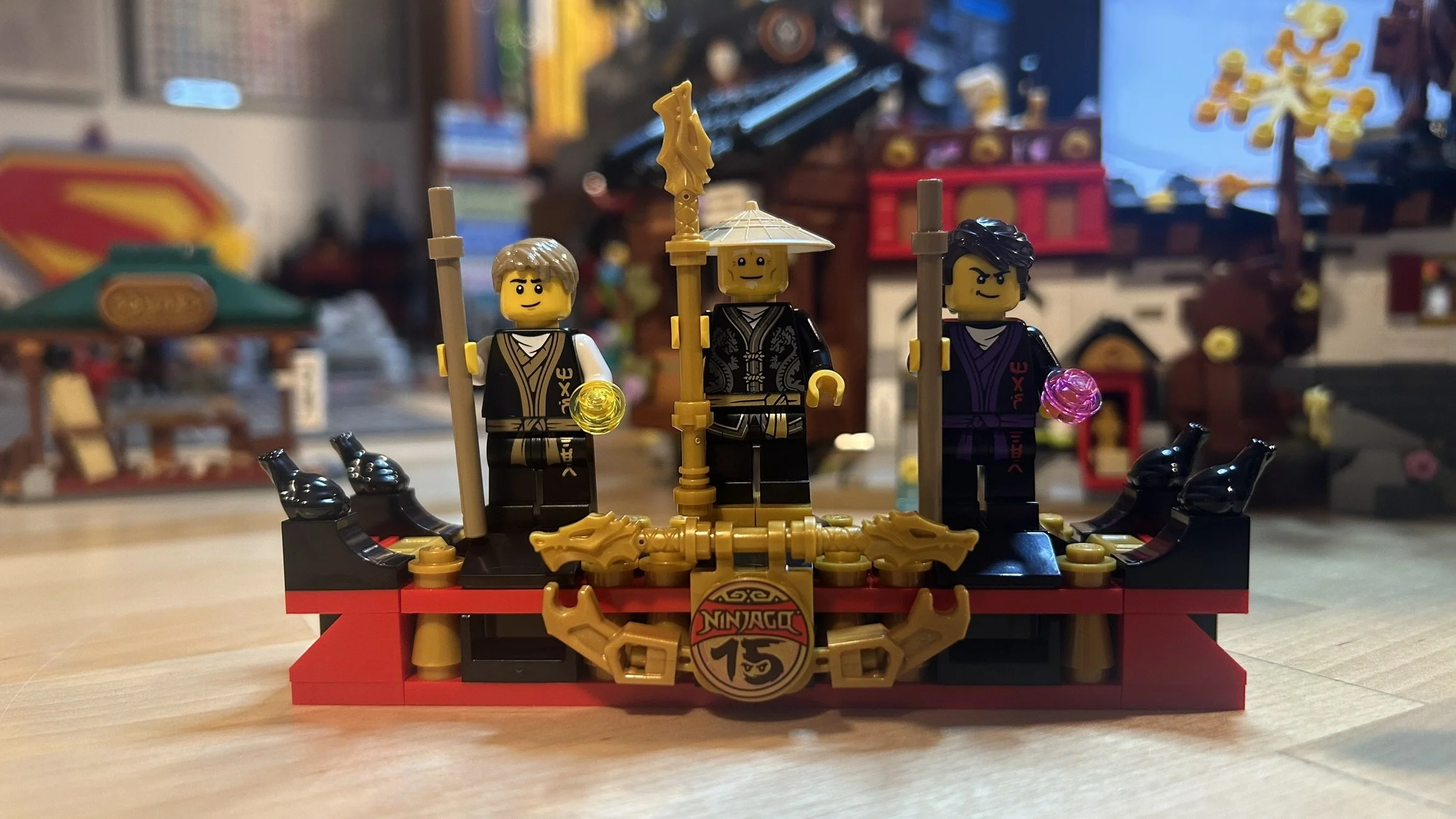
The most important minifigures in the set are the three special Legacy anniversary figures: Young Wu, Young Garmadon, and their father, the First Spinjitzu Master. Each Ninjago Legacy set released this year includes one of these commemorative figures, echoing the golden ninja sets from the 10th anniversary and the character celebrations from LEGO Star Wars’ 25th anniversary.
None of these figures have appeared in minifigure form before—and most have barely been seen animated—making their inclusion especially significant. The collection appears to represent the original elemental masters: the original Master of Earth who will appear in 71858 Four Weapons Blacksmith, Lightning in 71866 Ninja Character Display, and Ice in 71860 Lloyd’s Titan Mech. The packaging encourages fans to collect all seven, meaning there’s likely still one Legacy set yet to be revealed. I’m very curious to see who that final figure will be.
10 year old daniel is very excited.
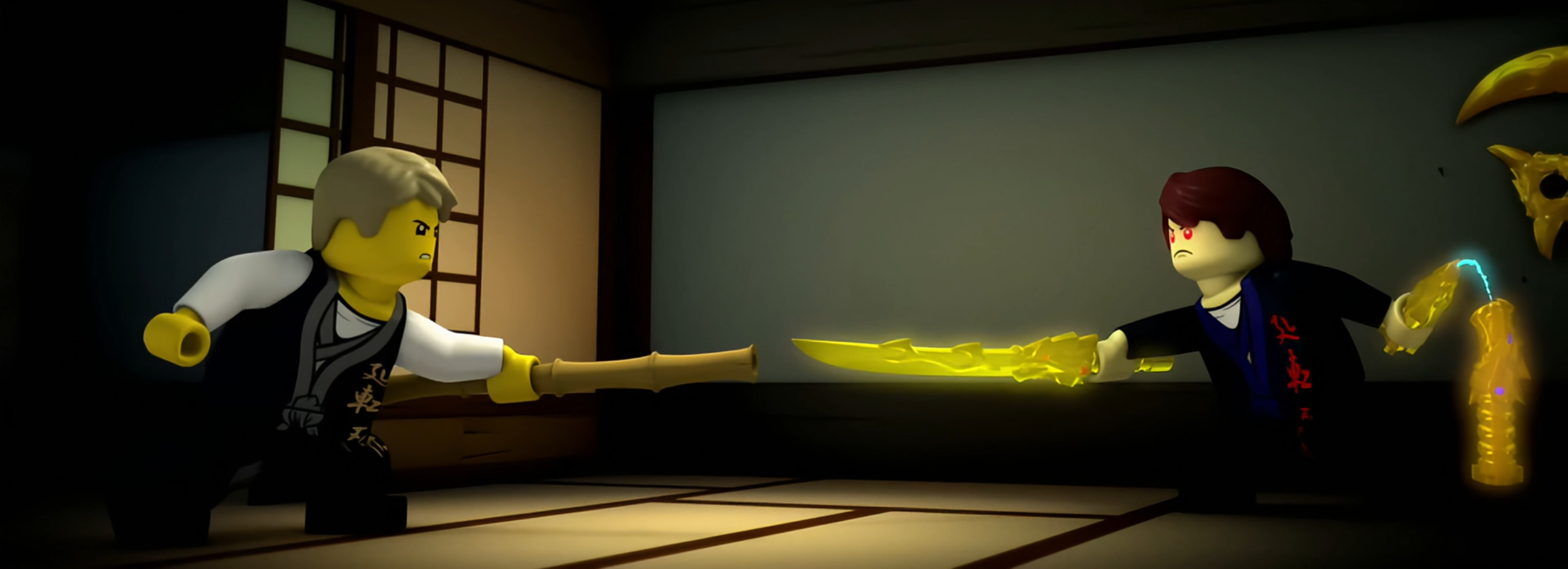
Young Wu, Young Garmadon, and the First Spinjitzu Master are minifigures I’ve been waiting for since the 2011 mini-episode where Wu banishes Garmadon to the Underworld. They’ve appeared frequently in flashbacks and books over the past 15 years, and for many fans, this feels long overdue. Simply put, LEGO nailed them.
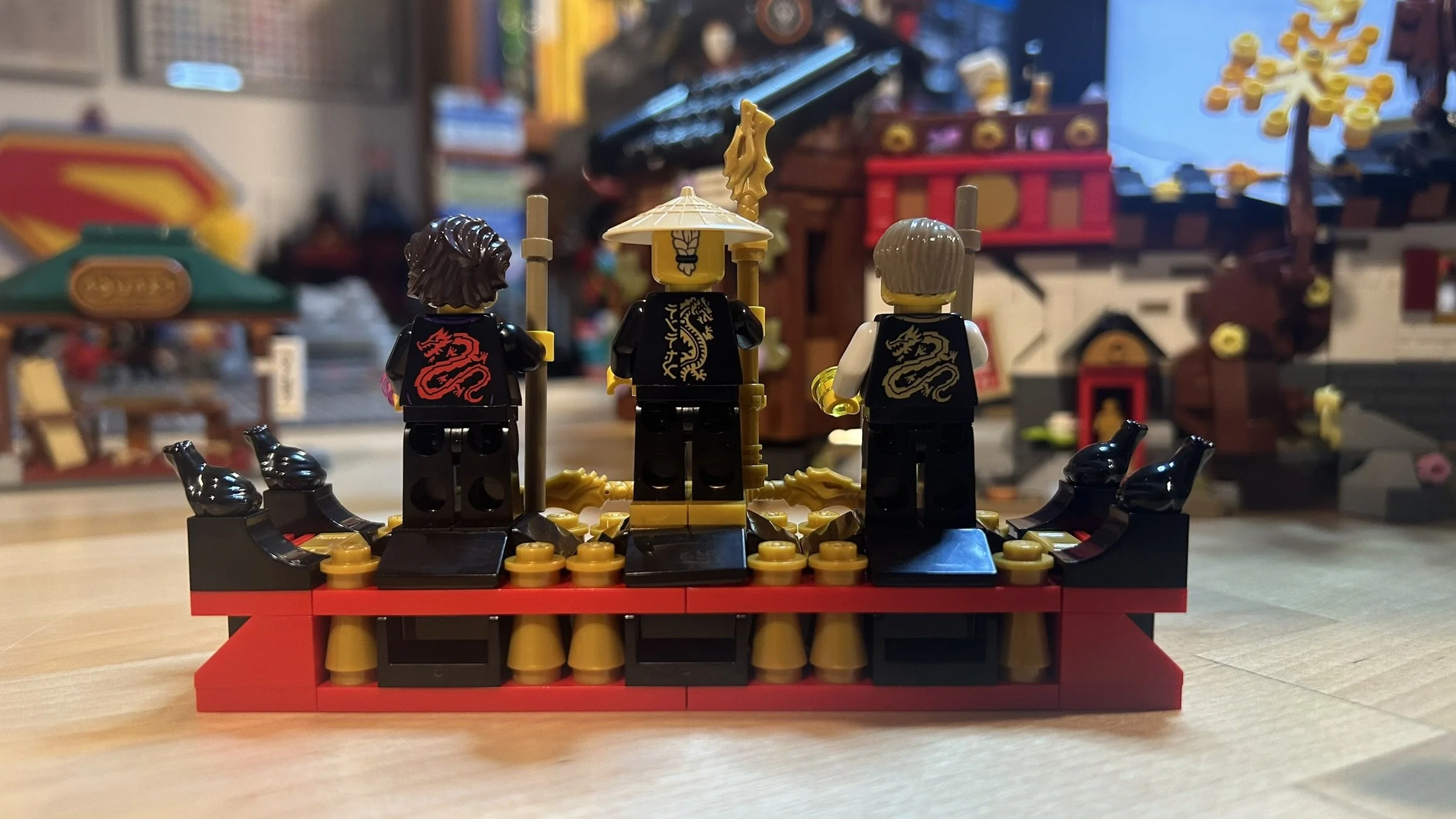
These figures aren’t exact replicas of their 2011 designs, but that’s to be expected. LEGO’s design language has evolved over the years, and the updates help them fit seamlessly alongside modern Ninjago minifigures—a change I welcome. Both Wu’s and Garmadon’s torsos feature the word “Master” written in Ninjargon, the stylized in-universe language/typeface introduced with The LEGO Ninjago Movie and now commonly used across the theme, much like Aurebesh in Star Wars.
Each figure holds a 1×1 stud representing their elemental power: Wu carries a trans-yellow stud for creation, while Garmadon holds a trans-pink stud for destruction. Completing the trio is the First Spinjitzu Master, one of the most significant and intriguing characters in Ninjago lore.
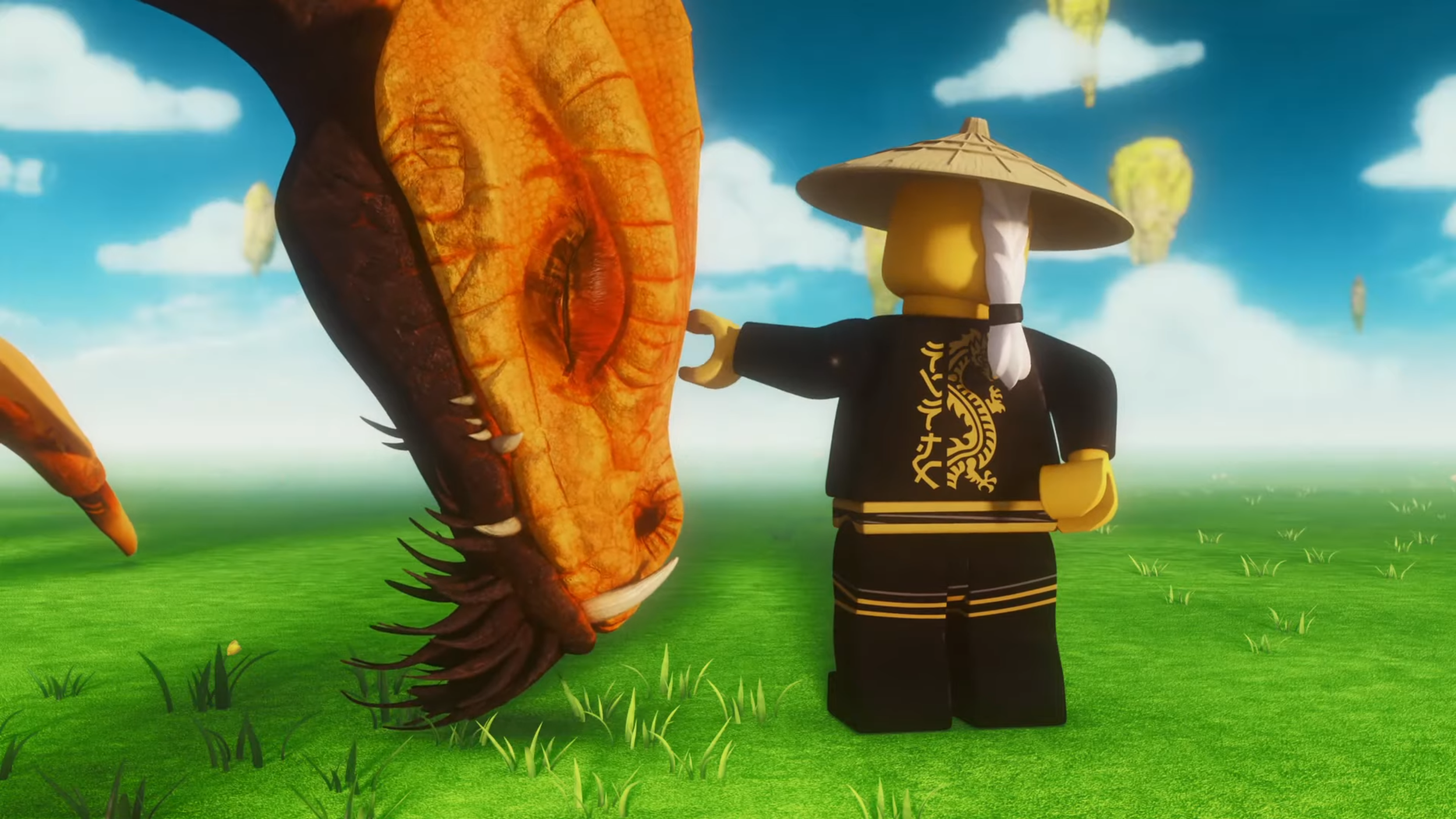
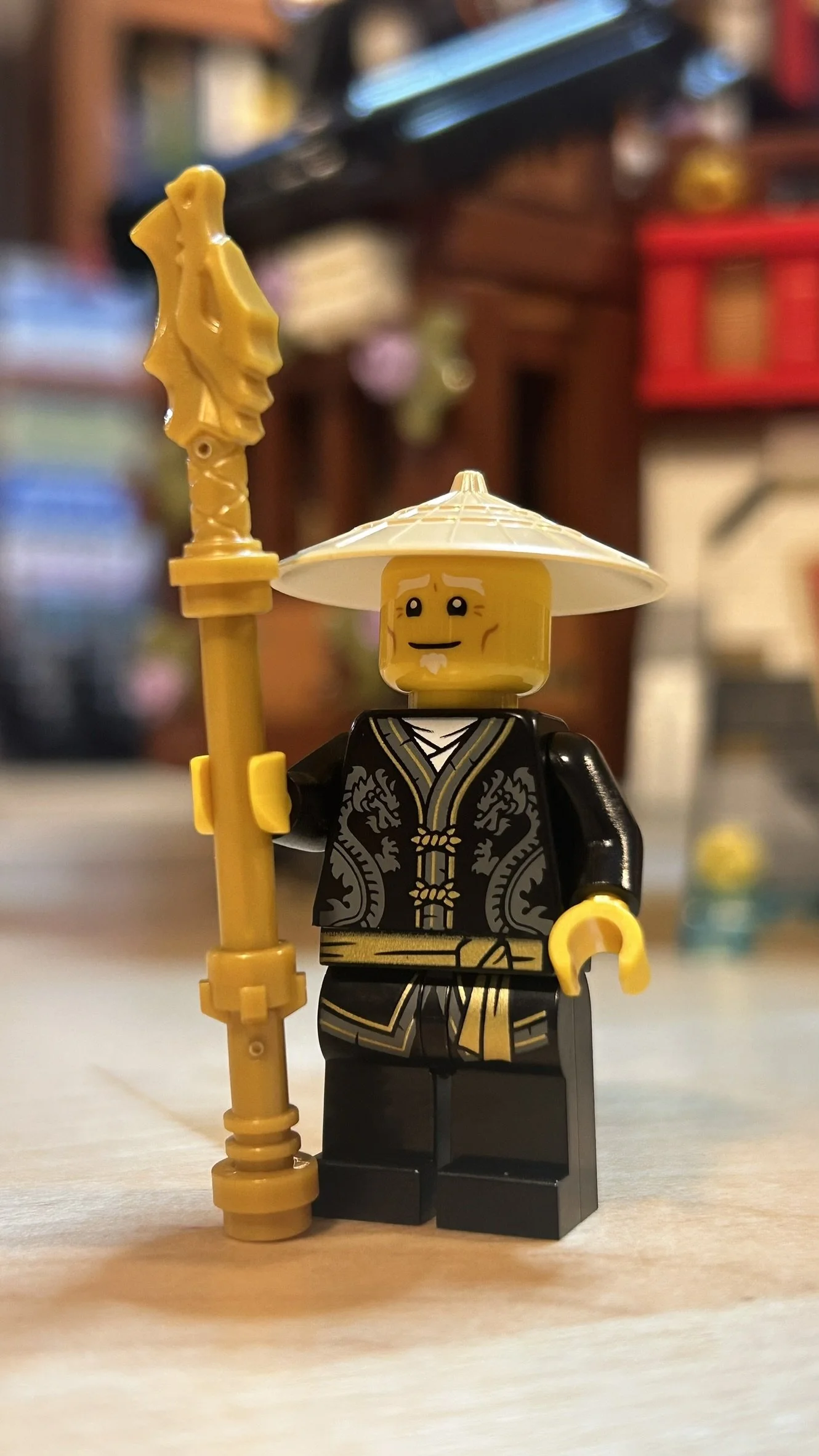
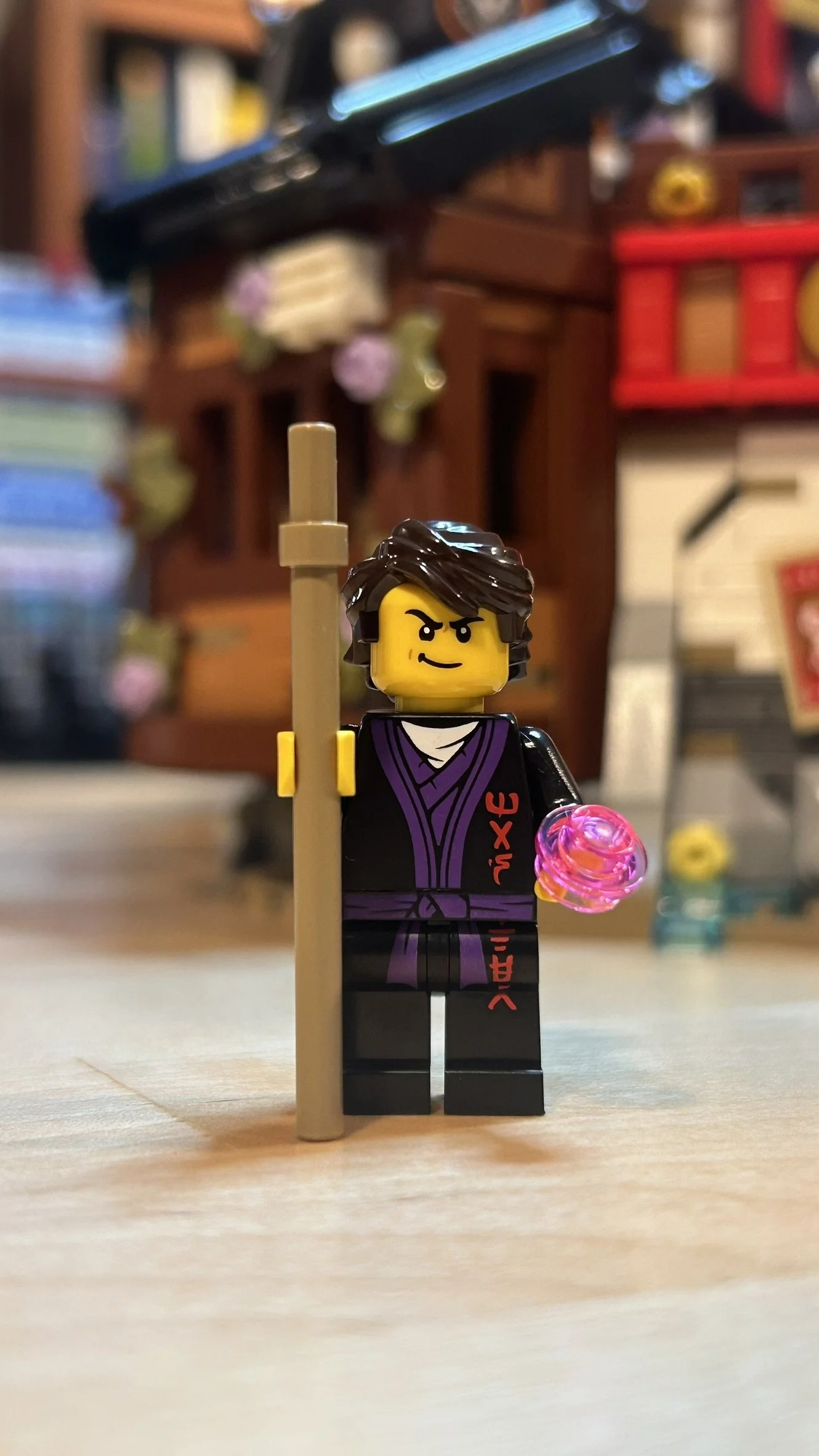
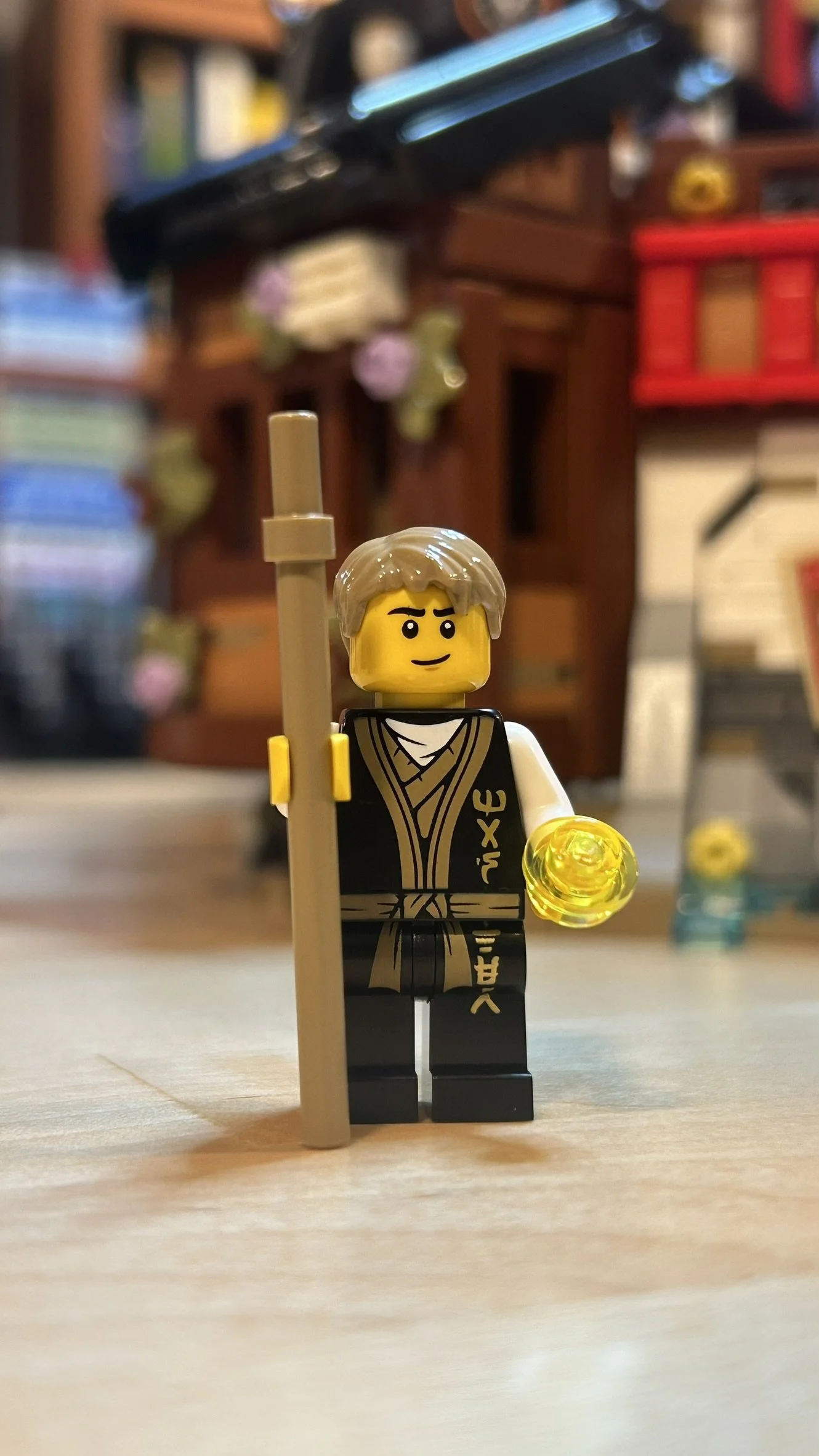
Essentially the creator deity of Ninjago, the First Spinjitzu Master left the realm of Oni and Dragons to form the world of Ninjago, harnessing its elements and passing them on to the original elemental masters to protect the realm from darkness. He is also the father of Wu and Garmadon and the creator of the Golden Weapons of Spinjitzu. Despite this importance, he has appeared only rarely—mostly in flashbacks and briefly in season 10, March of the Oni, when he offers Lloyd the choice to return home or pass on. Wild stuff for a kids’ series.
For 15 years, his face has remained hidden, always turned away or obscured—even on the box for this very set. Now we finally get to see it in minifigure form. While the face itself is fairly understated and clearly resembles Wu’s, fitting for father and son, it’s still satisfying to finally put a face to such a legendary character. The back of his torso translates simply to “Ninja.”
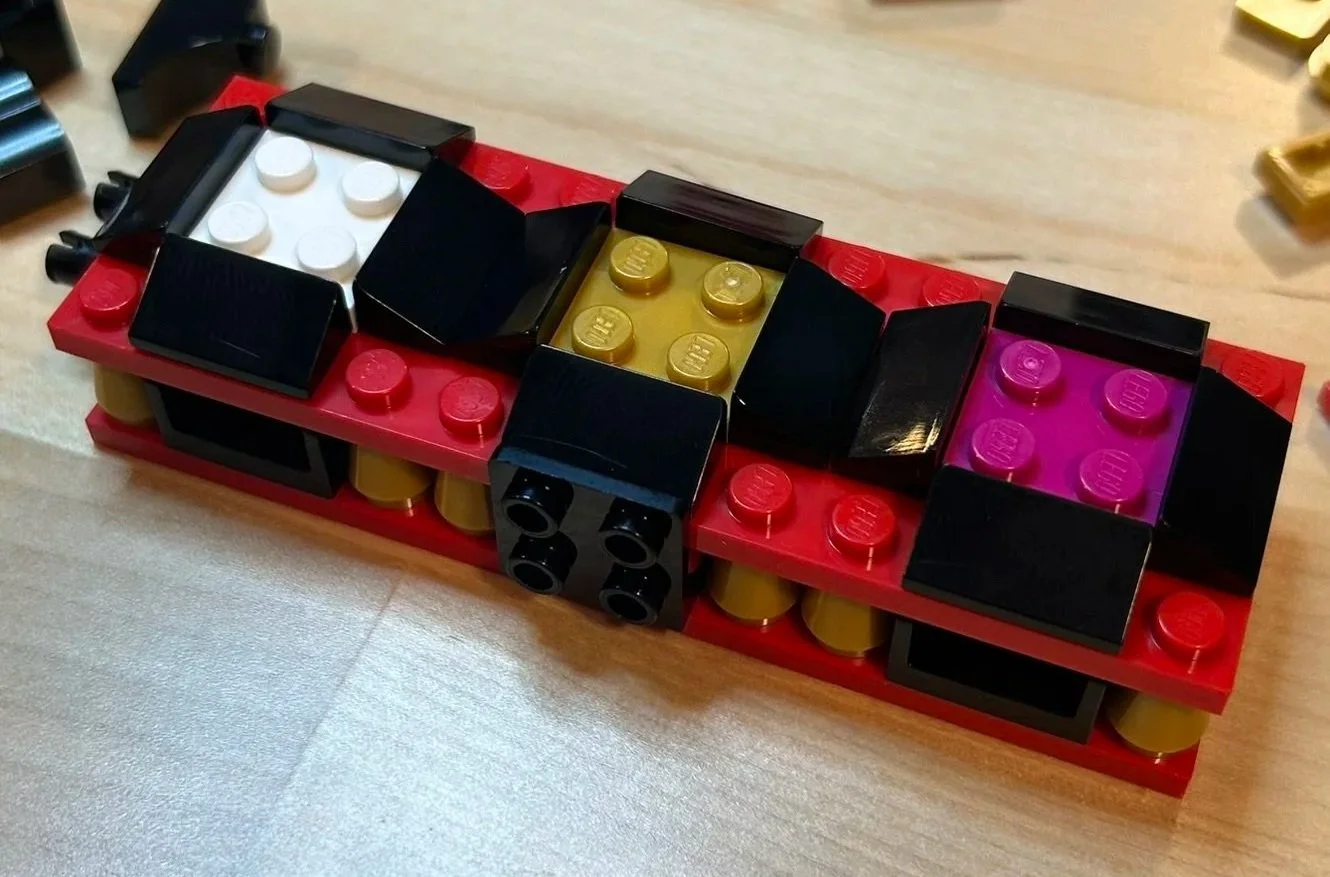
The brick-built stand for these three minifigures includes a 15th anniversary plaque and Technic pins, allowing it to connect with the other Legacy anniversary figures from the sets mentioned earlier. One detail I really appreciated is that beneath each figure is a 2×2 plate matching their elemental color—a subtle nod tucked into the build for sharp-eyed Ninjago fans.
The Old Town and the Roots It Grows From
Turning to the build itself, The Old Town includes 4,851 pieces and 23 minifigures, spread across 44 bags, four instruction booklets, and three sticker sheets with a total of 54 stickers. As of December 2025, it is the third-largest LEGO Ninjago set ever released and the one with the most minifigures, edging out 71741 Ninjago City Gardens by a single figure.
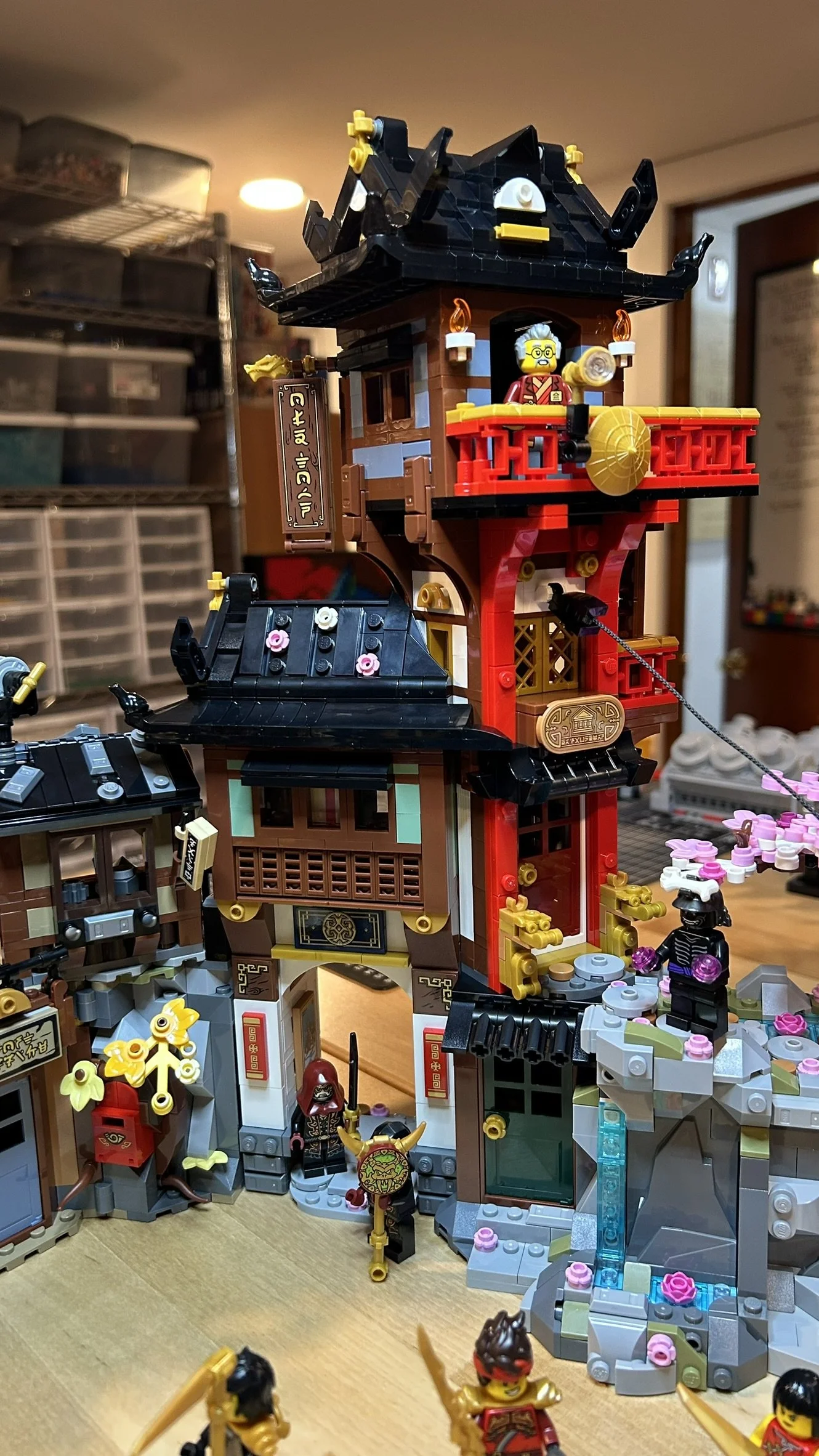
The build is divided into four main sections. The first covers the First Spinjitzu Master’s Shrine, Mystake’s Tea Cart, Chuck’s Woodworking Shop, and the Old Town entrance. The second includes the Post Office and Faith’s workshop, followed by the lookout tower in the third section, and finally Dr. Saunders’ Office and the Loyalists’ cave in the fourth.
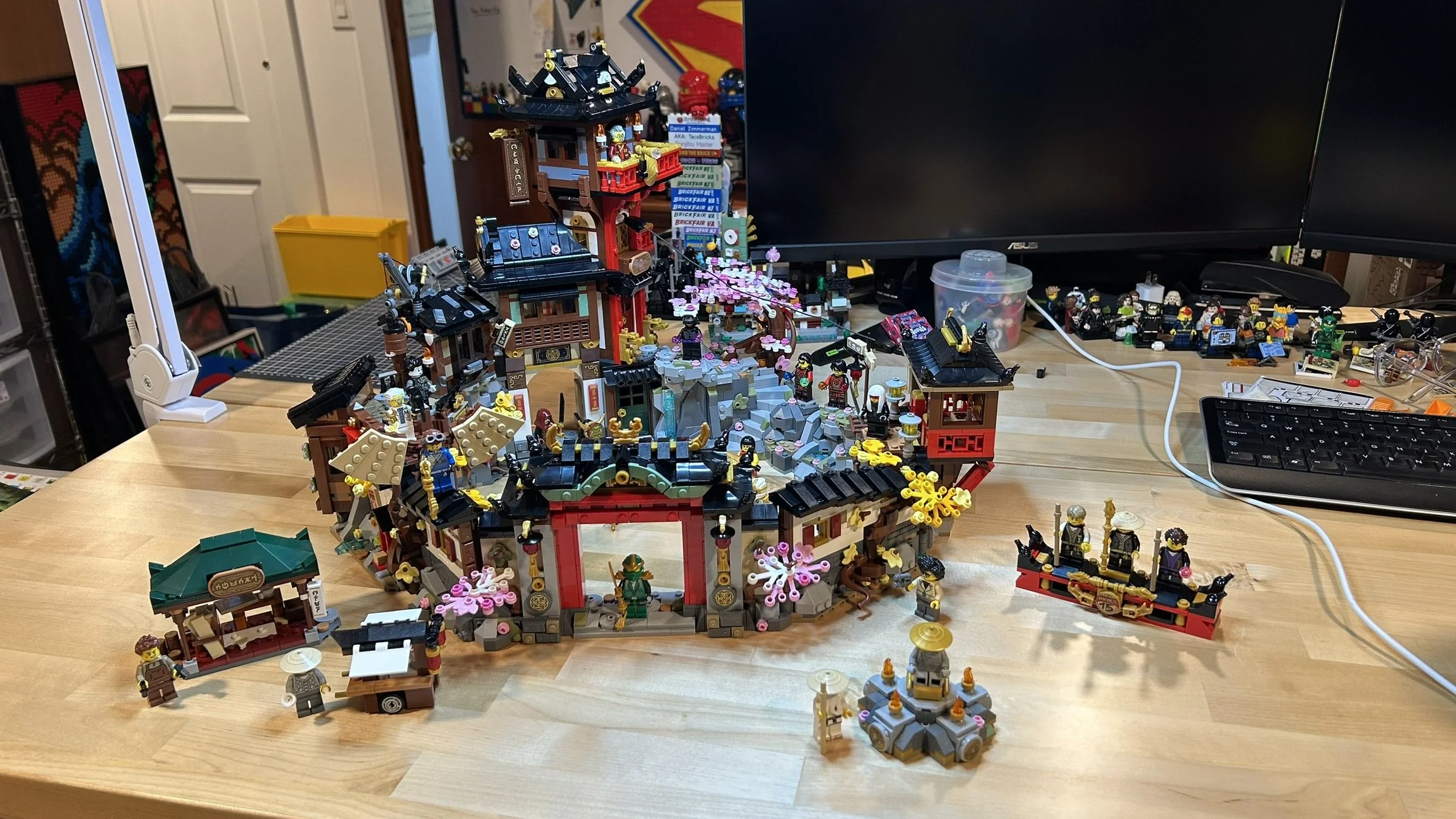
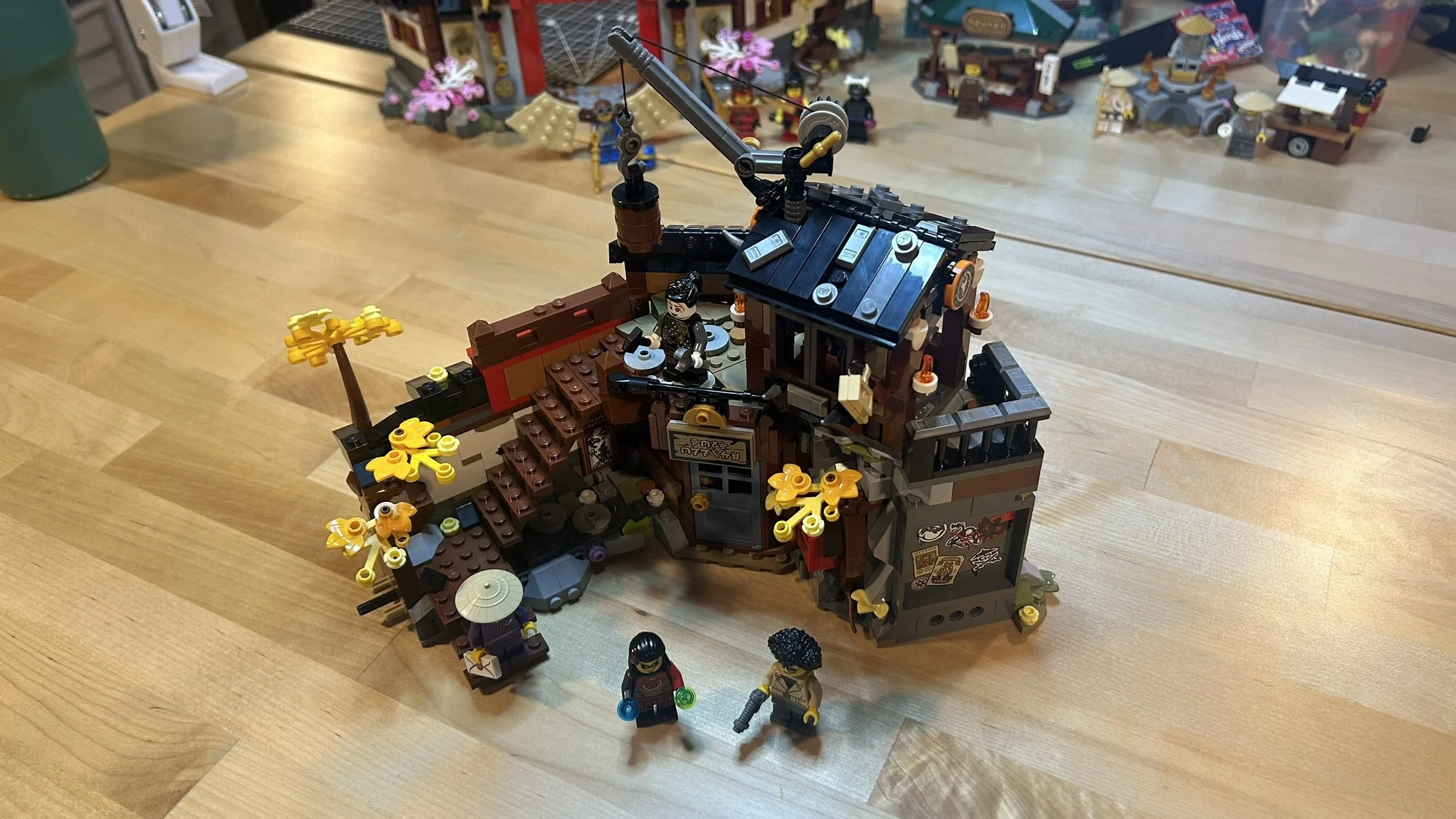
The finished model
The build opens with Mystake’s tea cart, a small but fitting model that ties directly into her role as the enigmatic teashop owner who provides the ninja with magical teas—and the occasional dose of backstory.
Next is the First Spinjitzu Master’s Shrine, another quick side build that helps open up the layout so the Old Town doesn’t feel closed in. Four 2×2 round tiles on the shrine are decorated with stickers representing the Golden Weapons of Spinjitzu—the Sword of Fire, Nunchucks of Lightning, Shurikens of Ice, and Scythe of Quakes—with a stone statue of the First Spinjitzu Master perched on top.
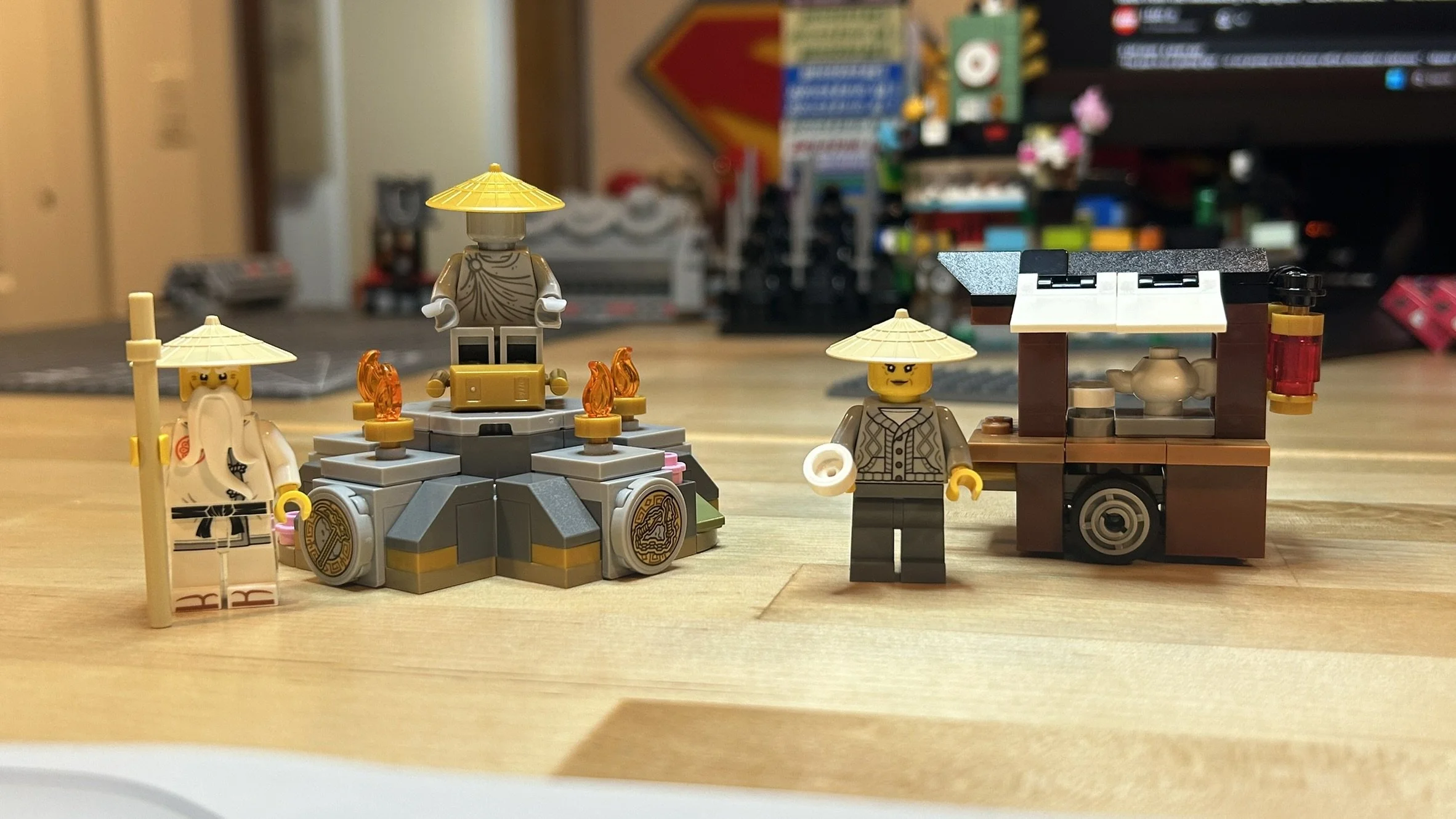
The first spinjitzu master’s shrine and mystake’s tea cart
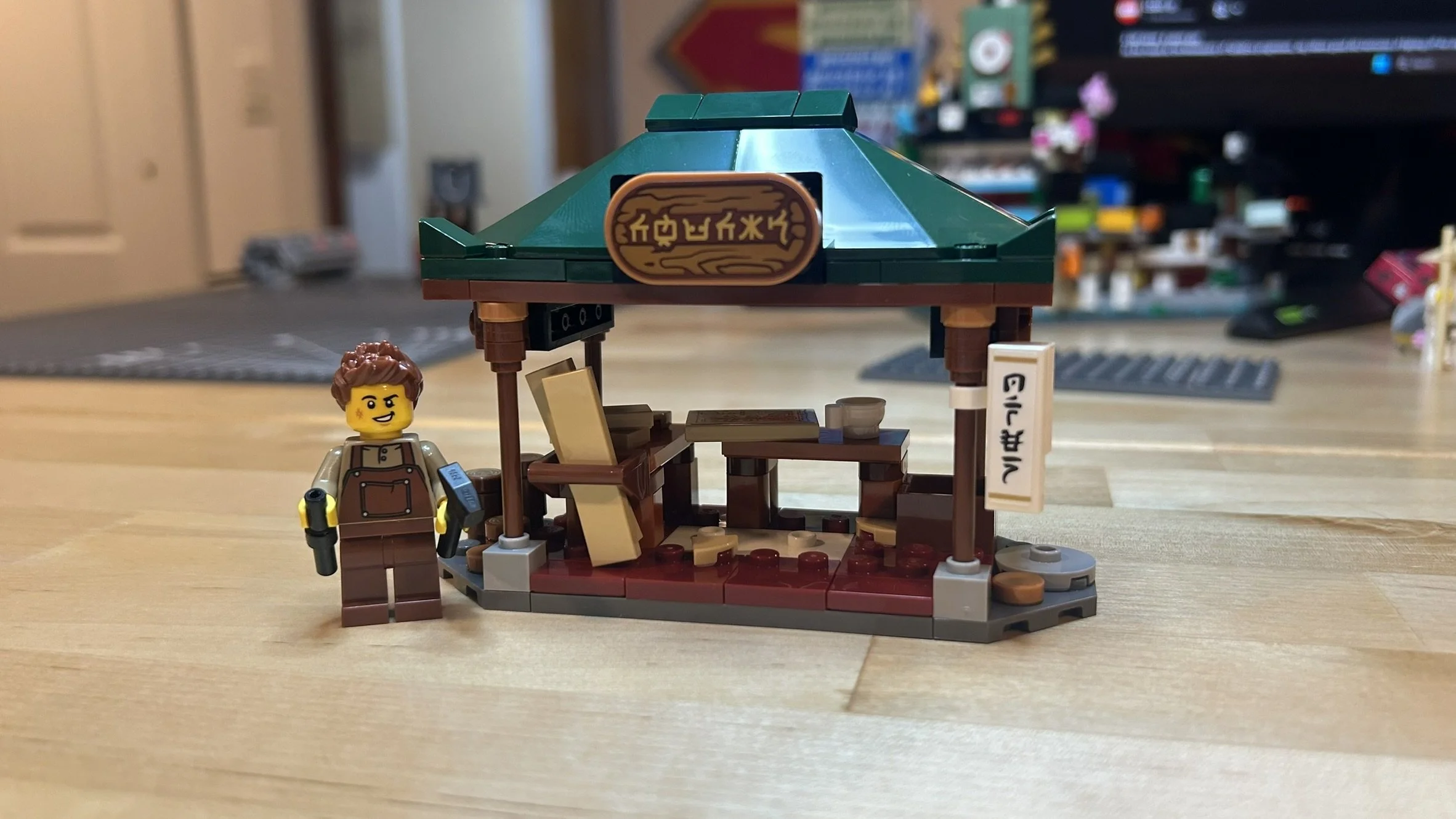
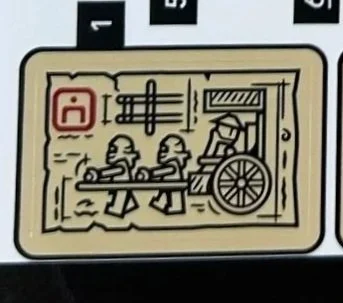
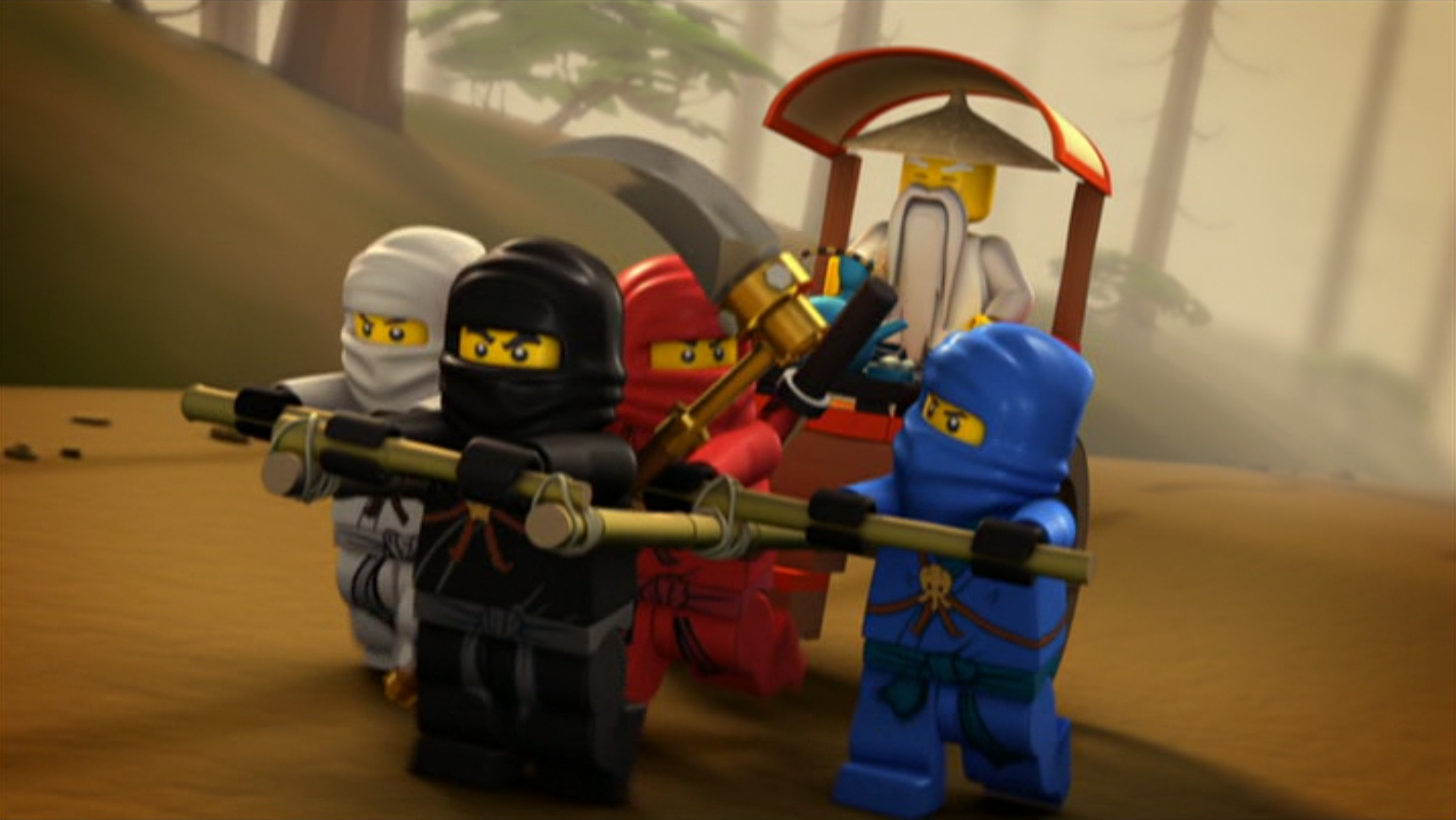
Next up is Chuck’s Woodworking Shop. Sticker 54 on the front simply translates to “Chucks,” introducing an original character created specifically for this set. Inside, the shop includes a clever nod to the very first Ninjago pilot episode: a 2×3 tile (Sticker 1) depicting the diagram of the ninja pulling Sensei Wu in a handcart—a scene longtime fans will instantly recognize. A 1×3 tile on the side (Sticker 29) translates to “open,” and small details like wood shavings scattered across the floor help sell the idea that this is a well-used, lived-in space.
Moving on to the main build, the entrance to the Old Town makes it immediately clear what kind of set this is. The Old Town is a dense, detail-heavy build, relying on lots of smaller elements layered together—very much a display-focused set aimed at older builders and longtime fans. As someone who loves intricate builds, this hits the mark for me, though I think it’s an enjoyable experience whether you’re deep into Ninjago or coming to the set fresh.
The entrance itself is beautifully designed, drawing inspiration from traditional temple gateways found across various Asian cultures. The walls angle inward and combine standard bricks with masonry bricks to create built-in texture, while trees woven into the structure reinforce the “old” feeling of a town slowly being reclaimed by nature.
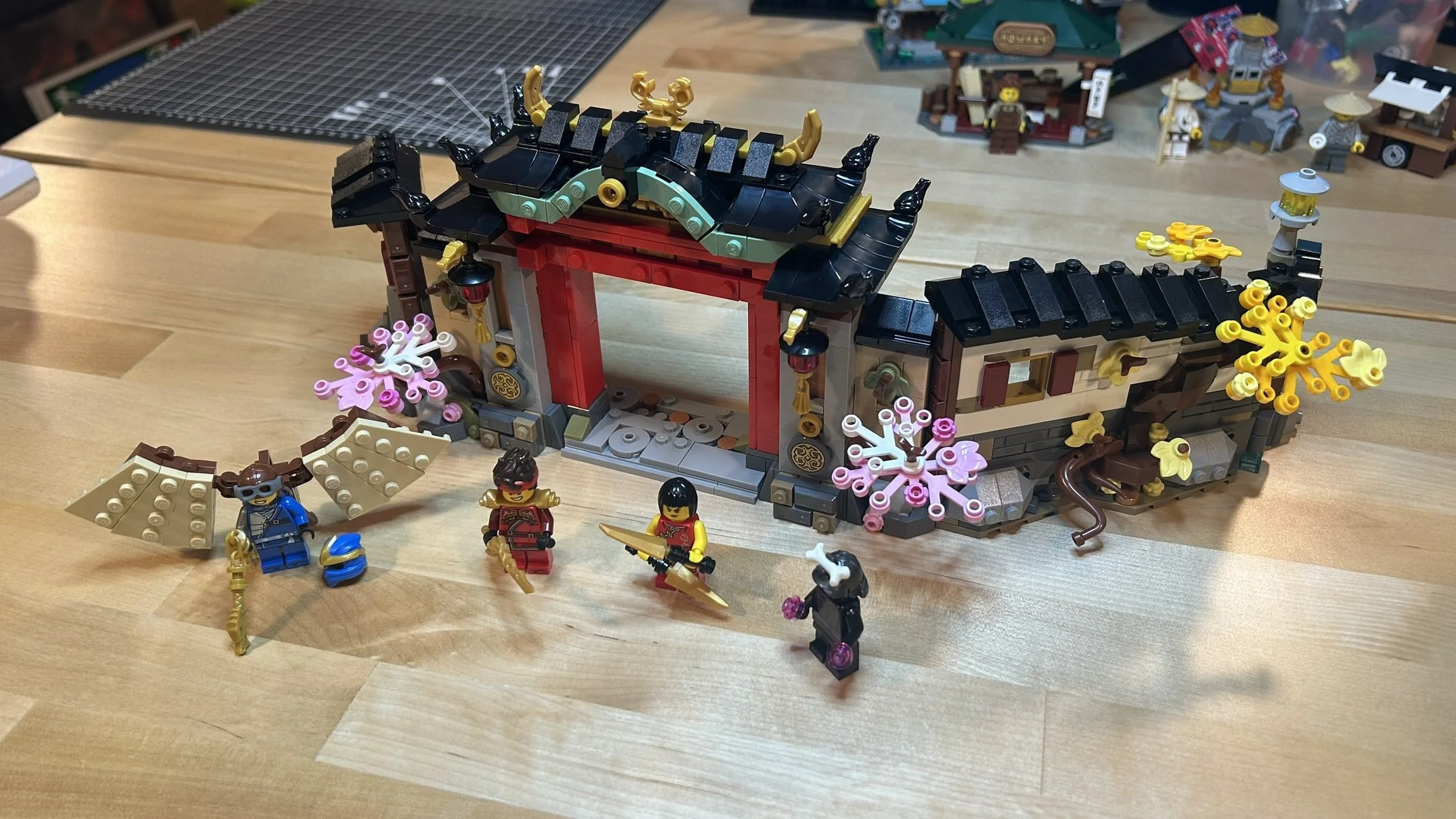
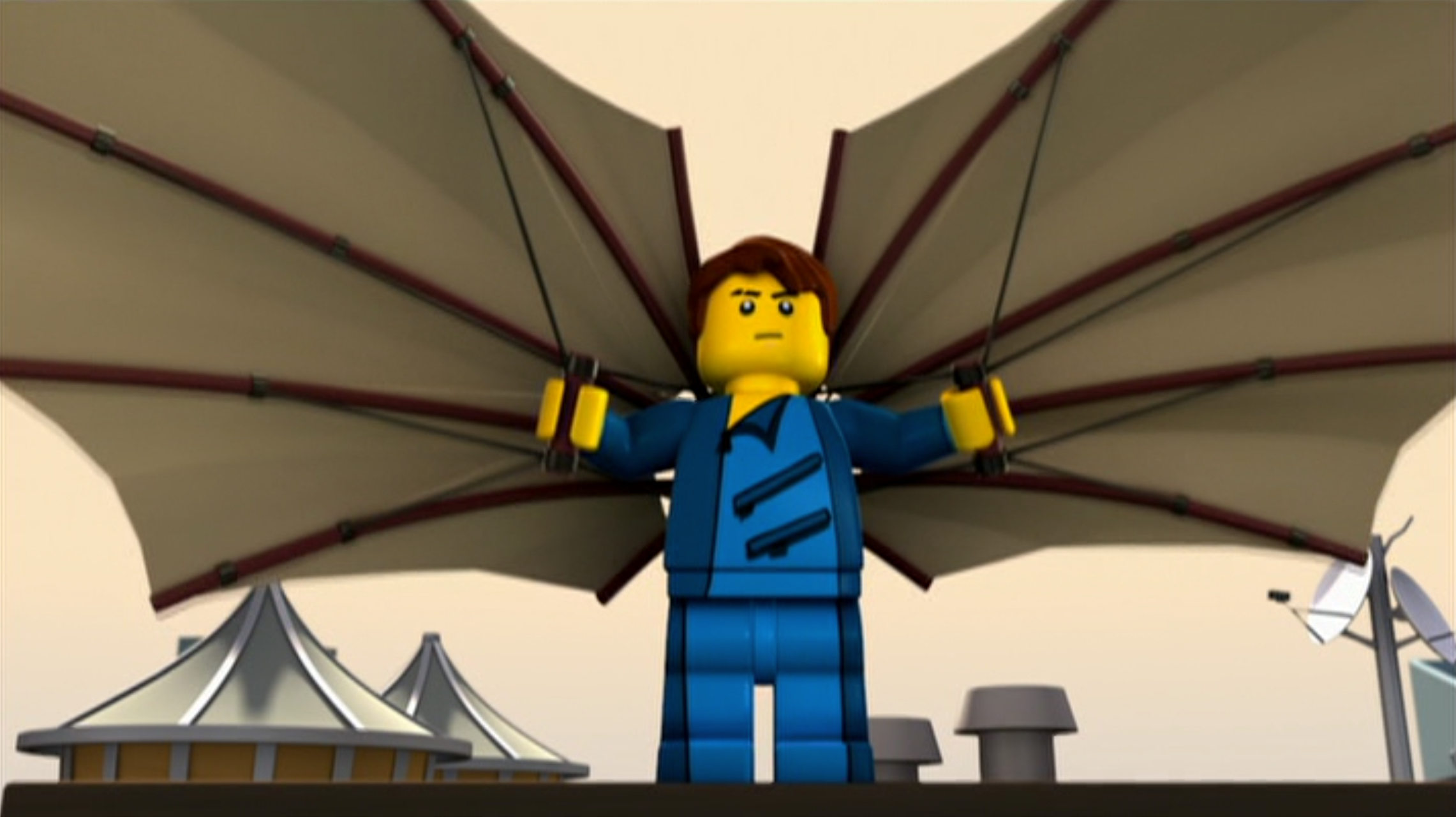
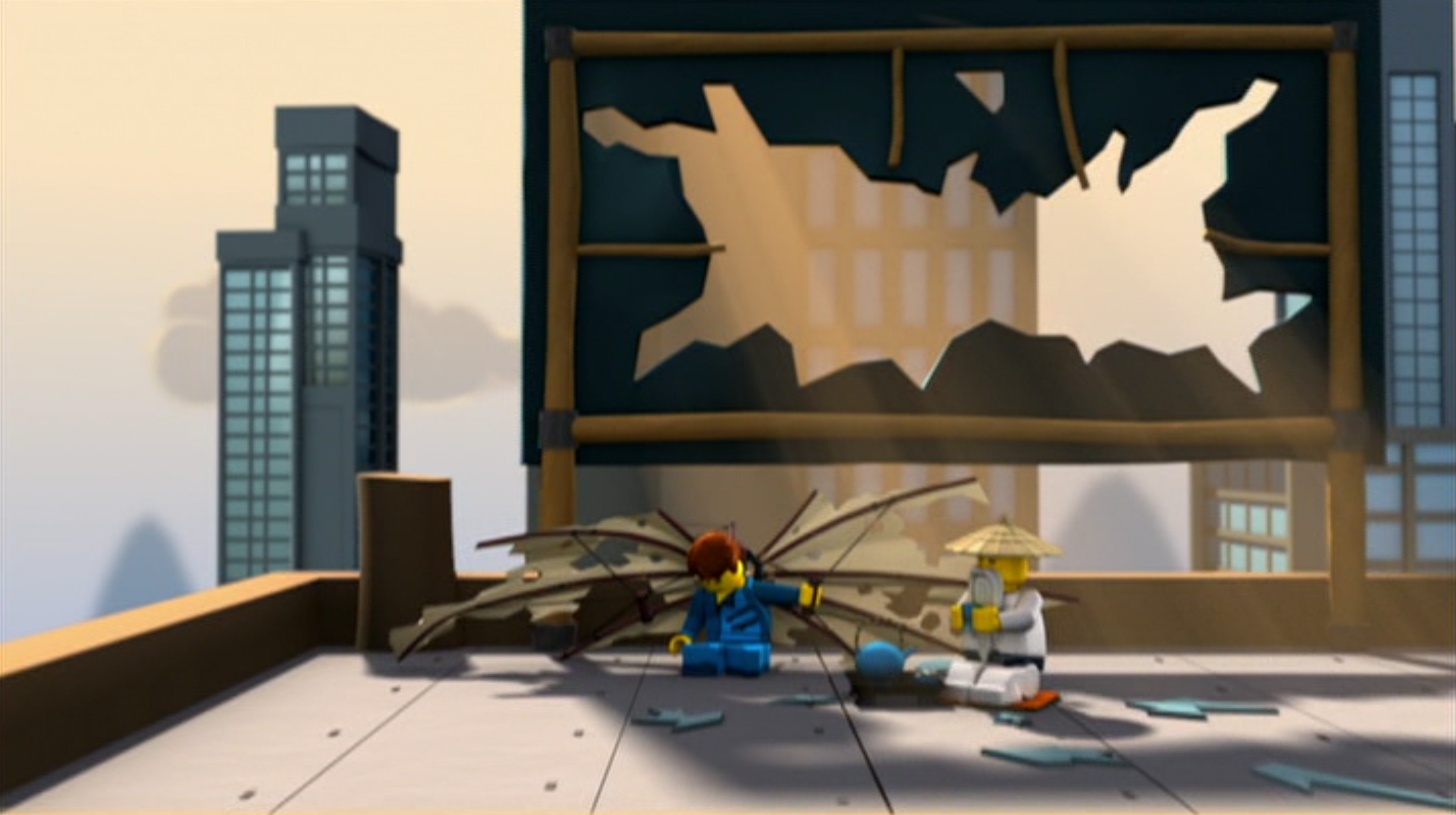
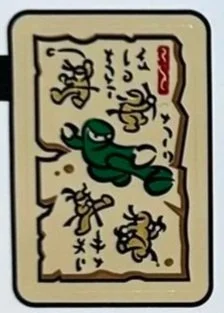
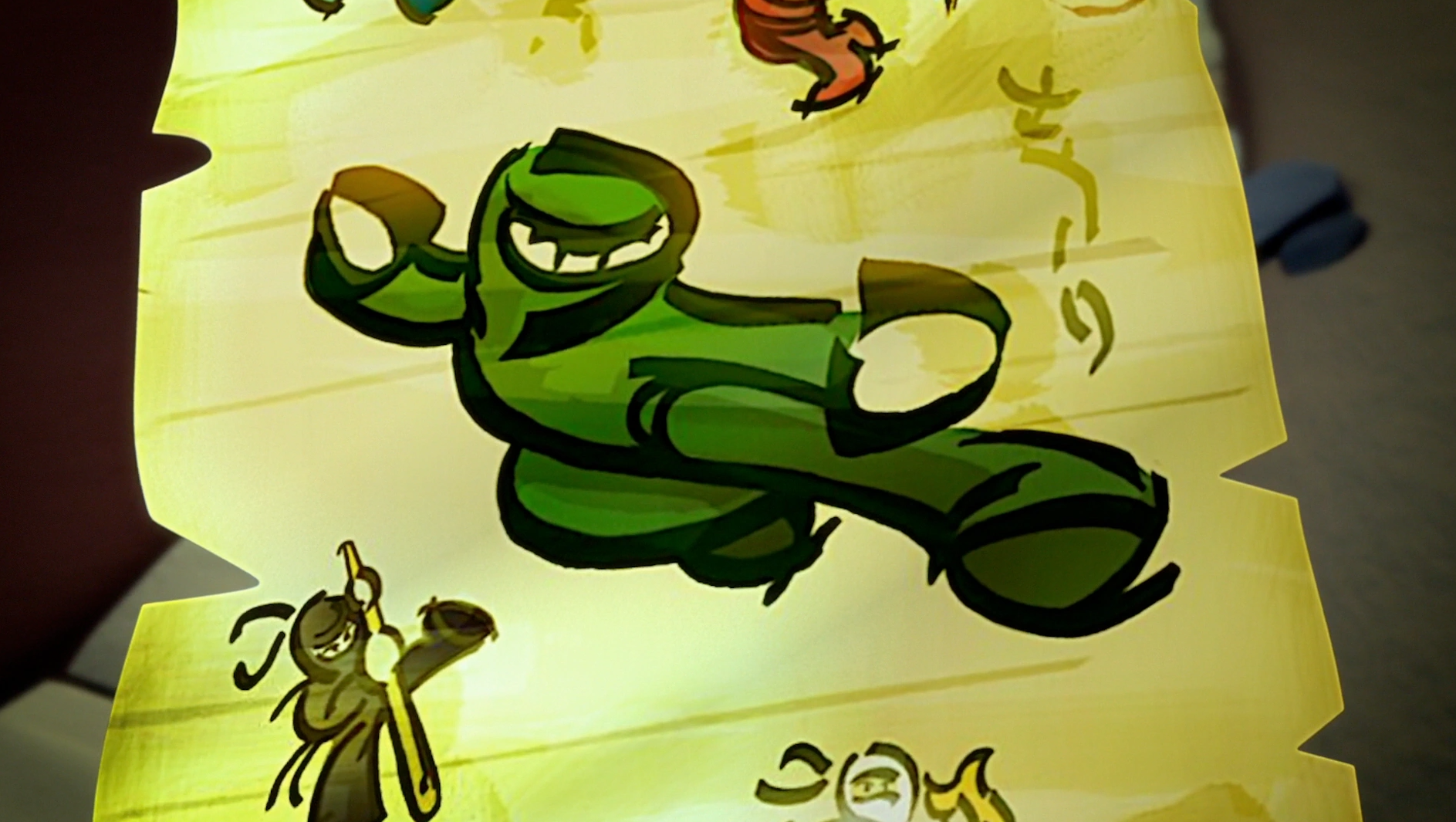
A hinged section at the top of the entrance reveals a hidden compartment packed with nods to the series. Sticker 6 depicts the prophecy of the Green Ninja from season one, Rise of the Snakes, while Sticker 24 shows the motherboard of the Prime Empire arcade cabinet from season 12—an essential part of Unagami’s plan to cross from the digital to the physical realm. One of my favorite details in the entire set is Jay’s glider, a direct callback to the one he uses when he first meets Sensei Wu in the pilot episodes. And finally—how could I not mention it—a brand-new frog color in black! I’m already looking forward to seeing these black frogs show up in Frog-ust 2026.
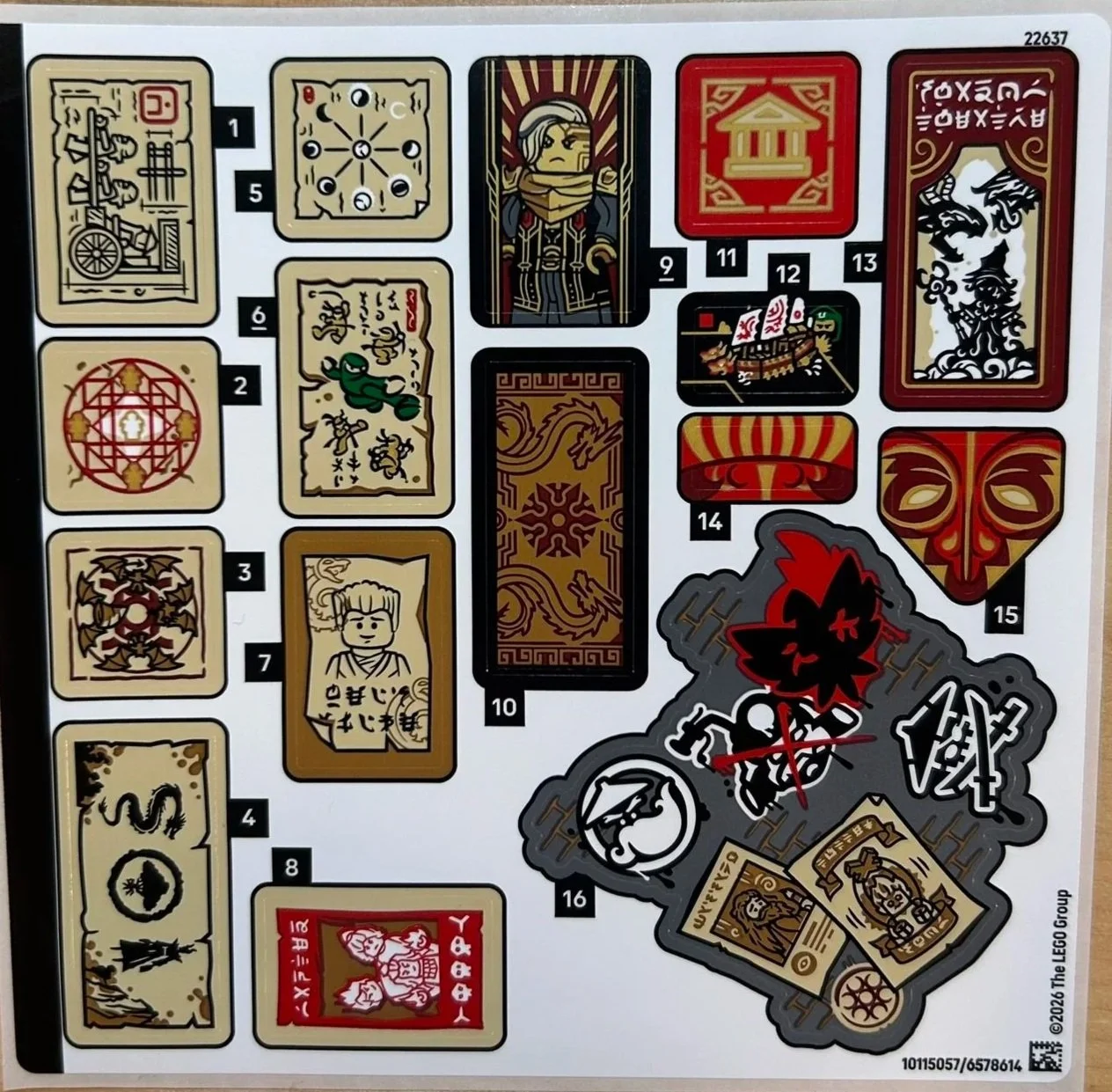
Next up is the Post Office and Faith’s Workshop. This section of the build contains some fun building techniques to create the angles of the building that is built into the rocks and sticking out in different directions. It avoids a simple, boxy footprint and instead looks like it was built up around the existing environment of the Old Town. This kind of architectural experimentation is something Ninjago does especially well, consistently pushing the boundaries of how LEGO buildings can be constructed.
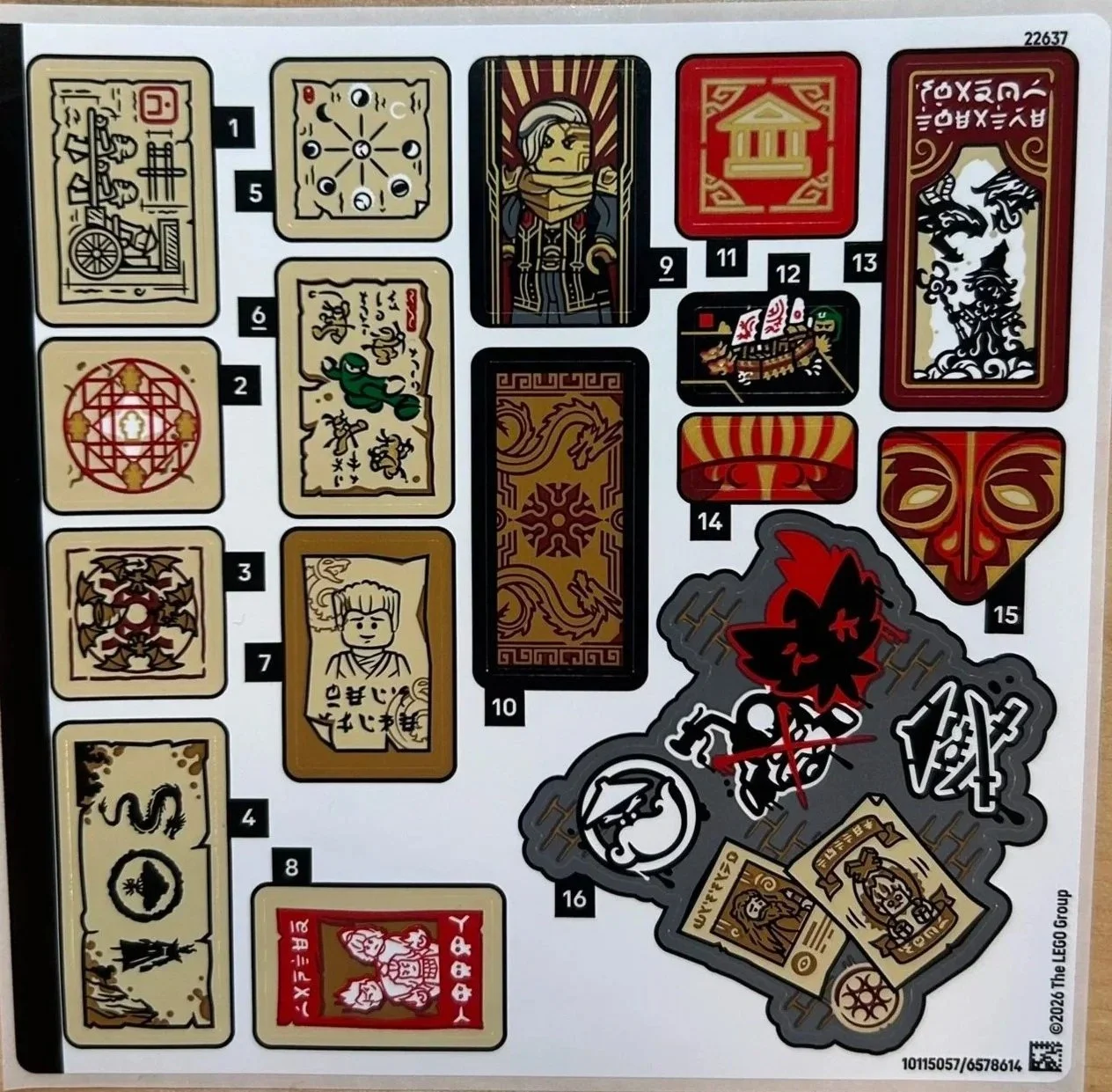
This section is packed with stickers that reference moments spanning the Ninjago timeline. Highlights include:
Sticker 7, depicting Master Chen’s message revealing that Zane is still alive at the start of season 4, Tournament of Elements.
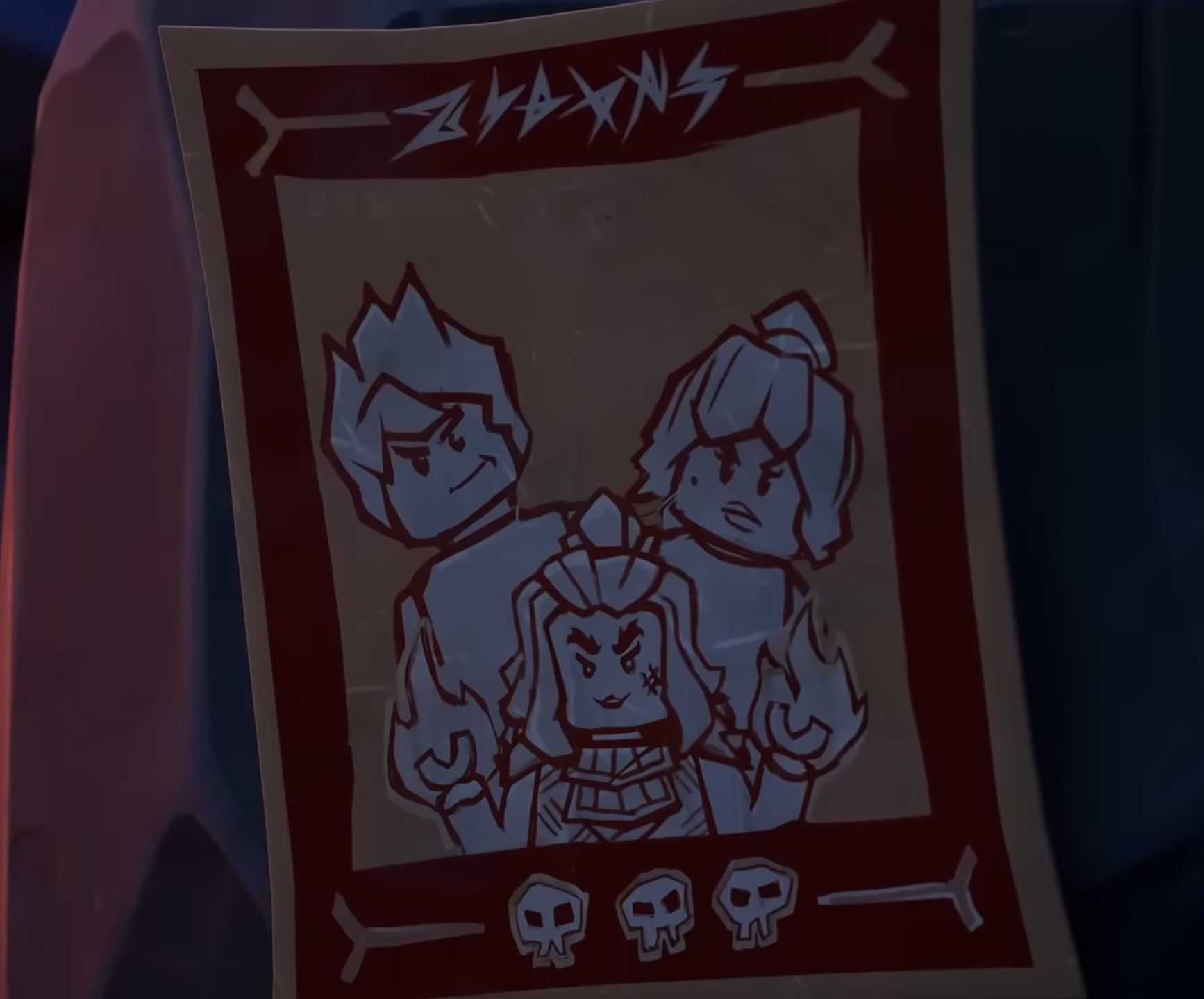
Sticker 8, a wanted poster for Kai, Nya, and Wyldfire after their run-in with the Rock Guys (officially the Lightning-Tide tribe) in episode 1 of Dragons Rising season 3.
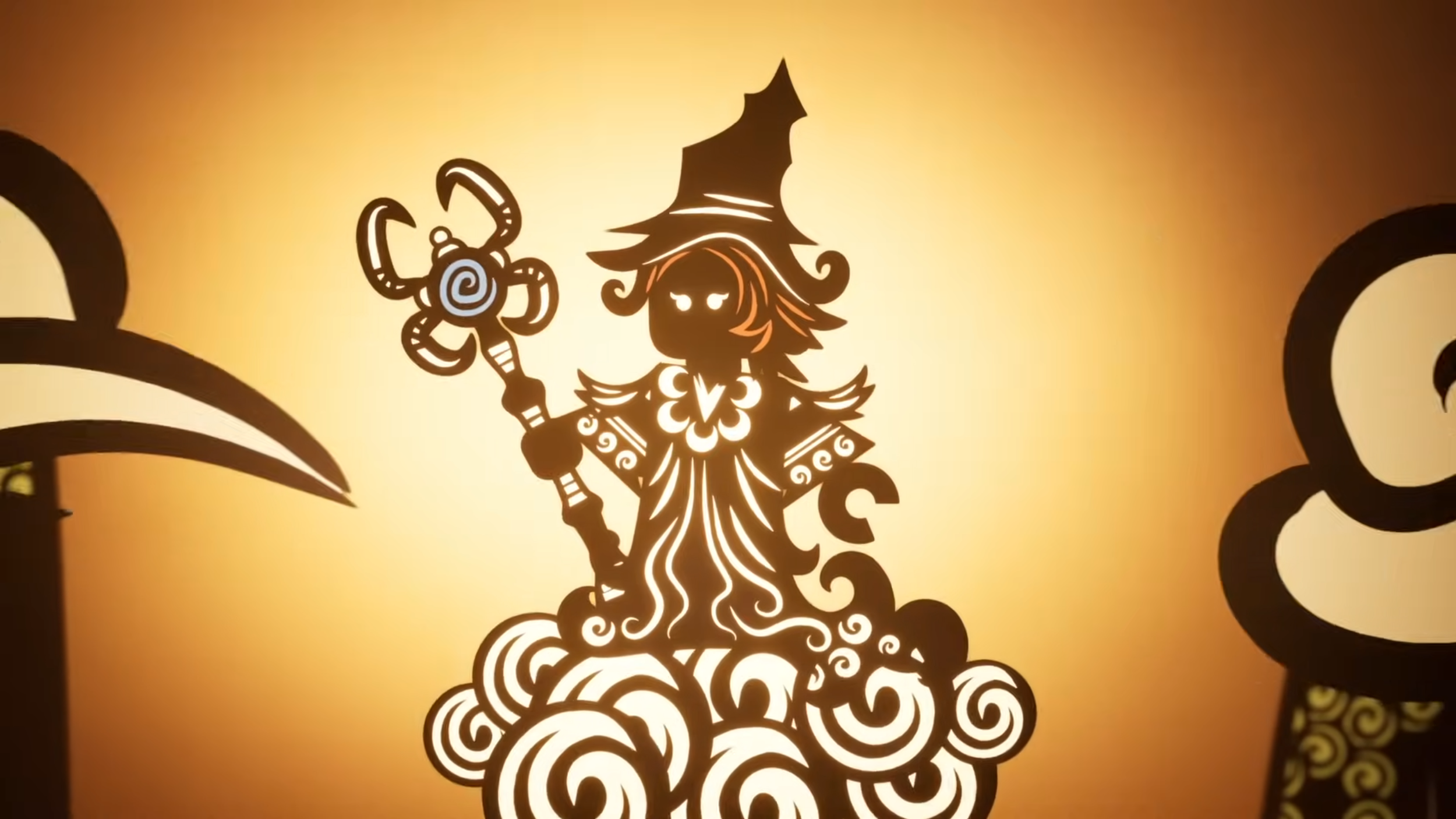
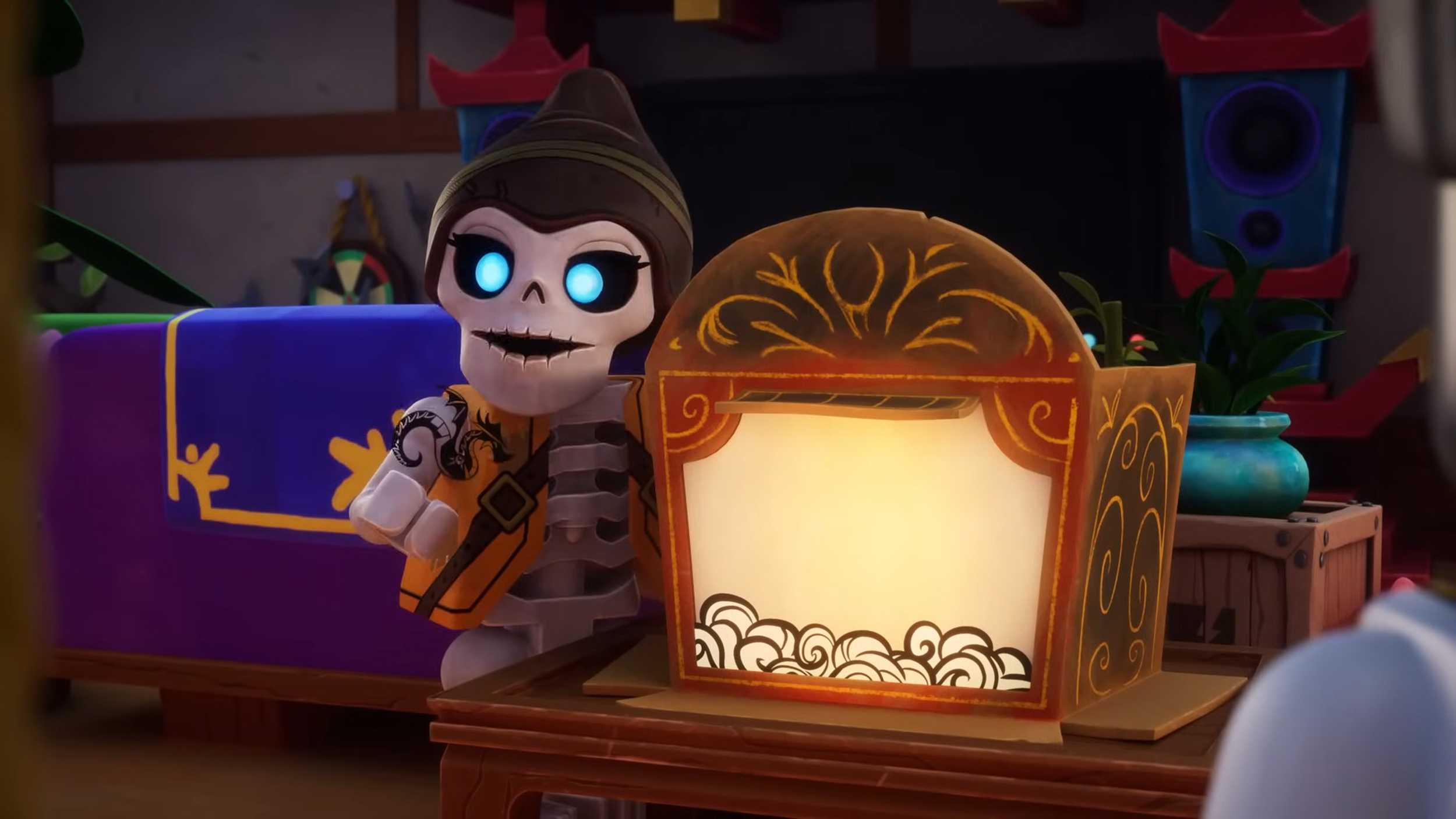
Sticker 13, reading “Shadow Theatre,” referencing the telling of Bonzle’s origin in season 2, episode 5 of Dragons Rising. Bonzle—literally a spell given physical form—is a character I still hope we see as a minifigure someday.
Sticker 16, a dense collage of references including the Sons of Garmadon logo (crossed out), the Red Crows biker gang from Tri Vuong’s Garmadon comic, the WU CRU logo, Captain Soto’s Pirates, the six ninja handprints from March of the Oni, and a missing persons poster for Mindaro from Spinjitzu Brothers: The Chroma’s Clutches.
Sticker 20, a banner translating to “Faith,” marking her repair shop, which stylistically echoes the villain-focused sets from 2018.
Sticker 23, above the Post Office door, which simply translates to “Post Office.”
Sticker 26, a Prime Empire video game box featuring Unagami and Kai in his arcade suit.
Sticker 46, showing the Dragon Hunters’ emblem—the group Faith once led in season 9, Hunted.
Together, these details add a remarkable amount of lore and texture, helping this section feel richly connected to Ninjago’s past and present.
Watching Over the Old Town
Next is the Lookout Tower, a simpler but welcome change of pace in the build. While it’s a single structure and lighter on deep-cut references, I really enjoy how it overhangs the main wall of the Old Town. The angled supports are particularly satisfying to build and add visual interest without overwhelming the section.
There are still a few fun details tucked inside. Sticker 28, on a 1×3 tile inside the tower, translates to “lookout,” while Sticker 36, a 2×2 tile on the desk, depicts the Four Weapons Blacksmith shop—illustrated to mirror the very first shot of the original pilot episode. Sticker 48 on the exterior translates to “Old Town.” Overall, this section helps vary the skyline and architectural styles of the set, keeping the build from feeling repetitive as it comes together.
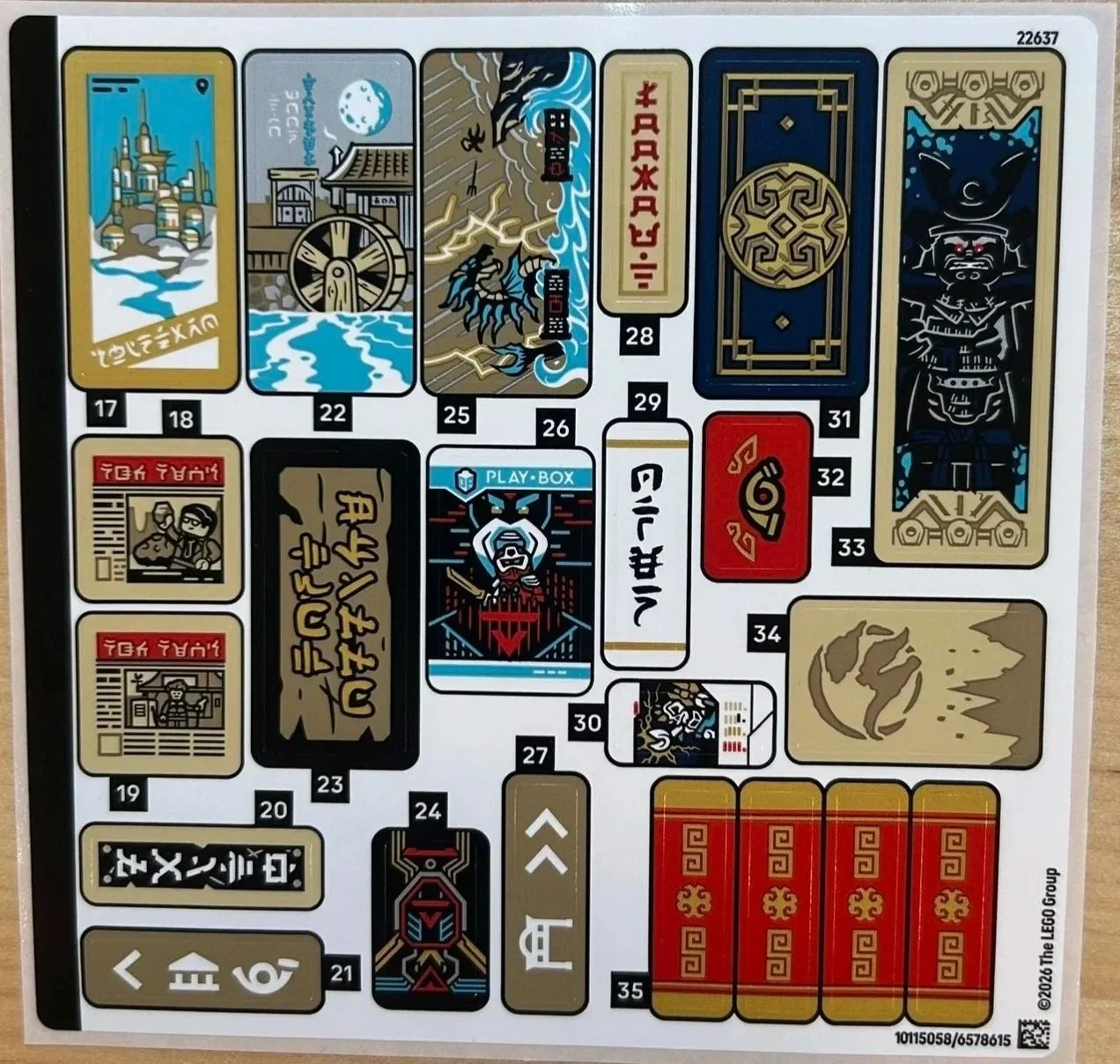
The final section—Dr. Saunders’ Office and the Loyalists’ Cave—is easily the most reference-heavy part of the set. It’s a dense, angular build that breaks the grid and adds welcome height, and it stands out as my favorite section thanks to its distinctive style and angles. The color palette immediately caught my eye as well, echoing the first large direct-to-consumer Ninjago set, 70751 Temple of Airjitzu. Like that iconic build, this section leans heavily on Sand Blue, Sand Green, and red.
There are also a lot of nods tucked into this area, so let’s break them down.
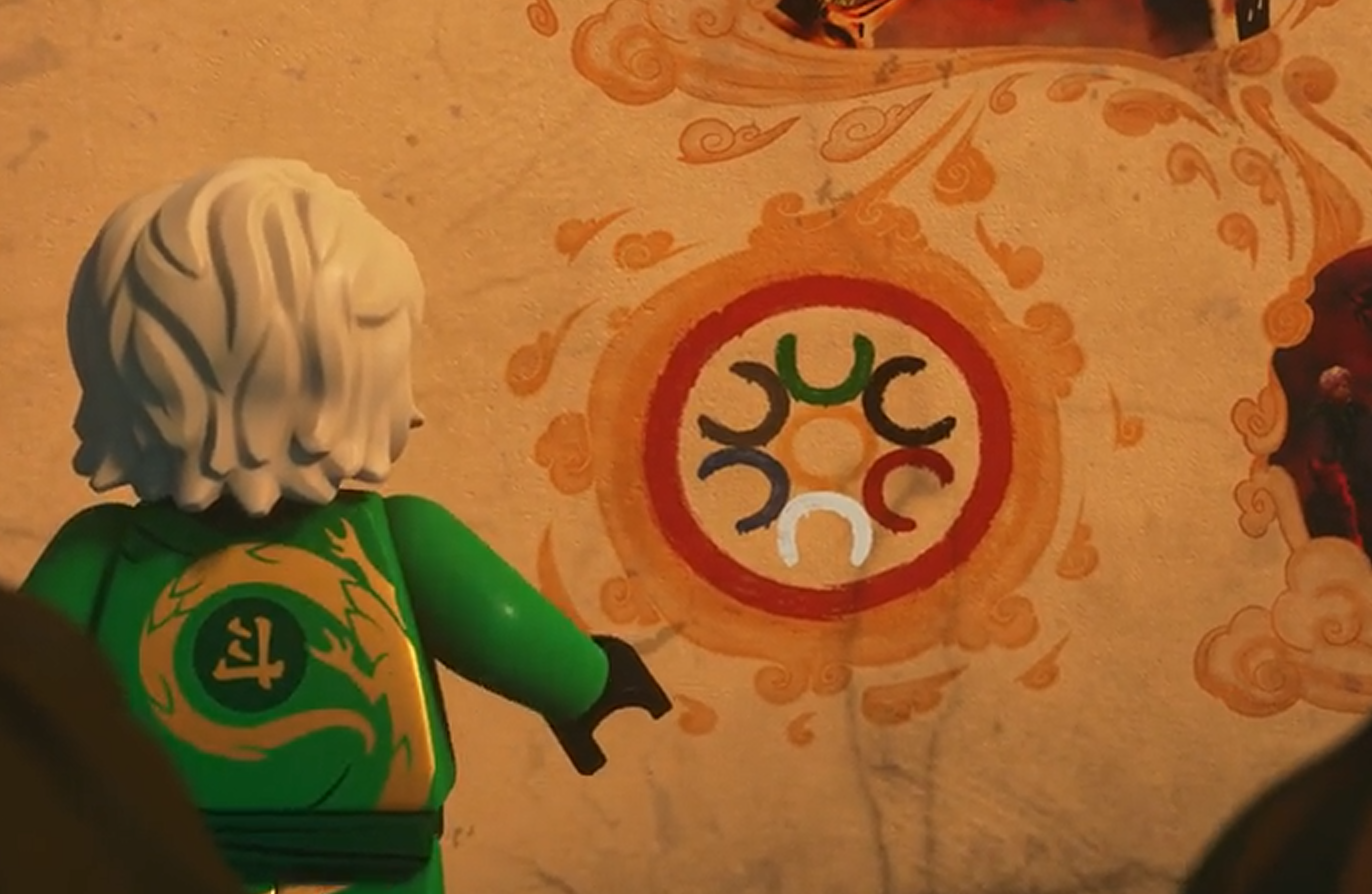
Sticker 2 is the artwork from the wall of the Temple of Light that tells the ninja how to help Lloyd become the Golden Ninja in season 2, Rise of the Green Ninja.
Sticker 3 shows the scroll that tells Kai, Jay, Cole, and Zane how to achieve Dragon Form in season 15, Crystallized.
Sticker 4 depicts the artistic flashback of the Oni and Dragon tale as told by Mystake in season 9, Hunted.
Sticker 5 shows the yin-yang eclipse that occurs on the Day of the Departed, resurrecting deceased villains from the Departed Realm in the Day of the Departed special.
Sticker 9 is a poster of Empress Beatrix, the main antagonist from Dragons Rising season 1.
Sticker 12 depicts Destiny’s Bounty as seen in The LEGO Ninjago Movie, set #70618.
Stickers 14 & 15 form young Morro’s kite, which he flies with his elemental wind powers in a flashback from season 5, Possession.
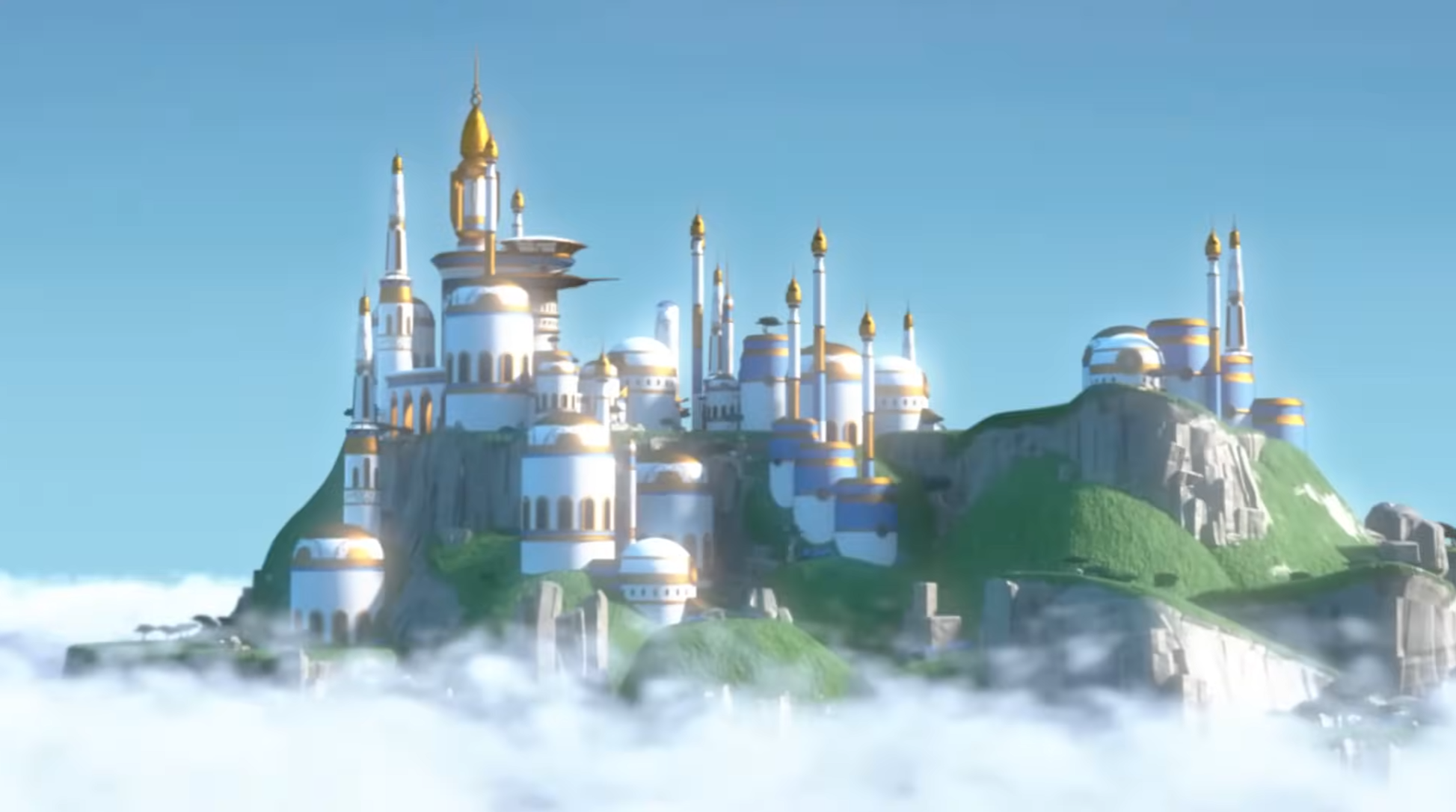
Sticker 17 translates to “Shintaro” and shows the kingdom of Shintaro, the ivory city and main location of season 13, Master of the Mountain.
Sticker 18 is a newspaper showing Cyrus Borg investigating a rock, potentially the comet the ninja find the Golden Weapons on in season 3, Rebooted.
Sticker 19 is another newspaper; its title translates to “NGC News” and it depicts Twitchy Tim at his gas station from The Island miniseries, set between seasons 13 and 14.
Sticker 22 translates to “Two Moon Travel” and depicts Two Moon Village, the main location from the Garmadon comic series by Tri Vuong.
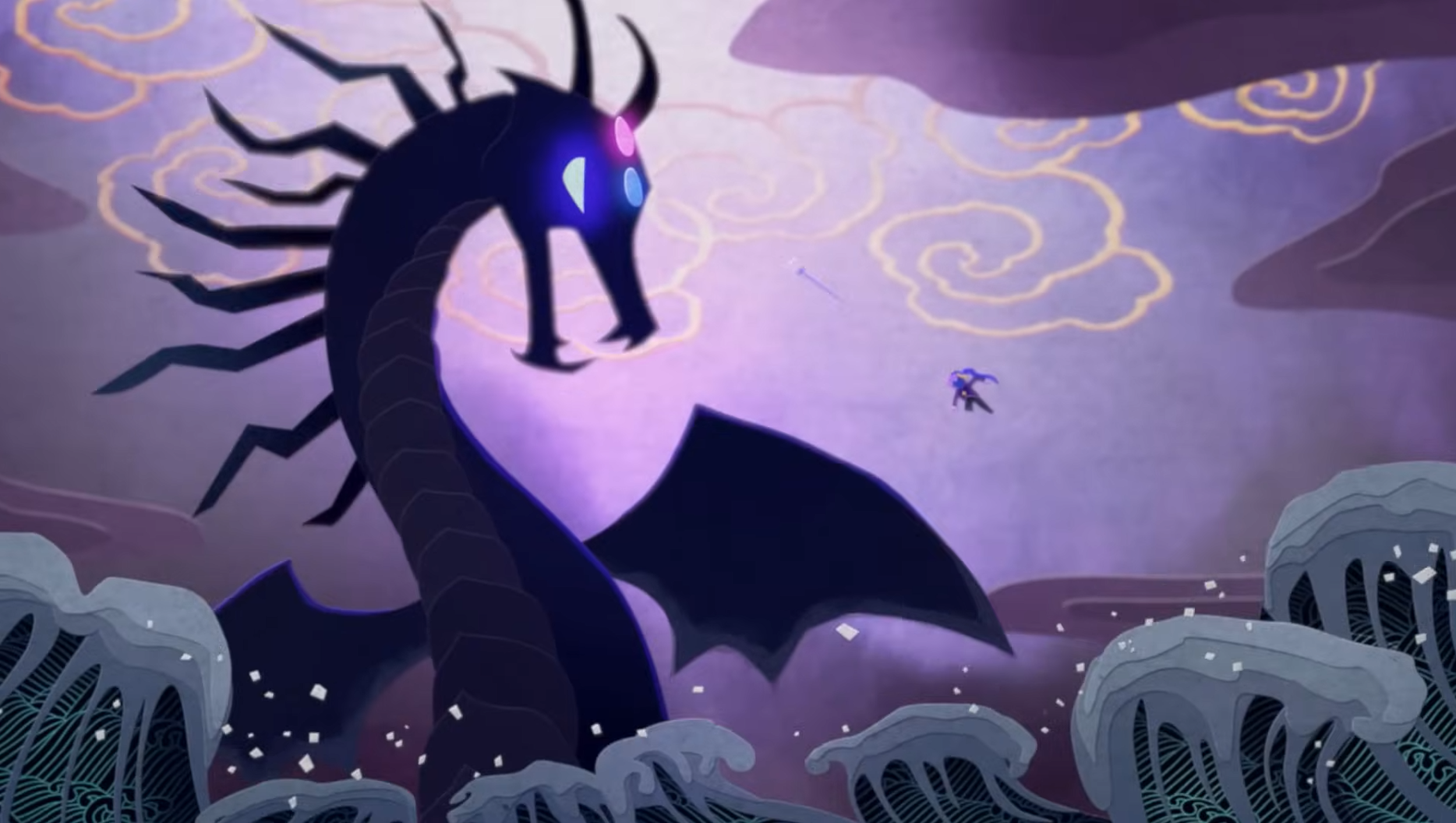
Sticker 25 shows the legend of Nyad, the original elemental master of water, versus Wojira from season 14, Seabound.
Sticker 33 depicts Garmadon’s re-emergence from the Departed Realm in season 8, Sons of Garmadon.
Sticker 34 in Dr. Saunders’ office is the Scroll of Forbidden Spinjitzu, the artifact that boosts a Spinjitzu master’s powers in season 11, Secrets of the Forbidden Spinjitzu.
Sticker 39 hangs from the top of the building and translates to “Old Town.”
Sticker 40 depicts the original Destiny’s Bounty, set #9446.
Stickers 51 & 52 make up the book Jack the Rabbit, the story Sensei Wu reads to a young Lloyd in season 1, Rise of the Snakes. Inside, it reads “once upon a time.”
Sticker 53 is the museum sign above the main door and translates to “Dr. Saunders.”
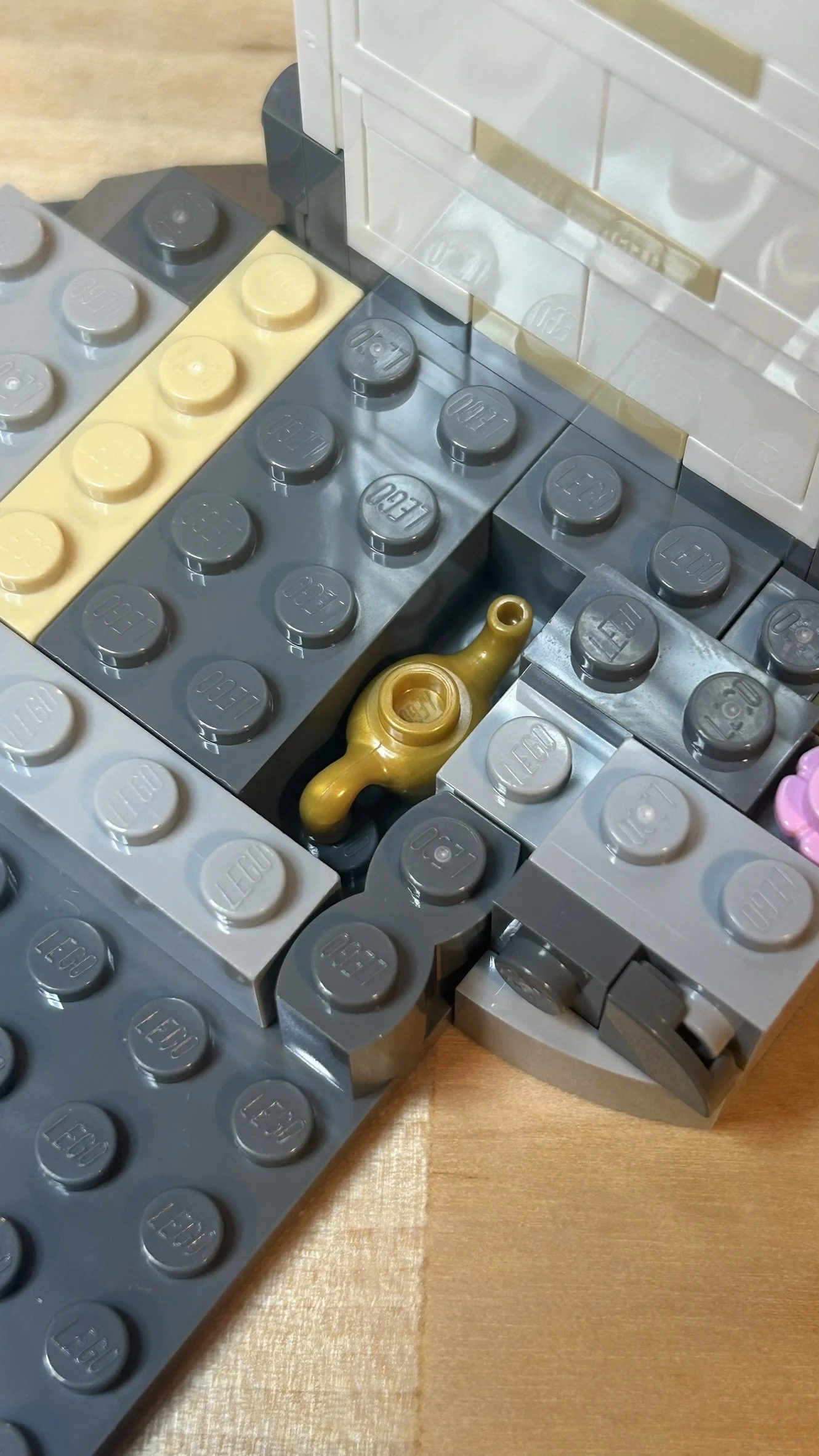
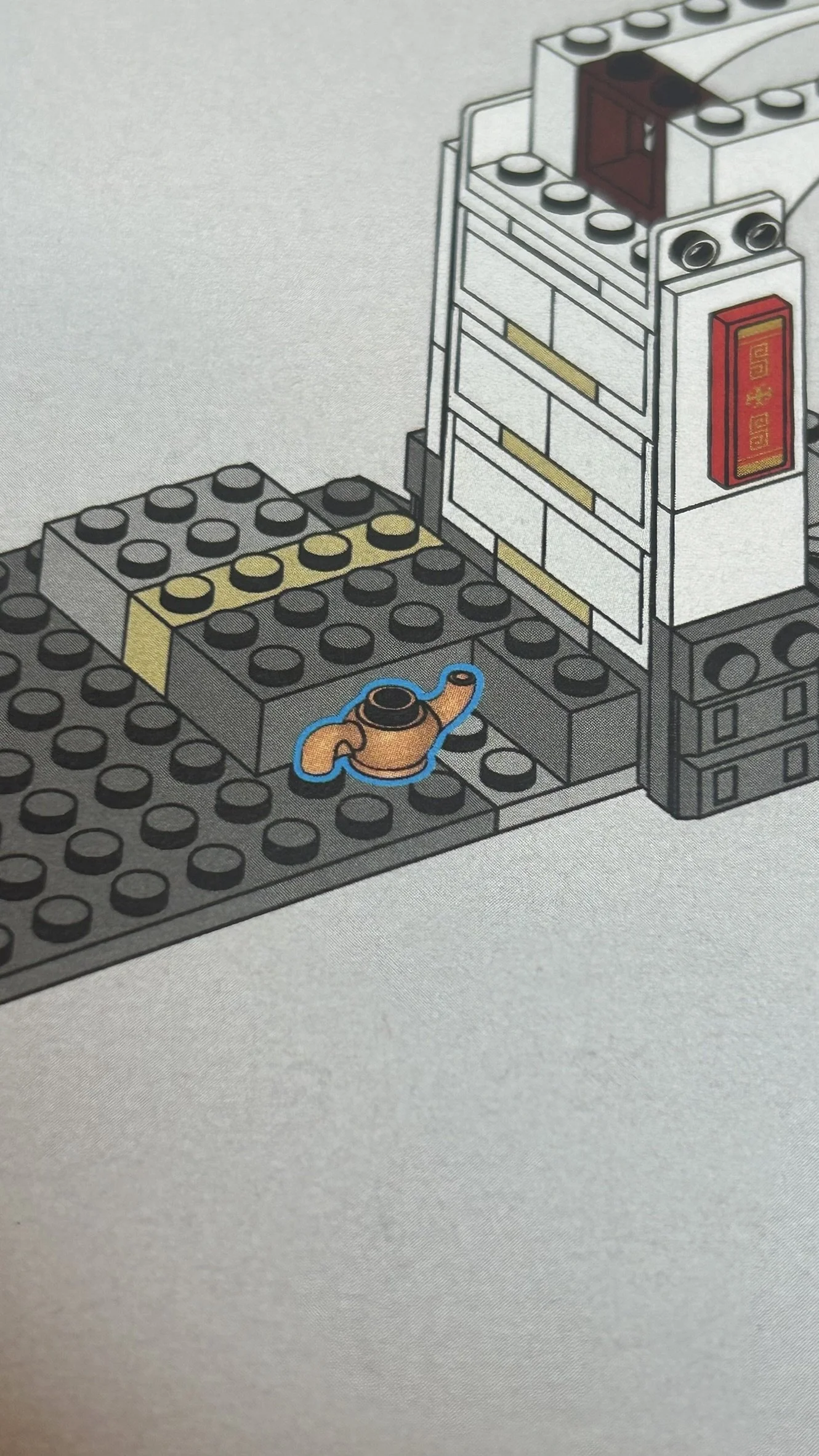
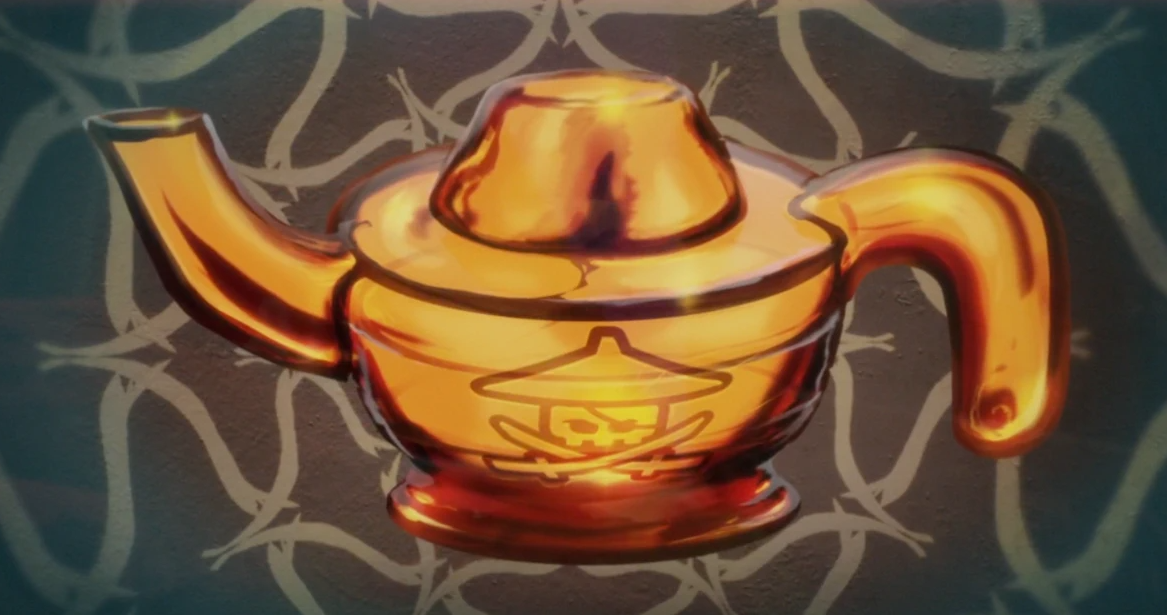
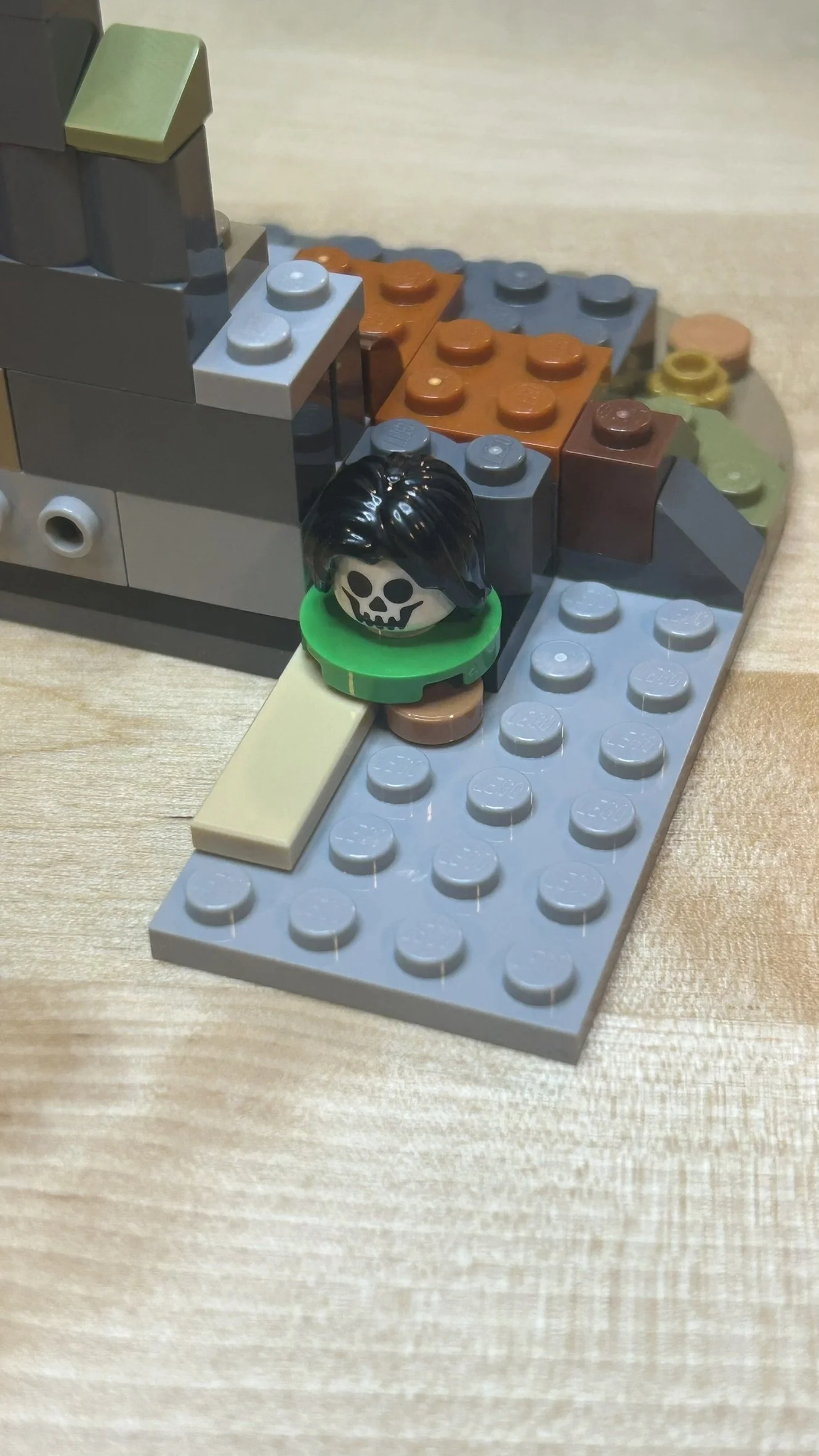
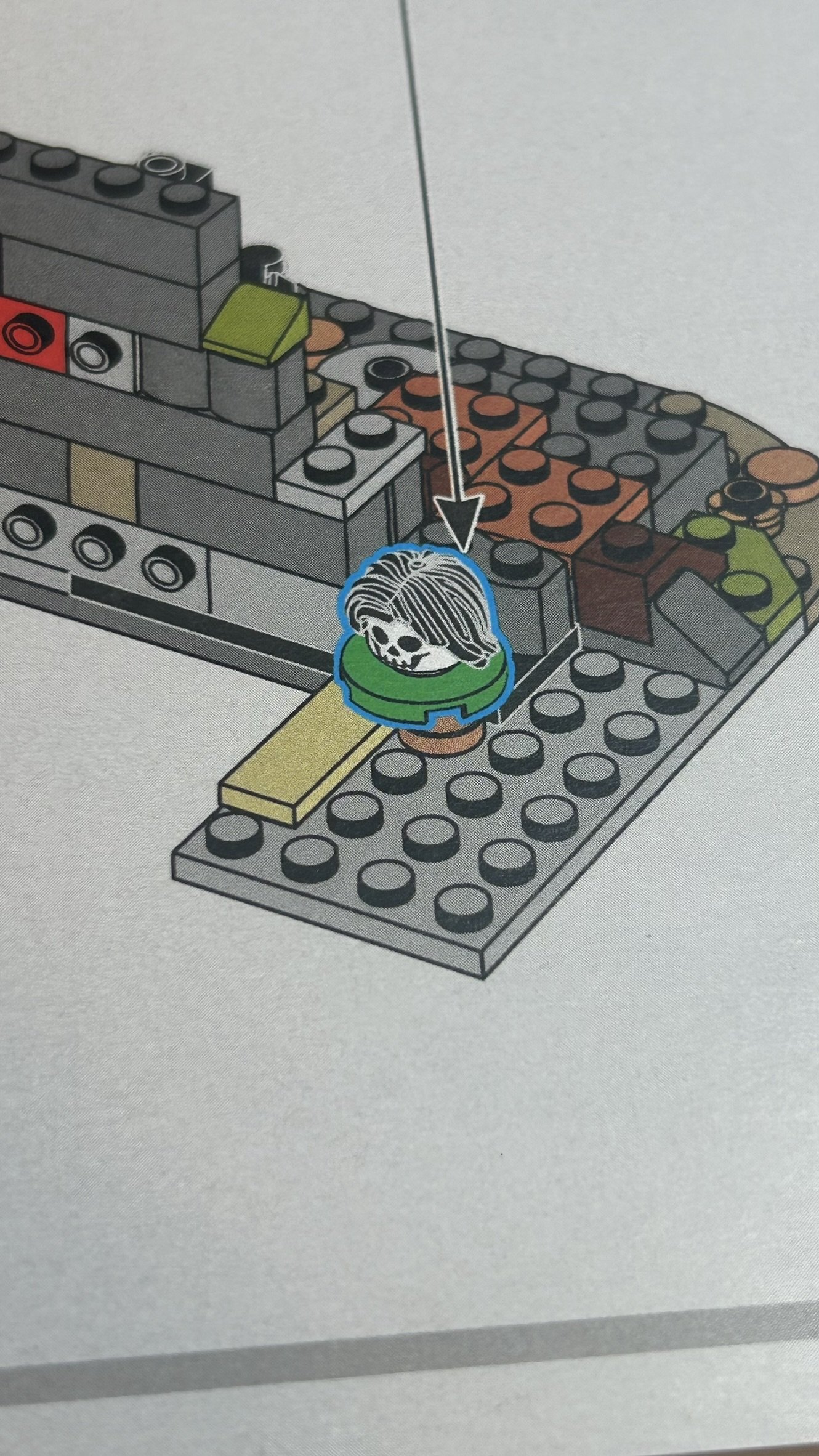
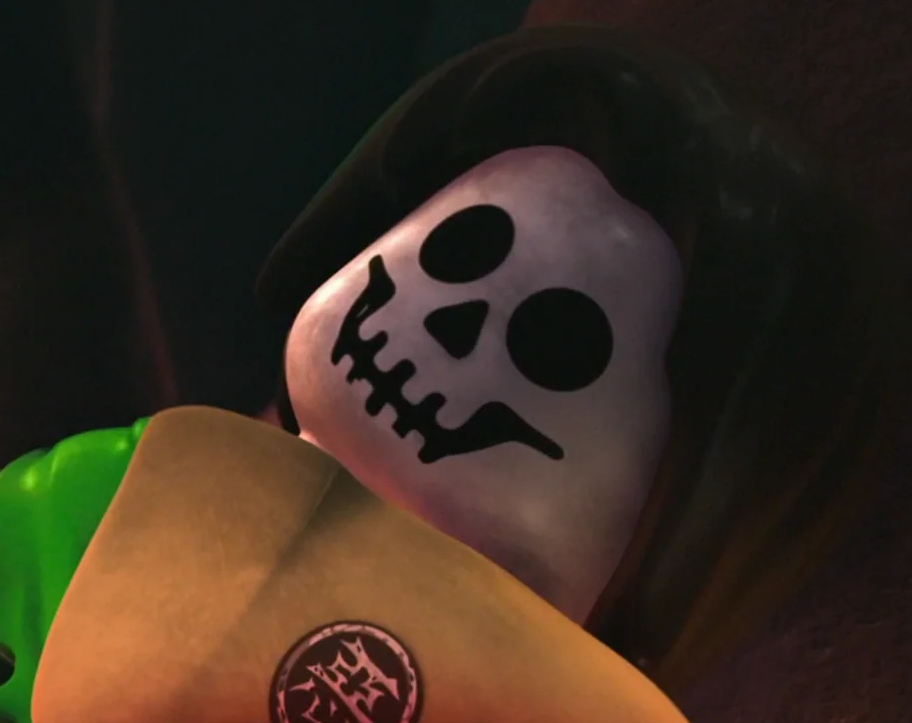
Beyond the stickers, there are a couple of notable references built directly into the model itself—easy to miss unless you’re paying close attention during the build. On page 17 of the instructions, Nadakhan’s Teapot of Tyrahn is built into the model, referencing the sky pirate leader and main antagonist of season 6, Skybound. On page 73 of the instructions, a grim detail appears as a long black-haired skull with a green scarf, representing Morro—Sensei Wu’s lost student and main antagonist of season 5, Possession.
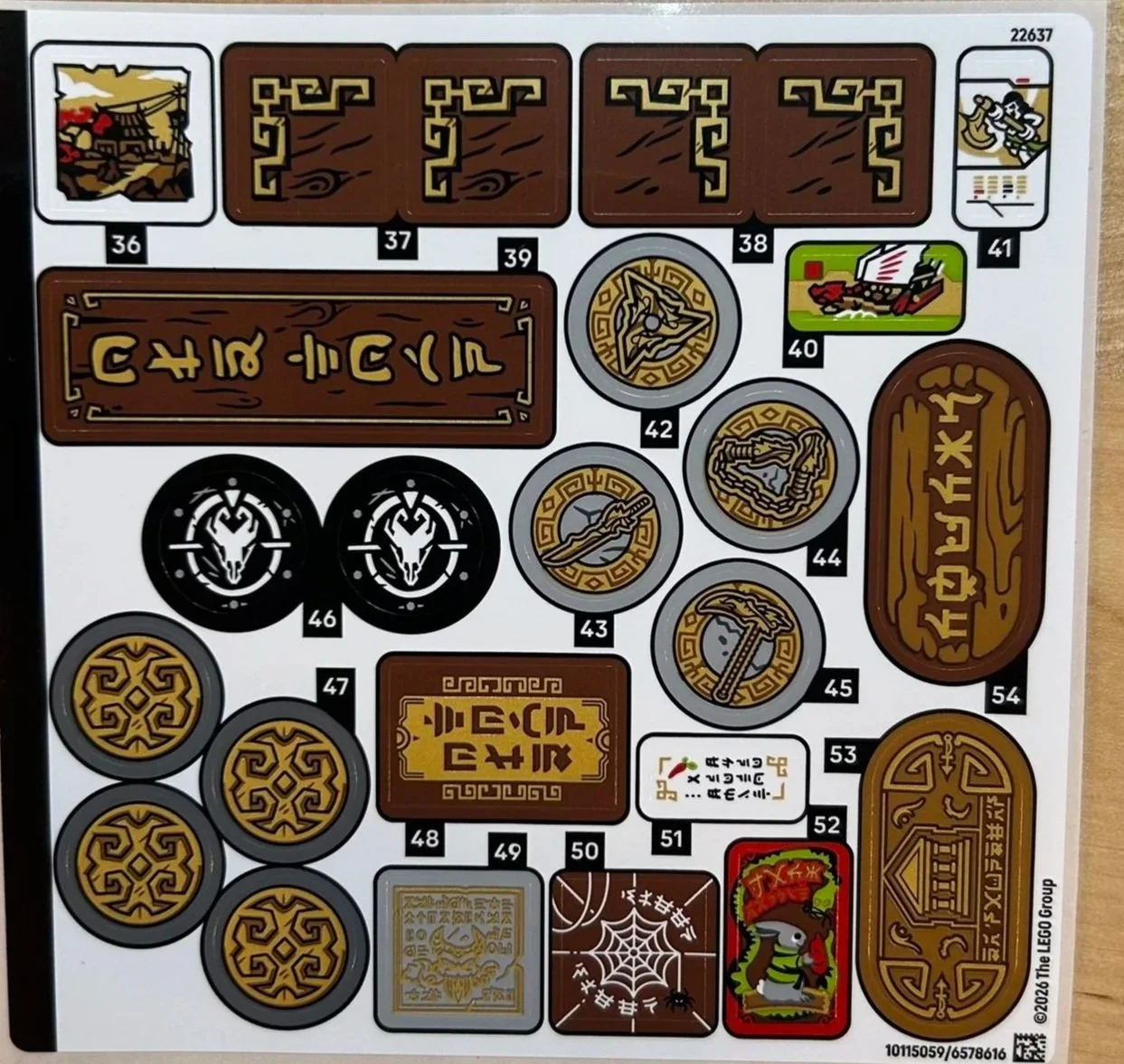
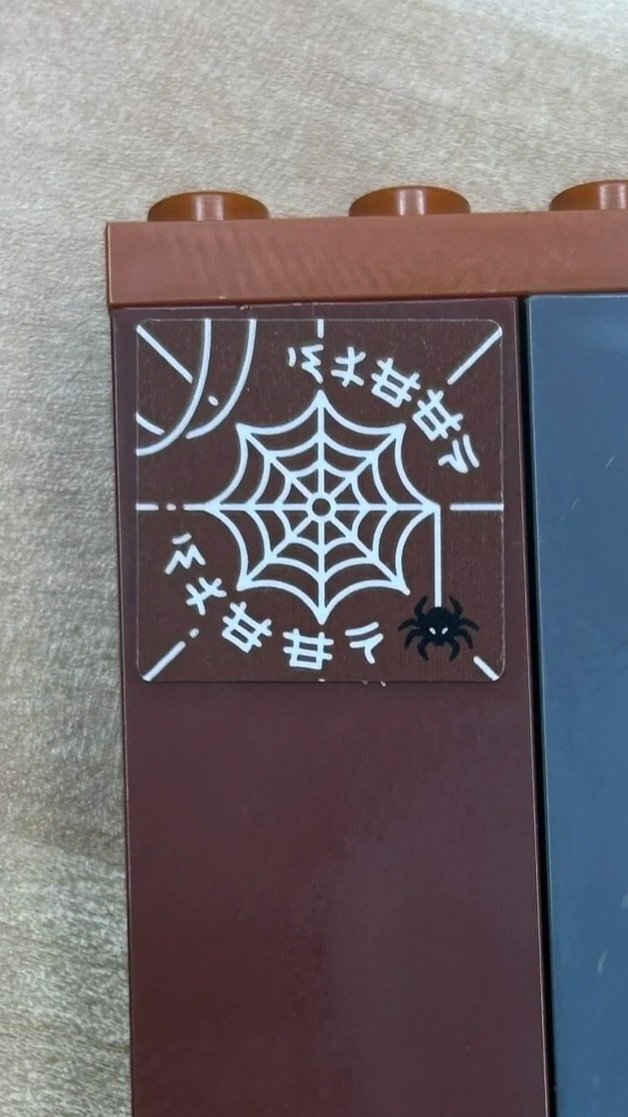
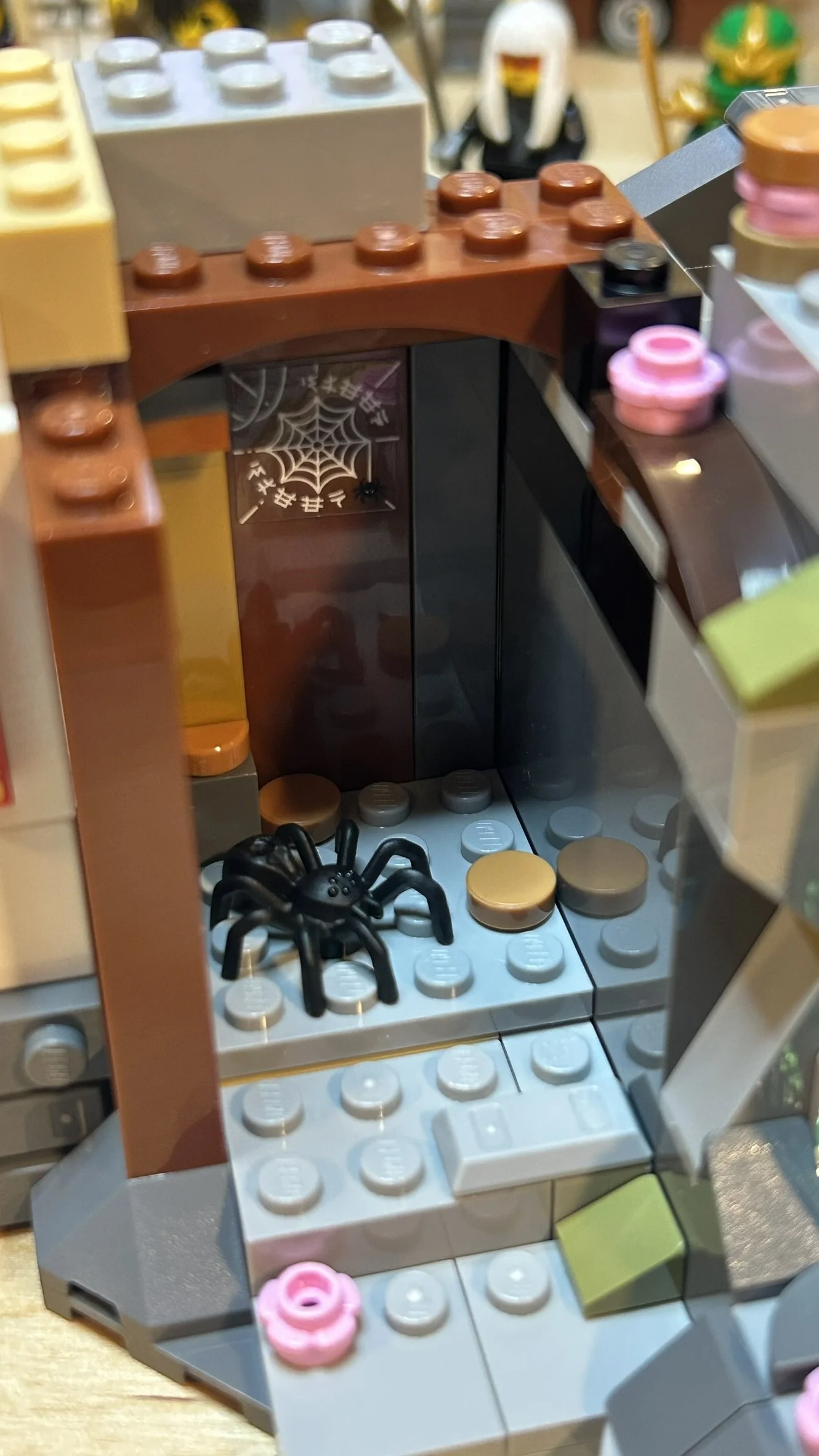
While translating the stickers in this section, I may have stumbled across a possible typo. Sticker 50 shows a spider web with the word “sleen” written above and below it. After spending some time puzzling over it—and comparing notes with another die-hard Ninjago fan—we suspect it was intended to read “sleep.” The spider depicted both on the sticker and on the base of the build appears to reference the giant spider from Tiger Widow Island, whose venom can put a Djinn to sleep, as seen in season 6, Skybound. Of course, it’s possible I’m misreading the Ninjargon text, but I’m hard-pressed to come up with another explanation.
EDIT: A few days after finishing this article—and following the official reveal of the set—we received confirmation from the set’s designer, Chi Wing Lee. In an in-depth interview conducted by YouTuber BricksByMind, Chi directly addressed this detail, confirming that Sticker 50 is a typo. At the 1:42 mark of the interview, he explains that it was indeed meant to translate to “sleep.”
I was incorrect in my original theory about its meaning. Rather than referencing Tiger Widow Island from season 6, the sticker is actually tied to a lullaby Princess Harumi sings to a baby Wu in season 8, Sons of Garmadon. The lullaby references spiders, which explains both the spider web design on the sticker and the spider element incorporated into this section of the model.
The full interview is well worth watching. Chi offers a fascinating look into his design process and the amount of care and thought that went into creating this truly special Ninjago set.
Where the Deep Lore Lives
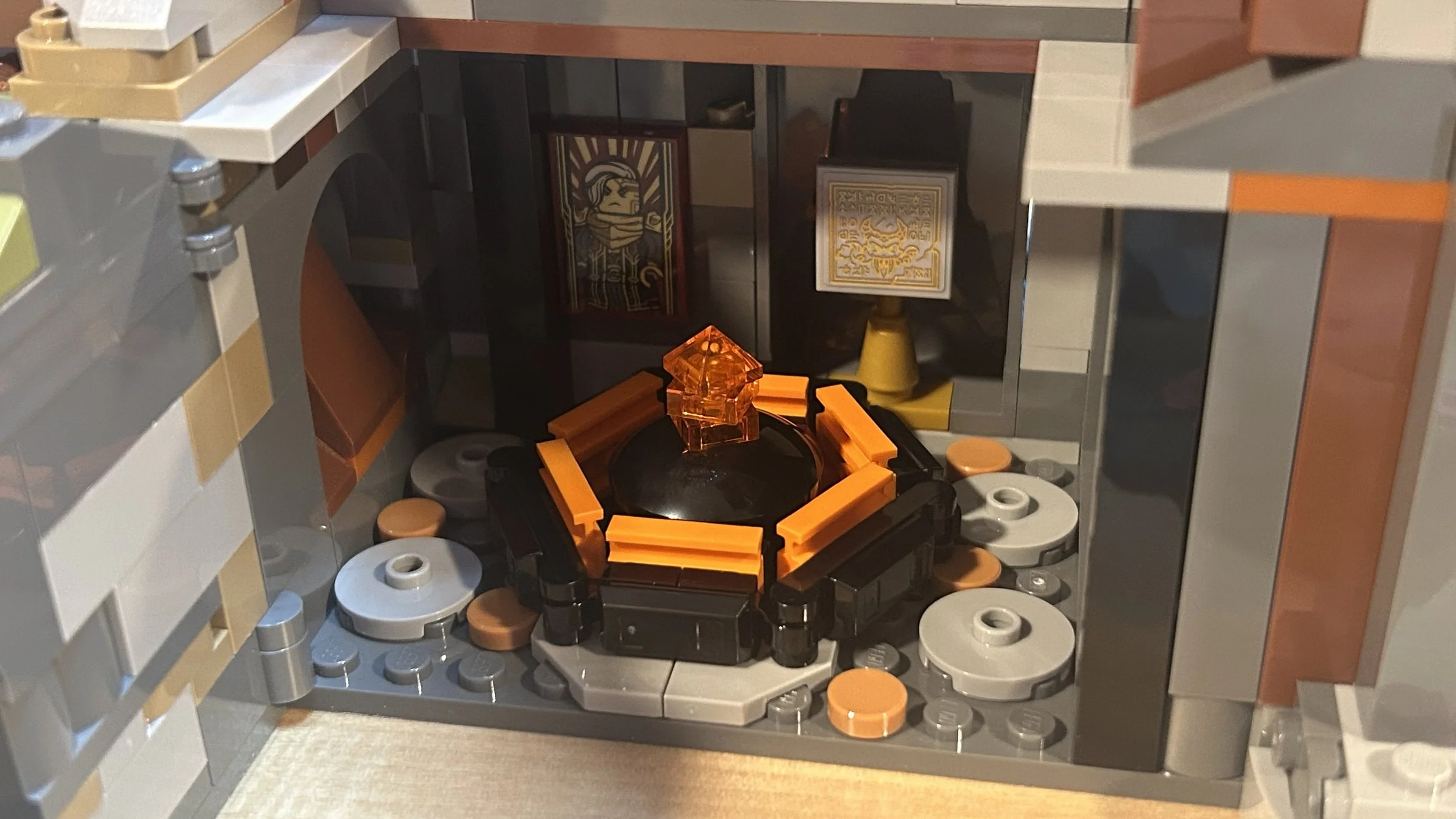
Beneath Dr. Saunders’ Office is a hidden Loyalist hideout. The Loyalists serve as the antagonists in season 4 of Dragons Rising, and the small build tucked into the cave—along with the alternate face for one of the minifigures—offers a subtle hint at their origins. To avoid spoilers for the upcoming season, I’ll leave that detail unrevealed.
Because this section ties into currently unaired material, the meaning of Sticker 49 is still unclear. It appears to depict a ruin or artifact with significance to the Loyalists, and the surrounding build elements suggest a possible connection to the Dragons Rising season 1 villains, Empress Beatrix and the Imperium Empire. For now, it’s a mystery—one that future episodes will hopefully clarify.
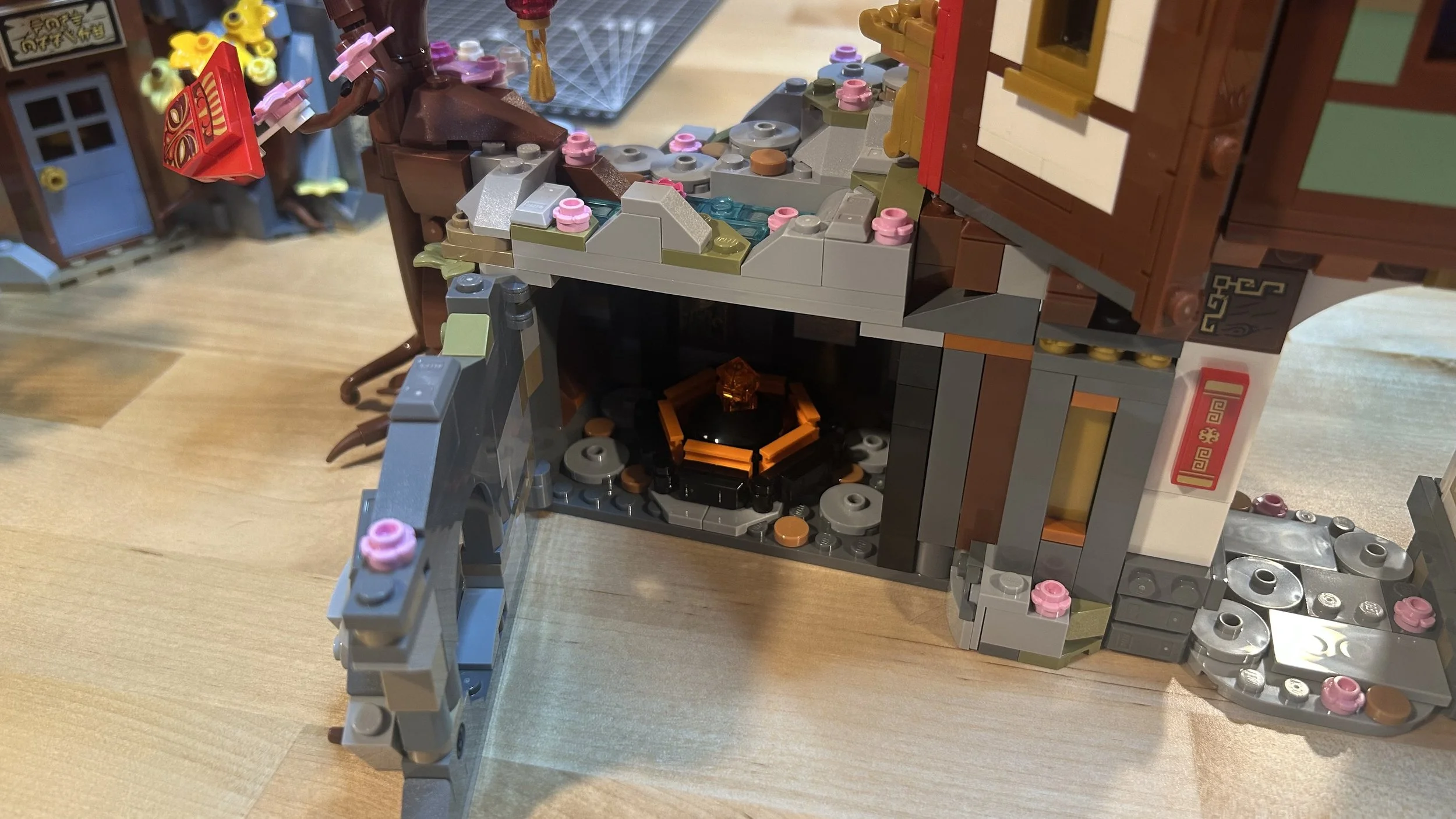
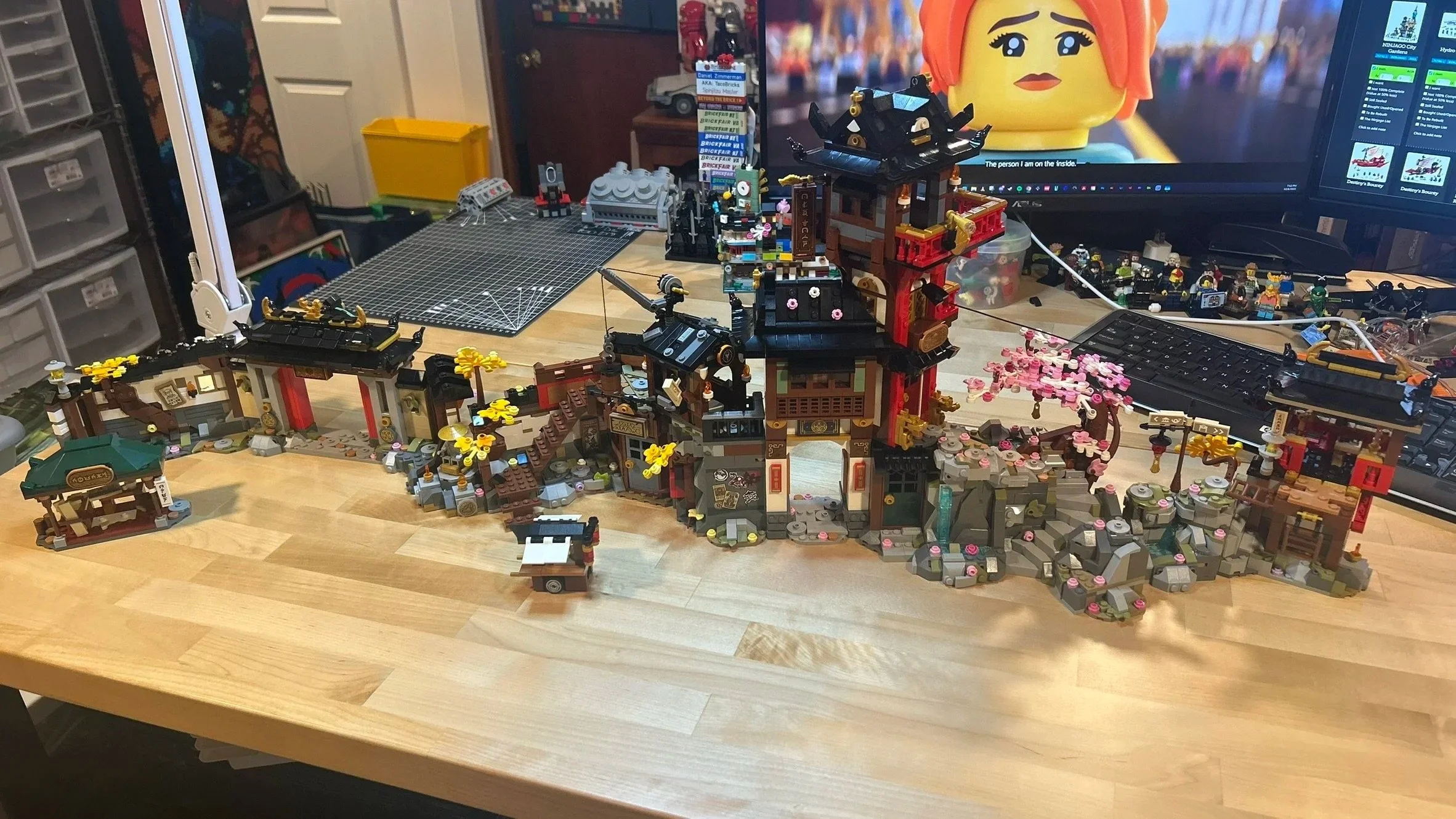
Once every section of the build is complete, the set can be assembled in two different ways. The first is the circular configuration shown on the front of the box. The second option arranges all four sections into a long line, stretching roughly 43 inches from end to end. Personally, I prefer the circular layout. I tend to gravitate toward closed, more contained displays, but I do appreciate the alternate linear option—everyone’s display space is different, and it’s nice to have flexibility.
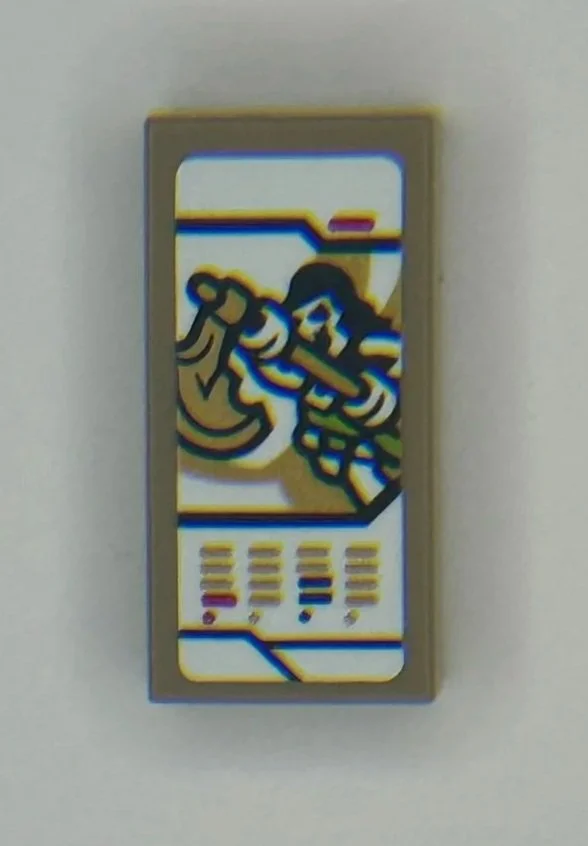
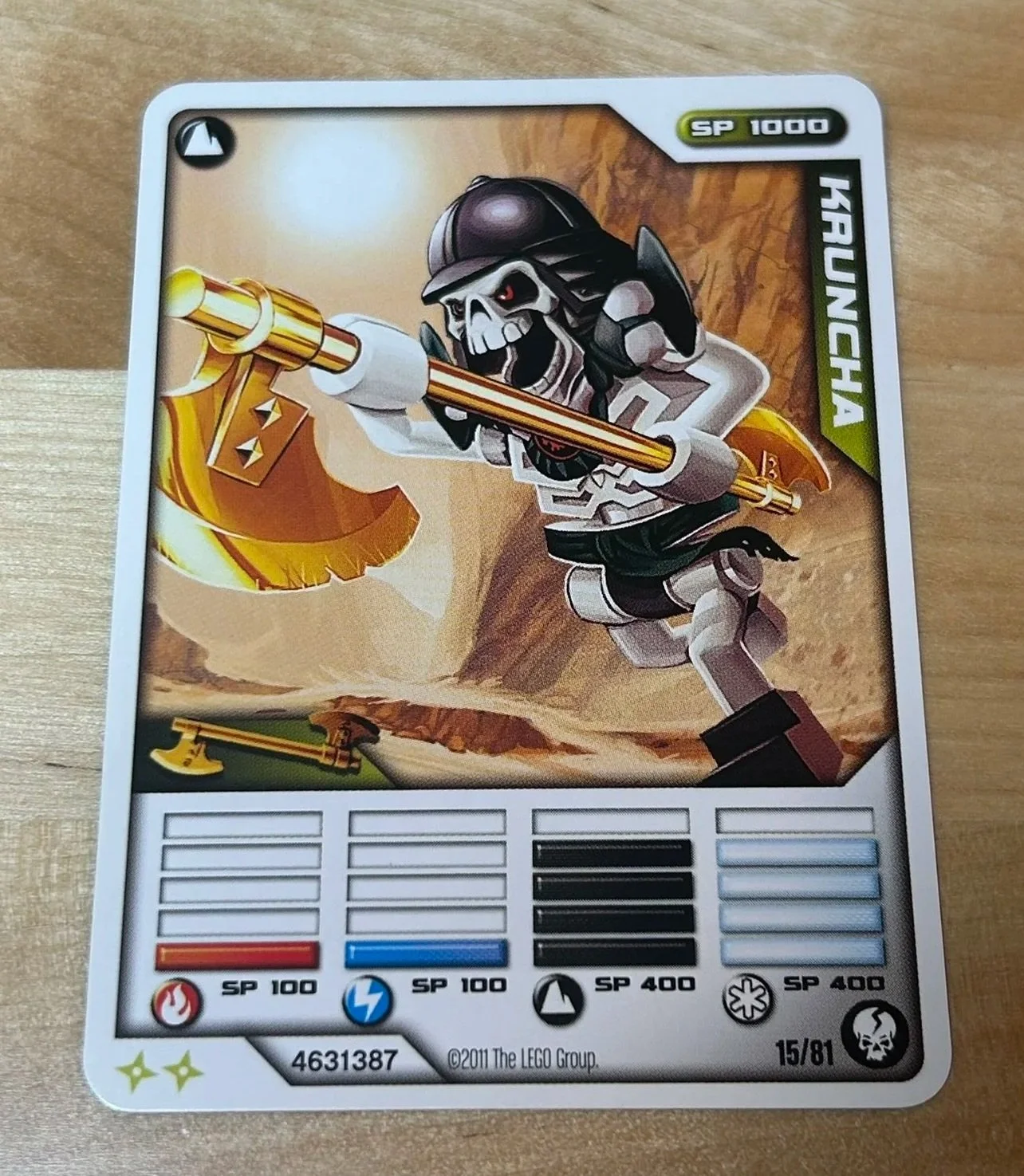
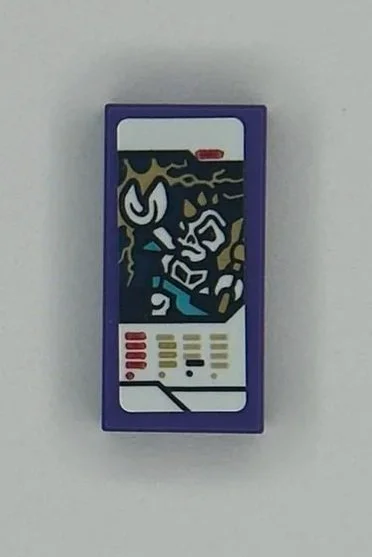
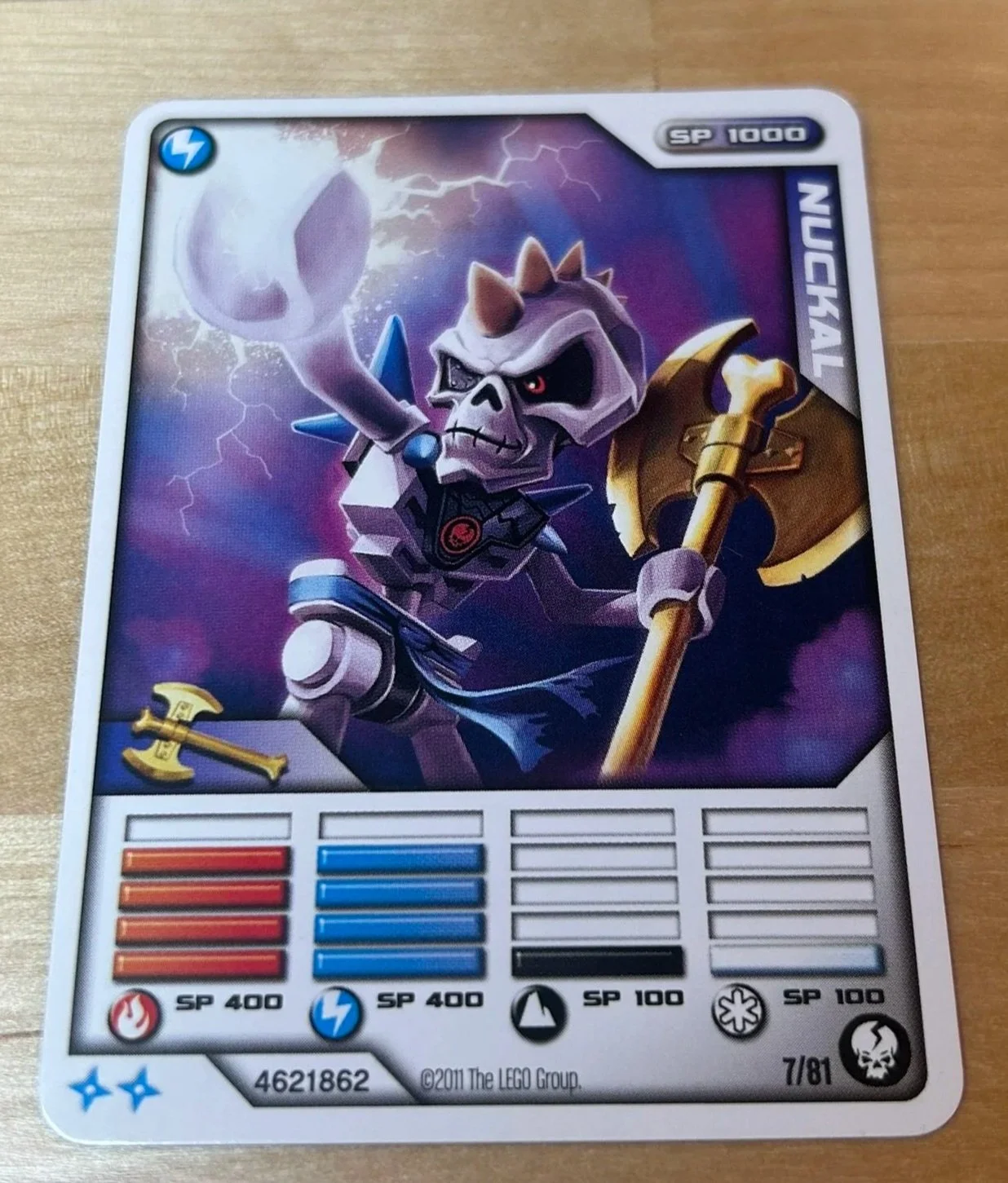
There is one last reference I wanted to call out separately, as it continues a long-running Ninjago tradition: Micro Ninjago trading cards. Stickers 30 and 41 are miniature versions of the character cards for the skeletons Kruncha and Nuckal. These cards originally came with the spinner sets released during Ninjago’s earliest waves in 2011–2012 and were used to boost spinners or add obstacles for opponents. Many Ninjago sets since then have included micro versions of these cards, and it’s a tradition I’ve always enjoyed seeing return. I’m glad it’s represented here and hope it continues in future sets.
Does The Old Town Represent 15 Years of Ninjago?
To wrap things up, I genuinely love 71861 The Old Town and feel confident saying it succeeds in honoring 15 years of Ninjago. The references extend beyond the original sets and television series to include the books and comics as well, making it clear just how much care the design team put into celebrating Ninjago’s history across multiple forms of media. In my opinion, they absolutely nailed it.
If I have one small grievance, it’s the absence of a nod to Ninjago’s theme song, The Weekend Whip by The Fold. A simple sticker—perhaps styled like album artwork—would have been a fun way to acknowledge a song that has been part of the series for just as long as the story itself. That said, this is very much nitpicking. There’s so much to love in this set that the omission is easy to overlook.
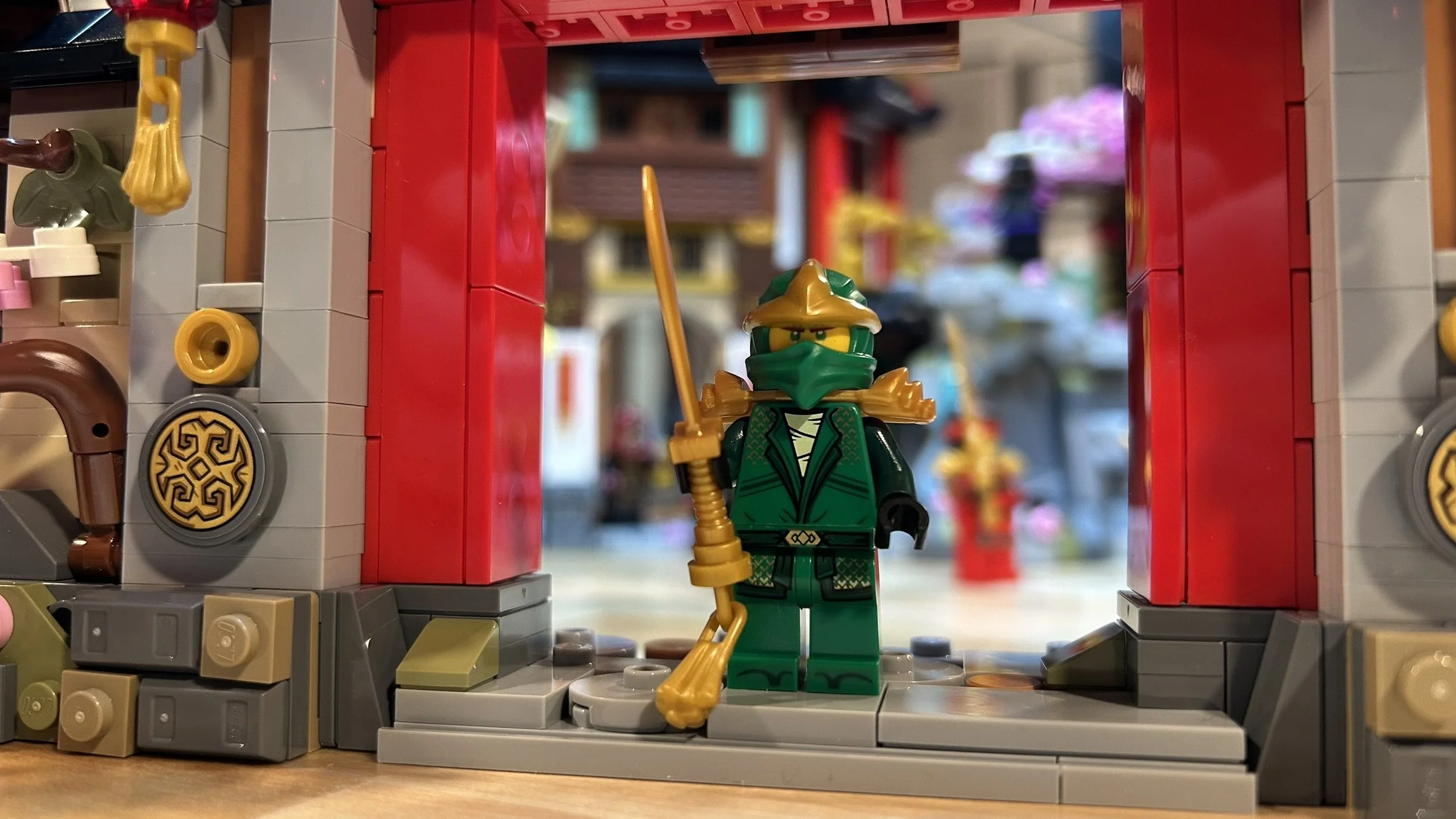
I had a fantastic time building this set, and the build experience is consistently strong from start to finish. The quality of the design and construction is exactly what you’d expect from a LEGO set of this scale, and it’s great to see that level of care carried through into Ninjago. The minifigure lineup, in particular, is a dream for longtime fans, bringing together all six original ninja, updated versions of highly sought-after characters, and brand-new figures fans have been waiting on since as far back as 2012.
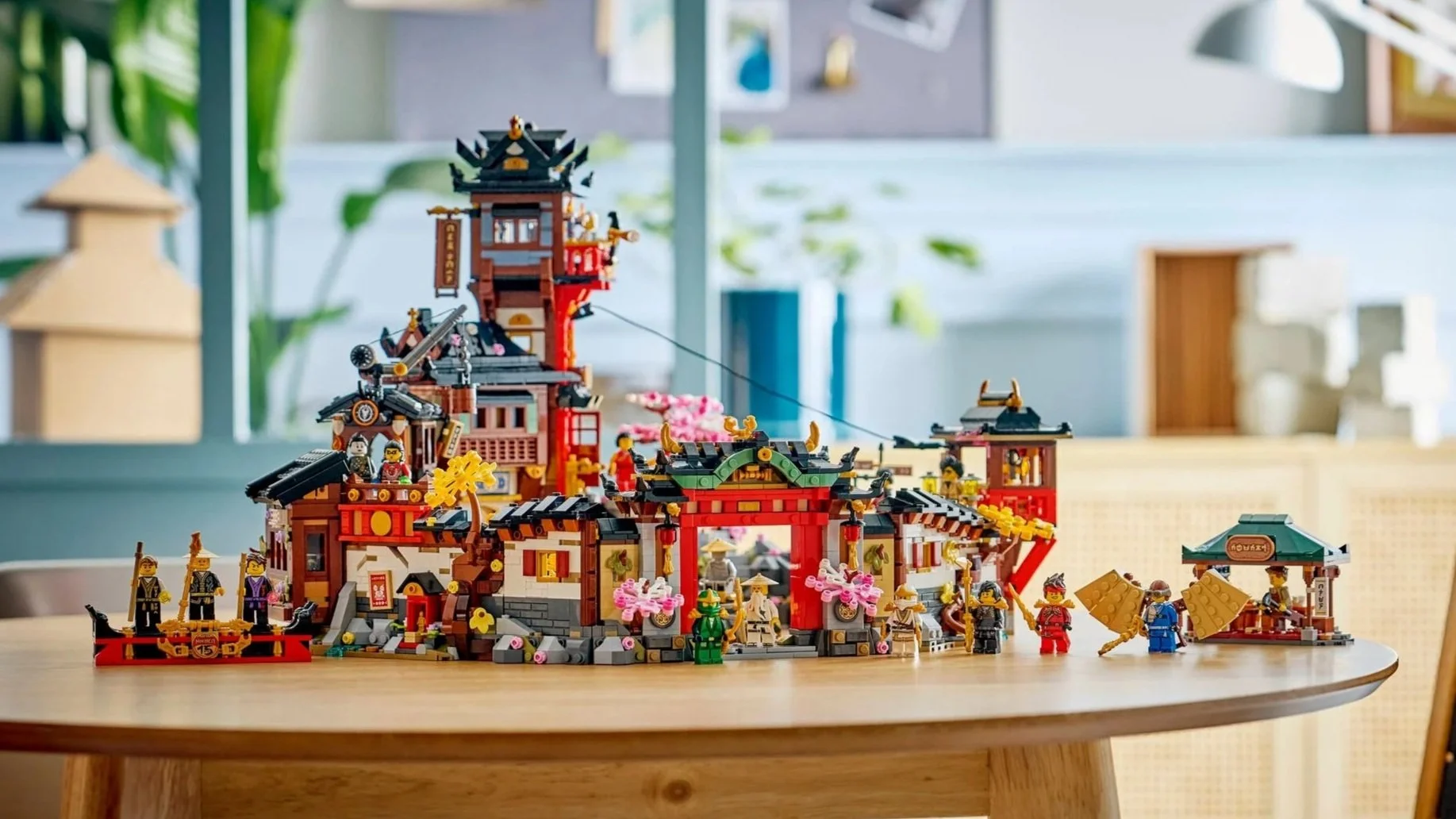
If this set hadn’t been sent to me, I would have been first in line at my LEGO Store on January 1st to buy it. The Old Town hits every benchmark I look for in a Ninjago set. Condensing 15 years of story and sets into a single model is no small task, but the Ninjago team rises to the challenge. This is a fantastic way to celebrate the theme’s legacy, and I can’t wait to see where Ninjago goes next. In the meantime—time for a rewatch. NINJAAAAGOOOOO!
What have been your favorite Ninjago memories from the past 15 years? What are some future Ninjago-related things you would like to see from BrickNerd? Share them with us in the comments!
Do you want to help BrickNerd continue publishing articles like this one? Become a top patron like Marc & Liz Puleo, Paige Mueller, Rob Klingberg from Brickstuff, John & Joshua Hanlon from Beyond the Brick, Megan Lum, Andy Price, Lukas Kurth from StoneWars, Wayne Tyler, Dan Church, and Roxanne Baxter to show your support, get early access, exclusive swag and more.