Happy Accidents: Finding Inspiration in Unplanned LEGO Photos
/It’s common knowledge that planning is the foundation of any creative activity. By choosing a scene, characters, lighting, and all the necessary accessories, we create a clear vision that guides an effective photography process.
But when we experiment with new tools or techniques, the results can exceed all expectations. Even more interesting, a single image can invite multiple interpretations. In these moments, unexpected inspiration emerges from completely unplanned shots. Let’s explore a few examples of these fun, multifaceted compositions. So here’s how those happy accidents can become a creative tool in LEGO photography.
From Honey to Liquid Gold
While combining live bees with LEGO characters in my Beekeeping Story, I used flash photography and a yellow background to transform water into honey. Beyond looking delicious, it also shimmered like gold. The key is directing the flash at a low angle so the surface of the water catches the light, giving it that metallic sheen rather than a transparent look.

Early Ariel character designs for The Little Mermaid by @scurviesdisneyblog.
This “liquid gold” effect brought me back to the theme of water and its inhabitants, particularly a goldfish. It also reminded me of early concept art from The Little Mermaid, where the tail was originally yellow. That connection ultimately led me to photograph a Gold Mermaid sitting on a sparkling wave.
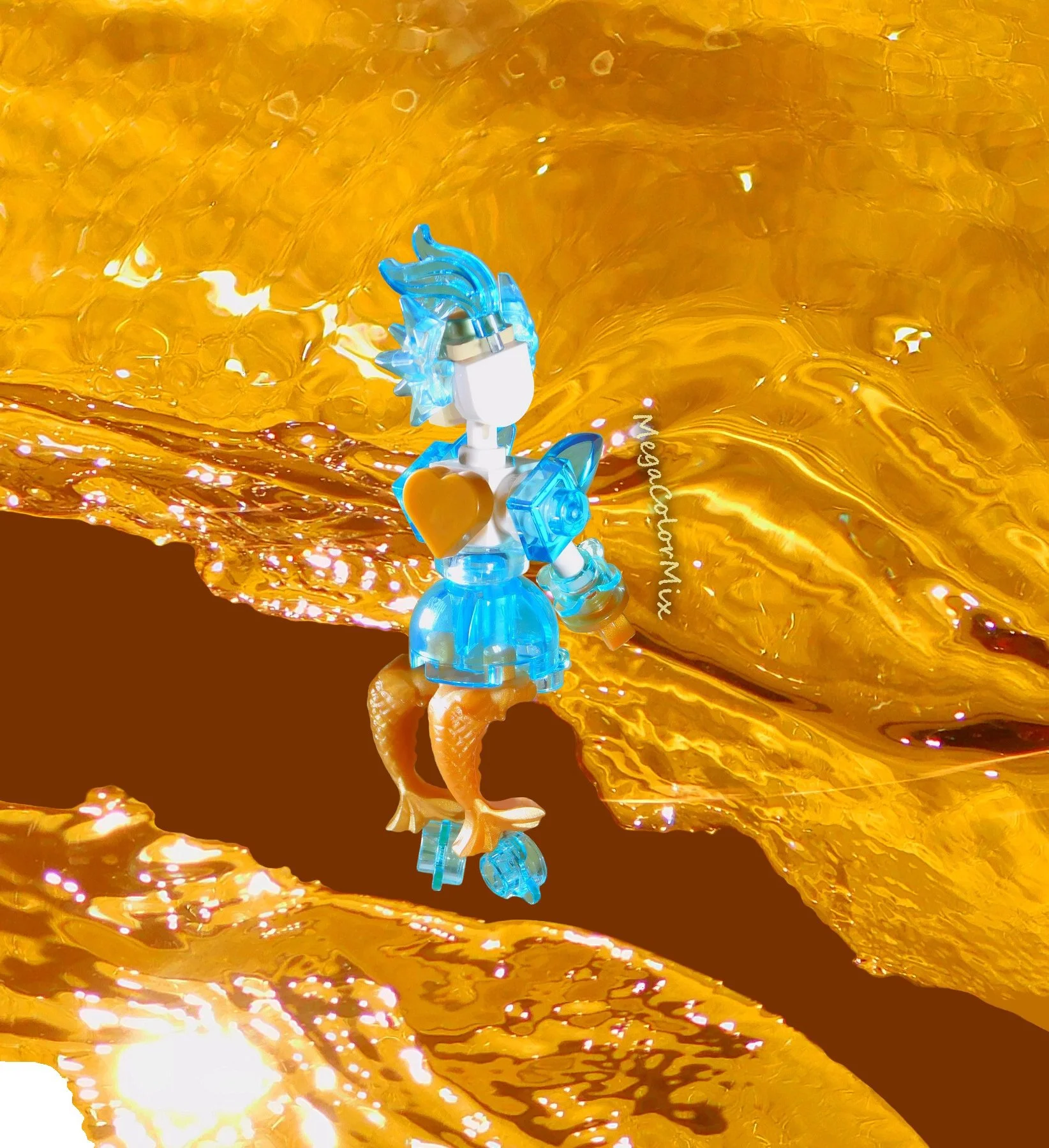
The Gold Mermaid
This transformation from one material into another opened the door to a broader idea: what if familiar elements could consistently stand in for something entirely different?
From Drops to Flying Dew
I was photographing a minifigure in front of a wet window during rainy weather when a splash hit the glass, forming large, rounded droplets. By carefully lighting them and removing unwanted reflections and shadows, I was able to create the illusion that the drops were floating.
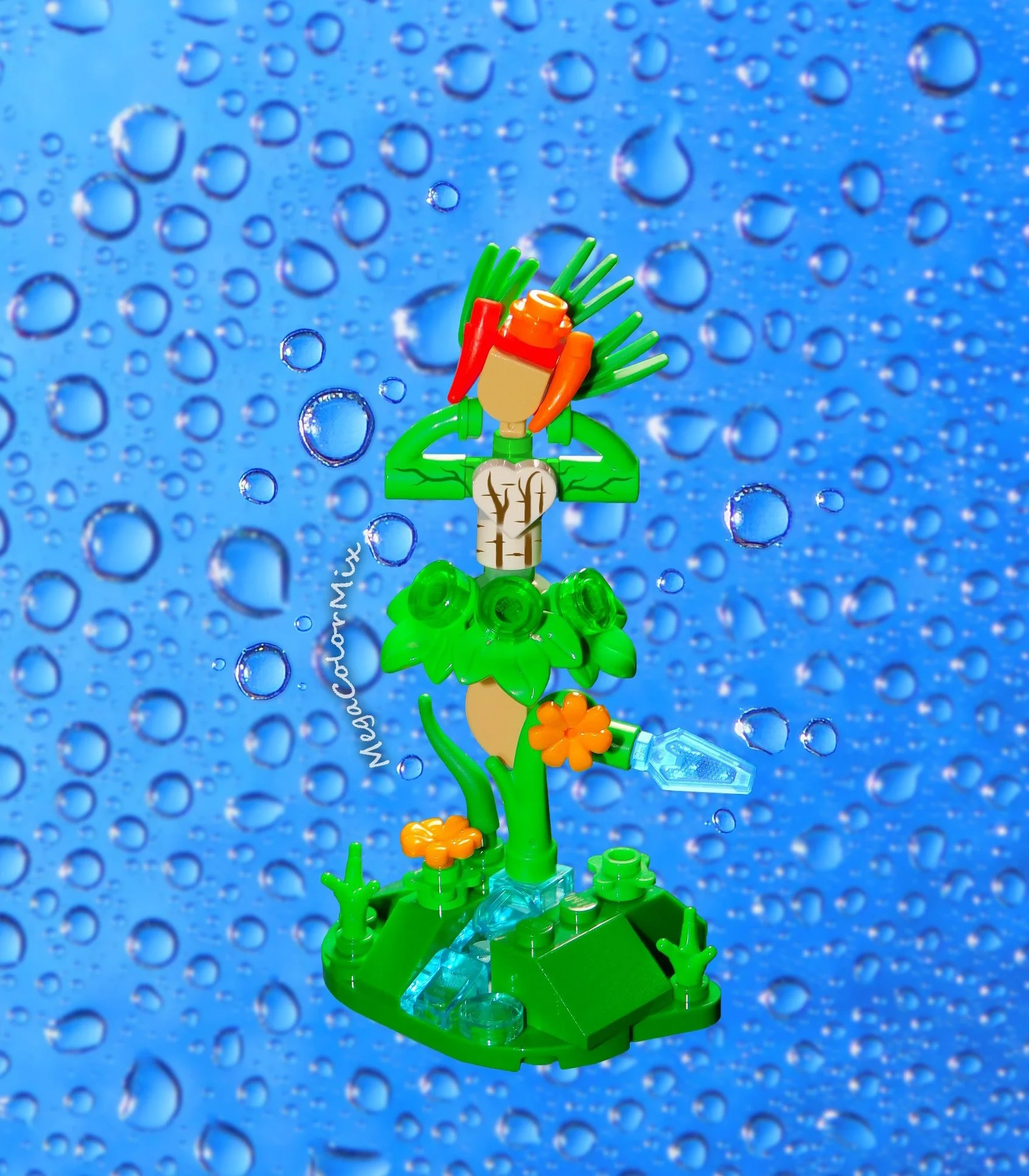
The Tree Fairy
This effect became morning dew for a Tree Fairy. To achieve this, place a separate image of your figure behind the wet glass so it doesn’t reflect on the surface. The droplets will retain that sense of motion and “flight.”
If water can suggest motion, the next step is to see how those same elements can begin to mimic entirely different environments.
From Wet Glass to Leafy Shade
Continuing with the theme of droplets, illuminated water on glass creates light spots with consistent shapes, but they appear in completely random positions. This randomness can resemble leaves shifting in the wind.
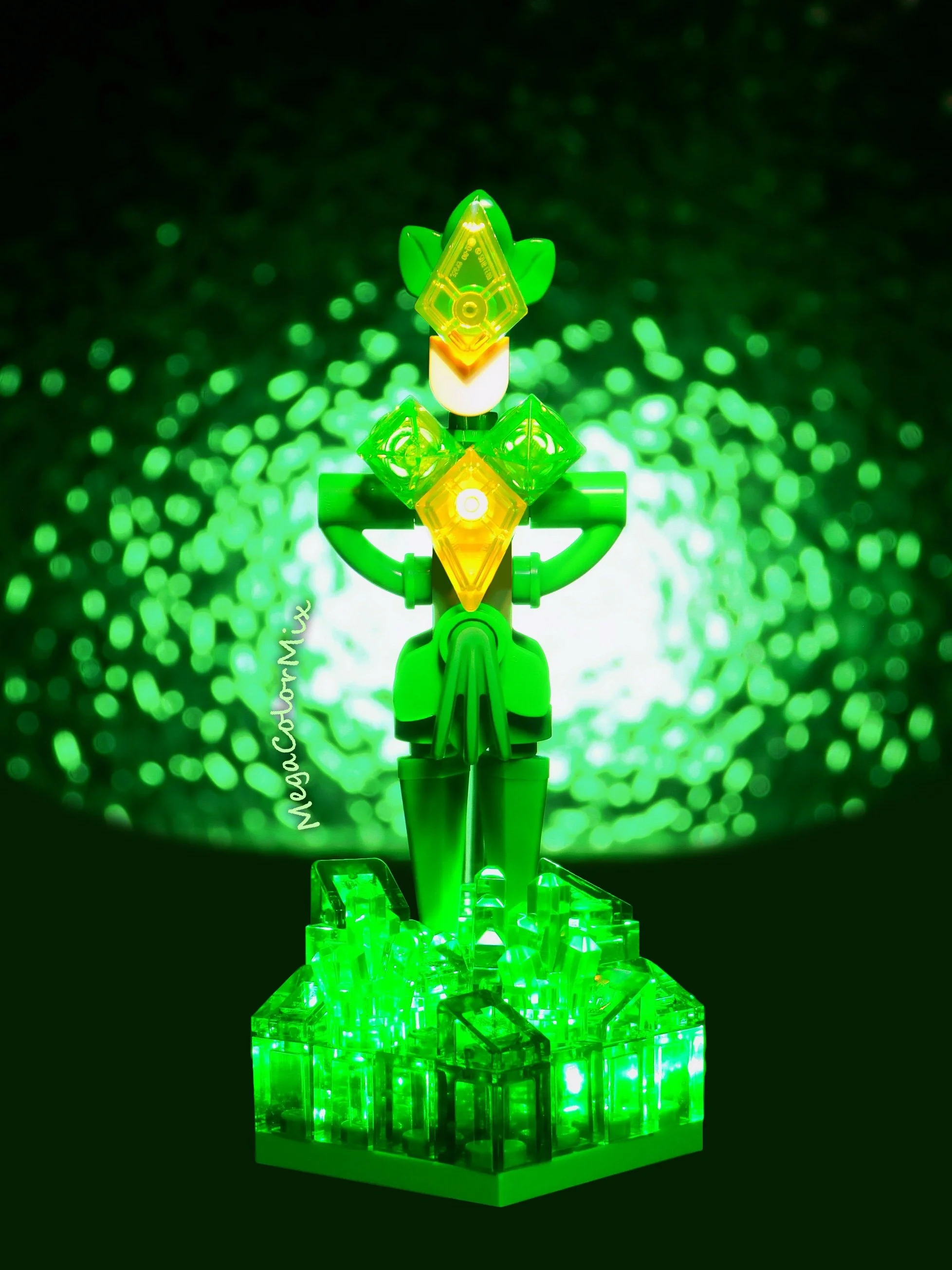
The Emerald Nymph
That visual inspired a portrait of a forest nymph resting in dappled shade. The green-tinted droplets also resemble emeralds, which led me to decorate the character with LEGO crystals, presenting her as a guardian of nature’s treasures.
Here, randomness becomes an advantage, turning simple patterns into something organic and alive. It’s a simple reminder that irregular patterns can often feel more natural than anything carefully arranged.
From Fall… to Flight!
While creating a collage of water splashes, I noticed an unexpected interaction: when a LEGO piece is thrown into water, it can appear to both fall and fly at the same time.
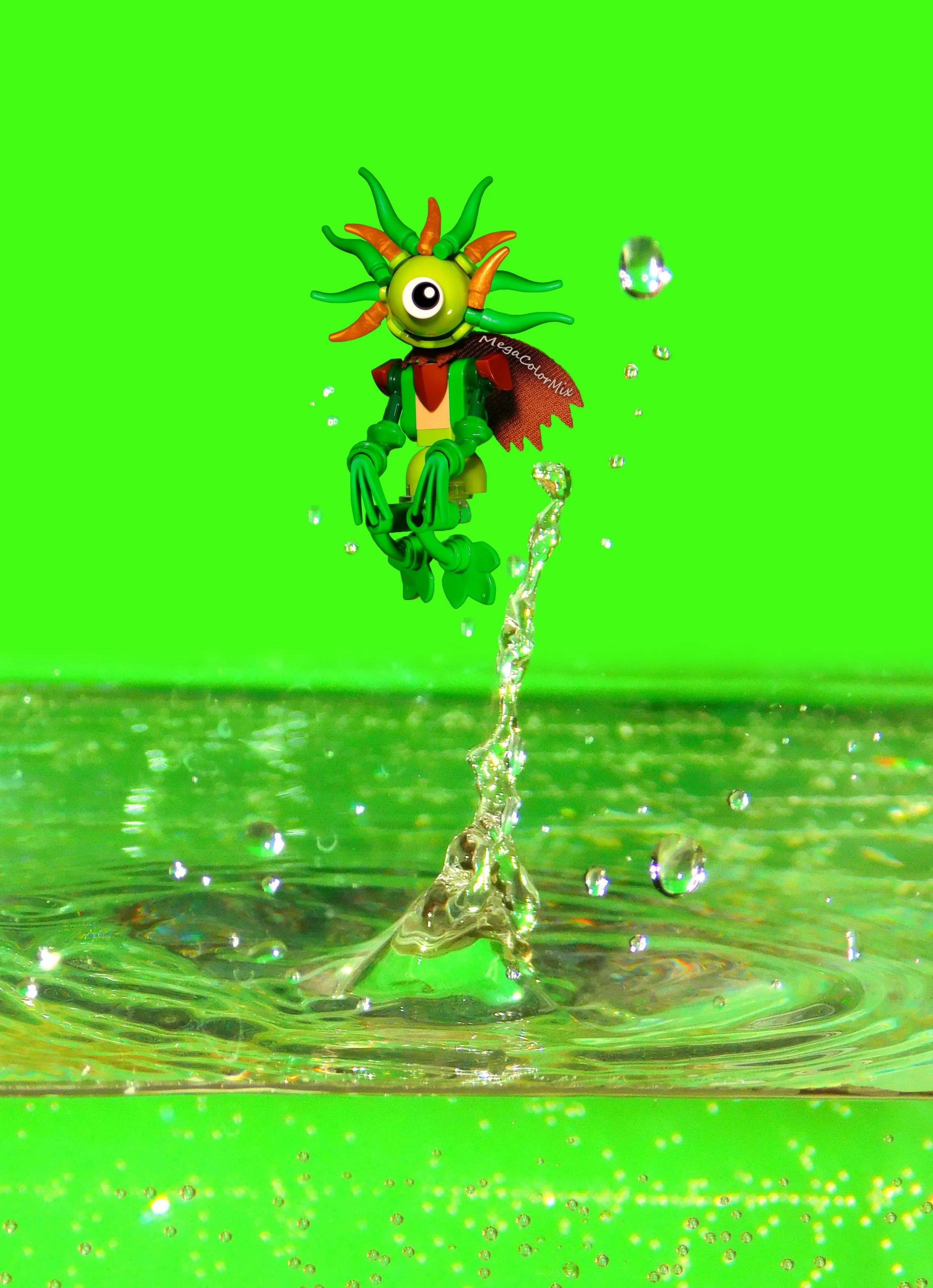
The Swamp Monster
This effect became the foundation for a scene in which a monster bursts upward from a swamp, captured mid-motion between descent and lift. Motion itself becomes the subject, especially when it exists in that in-between state where direction is unclear. That ambiguity gives the scene its energy, capturing a moment that feels both chaotic and alive.
Firework Sparkler as Tornado
This idea was inspired by a simple sparkler used in a festive photo. As it burned down, the glowing tip traced a line filled with bursts of light that resembled a swirling firestorm.
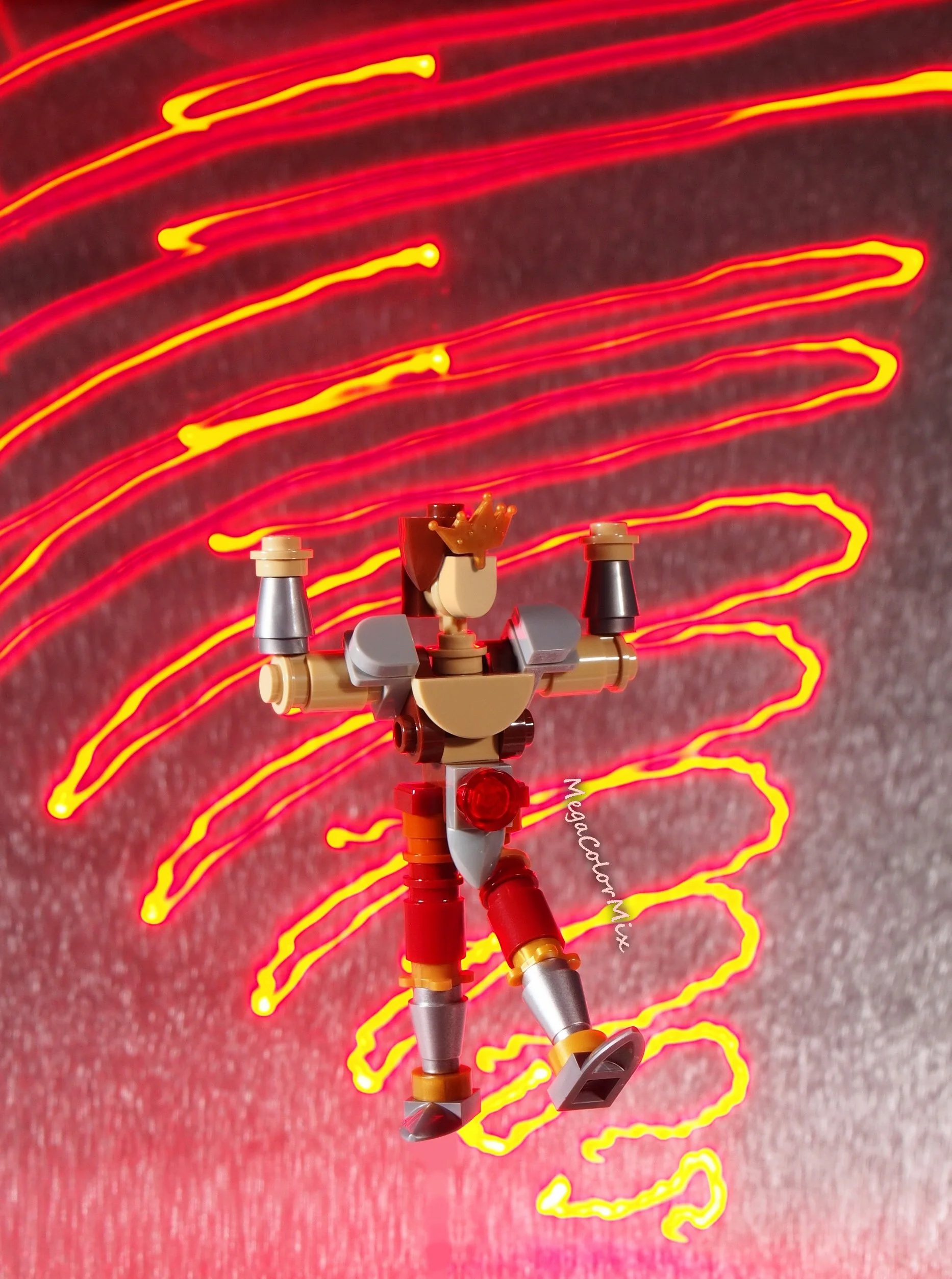
The Fire Warrior
Using a slower shutter speed helps capture the full motion of the sparkler, allowing the light trails to form continuous, flowing shapes. By pairing this effect with a dynamic pose, I created a Fire Warrior summoning a tornado from the depths of the earth. Light, like water, can be shaped into something far beyond its original purpose.
Fairy Lights as Solar Halo and Rainbow
Transforming fairy lights into the Aurora Borealis inspired me to explore another optical phenomenon: the solar halo. By placing the figure on a reflective surface, or mirroring the lower portion of the image in post-processing, the lights form a defined circular halo around the character.
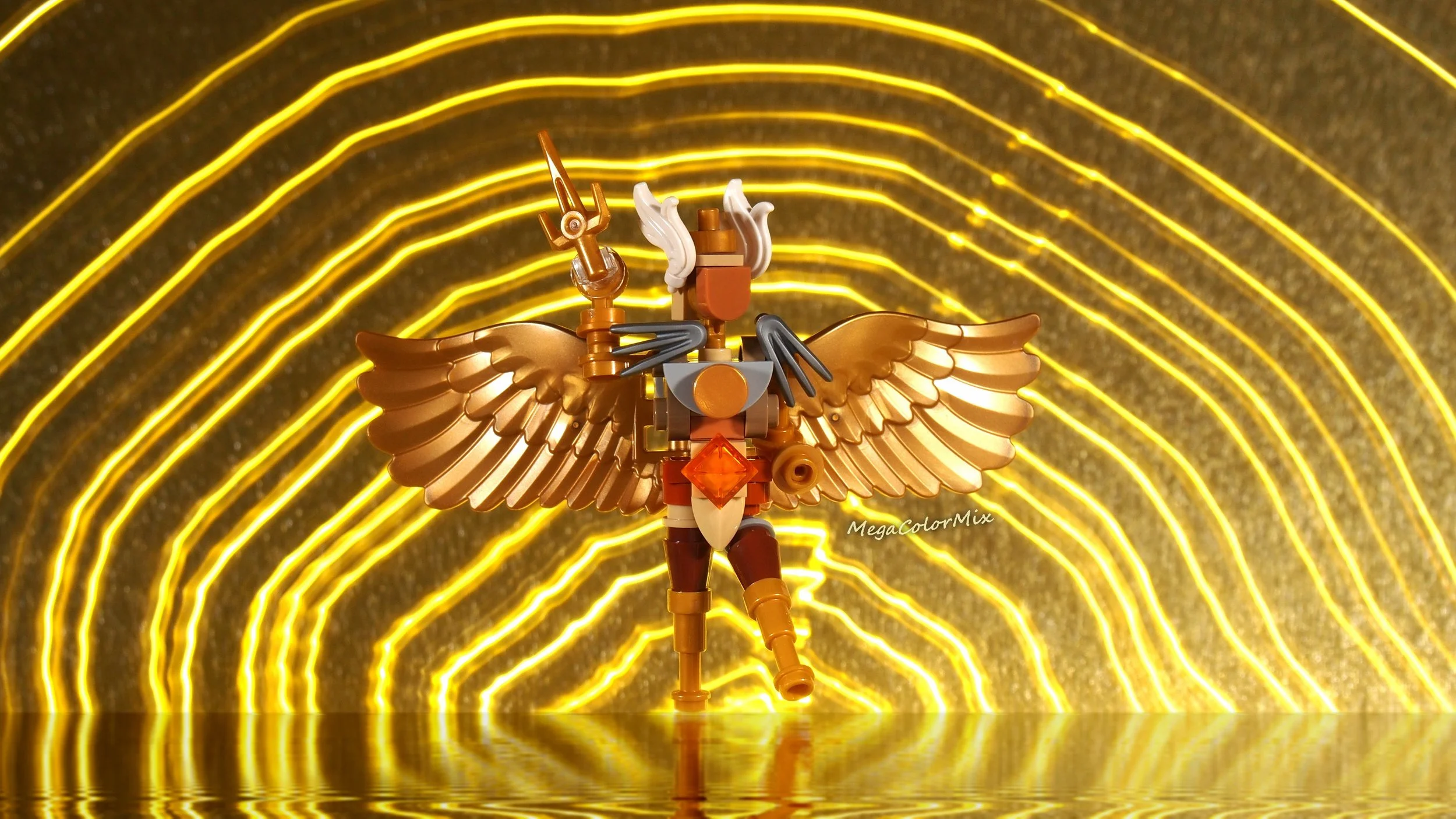
The Golden Warrior
The halo effect can also produce soft, multicolored light spots, which inspired another phenomenon: a rainbow. In this composition, the figure represents a star emerging from behind the clouds.
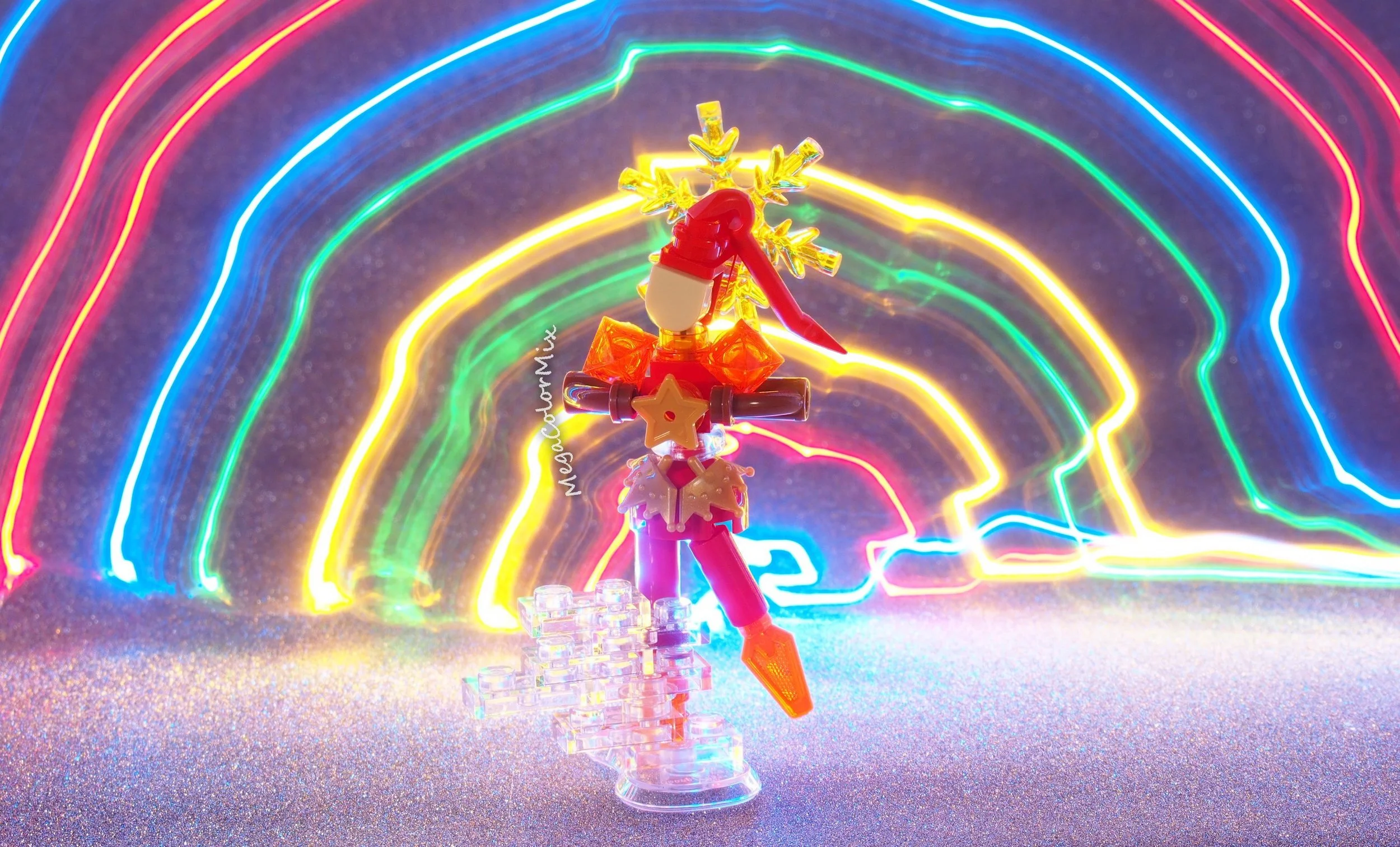
The Star Behind the Cloud
As these examples show, unplanned shots aren’t mistakes to discard—they’re opportunities waiting to be recognized. The images that don’t go according to plan often carry the most potential, pushing us toward ideas we wouldn’t have considered otherwise. They expand our creative toolkit, enrich our galleries, and encourage us to explore new techniques.
The next time something unexpected happens during a shoot, don’t rush to reset. Take a closer look, experiment, and see where it leads. You might find that the best ideas begin where the plan ends. We’ll continue exploring the potential of unplanned shots in future discoveries, so stay tuned!
What unexpected effect have you discovered while experimenting with LEGO photography? Leave your thoughts in the comments below.
Do you want to help BrickNerd continue publishing articles like this one? Become a top patron like Paige Mueller, Rob Klingberg from Brickstuff, John & Joshua Hanlon from Beyond the Brick, Megan Lum, Andy Price, Lukas Kurth from StoneWars, Wayne Tyler, Dan Church, and Roxanne Baxter to show your support, get early access, exclusive swag and more.