SEGA Saga: Comparing the LEGO Genesis and Mega Drive to the Real Thing
/The LEGO Group knows how to tap into the nostalgia of AFOLs who grew up with one foot in the old millennium and the other in the new. We’ve been seeing this trend for some time, and Billund has embraced it, transporting our inner children back to their ’90s bedrooms. We may not have had much, but it was enough to fill our days.
In recent years, the LEGO Group has been no stranger to these nostalgic ventures. Remember the NES and Atari, the Game Boy, and, more recently, the PlayStation? Of course, other legends are still missing, such as the Commodore 64. But 40926 SEGA Genesis Console, known in Europe as the SEGA Mega Drive Console, gives another gaming icon its turn in the LEGO spotlight.
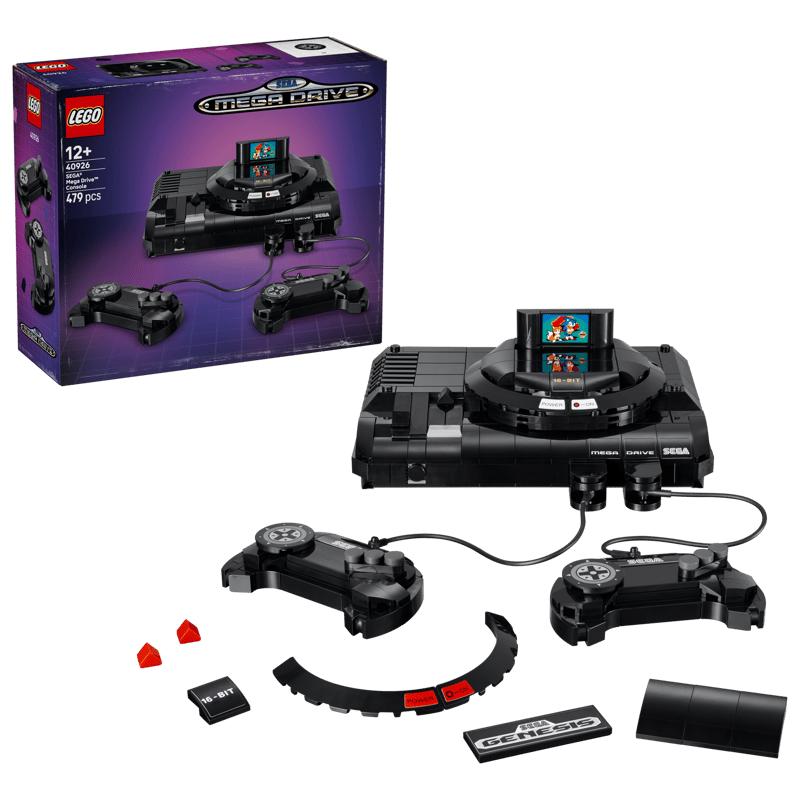
image via lego.com
For me, seeing that set was a real blast from the past, back to when I spent hours with my brother in front of the living room TV. So I “borrowed” Doc Brown’s DeLorean to take you with me to a typical day of my childhood. The ritual was always the same, but first, we needed a game.
Long before downloading and streaming games, renting them was one of our options. Video stores had started with VHS tapes, but soon expanded to games for SEGA, NES, SNES, and other consoles. I can still picture that mysterious place not far from home, where you could dream about owning this game or that one. I also remember hoping that a rental might eventually become a purchase. As the selection changed, those well-used cartridges would sometimes go up for sale.
In the 1990s, renting cartridges was an affordable way for many kids to try dozens of games without buying them at full price. My brother and I were no exception, and choosing what to play was part of the anticipation. Then came the ritual: we would take the cartridge and blow on the contacts, convinced that clearing away the dust would make it work. For some younger readers, SEGA might mean little more than Sonic, the Japanese company’s supersonic hedgehog. But SEGA also gave us true ’90s gaming icons such as Streets of Rage and Golden Axe, while its console hosted games like Mortal Kombat.
That last title wasn’t a SEGA exclusive, but the Genesis version allowed players to unlock blood and more graphic fatalities with a code. Compared with Nintendo’s censored version, it helped reinforce SEGA’s image as the more rebellious, mature choice. This was the world of arcades, tokens, and hours spent with friends, increasingly finding its way into our living rooms. SEGA and its competitors were shaping the future of video games one cartridge at a time.
My brother’s SEGA Mega Drive.
Like Pandora's Box …
Having retrieved Doc’s DeLorean, I’m now returning to you in the future. Holding the LEGO SEGA Genesis Console set felt like holding my own personal Pandora's Box. I knew opening it would unleash all sorts of emotions and leave me nostalgic for a distant past. As you may know by now, I’m very sentimental when it comes to my childhood. Something similar happened with 72423 Shrek, Donkey & Puss in Boots.
Having recovered Doc's DeLorean, I'm now returning to you, in the future. Holding the 40926 SEGA Genesis Console set in my hands was like holding my own personal . I knew that opening the box would unleash a myriad of emotions, and I knew that inside it would remain only a personal nostalgia for a distant past that was. As you know by now, I'm very sentimental when it comes to the past and my childhood. A bit like what happened with the LEGO set 72423 Shrek, Donkey, and Puss in Boots.
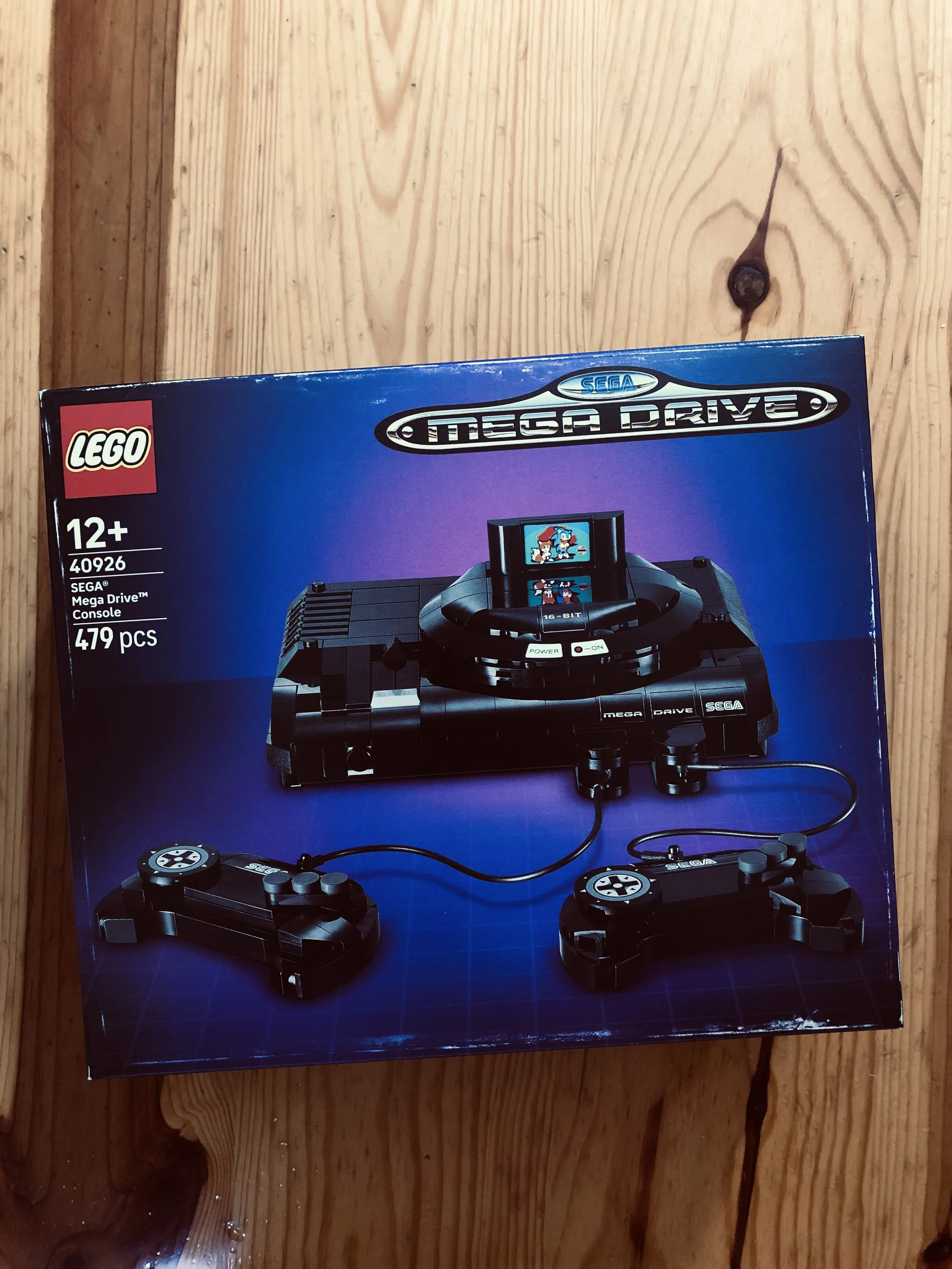
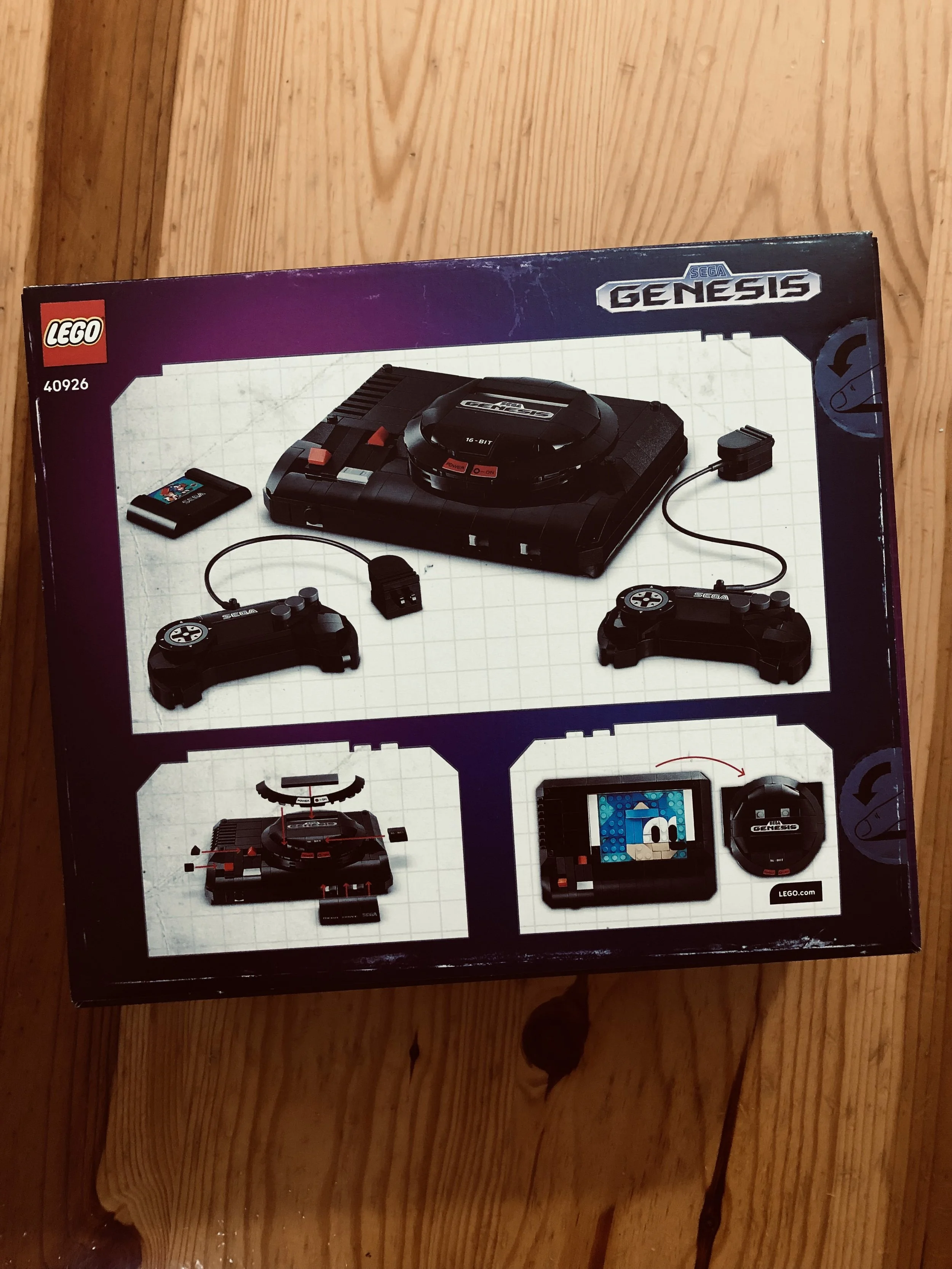
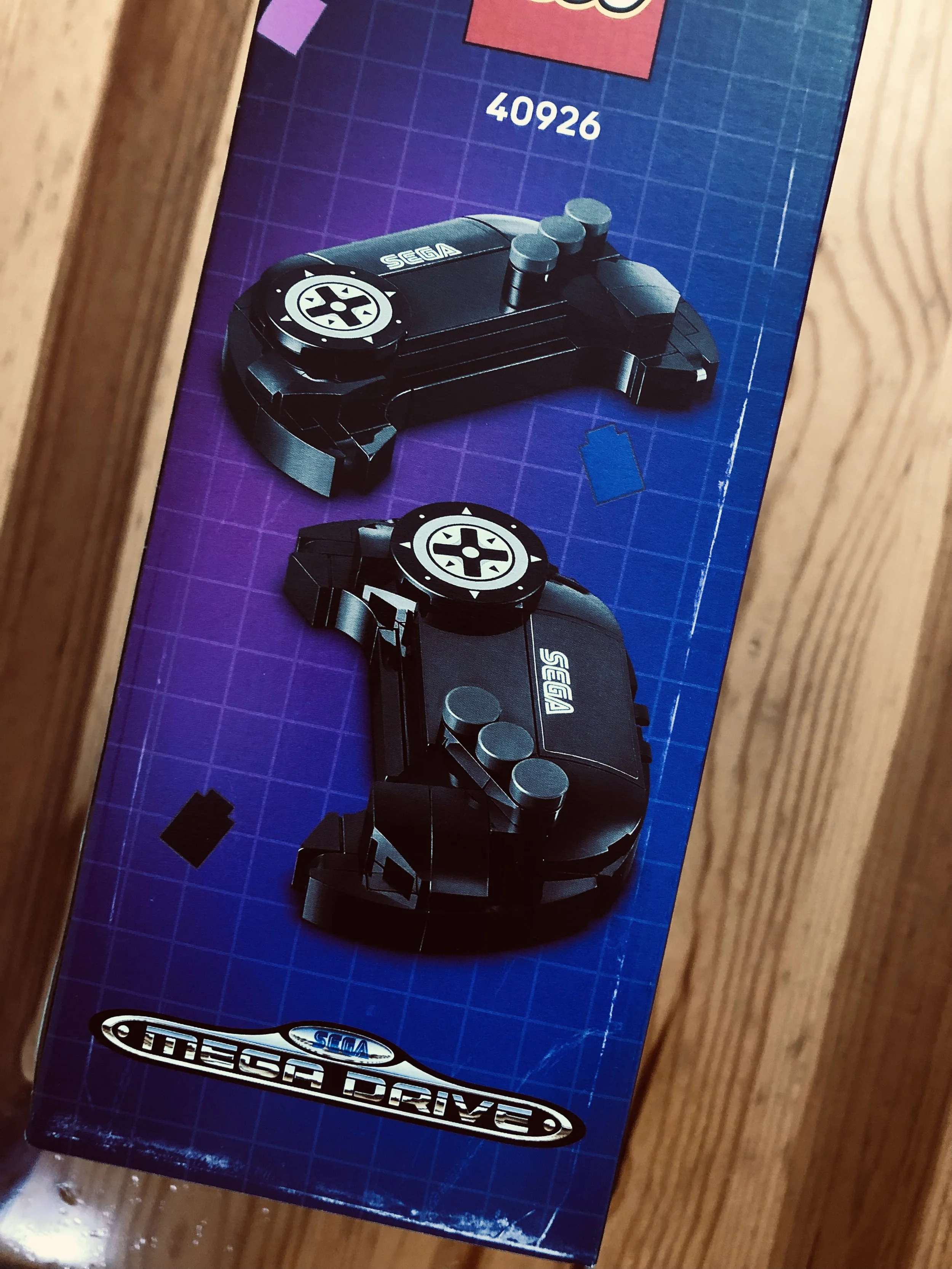
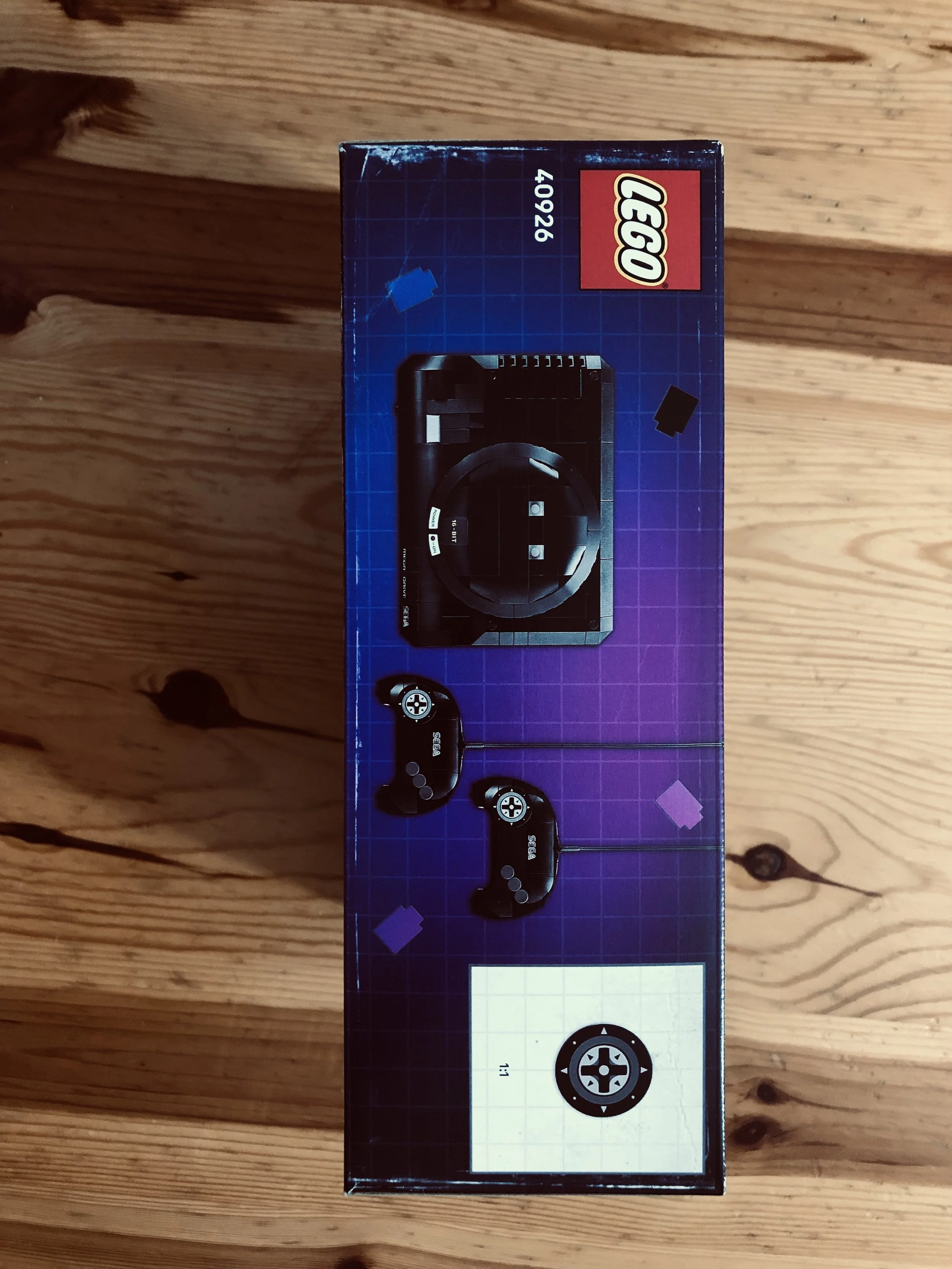
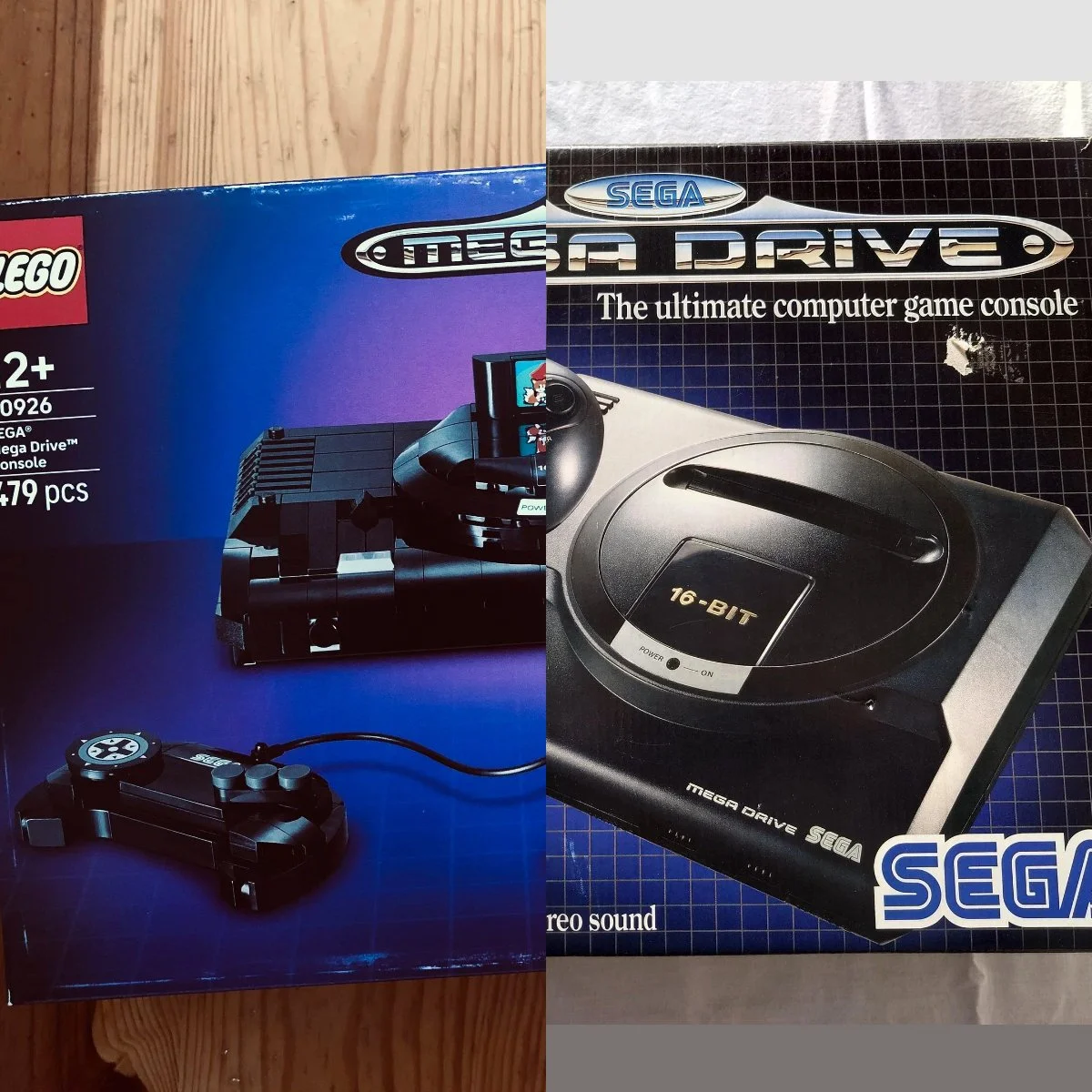
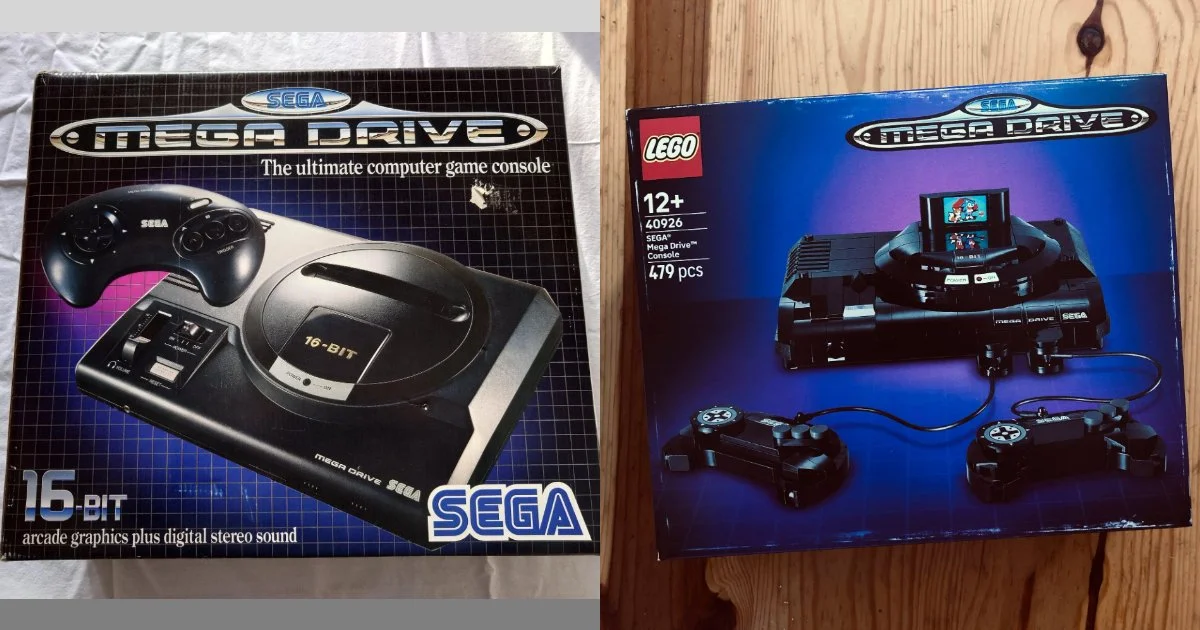
Some memories have faded with time, but even a small reminder makes me smile. The LEGO graphic designers have done an excellent job with the packaging. Despite the differences, it closely resembles the original Mega Drive box I remember. The resemblance isn’t as strong when compared with Genesis packaging, but for someone who grew up with the Mega Drive, it was a pleasant surprise.
SEGA Mega Drive box. Source: Reddit
Inside, things are fairly sparse: four bags, the instructions, a few loose elements, and some stickers. Those last items are a source of both happiness and worry for many builders!
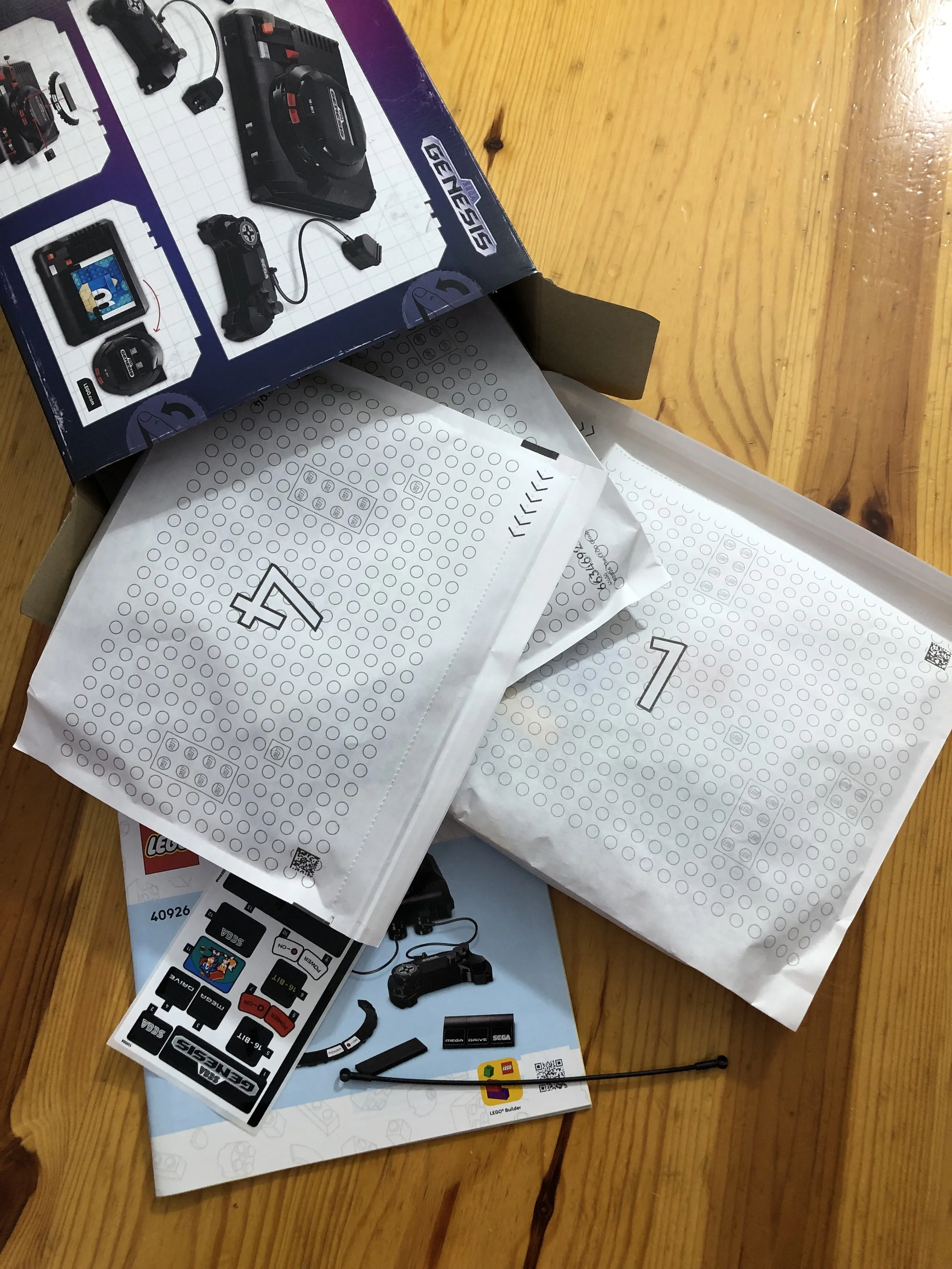
Now, get comfortable, because I want to tell you how the company behind a supersonic hedgehog became a video game giant for SEGA. Younger readers may be used to a very different world, with PlayStation and Switch consoles, gaming handhelds, downloads, and streaming. But before home consoles became commonplace, arcades offered experiences we couldn’t easily bring home.
Those cabinets could swallow plenty of coins, but the fun was guaranteed. I know this may sound like a classic “dinosaur” tale, but even the most gripping modern battle royale game can’t quite recreate that feeling for me. I still remember one summer evening at the seaside with my parents and brother. The arcade was packed, with lines in front of the cabinets. In the center of the room stood Daytona USA. It was the mid-’90s, I was very young, and that machine had become my holy grail.
One evening, I decided to try it. Even today, I can feel that hard seat beneath me. The game began, and within seconds I was catapulted into a fantastic world of virtual speed and NASCAR-style racing. The laps flew by, and I barely realized what was happening. By the end, the arcade record was mine. But I hadn’t just set a record. A crowd had gathered to watch a small child become a little virtual legend! I was really moved by it, and it remains a lovely memory.
SEGA’s Daytona USA arcade machine. Source: GAMEREVS
Years later, the PC version arrived at home, but it was never quite the same. That evening belonged to the arcade. It also belonged to SEGA, which developed the game and helped make it a milestone in arcade racing. By then, the company already had decades of history behind it.
SErvice GAmes… SEGA!
SEGA didn’t begin with Sonic, or even with home consoles. Its modern history starts in Tokyo in June 1960 with the establishment of Nihon Goraku Bussan Co., Ltd. Its roots reach further back through earlier amusement-machine businesses in Hawaii and Japan, including Service Games of Japan. These businesses supplied slot machines, jukeboxes, and other coin-operated amusements, including to American military facilities.
In 1960, two successor companies were established: Nihon Goraku Bussan handled sales, while Nihon Kikai Seizo handled manufacturing. The latter produced the SEGA 1000, Japan’s first domestically manufactured jukebox. And that name, SEGA? It came from the first two letters of “Service” and “Games.” It’s a little like the LEGO Group taking its name from the Danish words leg godt, meaning “play well.” A small linguistic connection between two companies that would become such a big part of our childhoods!
An early use of the SEGA name on slot machines. Source: ejunkieblog
The name itself predates the jukebox, appearing on slot machines in the 1950s. Sonic would have to wait a few more decades for his turn.
A Supersonic Console
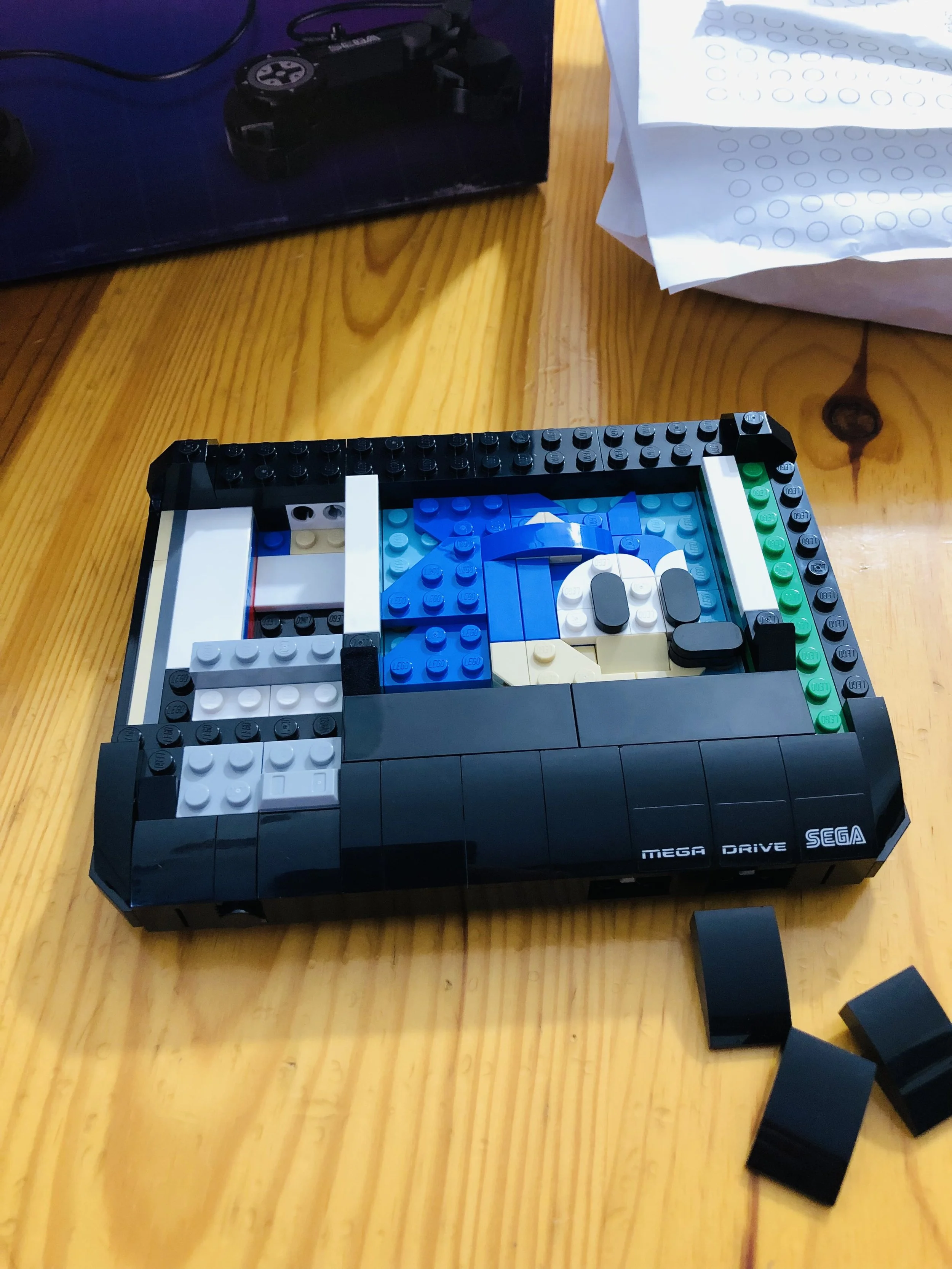
As we explore the history of this rebellious company, I’m continuing to assemble the 40926 SEGA Genesis Console. The first bag lets us build its soul, with a small tribute to SEGA’s mascot, Sonic!
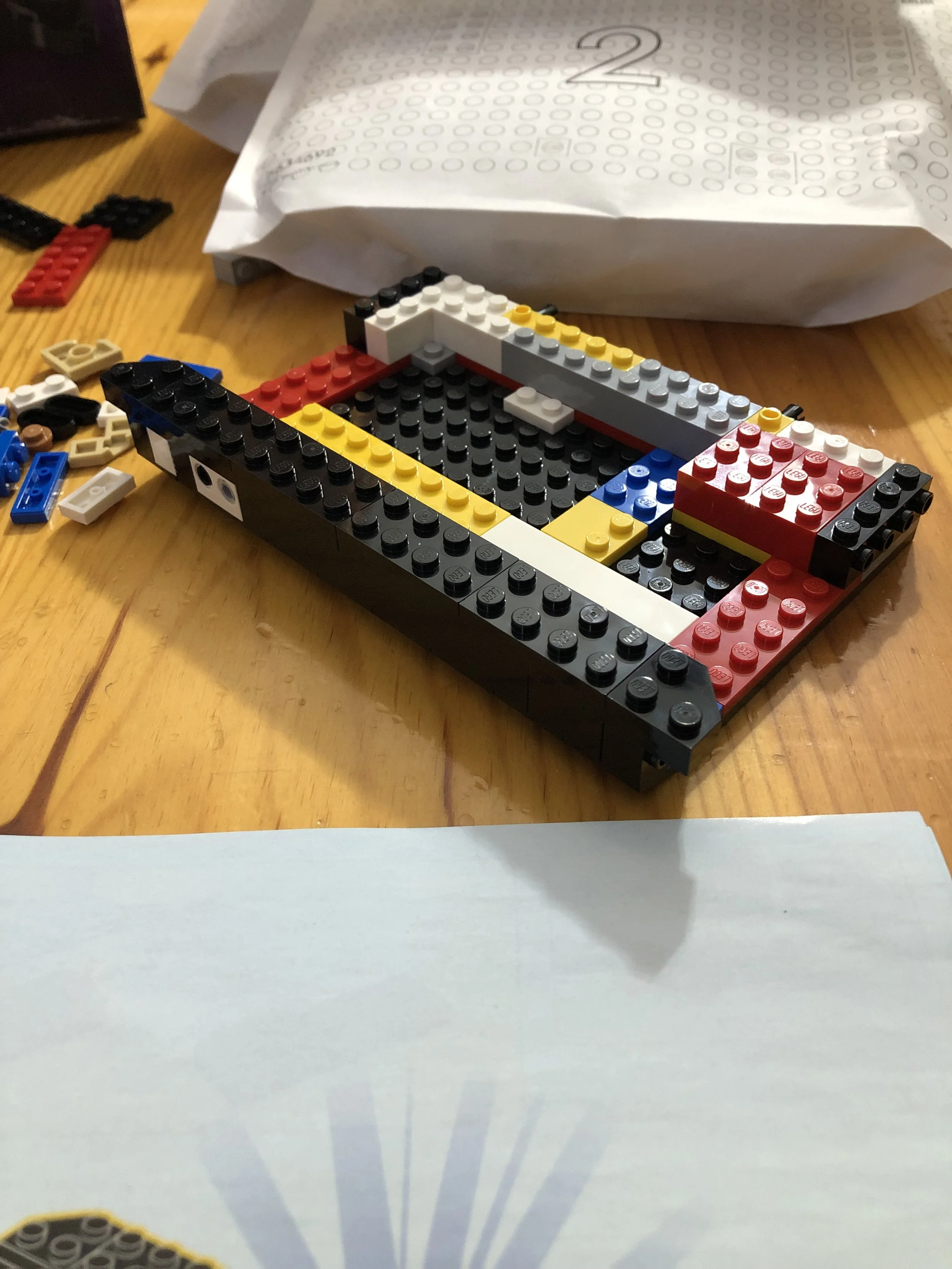
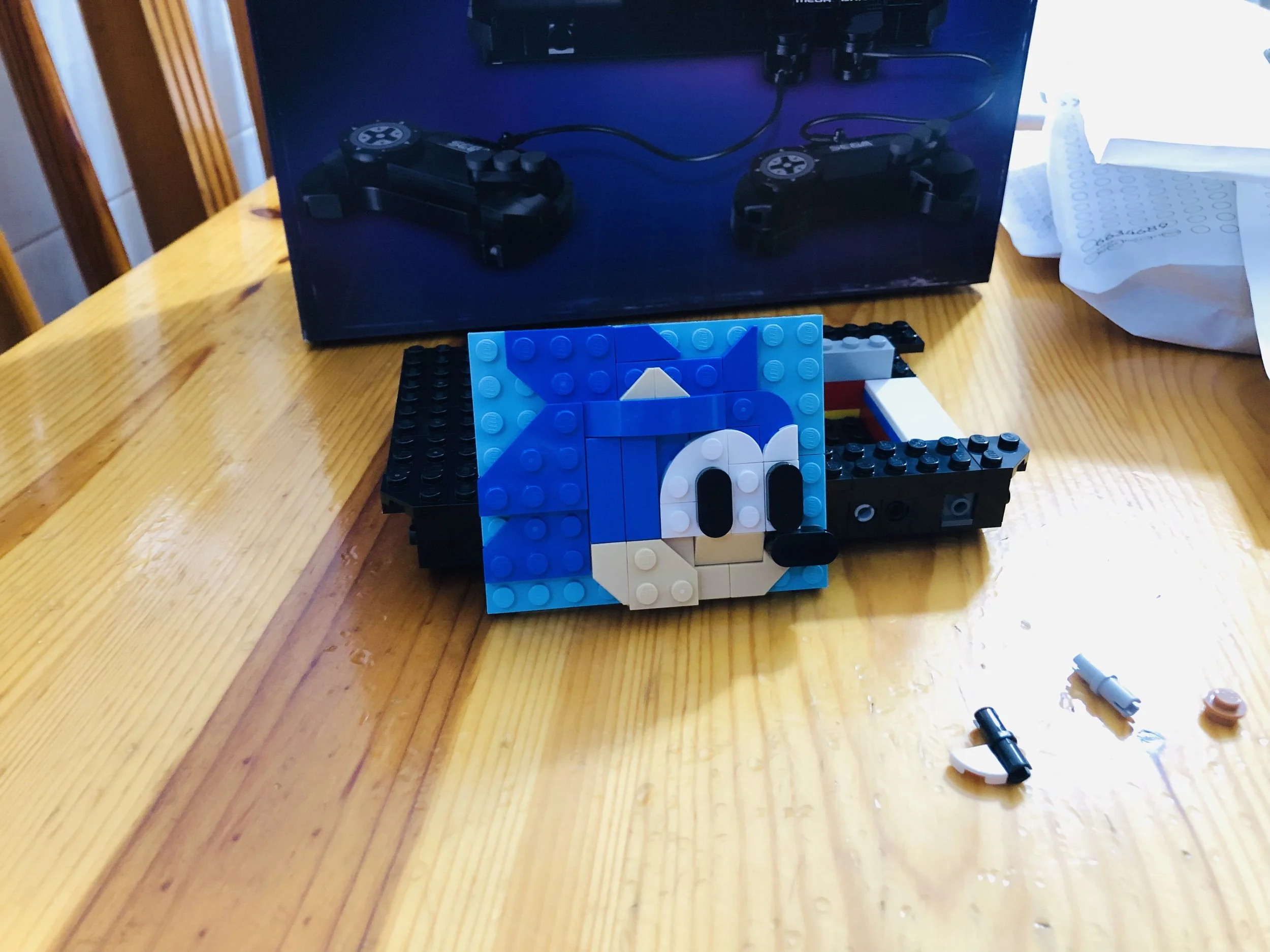
Sonic’s story shows how deliberately SEGA cultivated that rebellious identity. By the early 1990s, the company wanted a character who could compete with Nintendo’s Mario while showcasing the Mega Drive’s speed. The result was Sonic the Hedgehog, a blue hedgehog designed to embody speed, attitude, and modernity.
After considering various concepts, SEGA chose Naoto Ohshima’s character design. Sonic debuted in his own game in 1991, and both the game and its star quickly became some of the most recognizable names in the industry.
1991 Sonic logo. Source: SONIC.FANDOM.COM
I suspect very few SEGA owners of my generation escaped without a copy of Sonic the Hedgehog. Since then, he has raced through video games, anime, animated series, and films combining live action with animation. A mascot born out of commercial necessity became a pop culture icon. Fans even pit him against other famous speedsters, including the Flash, in debates about who would win a race.
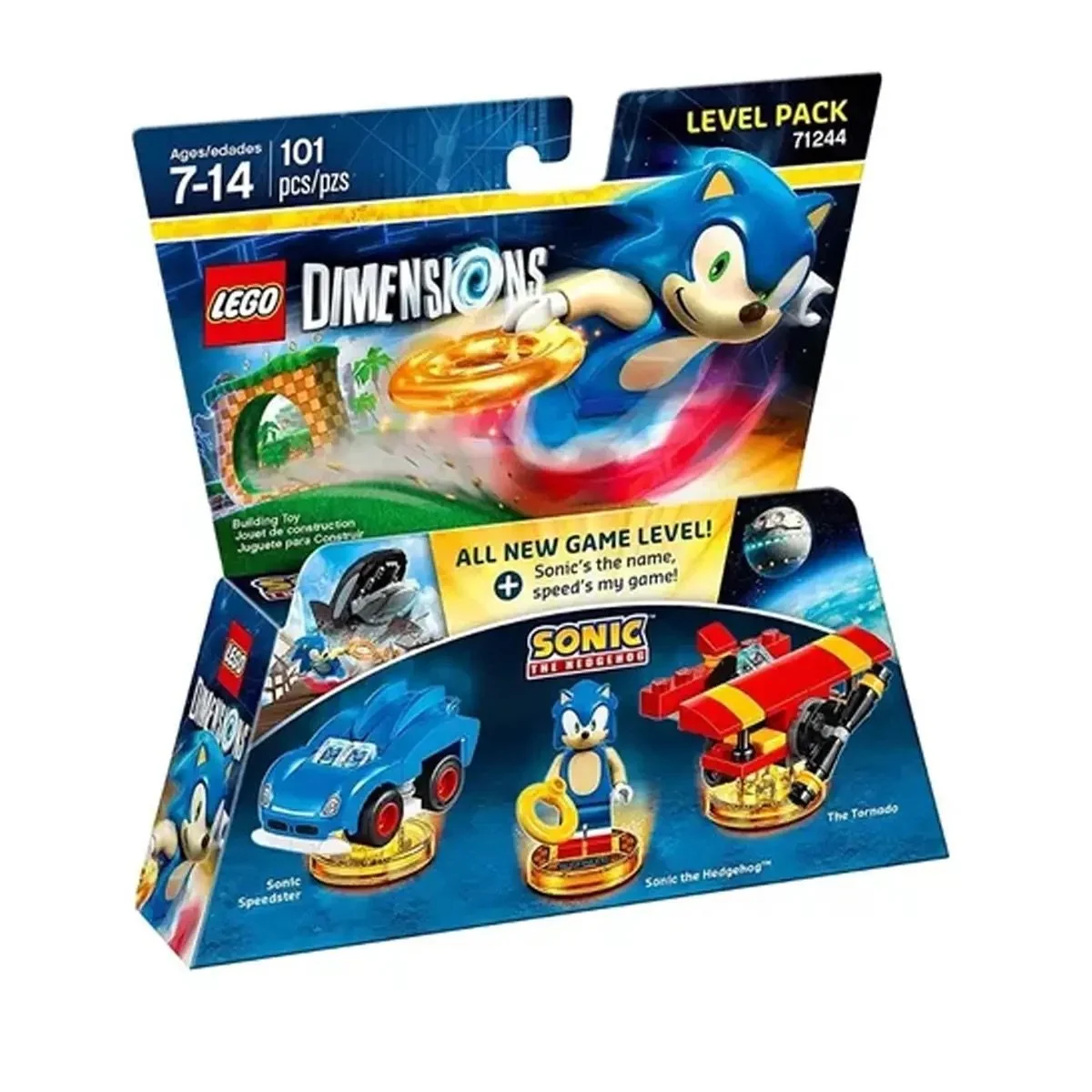
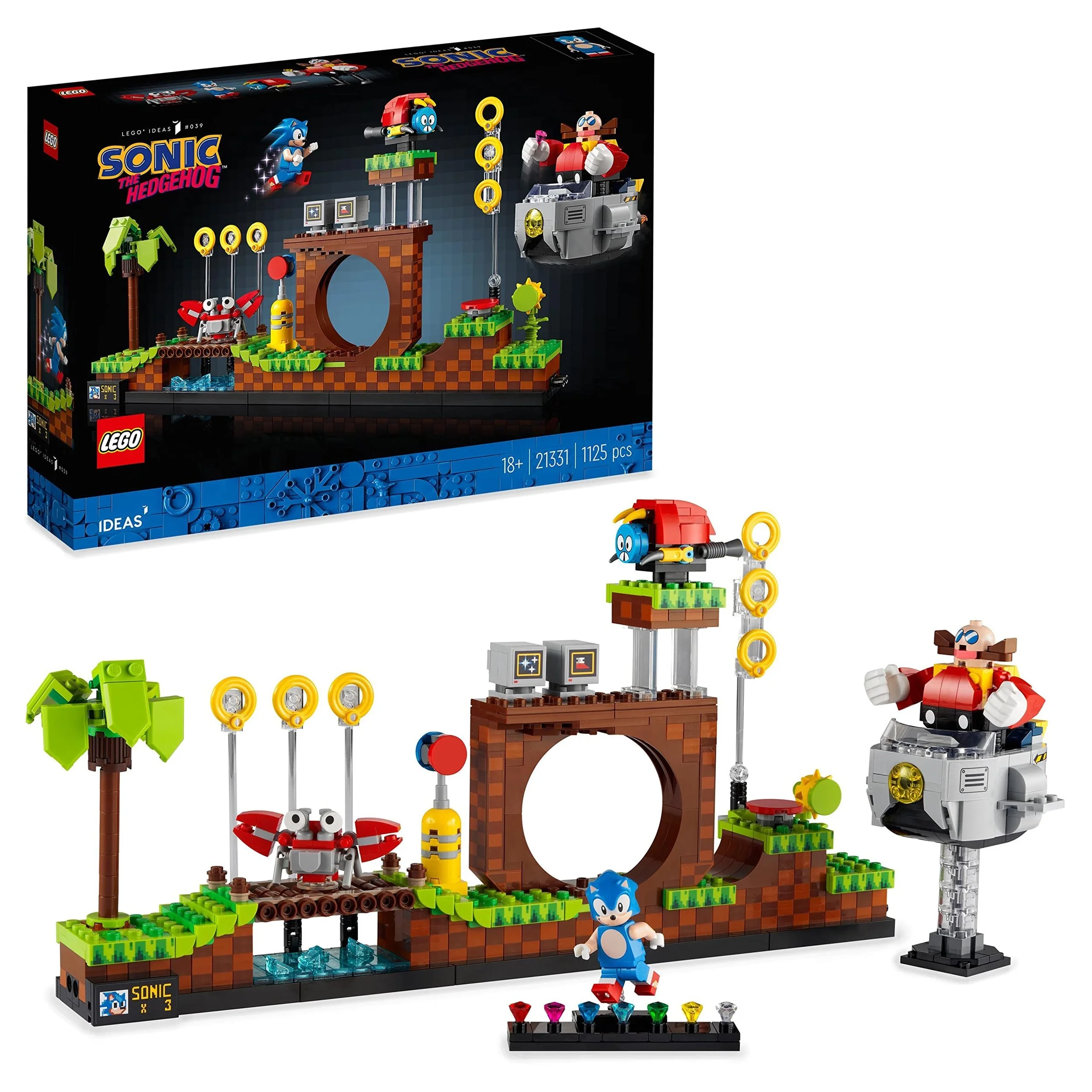
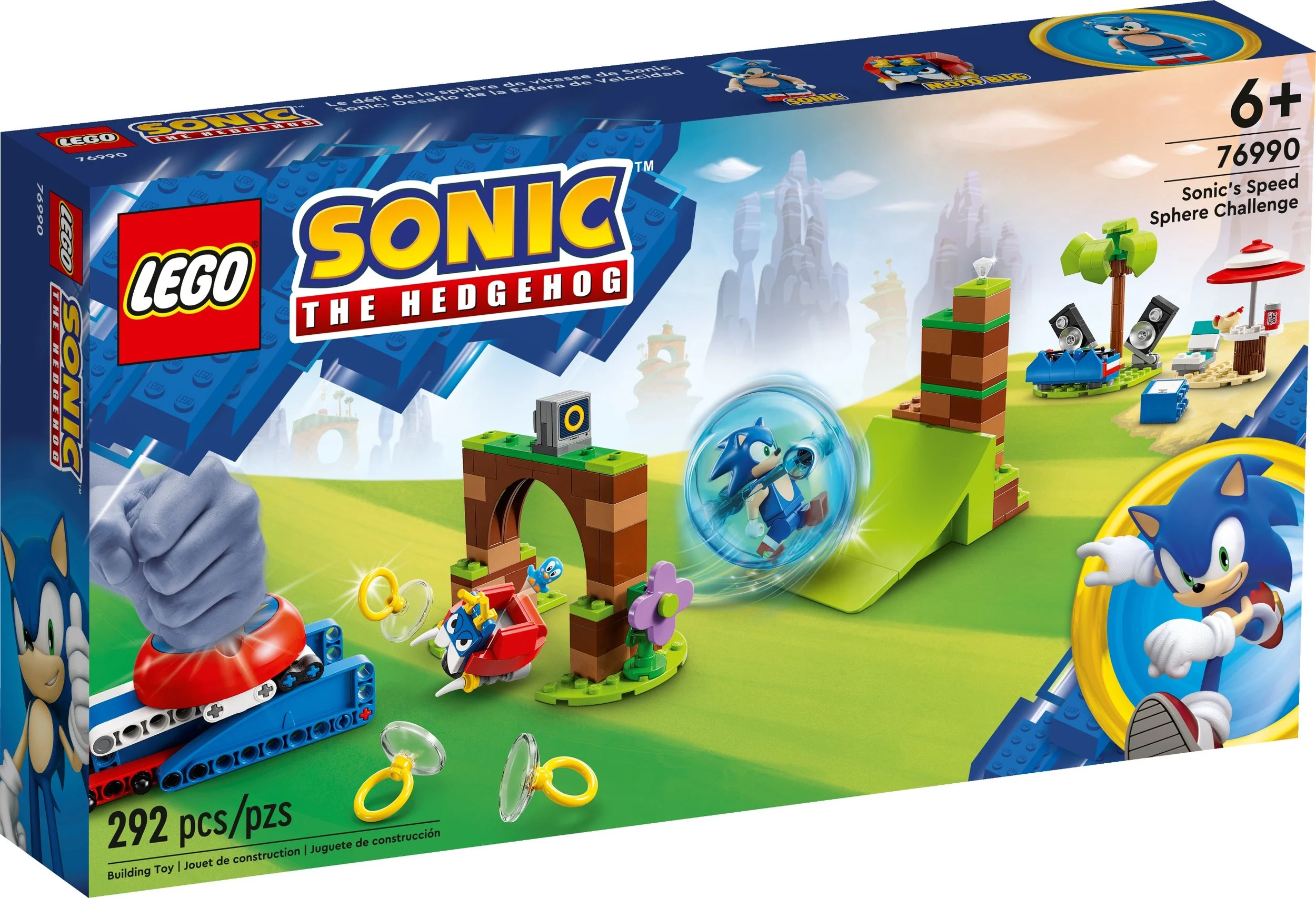
His first LEGO appearance came in 2016 with 71244 Sonic the Hedgehog Level Pack for LEGO Dimensions. On January 1, 2022, 21331 Sonic the Hedgehog – Green Hill Zone brought him into LEGO Ideas. A dedicated theme followed in August 2023, including 76990 Sonic’s Speed Sphere Challenge. Now, he’s hiding inside the console that helped make him famous.
Rebel by Nature
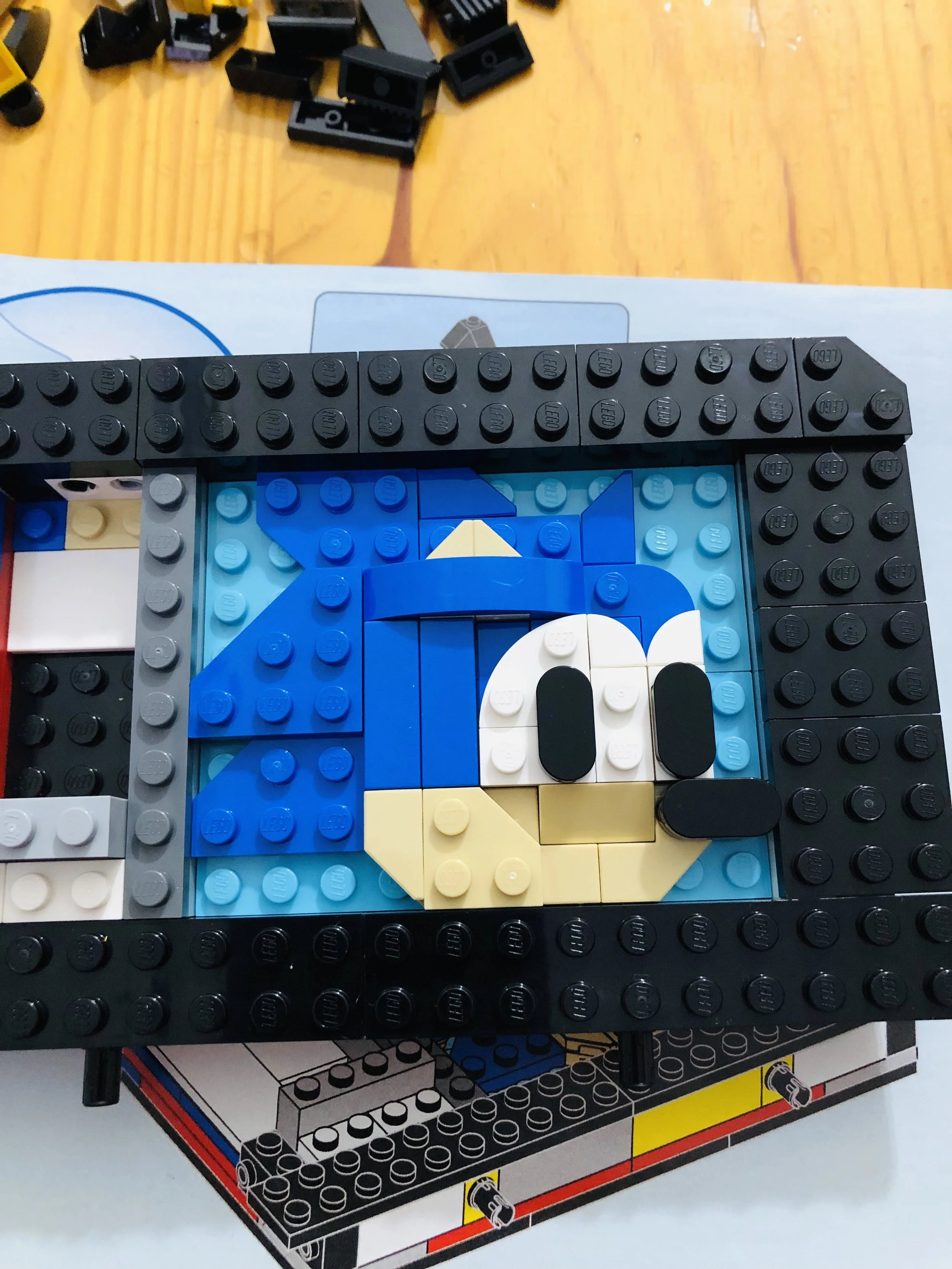
The second bag continues the body of the console and incorporates that Sonic Easter egg. Each added piece brings back memories of long games of Sonic, Golden Axe, Streets of Rage, and numerous other titles. There was even a bizarre collaboration involving McDonald’s and Virgin Games: Global Gladiators.
Global Gladiators. Source: magliecalciovintage.it
Personally, I find the use of stickers for important details, such as the console’s logos, a little disappointing. They help capture the original’s appearance, but I would have preferred printed elements for those details.
While we finish that shell, there’s still a question to answer: how did a company selling jukeboxes and slot machines become the home of Sonic and the Mega Drive? We need to take the DeLorean back a little further again.
In 1964, Nihon Goraku Bussan merged with Nihon Kikai Seizo, bringing sales and manufacturing together and expanding into commercial arcade-machine production. Another merger followed in 1965, this time with Rosen Enterprises. The combined business took a new name: SEGA Enterprises, Ltd.
Ota, Tokyo, where SEGA Enterprises, Ltd. took shape in 1965. Source: reddit
One of SEGA’s early international successes was Periscope, an enormous electromechanical arcade game released in 1966. Players looked through a physical periscope to aim at enemy ships, launching torpedoes represented by trails of lights. There was no video monitor, but the combination of lights, sound, and mechanical scenery created an immersive experience.
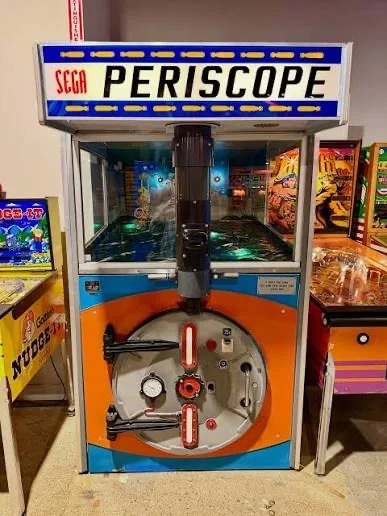
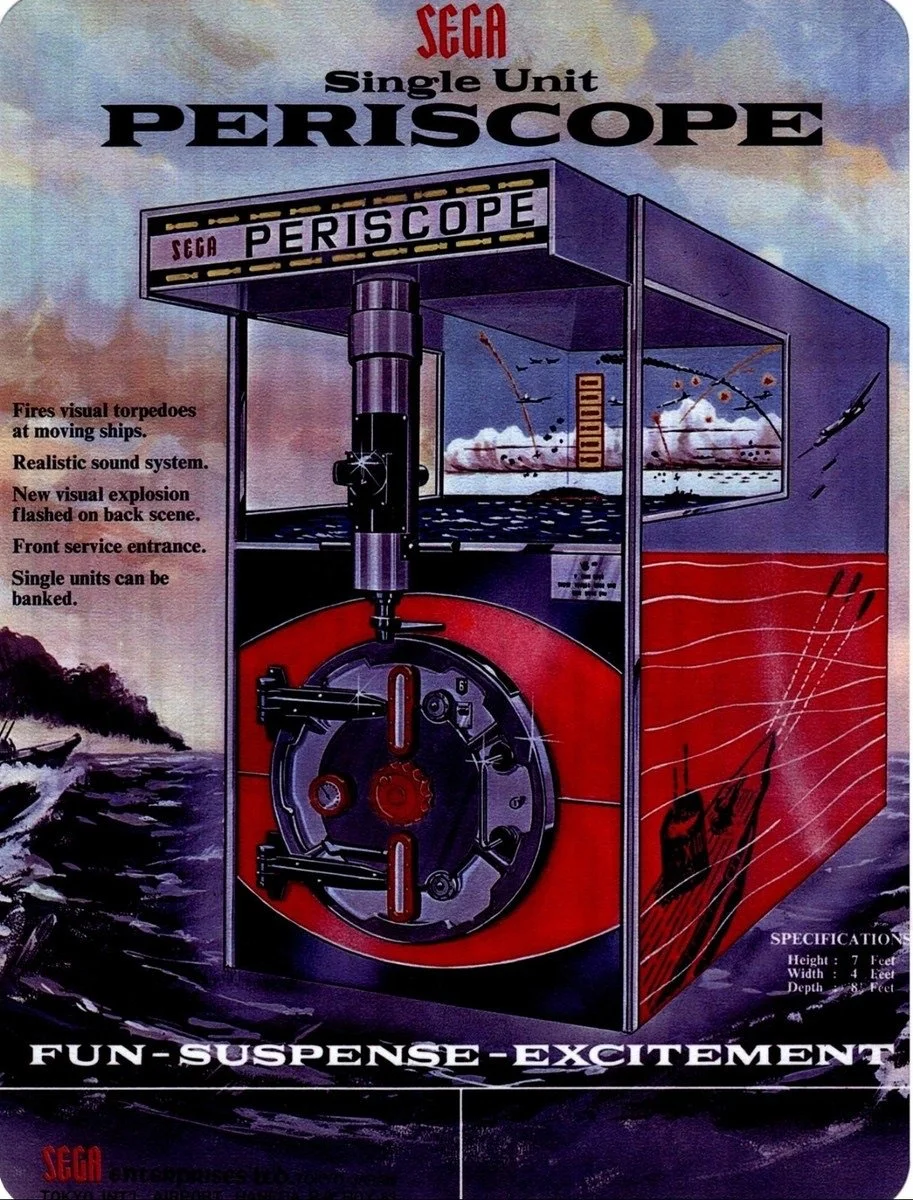
As often happens with successful ideas, there’s more than one company in this story. Nakamura Manufacturing, the company that would become Namco, had released its own Periscope in 1965. That makes the history more complicated than a simple tale of one company inventing a game, but SEGA’s version certainly helped bring the experience to an international audience.
Its importance also went beyond the machine itself. In the United States, its high production and shipping costs helped justify charging 25 cents per play, more than many players were accustomed to paying. Its success helped establish the quarter as a familiar price for arcade games.
The cabinet’s elaborate presentation also helped it find space in shopping malls and department stores. The enormous three-player version, with a periscope for each player, was followed by a smaller single-player model better suited to export and tighter spaces.
Three-player Periscope. Source: GAMEPASS
Successes like this helped establish SEGA in the arcade business. Home consoles, and the famous “16-bit war,” were still some way off. In 1983, the company took an important step in that direction with the SG-1000, its first home video game console, an 8-bit machine.
SEGA SG-1000 console. Source: eBay
One Step From the Storm
On to the third bag, and the LEGO console continues to grow. Before long, the console itself is complete. Honestly? I remembered the Mega Drive being much larger! I’m joking, of course. This is a compact LEGO version, after all. Even at this size, it has that familiar rebellious soul. The cartridge slot, in particular, takes me straight back to childhood. For those of us who had a console bundled with Sonic, a cartridge of his game belongs here too.
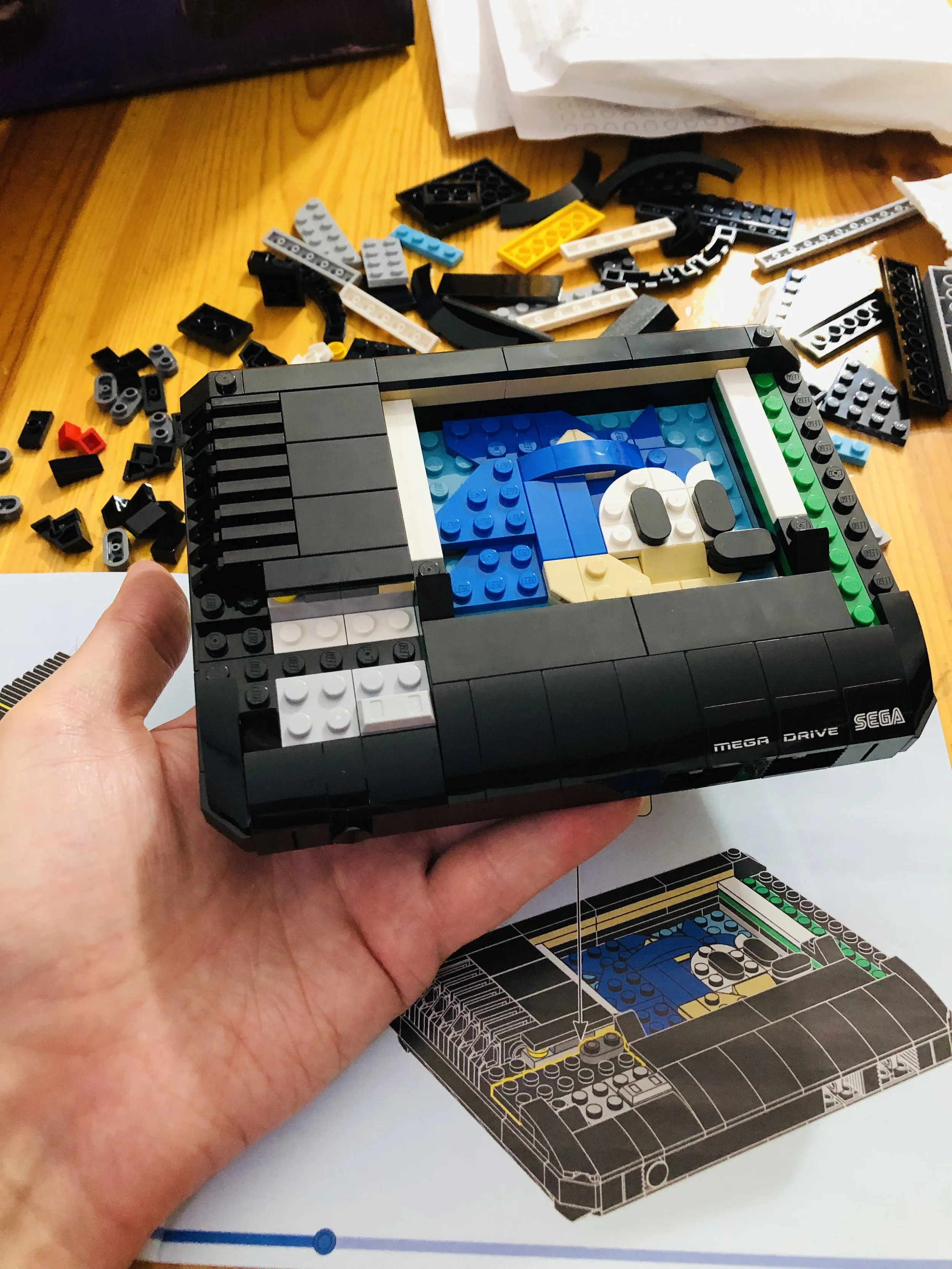
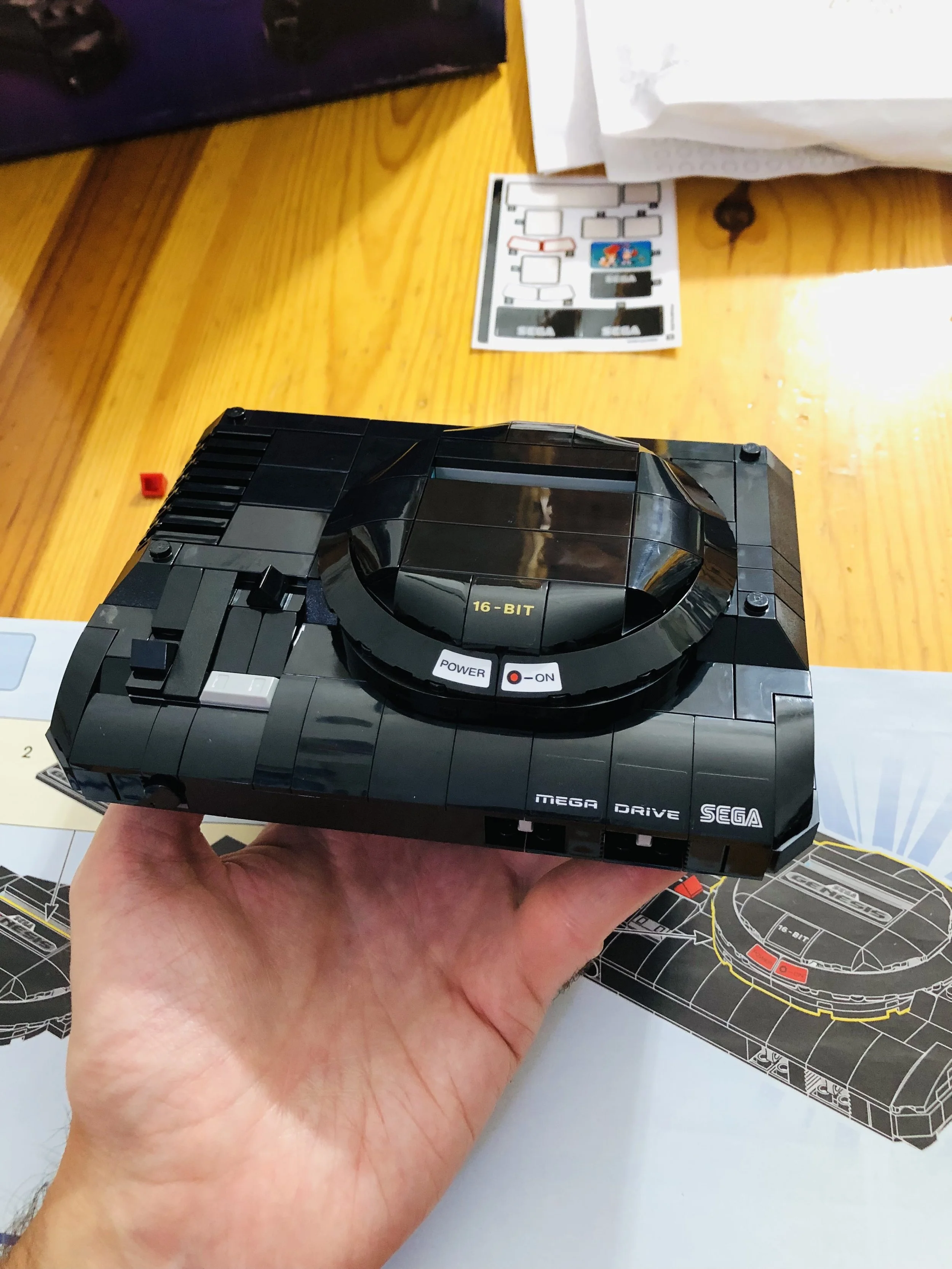
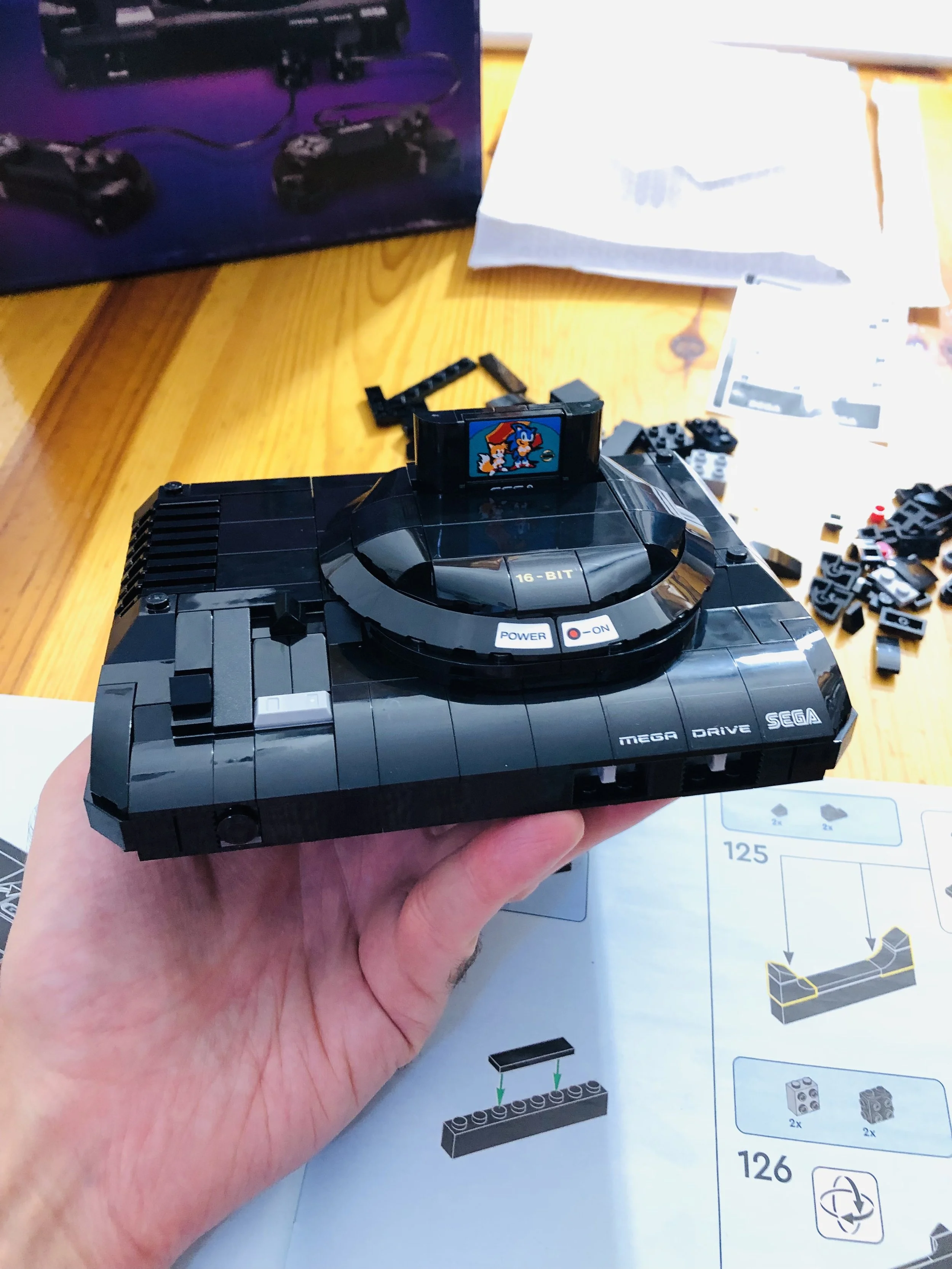
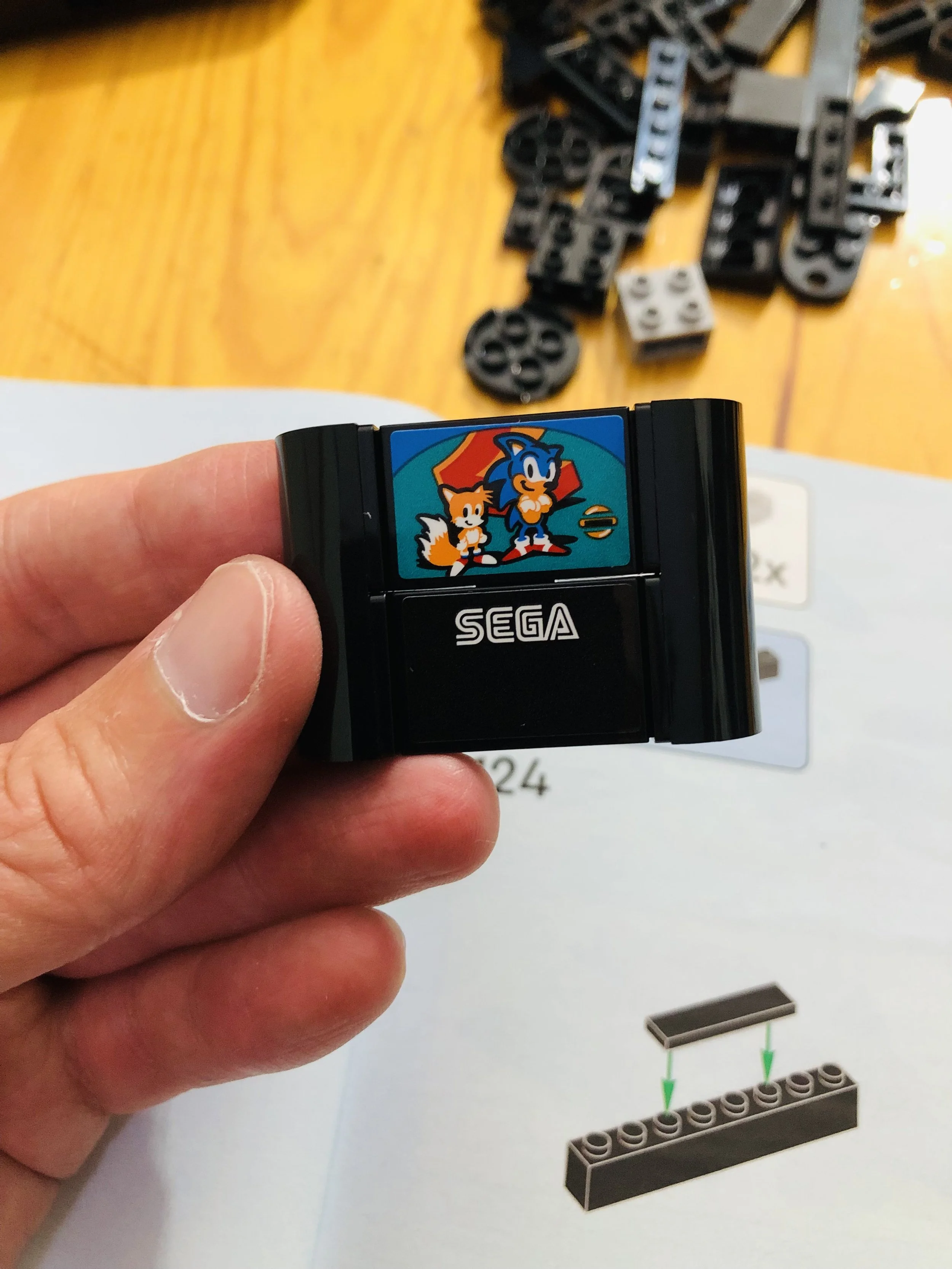
Before we connect the controllers, let’s finish the journey from the arcade to the living room. Even while entering the home-console market, SEGA continued experimenting with arcade technology. In 1983, it released Astron Belt, an early LaserDisc arcade game.
SEGA Astron Belt LaserDisc. Source: ARCADE HISTORY
LaserDisc was an optical video format that looked more like an LP than the CDs we would later become familiar with. Arcade machines used disc players to bring prerecorded footage into games, something Dragon’s Lair famously used for its animated adventure. Astron Belt took a different approach, combining video backgrounds with computer-generated gameplay.
In a game like Dragon’s Lair, the player’s input determined which prerecorded sequence played next. Make the right move at the right moment, and the adventure continued. Make the wrong one, and you might be treated to a death scene. The machine wasn’t drawing each new movement as you played; it was selecting the appropriate footage.
For the time, the results were astonishing. But the equipment was also delicate, and arcade life wasn’t always kind to it. Long operating hours, heat, and frustrated players kicking cabinets were hardly ideal conditions for those disc players.
Dragon’s Lair LaserDisc. Source: WorthPoint
Arcades remained central to SEGA’s business. In 1984, SEGA Europe was established to market arcade machines in Europe, followed in 1985 by SEGA Enterprises, Inc. in the United States. That same year brought Hang-On, with its memorable motorcycle-shaped cabinet controlled by leaning the bike. Its sequel, Super Hang-On, would later reach the Mega Drive.
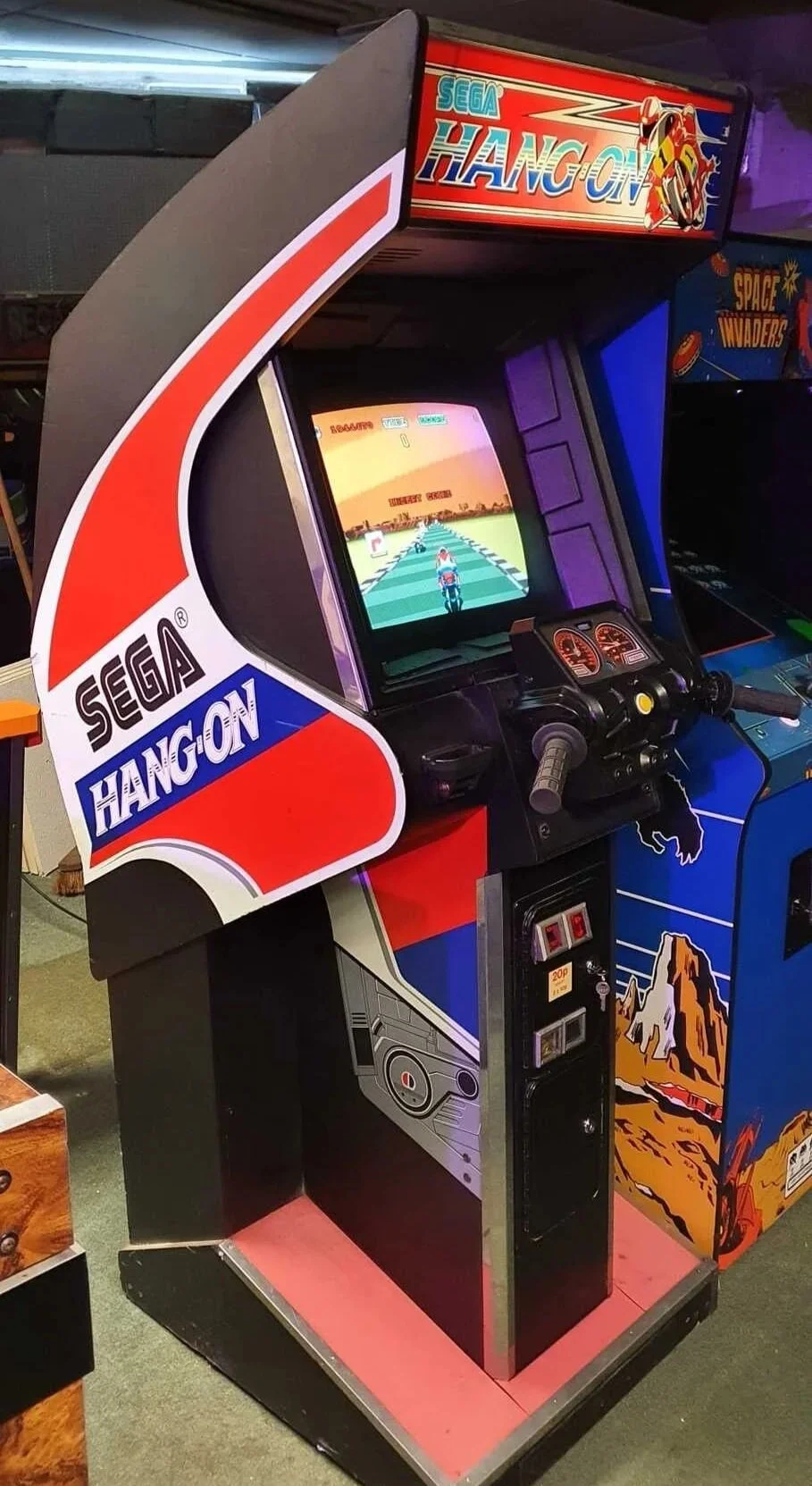
Hang-On arcade cabinet. Source: Williams Amusements
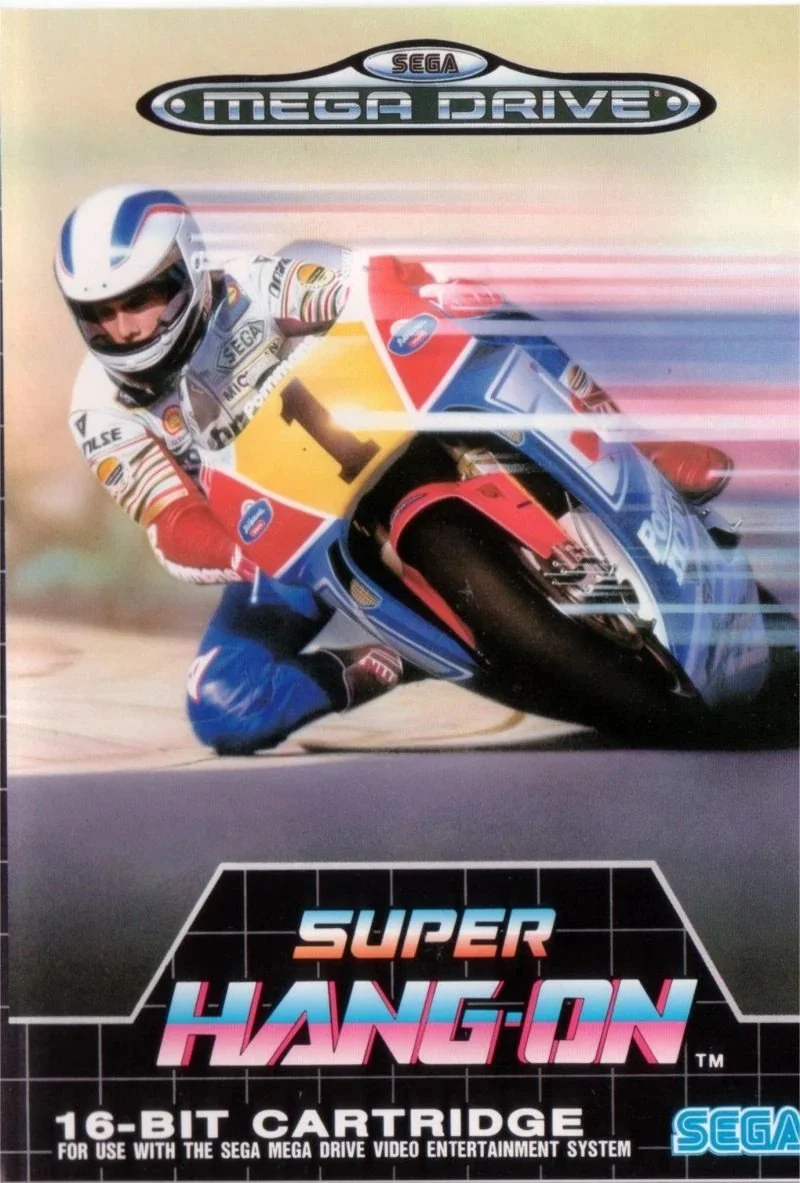
Mega Drive Super Hang-On cartridge. Source: Fandom wiki
In 1990, SEGA went further with the R360, an arcade machine capable of rotating the player through a full 360 degrees. And I thought my hard seat in Daytona USA was an experience!
Japanese R360 flyer. Source: THE ARCADE FLYER ARCHIVE
Two years earlier, however, SEGA had released the 16-bit Mega Drive in Japan. It would arrive in North America as the Genesis, and the console rivalry was about to become much louder.
Before we build the final part of the set, there’s one last chapter: the famous “16-bit war.” SEGA launched the Mega Drive in Japan on Oct. 29, 1988, followed by the Genesis in North America in August 1989. The latter brought SEGA’s challenge to Nintendo and its NES directly into American living rooms.
SEGA Genesis. Source: Wikipedia.
Nintendo launched the Super Famicom in Japan on Nov. 21, 1990. It later reached North America and Europe as the Super Nintendo Entertainment System, or SNES. Sonic arrived in 1991, giving SEGA a mascot who could stand alongside Mario, and the rivalry intensified.
SEGA’s confrontational advertising captured that attitude perfectly. “Genesis Does What Nintendon’t” left little doubt about which competitor the company had in mind. This was a battle for players’ attention, loyalty, and, of course, their parents’ money.
SEGA’s “Genesis Does What Nintendon’t” campaign. Source: FANDOM WIKI
Nintendo was a formidable opponent, but Sonic’s speed and attitude helped position SEGA as the cooler choice for teenagers. Sonic the Hedgehog 2 followed in 1992, strengthening the Genesis lineup and its position in the United States. Nintendo had found a serious rival.
Through the early ’90s, both companies competed with advertising and games. SEGA had Streets of Rage, Golden Axe, and Shinobi, while Nintendo offered Super Mario World, The Legend of Zelda: A Link to the Past, and, in 1994, Super Metroid. Sonic also reached television in animated series in 1993, then welcomed Knuckles into Sonic the Hedgehog 3 in 1994. For many players, owning a console became a declaration of allegiance. You were “team SEGA” or “team Nintendo,” and you probably had an opinion about anyone who chose differently!
Another console-war advertisement
The “war” played out differently around the world. Nintendo remained dominant in Japan, while SEGA mounted a particularly strong challenge in North America. The Mega Drive also found considerable success in Europe, becoming one of the decade’s defining consoles. For me, the lasting legacy is the way that rivalry helped make gaming such a visible part of popular culture. Sonic and Mario became the competing faces of a generation, and SEGA secured a place in far more homes than its arcade beginnings might have suggested.
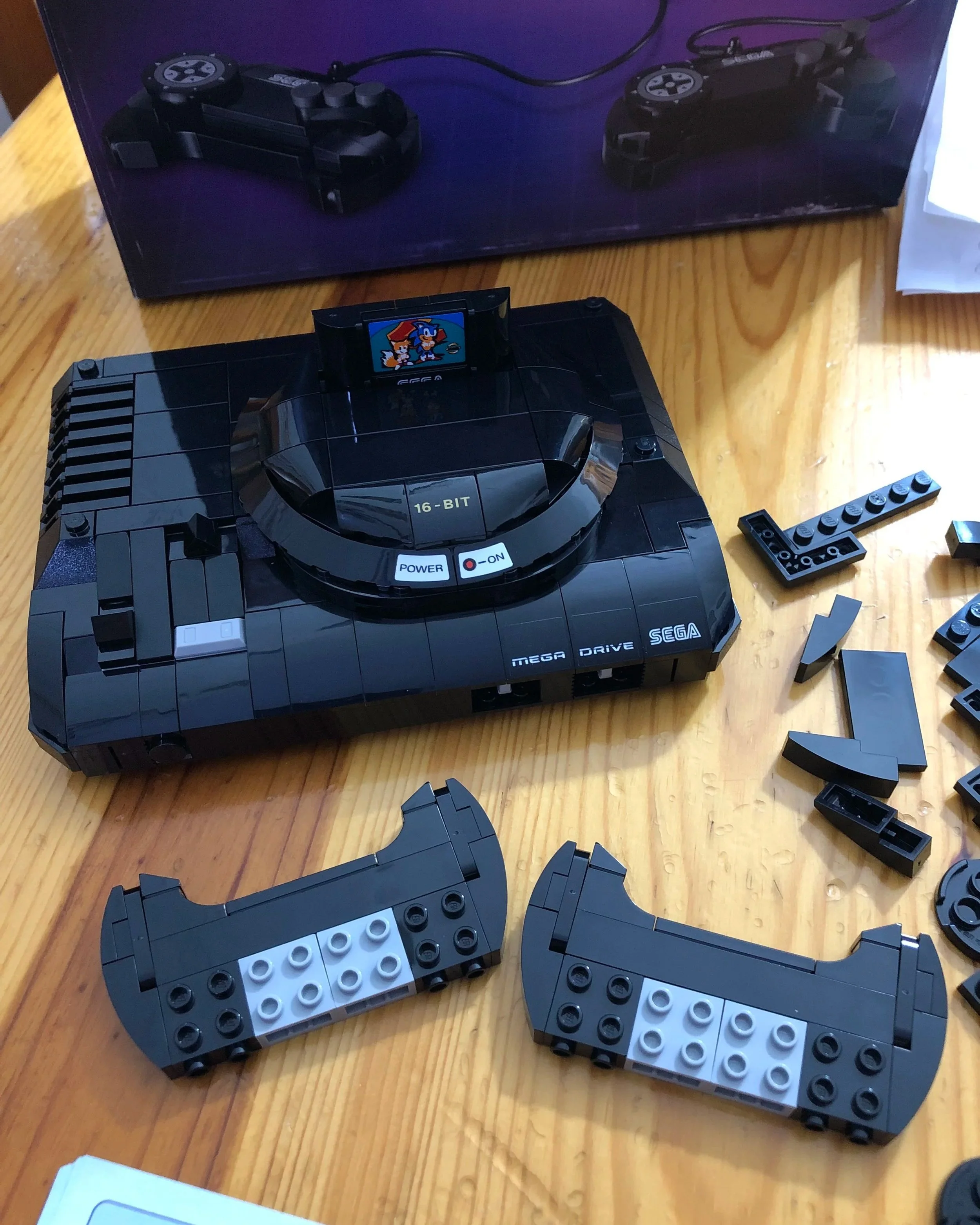
Now, back to the LEGO build. It’s finally time to make the two controllers, with their characteristic bean shape. The SEGA logos and familiar A, B, and C buttons bring back memories of hours spent gaming, and the connecting cables complete the effect.
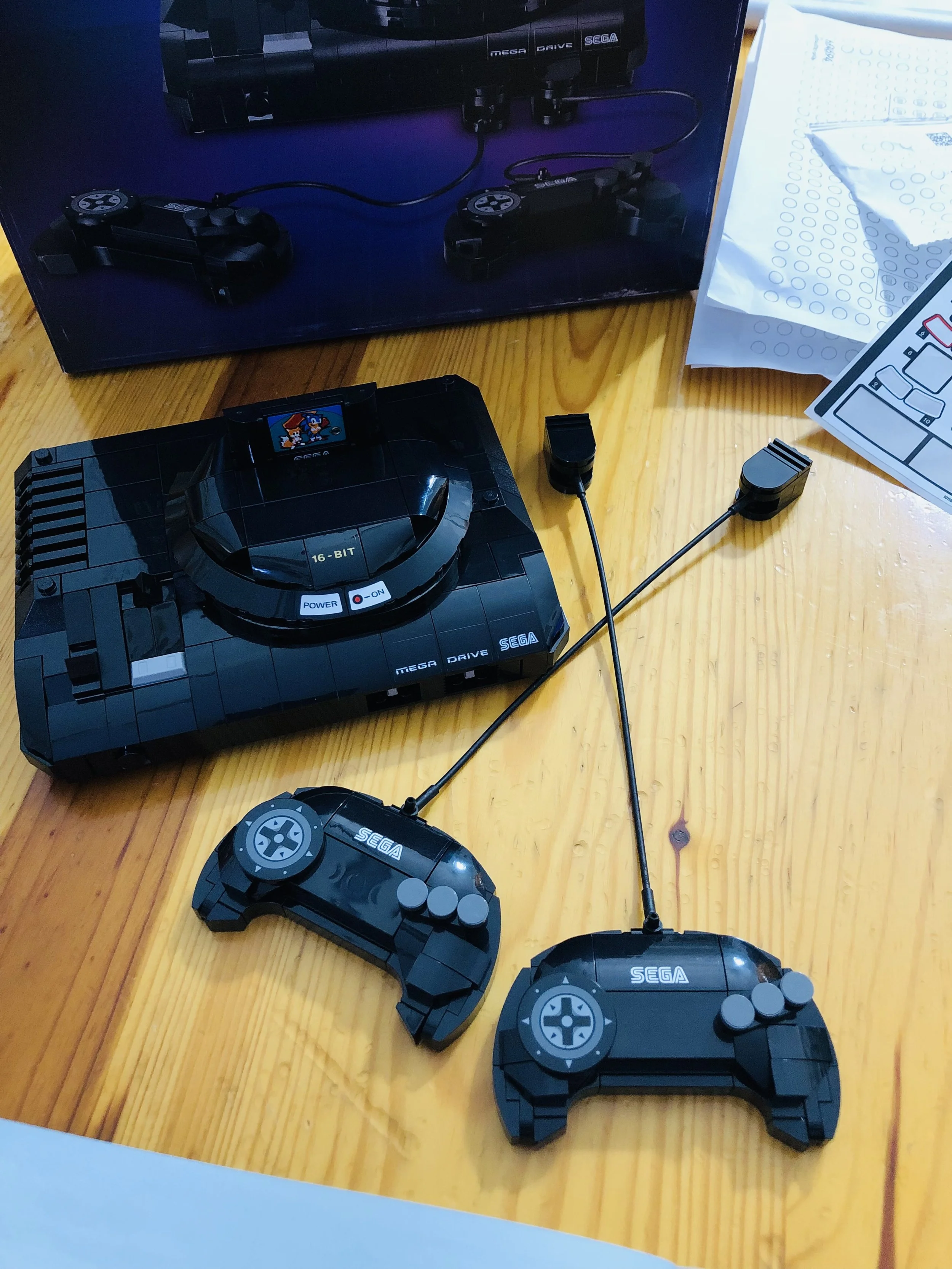
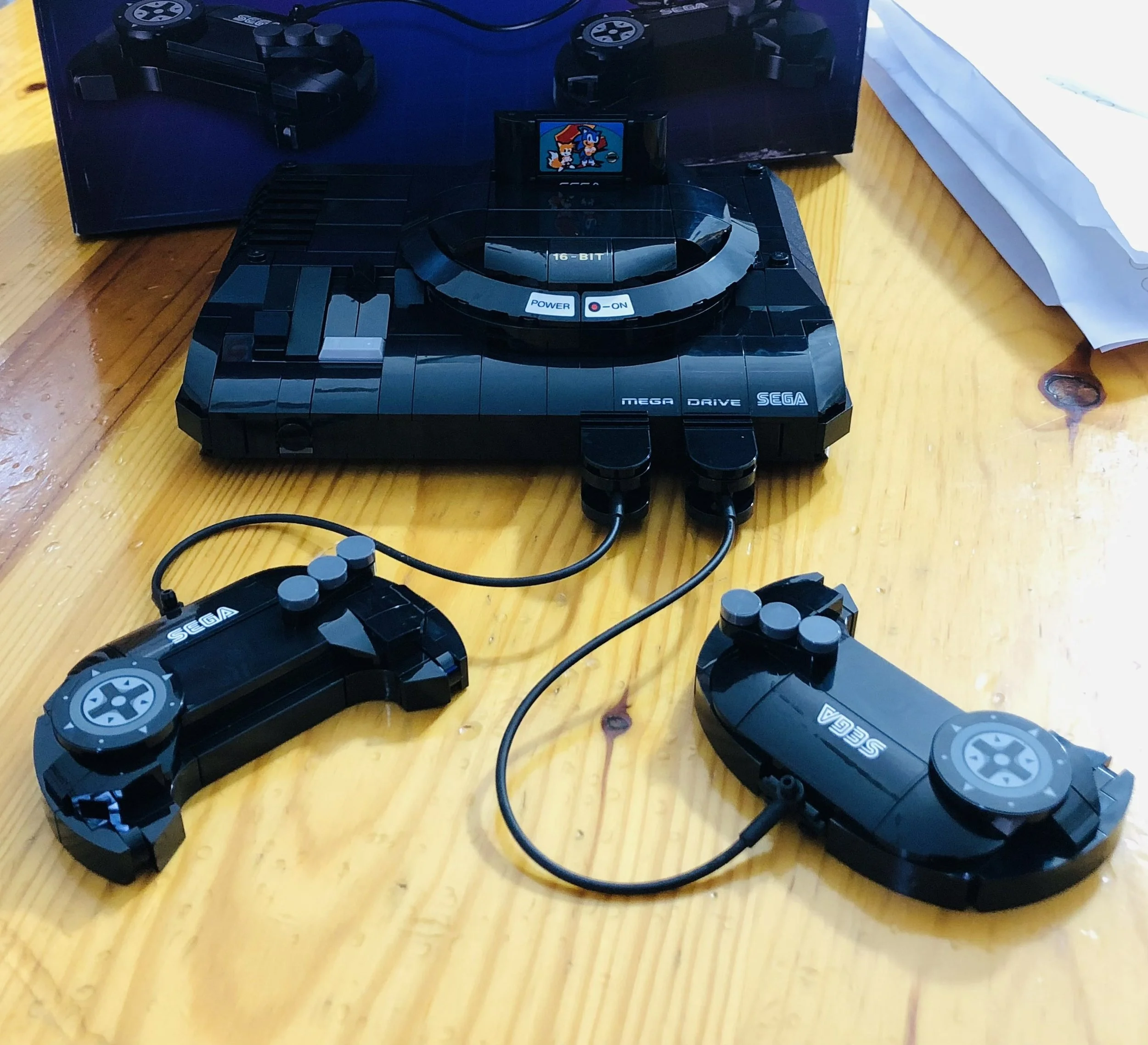
Once everything is in place, the resemblance is impressive. The set also includes the elements needed to transform the Mega Drive into the Genesis version, complete with its distinctive red details.
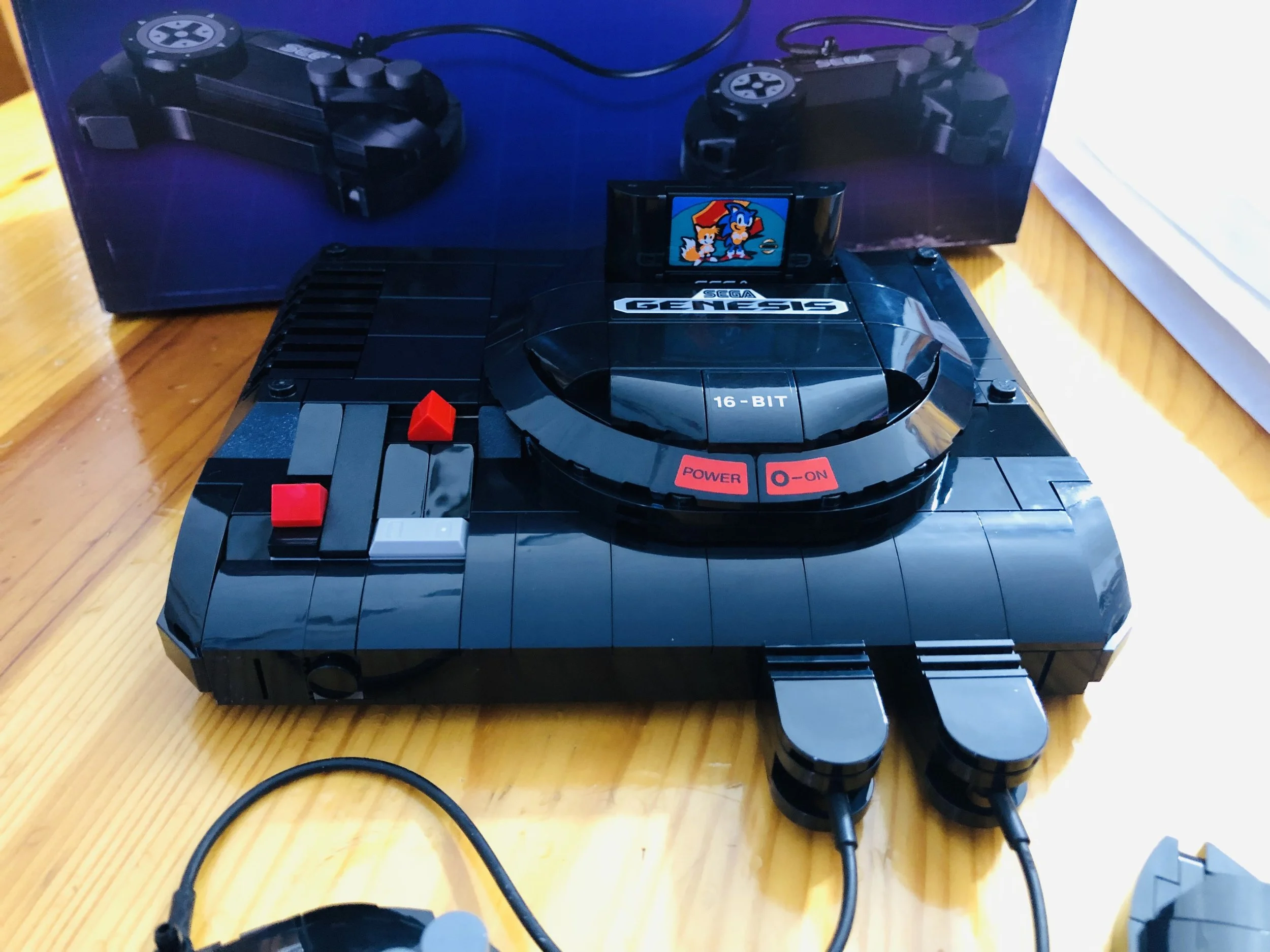
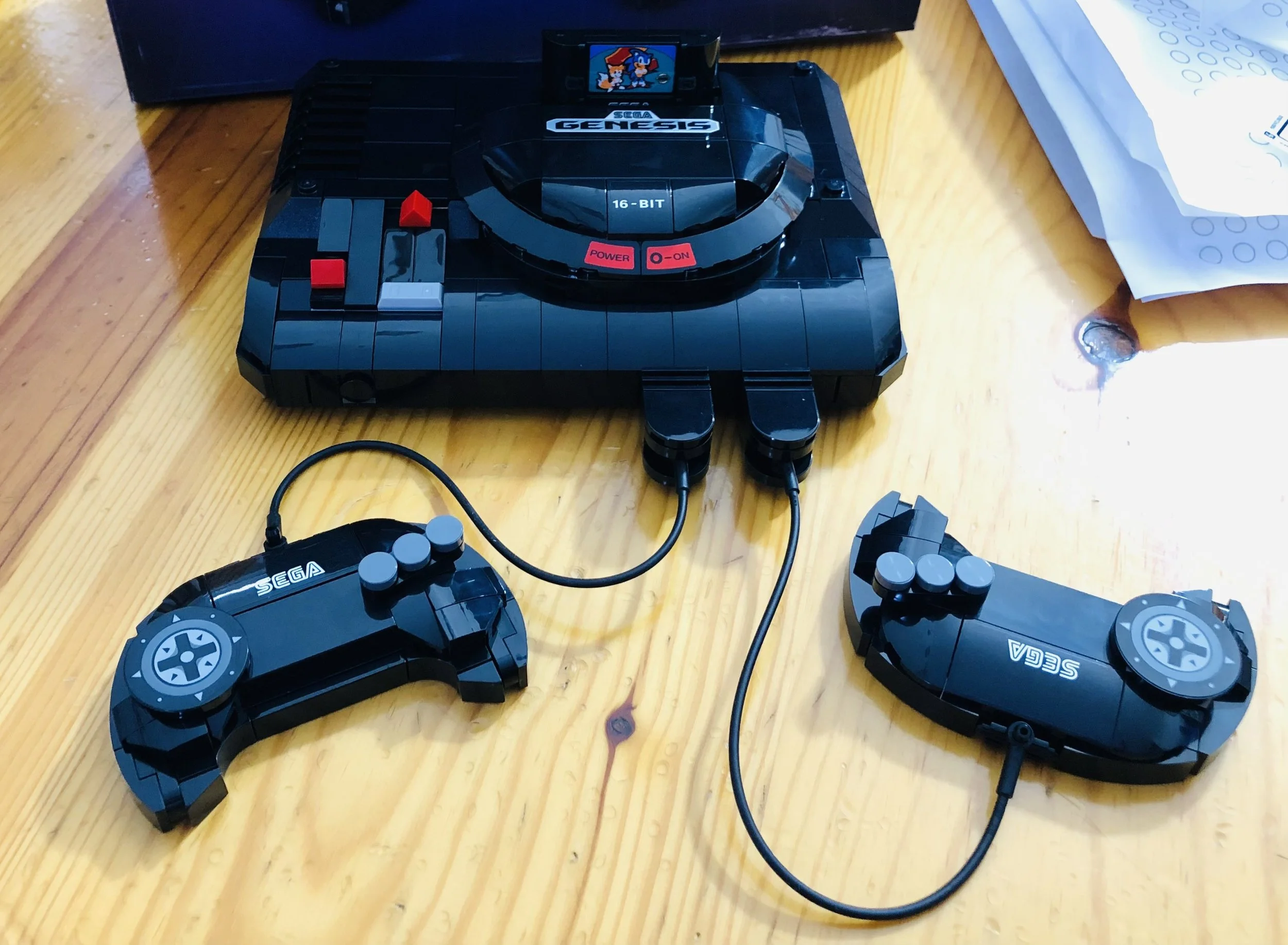
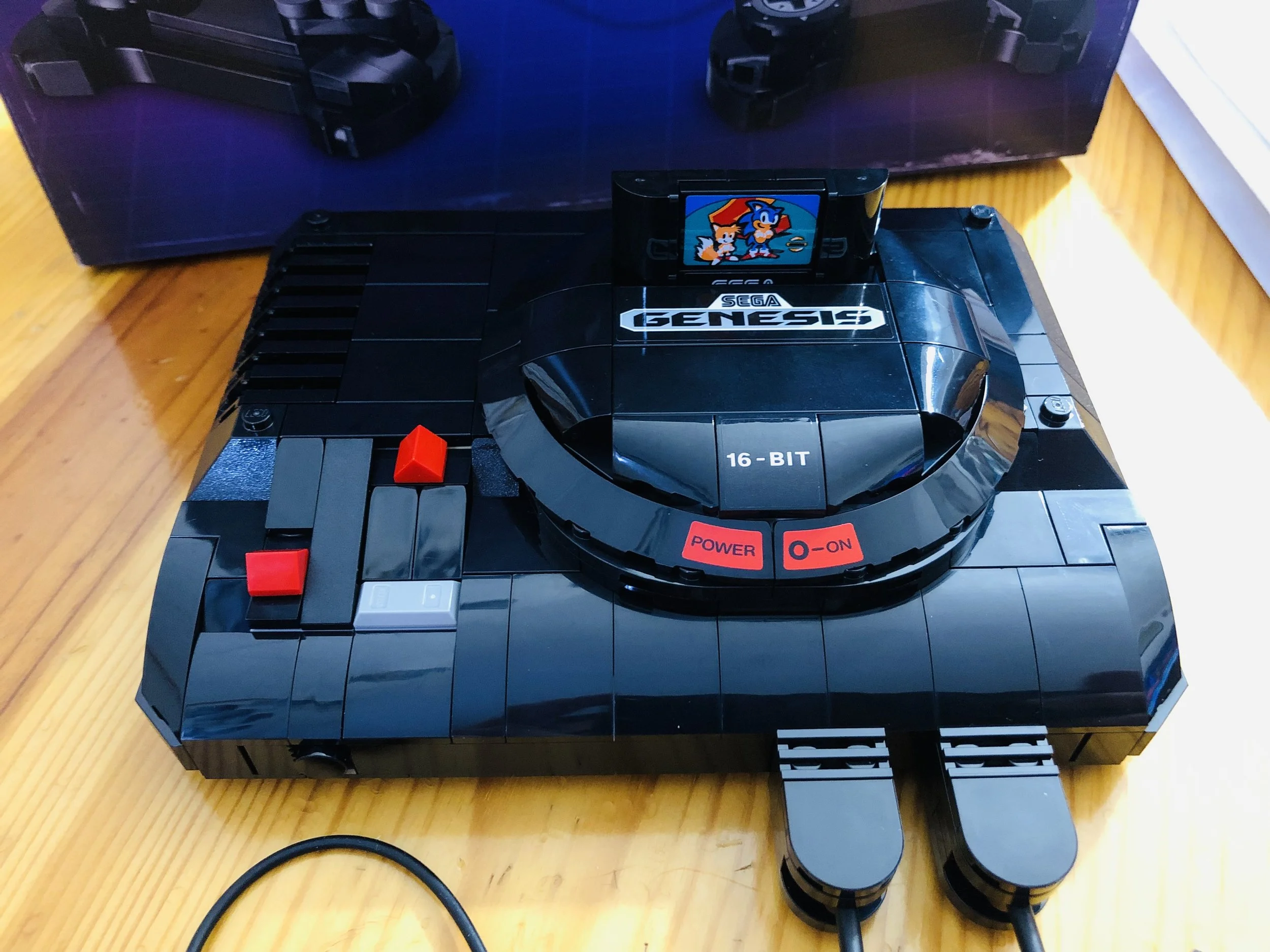
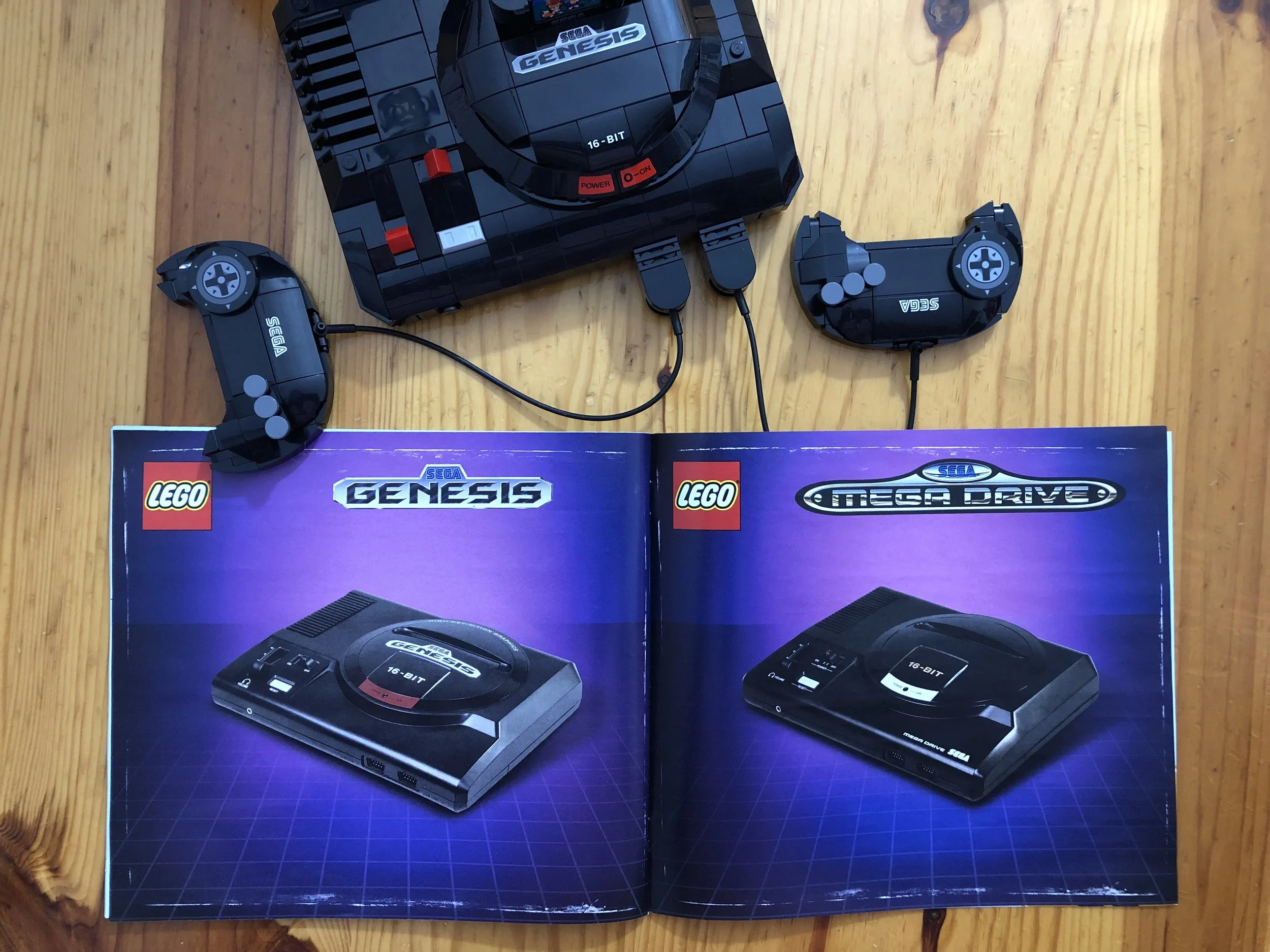
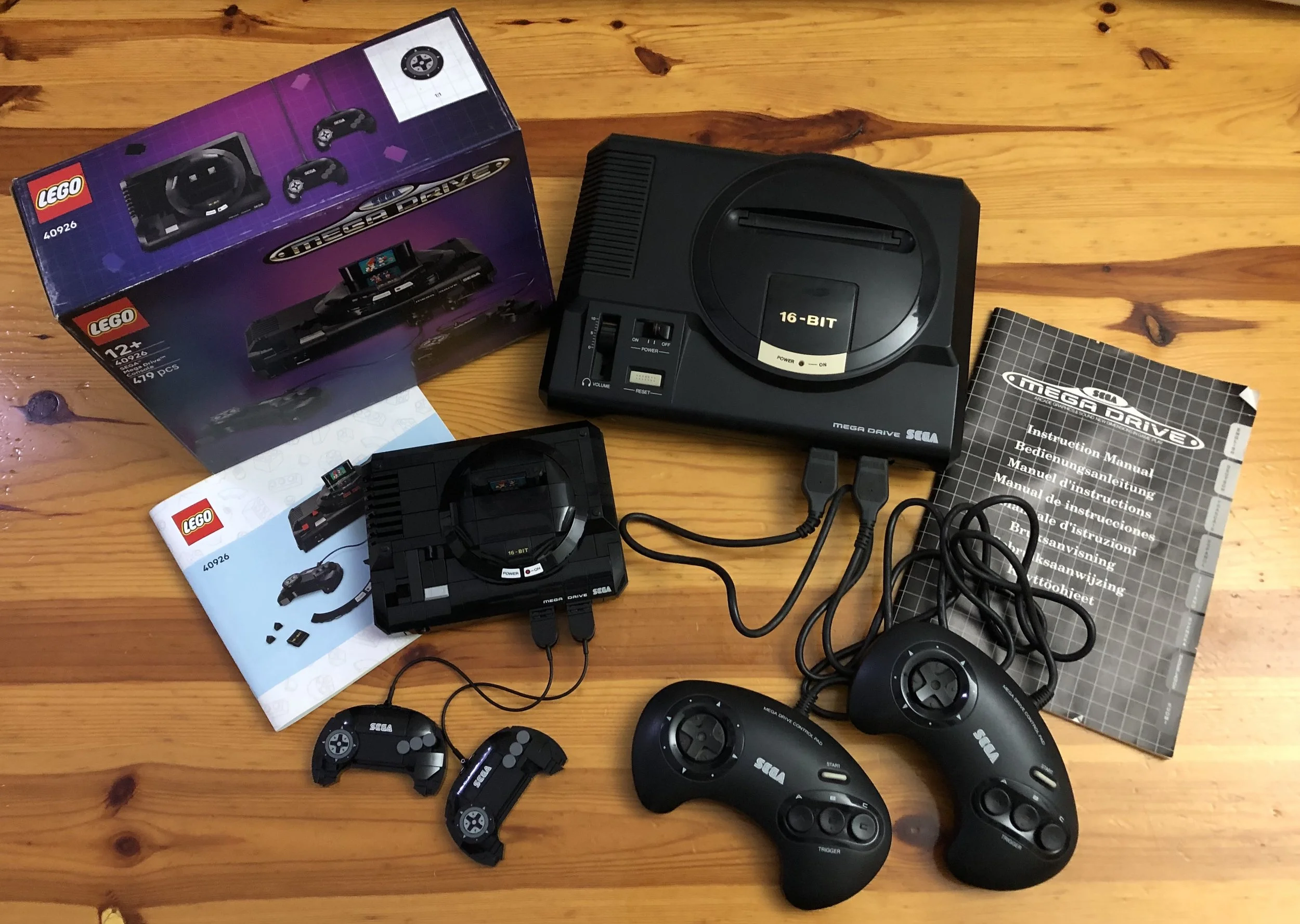
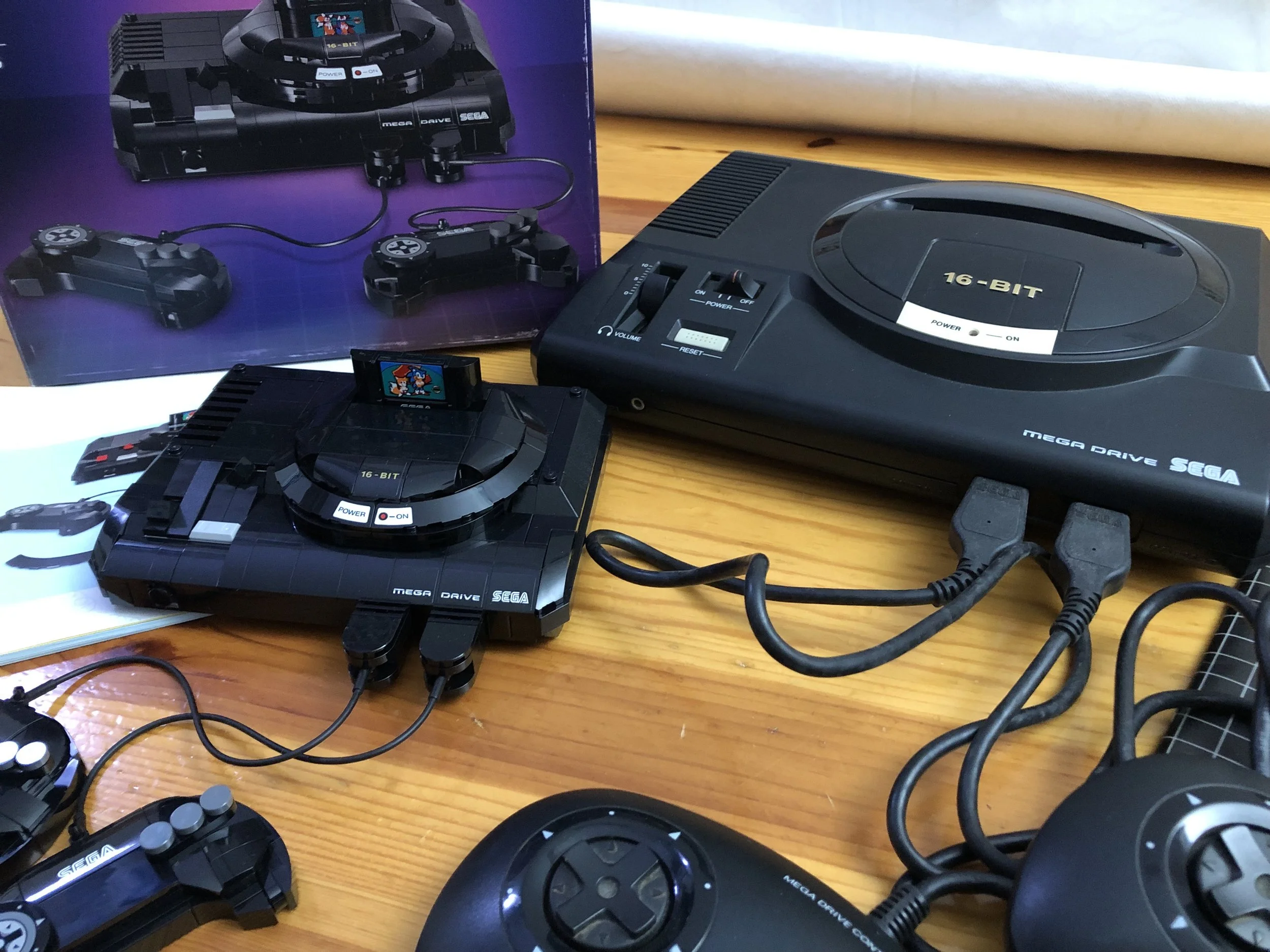
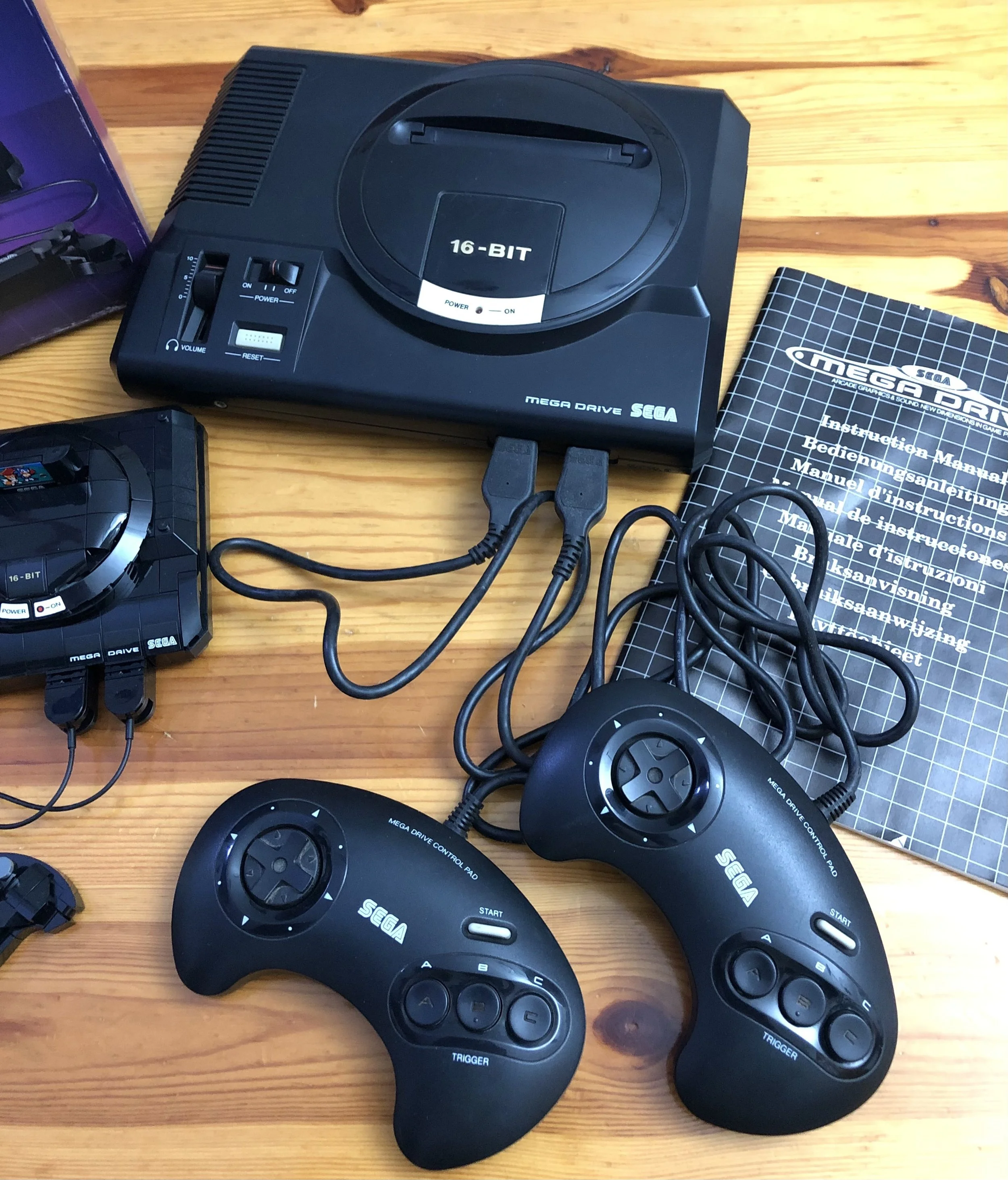
Set beside the real console, this little model makes a charming comparison. It’s modest in size, but it captures enough of the original to bring all those memories back.
Still Playing
I remain convinced that one of the most remarkable things a LEGO set can do is bring back a memory you had tucked away. This one rekindled something personal that had become buried beneath everyday commitments. For a little while, I was that young gamer again, sitting in front of the TV with my brother as though no time had passed.
Credit to the LEGO for capturing so much of that rebellious spirit in such a small model like 40926 SEGA Genesis Console. And SEGA? Well, it still survives today in the modern era of video games, almost 87 years after the founding of the first Hawaiian company that later gave birth to SEGA. But that’s another story…
Which other console would you like to see created by the LEGO? Comment below!
Do you want to help BrickNerd continue publishing articles like this one? Become a top patron like Paige Mueller, Rob Klingberg from Brickstuff, John & Joshua Hanlon from Beyond the Brick, Megan Lum, Andy Price, Lukas Kurth from StoneWars, Wayne Tyler, Dan Church, Roxanne Baxter, and Marci Hollingsworth to show your support, get early access, exclusive swag and more.