LEGO Lifts All Purchase Limits with LEGO Unlimited Initiative
/LEGO products have always enabled endless creativity, but acquiring those items has often come with very real limits. Whether it’s the five-per-household restriction on new sets from LEGO.com, the 999-element cap on Pick a Brick orders, or the all-too-familiar “temporarily out of stock” label, fans have learned to work within a system that quietly defines how much they can build.
Now, in a bold move that could fundamentally reshape how builders interact with the LEGO ecosystem, The LEGO Group has announced a sweeping new initiative: LEGO Unlimited. At first glance, it sounds simple: remove limits, increase access, and let builders build. But as with many LEGO initiatives, the details reveal something far more ambitious.
LEGO Unlimited
In their official press release below, the LEGO Group positions LEGO Unlimited as an evolution of its direct-to-consumer model designed to eliminate purchase friction.
The LEGO® Group LAUNCHES LEGO® Unlimited™ INITIATIVE
BILLUND, Denmark — The LEGO® Group is proud to introduce LEGO® Unlimited™, a new initiative designed to remove purchasing and availability limitations across its product ecosystem while enhancing the creative potential of builders worldwide. As part of its ongoing commitment to inspire play without boundaries, this effort will eliminate quantity caps on all products and expand production capabilities to ensure that in-portfolio items remain consistently available to fans.
LEGO® Unlimited™ aims to fundamentally change how fans acquire bricks, whether through sets or the Pick a Brick service. Through a combination of production-on-demand systems and industry-leading manufacturing processes, The LEGO® Group is shifting from a traditional inventory model to a dynamic fulfillment approach. By integrating advanced forecasting systems with scalable production capacity, LEGO® Unlimited™ seeks to synchronize supply with creative intent, minimizing delays and unlocking a more seamless path from idea to build.
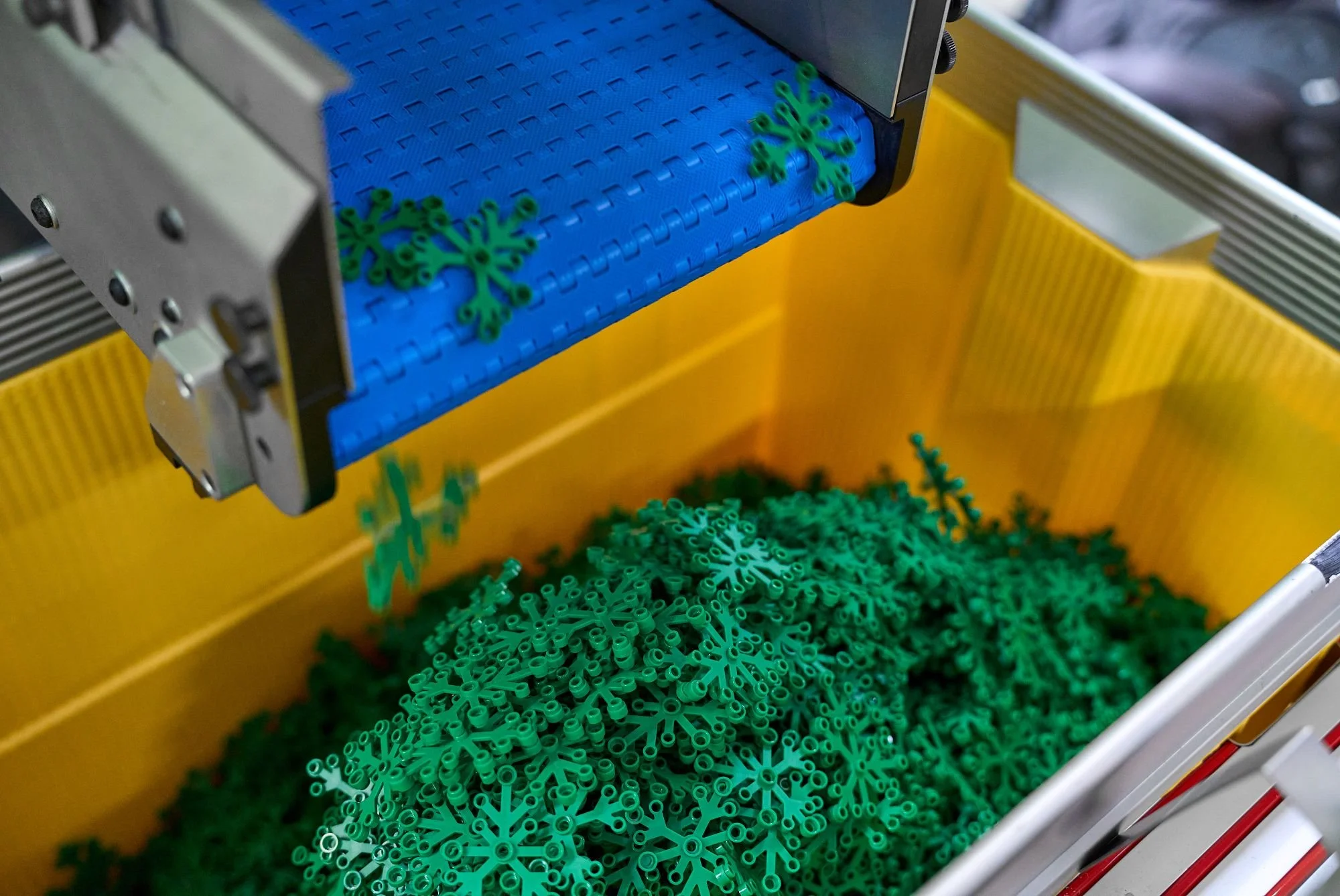
Image via LEGO
“LEGO® Unlimited™ represents a natural evolution of our mission to inspire and develop the builders of tomorrow,” said Björk Schoenwald, Head of Functional Operations and Organizational Logistics at The LEGO® Group. “For decades, creativity has been limitless—but access has not always kept pace. This initiative is about aligning those two ideas and enabling builders to bring their visions to life without unnecessary constraints.”
Changes stemming from the LEGO® Unlimited™ initiative will be implemented gradually over the coming years. As global production capacity expands and new regional manufacturing facilities come online, LEGO® Unlimited™ will introduce a more dynamic fulfillment model. This includes the ability to produce elements based on real-time demand, reducing reliance on fixed inventory levels while improving availability across major markets.
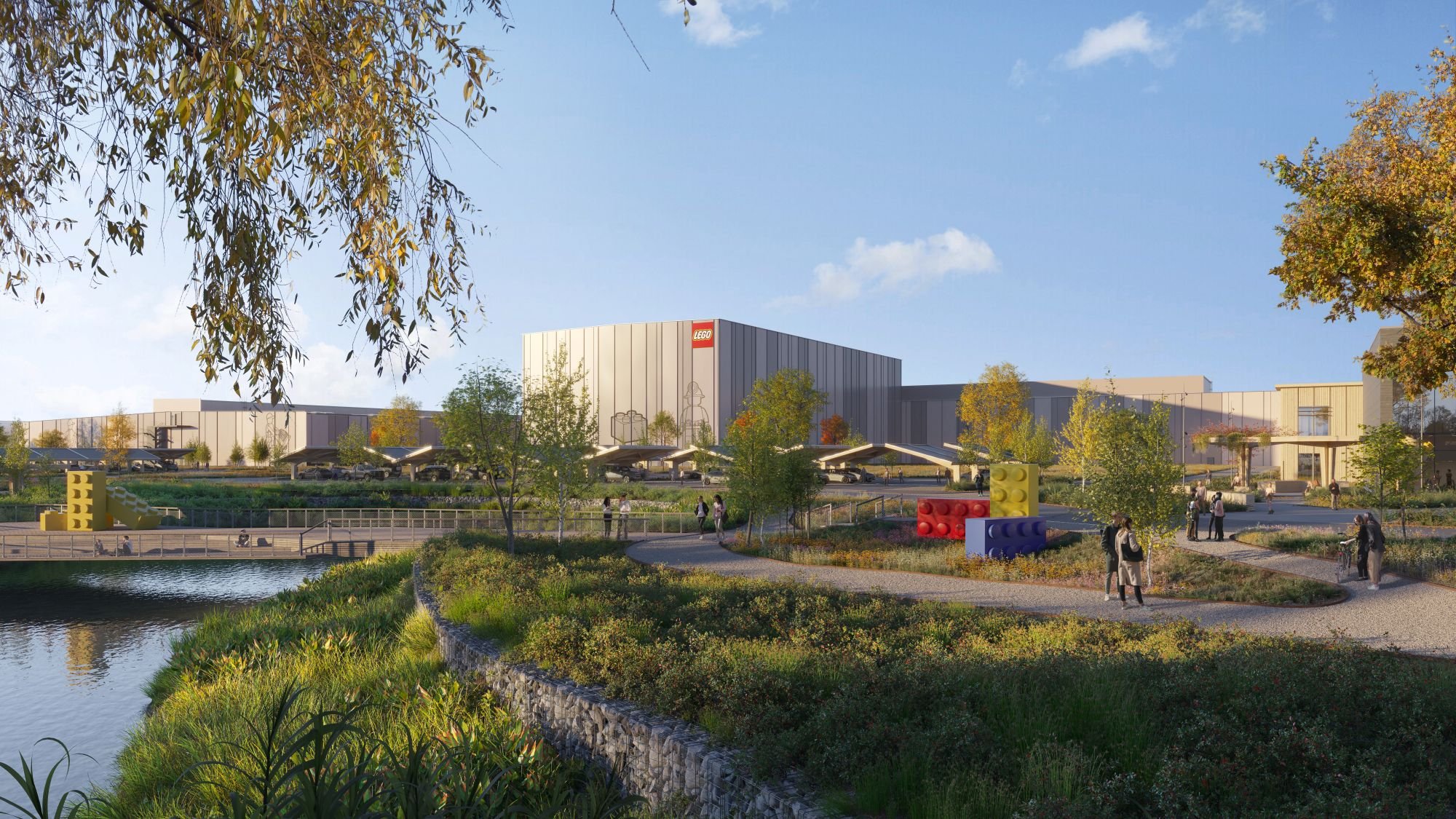
Image via LEGO
LEGO® Unlimited™ aligns with the LEGO® Group’s broader innovation and operational framework:
Expand: Increased global manufacturing capacity and regional fulfillment networks will improve availability and reduce delivery times.
Access: Removal of purchasing limits allows builders to acquire the elements and sets they need without artificial constraints.
Scale: Advanced demand forecasting systems will enable more responsive production, helping ensure consistent availability while minimizing inefficiencies.
The LEGO® Group believes that removing barriers to access can unlock new levels of creativity for builders of all ages. LEGO® Unlimited™ is designed to create a future where imagination is no longer shaped by limits—but supported by them being removed entirely.
The Impact of Unlimited
To understand the potential impact of LEGO Unlimited, it’s important to first look at the system it replaces. Aside from removing the limit on LEGO sets you can purchase online, the Pick a Brick service is poised to see the most changes.
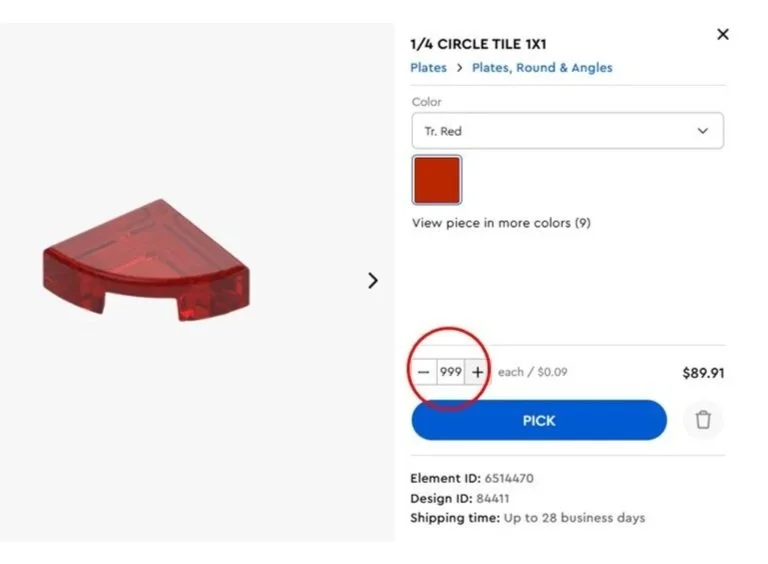
Currently, Pick a Brick elements are limited to a maximum order quantity of 999 per element. While this may seem generous for the casual builder, large-scale MOC projects routinely require tens of thousands of identical parts. As a result, builders are often forced to place multiple sequential orders, introducing delays in both fulfillment and project timelines.
From an operational standpoint, this approach also increases internal processing complexity. Needing 10,000-pieces for a project can translate into 10+ separate orders (hopefully with a GWP, at least), each requiring individual handling, packaging, and shipping—an outcome that runs counter to the LEGO Group’s stated sustainability goals.
A key component of LEGO Unlimited is expanding the available parts palette. At the time of writing, the US Pick a Brick service lists approximately 4,148 elements. However, internal part inventories across active molds are estimated to exceed 10,000 unique elements globally at any given time. Even a conservative doubling of the available catalog would represent a 100–200% increase in accessible elements, fundamentally changing how builders approach sourcing for complex designs.
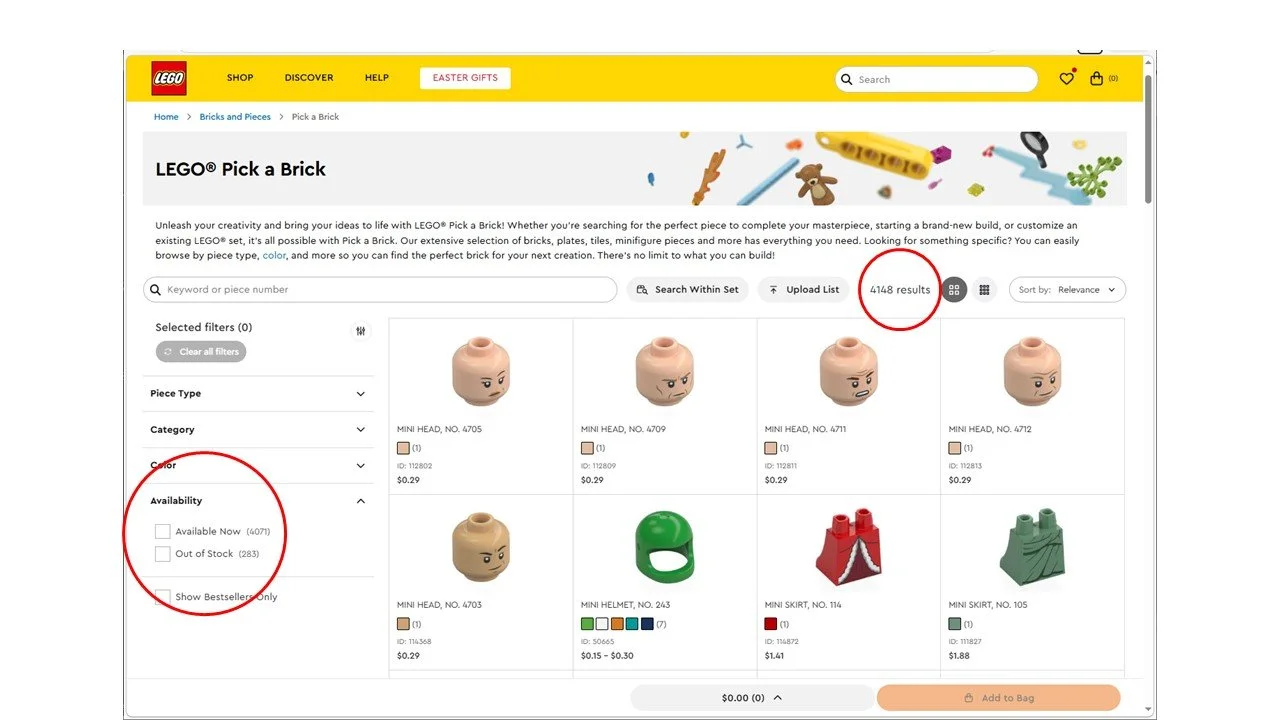
Fulfillment is another area targeted for transformation. Today, Pick a Brick operates under a dual-category system with “Best Seller” pieces that are typically shipped within ~7 days from regional warehouses and “Standard Elements” that are often fulfilled from centralized locations with delivery timelines of 28 days or more (sometimes much more). LEGO Unlimited proposes a gradual shift toward locally manufactured bricks with a greater percentage of elements stocked across regional distribution centers. Early projections suggest this could reduce average delivery times by 40–60%, particularly for high-volume orders.
Packaging is also expected to evolve. Currently, elements are consolidated into as few bags as possible—a practical solution for small orders, but increasingly inefficient as order size grows. Large Pick a Brick shipments often require significant post-delivery sorting, effectively shifting part of the fulfillment burden to the customer.
Under LEGO Unlimited, LEGO is exploring adaptive packaging systems, where elements are grouped based on quantity thresholds or part type. While fully individualized packaging would be impractical, even partial separation at scale could dramatically reduce sorting time for builders working with large inventories.
Another notable implication is the potential impact on the secondary market. Limited availability and purchase caps have historically enabled resellers to acquire and redistribute high-demand sets and elements at a premium. By removing these constraints and ensuring consistent availability, LEGO Unlimited could significantly reduce the viability of this model, effectively stabilizing pricing across both primary and secondary channels.
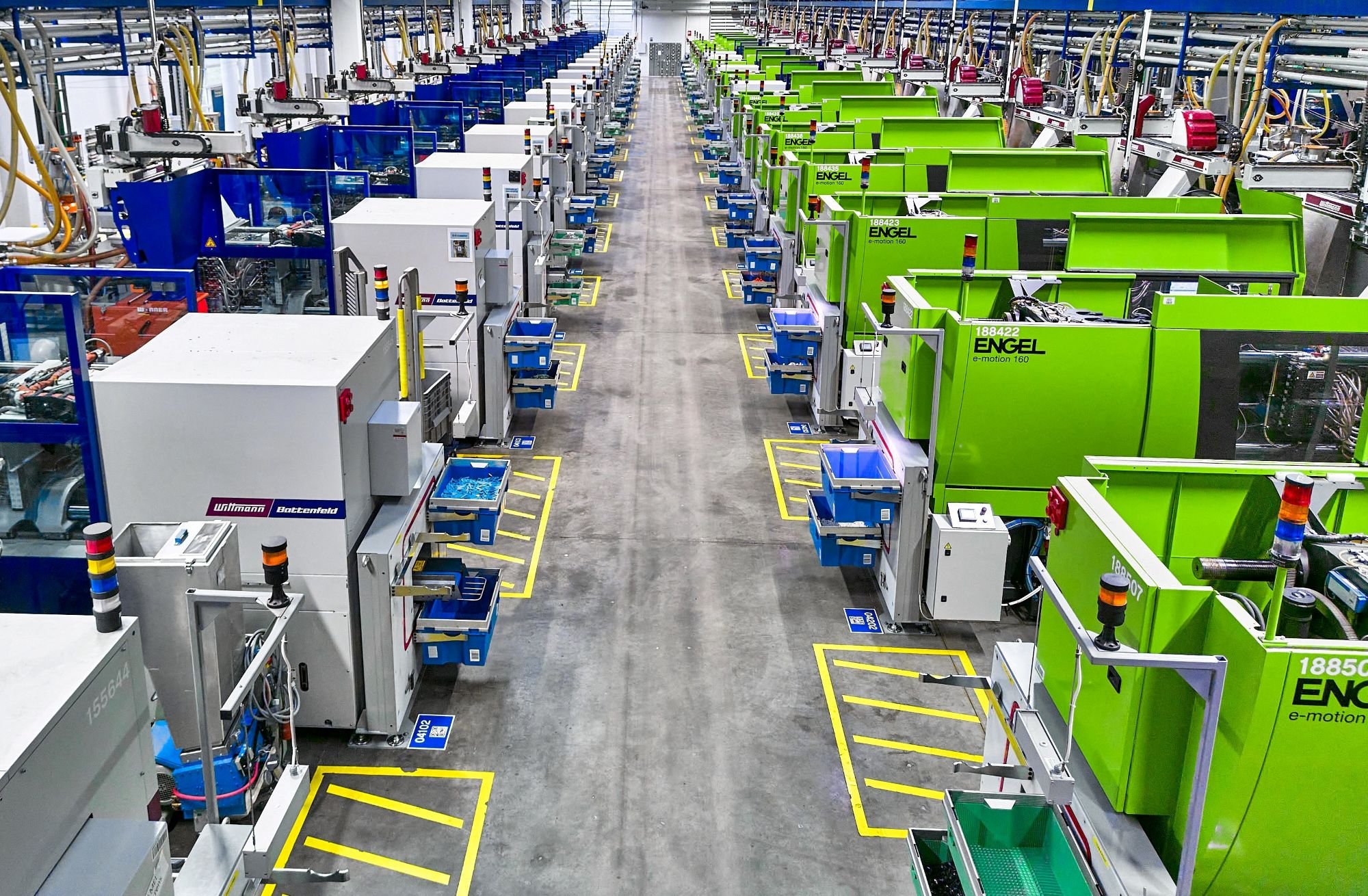
Image via LEGO
Finally, there is the question of demand itself. If limits are removed and availability is guaranteed, demand is no longer artificially constrained. Instead, it becomes a direct reflection of builder intent.
According to LEGO, managing this shift will rely heavily on demand forecasting AI systems trained on decades of earned insights (like instructions scanning for Insiders points), purchasing trends, and real-time behavioral modeling. These systems are expected to predict not only which elements will be needed, but in what quantities and in which regions, potentially enabling production to begin before orders are even placed.
Which raises an interesting possibility that “in stock” may actually mean “made to order” under the new program.
Unlimited Possibilities
Here at BrickNerd, we’re always interested in how ideas like this move from concept to reality. We had the opportunity to sit down with Björk Schoenwald from The LEGO Group, who played a leading role in developing and implementing the LEGO Unlimited™ initiative.
BrickNerd: Thank you for speaking with us about LEGO Unlimited. Can you share how this idea first came about?

BJÖRK SCHOENWALD, LEGO Functional Operations Head
Schoenwald: One of the missions of the LEGO Group is to “inspire and develop the builders of tomorrow.” We’ve always focused on providing creative tools through our product portfolio, but over time, we realized that access itself had become part of the creative process. When builders begin designing around availability rather than imagination, that’s a signal that something isn’t working correctly. LEGO Unlimited is really about removing that constraint and allowing creativity to lead again.
BrickNerd: Are products now truly unlimited globally or is this more of an aspirational program?
Schoenwald: Increased global production capacity allows us to think differently about how we fulfill demand. It’s not just about producing more. It’s about producing more intelligently, closer to where demand exists. That reduces shipping time, lowers costs, and allows us to respond more dynamically when demand shifts… sometimes faster than we historically would have thought possible. That means that we can promise unlimited availability and make set and element availability feel universal from a customer perspective, even if the underlying production model remains distributed.
BrickNerd: The LEGO Group has seen steady growth in recent years. Is there any concern that demand could outpace production, even under LEGO Unlimited?
Schoenwald: Demand is always something we monitor closely. But one of the advantages of LEGO Unlimited is that it shifts us away from purely fixed production models. By integrating predictive systems with scalable manufacturing, we’re able to anticipate demand earlier and adjust accordingly. In many cases, we expect to begin production before demand fully materializes based on patterns we’re already seeing. Predicting the future isn’t hard when you have an AI model trained on billions of customer purchases and interactions. At a certain scale, our sales patterns begin to look less like predictions and more like inevitabilities.
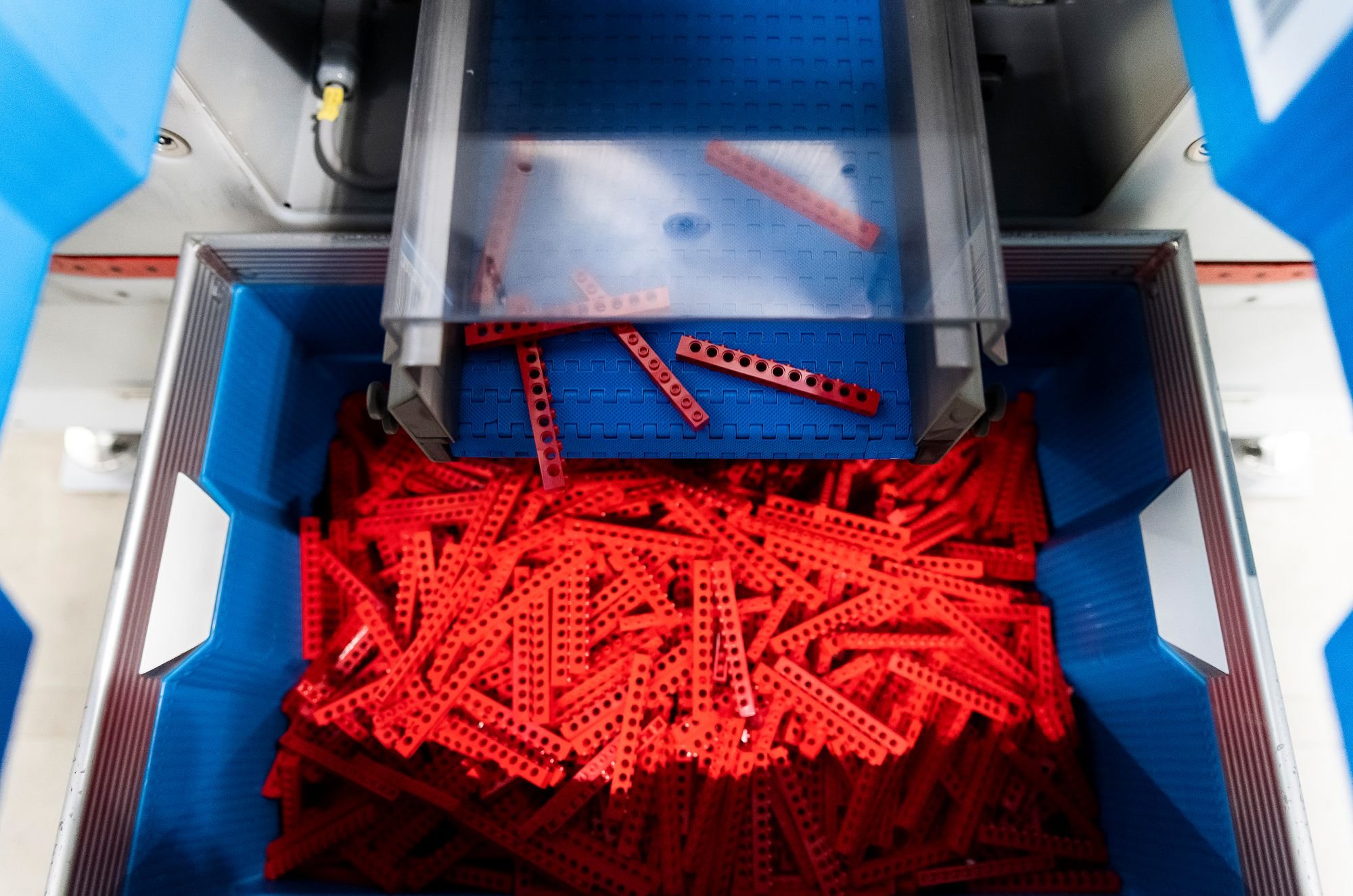
Image via LEGO
BrickNerd: Was reducing or eliminating resellers another goal of the initiative?
Schoenwald: I wouldn’t describe it as a primary objective. But we are aware of the challenges that limited availability can create. If availability improves across the board, those dynamics tend to resolve themselves naturally. It’s one of those outcomes where improving the system benefits more people than you initially set out to. It’s interesting that to combat scalping, we are essentially opening the doors to the factories to make whatever is needed, whenever it’s needed, effectively removing scarcity as a variable entirely.
BrickNerd: The LEGO Group has maintained steady growth for nearly a decade. Is there a risk that increased sales could exceed the production capabilities and force LEGO Unlimited to be curtailed in the future?
Schoenwald: We certainly hope the sales trend continues. I mean, we keep raising prices and people keep buying sets, so you would think we might hit critical mass at some point. Yet builders are still demanding 10,000+ piece sets and never-ending goats and spacemen on Pick a Brick. Though contrary to the widespread reports from two years ago, we would be mad to limit production and thereby limit the creativity we have come to enjoy so much from the fan community and beyond.
BrickNerd: The initiative also included a small mention of packaging Pick a Brick orders by element instead of poured into the same bag, which we are sure will be a popular change.
Schoenwald: Yes, people will now be able to choose the packaging they want for element orders. Individual bagged elements will be available for an upcharge, like a bag fee you might see in a supermarket. We actually expect most people to continue receiving items bagged together because it saves them money for their next order. And how difficult is it really to sort an order? For many builders from what I hear, sorting has always been considered part of the building experience.
BrickNerd: I see we only have time for one last question. With limits removed, is there any scenario where a single order becomes too large?
Schoenwald: That depends on how you define “too large.” Is ten Death Stars too large? Is a Pick a Brick order the size of LUG project support too large? And who are we to determine what you can and can’t buy? Instead of driving people to our competitors, we choose to make it as easy as possible to stay within the LEGO ecosystem.
BrickNerd: Thank you for your time. We will follow up with your PR representative with any other questions.
The Limits of Unlimited
Naturally, we still have a ton of questions. (We are BrickNerd, after all.) What does a world without purchase limits actually look like for builders? Does removing scarcity unlock new forms of creativity, or does it fundamentally change how we approach building in the first place? If everything is always available, what happens to the thrill of the hunt that has long been part of the LEGO experience? And perhaps most importantly… where are we all going to put all of this?
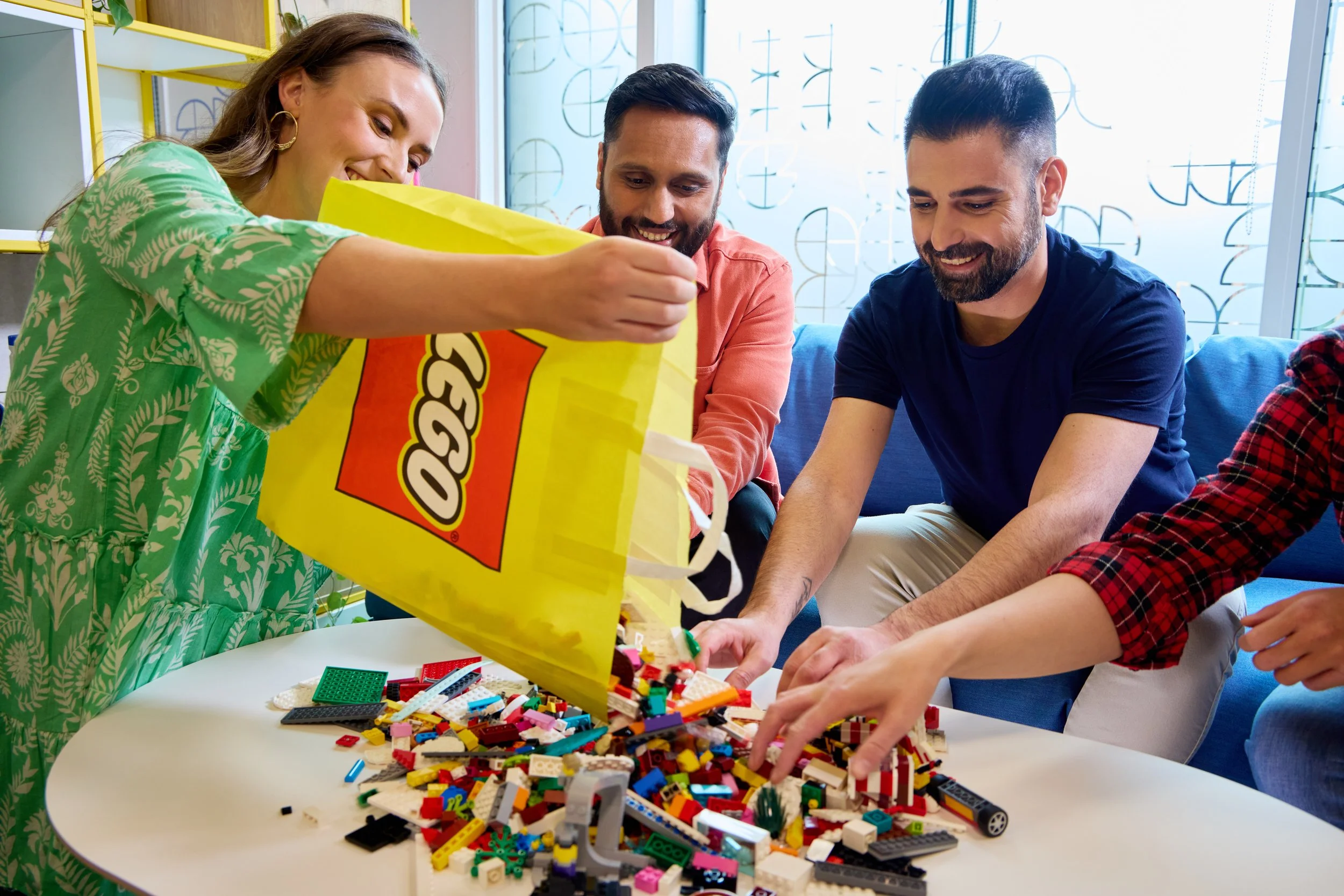
Image via LEGO
LEGO Unlimited could represent the end of an era defined by backorders, refresh buttons, and carefully planned orders built around availability. In its place, LEGO is proposing something far more ambitious and life-altering for AFOLs. We have to ask ourselves, at what point does unlimited availability stop being a technical challenge and become a philosophical one for builders?
Only time will tell how fans ultimately respond to a world without limits. But if LEGO Unlimited delivers on even part of its promise, we may be entering a future where the building possibilities are unlimited—even if our shelf space isn’t.
How will LEGO Unlimited impact your MOC building? How long did it take you to figure out this is an April Fool’s joke? Leave your thoughts in the comments below.
Do you want to help BrickNerd continue publishing articles like this one? Become a top patron like Paige Mueller, Rob Klingberg from Brickstuff, John & Joshua Hanlon from Beyond the Brick, Megan Lum, Andy Price, Lukas Kurth from StoneWars, Wayne Tyler, Dan Church, and Roxanne Baxter to show your support, get early access, exclusive swag and more.