Miniland on Parade: Recreating LEGO’s Thanksgiving Floats
/The 1967 LEGO Thanksgiving parade float.
The holiday season is ramping up here in the States, with today being our Thanksgiving holiday. It’s a day filled with many traditions: good food, time with family, American football, and the iconic Thanksgiving Day Parade held in New York City.
I only recently learned that LEGO has been tied to the yearly parade for much longer than I thought!
A History of LEGO on Parade
In 1967, the LEGO Group made its Thanksgiving parade debut with the Tivoli train float. To create excitement around the soon-to-open LEGOLAND Billund, this train was chosen for the LEGO Group’s debut in the parade. The train was designed by legendary LEGO master builder Dagny Holm, who would go on to contribute many of the models around LEGOLAND Billund.
The train was not initially made for the parade, though. It was, in fact, borrowed from Tivoli Gardens in Copenhagen, Denmark. Tivoli Gardens is an amusement park featuring old-fashioned rides, gardens, restaurants, and more, and has been around since 1843. The LEGO train was used to bring guests on a tour around the gardens. When LEGOLAND Billund opened, it featured a train very similar to the one from Tivoli and the Thanksgiving parade, now taking guests on rides around the newly opened park.
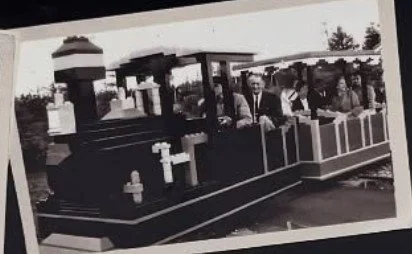
The very similar train found at LEGOLAND Billund when it opened in 1968.
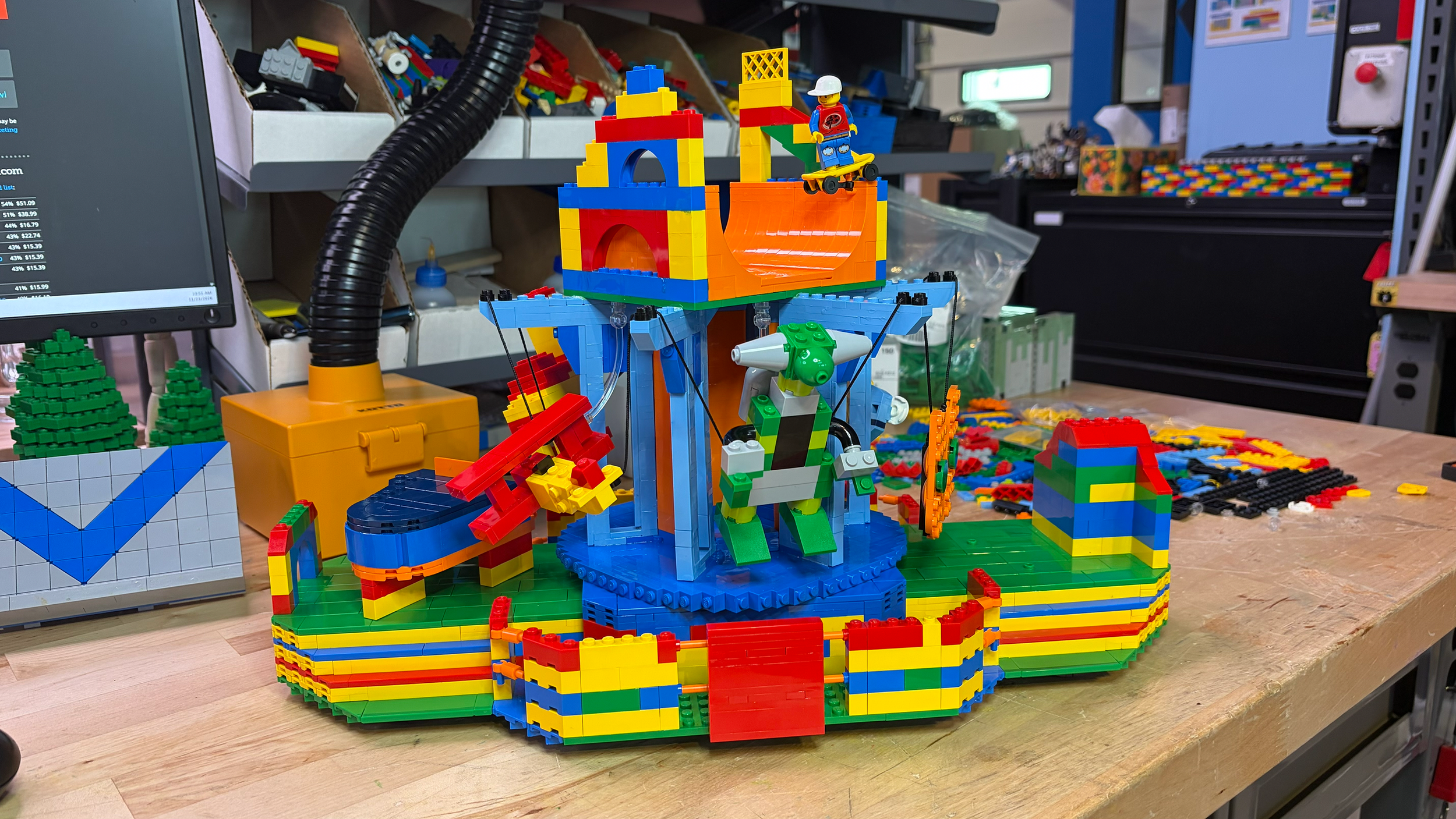
The LEGO Group wouldn’t return to the Thanksgiving parade until 2002, with a brand-new float called the Carousel of Imagination. Designed to celebrate the creativity and possibilities of LEGO bricks, it commemorated the LEGO Group’s 70th anniversary. Jerry Ospa is credited as the designer of this float, which returned for the 2003 and 2004 Thanksgiving parades.
The float feels very at home in the era of early 2000s LEGO. The basic colors of red, blue, green and yellow make up most of the model. The simple yet effective mini models arranged around the carousel show what you can make with even limited bricks. And my favorite detail on the model? A minifigure of Pepper Roni from the LEGO Island video games skating down a half-pipe on top.
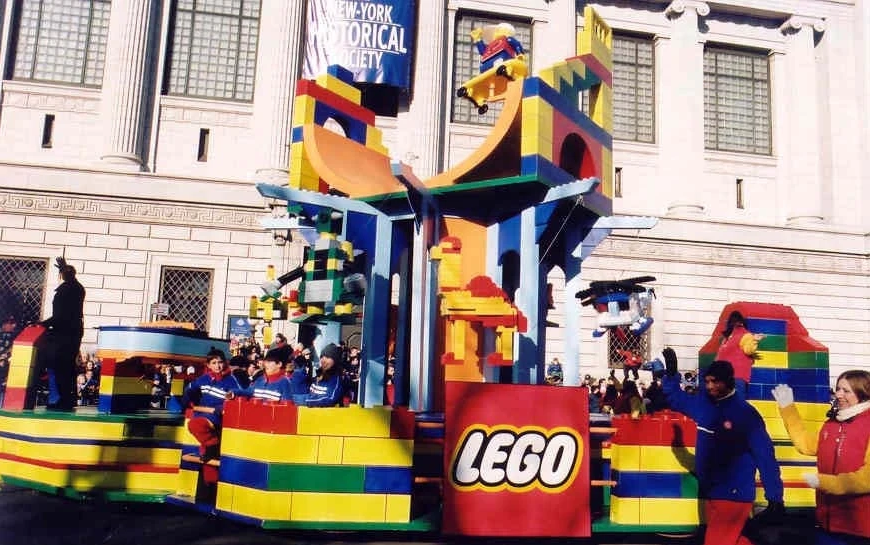
The 2002–2004 Thanksgiving parade float, the Carousel of Imagination.
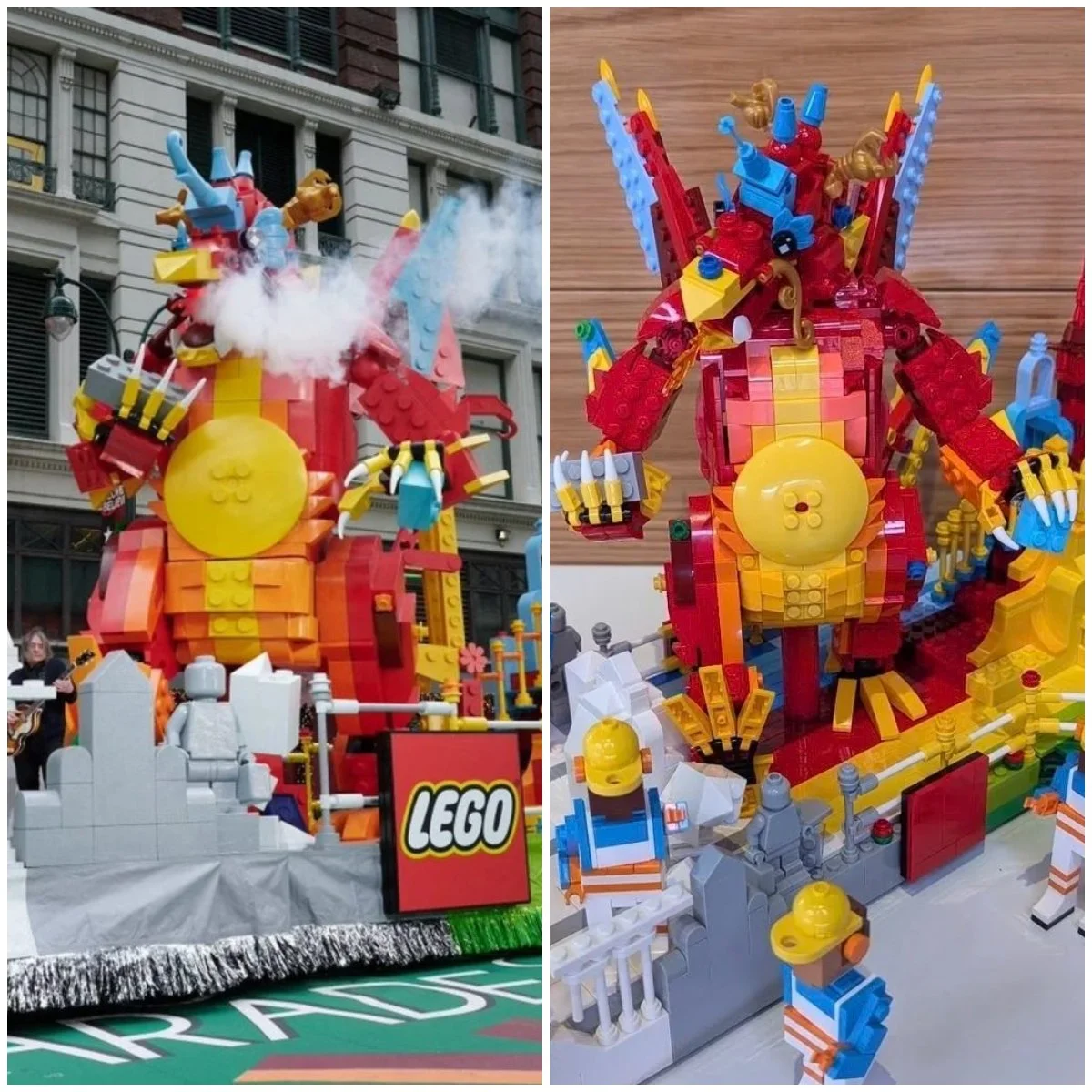
A decade and a half after the Carousel of Imagination retired, the LEGO Group returned to the Thanksgiving parade in 2019 with the Brick-Changer. It ran through 2024, displaying a big, red, magical creature, part turkey and part dragon, as the centerpiece of the float. The float’s story is that the Brick-Changer is rebuilding the landscape around them into a colorful, vibrant world of endless possibilities.
Joseph Ammons served as the float designer for the Brick-Changer, with Jennifer Palmer leading costume design. According to interviews with the team responsible for the float’s creation, it is constructed with just over 2,000 large-scale LEGO elements, meaning it could, in theory, be replicated with normal-sized LEGO bricks.
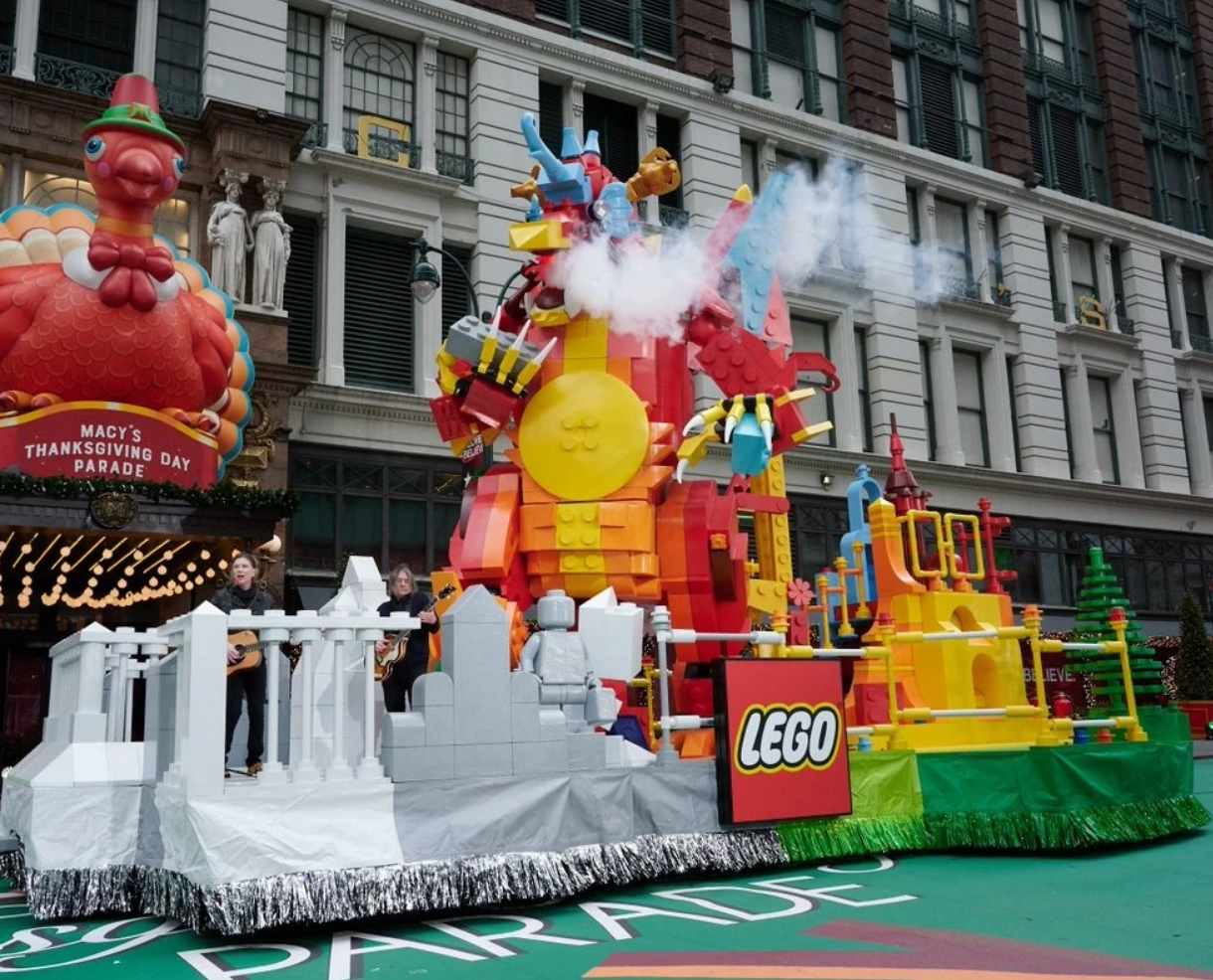
The 2019–2024 Thanksgiving parade float, the Brick-Changer.
The fourth and most current float is the Brick-tastic Winter Mountain, which debuted in 2025 and is expected to return this year for the 2026 parade. Designed by PJ Portera, the float is visibly inspired by the ongoing Winter Village product line that the LEGO Group has been producing since 2009. The story of the float goes like this: A family on Winter Mountain spends their winter vacation skiing down the mountain with the local yeti and penguins. A fun time for all!
Like the Brick-Changer, the Brick-tastic Winter Mountain is designed to fit within the LEGO system, albeit at a much larger scale. If this float were built out of regular LEGO elements, it would use an estimated 2,475 bricks.
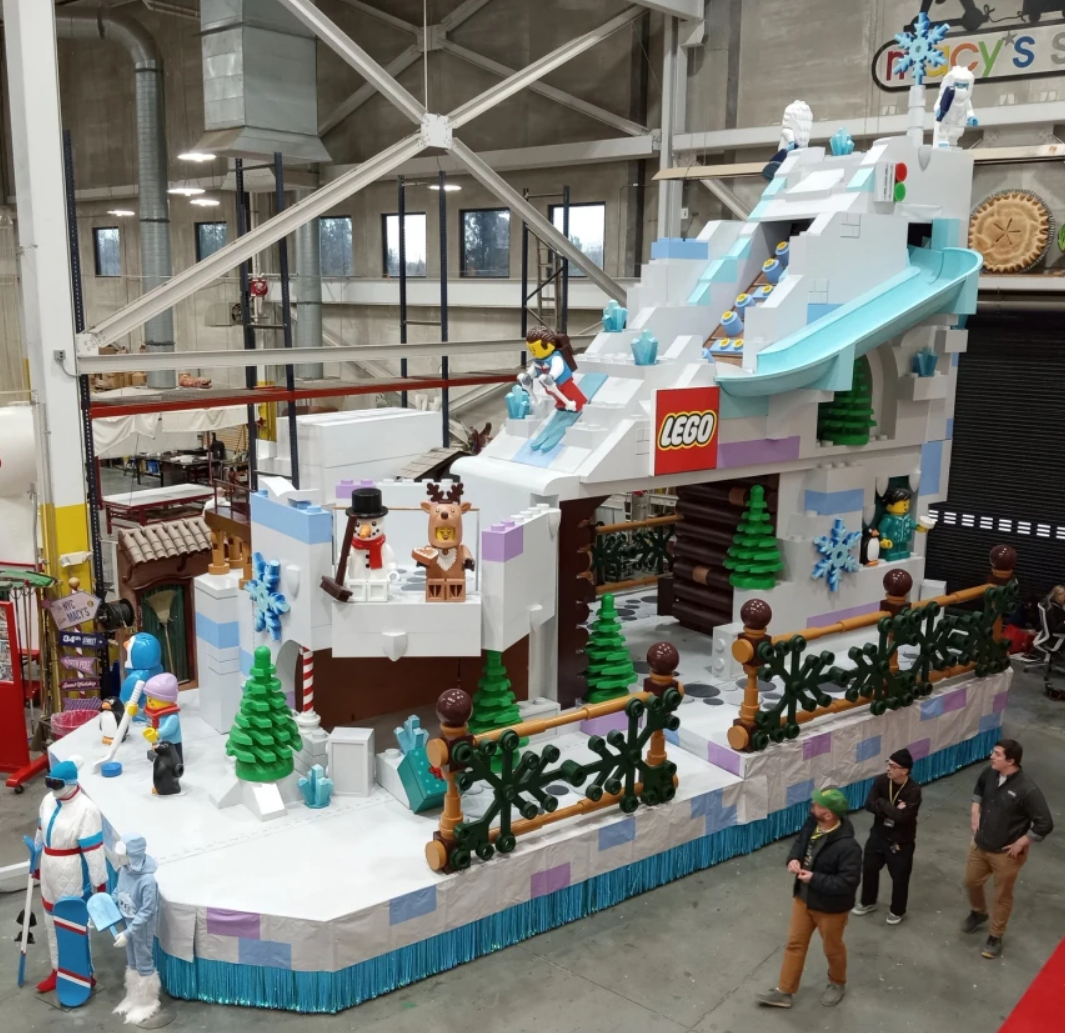
The Brick-tastic Winter Mountain, which debuted in the 2025 Thanksgiving parade.
Bringing the Parade to Miniland
All four of these floats are amazing in their own way, each reflecting the LEGO era in which it was designed. They’re also incredible examples of the creativity of the LEGO system. So much so that the Model Shop at LEGOLAND New York has spent the last few years recreating these floats out of real LEGO bricks for the Manhattan section of our Miniland. My fellow Master Model Builder, Willis Reifsnyder, started this project and was kind enough to chat with me about his history with it!
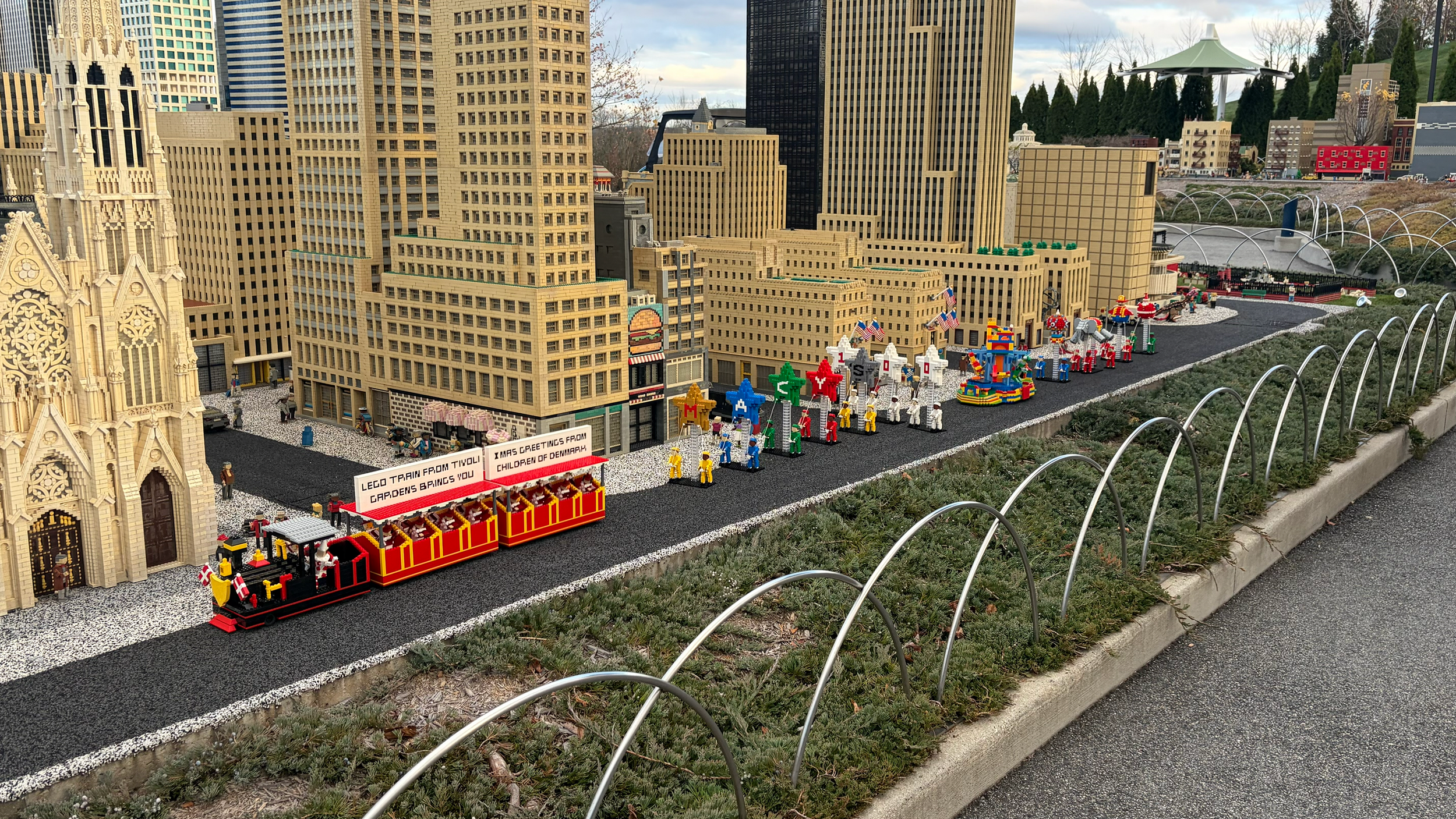
The newest additions to LEGOLAND New York’s Miniland Thanksgiving parade.
Daniel: You’ve been working on the Thanksgiving parade project for a few years now. How did it start?
Willis: It started when I was working as a Master Model Builder for LEGOLAND Discovery Center Westchester in New York. I had created a minifigure-scale version of the Brick-Changer for its Miniland. Back then, I had to scale the model down to fit in with minifigures and was working from news coverage of the parade for reference images. But when building the model for LEGOLAND New York, I realized I didn’t have to change the scale, as a version built with regular-sized bricks fits Miniland scale perfectly.
Willis’ original minifigure-scale depiction of the Brick-Changer for LEGOLAND Discovery Center Westchester’s Miniland.
When I got around to building the Brick-tastic Winter Mountain, it was a similar case: Regular-sized LEGO bricks fit Miniland scale perfectly. And specifically with the Brick-tastic Winter Mountain, I was provided with the digital model file for the float, so I was able to build it more accurately as depicted. I had to make some minor changes to make the float physically work within the LEGO system and retain its functionality as well.
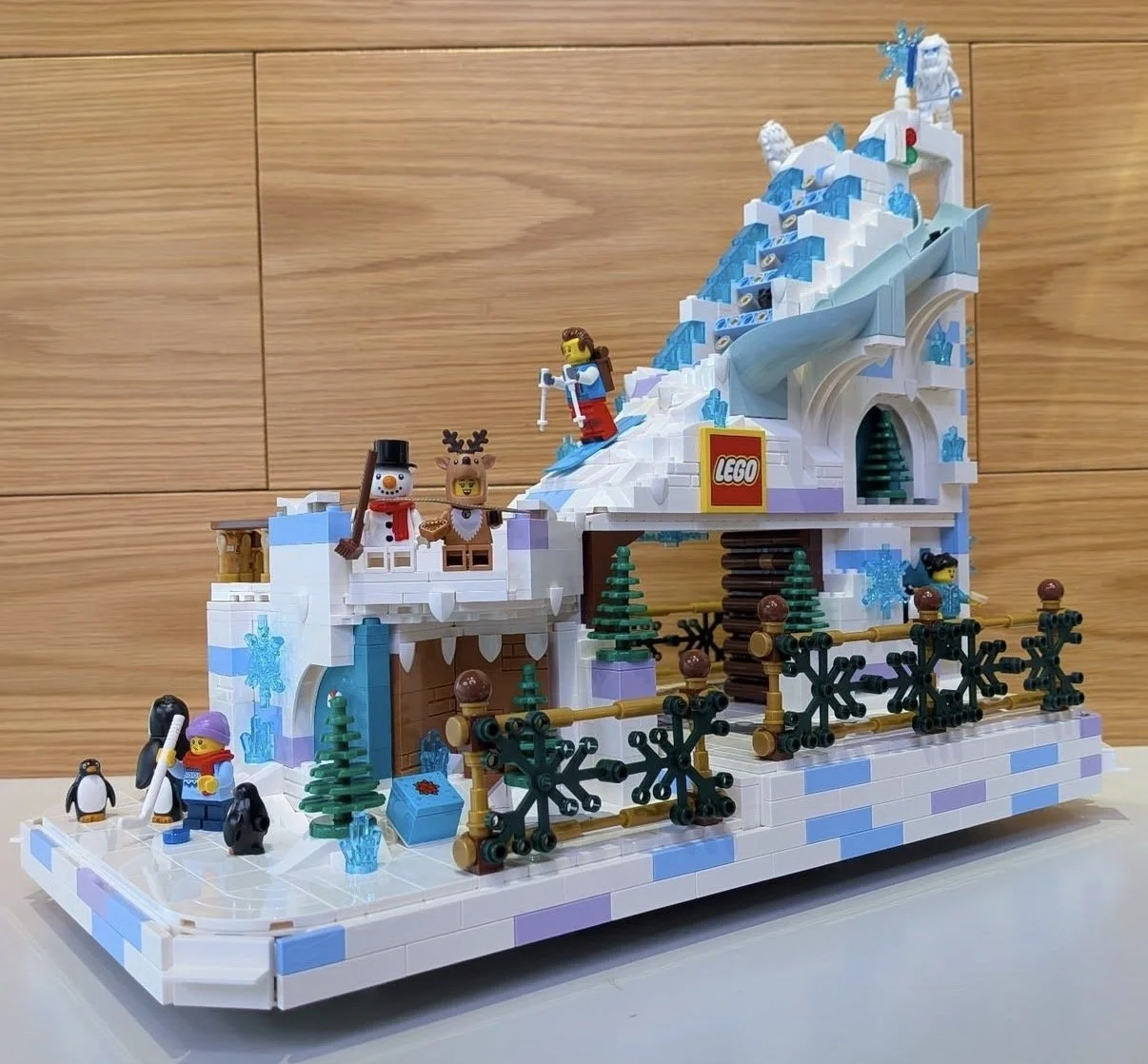
Willis’ Miniland-scale model of the Brick-tastic Winter Mountain.
Daniel: What was a standout moment in the process of designing these floats for Miniland?
Willis: How big these models are in hand once they are fully built at 1:1 brick scale! The Brick-tastic Winter Mountain is around 50 studs long, and the Brick-Changer is closer to 40 studs long. The one I built for this year, the Tivoli train, is around 120 studs long, the biggest one yet!
The Tivoli train was a fun challenge this year due to the lack of reference images we could find. The shield on the front is one solid piece, unlike anything LEGO has made before, while the rest is made out of clearly defined individual bricks. Rendering the shield in LEGO bricks was a fun challenge.
As I’ve built these three floats, I’ve noticed that all three have their detail on the left side, typically the angle from which cameras broadcast the parade on TV. It’s a detail I’ve found quite humorous.
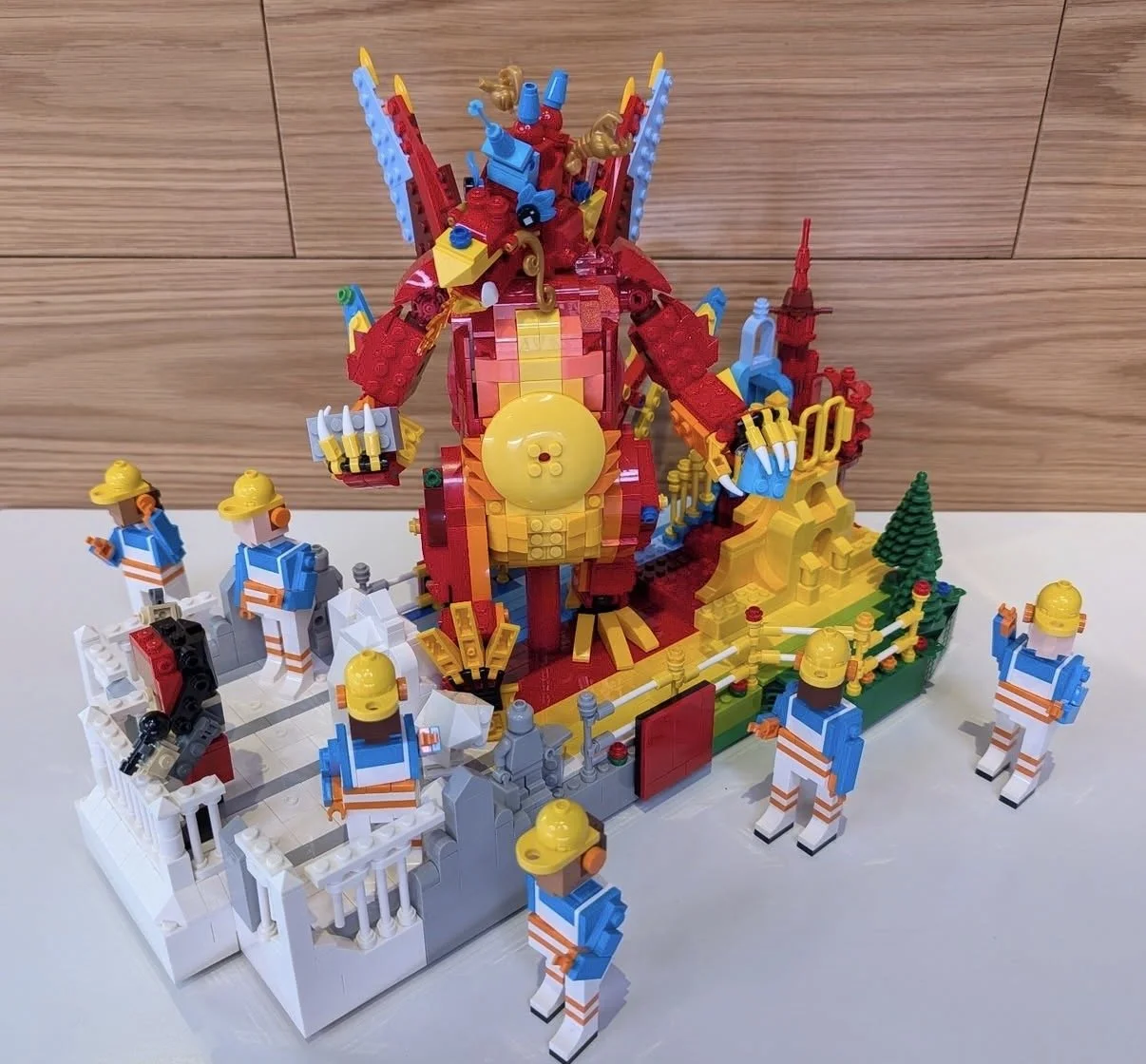
Willis’ Miniland-scale model of the Brick-Changer float.
Daniel: Out of the three you’ve built and designed, which one is your favorite?
Willis: For a while, the Brick-Changer was my favorite, as I spent the most time with it between two different LEGOLAND attractions. But I have to say, as a train enthusiast, the Tivoli train now takes the favorite spot!
Daniel: Thanks, Willis! Follow Willis on Instagram at Musicmancer.
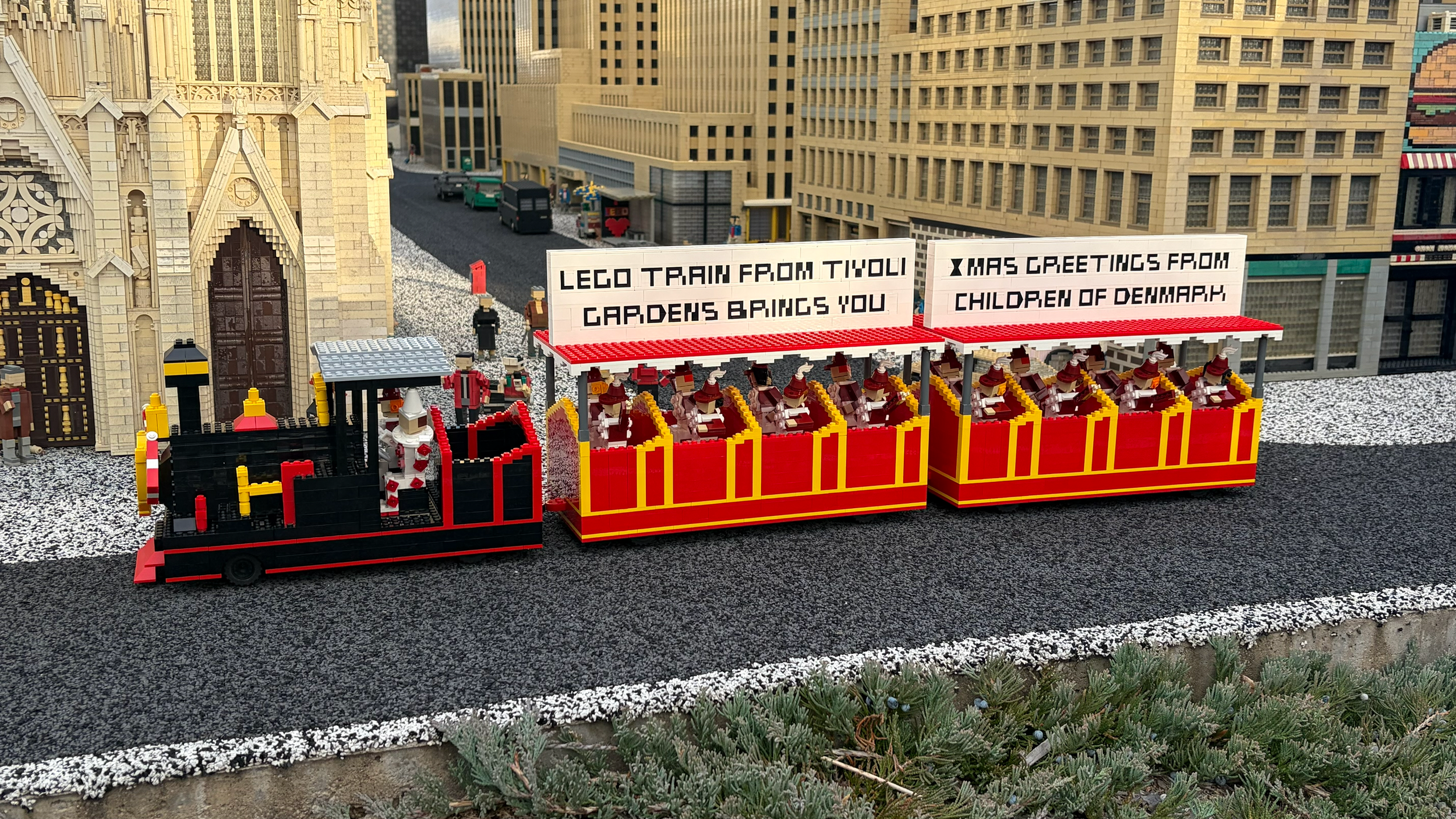
Willis’ third and latest Thanksgiving parade float, the 1967 Tivoli train.
Balloons for the 100th Parade
In 2026, it was decided that Willis would design and build a new float for the project based on the first float from 1967. Additionally, the Model Shop’s lead designer, Zac Durren, and I, Master Model Builder Daniel Zimmerman, designed more floats and balloons for our Miniland Thanksgiving parade. Zac also provided some insight into his process for designing his balloons.
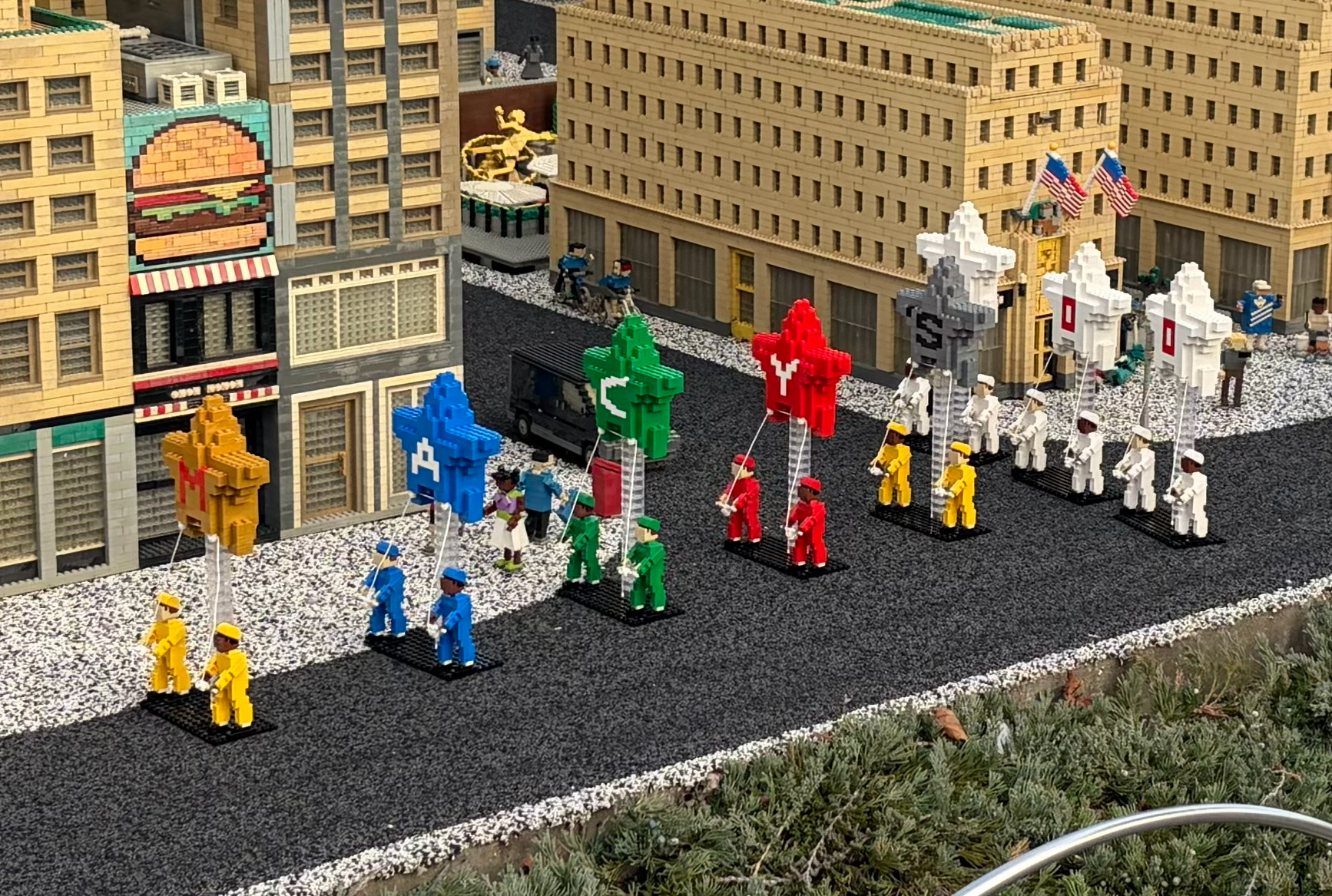
Daniel: What was your design process like for these balloon models for our Miniland-scale Thanksgiving parade?
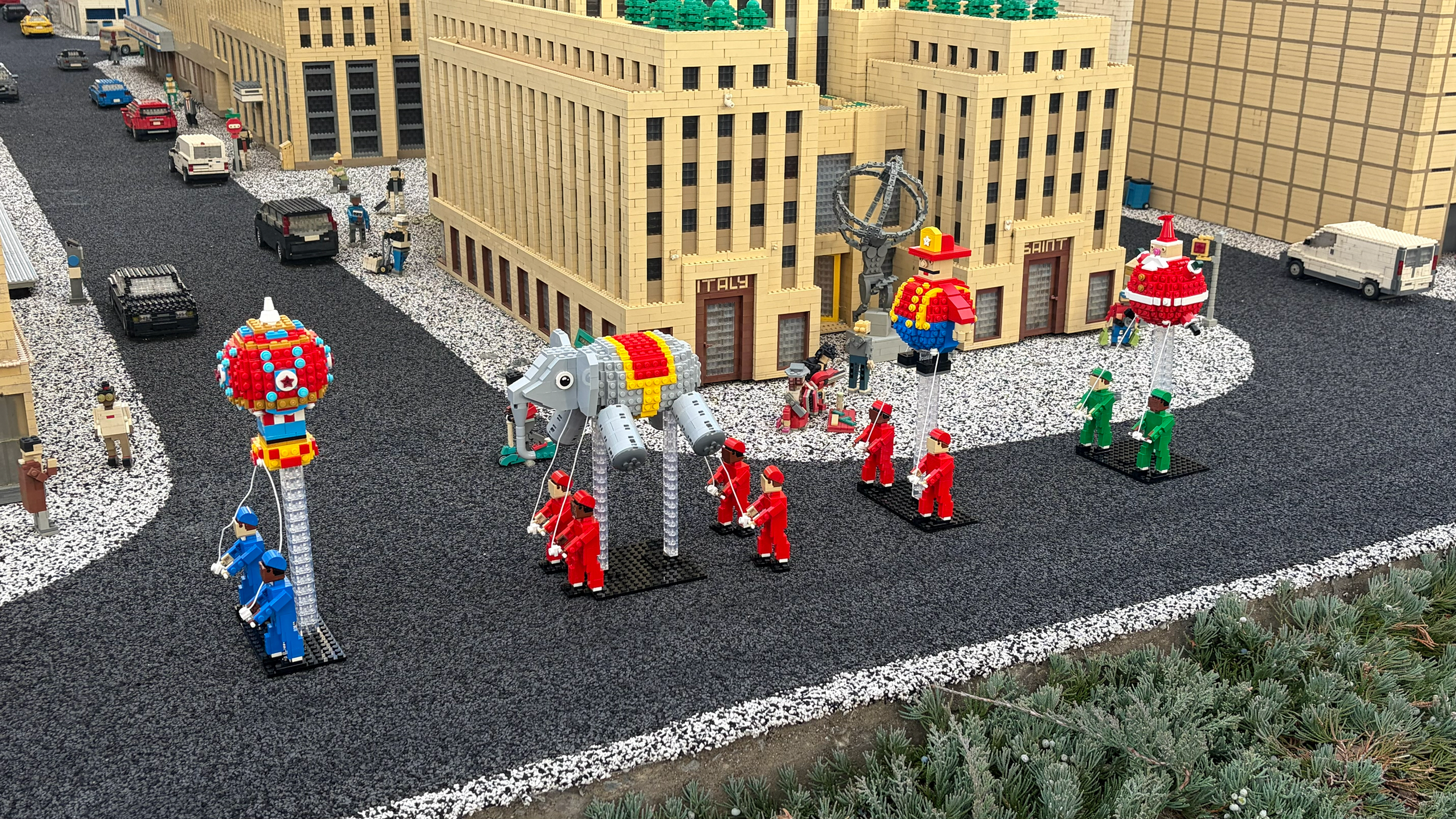
Zac: I started with the people holding and guiding the balloons, referencing various photos online of the costumes and stances people find themselves in during the parade. I wanted to make a design that looked like it could fit the theming of any balloon, regardless of who was holding the rope. That led to a basic yet colorful tracksuit design and a simple cap. The scale and posing of the people then helped determine the scale of the balloons they would be holding. I wanted to make it look like the Minilanders actually could hold onto the balloons without flying away!
Daniel: What made you pick the designs for the balloons you built?
Zac: 2026 marks the 100th Thanksgiving parade in New York City. It began in 1924, with three years skipped during World War II, so I wanted to make balloons commemorating the milestone. That led me to make the white star balloons with the one and zeros on them.
As for the other balloons depicting animals, those are a reference to the circus animals they used to have in the parade in its early years. They used to bring some of the animals out of Central Park Zoo. They were eventually succeeded by balloon animals. The Santa balloon is a reference to how Santa is typically part of the very end of the parade, signaling the beginning of the Christmas holiday season.
Daniel: Thanks, Zac! Follow Zac on Instagram at Gimmebuilds.
Recreating the Carousel of Imagination
One of the two reference images I had when designing my rendition: a scan of a page from a German LEGO publication from 2002.
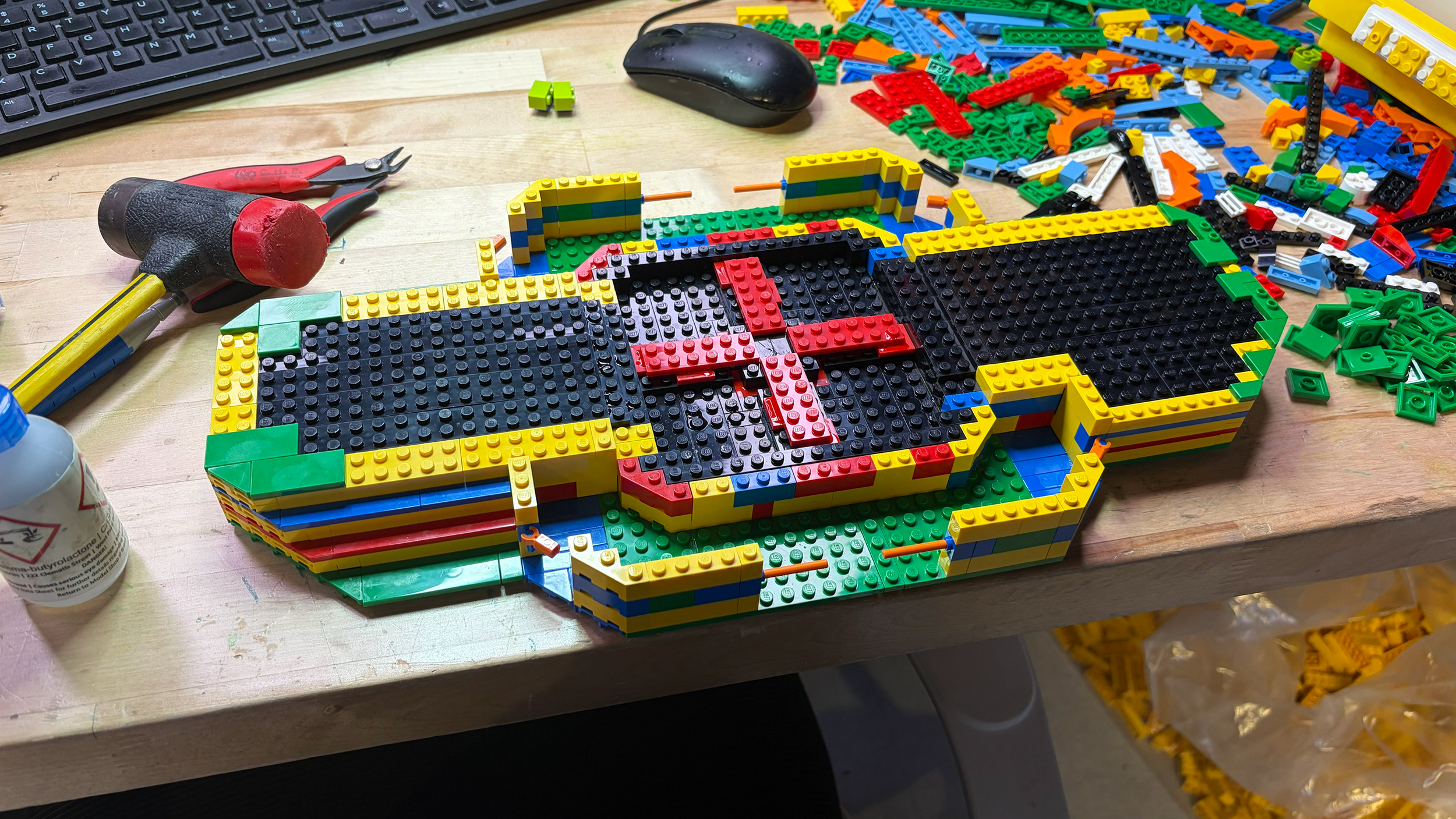
I had the distinct pleasure of designing the float from 2002, the Carousel of Imagination, in brick form, and it proved to be an interesting challenge. As Willis discussed, the 2019 and 2025 floats were designed using digital LEGO building programs to create virtual 3D models scaled to the LEGO system. These detailed 3D models allowed for highly accurate brick recreations.
As I began to design the Carousel of Imagination in BrickLink Studio, it quickly became clear to me that this float did not follow a single consistent LEGO scale. The colorful base of the float, the turning carousel base, the mini models and even the skateboard half-pipe on top are all at different scales.
While it may not be obvious at first, once you start to replicate it brick by brick, you quickly realize some things do not line up as you count studs. It led to an interesting design process, as I had to decide how to change things to properly scale it to Miniland while making a clean and visually appealing model.
We also had some difficulty finding reference materials. I was working from two pictures and archival footage from the 2002 parade, which meant more creative decision-making and interpretation in the final model. It is not an exact brick-for-brick recreation like the Brick-Changer and Brick-tastic Winter Mountain, but I think it is safe to say it’s very close.
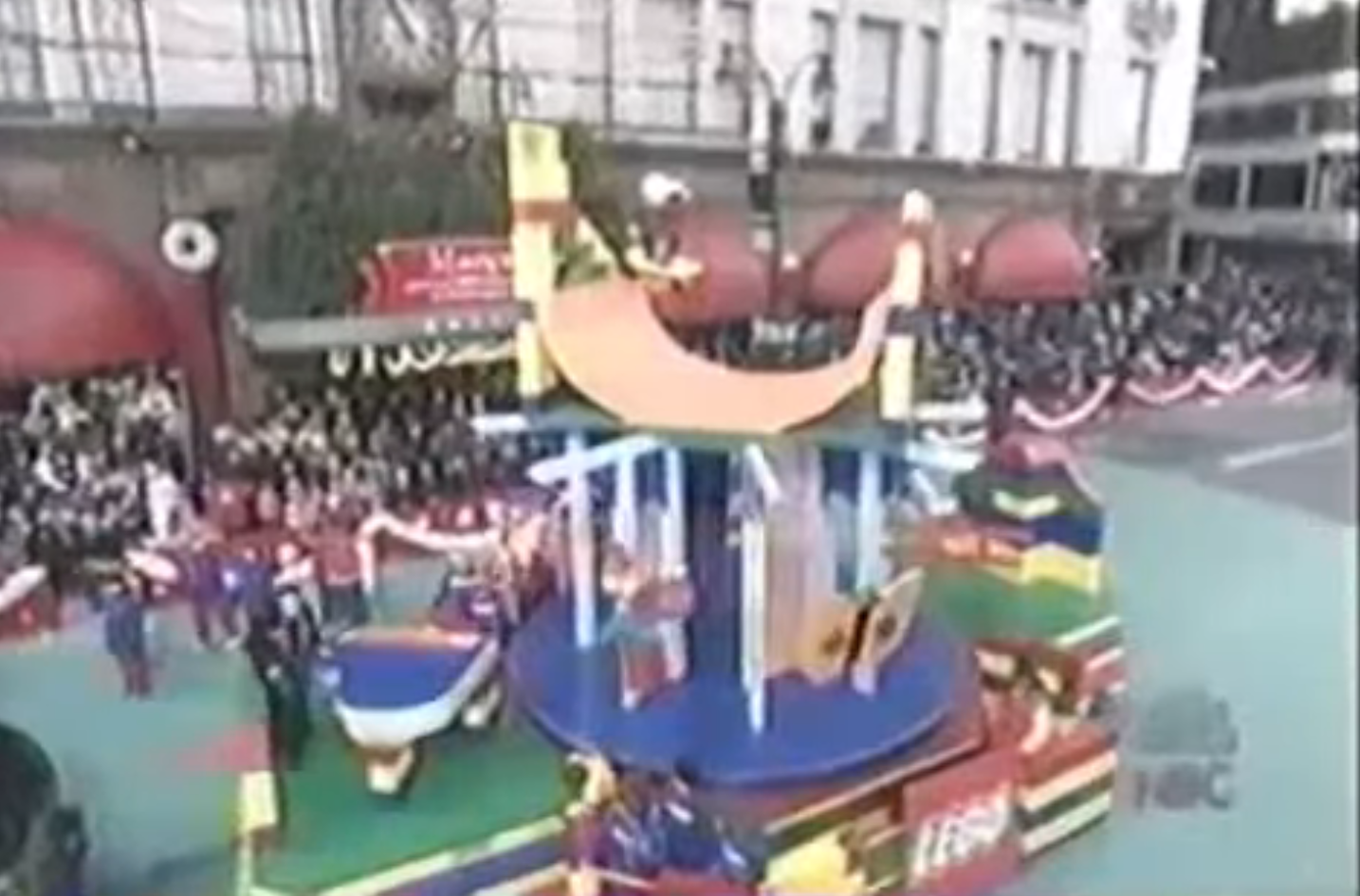
A screengrab from a recording of the 2002 Thanksgiving parade.
I am confident in saying I made the right decisions with this model’s design. For example, the final model is missing a few mini models so the ones on the float don’t feel overcrowded. The half-pipe on the very top of the original float appears to be a modified version of piece 43085, Ramp 8 x 12 x 6. It was used a few times in the Island Xtreme Stunts product line, the same line that featured Pepper Roni.
The carousel’s version of the ramp element seems shorter in length, narrower in width, and one brick shorter in height, and it's missing the brick-like protrusion at the back. The ramp element also never appeared in orange as it does on the carousel. To work around this, I used 24 1 x 5 x 4 inverted arches to create a properly fitting and proportionate ramp.
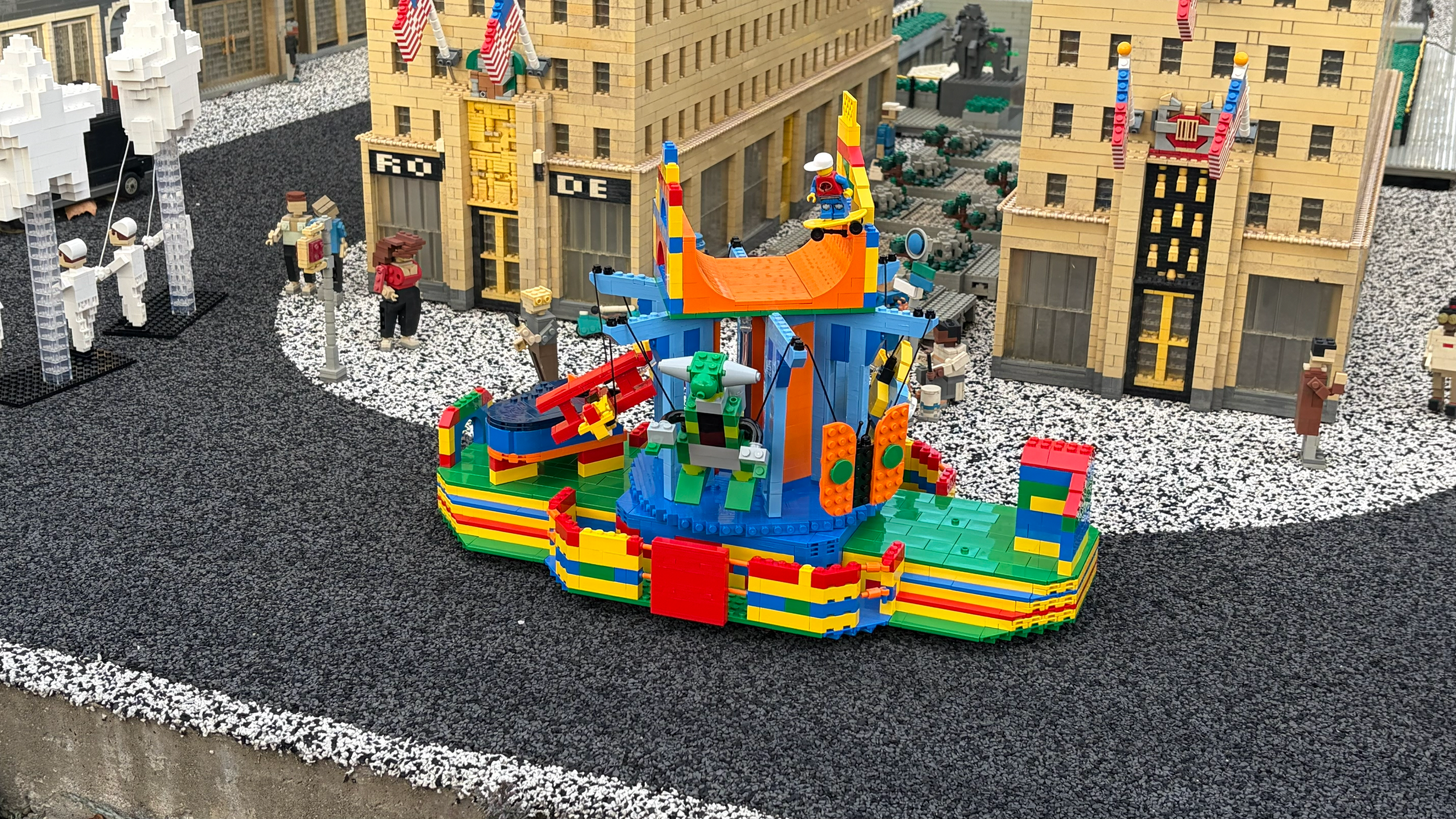
Regardless of the challenges this model brought me, I still really enjoyed the process of creating it, and I am even more proud of the final result. Seeing the float’s base take shape and the carousel's geometry come together was a lot of fun. It is a privilege to see it out in Miniland alongside the models designed by Willis and Zac, creating a full parade.

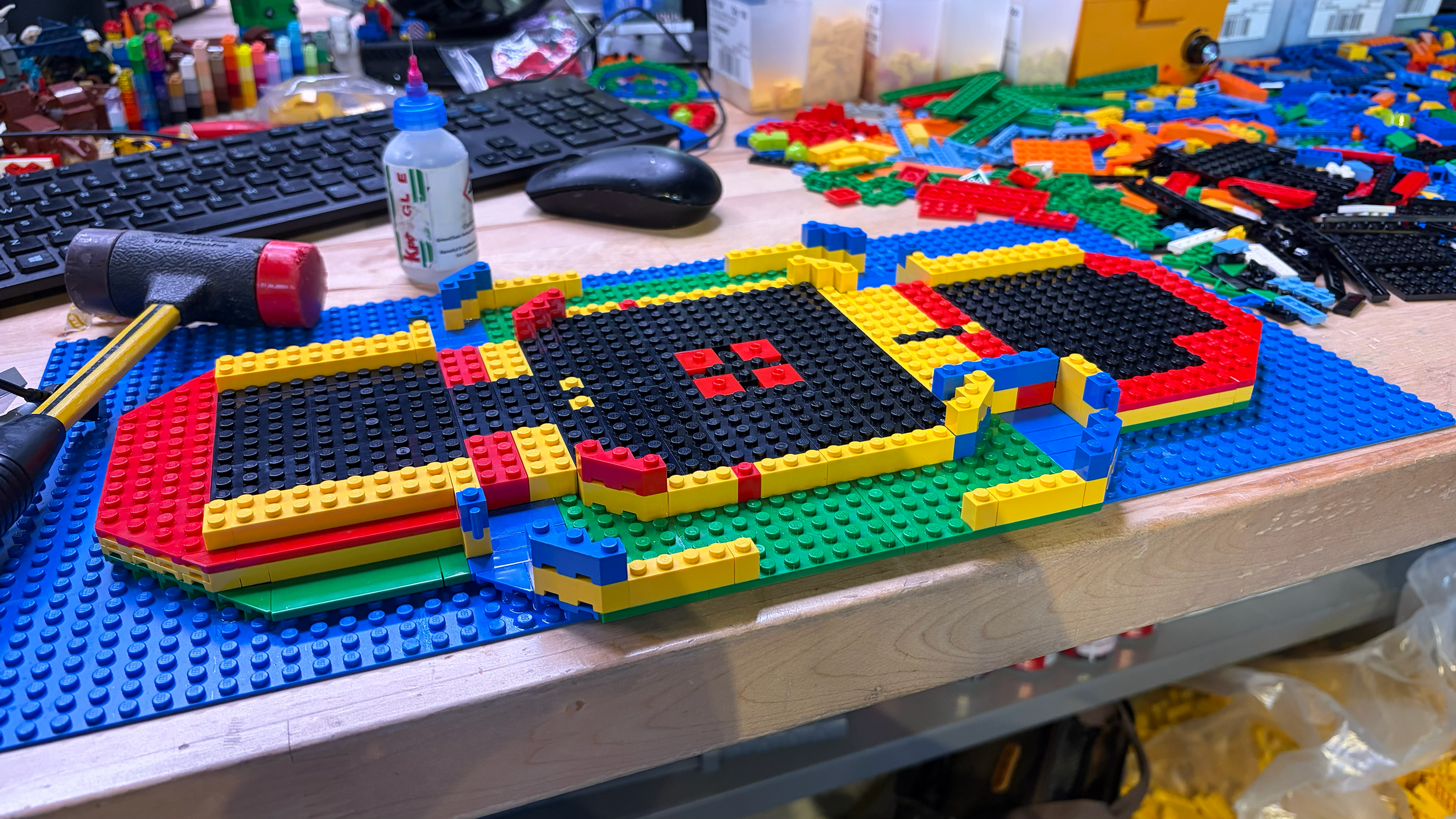
A special thank you to Willis and Zac for taking the time to chat about their work on these models, and thank you to the rest of the Model Shop team at LEGOLAND New York for supporting us in making this project. If you find yourself in the Goshen, New York, area soon, be sure to swing by and see our models in Miniland. Stop by the Master Model Builders Creative Workshop and say hello to us, too!
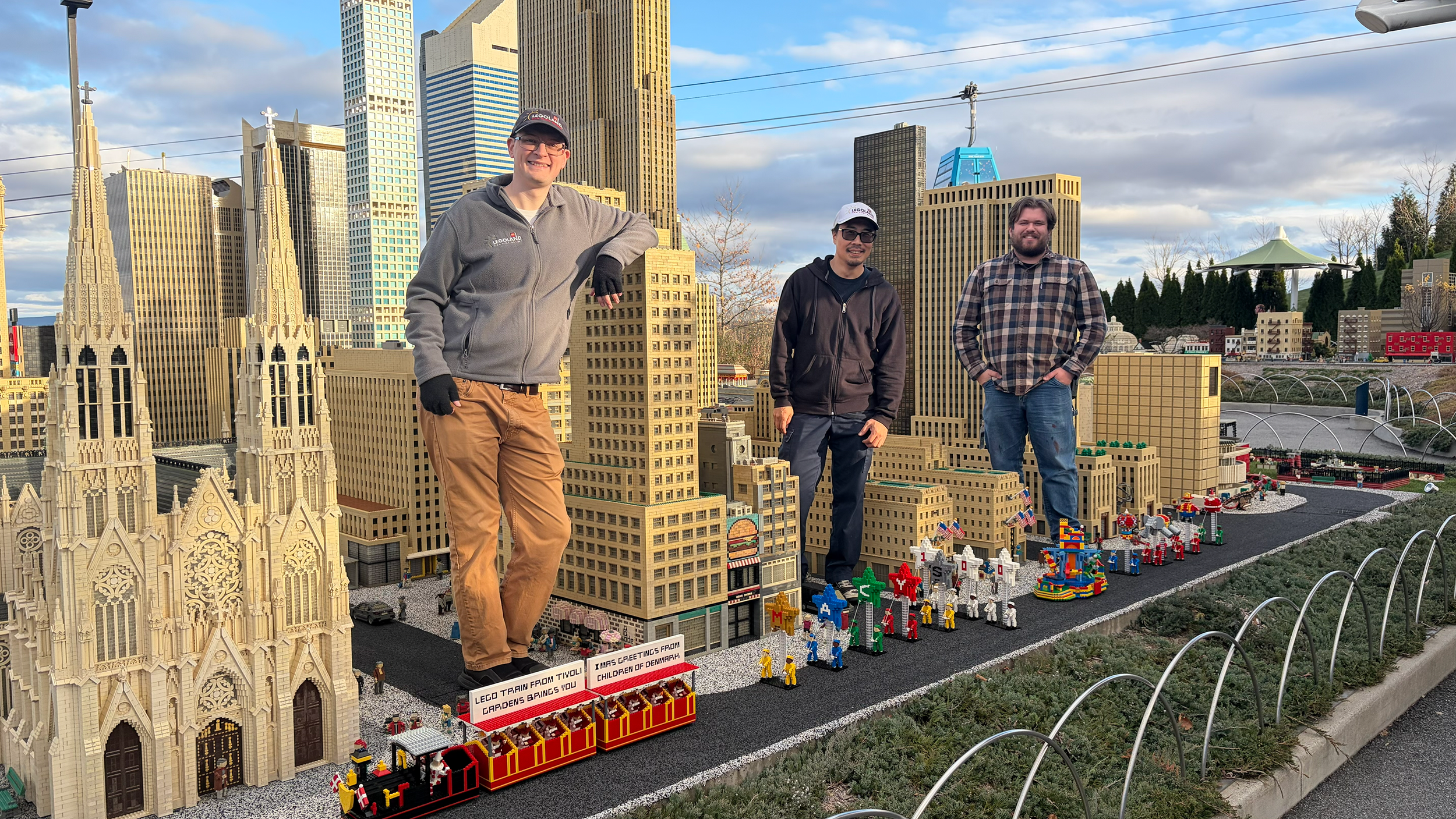
The LEGOLAND New York Master Model Builders and their Thanksgiving parade. From left: Willis Reifsnyder, Zac Durren and Daniel Zimmerman.
Check out this video from the LEGOLAND New York Instagram page featuring the floats you see here.
Here’s hoping your day includes good food, good company, and a little time to build. Happy Thanksgiving!
What would you build if you could design LEGO’s next Thanksgiving parade float? Let us know in the comments below!
Do you want to help BrickNerd continue publishing articles like this one? Become a top patron like Paige Mueller, Rob Klingberg from Brickstuff, John & Joshua Hanlon from Beyond the Brick, Megan Lum, Andy Price, Lukas Kurth from StoneWars, Wayne Tyler, Dan Church, Roxanne Baxter, and Marci Hollingsworth to show your support, get early access, exclusive swag and more.