Smooth Sailing? Lessons From Building a Pirate Ship GBC
/In January 2025, I wrote about our family’s first Great Ball Contraption (GBC) module. Since then, we’ve brought that module, lovingly christened The Banana Cradle, to other conventions, including Bricks Cascade. For BrickCon 2026, we wanted to take what we’d learned and design a module of our own.
But where do you start? You can find a cool mechanism and work backward, or take someone else’s idea in a new direction. Whatever you build, it needs to move balls from point A to point B. We were sitting in our LEGO room when my son said, “What about a pirate ship GBC?” I sat with that for a moment, then thoughtfully replied, “Wait, what? What is a pirate ship GBC? What do you mean?”
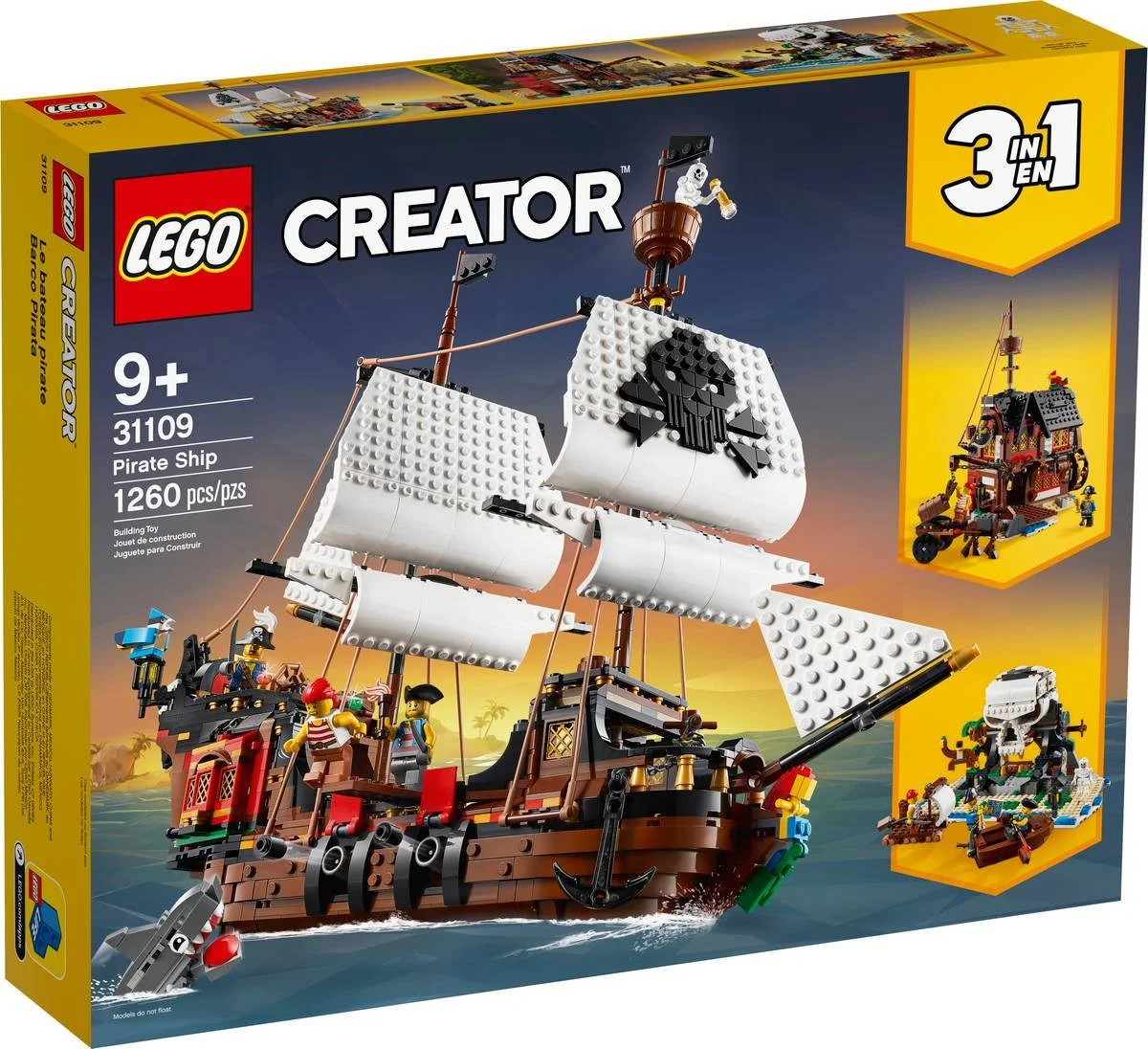
The inspiration.
His vision was to send balls rolling through a pirate ship beneath a large, curling wave. When I asked where he got the idea, he pulled a move straight out of The Usual Suspects and pointed over my shoulder at our copy of 31109 Pirate Ship, the Creator 3-in-1 set from 2020. That was that. We got to work.
Retrofitting A Pirate Ship
As existing LEGO sets go, we could hardly have picked an easier one to turn into a GBC module. A few fence pieces from our collection gave us a channel for the balls. The natural drop from the quarterdeck to the main deck made them bounce too high, so we added a ramp. A brick with studs on the side and a few slopes guided balls from the elevator into the channel, which led to a new exit ramp.
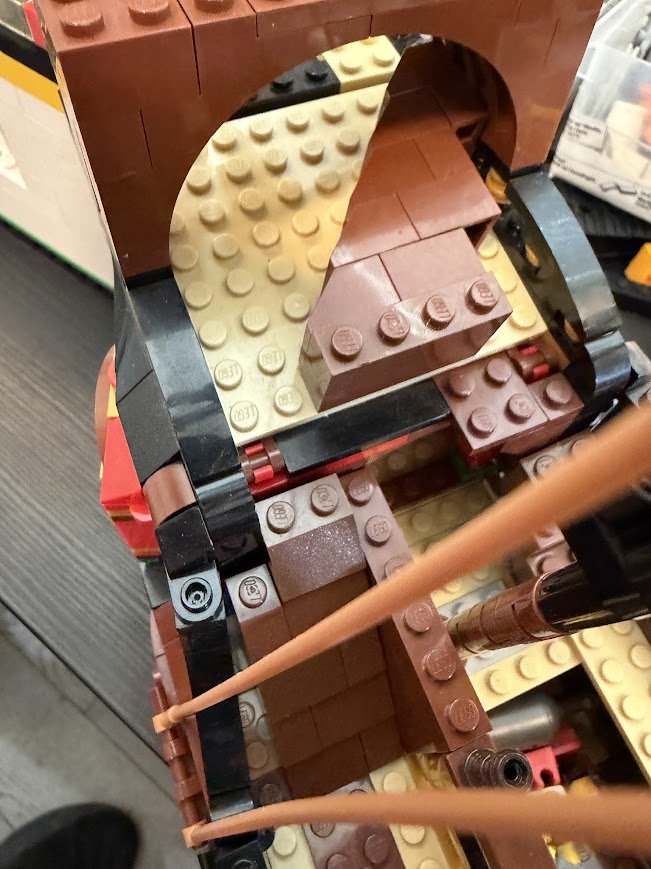
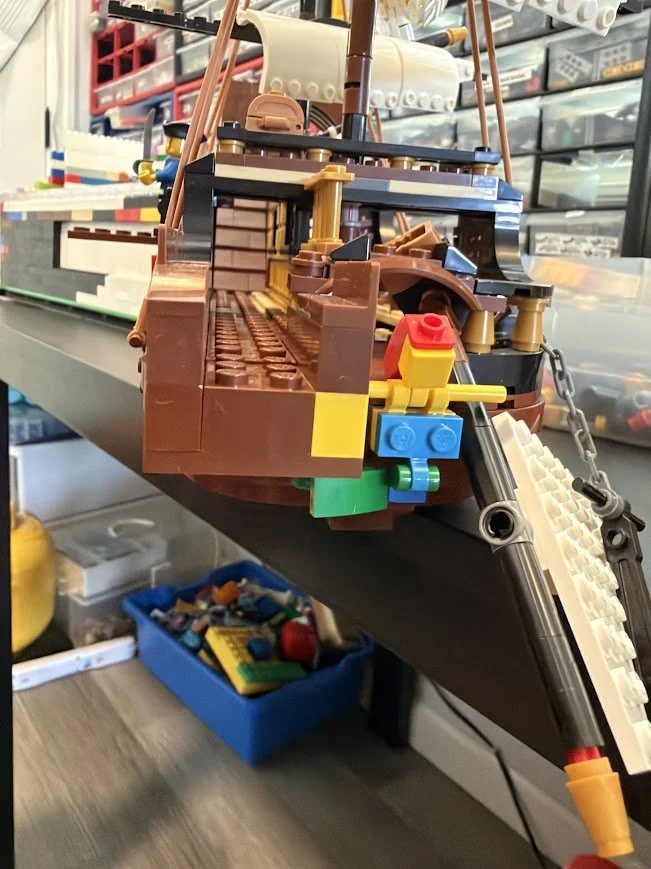
Of course, the balls wouldn’t roll through a ship sitting flat, so we needed to tilt it. We built a couple of test towers from spare pieces and DUPLO bricks to find the right angle. Those temporary towers worked so well that they became part of the final model. The silver lining of our children outgrowing Duplo is that they don’t mind when I “borrow” it.
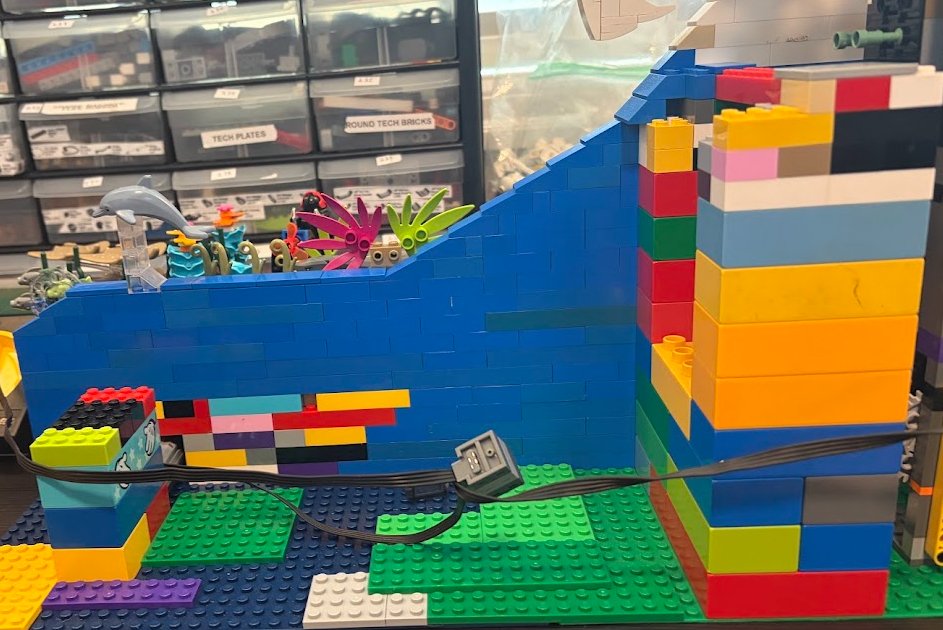
The GBC standard gives builders a common interface so independently built modules can work together. Among its requirements, each module should accept an average of one ball per second, and the input basket should be 10 bricks tall, with an opening at least eight studs square. The output must deliver balls into the next module’s basket, so we also had to account for that clearance when setting the height of our towers and exit ramp.
Giving Gravity a Hand
Many GBC modules begin by lifting balls so gravity can handle the next part of the journey. There’s no shortage of ways to do that, from simple elevators to more visually striking mechanisms. A ball pump, for example, pushes balls up a shaft by feeding new ones underneath them.
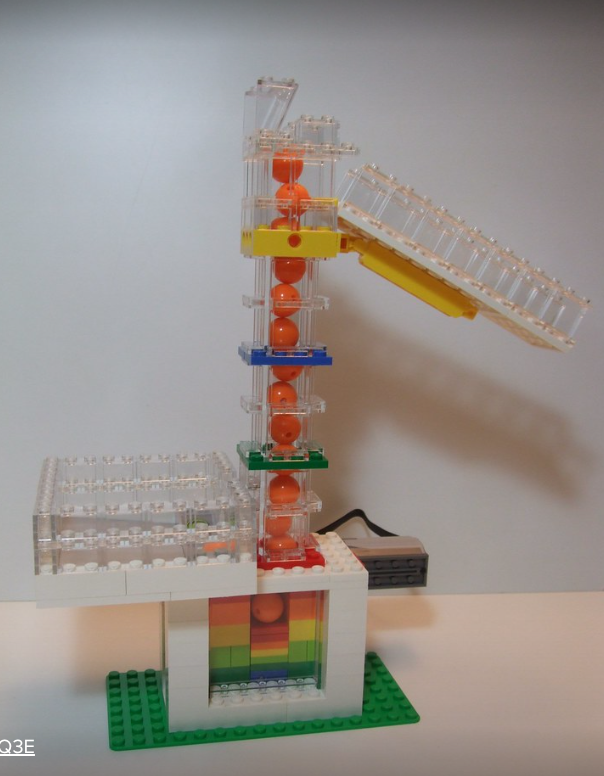
Ball Pump by dr_spock_888
For Bricks Cascade 2025, we had built a simple elevator using instructions we found online. Adding more tread pieces let us extend it to the height our pirate ship needed. We weren’t too concerned about its appearance because the wave would hide it.
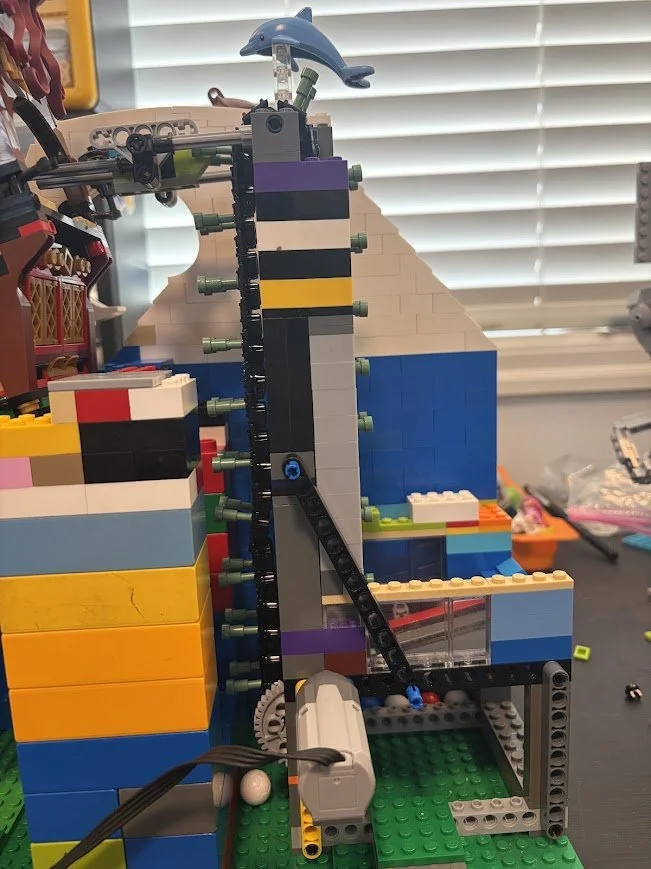
The hidden elevator.
After running it for three days at BrickCon, I learned that telescope pieces might not be the best choice for carrying the balls. A few times a day, a ball would roll off the top just a little too slowly. A telescope would catch on it, pop out of its socket and launch itself somewhere inconvenient.
If you build this kind of elevator, bring extra telescope pieces. A lot of them. If I rebuilt ours, I’d try 3L Technic pins instead. A few of the GBC builders I spoke with recommended them because they release the balls more reliably.
Making Waves
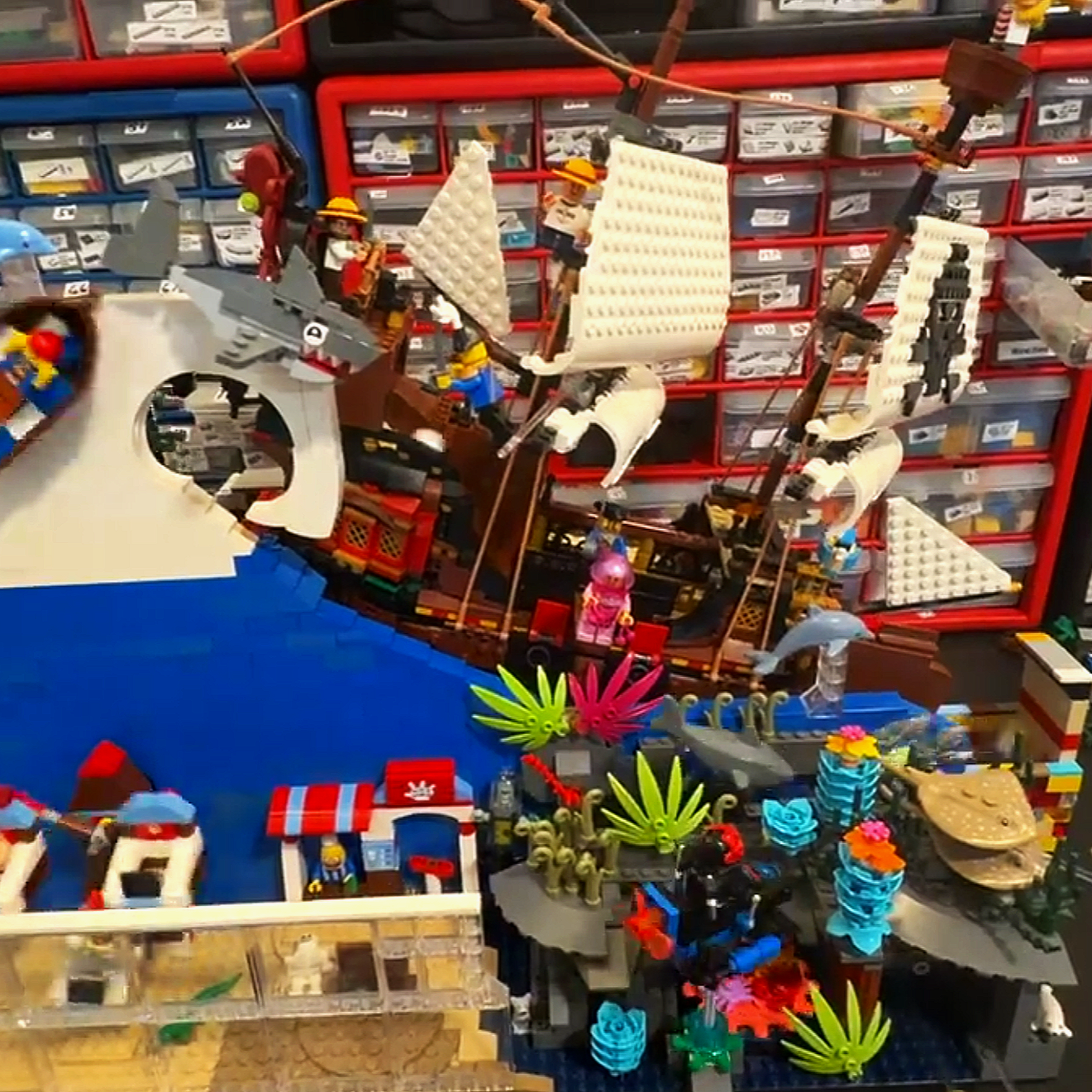
This was supposed to be our summer project, but the working module came together over just a couple of evenings. That left us plenty of time to give it some personality. Outside of GBC, our main LEGO passion is our theme park, so the underwater setting seemed like a good excuse to include the 2011 SpongeBob SquarePants set 3816 Glove World.
Rather than add another motor to spin the ride, we extended the elevator’s lower axle through the wave. A chain connected it to the ride, putting a little more of the elevator’s motion to work.
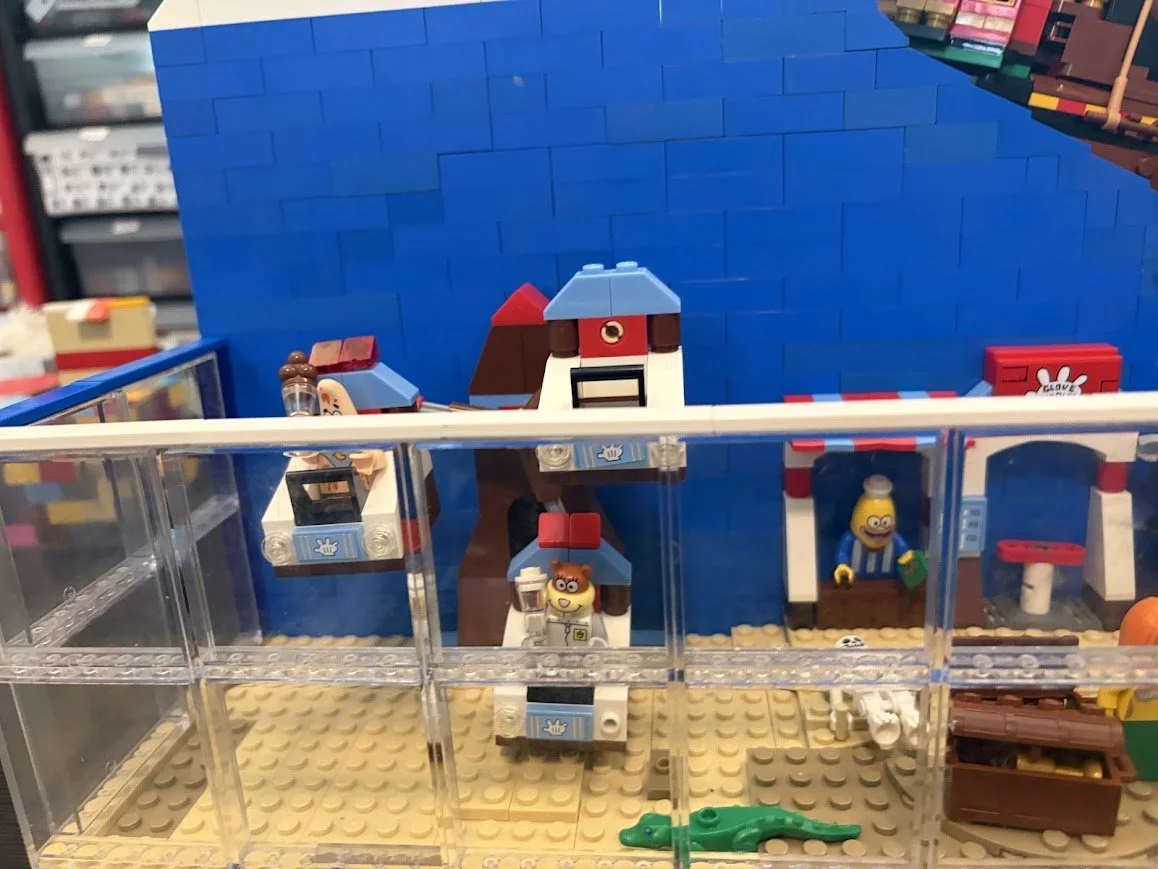
That tickled us enough to add another moving feature: a spinning ship at the top of the wave, another of my son’s ideas. We powered it from the elevator’s upper axle. Finally, we built a coral reef with turtles lazily swimming and fish trying to evade a shark. A separate motor drove the reef’s movements through a series of gears hidden in the rocks.
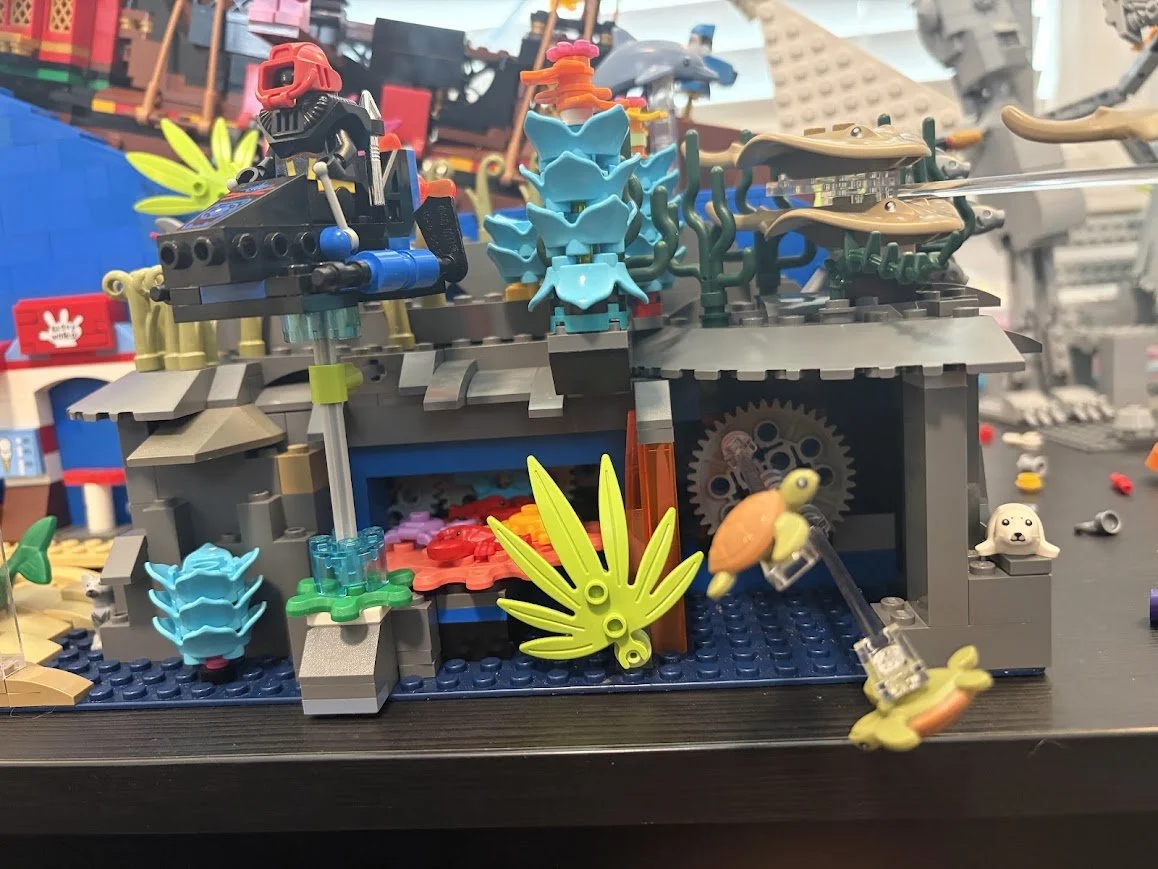
We kept wanting to add more, but eventually realized we had to stop or we’d never finish. We’re really proud of the result, which we named Abandon Ship!
Getting It There in One Piece
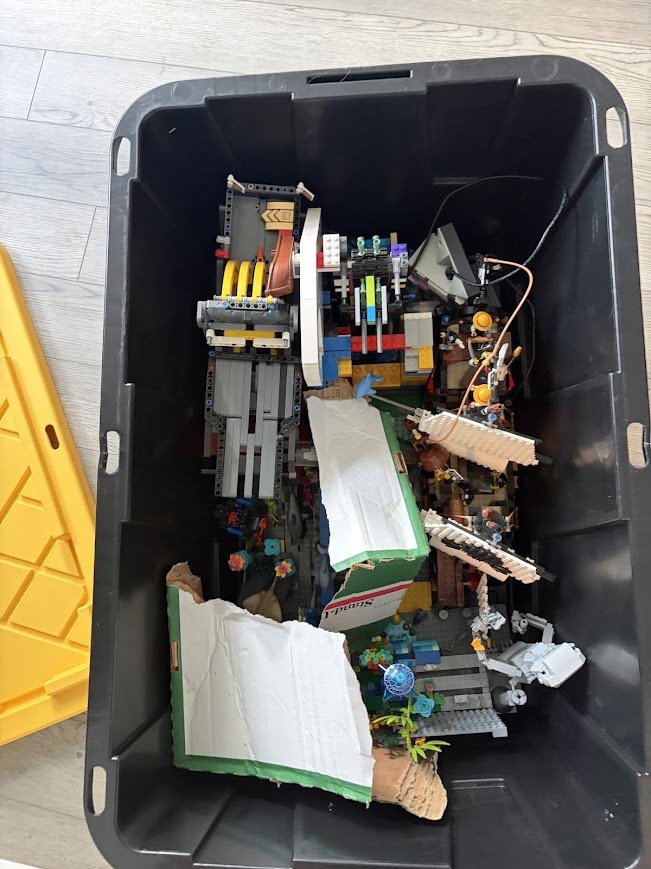
A bigger build gives you more opportunities for things to go wrong, and more opportunities to learn. One of our first lessons was to think about transportation much earlier. The day before we left for BrickCon, I realized we didn’t have a tote big enough to hold the model intact.
The pirate ship rests on its towers without connecting to them, so it lifts right off. The bottom section, however, was one large assembly built on flexible baseplates. Next time, I’d use MILS bases for a sturdier foundation and plan places where the model could separate into sections joined by Technic pins.
We also learned that testing a module at home doesn’t tell you how it will behave after a car ride. Two days before the convention, ours ran flawlessly for three hours. Then it spent two and a half hours jiggling, shimmying and bouncing on the drive to Bellevue. When we unpacked it, pieces had loosened and several things had fallen off. Setup took much longer than we’d planned.
I promise this isn’t just trash.
Our packing solution involved removing the upper sections and adding cardboard braces inside the tote. Even so, if you’re bringing a GBC module, or any MOC, to a convention, allow time for a little TLC when you arrive.
Hot Fixes and Convention Fun
The weekend flew by in a whirlwind of attendee questions, old friends and plenty of gawking at other people’s builds. When our attention wandered, we took turns exploring the hall, trusting our fellow GBC builders to keep an eye on our module. We returned the favor when they stepped away.
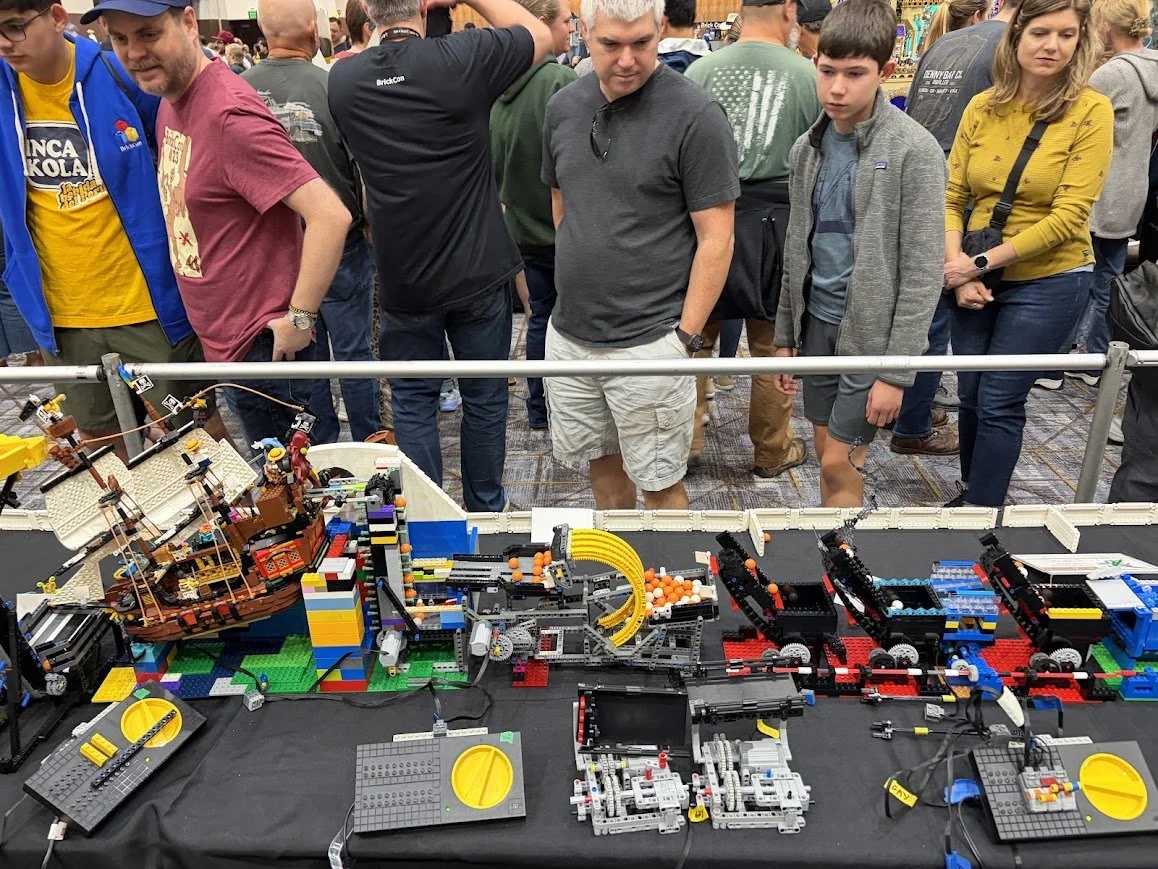
Brickcon 2026 Attendees
That teamwork matters because a GBC loop needs supervision. You’re generally expected to stay with your module or arrange for someone to watch it. If something goes wrong while you’re away, you might return to find it removed from the loop. We also discovered what seems to be an unwritten rule: your module will most likely break at the exact moment you step away.
In our case, we returned from the restroom to find an elevator that was no longer elevating. The rest of the loop kept going, so my son and a teammate took turns catching balls from the preceding module in a cup and pouring them into the next one. As our theme coordinator put it, “A human moving the balls conforms to all GBC rules and is a legitimate module.”
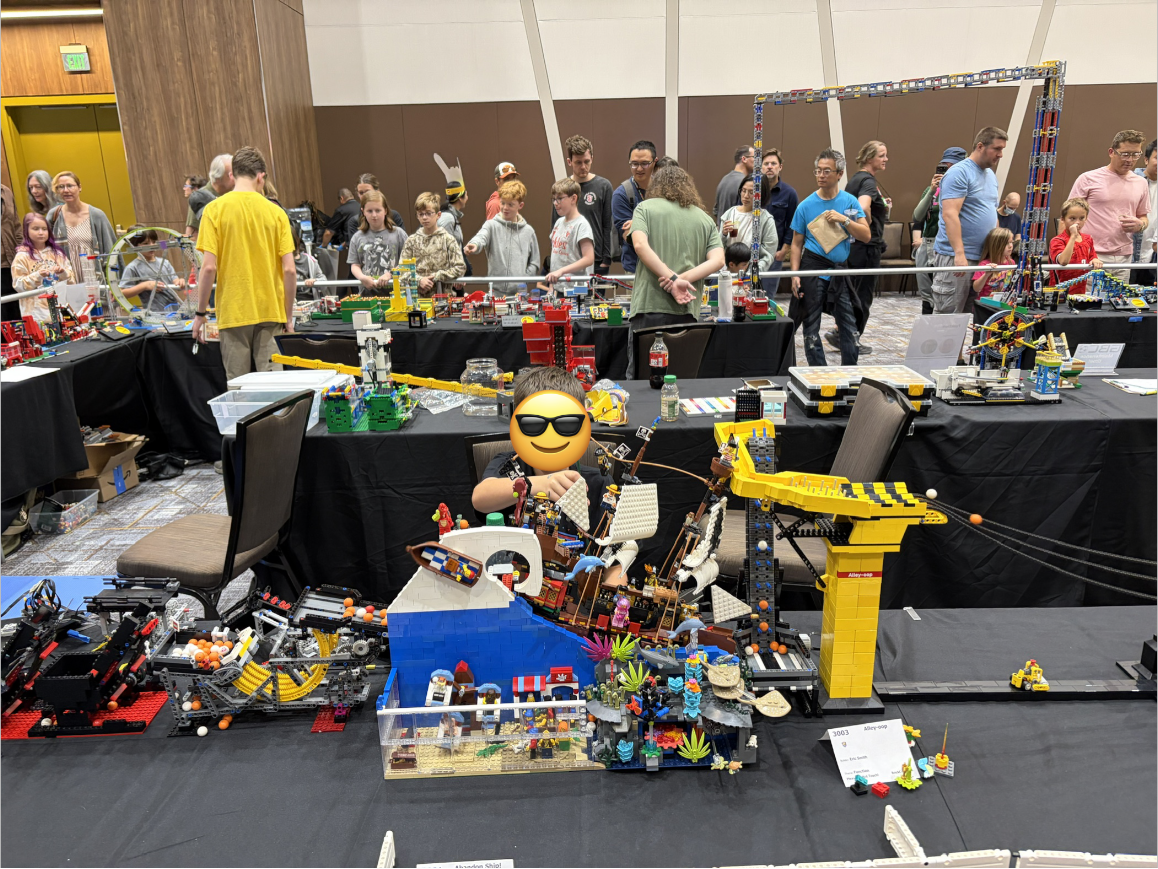
Our junior master builder working on a hot fix.
The investigation led to our last big technical lesson. We were powering the pirate ship’s motors and the Banana Cradle’s motor from a single train transformer. A fellow builder noticed how hot it had become, and the combined load appeared to be more than it could handle. Unplugging the coral reef’s motor got the elevator moving again. Losing some of the scene’s animation was a bummer, but we were happy to be back in business.
Our three-hour test at home hadn’t caught the problem because we’d run the module more slowly than we did at the convention. We hadn’t realized our test speed was below the required capacity of one ball per second. Next time, we’ll test at the speed we need for the display, and each module will get its own transformer.
An Awarding Experience
We keep bringing GBC modules to conventions, so it’s safe to say we enjoy it. But on Sunday morning, we found something in front of our MOC that got us officially hooked: a little build we didn’t recognize. We asked what it was. A trophy! What for? Our MOC!
We hadn’t even attended the awards ceremony because we didn’t think we’d be in the running for anything. There was one last lesson for next time: go to the ceremony. We’re officially award-winning MOC builders now.
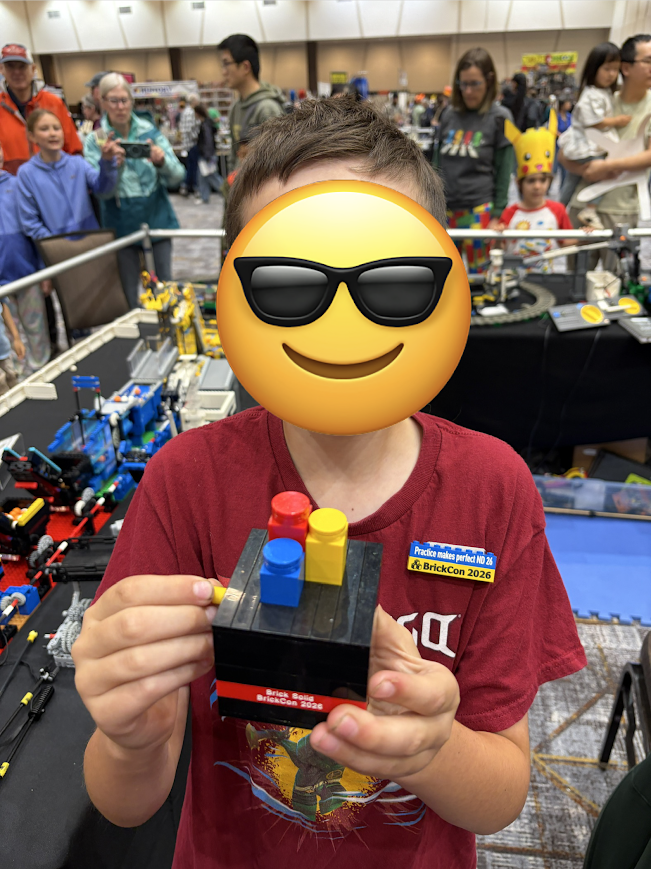
Look, my son was excited, but as a grown man who hasn’t won many trophies in his life, I was floored. We’d spent the weekend building, troubleshooting and sharing our work with LEGO fans who were kind, welcoming and happy to help. The trophy was a wonderful surprise, but getting to do all of that with my son was already a good reason to come back.
What LEGO set would you turn into a GBC module? Let us know in the comments below!
Do you want to help BrickNerd continue publishing articles like this one? Become a top patron like Paige Mueller, Rob Klingberg from Brickstuff, John & Joshua Hanlon from Beyond the Brick, Megan Lum, Andy Price, Lukas Kurth from StoneWars, Wayne Tyler, Dan Church, Roxanne Baxter, and Marci Hollingsworth to show your support, get early access, exclusive swag and more.