Building Knowledge: The Long Road to the University of Science
/The BrickLink Designer Program has produced some impressive buildings over the years, but few are as ambitious as the University of Science. Created by Joshua Kingma, also known as KingCreations, the nearly 4,000-piece model showcases the grandeur of a historic university packed with classrooms, laboratories, hidden details, and architectural character.
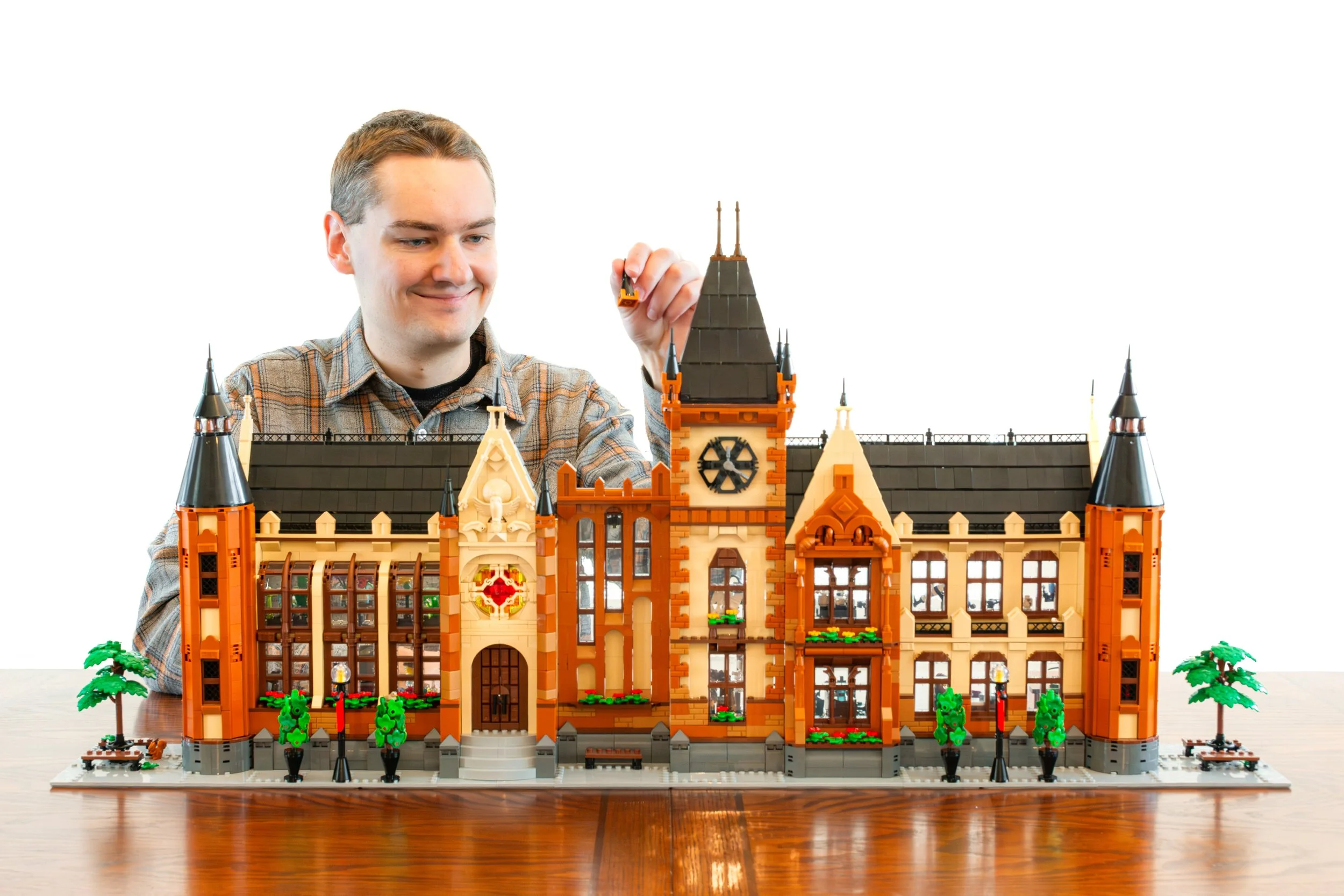
Joshua Kingma building the University of Science.
With pre-orders opening today, we sat down with Joshua to talk about the long road from concept to finished set, designing for the BrickLink Designer Program, and why educational buildings deserve a place in our LEGO cities.
The Builder Behind the University of Science
Dave: For readers who may not know your work, can you tell us a little about yourself and your history as a LEGO fan?
Joshua: Yeah, absolutely. Like a lot of people, I’ve been a LEGO fan my whole life. I was really into it as a kid, then kind of went through the usual dark age during my teenage years. It was only a few years ago that I really got back into it. I discovered BrickLink Studio and started messing around with designing my own stuff digitally, and that completely reignited everything for me. At first, I was mostly building vehicles and smaller buildings and putting together a little custom city. Then the deeper I got into it, the more I started learning different techniques and ways people approached LEGO design. That was a huge part of what made it exciting again.
At the same time, I was also getting back into official LEGO sets, especially some of the adult-focused ones. The Parisian Restaurant was one of the first sets that really pulled me back in. That’s still one of my favorite LEGO sets ever. From there, I just kept building and experimenting, and eventually discovered the BrickLink Designer Program around when it first started. I thought it looked really cool, so I started submitting projects beginning with Series 1.
Dave: How have your education, professional background, or hobbies influenced the kinds of models you make?
Joshua: I have a degree in marketing with a minor in design, and honestly, both of those ended up helping a lot with BDP, especially the presentation side of things. You’re competing against hundreds and hundreds of submissions, so presentation really matters.
Over the years, I’ve spent a lot of time improving my renders and figuring out how to present a model in a way where people immediately understand what makes it interesting. You only get a handful of images to sell the idea, so you have to think about what angles you’re showing, lighting, colors, what details people are going to notice first, all of that stuff.
As far as the actual kinds of models I make, I naturally gravitate toward buildings, vehicles, and nature-based stuff. I also tend to look at LEGO’s lineup and think about what feels missing. With the University of Science, one of the big things for me was realizing LEGO had never really done a large adult-focused educational building before. It just felt like an interesting space that hadn’t really been explored yet.
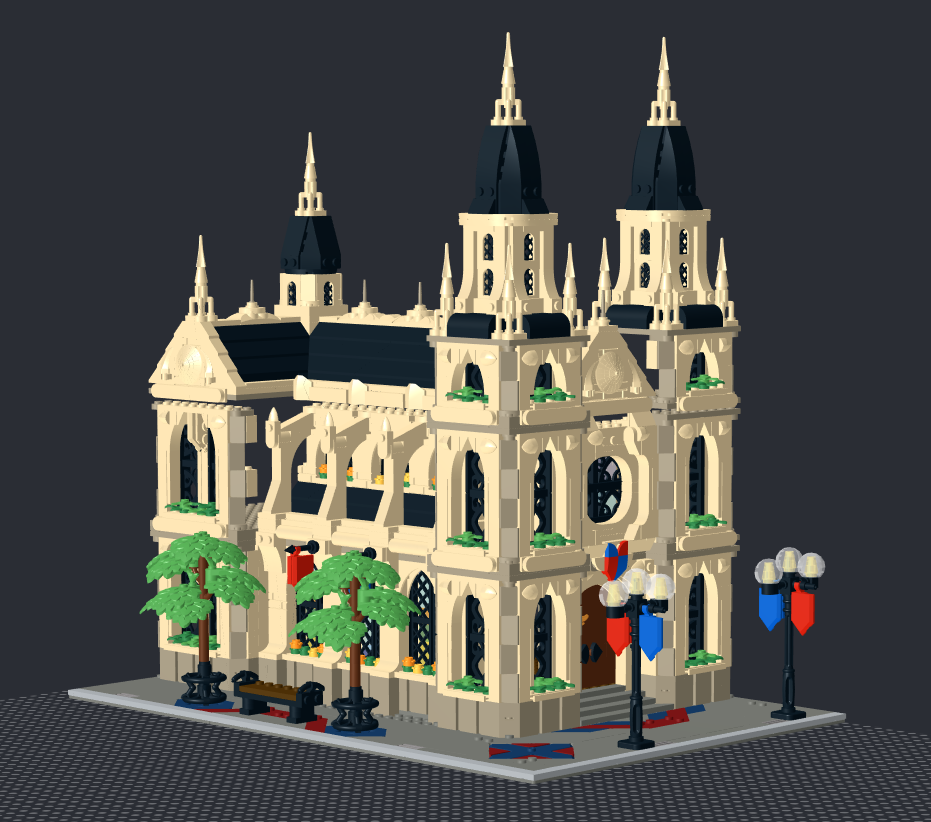
Joshua’s first try at a university design.
Dave: You’ve submitted projects to both LEGO Ideas and the BrickLink Designer Program. How differently do you approach those two platforms?
Joshua: Personally, I pretty much focus on BDP. I like that you retain creative control over the design. It feels more like if you create a really strong model, it has a chance of getting selected. With LEGO Ideas, at least from my perspective, it feels much more tied to marketing and attention. You have to figure out how to get 10,000 supporters and keep the momentum going, and sometimes it feels less about the actual model and more about visibility.
I also tend to make non-IP projects. Most of the things I enjoy designing are original ideas, so BDP is just a much better fit for that. I’ve still thrown a couple of projects onto LEGO Ideas because, you know, why not? But I definitely prefer spending my time refining models instead of trying to campaign for votes.
From Academy to University
Dave: Before University of Science, you had already explored educational architecture with North Point Academy. How did that project evolve into this one?
Joshua: North Point Academy was really the starting point. I submitted that one a few different times because it always seemed to get pretty positive feedback. It felt like people wanted an educational building, but after a few rounds of it not getting selected, I started thinking about how I could push the idea further. I still wanted to stay in that educational space, but I didn’t want to just make another school. If I was going to revisit the concept, I wanted it to feel different. A university felt like the natural next step.
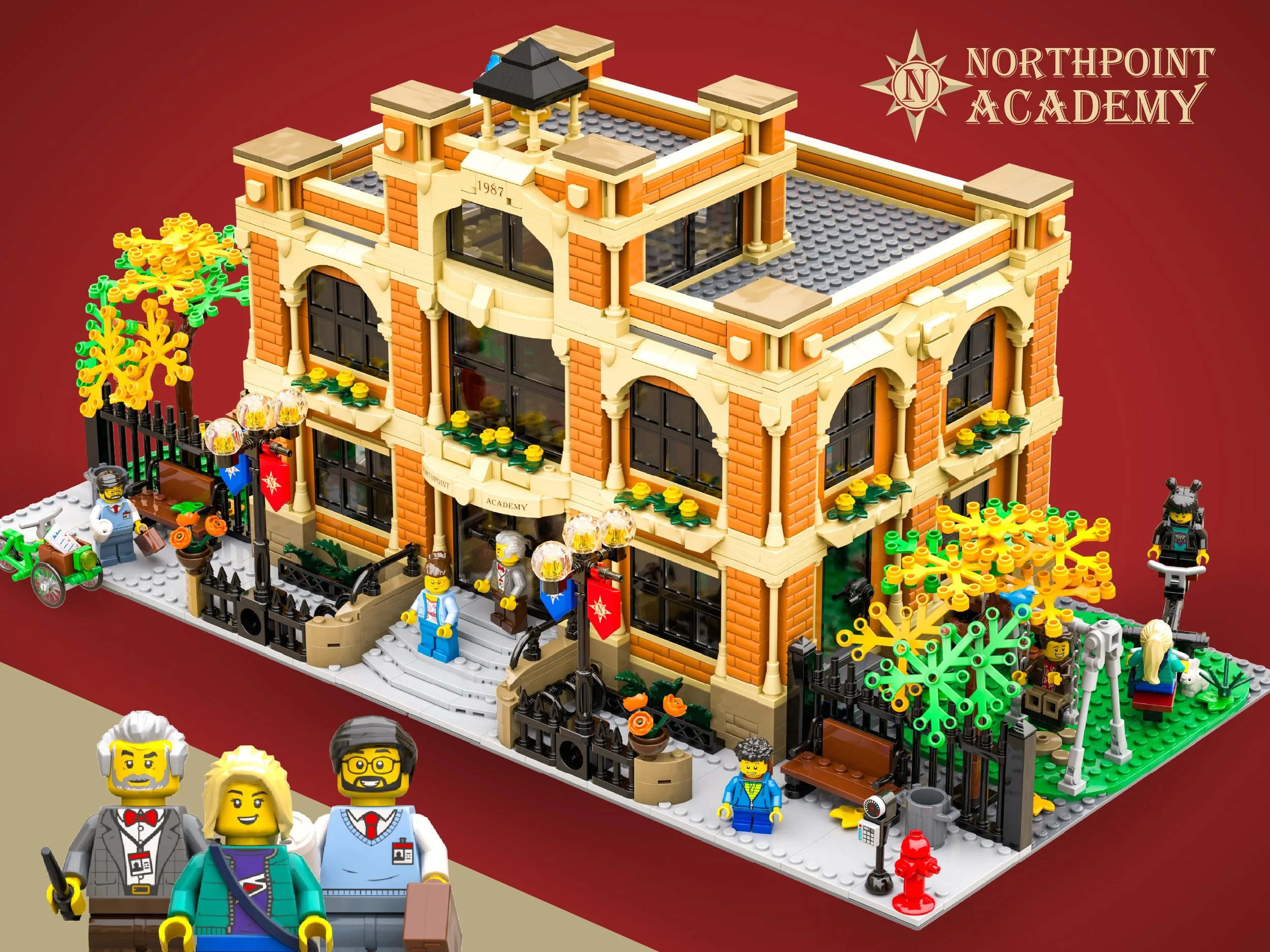
Once I started thinking about that, science quickly became the focus because it gave me so much more to work with visually. A regular school can end up being a lot of classrooms that look pretty similar. With science, suddenly you have astronomy, chemistry, biology, engineering, botany—there are all these different subjects that can each have their own identity. That made it a lot more fun to design.
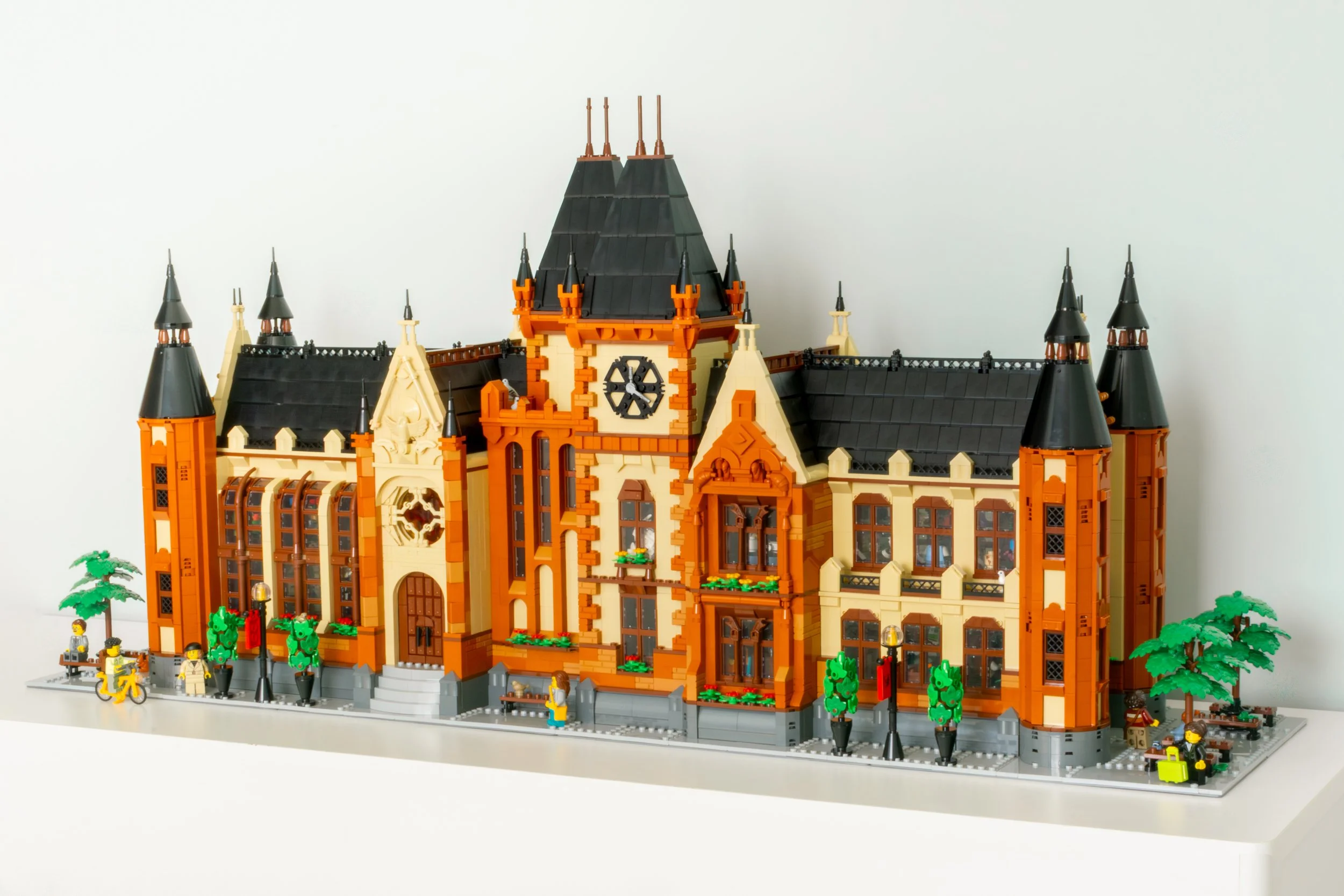
Two of the University of Science sets back to back.
Dave: The final model has a really unique visual identity. There are influences from universities, cathedrals, castles, and European architecture, all mixed together. What inspired the overall look?
Joshua: I looked at a lot of different references. There were universities, obviously, but I also looked at castles, cathedrals, museums, and just older European architecture in general. I think that style naturally communicates “university” pretty well, even in places where the actual building isn’t a university.
One thing I knew pretty early on was that I didn’t want the whole thing to feel repetitive. A lot of my own buildings—and honestly a lot of LEGO buildings in general—rely on repeating windows, mirrored sections, and things like that. There’s nothing wrong with it. It makes sense architecturally, and it makes the design process easier. For this one, I wanted each section to feel a little different.
Part of that was because I wanted the building to feel like it had grown over time. Real universities aren’t usually built all at once. You have additions from different eras, with slightly different architectural styles and materials. I liked the idea that this building might have that same sort of history.
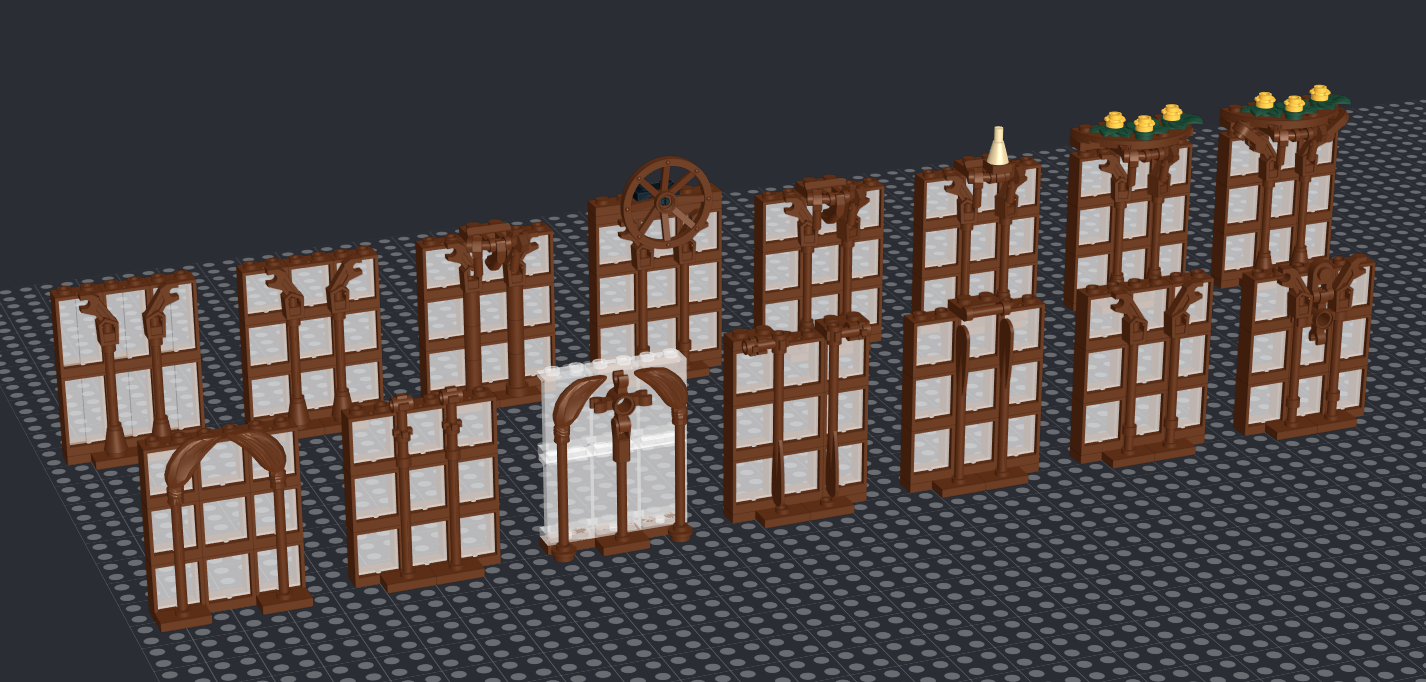
Digital window iterations.
Dave: Color feels like a huge part of that, too.
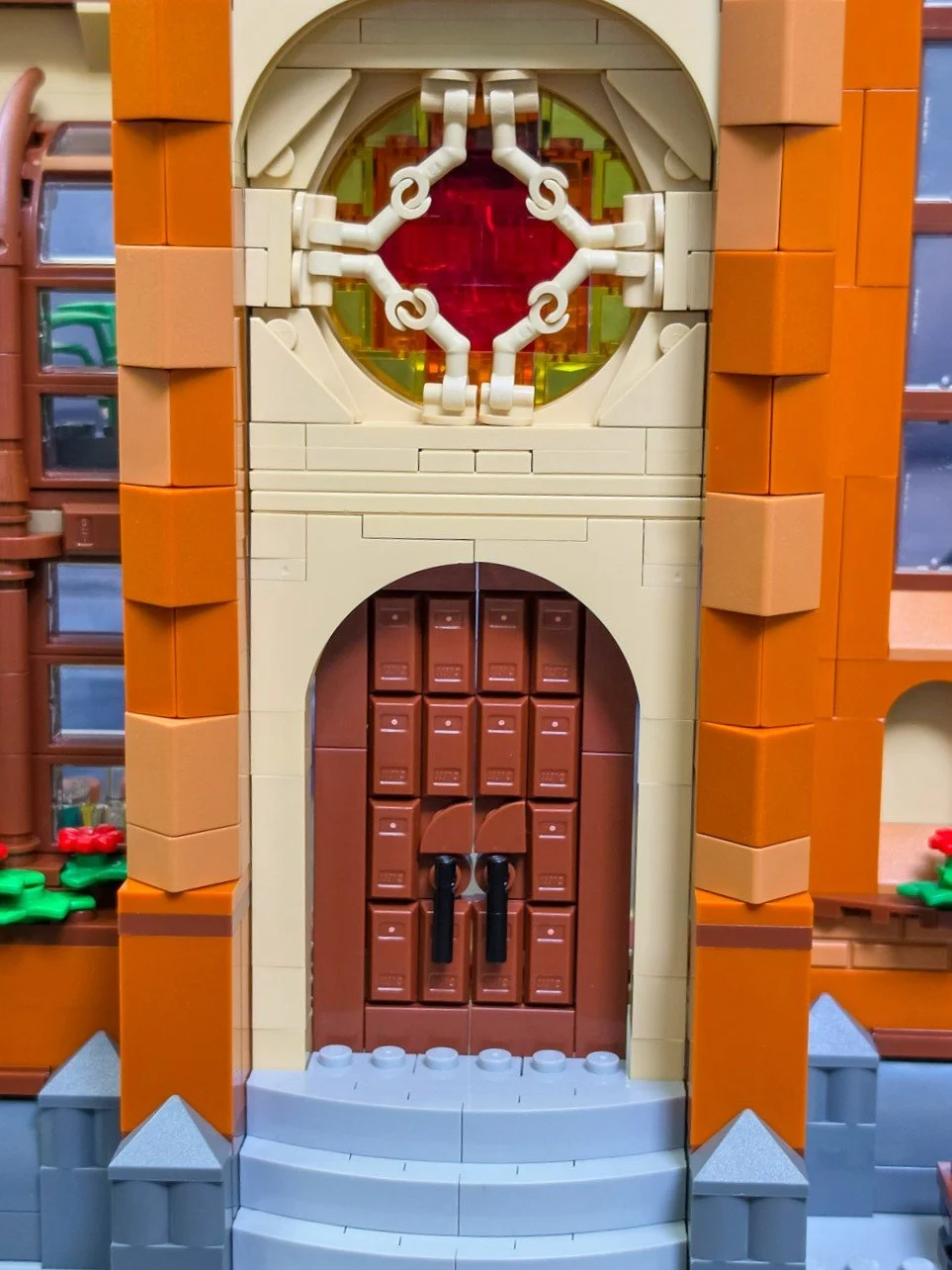
Joshua: Yeah, that changed quite a bit. The earlier versions were much more tan and dark tan, which worked fine, but they just didn’t stand out enough. At some point, I found a few buildings that used darker orange tones with lighter stone colors, and I really liked how warm it felt. It immediately made the model feel more distinctive.
The downside is that dark orange is one of the more limiting colors in LEGO. People sometimes think you design whatever you want and then choose the color afterward, but with BDP, it’s often the opposite. You look at the parts that exist in a color and then figure out what kind of architecture those parts will allow you to build. So the color choice ended up influencing a lot of the design.
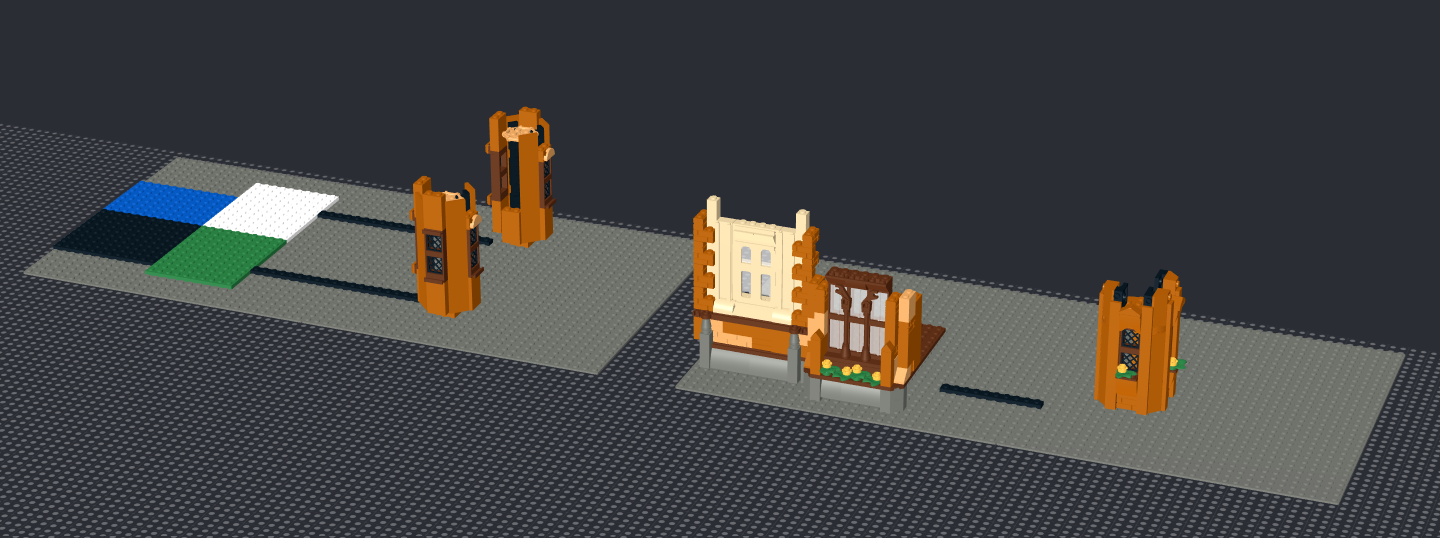
Dave: One of the most distinctive things about the model is the way it splits open down the middle instead of using removable floors like a traditional modular building.
Joshua: That was one of the first big things that clicked for me. The earlier versions were much more modular-inspired, but once BDP started moving away from projects that functioned exactly like modular buildings, I started rethinking the whole layout.
One issue I kept running into was accessibility. With removable floors, there are certain kinds of rooms that just don’t work very well. Everything has to be accessible from above, which ends up affecting the kinds of spaces you can create. At some point, I started playing around with the idea of splitting the building open. Originally, I thought it might even be hinged. What I liked immediately was that it let people see the interiors from the front rather than just from above. It also let me create a lot more rooms and use the space more efficiently. Then I realized it also created a really interesting display piece.
Opened up, it becomes this huge panoramic building. Closed up, it still fits alongside modulars. It felt like one of those ideas that solved multiple problems at once. The hinge eventually went away because it created its own issues, but the split layout stayed all the way through.
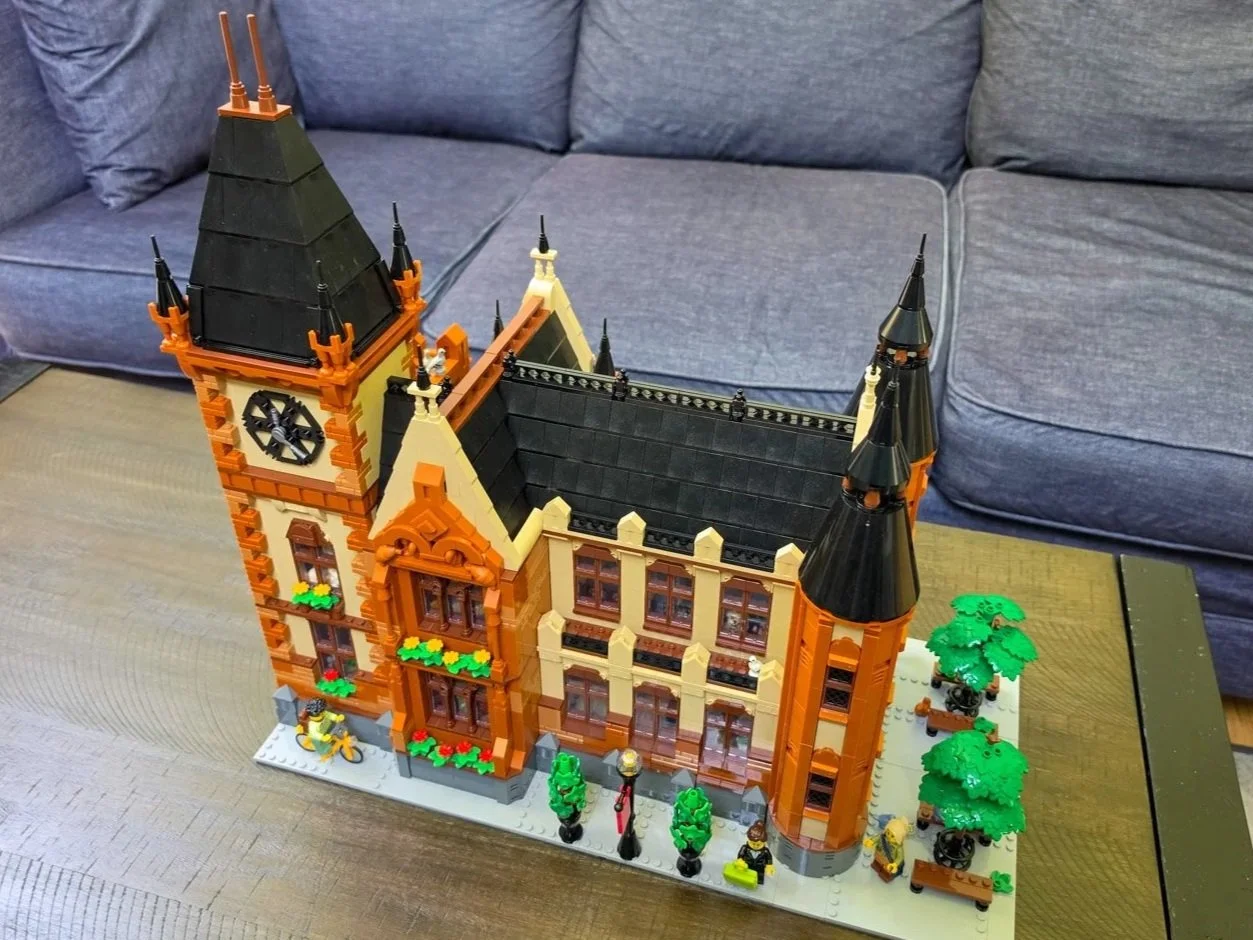
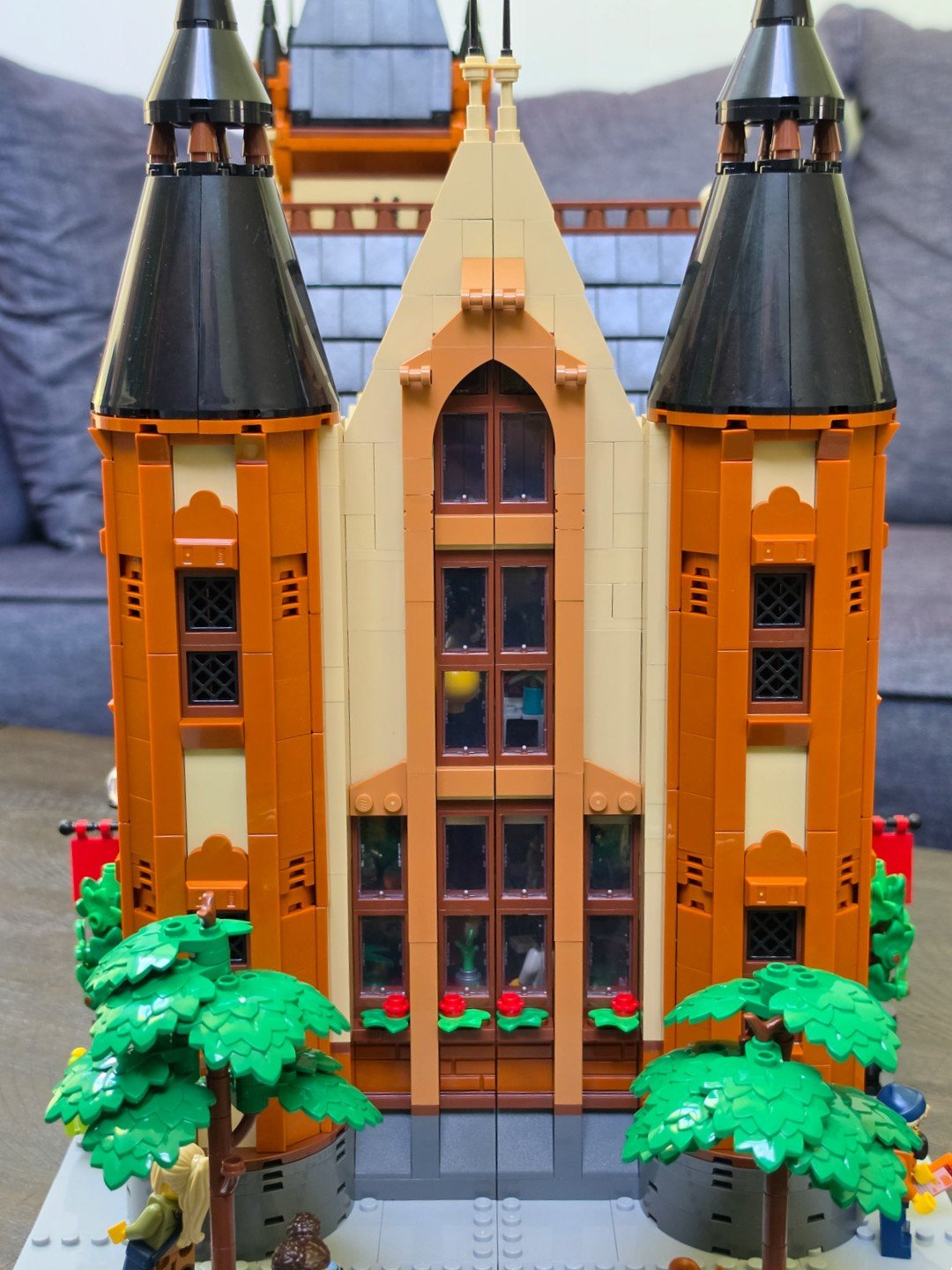
Closed configuration of the University of Science.
Dave: What was the hardest part of the design?
Joshua: The stained-glass window. Easily. The funny thing is that the final solution isn’t actually that crazy, but getting there took way longer than it should have. A lot of it came down to geometry and part availability.
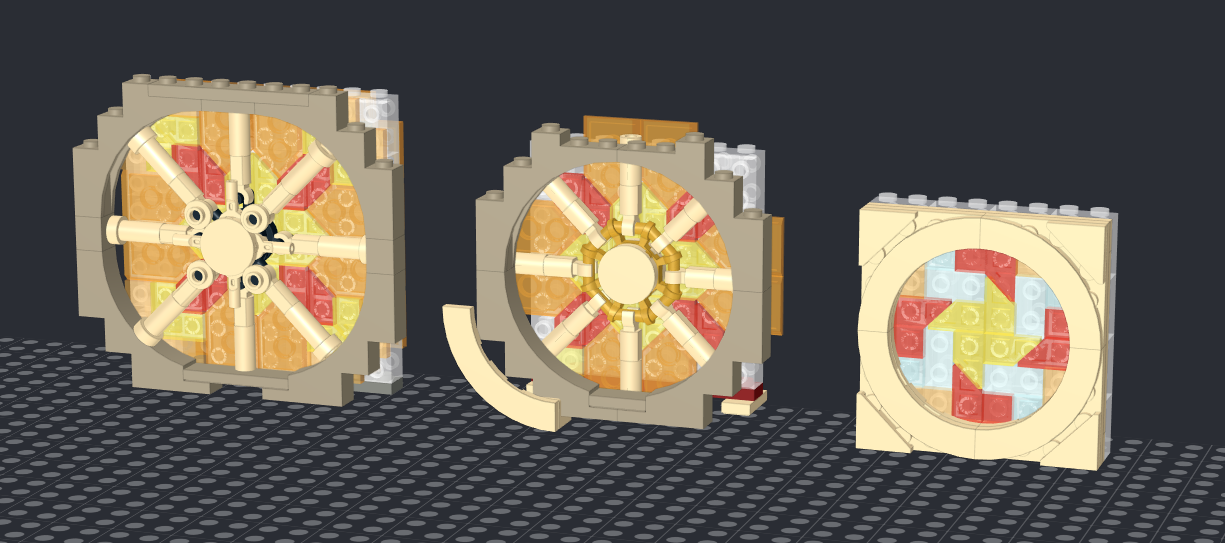
Stained glass window technique exploration.
The pieces I wanted either didn’t exist or didn’t quite create the shape I was after. I think I tried a ridiculous number of versions before landing on the final one. In a weird way, though, those are usually the most satisfying parts of a project. The constraints force you into solutions you probably wouldn’t have found otherwise.
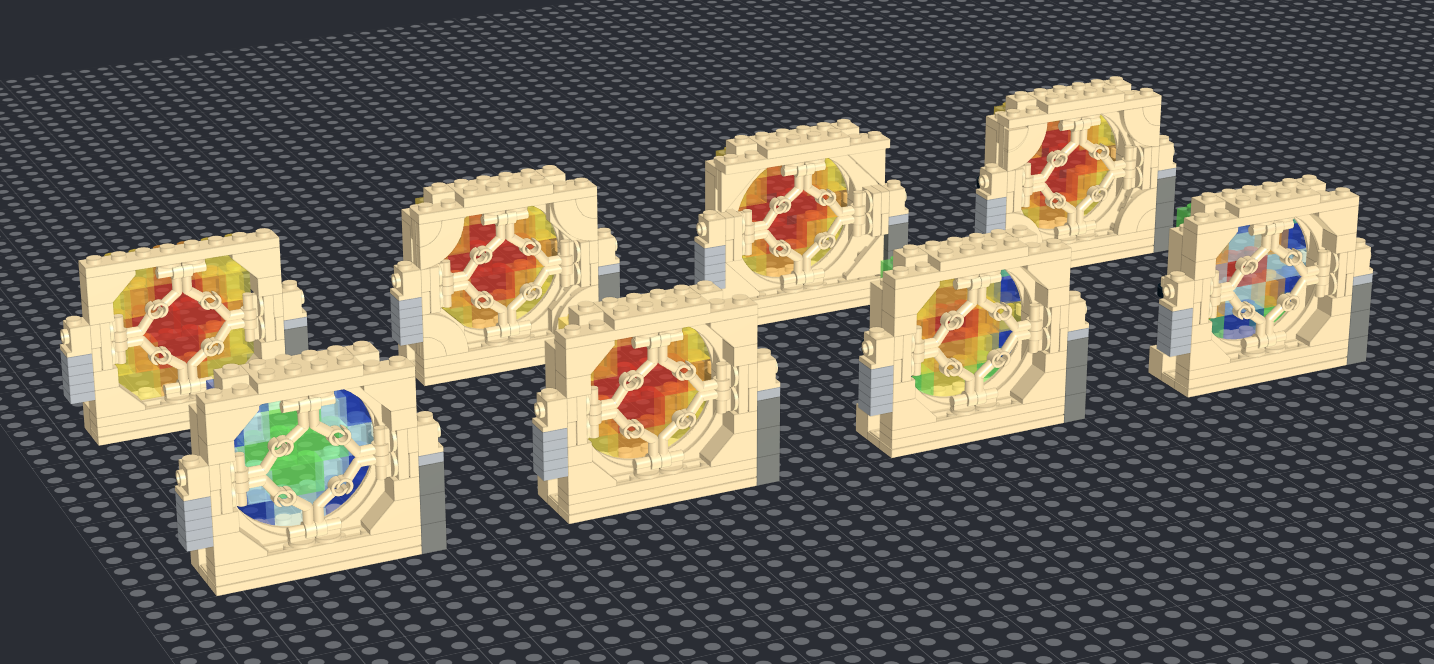
Stained glass window color exploration.
Building for the BrickLink Designer Program
Dave: The University of Science went through multiple rounds before finally being selected. What does rejection feel like after putting that much work into a project?
Joshua: It’s definitely disappointing, but at the same time, after you’ve done BDP enough times, you kind of know what you’re signing up for. I think I’ve submitted somewhere around fifteen projects across the different series, so statistically, most of them aren’t going to make it through.
With University of Science specifically, I always knew it was a long shot. It’s a 4,000-piece building, and usually there aren’t many slots for projects that large. A lot of times, the big project that gets selected is a castle or something with a really broad audience. So when it wasn’t selected the first time, I wasn’t shocked. Disappointed, sure, but not surprised.
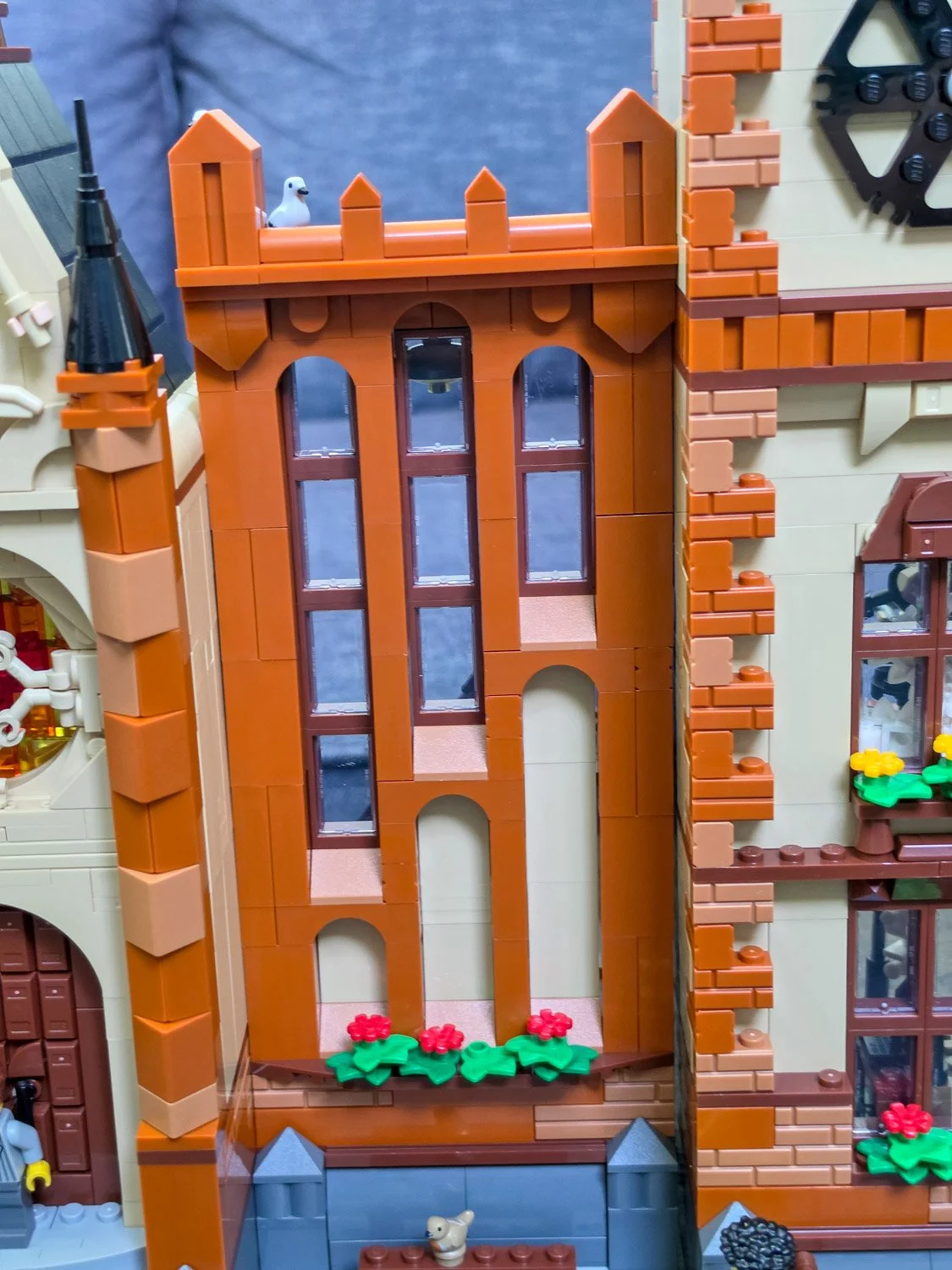
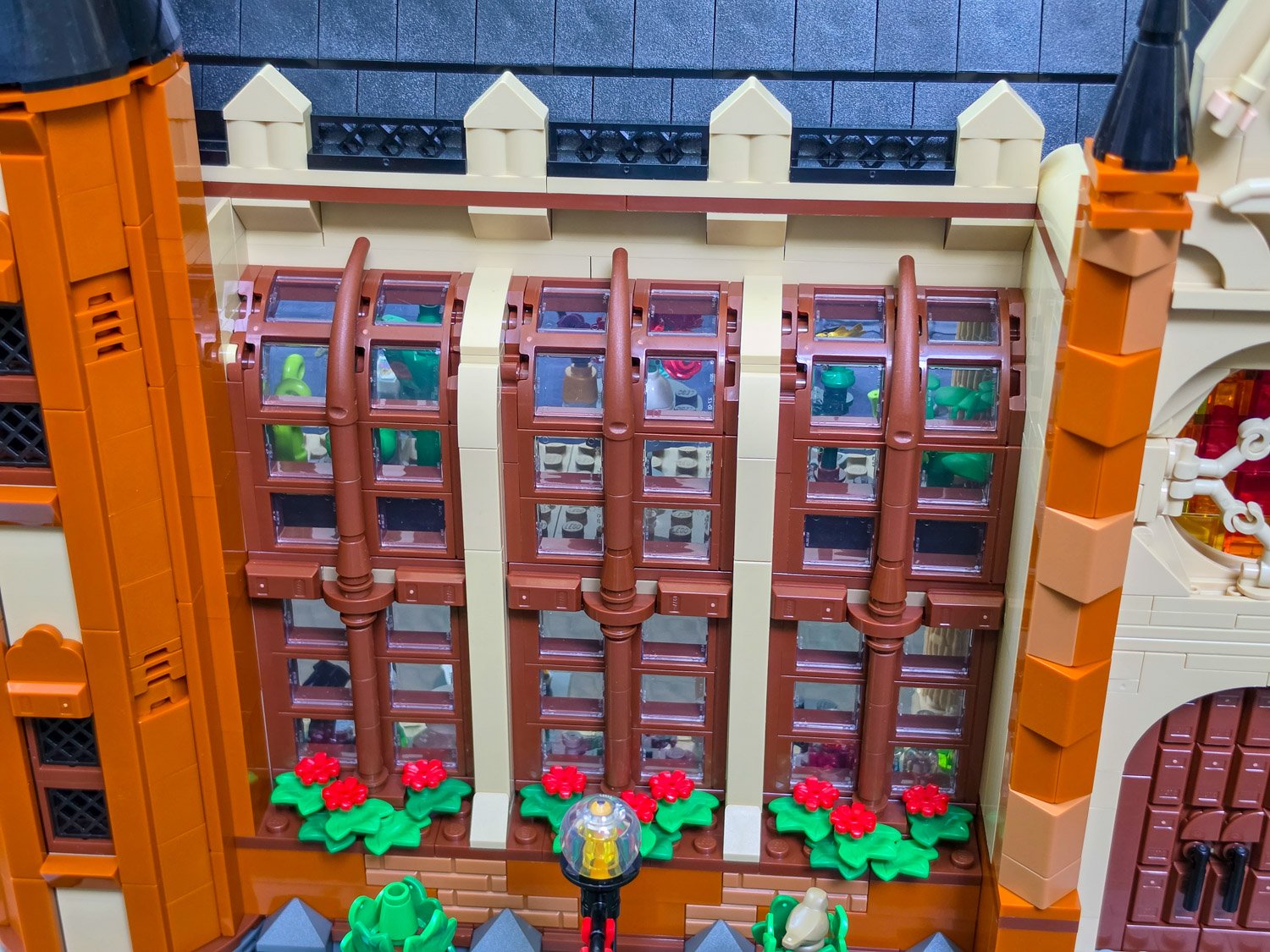
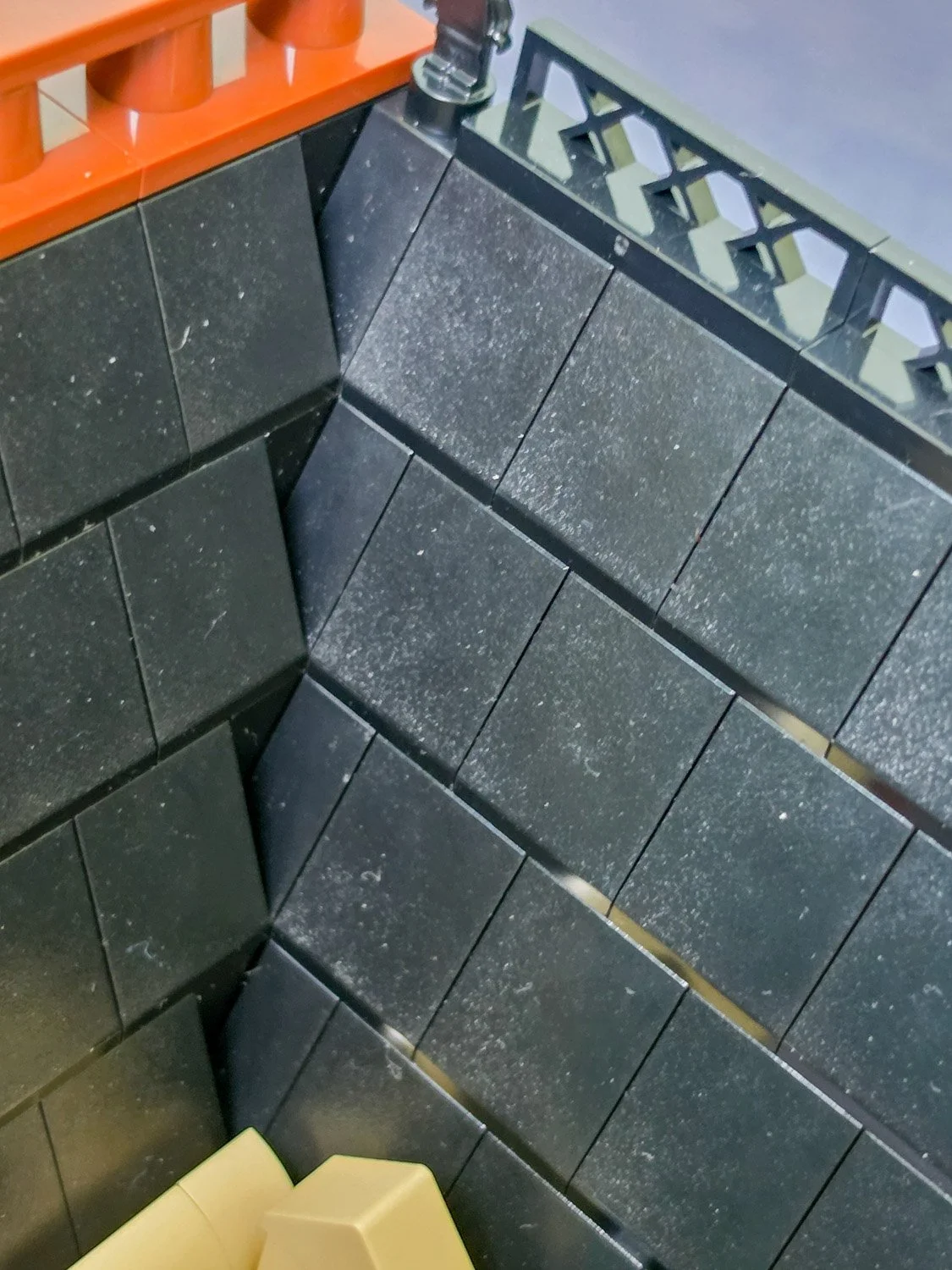
Dave: Did you ever get to the point where you thought, “Maybe this one just isn’t happening”?
Joshua: During the design process, absolutely. There are always moments when you’re staring at a section that isn’t working and wondering whether you’re wasting your time. Usually for me, it’s not the entire project that feels impossible. It’s one specific thing. A roofline, a window, a room layout, whatever it happens to be. You get stuck on it for a while, and it starts affecting everything else. Then eventually something clicks, and suddenly you’re moving again.
After I submitted it, though, I was pretty committed to seeing it through. Between Series 7 and Series 8, there wasn’t really a reason not to resubmit it. If it hadn’t made it through Series 8, I probably would have retired it. Not because I didn’t like it anymore, but because the parts palette was changing, and it would’ve required a lot of redesign work. At some point, you have to decide whether you’re improving a project or just rebuilding it over and over.
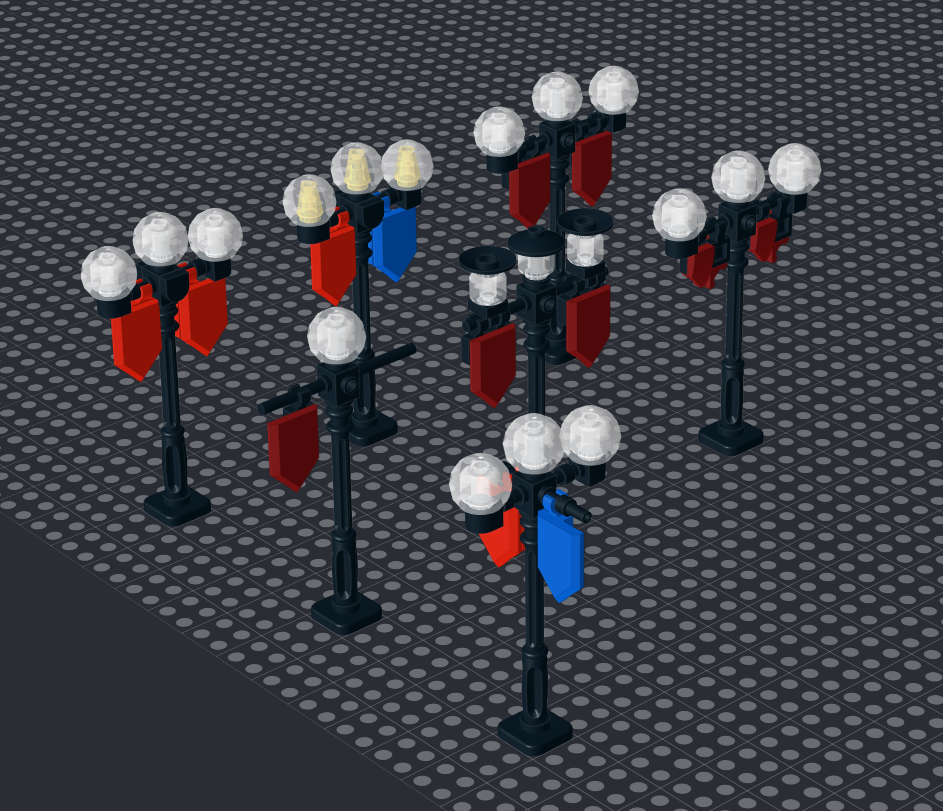
Street lamp design exploration.
Dave: How much does the BDP parts palette affect your design decisions?
Joshua: Honestly? Almost everything. I think that’s one of the things people don’t fully appreciate about designing for BDP. You’re not just designing a building. You’re designing a building with a very specific collection of parts and colors available to you.
Dark orange is a good example. I loved the color for this project, but there are so many times where you’d think, “Oh, this piece would be perfect here,” and then you realize it doesn’t exist in dark orange. That happens constantly. So a lot of the process becomes figuring out what you can actually build rather than what you’d build in a perfect world.
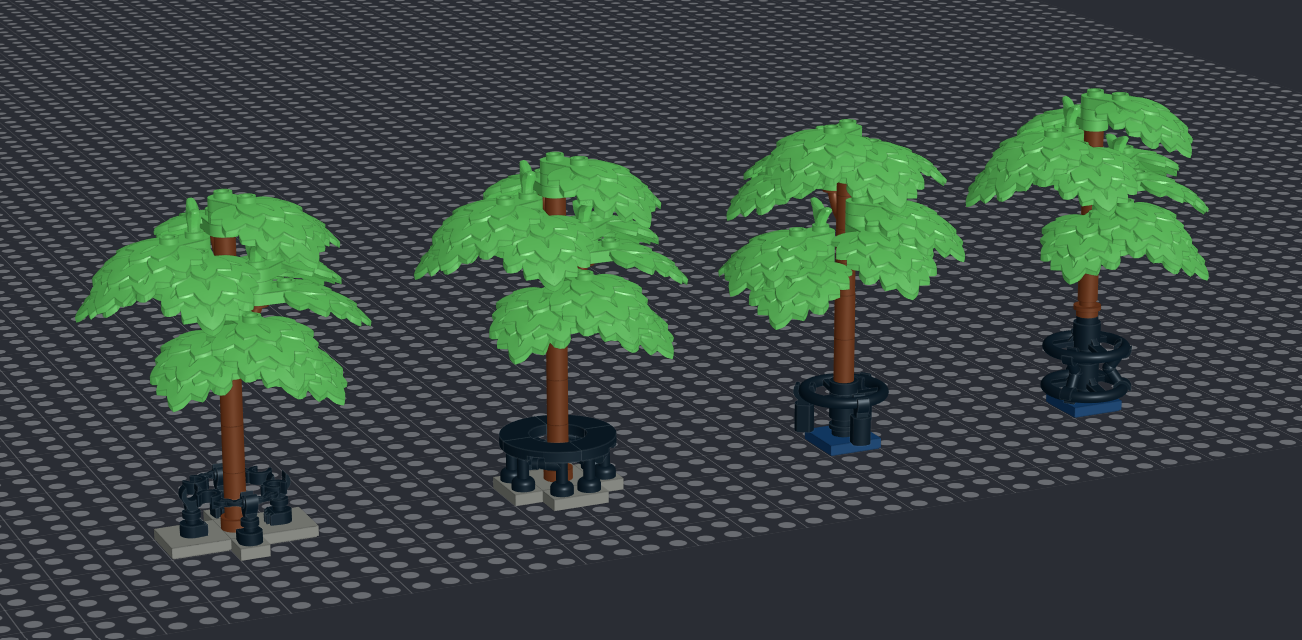
Tree planter design exploration.
Dave: Were there any significant changes between the original submission and the final version?
Joshua: Not as many as people might think. The overall structure stayed pretty similar because once a project is selected, you’re not supposed to completely redesign it. Most of the changes were smaller improvements. Better minifigures. Better details. A few areas that felt unfinished. One thing people kept pointing out was that the room in the clock tower was empty. And honestly, they were right. I’d basically hit the part limit and had to stop somewhere.
Once I had the opportunity to revisit it, that became the hidden laboratory space, which is probably more interesting than whatever I would’ve originally put there anyway. There were also a handful of parts that disappeared from the palette or retired unexpectedly, so some things had to change whether I wanted them to or not.
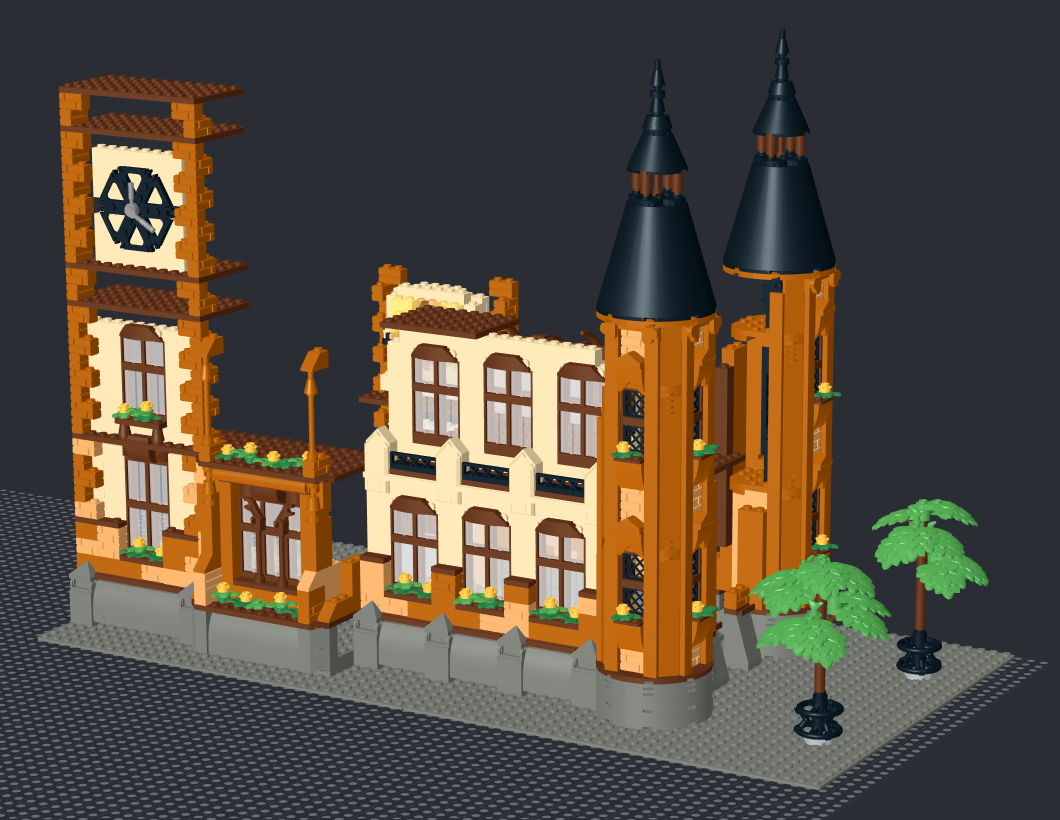
Early pass at facade design.
Dave: How much do you think about things like stability, instructions, and the actual building experience while you’re designing?
Joshua: More than I used to. When you’re designing digitally, you can convince yourself that something works because Studio says it works. Then you build it physically and discover that maybe it technically connects, but nobody is going to enjoy building it. Going through BDP multiple times helps with that. You start recognizing where the problem areas are.
That said, I still don’t think about it nearly as much as official LEGO designers do. They have to worry about bag breakdowns, instructions, age ranges, all kinds of things. I’m mostly focused on making the best model I can and then letting the review process help refine it.
Dave: You’ve mentioned presentation several times. How important is that side of the process?
Joshua: I think it’s really important, but I also don’t think there’s one correct way to do it. Some people create very simple presentations and do really well. Other people spend a huge amount of time on renders and graphics. I definitely fall into that second category. I probably spend way too much time in Lightroom and Illustrator.
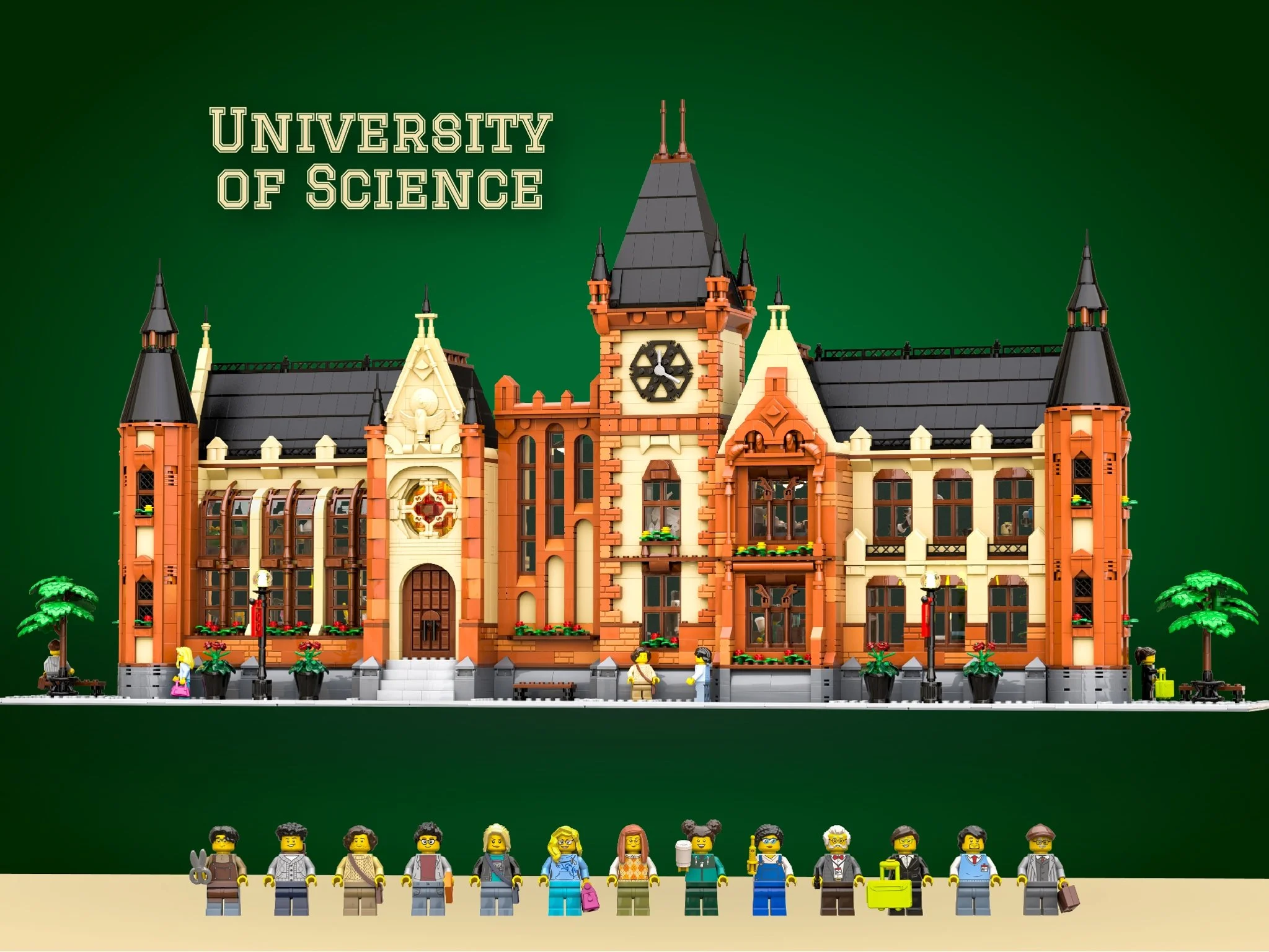
Presentation and cover image of BrickLink BPD voting entry.
But when someone is scrolling through hundreds of projects, you only have a few seconds to convince them to stop and take a closer look. So I’ve always felt it was worth putting the effort into presentation. Whether it’s actually worth all the time I spend on it is probably another question.
Dave: Looking across all of your projects, what do you think defines your building style?
Joshua: I think I always want my models to still feel like LEGO. I love advanced techniques and detailed architecture, but I don’t want somebody to look at one of my models and think it doesn’t belong next to official sets. I also really like hidden details. Little storytelling moments. Things people don’t notice right away. Those are always the details I enjoy finding when I’m building somebody else’s model, so I end up putting a lot of them into my own projects too.
Hidden Details and Scientific Discovery
Dave: One of the things people immediately notice about the set is how packed it is with scientific references and little details. How much of that came from you?
Joshua: Most of it. A lot of the sticker concepts were already there in the original submission. After the project was selected, I added a few more things and expanded some of the classroom details, but the overall idea didn’t really change. One thing that happened was somebody on Instagram suggested doing more with the blackboards, and I thought that was actually a pretty good idea. It gave me a way to represent more scientific fields without having to redesign entire rooms.
So I started digging around for equations and diagrams and things that would make sense in the different classrooms. I’m definitely not a scientist, so a lot of it was literally me searching for things and trying to figure out what would feel authentic. For the rocket science room, for example, I was basically looking up famous rocket equations and trying to find things that would be recognizable to people who actually know the subject. Most people probably won’t notice any of that, but I like the idea that if somebody does know what they’re looking at, the details hold up.
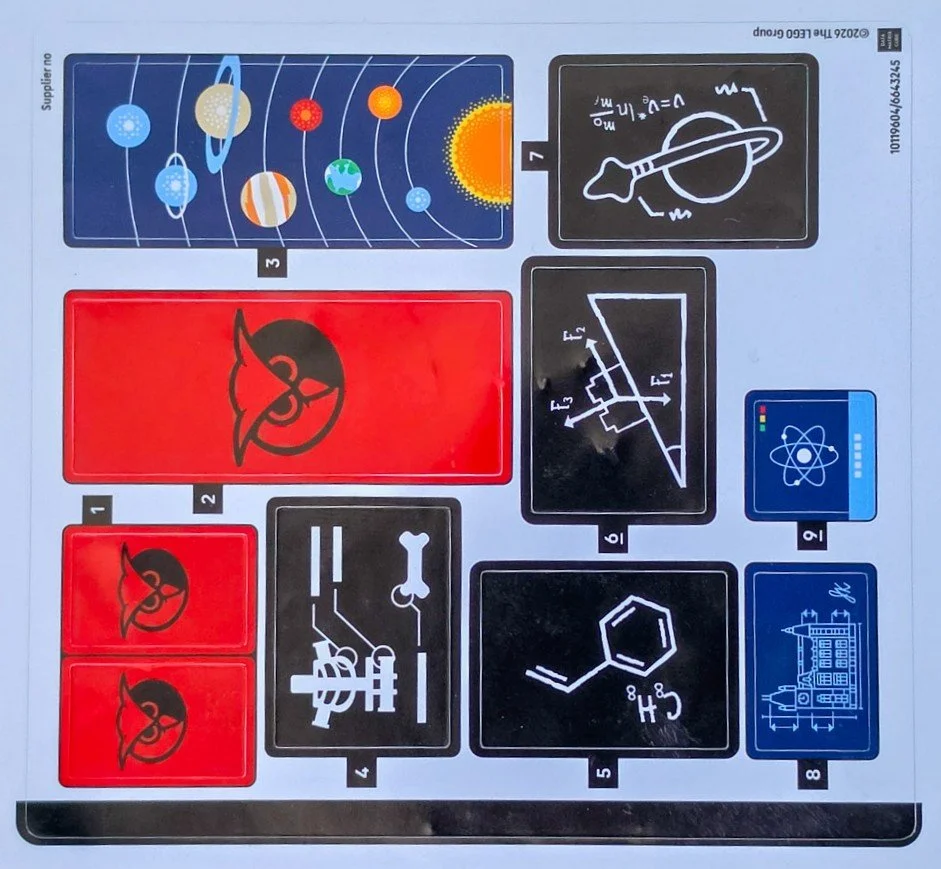
Sticker set from BrickLink 910068 University of Science.
Dave: There are also quite a few hidden details throughout the model.
Joshua: Yeah, I always like doing that. One of them is my initials hidden in one of the blueprint stickers. That’s probably the easiest personal one to point to. But honestly, a lot of the hidden details are just little things that make the building feel lived in. I don’t know that most people consciously notice them, but I think they notice when they’re missing.
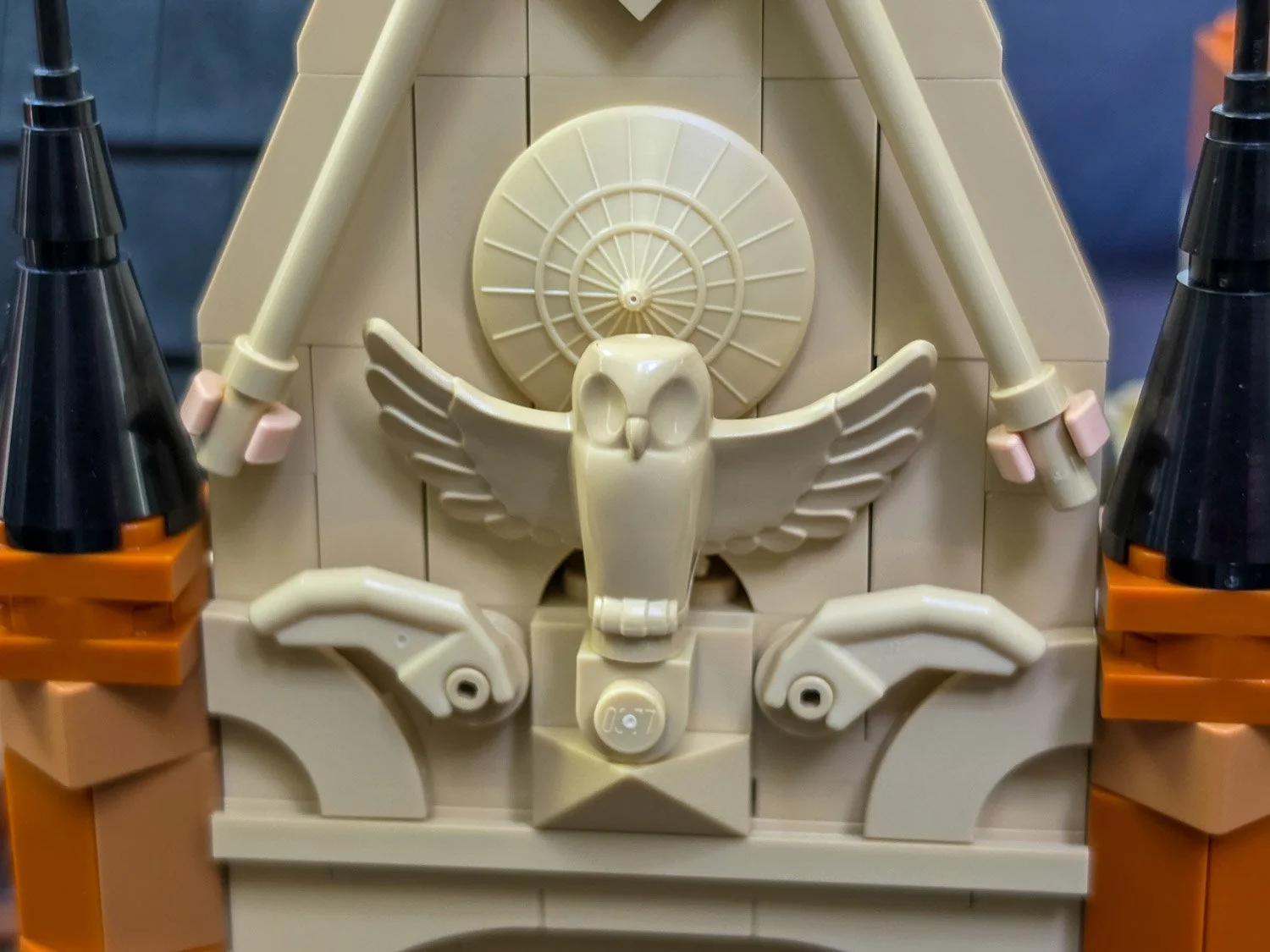
Dave: The owl ends up becoming almost the mascot of the entire university. Where did that come from?
Joshua: Honestly, it started because I found the owl element and thought it was cool. That’s pretty much it. I was looking at parts for the stained-glass section and came across it. Then I started thinking, “Well, this should probably show up somewhere else too.” And once you start down that path, it kind of snowballs. Owls already have that association with wisdom and education, so it ended up fitting the university theme really naturally.
Dave: Are there any details you’re particularly happy made it into the final version?
Joshua: Probably the birds. When the project was selected, some newer bird elements became available that weren’t in the original parts palette. As soon as I realized I could use them, I started sticking them all over the place. I don’t know why, I just really like adding animals to builds.
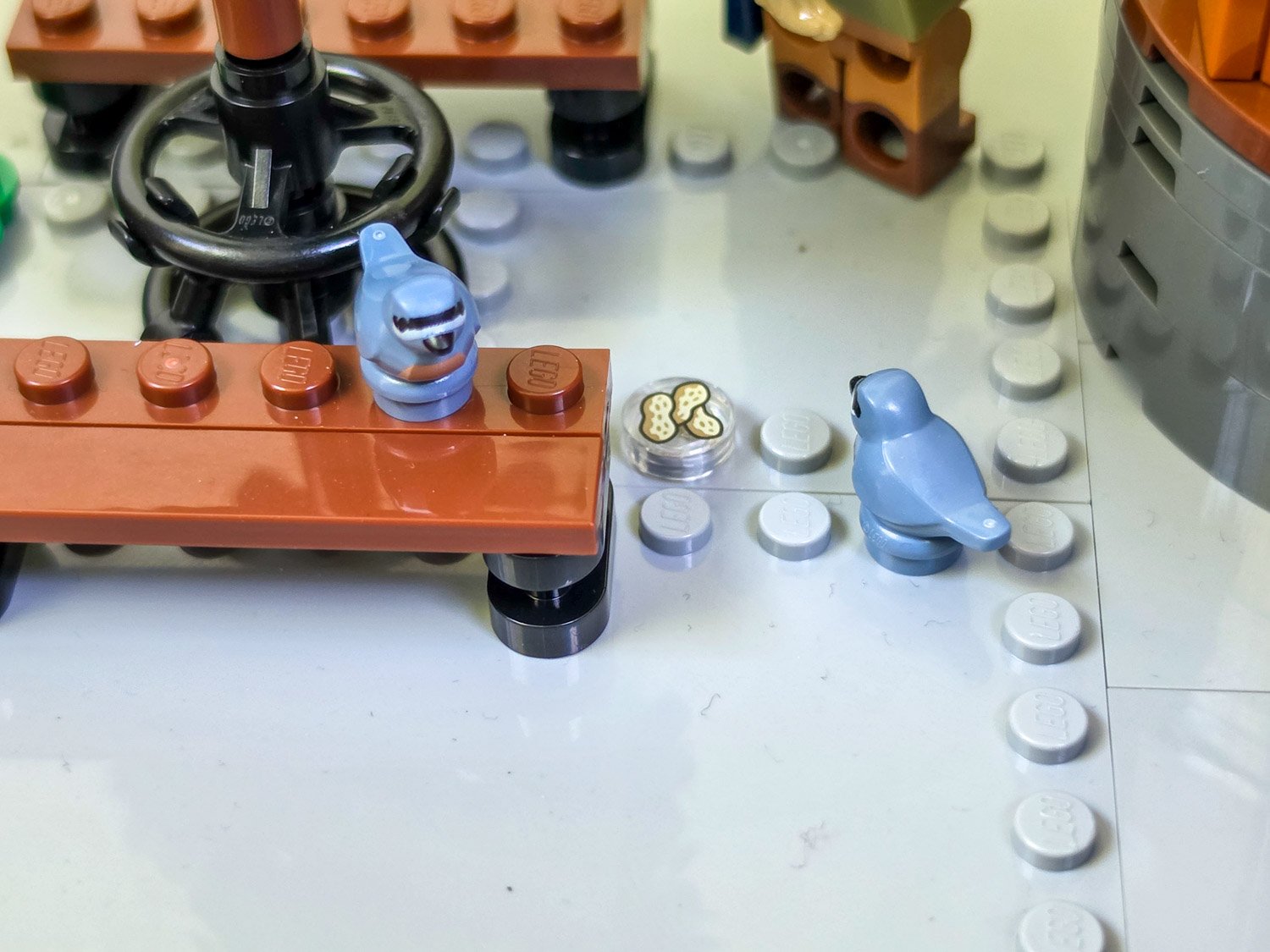
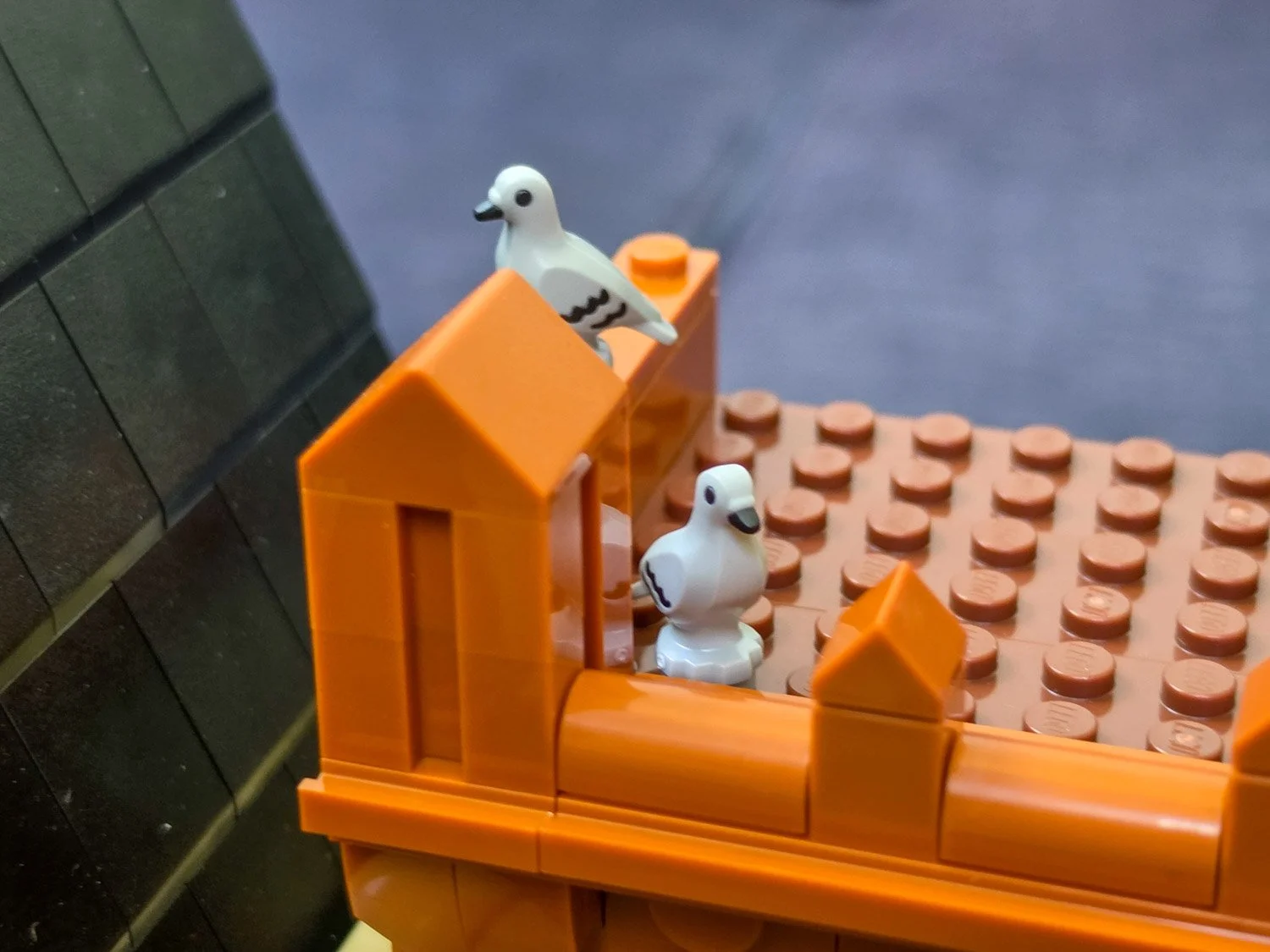
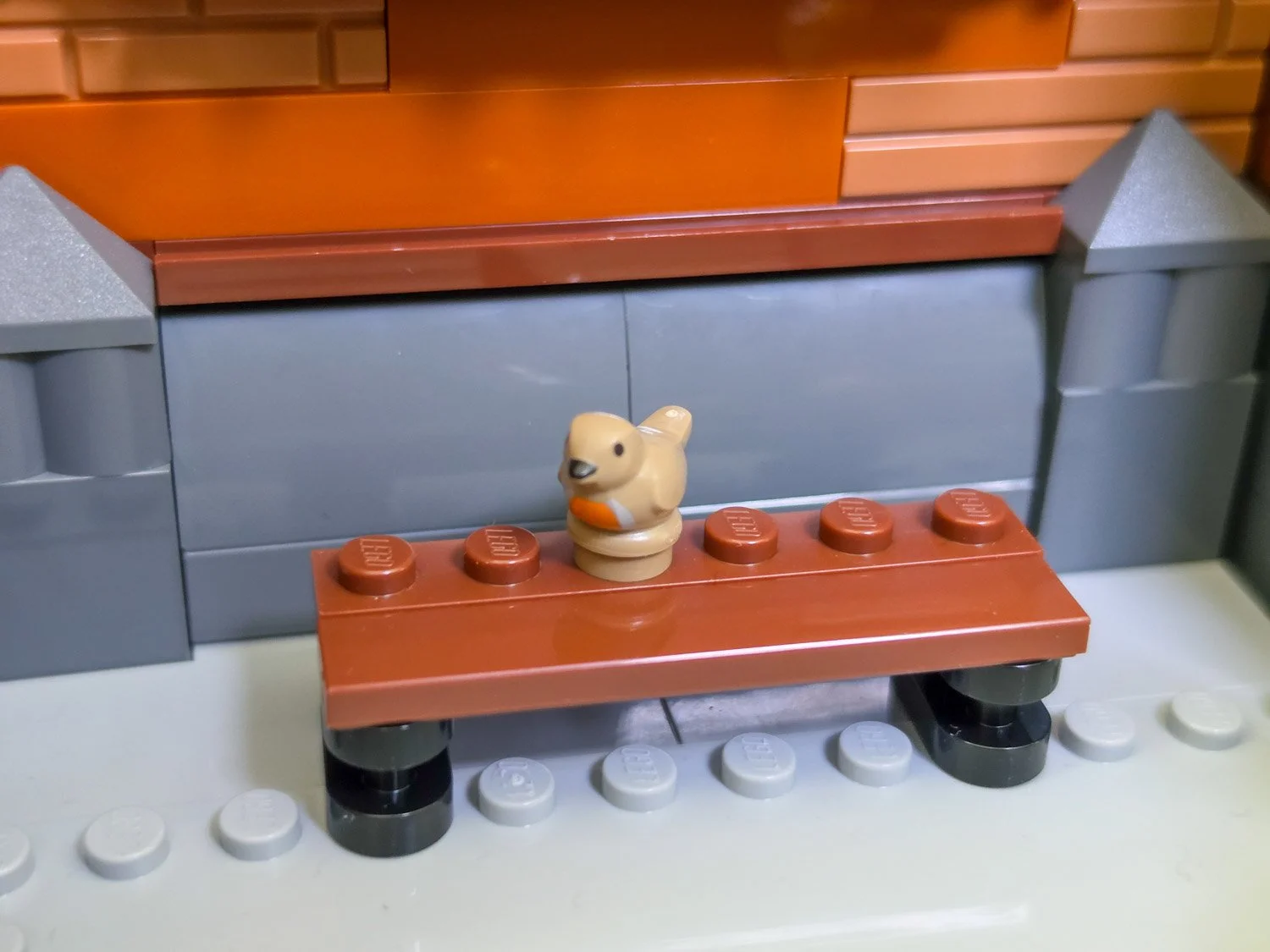
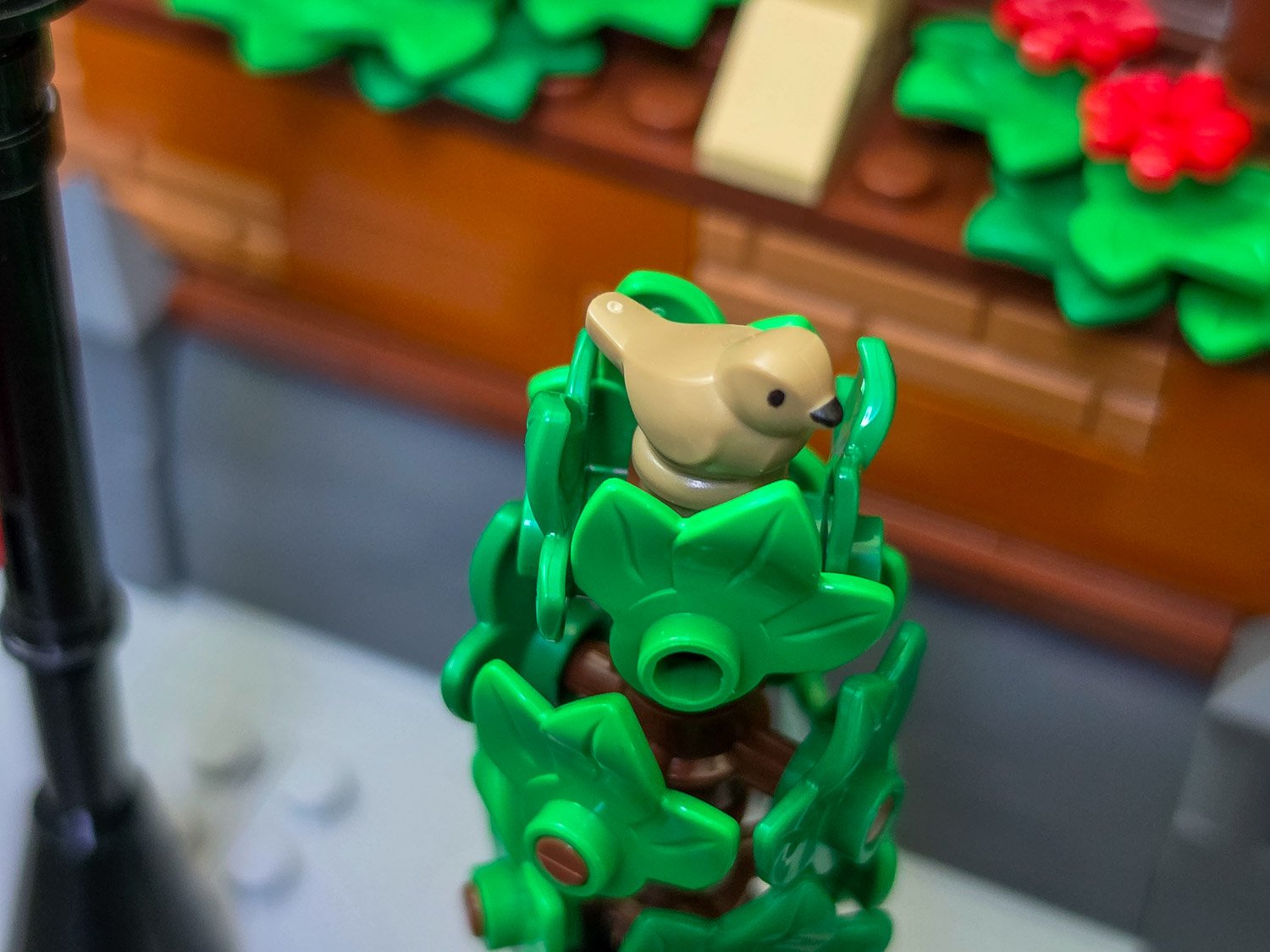
There’s one bird in particular that technically ended up being exclusive to this set because of the printing, which is kind of funny. The birds weren’t some huge design goal from the beginning. It was more like, “Well, now I can add birds, so obviously I’m going to add birds.”
Dave: The hidden laboratory in the tower feels like one of those details people are going to love discovering.
Joshua: That wasn’t actually there originally. One of the most common comments I got after submitting the project was people asking why the tower room was empty. And honestly, the answer was basically that I ran out of parts. I was already pushing right up against the limit and something had to give.
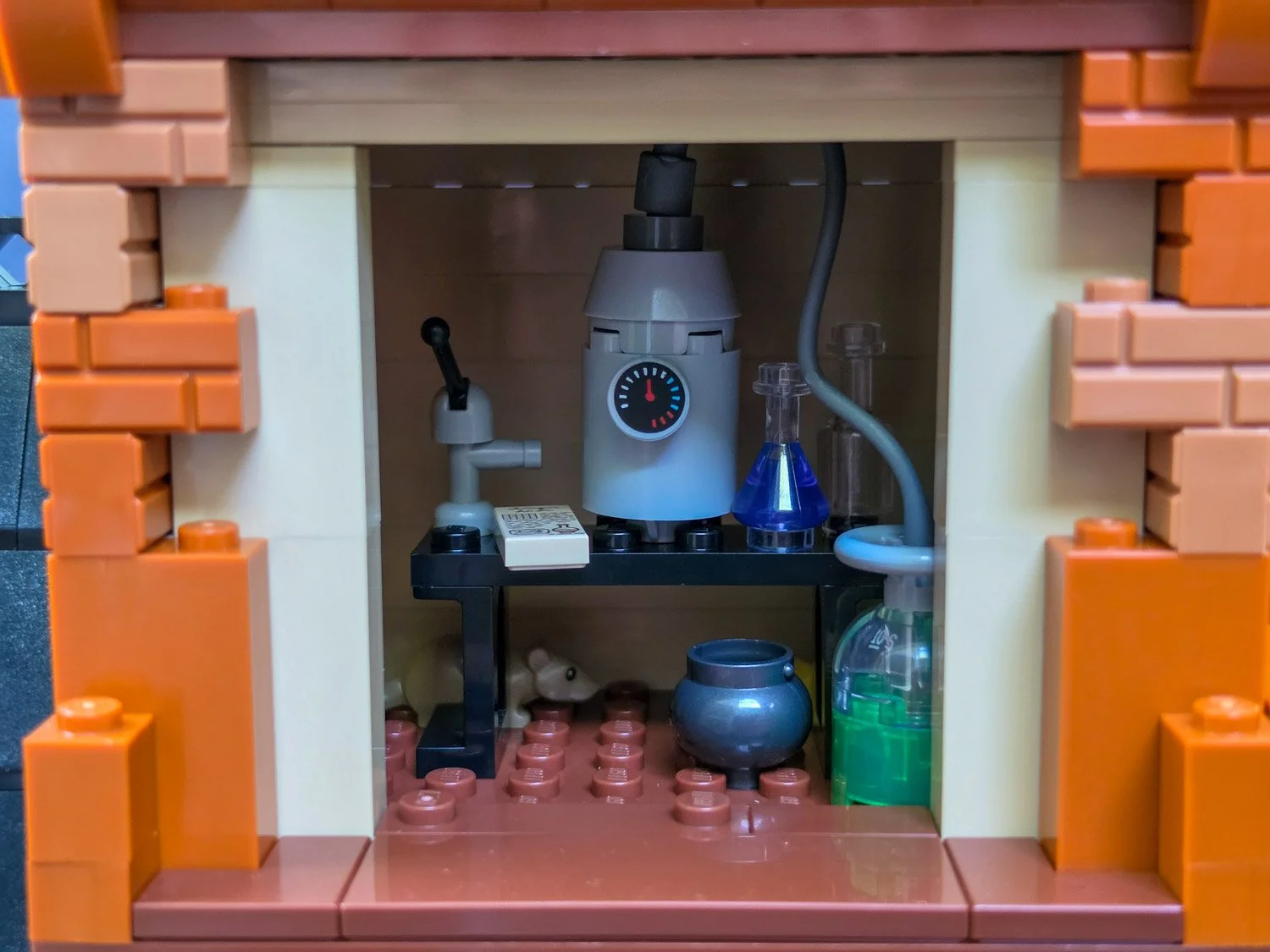
Once the project got selected and I had a chance to revisit it, I started thinking about what would make that space more interesting. I didn’t really want to add another full department up there, so the secret laboratory idea felt like a fun solution. It’s one of those things where the feedback ended up making the model better.
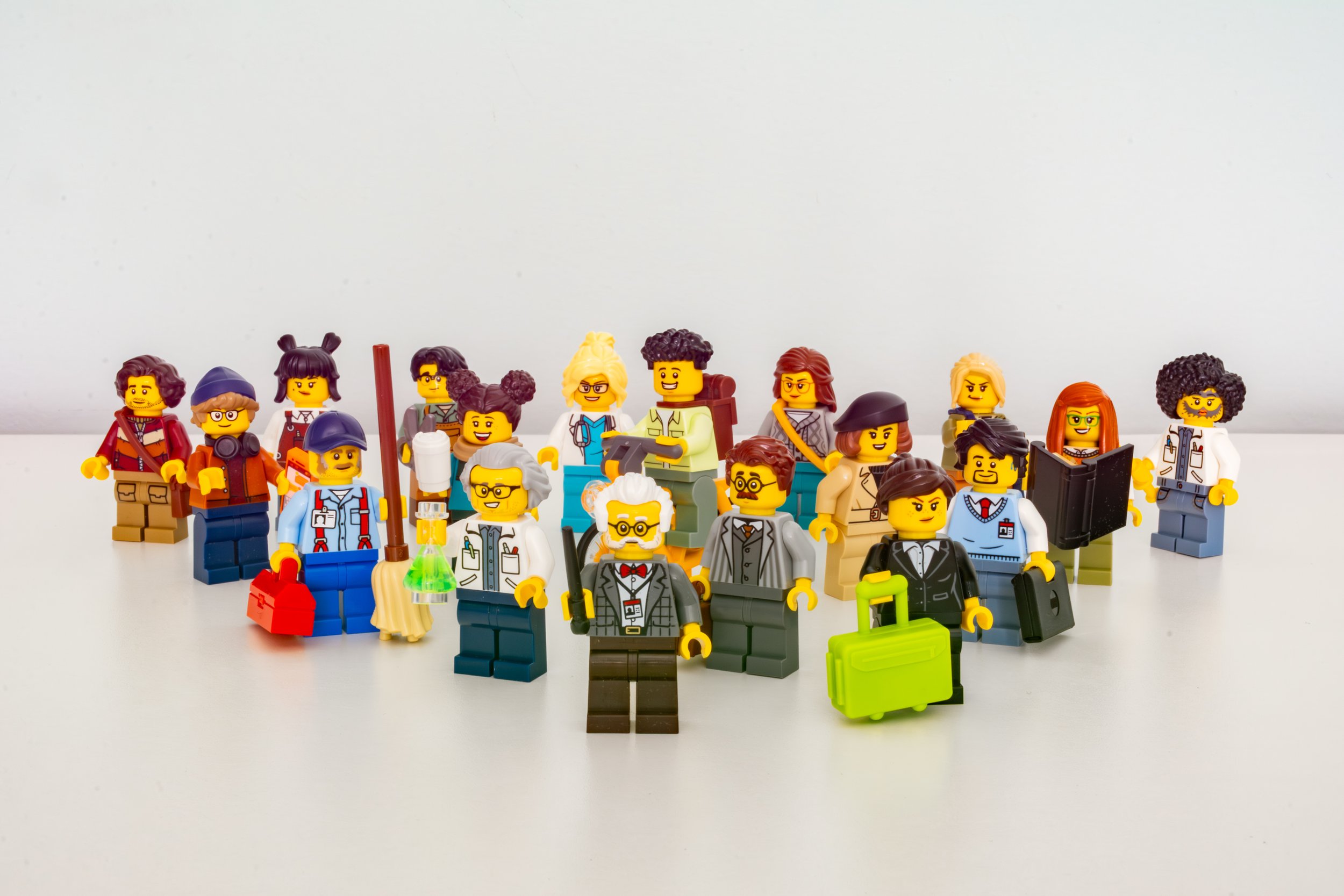
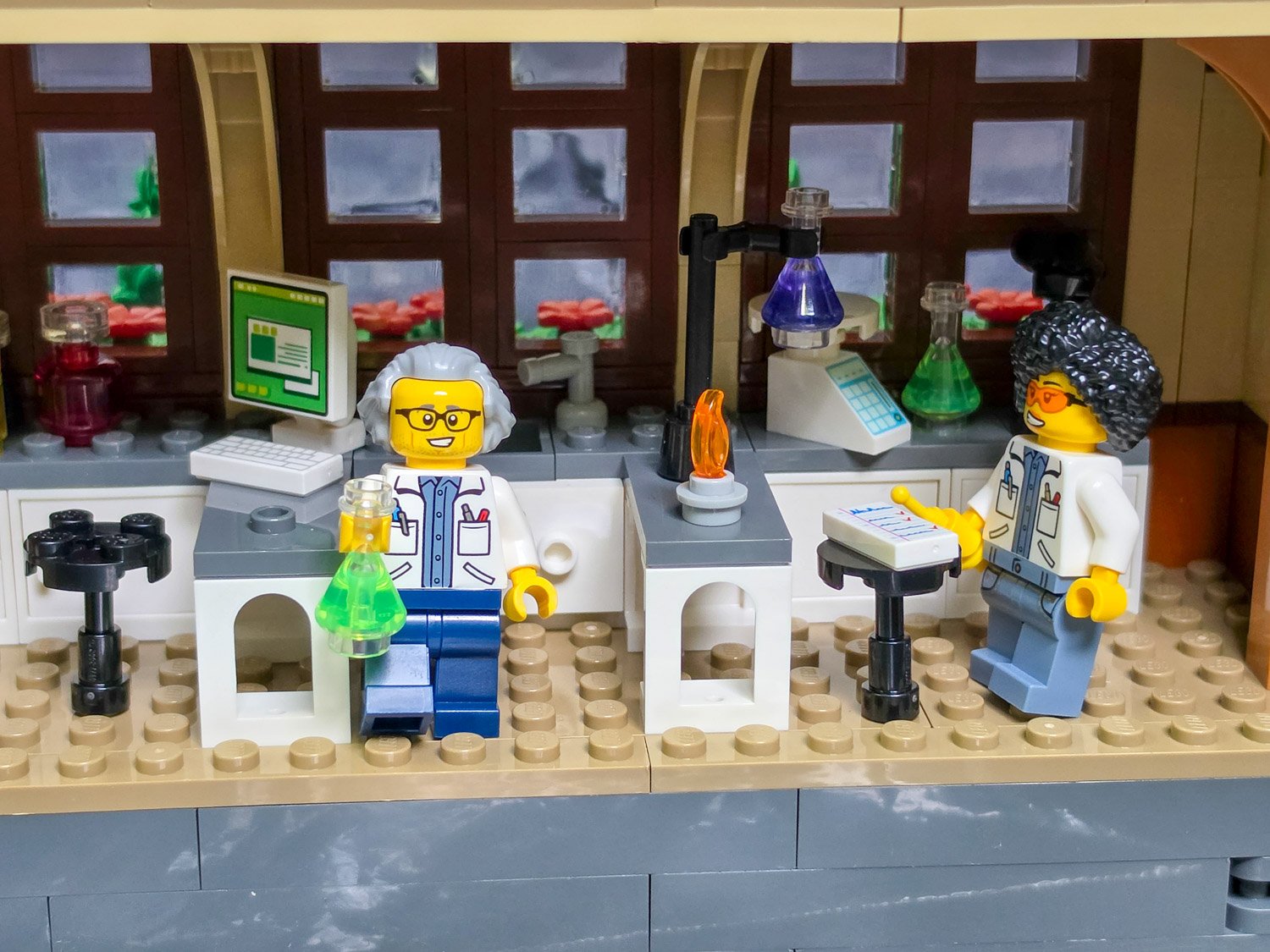
Dave: The minifigures feel very intentional too. How do you approach designing characters when you’re limited to existing parts?
Joshua: Mostly trial and error. I’ll spend way too much time swapping heads and torsos and hairpieces around until something feels right. You usually have a rough idea of who the character is supposed to be, but then you’re limited to whatever parts actually exist.
Sometimes you get lucky. There was a Ninjago torso that became available during development that was basically perfect for one of the science figures. If that part hadn’t existed, I honestly don’t know what I would’ve used instead. A lot of minifigure design is just digging through parts and hoping you stumble across something that works.
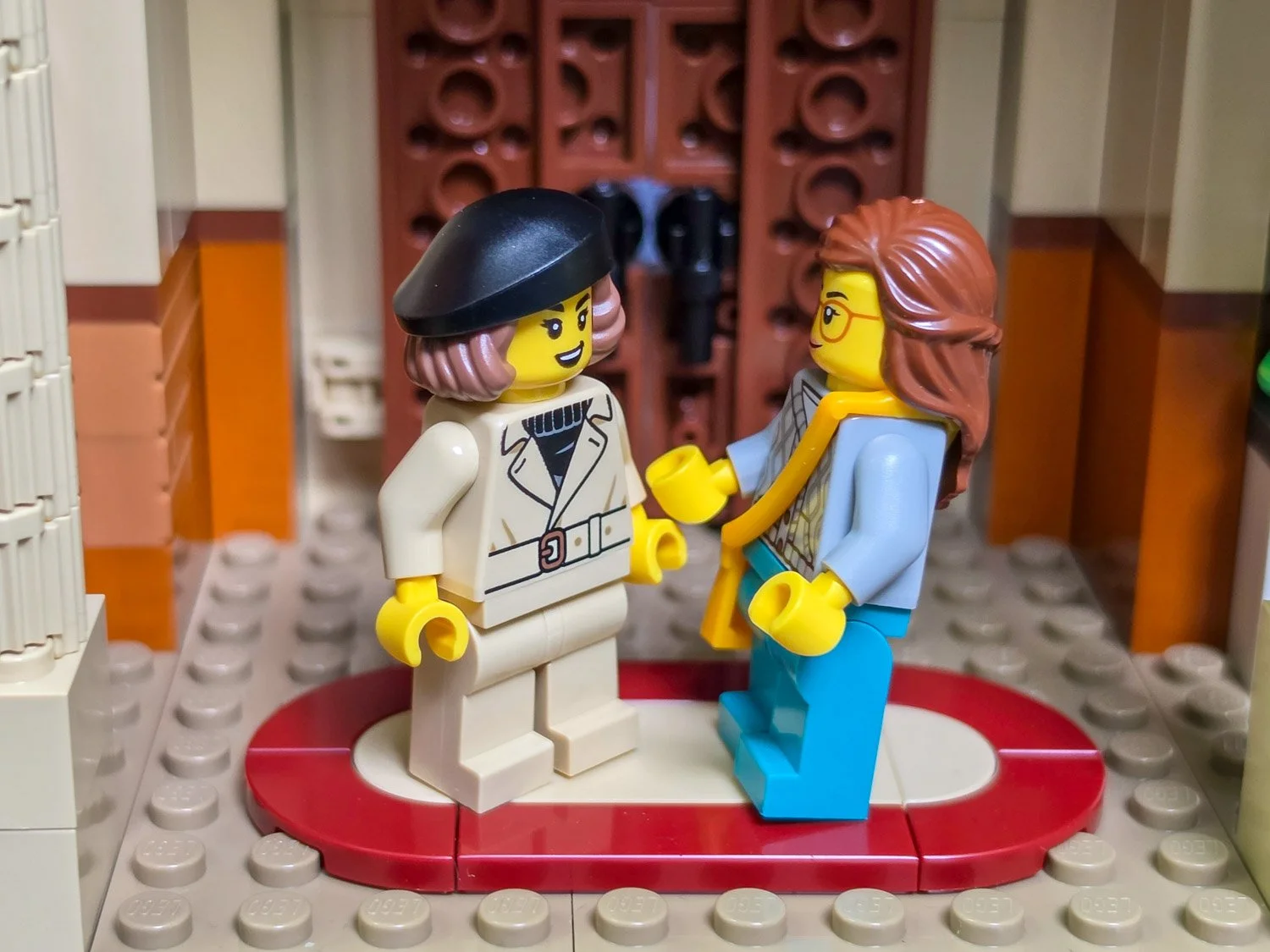
Dave: Are any of the minifigures based on real people?
Joshua: One of them is loosely based on my girlfriend. The one with the yellow shoulder bag. That was actually the first time I’d intentionally tried to recreate somebody I know as a minifigure, so that was kind of fun.
Building a 4,000-Piece Campus
Dave: At nearly 4,000 pieces, this is one of the largest projects in BDP history. Did the scale ever intimidate you?
Joshua: Definitely. There were a lot of points where I questioned whether it was worth continuing because it was just such a huge project. With something that large, everything affects everything else. You change one section of the architecture and suddenly you’re affecting the interior layout, the part count, the color balance, or something else somewhere down the line.
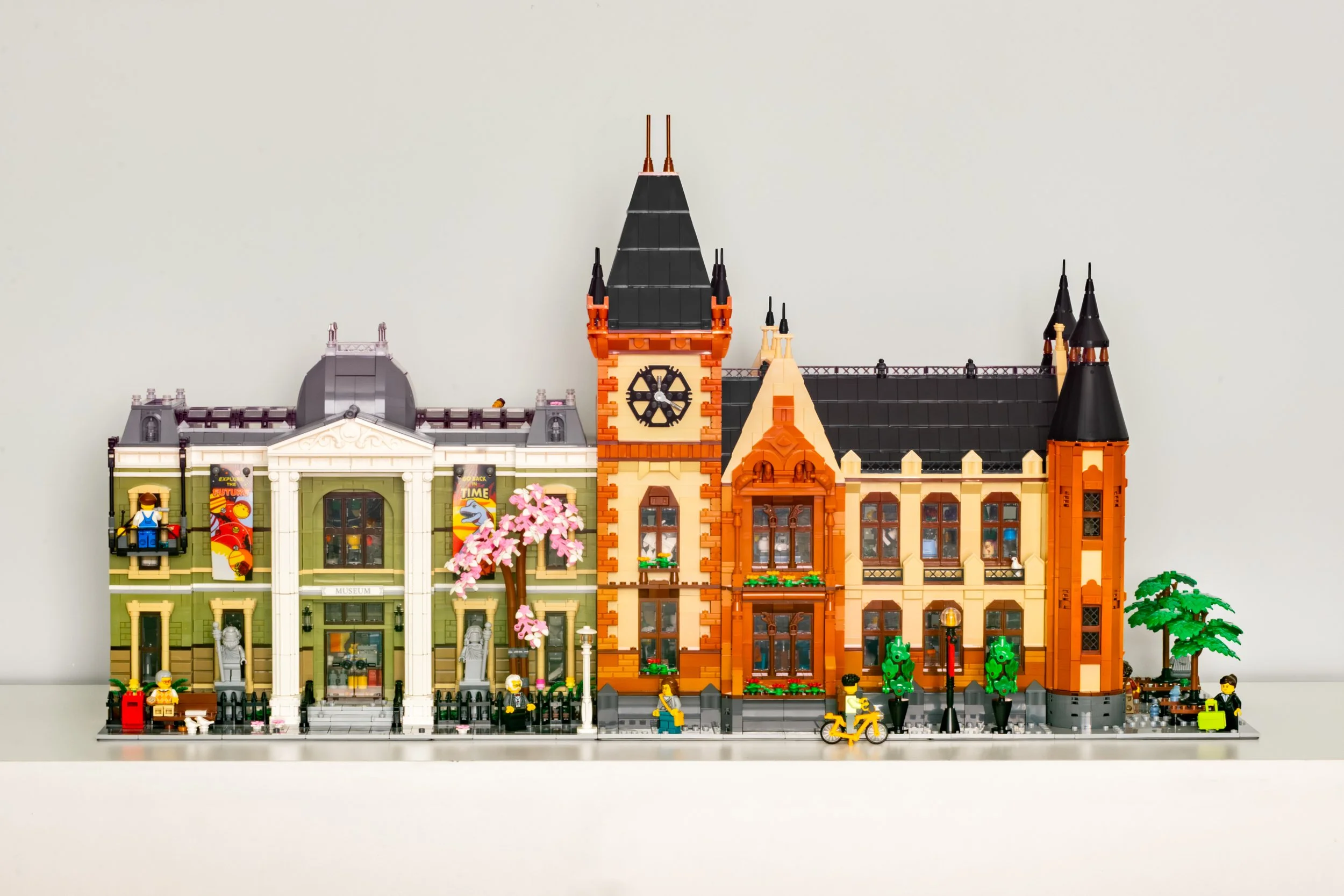
Model next to Modular 10326 Natural History Museum.
There were definitely stretches where I got stuck on one particular area and couldn’t figure out how to move forward. Usually it wasn’t the whole project that was the problem. It was one specific thing. Then eventually you’d figure that out and suddenly the project would start moving again. That’s kind of how the whole thing developed.
Dave: Was there anything that surprised you once you physically built the final version?
Joshua: Honestly, just how big it is. When you’re designing digitally, you know the dimensions. You know the part count. But it’s different once it’s sitting in front of you. People see the piece count and compare it to a modular building, but physically it’s much larger than most modulars.
And it’s heavy. Someone from BrickLink told me it’s about twenty-five percent heavier than any previous BDP set, which I thought was kind of funny. There are a lot of large roof pieces in there. A lot.
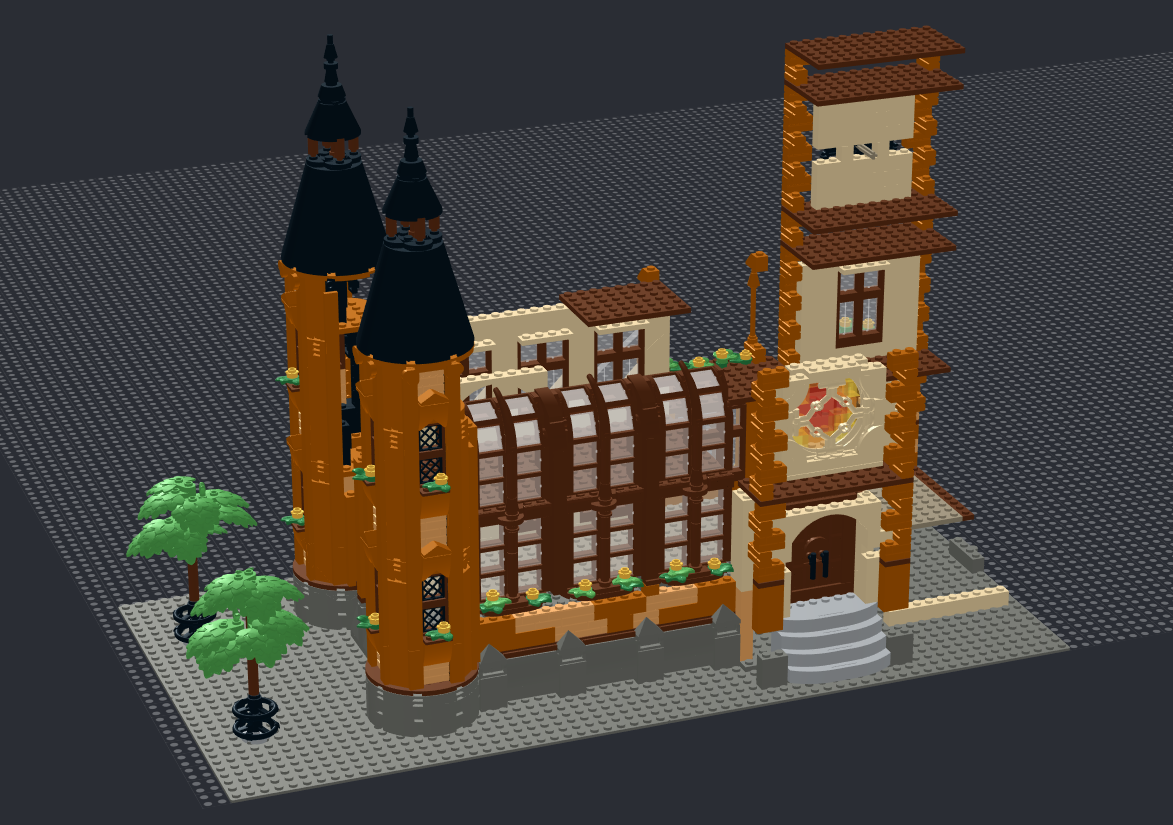
Dave: The split-open design really changes how the model displays compared to most large LEGO buildings.
Joshua: Yeah, that’s become one of my favorite parts of it. Opened up, you can see everything at once. All the rooms, all the architecture, all the little details. Then when it’s closed, it still works pretty naturally as a display building.
What I’ve enjoyed most is seeing what people imagine doing with it. Some people immediately see a university. Other people see the X-Mansion. I’ve seen people suggest turning it into a museum, a fantasy academy, all kinds of things. That’s one of the fun parts of LEGO. You build something with one idea in mind and everybody immediately starts imagining something different.
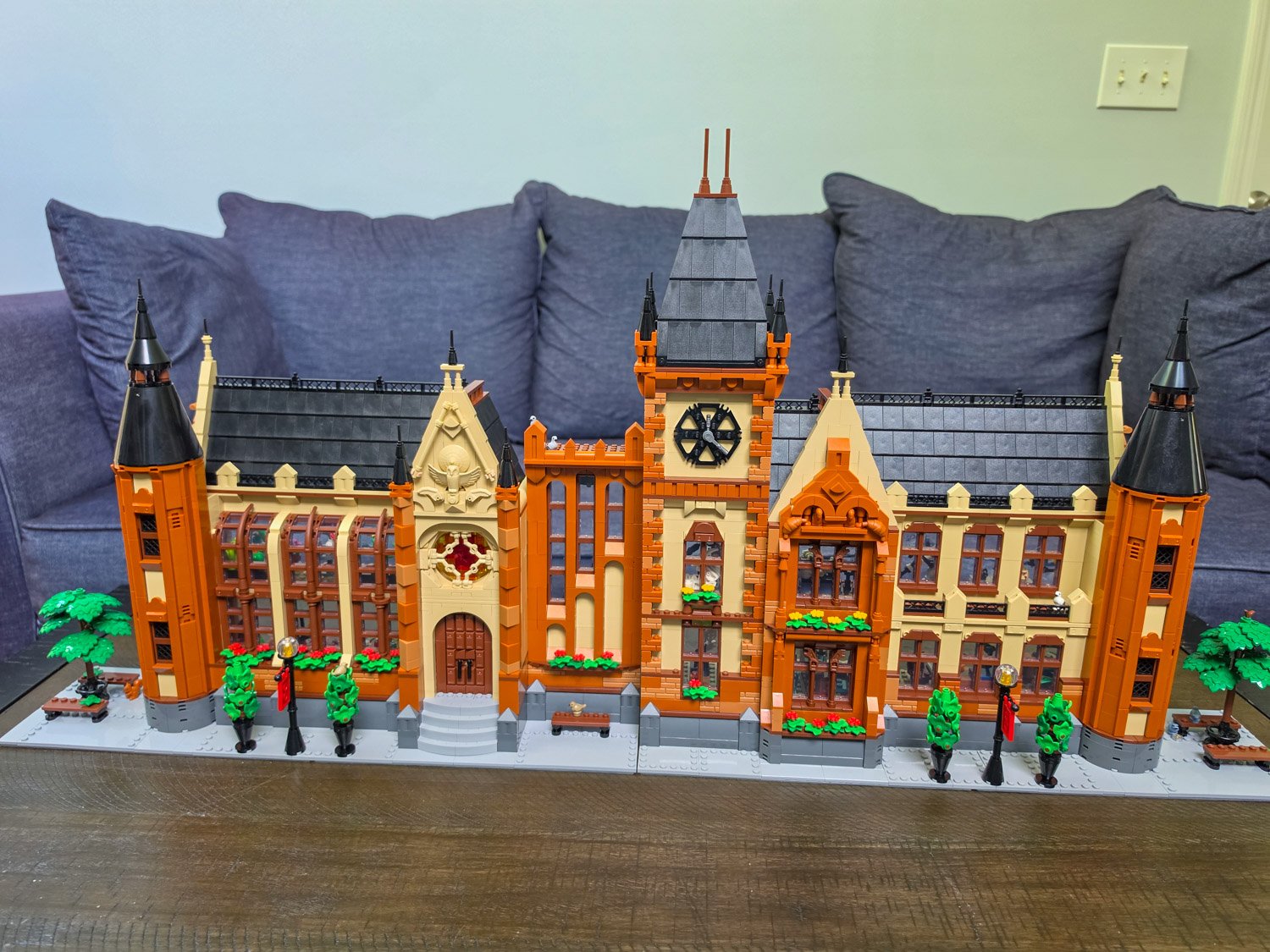
Open configuration of the UNiversity of Science.
Dave: There’s already been a lot of discussion about the price online.
Joshua: Yeah, and I get it. It’s a big purchase. I think the thing people don’t fully appreciate until they see it in person is just how much LEGO is actually there. There are over a hundred roof slopes alone. Then all the larger structural pieces, the towers, the landscaping, everything else.
I’m not saying people have to agree with the price, but once I built the physical copy, it made a lot more sense to me where the cost was coming from. It’s just a lot of plastic.
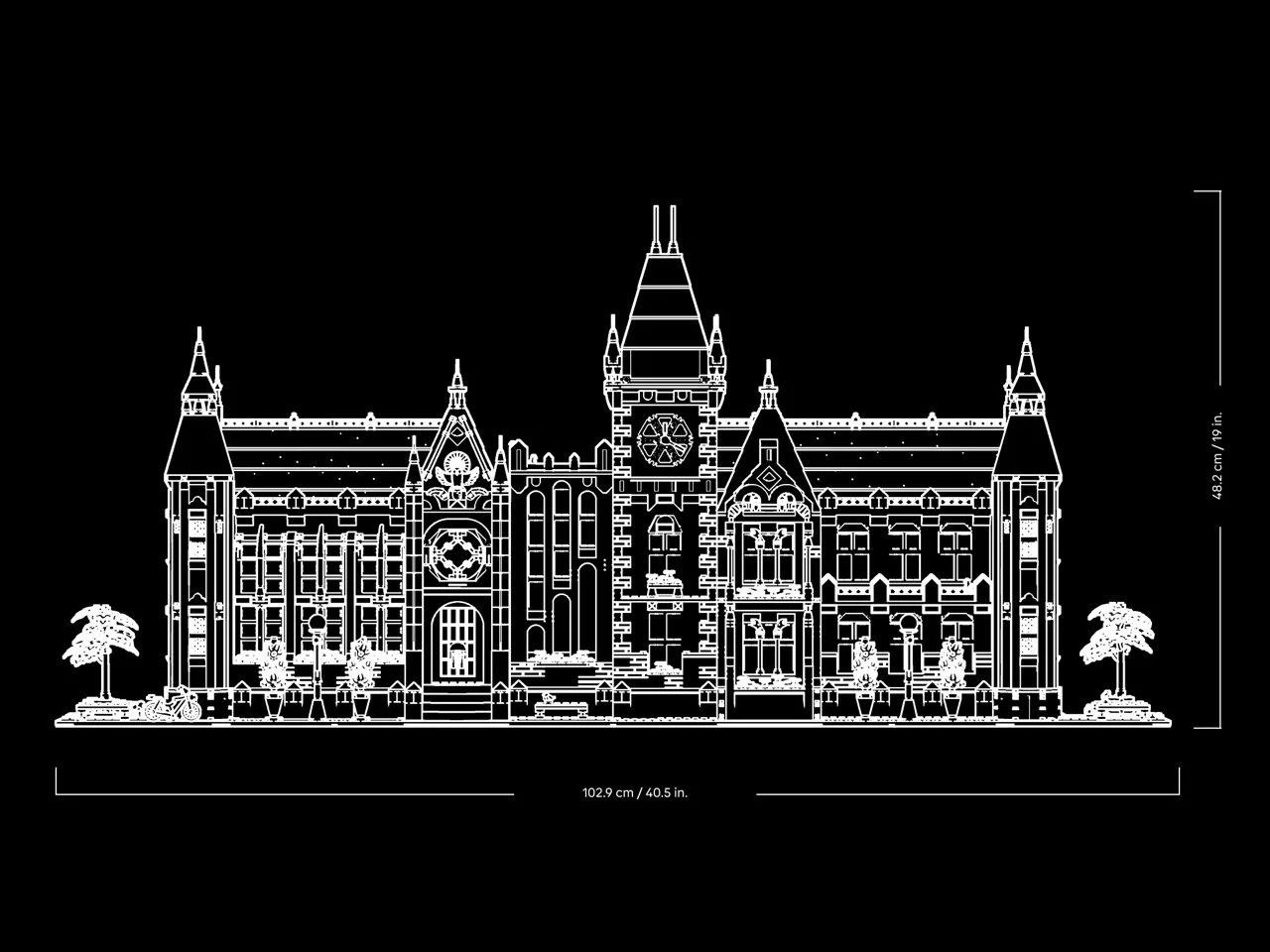
Size/Blueprint of the set.
Dave: How do you hope people interact with the set once they have it?
Joshua: Honestly, I just hope people have fun with it. One of the coolest things about releasing a model is seeing what people do with it afterward. I’ve had people send me pictures of previous designs incorporated into cities, layouts, displays, all sorts of things I never would have thought of myself.
I imagine the same thing will happen here. Some people will build it exactly as intended. Some people will modify it. Some people will probably take it apart and use it for something completely different. That’s kind of the fun of LEGO.
Future Experiments
Dave: After going through multiple rounds of the BrickLink Designer Program, what advice would you give someone thinking about submitting a project?
Joshua: The biggest thing is to build something you actually care about. I know that’s kind of a cliché answer, but I really do think people can tell when somebody is passionate about a project versus when they’re trying to design what they think will sell. Obviously there are themes that tend to do well. Castles tend to do well. Certain types of buildings tend to do well. Everybody knows that.
But if you’re spending months working on something, it helps if it’s something you’re genuinely interested in because you’re going to be staring at it for a long time. I also think it’s important to ask what makes your project different. That doesn’t mean it has to be completely original. That’s basically impossible at this point. But there should be something that makes people stop and take a second look.
Dave: You’ve already had multiple successful BDP projects. What kinds of ideas are keeping you busy these days?
Joshua: It kind of changes all the time. After University of Science got selected, it was actually nice to have a little break because I couldn’t immediately jump back into another submission. I’ve been experimenting with a bunch of different ideas since then. One of them was Ivory Palace, which leans more into fantasy and wizard themes.
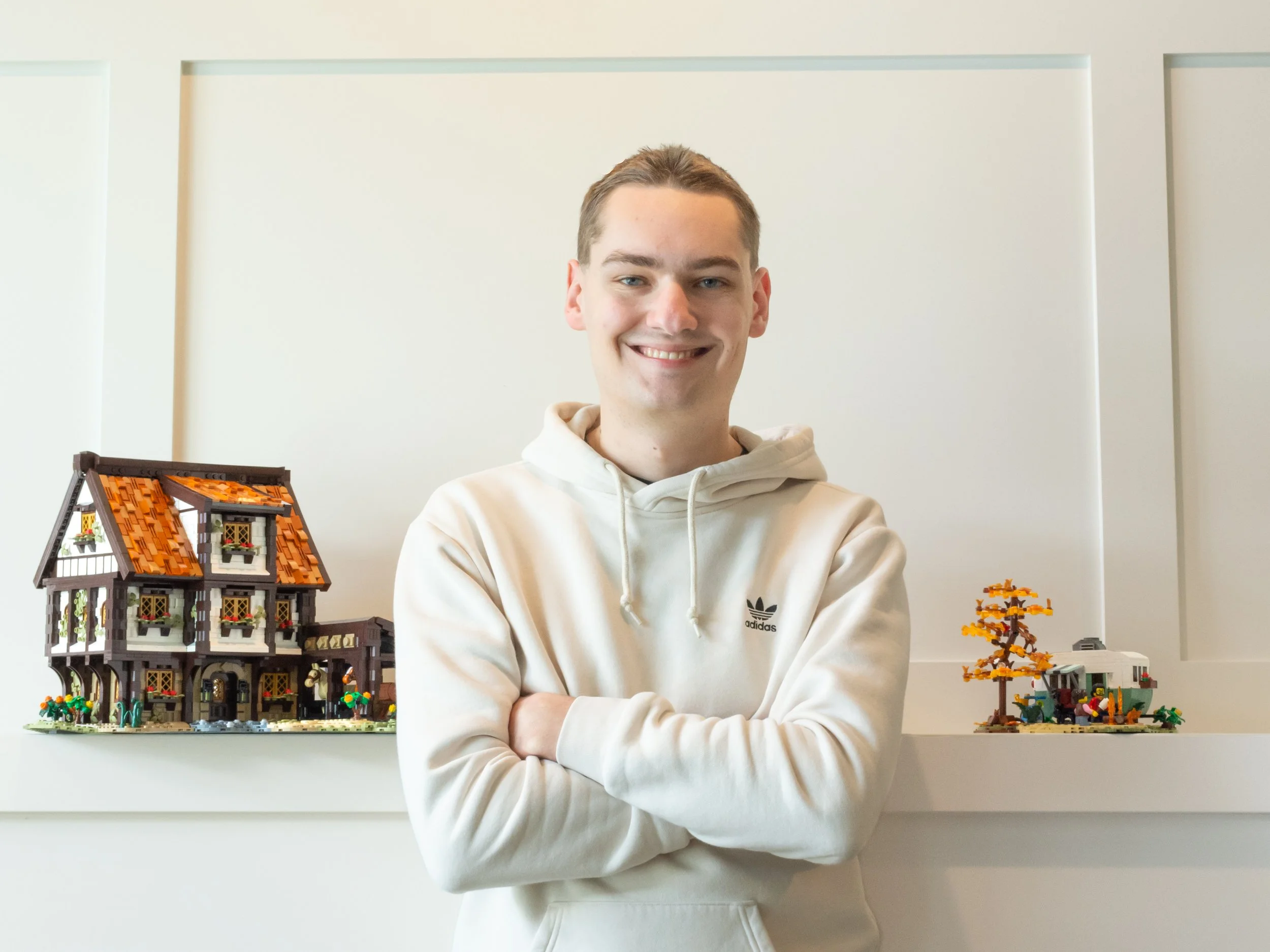
I also spent some time trying to design a hospital, which turned out to be surprisingly difficult. People always say they want hospitals in LEGO cities, and I agree, but actually making one visually interesting is harder than you’d think. A lot of ideas sound great until you start building them. Sometimes a project comes together really quickly. Other times you get a few weeks into it and realize it just isn’t working. That’s pretty normal.
Dave: Final question. What does the AFOL community mean to you?
Joshua: Honestly, it’s been great. Most of my interaction with the community started online through Instagram and BDP, but over the last few years I’ve been doing more events and meeting people in person too. One of the coolest parts is hearing from people who bought one of your sets and then seeing what they did with it.
Somebody will send you a photo and suddenly your model is sitting in the middle of a city layout you had absolutely nothing to do with. That’s always kind of surreal. It’s probably my favorite part of the whole thing.
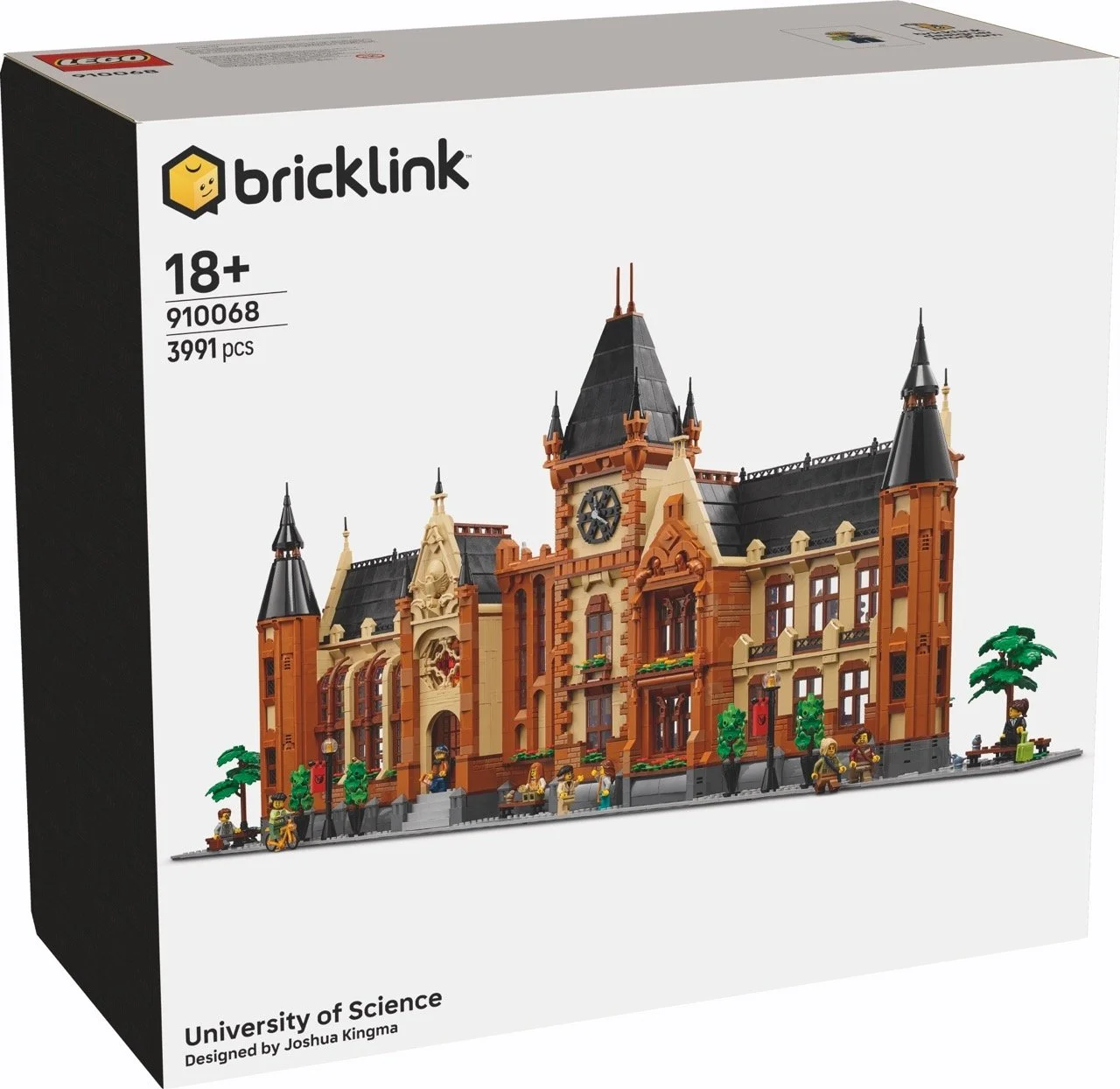
BrickLink 910068 University of Science is available for pre-order from June 9th until June 18th (or until the set has met its maximum production run) for $360.
DISCLAIMER: This set was provided to BrickNerd by LEGO. Any opinions expressed in this article are those of the author.
Have you ever kept working on a LEGO project after a setback or rejection? Leave your thoughts in the comments below.
Do you want to help BrickNerd continue publishing articles like this one? Become a top patron like Paige Mueller, Rob Klingberg from Brickstuff, John & Joshua Hanlon from Beyond the Brick, Megan Lum, Andy Price, Lukas Kurth from StoneWars, Wayne Tyler, Dan Church, and Roxanne Baxter to show your support, get early access, exclusive swag and more.